
Pensacola Eyeglass Store Case Study | Map Visibility
An independent optical retailer achieved complete Google Map Pack dominance in under three months using structured local SEO methodology.
The Starting Position
Mark ran a regional optical shop in Pensacola, competing against chain operators and independent optometrists. His locations had a strong local reputation but little meaningful Map Pack visibility.
The business faced a discovery problem, not a capacity problem. Customers who found Mark loved him; the issue was getting found.
The Methodology Applied
The intervention ran three months using the Maps Domination Program™, moving from entity cleanup to neighborhood content to full takeover.
- ▸Weeks 1-4: 13×13, 169-point GeoGrid scan across all locations, primary category shifted from Optometrist to Eye Care Center to capture retail searchers, 38 citation inconsistencies corrected, and schema rebuilt for Store, Optician services, and service catalogs
- ▸Weeks 5-8: neighborhood pages built for six geographic clusters, content optimized for location-specific eye exam, eyeglass, and contact lens searches, and review generation automation activated
- ▸Weeks 9-12: all three Map Pack positions captured for "eye exam pensacola" and dominance extended to secondary keywords
The Numbers
The shop went from typical positions 4-8 to stronger Map Pack visibility, and weekly discovery calls jumped from about 22 to roughly 140.
- ▸Map Pack presence: position 4-8 typical to all 3 positions owned
- ▸Keywords at position 1: 2 to 14
- ▸Keywords at position 1-3: 7 to 38
- ▸Discovery calls per week: ~22 to ~140
- ▸Location count: 3 to 4 (opening soon)
Why Map Pack visibility shifts in retail
Retail verticals have a structural advantage: chain competitors often run weak Google Business Profiles because of centralized management. Common chain problems include inherited categories, generic review responses, identical listings across locations, and no neighborhood-level content.
An independent retailer executing proper methodology can outperform multi-location chains by building superior local relevance signals.
Why the Fourth Location is Opening
Mark's existing locations reached capacity. When discovery stops being the limiting factor, owners typically choose between expanding existing locations or opening new ones.
Mark chose geographic expansion, leaning on existing review pipelines and content infrastructure to cut the marginal cost of the new location.
The Positioning Shift
Before, Mark was "just another eye doc in Pensacola." After, he became "the eye doctor you see when you Google it."
Map Pack ownership turns a business from one option among many into the default choice, which changes pricing, patient acquisition, and even recruiting.
More client results
Client wins
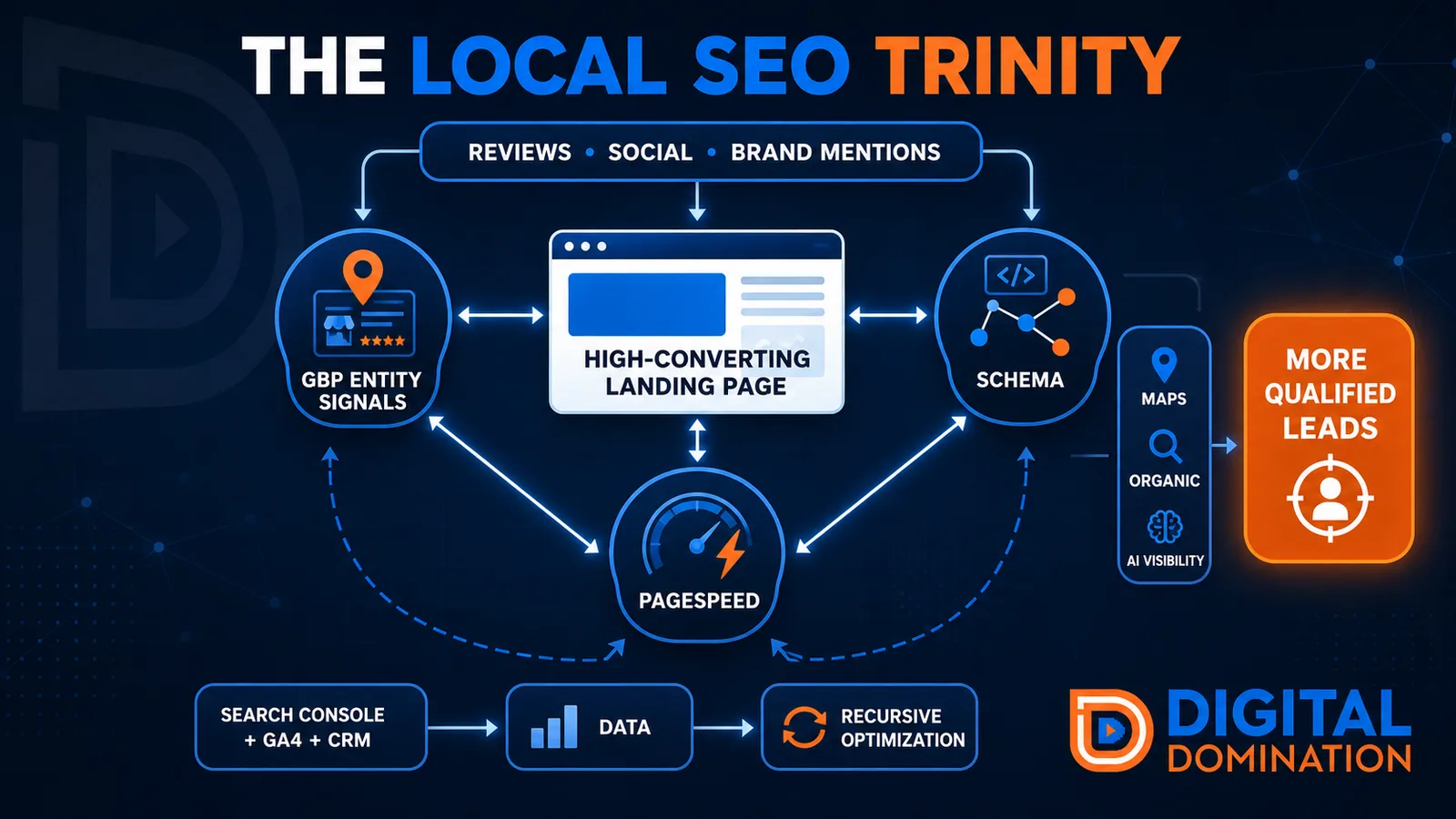
The Local SEO Trinity
Think of a three-legged stool. Your Google profile, your website, and your reviews all have to hold you up. If one leg is short, the whole thing wobbles.
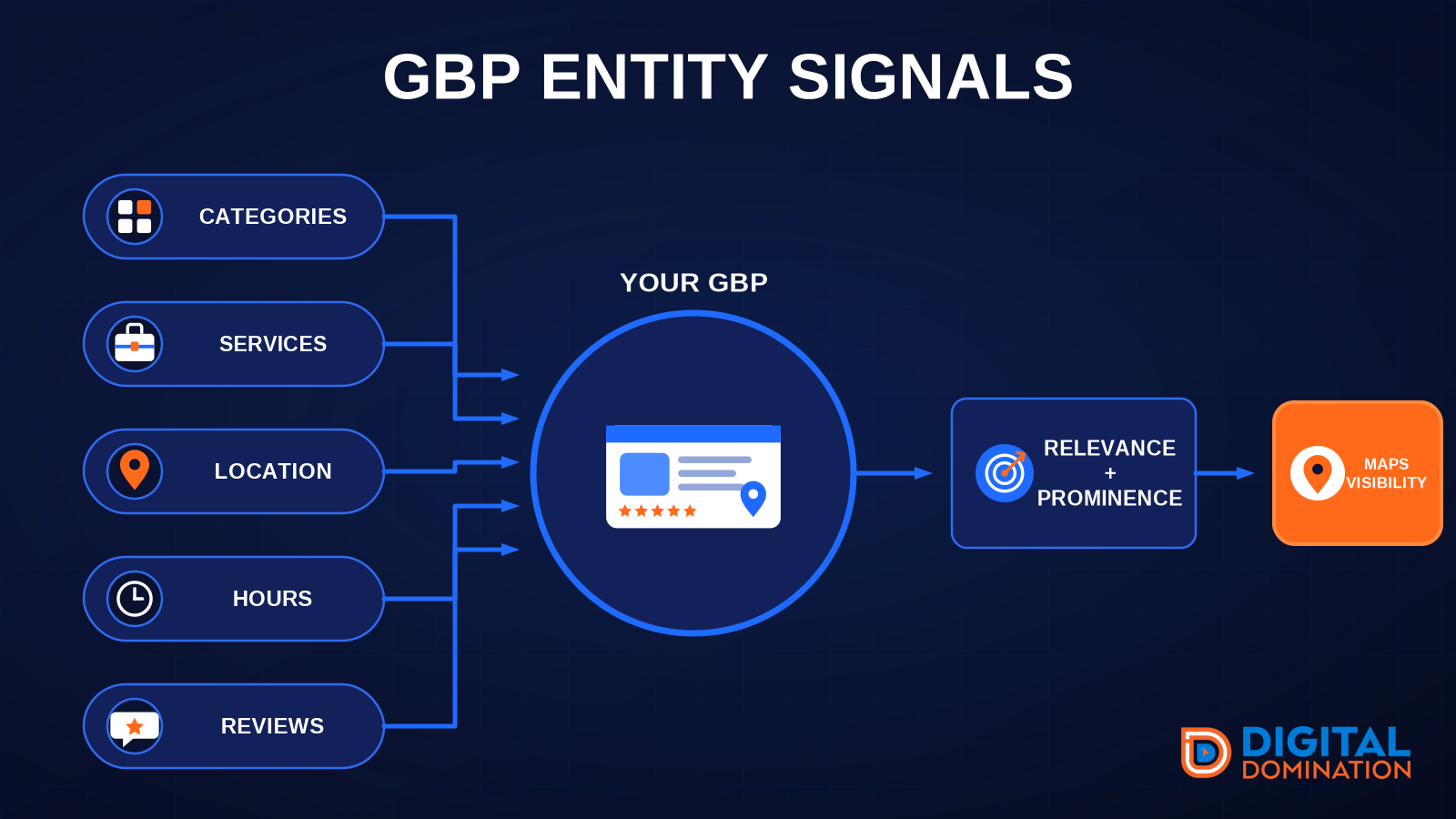
GBP entity signals
This leg is your Google Business Profile. GBP means Google Business Profile. It covers your categories, your services, your location, your hours, and your reviews. Google uses those facts to decide who to show.
Your Google profile is your storefront sign. If the sign is missing, or it names the wrong shop, people drive past.
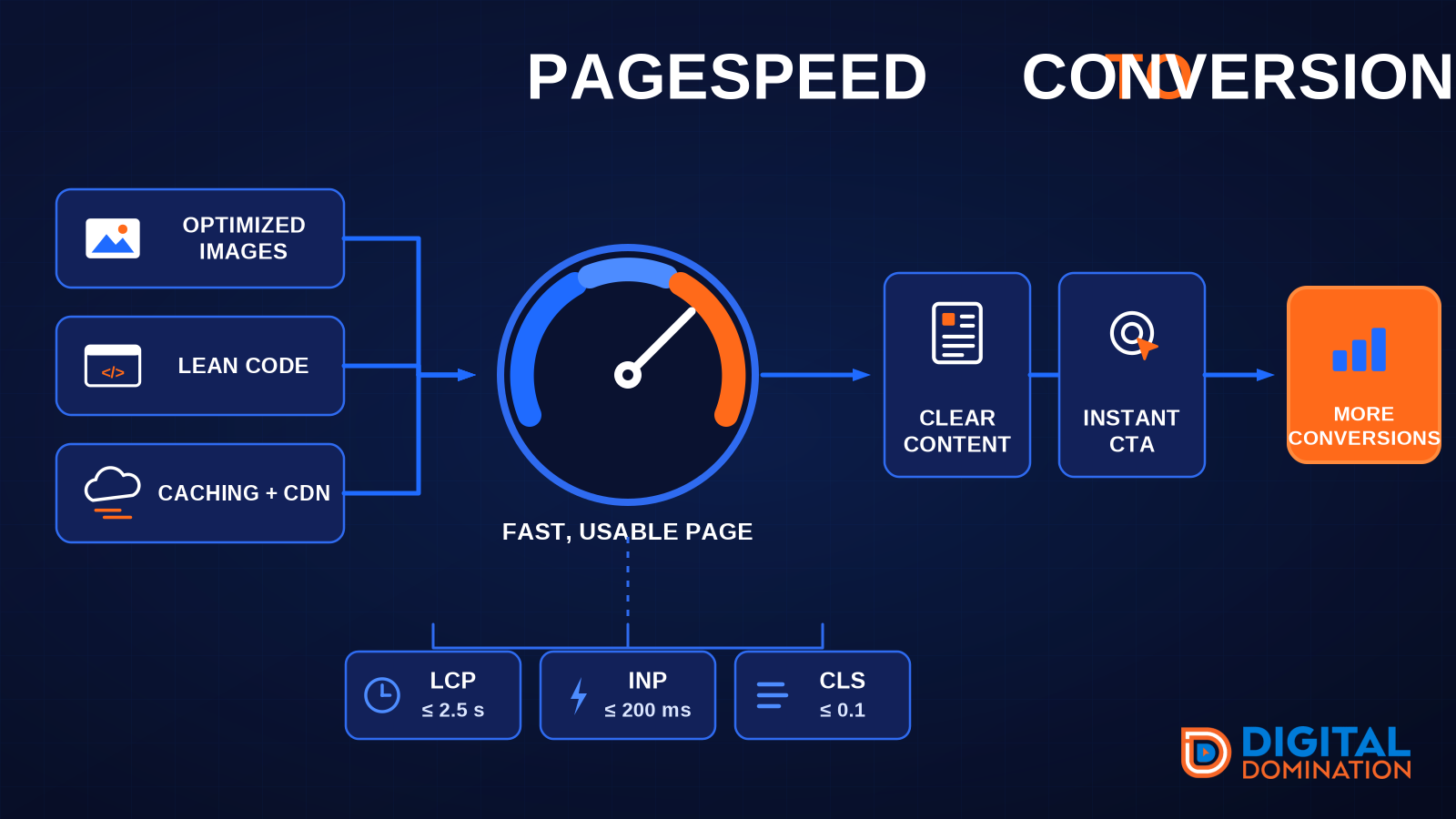
PageSpeed to conversion
This leg is your website, above all on a phone. Small images, lean code, and caching make a page fast. A fast, clear page is what turns a visit into a call. Phone speed is one of the 12 Trinity checks because a slow page loses the call before anyone sees your offer.
Your website is the showroom. If the door sticks, people leave before they look around.
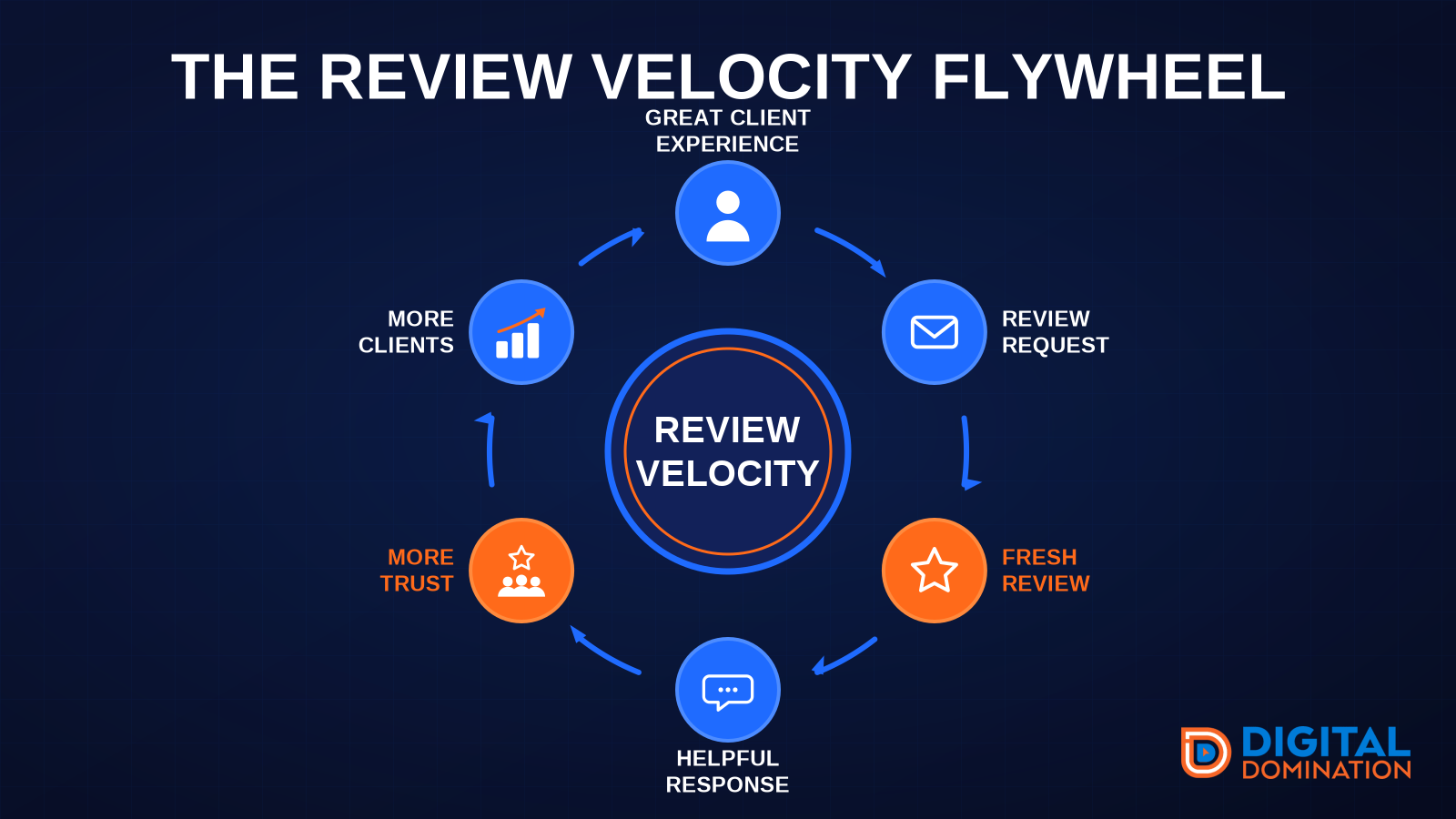
The review velocity flywheel
This leg is reviews and reputation. A good visit leads to a review request, then a fresh review, then a helpful reply, then more trust, then more customers. When the scan can find your Google listing, it shows your rating, your recent reviews, and how many you answered.
Reviews are word of mouth. One kind word helps. A steady stream of real reviews, and a reply from you, helps more.
How this turns into revenue
Being found in more searches leads to more calls. More calls lead to more booked jobs. More booked jobs lead to more revenue.
Example numbers, not a real business: 40 calls from search in a month, a 25 percent close rate, and a $400 average job. That is 10 booked jobs. That is $4,000. The math is the lesson. It is not a promise.
The full page has a box where you can type your own average job value and close rate.
One real story, from our car dealership case study: Medina Auto Group went from invisible on Google Maps to dominating every high-intent search across their market. The turnaround spanned all four of their rooftops at once. The same page says the team eliminated 89 unfair one-star reviews that had been dragging the dealership's reputation down and keeping it out of the Map Pack. It also says: “Results described here are exceptional and non-typical. Outcomes vary based on market conditions, competition, and implementation. No guarantees are made regarding earnings, rankings, or conversions.”
Free strategy call
More booked jobs start with a clear plan
Book a free strategy call. We look at your Google profile, your website, and your reviews, and we tell you what to fix first.
Free. You pick the time. A real person shows up.