
Concrete contractor local SEO: how GBP entity signals, schema and PageSpeed turn an HOA violation letter into a signed driveway bid
The crew that pulls the truest edge and the cleanest broom finish does not automatically get the job. The company Google can read, a homeowner can trust from her kitchen counter and a phone can load on one bar of signal does.

The HOA letter gives the homeowner thirty days and gives you about ninety seconds
The HOA violation notice arrives on a Tuesday: a two-inch heave at the garage apron, a web of cracks where the old wire mesh rusted through, and thirty days to correct it. That evening the homeowner photographs the letter and searches "concrete driveway replacement near me" from the kitchen counter. Three profiles appear. One shows a finished driveway like the one she wants, a service called Driveway removal and replacement, and a starting price per square foot. One is a general contractor. One has a category, a phone number and a photo of a truck. She requests an estimate from the first before the pasta water boils.
The company with the best finishers in the county may never have entered that three-pack. Maybe the profile still says General contractor because that is what the owner clicked in 2019. Maybe the website is a one-page template with a drone clip of a pour autoplaying above the phone number. Maybe the service area was never set, so Google ranks the company for the industrial park around its yard and nowhere else. She did not compare craftsmanship. She compared what she could see in ninety seconds.
Forms, rebar and finish: the whole framework in concrete terms
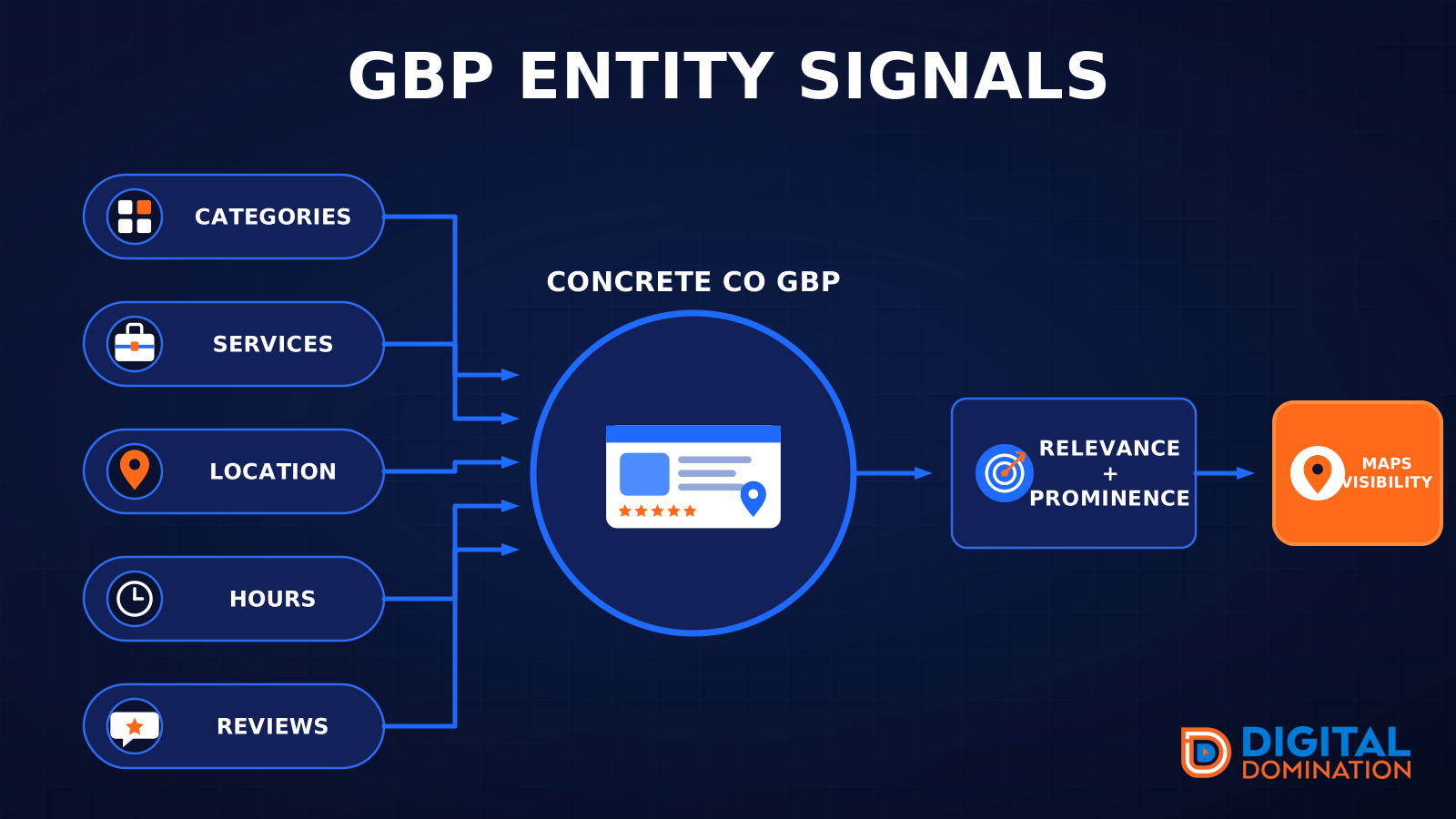
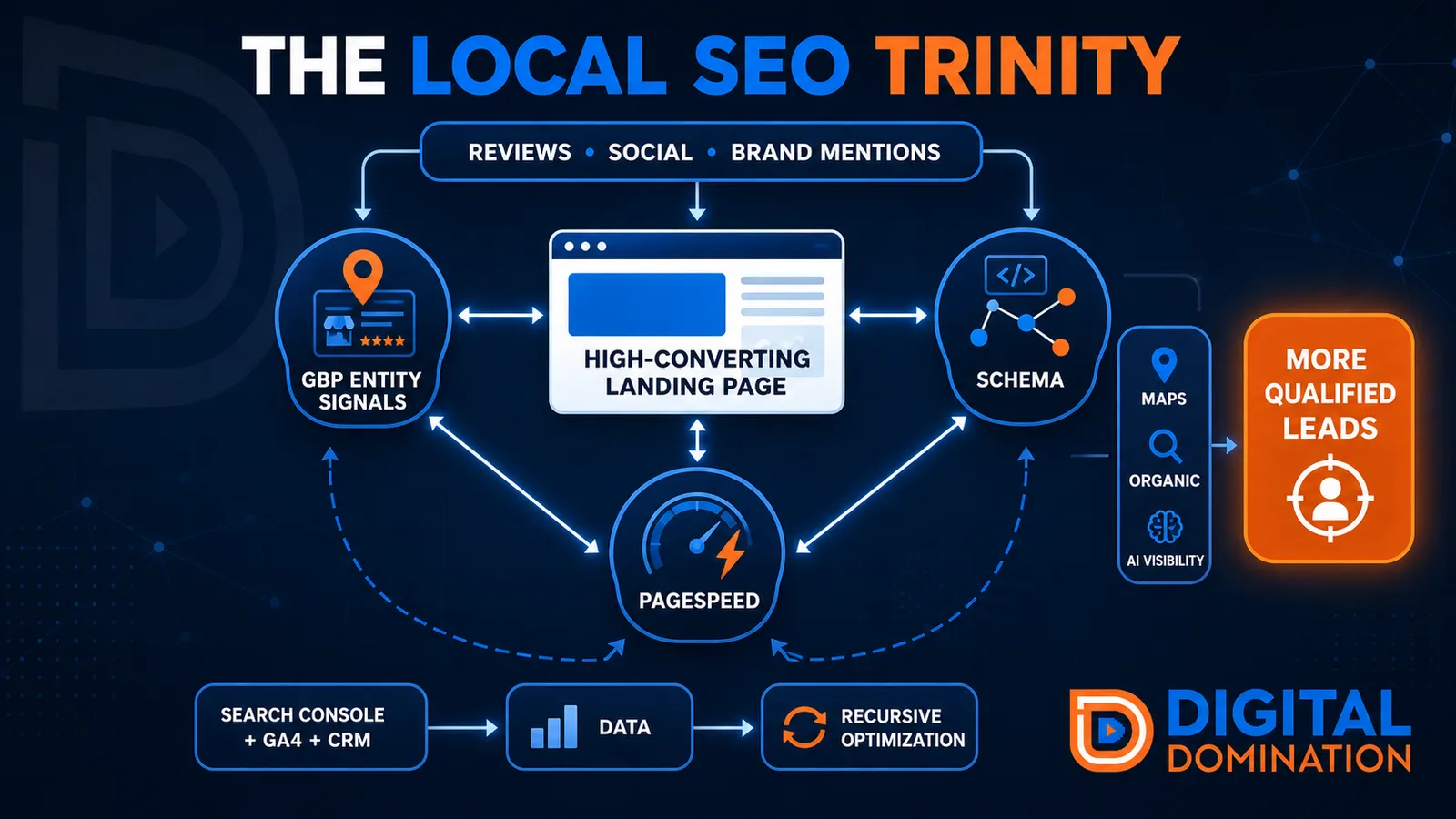
Google Business Profile entity signals are the forms: they define the edges of the business, what kind of contractor it is, which pours it does and where the trucks go. Schema is the rebar: invisible once the slab is finished, but it ties the company, the license, the estimator, each service and each city into one piece that behaves as one entity. PageSpeed is the finish: the only part the homeowner touches, and the part that decides whether she calls. Google describes local ranking as relevance, distance and prominence. You cannot move her house, so the work lives in the other two, plus conversion and the loop that improves all of it:
- ▸Relevance: the profile, the service pages and the reviews all say driveway, patio, pool deck, slab or foundation in the words a homeowner types.
- ▸Prominence: reviews that keep arriving, a license and bond anyone can verify, photos of finished pours, and mentions on Nextdoor, Reddit and the pool builder's referral list.
- ▸Conversion: a first screen that loads fast, shows a finished slab, a license number and a price basis, and puts the estimate button under the thumb.
- ▸The loop: Search Console shows what people searched, GA4 shows what they did, the bid sheet shows what got poured, and the next fix follows.
Concrete contractor is the category; the services list is where Google learns what you pour
Most concrete profiles fail before anyone looks at a photo. The primary category should be Concrete contractor for a flatwork company; use Foundation as the primary only when structural repair is the core business, and add Paving contractor, Masonry contractor or Excavating contractor only for work you actually sell. The category tells Google what you are. The services list tells Google what you pour, and most contractors leave it empty. Every service you add should exist as a page with the same name, so the profile, the page and the reviews share one vocabulary. Then finish the profile with the same discipline:
- ▸Services named the way homeowners search: driveway replacement, stamped concrete patio, RV pad, pool deck, cool deck resurfacing, sidewalk repair, garage slab, stem walls and footings, concrete removal, foundation crack repair, slab leveling.
- ▸Service area, not a pin: most concrete companies run from a yard or a house, so set a service-area business, hide the address if customers never visit, list the cities you will actually send a pump truck to, and set real office hours rather than a 24-hour flag nobody answers.
- ▸Photos in a rhythm: a wide shot after cure, an edge and joint detail, one forms-and-rebar shot so the buyer sees what is under the slab, and a before-and-after pair on every tear-out, captioned with pour type and neighborhood.
- ▸A per-city service page as the profile's website link, with UTM parameters, so a Henderson search lands on the Henderson page and reports as its own line in GA4.
License, bond, mix design and the slab the homeowner sees before she calls
A concrete buyer is about to hand a stranger a deposit for work that cannot be undone, so the first screen has to answer two questions: is this company allowed to do this, and does the finished work look like what I want. The first answer is your state contractors board license number and classification (in Nevada, the State Contractors Board and the C-5 concrete classification; in California, the C-8), the license monetary limit where your state publishes one, your bond, and your liability and workers compensation coverage. Put the number on the page and link it to the board's lookup. Where concrete is not licensed at the state level, the county registration and the insurance certificate carry that weight.
The second answer is a real photo of your own finished pour. Under it, an authority strip. This is an example with placeholder figures only: Licensed C-5 contractor, 4,000 PSI mix standard, 18 years pouring in the valley, 4.9 stars from 180 reviews, two-year workmanship warranty. The proof behind it lives farther down the page:
- ▸Your standard mix and reinforcement: PSI rating, fiber or rebar, bar size and spacing, and slab thickness for driveways versus RV pads. Buyers who watched a neighbor's slab crack read this line.
- ▸The named ready-mix supplier and the decorative systems you install, such as Brickform, Butterfield Color or Sika Scofield, because brand names corroborate.
- ▸ACI flatwork finisher or technician certification for anyone on the crew who holds it, with the year.
- ▸The warranty in plain words, including the honest note that concrete cracks at control joints by design.
- ▸Owner and estimator bios with a photo, years in the trade and the pours each one runs, plus real memberships: the American Society of Concrete Contractors, the home builders association, the BBB.

Reviews that name the pour, the street and the cleanup
A concrete company will never see a plumber's review volume. A crew finishes maybe six to ten jobs a month, so velocity has to come from nearly every one, and the ask has to land at the final walkthrough, after the forms come off and the homeowner can stand on the slab, not three weeks later when the invoice is paid. Text the link from the driveway while the finish is the best thing on the street. A profile earning a handful of reviews every month reads as busy. One with 200 reviews and nothing since last summer reads as a company that may have stopped pouring.
What the review says matters as much as the star. The strongest concrete reviews name the pour type, the neighborhood, whether the crew showed up on the day promised, whether the stucco and the neighbor's driveway stayed clean, and how the estimator explained control joints and curing. That language matches what the next buyer types, and it pre-answers the trade's biggest complaint before it becomes a one-star review about a hairline crack. Reply to every review naming the service and the area, show the aggregate above the fold, and add the platforms buyers cross-check: Google first, then Yelp, Nextdoor, Angi, Houzz and the BBB.

The rebar layer: HomeAndConstructionBusiness schema that ties company, license and every pour together
Schema is JSON-LD that labels what is already visible on the page so search engines and AI systems stop guessing. Without it, Google sees a company name, a license number, a list of pours and some prices. With it, Google understands that the company is a HomeAndConstructionBusiness, that the license number identifies that company and was issued by a named board, that a named estimator works for it, that a stamped concrete patio is a Service offered at a stated price per square foot, and that the service is available in specific cities. Most concrete sites we audit at Digital Domination have no schema at all, or a default LocalBusiness block from a page builder that models none of those relationships. The structure that works, node by node:
- ▸The company: HomeAndConstructionBusiness with name, telephone, priceRange, openingHoursSpecification, a service-area designation if you hide the address, and a permanent @id such as yourdomain.com/#business that every other page points back to.
- ▸The license: hasCredential pointing to an EducationalOccupationalCredential, the number as a PropertyValue under identifier, the board as recognizedBy and the classification in the credential name.
- ▸Owner, estimator and foreman: Person nodes with worksFor pointing at the business @id, jobTitle, image and knowsAbout for the pours each one runs.
- ▸Each pour type: a Service node (driveway, patio, pool deck, RV pad, sidewalk, slab foundation, footings, removal, crack repair, leveling) with serviceType, a description matching the page and its own @id.
- ▸Pricing: an Offer on each Service carrying a UnitPriceSpecification with the starting price per square foot, the currency, the thickness it assumes and any minimum job note.
- ▸Service area and corroboration: areaServed on the business and on each Service as City or Place entries rather than a radius, and sameAs to the state board record, the Google Business Profile, Yelp, Houzz, Angi, Nextdoor, the BBB and social profiles.
- ▸Proof and navigation: ImageObject for project photos captioned with pour type and city, Review and AggregateRating drawn only from reviews shown on the page, FAQPage on the curing and cracking questions, and BreadcrumbList on every city and service page.
PageSpeed: the drone footage of the pour is costing you the estimate
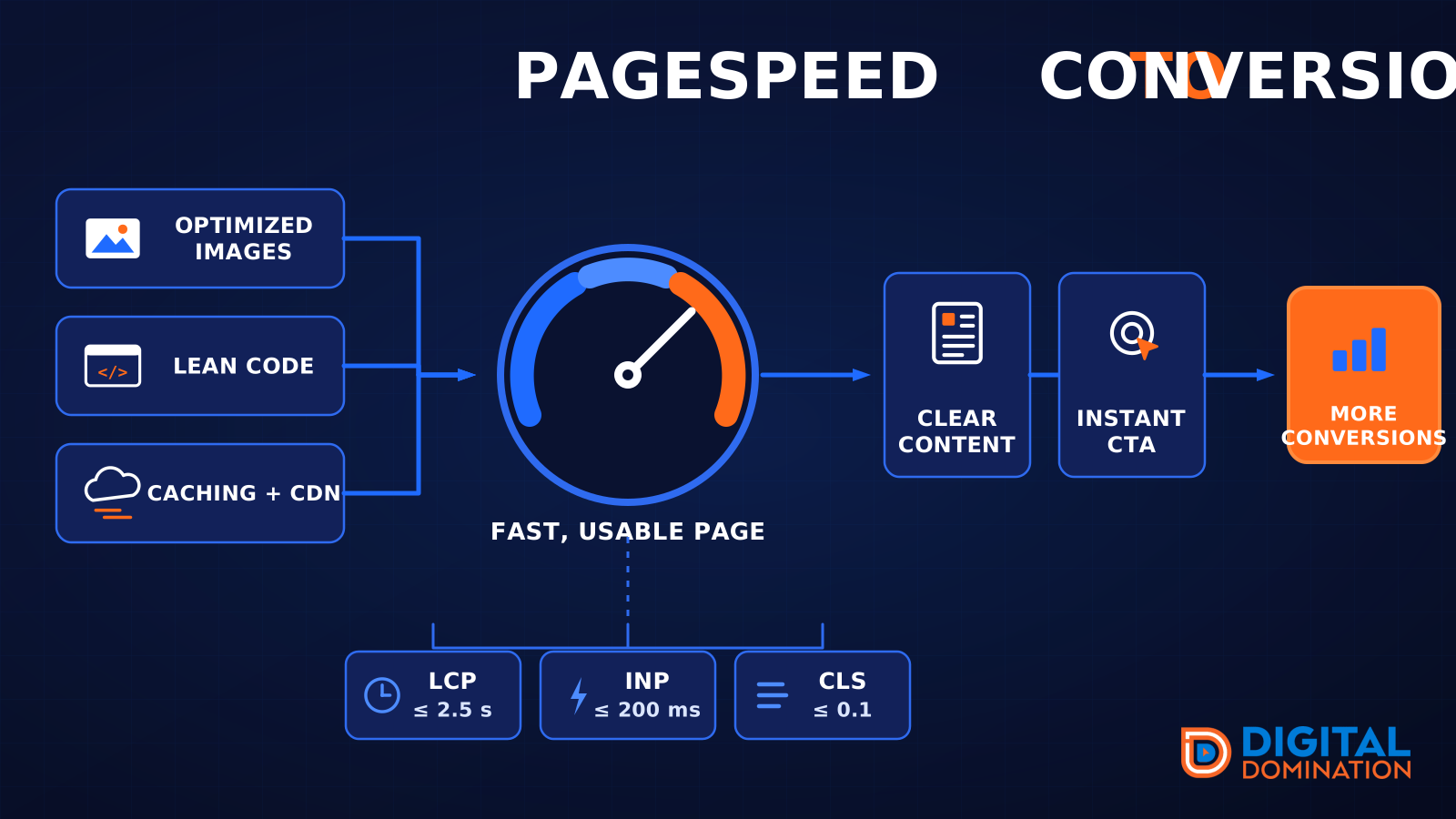
A homeowner standing on a cracked driveway has a phone, one bar of signal and no patience. Concrete sites are slow in a specific way: an autoplay pour video in the hero, sixty gallery photos uploaded straight from the foreman's phone at four to six megabytes each, an Instagram feed widget, and a page builder theme loading every script it owns. Google's good thresholds for Core Web Vitals are a Largest Contentful Paint of 2.5 seconds or less, an Interaction to Next Paint of 200 milliseconds or less and a Cumulative Layout Shift of 0.1 or less, measured at the 75th percentile of real field data, not on office Wi-Fi. At Digital Domination we build to a PageSpeed Insights performance score of 90 or higher and a 2/2 on the agentic browsing check, because the AI agents now shopping contractors for people quit a slow page even faster than she does. The fixes that move a concrete site most:
- ▸Replace the autoplay hero video with a preloaded WebP still of your best finished pour, and offer the clip as click-to-play below it.
- ▸Convert every gallery image to WebP or AVIF at responsive sizes, lazy-load everything below the first row, and never lazy-load the hero image itself.
- ▸Drop the social feed widget for three embedded photos and a link, make the map click-to-load, and defer chat, heatmap and tag manager scripts until the page is usable.
- ▸Reserve fixed dimensions for the estimate form, the review badge and the sticky call bar so nothing jumps while a thumb is over the phone number, then self-host the fonts, enable compression and caching, and fix a slow shared host.
Per-square-foot pricing that AI Overviews can repeat without guessing
AI Overviews, ChatGPT and Gemini answer "how much does a concrete driveway cost" all day, using whatever crawlable pricing they can find. Concrete already has a pricing model homeowners understand: a price per square foot by finish, plus tear-out, plus the variables that move it. A contractor who publishes that basis gets quoted. One who hides it behind a form gets described by a national average. Typing a dollar into the profile is not a ranking trick; the advantage is clear, repeatable language a machine can attribute to you, on each service page, in the GBP services and in the Offer schema above. What a concrete company can honestly publish:
- ▸A starting price per square foot for a broom-finish pour at a stated thickness, with tear-out and haul-off priced separately.
- ▸The upcharge basis for stamped, exposed aggregate, colored and cool deck finishes, as a per-square-foot range.
- ▸A minimum job size or charge, and the variables that move the number: six-inch thickness for RV pads, rebar versus fiber, grading and drainage, pump truck access, saw cutting, permit fees.
- ▸Foundation and structural work quoted after an inspection, with the inspection fee stated as free or flat, and payment terms spelled out: deposit, progress payment at the pour, balance at walkthrough.
Content that follows the buyer from "how thick should a driveway be" to the final walkthrough
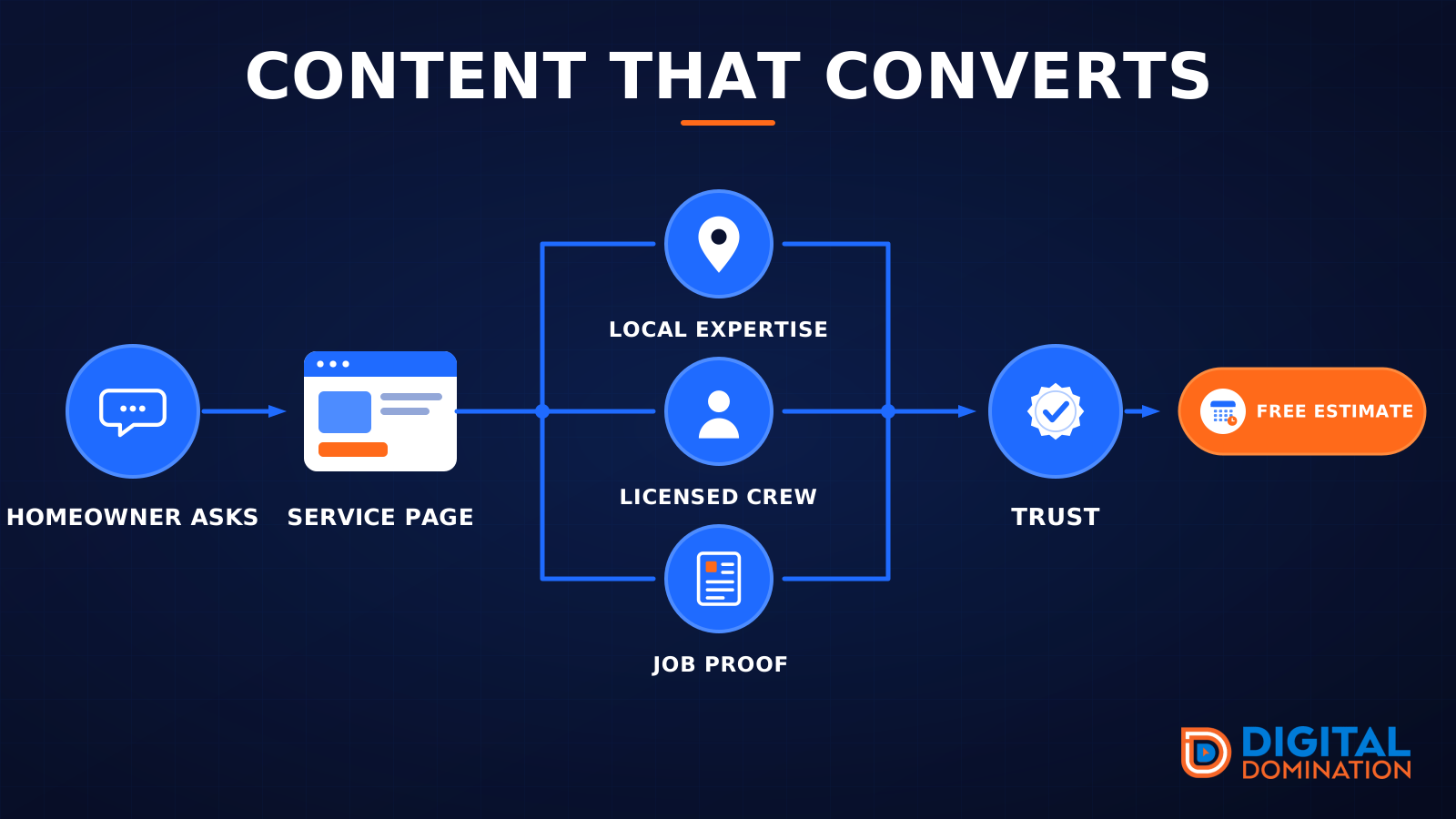
A homeowner researches concrete for weeks before requesting an estimate, and every question in that stretch is a page you can own. Each service page should carry direct answers under headings a machine can lift: how thick a driveway or RV pad should be and why, rebar versus fiber mesh, when they can walk on it and when they can park on it, why concrete cracks and where control joints go, what happens on a rain day or a 110-degree day, whether sealing is worth it, how long the job takes from tear-out to cure, and which permits and HOA approvals a driveway extension needs in each city you serve. Local soil, freeze-thaw or heat, and each jurisdiction's right-of-way rules are the content nobody copying a national article can write.
Name the author. The owner or lead estimator with a photo, a bio and a license number is a stronger author than a marketing department, for the reader and for the systems that weigh expertise. Add published and updated dates, captioned photos from the actual pour, a time-lapse with a transcript, a short glossary (slump, PSI, control joint, cold joint, spalling) and internal links from every pour type to the city pages that offer it.
From impression to poured yard: Search Console, GA4 and the bid sheet
Search Console and GA4 rank nothing. They turn the site from a brochure into a system that learns. Search Console shows which queries produce impressions for each city and pour type, where the page ranks, how often it is clicked and whether the schema has errors. GA4 shows what the visitor did: which page produced the tap on the phone number, which estimate form was started and abandoned, whether the gallery converts or just gets browsed. Your bid sheet, whether that is Jobber, JobNimbus, Houzz Pro or a spreadsheet, closes the loop by recording which estimates became site visits, which bids were signed and which pours happened. Read the three together every month:
- ▸Impressions but few clicks for stamped concrete patio plus a city: rewrite the title, the first screen and the price basis on that page, add photos of that finish in that city, and check that the profile says the same thing.
- ▸Clicks but few calls: the page is slow, the proof is buried, the price basis is missing, or the estimate button sits below the fold on a phone.
- ▸Calls but few signed bids: you rank for work you do not want, the minimum is unstated, or the estimator is booking too far out.
- ▸Signed bids clustering in one neighborhood or one pour type: build the city page and service page that demand is asking for, then aim a GBP post and a time-lapse at it.
Time-lapse pours, Nextdoor recommendations and the pool builder who refers you
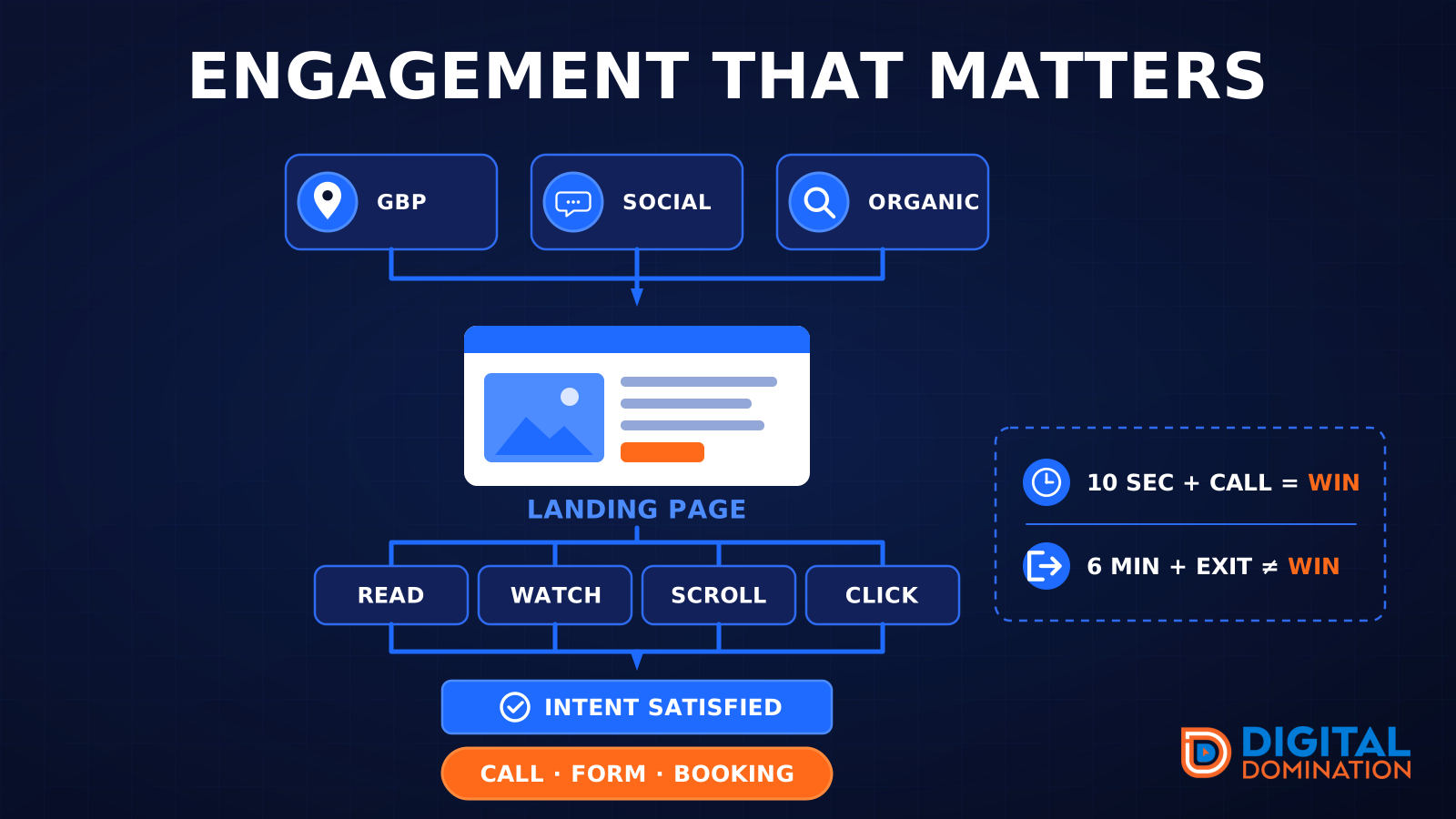
Concrete produces the most watchable content in home services, and most contractors never post it. A ninety-second time-lapse of tear-out, forms, pour and finish, posted to the Google Business Profile, Facebook, Instagram, YouTube and TikTok with the pour type and city in the caption, corroborates the service and the area, pulls branded searches and gives the estimator something to send with the bid. Google now reports supported social and video platform properties in Search Console, which says how far those clips and search discovery have merged. The mention that matters most, though, is one you do not write: a Nextdoor thread where a neighbor says a named company replaced her driveway in a named subdivision, showed up on the day and left the street clean. That sentence connects brand, service, place and experience without a link. Pool builders, landscaping companies, general contractors and realtors who list you on their sites do the same work.
On Reddit, stay measured. Axios reported in August 2026 that Reddit's share of visible ChatGPT Search citations fell roughly 86 percent, and OpenAI still holds a Reddit data partnership. Fewer visible citations does not mean the r/Concrete thread where you explained why a slab cracked stopped teaching anyone what you know. It means no single platform should carry your mentions, so answer questions where homeowners ask them and keep the footprint spread across owned pages, the profile, review sites, video and community threads.
Ninety days, timed to land before the pouring season fills the calendar
Concrete is seasonal everywhere: freeze-thaw markets stop pouring in late fall, and hot markets shift to dawn pours and lose weeks to monsoon rain. This plan is built so the profile, the pages and the schema are finished before the season the phone rings, and it splits flatwork and structural into separate silos from week one because they are different buyers typing different words. The four phases:
- ▸Days 1-14, baseline: run a GeoGrid scan for driveway, patio, pool deck and foundation repair across the market; audit every profile field and photo; pull Search Console, GA4 and twelve months of bids; record license, bond, insurance and certifications; test Core Web Vitals on the home page, a service page and a city page; export whatever schema exists.
- ▸Days 15-30, the pour: fix the primary category and services, set the service area, write the first screen with license and price basis, publish the flatwork and structural service pages with their own Offers, deploy the schema graph with permanent @ids, replace the hero video, compress the gallery, and wire GA4 call and form events to the bid sheet.
- ▸Days 31-60, relevance and proof: publish the city pages and the thickness, cracking, curing and permit content; start the walkthrough review ask on every job; post one time-lapse a week; build sameAs targets on the board record, Yelp, Houzz, Angi, Nextdoor and the BBB; ask three referral partners to list you.
- ▸Days 61-90, the loop: find impressions without clicks and clicks without calls, rewrite the weakest first screens, expand the pour types the bid sheet says are selling, recheck Core Web Vitals and the agentic check, rerun the GeoGrid scan and compare it with day one.
The same concrete company in every place Google looks
None of this is about optimizing a profile, a website or an Instagram account on its own. It is one clearly defined company, with one license, one set of pours, one service area, one price basis and one reputation, described the same way on the Google Business Profile, the website, the schema, the review sites, the social clips and the Nextdoor threads, then made more relevant and more prominent every month by what Search Console, GA4 and the bid sheet report. At Digital Domination that system stands behind our promise to concrete contractors: top 3 in the Google Map Pack in 12 weeks or you do not pay.
Start with the truth about where you rank today. The free GeoGrid scan checks 169 points across your market and shows, block by block, where a homeowner holding an HOA letter finds you and where she finds someone else. Run it at /scan/ and read the map before you touch anything.
Keep reading
Related guides
- ▸Google AI Mode citations vanished
- ▸Google AI Mode alerts change local search visibility
- ▸Google AI Overviews Local Buying Searches
Put it into action
Frequently Asked Questions
What Google Business Profile primary category should a concrete contractor use?
Concrete contractor for a company that mostly pours flatwork: driveways, patios, pool decks, slabs and sidewalks. If structural repair is the core business, Foundation can be the primary with Concrete contractor as a secondary. Add Paving, Masonry or Excavating contractor only for work you sell, because a category you cannot back with services, pages and reviews dilutes the entity.
Should a concrete contractor publish prices per square foot?
Yes: a starting price per square foot for a broom finish at a stated thickness, tear-out priced separately, and the variables that move it listed alongside. AI answers and homeowners both use whatever pricing they can find, so an honest published basis gets quoted while a hidden one gets replaced by a national average. Foundation repair is the exception: say it is quoted after an inspection and what the inspection costs.
Why does a concrete website need to be fast when most jobs are planned weeks ahead?
Because the shortlist is built on a phone in the first few minutes, even when the pour is a month away. A homeowner comparing three profiles opens each site once, and an autoplay video or a sixty-photo gallery that takes eight seconds to render loses that one opening. Core Web Vitals are also measured from real visitors at the 75th percentile, so a site that feels fine on office Wi-Fi can still fail in the field.
What schema type should a concrete contractor use?
HomeAndConstructionBusiness as the main entity, with a permanent @id that every page references. Under it, a Service node per pour type, an Offer with a UnitPriceSpecification for the per-square-foot basis, Person nodes for the owner and estimators, hasCredential for the contractor license, areaServed for the cities you pour in, and sameAs to the state board record and your profiles. A default LocalBusiness block from a page builder models none of those relationships.
How do I get reviews when my crew only finishes a handful of jobs a month?
Ask at the final walkthrough, by text, while the homeowner is standing on the new slab. That moment produces the highest response rate in the trade and the most detailed language, because the finish is right in front of them. Prompt for the pour type and the neighborhood, reply naming both, and keep the cadence steady rather than collecting twenty reviews in one push and none for six months.
Should I hide my address if I run the company from my house or a yard?
Yes, if customers never visit. Set the profile as a service-area business, hide the address and list the cities you will actually send a crew and a pump truck to. A hidden pin at a residence is far safer than a visible one that gets flagged, and Google ranks a service-area business across the area it declares. Mirror the same cities on your city pages and in the areaServed schema.
Do driveways, patios, pool decks and foundation repair need separate pages?
Yes, because they are different searches from different buyers. A driveway shopper compares finishes and price per square foot over several weeks, while a homeowner who just found a stair-step crack wants credentials and an inspection today. One thin services page that mentions everything ranks for nothing; a page per pour type, with its own photos, price basis, FAQ and Service schema, gives Google and the buyer a clean match.
Ready to dominate your map?
Top 3 in the Google Map Pack in 12 weeks, or you don't pay.