
Gym local SEO: how GBP entity signals, schema and PageSpeed fill the floor at 6 am
A gym gets judged from a phone in a parking lot before anyone walks through the door. Here is how to make Google, AI search and the person holding that phone all see the same gym.

7:20 am in a hospital parking lot
A nurse comes off a twelve-hour night shift, three weeks into a new city and too wired to sleep. From her car she types '24 hour gym near me' and the Map Pack shows three results.
The first lists hours of 5 am to 10 pm, even though the club has had keyfob access around the clock for two years. The second has photos unchanged since the grand opening. The third shows 'Open 24 hours', a locker room shower photo dated last week, a monthly price on its services list and a tour button that loads before she finishes reading. She taps the third one.
The first gym had the bigger floor and the better coaches. It lost her because its profile never said the two things she needed: open now, and showers. Google and the AI systems that answer 'best gym for early mornings near me' make the same judgment at scale, on relevance, distance and prominence. Distance you cannot move. The other two you can.
The short version for a gym owner
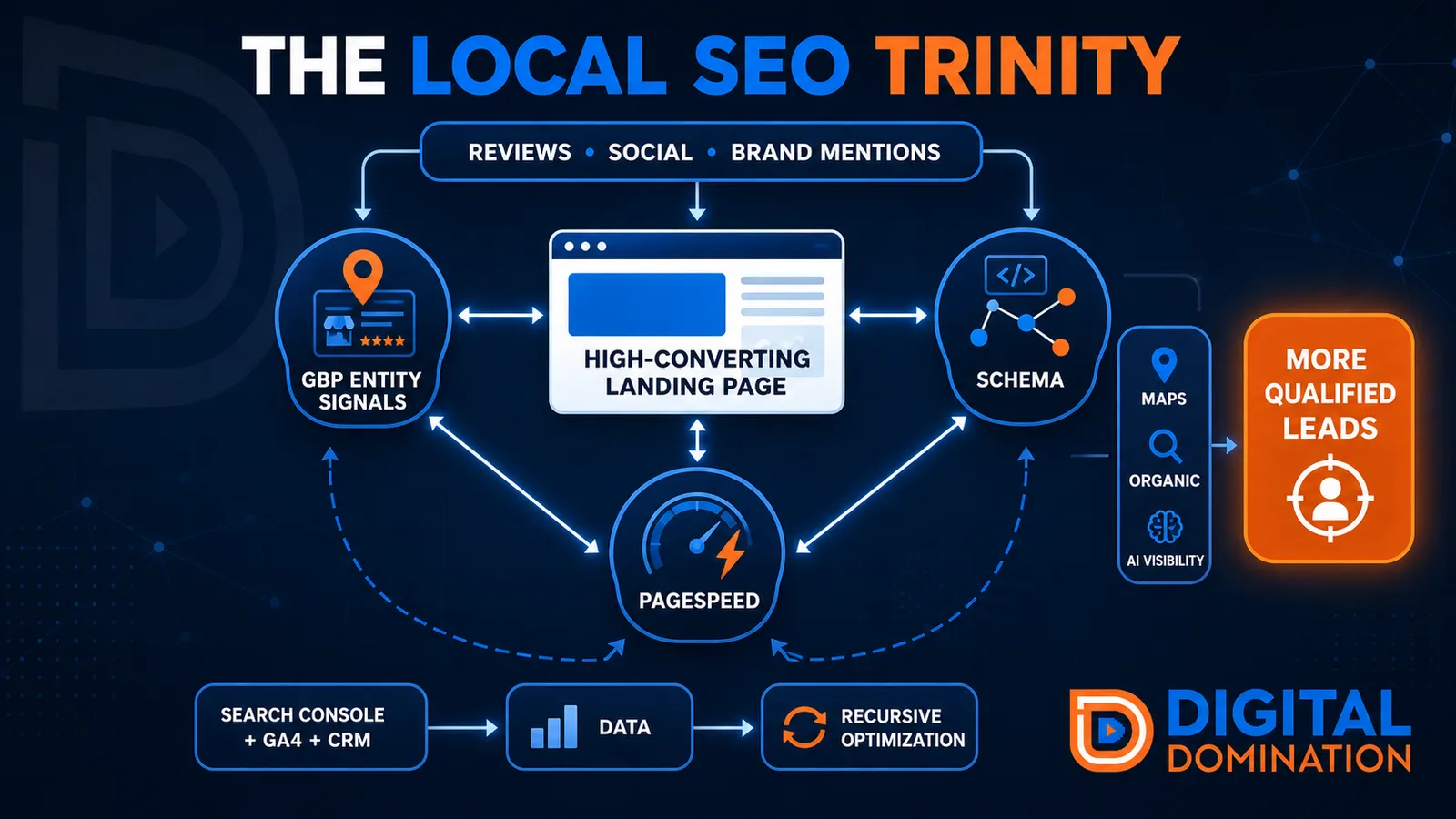
Google has to understand what kind of gym you are. A prospect has to believe it before booking a tour. The site has to make joining easy on a phone. At Digital Domination we build that on three pillars:
- ▸Google Business Profile entity signals: category, services, amenities, hours, photos and one landing page per club.
- ▸Schema: an ExerciseGym entity graph connecting the club, its locations, coaches, programs and membership offers.
- ▸PageSpeed: the schedule, the price and the tour button usable on a phone within a couple of seconds.
- ▸Around them: proof, review velocity, honest pricing and brand mentions, with Search Console, GA4 and your membership software closing the loop.
Google Business Profile: tell Google what kind of gym you actually are
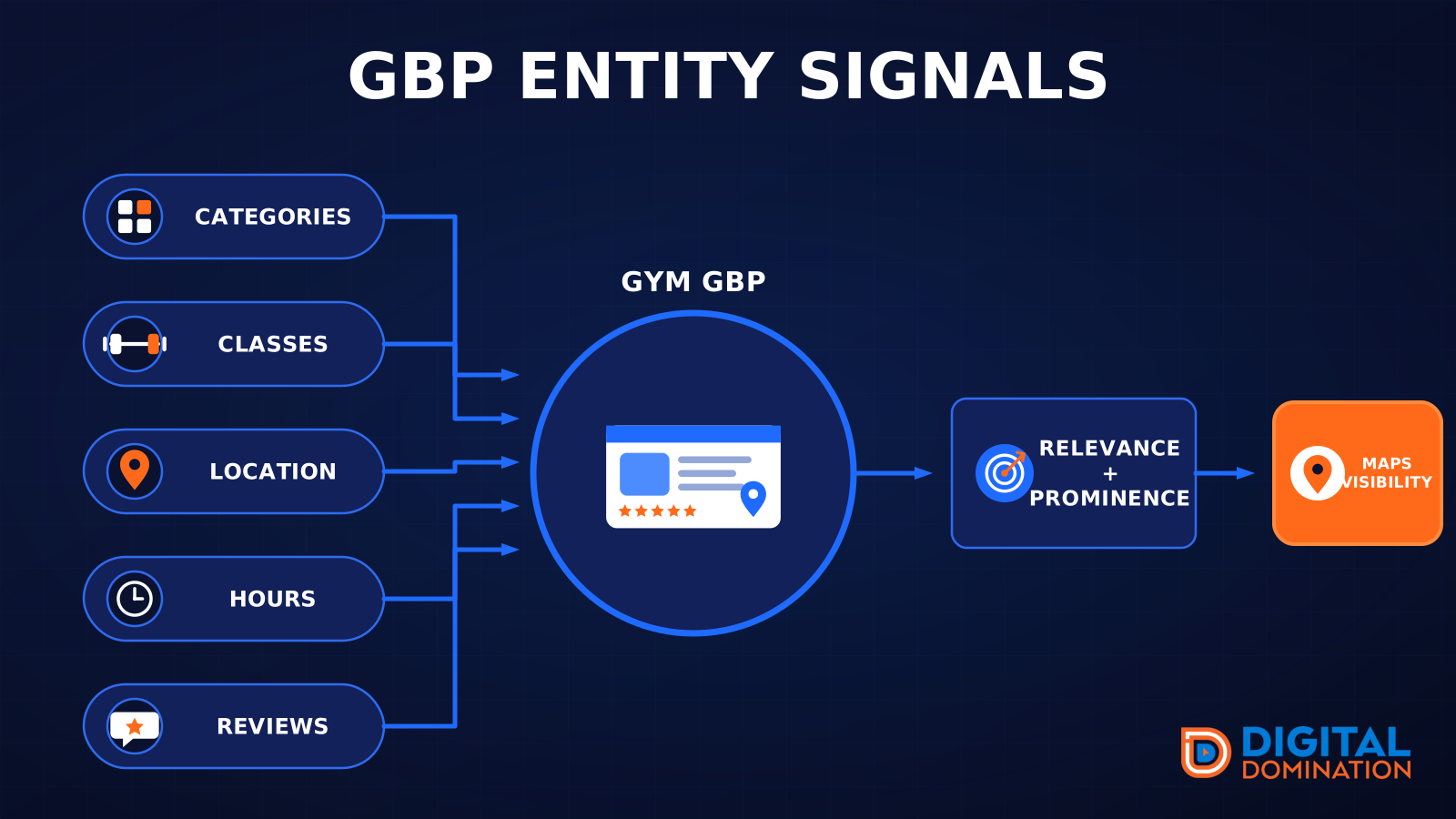
Gym, Fitness center, Health club, Personal trainer, Boxing gym, Pilates studio, Yoga studio: Google treats these as different businesses because searchers mean different things by them. A powerlifting gym filed under Fitness center keeps losing 'powerlifting gym near me' to a smaller club that chose Gym and listed Olympic lifting as a service. Pick the primary category for the search you most want to win, then add secondaries for other real lines of business.
Services are your vocabulary and should match the website word for word: personal training, small group training, HIIT classes, open gym, day pass, free trial. If members have keyfob access all night, set Open 24 hours and explain staffed hours on the site. Then work the profile as a checklist:
- ▸Primary category matched to your best-fit search, secondaries only for programs you genuinely run.
- ▸Every profile service mirrored on a website page with the same name.
- ▸Photos dated within 60 days: the floor at 6 am and at 6 pm so people can judge the crowd, plus showers, parking and childcare room.
- ▸Attributes for showers, sauna, childcare, wheelchair access and free parking where true.
- ▸One landing page per club as the website link, with UTM parameters so each club's calls and tours show separately in GA4, carrying address, access hours, amenities, coaches, class formats and neighborhoods served.
What a prospect checks before booking a tour
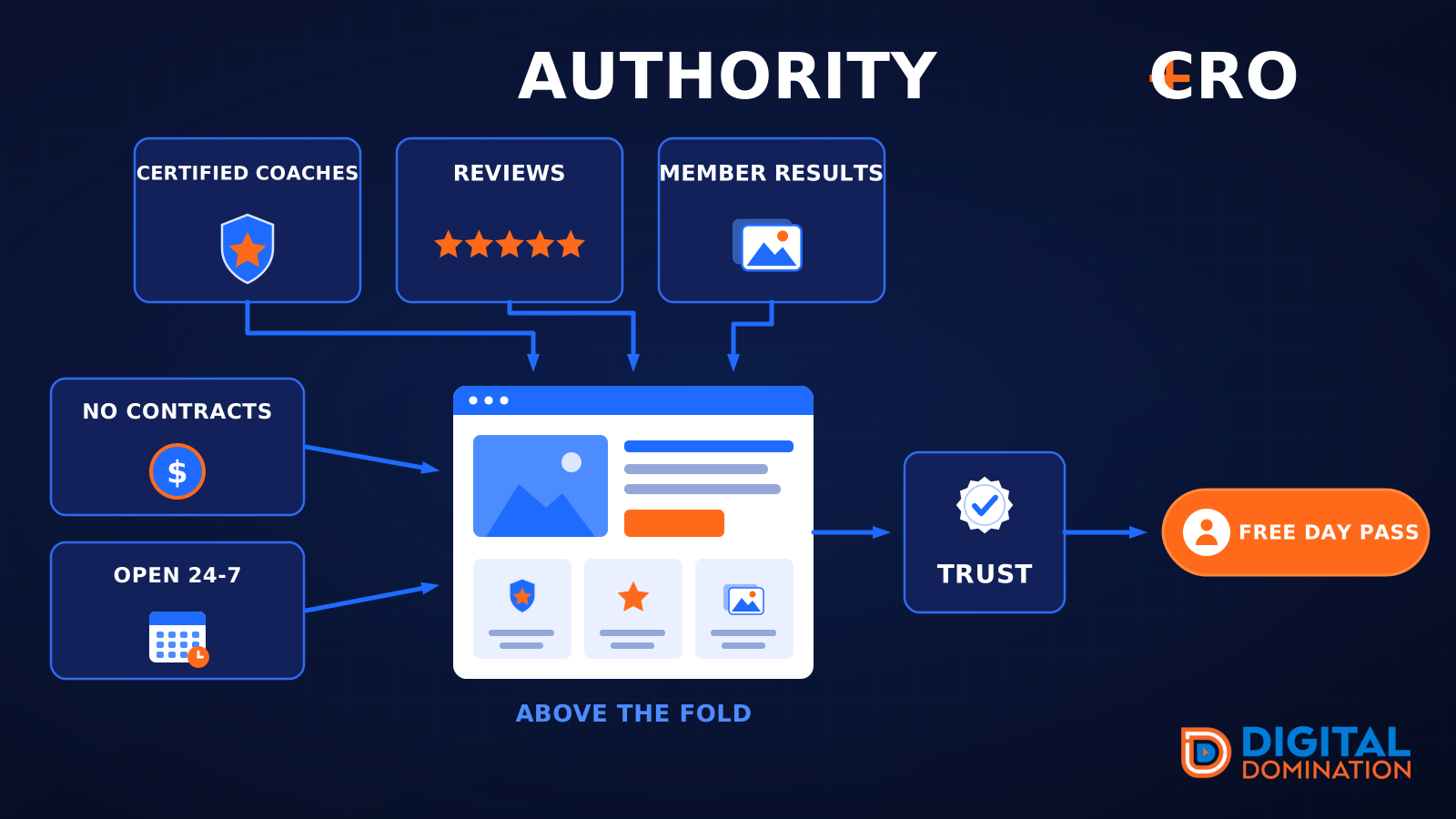
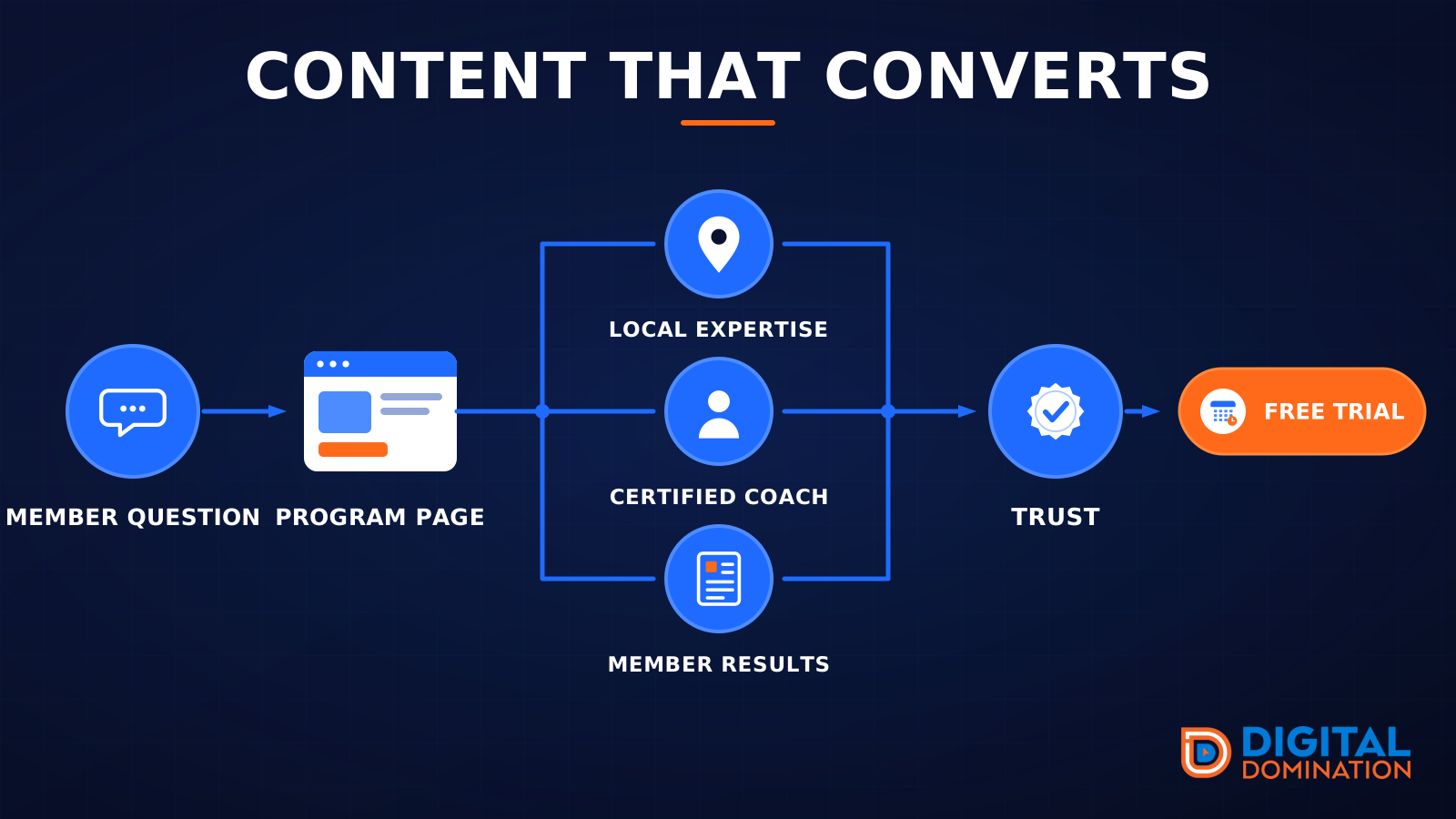
People do not join a gym the way they call a plumber. They are worried about being judged, locked into a contract and sold to at the desk. The first screen has to disarm those fears with proof that is specific and checkable: coach certifications from NASM, ACE, NSCA or ISSA with current CPR and AED cards, years open at this address, equipment brands people recognize such as Rogue or Hammer Strength, and licensed programs like Les Mills if you run them.
Every public-facing coach also needs a page, not a spot in a headshot grid: photo, certifications with the issuing body, specialties and home club. Those pages feed the schema and give reviews a name to attach to. 'Marcus fixed my squat in three sessions' only gets written if Marcus has a name on the site. Above the fold:
- ▸Gym type and city in the headline, so someone who searched 'strength gym in Henderson' sees those words immediately.
- ▸A real photo of the floor during a normal session, never stock.
- ▸Google rating and review count, no-contract language if that is your model, and a trial or tour offer with its price and a button that books it.
- ▸An example authority strip, placeholder figures only: Open since 2014 | 4.8 stars on Google | NASM and NSCA certified coaches | 24-hour keyfob access | No contracts | Free 3-day trial.
Reviews that mention the 6 am crowd, the showers and the cancellation
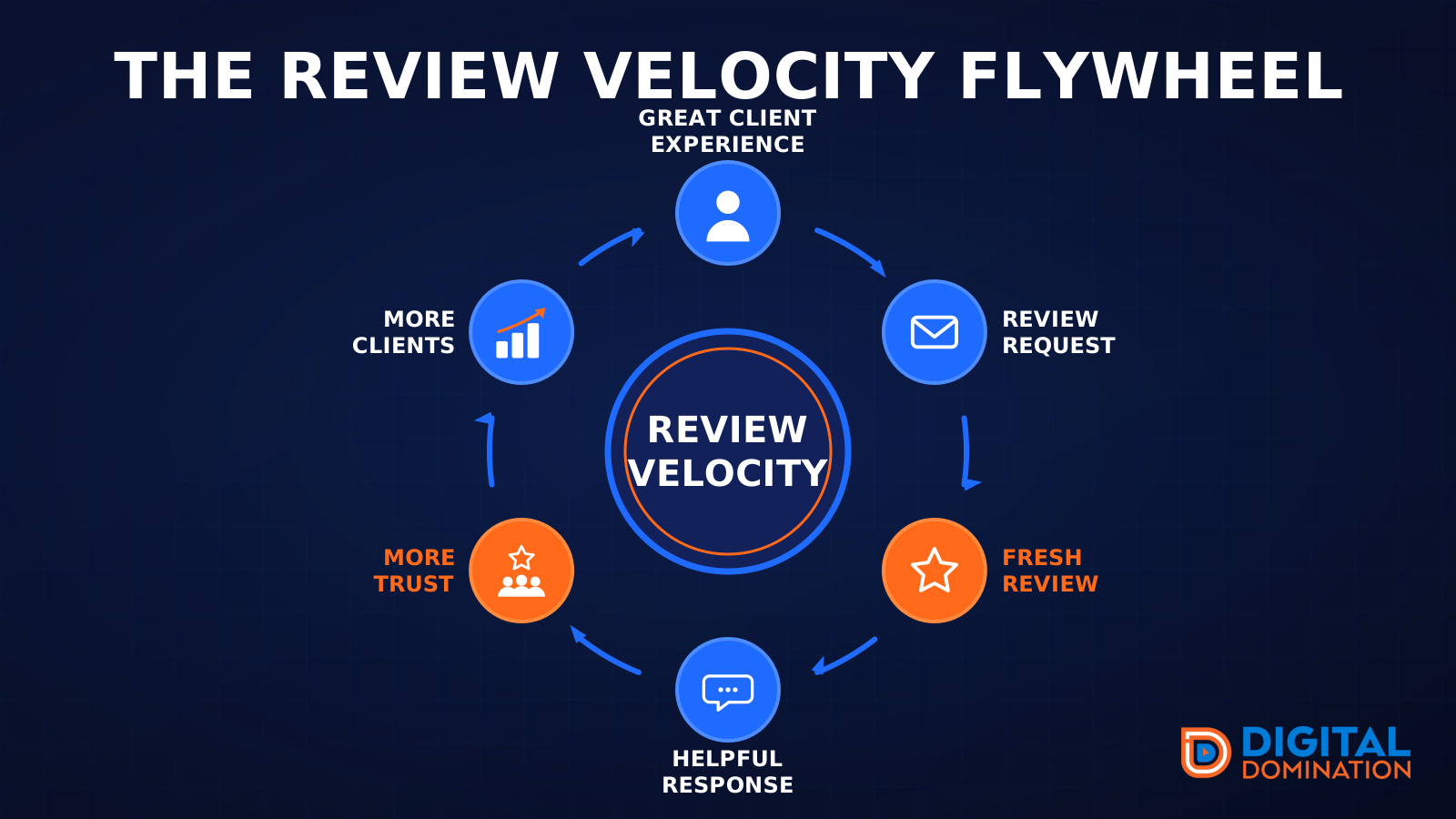
Gym reviews have a pattern other local businesses do not: negatives cluster around billing and cancellation, positives around cleanliness, crowd levels, staff who learn your name and a specific coach or class. Velocity matters more than a big old number; hundreds of reviews with nothing new since spring looks less alive than a few every week.
Ask at moments members are proud of, not at the sales desk: thirty days in, after a first pull-up, after a challenge finish. Never trade a free month for a review. Answer billing complaints publicly with the actual policy, because the next prospect is reading them for exactly that. A healthy profile shows:
- ▸New Google reviews every week with a rating that holds above the local average.
- ▸Reviews that name a coach, a class format, the time of day and how clean it was.
- ▸Owner responses within days, and ratings from Yelp, ClassPass and Mindbody summarized on the site.
Schema for a gym, and why the type is ExerciseGym
Schema is JSON-LD that labels what a page already shows so a machine can read it without guessing: Example Strength is an ExerciseGym, its Summerlin club is a location of it, Marcus is a Person with an NSCA credential who works there, small group training is a Service offered there for a monthly price. It must match the visible page; claiming amenities you do not have is worse than no schema.
Most gym sites we audit have nothing or a plugin's default LocalBusiness stamp on the homepage. The architecture that describes a gym properly:
- ▸The gym: ExerciseGym with a permanent @id such as https://examplegym.com/#gym.
- ▸Each club: a distinct ExerciseGym location node with its own @id, address, geo, telephone and openingHoursSpecification, which is how true 24-hour access is expressed.
- ▸Amenities: amenityFeature entries as LocationFeatureSpecification for showers, sauna, childcare and accessibility.
- ▸Each coach: Person with worksFor pointing at the gym @id, hasCredential as EducationalOccupationalCredential for NASM, ACE, NSCA or ISSA, and knowsAbout for specialties.
- ▸Each program: Service, connected to the gym with makesOffer and to the club and its neighborhoods with areaServed.
- ▸Memberships, day passes and trials: Offer with a PriceSpecification that includes the billing period.
- ▸Recurring classes: Event with a Schedule, only if the published schedule is kept current.
- ▸External profiles: sameAs to Google Maps, Instagram, Facebook, YouTube, ClassPass and Mindbody.
- ▸Pages: WebSite, WebPage, BreadcrumbList and VideoObject, all pointing at the same @id values so five pages describe one gym rather than five copies.
PageSpeed: the schedule has to load on the walk from the car
The typical gym website is one of the heaviest in local business: an autoplay hero video, a class schedule from Mindbody, Glofox, Zen Planner or ABC Fitness in an iframe, an Instagram feed widget, a chat bubble and three pixels. On a phone it takes five to eight seconds to become usable and jumps around while the schedule frame loads. The prospect wanted to know whether the 6 pm class was full. She never finds out.
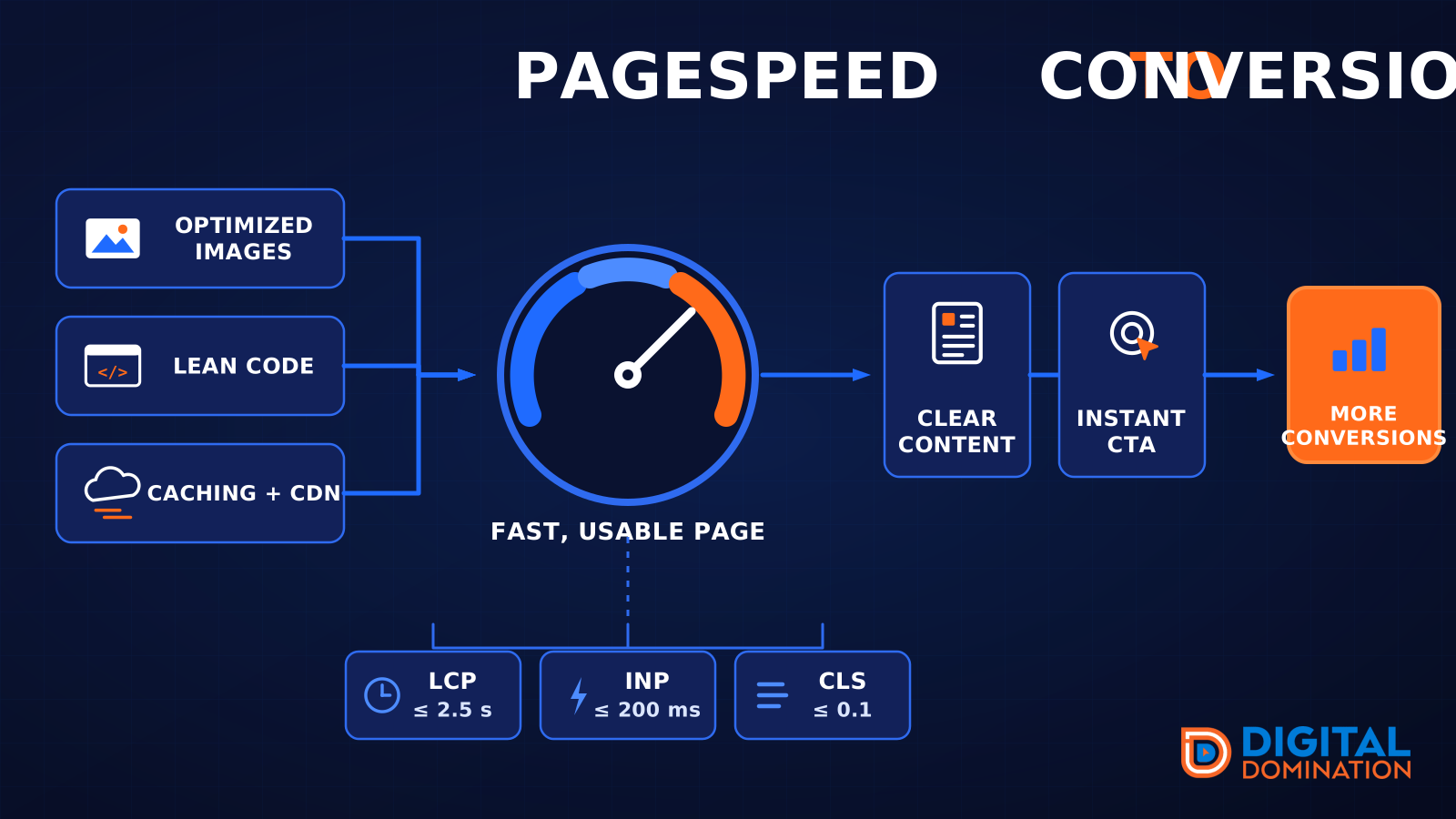
Google's good thresholds for Core Web Vitals are a Largest Contentful Paint of 2.5 seconds or less, an Interaction to Next Paint of 200 milliseconds or less and a Cumulative Layout Shift of 0.1 or less, at the 75th percentile of field data. We target a PageSpeed Insights performance score of 90 or higher and a 2/2 agentic-browsing check, because AI agents that book tours give up on slow pages too. The fixes that move the numbers for a gym:
- ▸Replace the autoplay hero video with a preloaded WebP or AVIF poster and a click-to-play tour video.
- ▸Render the class schedule as HTML, or load the booking widget on click with its height reserved so nothing shifts.
- ▸Swap the live Instagram feed widget for six static images that link to the account.
- ▸Defer chat, heatmaps and ad pixels until the page is interactive, and keep the sticky tour and call buttons as plain HTML.
Monthly dues, enrollment fees and the question AI keeps getting asked
The most common gym question on Google and in ChatGPT is a price question: how much per month, is there a joining fee, is there a contract, how do I cancel. A page that says 'contact us for pricing' cannot be quoted, so the AI Overview quotes the competitor who published a range. Put truthful, crawlable answers on the membership page and the GBP services list, and connect them to the Offer nodes in your schema:
- ▸Monthly dues as a range if tiers vary, or the exact figure per tier if they do not.
- ▸Enrollment fee and any annual fee in plain words, including 'waived this month' when true.
- ▸Contract and cancellation terms: notice period, method and any fee, findable in ten seconds.
- ▸Day pass and drop-in prices, what the free trial includes, and personal training as a per-session range.
Content that follows the member from first search to first PR
A prospect's questions change as they get closer to joining, and each stage is a search: 'gym near me with childcare', then 'is [club] busy at 6 pm', then 'how to cancel [club] membership' before they ever sign, because they check the exit before they enter. Local relevance is not a paragraph about the city; it is naming the neighborhoods members drive from, the parking and the schools whose athletes train there. The content that does this work:
- ▸Program pages for each format: what a session looks like, who it is for, what to wear and which coach leads it.
- ▸A beginner's guide to the club: first visit, tour, trial, and what the desk will and will not ask you to sign.
- ▸A busy-times section, honest about the 5 pm to 7 pm crush and the quiet windows.
- ▸Coach-authored articles, a tour video with a transcript, and internal links between clubs, coaches, programs and pricing.
Search Console, GA4 and the membership software as one loop
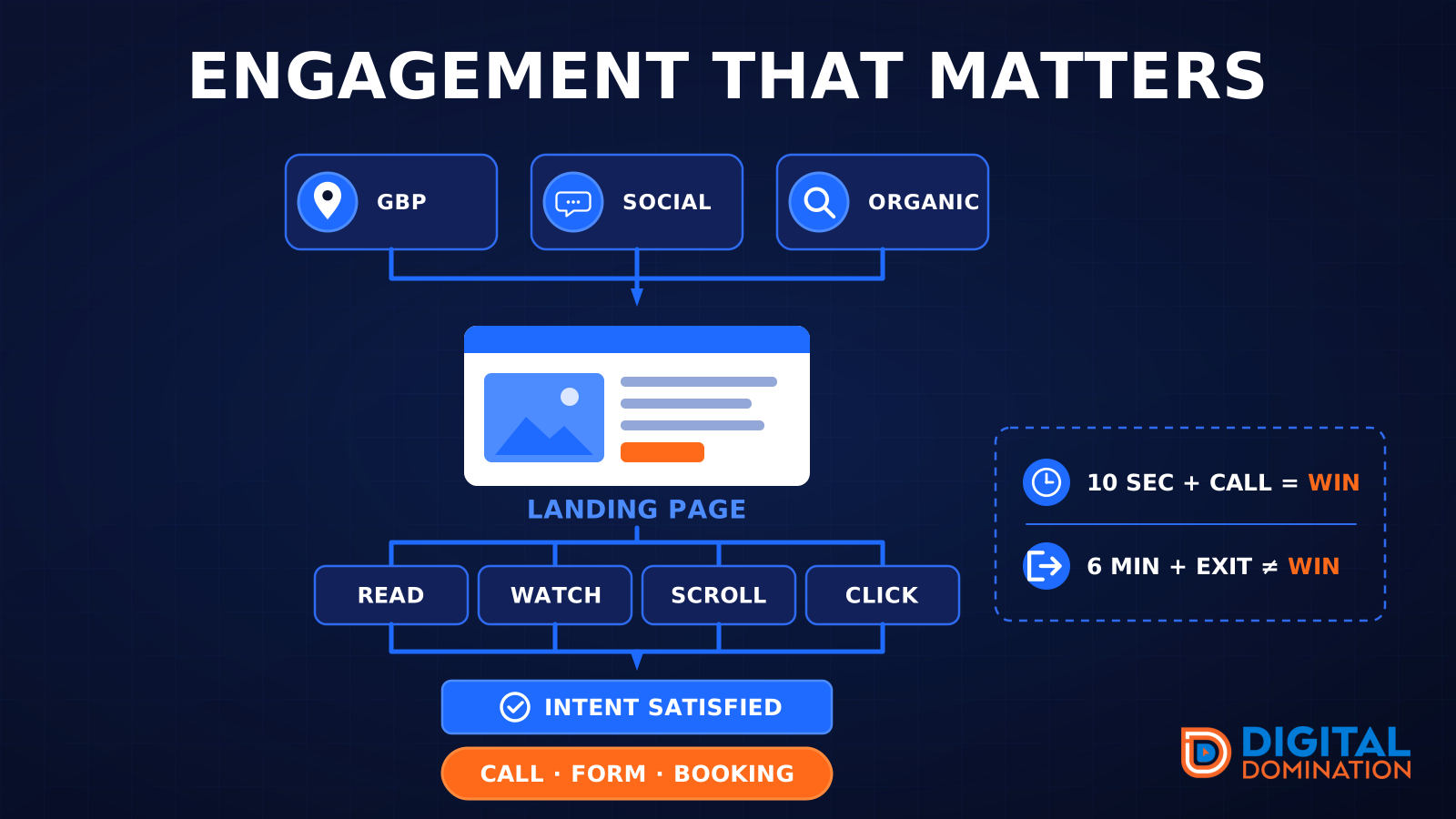
Search Console shows how Google surfaces the gym: which queries earn impressions, which club page shows for '24 hour gym [city]', where click-through is weak and whether Core Web Vitals pass on mobile. GA4 shows what people did after landing: tour bookings, trial sign-ups, click-to-call and online joins. The membership platform closes the loop by showing which visits became members and which were still paying six months later.
Impressions without clicks means fixing the title and the first screen. Clicks without tours means speed, price clarity or the trial offer. Tours without joins means the floor or the desk, not search. Run it as a habit:
- ▸Baseline rankings, impressions, calls, tours, joins and retention before changing anything.
- ▸Ship the single highest-value fix and annotate the date in GA4.
- ▸Compare four to six weeks of data, keep what worked, and let new Search Console queries choose the next page.
Instagram, member spotlights and the neighborhood subreddit
Gyms already produce more social content than almost any local business: class clips, PRs, coach tips. The mistake is treating it as a separate channel. Every clip should name the club, the coach, the program and the location that already live on the website, so the post corroborates the entity instead of floating free. Search Console now reports supported social and video platform properties, which shows how far search and social have merged.
Brand mentions work the same way. When someone in a city subreddit writes 'I tried Example Strength on Eastern after work, it was not packed and the coach fixed my deadlift', that sentence connects the gym, the location, the time of day, a service and an experience. Axios reported in August 2026 that Reddit's share of visible ChatGPT Search citations fell roughly 86 percent, but OpenAI still has a Reddit data partnership, and citation visibility is not retrieval. Diversify:
- ▸Post member spotlights and coach tips on Instagram, TikTok and YouTube Shorts with the club and neighborhood in the caption, with written permission from every member shown.
- ▸Publish a weekly GBP post linking to the program or club page the content is about.
- ▸Show up honestly in local running clubs and the subreddit's 'best gym' threads when asked, and keep name, address, phone and hours identical on ClassPass, Mindbody and Yelp.
A 90-day plan timed to the January surge and the September reset
Gym demand has two peaks: the first two weeks of January and the back-to-routine wave after Labor Day. The worst time to start fixing the foundation is January 2. Work backward so the profile, club pages, schema and speed fixes are indexed before the surge, then spend the surge on trial offers and reviews instead of repairs. Counting from whichever peak is next:
- ▸Days 1-14, baseline: run a GeoGrid scan for 'gym near me' and your top program searches, audit every GBP field and photo, benchmark tours, joins and retention, and test Core Web Vitals on the club and schedule pages.
- ▸Days 15-30, foundation: fix categories, services, hours and amenities, publish one landing page per club with UTM links, rebuild the first screen with real proof and pricing, publish coach pages, ship the ExerciseGym schema graph and cut the hero video and schedule iframe weight.
- ▸Days 31-60, relevance and authority: publish program pages, the beginner guide and the busy-times section, launch milestone review requests, start weekly GBP and social posts tied to pages, and clean up ClassPass and Mindbody listings.
- ▸Days 61-90, optimize: mine Search Console for high-impression low-click queries, find high-traffic low-tour pages in GA4, compare tour-to-join rates by club, recheck Core Web Vitals, rerun the GeoGrid scan and repeat the biggest win before the next peak.
One gym, described the same way from the sign to the schema
The goal is not a finished profile or a pretty website. It is one clearly defined gym whose clubs, hours, amenities, coaches, programs, prices and reputation read the same on the profile, the site, the schema, the reviews, Instagram and the third-party listings, then a monthly loop that makes it more relevant and more prominent.
At Digital Domination that is what we build for gyms, and it is what our guarantee rests on: top 3 in the Google Map Pack in 12 weeks or you do not pay. Start with the free GeoGrid scan. It checks 169 points across your market and shows where the nurse in the parking lot sees you, and where she does not.
Keep reading
Related guides
Put it into action
Frequently Asked Questions
Which Google Business Profile category should a gym choose: Gym, Fitness center or Health club?
Choose the one that matches the search you most want to win, because Google treats them as different intents. A strength or open-floor club usually fits Gym, a class-driven studio fits Fitness center or its specific studio type, and a club with a pool and courts fits Health club. Add the others as secondary categories.
Should a 24-hour gym set its hours to Open 24 hours when the desk is only staffed part of the day?
Yes, if members can genuinely access the floor around the clock with a key or fob. Google's hours describe when a customer can use the business, not when a receptionist is present. Explain staffed hours in the description and on the club page.
Should a gym publish membership prices online?
Publish them. Price is the most common gym question in Google and AI search, and a page that says 'contact us' cannot be quoted, so the AI Overview quotes the competitor who published a range. Monthly dues, enrollment fee, contract terms and the cancellation policy are enough.
Does ExerciseGym schema directly improve a gym's rankings?
Schema is not a ranking boost on its own. It helps Google and AI systems read the gym, its clubs, coaches, programs, amenities and prices as connected facts, and can make pages eligible for supported result features. Its value depends on describing real, visible content accurately.
How can a gym earn more Google reviews without breaking Google's rules?
Ask at proud moments instead of the sales desk: thirty days in, after a first pull-up or a challenge finish, with a direct link to the review form. Never trade a free month or a discount for a review, and never filter the request by how happy the member seems.
Is a slow class-schedule widget really costing a gym members?
Usually yes. The schedule iframe from booking software is often the heaviest element on the page and shifts the layout when it loads, which fails the CLS threshold and hides the tour button on a phone. Render the schedule as HTML or load the widget on click with reserved space.
Ready to dominate your map?
Top 3 in the Google Map Pack in 12 weeks, or you don't pay.