
Plumber local SEO: how GBP entity signals, schema and PageSpeed win the emergency call
A plumbing company gets hired in the ninety seconds between a homeowner finding water on the floor and tapping a phone number. This is how to make sure the number they tap is yours.
A water heater lets go on a Sunday morning
The tank is twelve years old and nobody has thought about it once. At 7:40 on a Sunday morning it splits, forty gallons run across the garage floor, and the shutoff valve has not been turned since the house was built. The homeowner is standing in wet socks typing 'emergency plumber near me' into a phone.
The company that gets that call is not always the best plumber in town. It is the one that appears in the Map Pack, shows a review from last week, says open now and answers on the second ring. A shop with better technicians loses the job because its profile says closed, its site takes six seconds to show a phone number, or Google is not sure it does water heaters at all. Google and the AI answer engines make the same snap judgment at scale, collecting facts about your company from every source and checking whether they agree.
The short version for a plumbing company
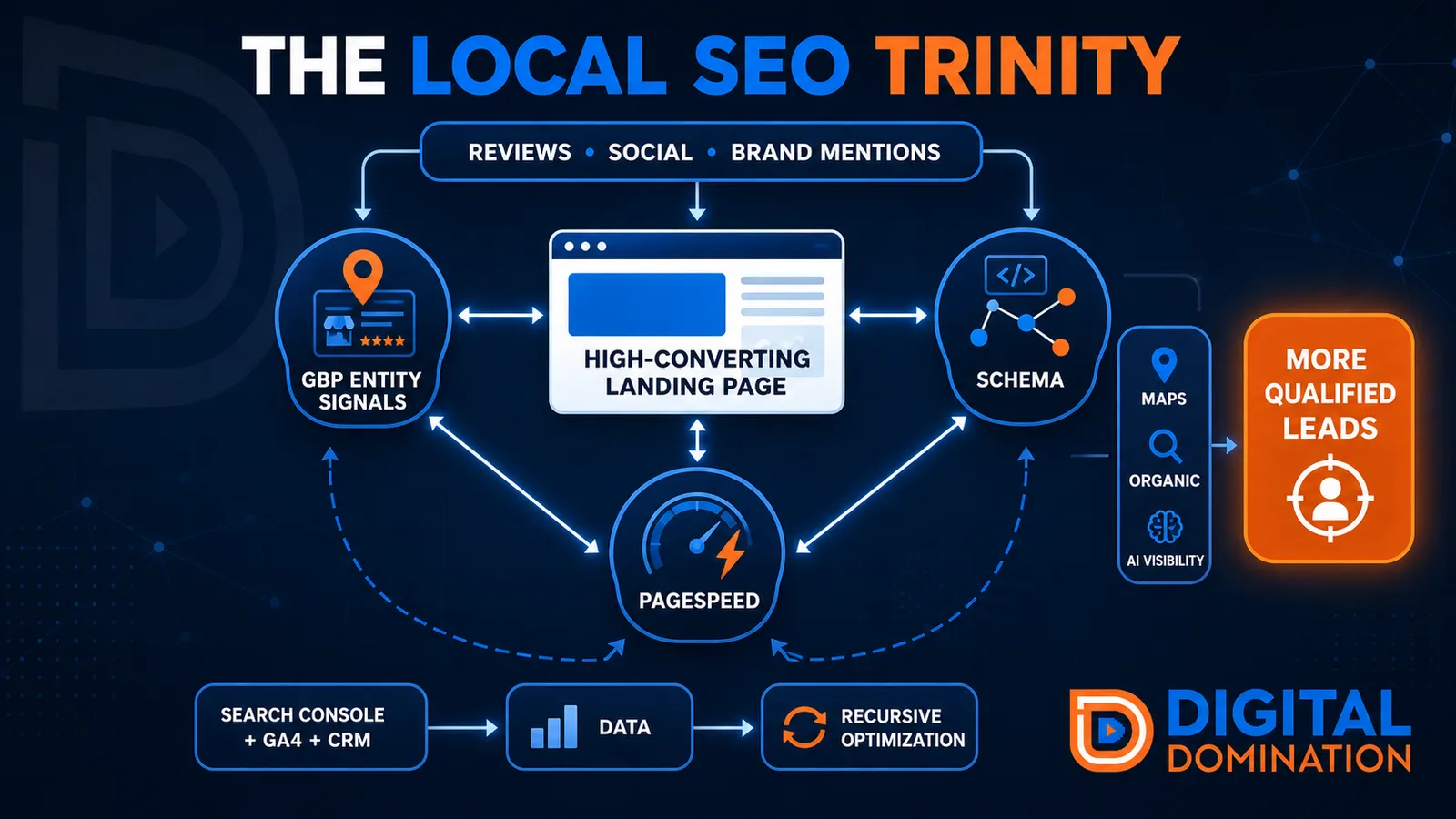
Google ranks local results on relevance, distance and prominence. You cannot move your shop closer to every searcher, so the fight is won on relevance (does Google understand exactly what you do and where) and prominence (does the market back you up). At Digital Domination we build that on three pillars that have to agree:
- ▸Google Business Profile entity signals establish who the company is, which plumbing work it does, where the trucks go and when the phone is answered.
- ▸Schema turns the website into a machine-readable record: the Plumber entity, its license, its people, its services, its service area and its prices, tied together with permanent identifiers.
- ▸PageSpeed makes sure a homeowner on a phone in a wet garage, and an AI agent searching for them, reaches the phone number and the proof in under three seconds.
- ▸A conversion-focused landing page carries all three, reviews and brand mentions supply prominence, and Search Console, GA4 and dispatch data close the loop.
Teach Google what kind of plumber you are
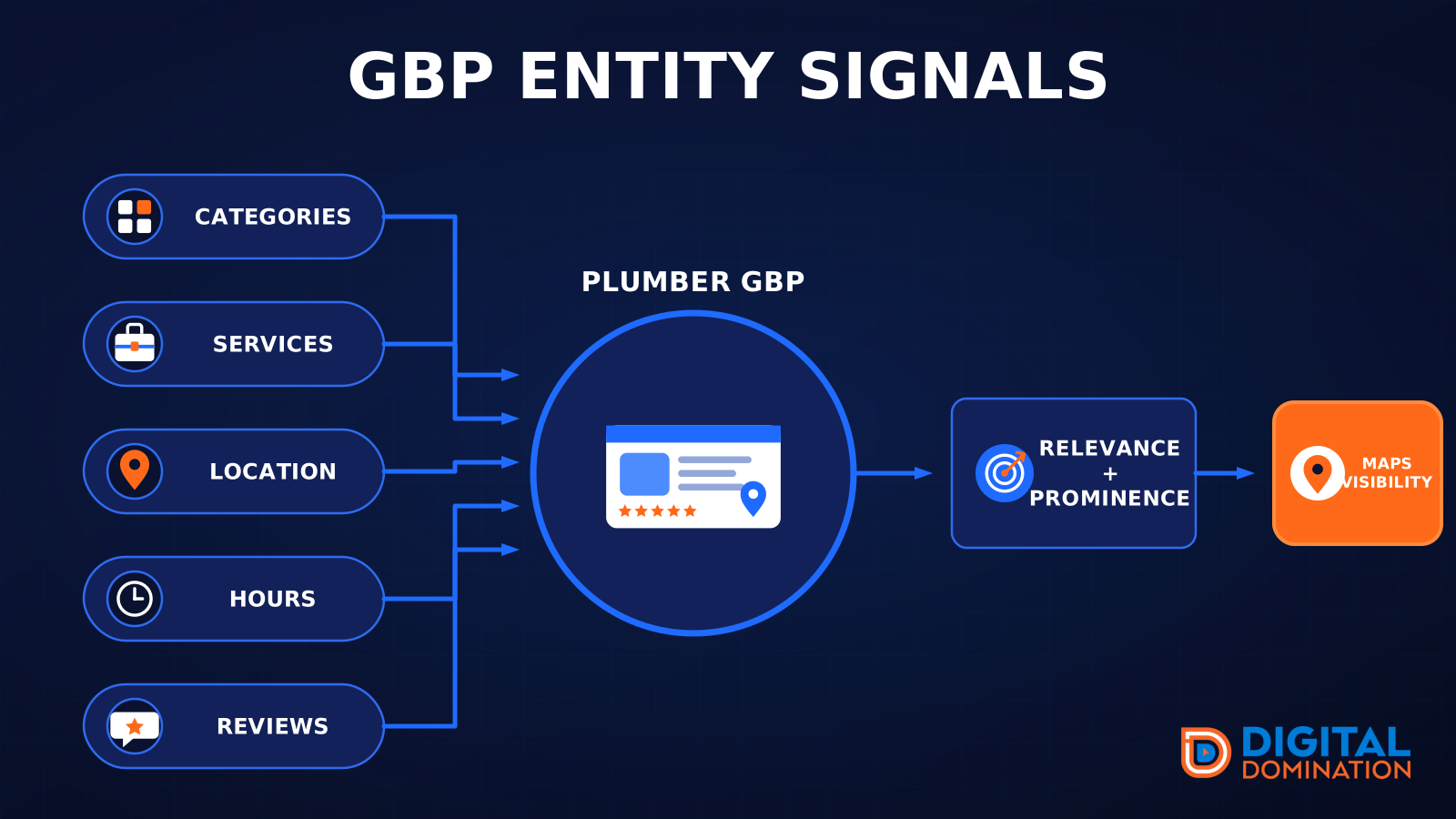
Plumber is the primary Google Business Profile category for almost every shop, and by itself it says little. A drain and sewer specialist, a tankless installer and a repipe contractor all share it. Add the secondary categories that match real revenue (Drainage service, Water heater installer, Gas installation service) and build the services list from your price book: drain cleaning, hydro jetting, sewer camera inspection, trenchless sewer repair, tankless water heater installation, slab leak detection, whole-house repipe. Every service on the profile needs a matching page on the site using the same words. Then:
- ▸Hours: set 24 hours only if a human picks up at 2 am. Open on the profile and voicemail on the phone earns a one-star review and a lost job.
- ▸Service area: the neighborhoods your trucks reach inside your response window, not every town within sixty miles.
- ▸Attributes: online estimates, veteran-owned, Spanish spoken. Each answers a question a homeowner would otherwise call and ask.
- ▸Photos: lettered trucks, uniformed technicians, a finished tankless install, a trench with new pipe in it, added monthly. Stock photos of a model with a wrench tell nobody anything.
- ▸Per-location pages: each profile links to its own page with that address, phone, hours, technicians and neighborhoods, with UTM parameters so you know which profile sends the calls.
Proof a homeowner checks before letting you in the house
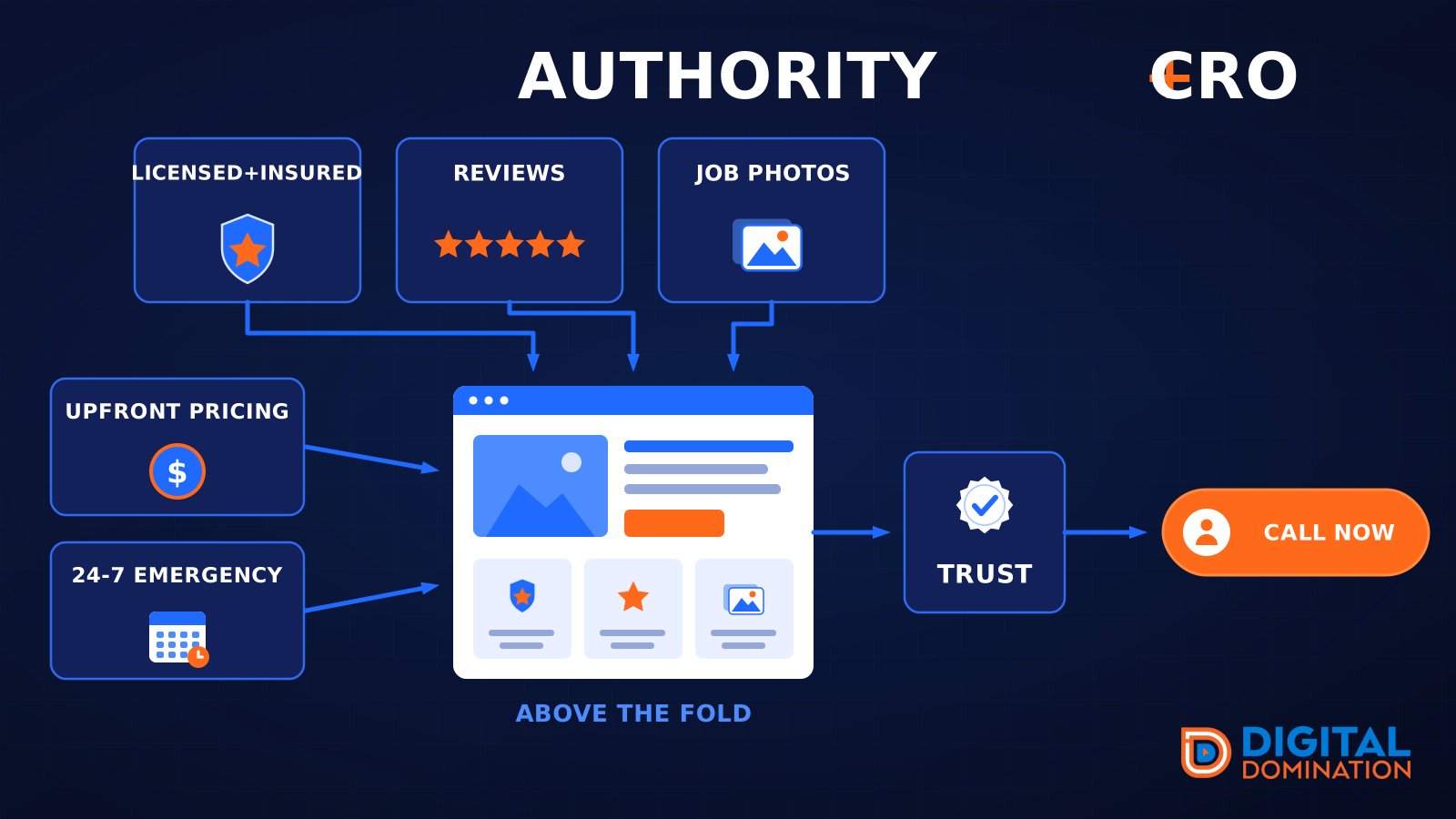
Plumbing is a stranger-in-my-home purchase made under stress, with a real fear of being overcharged. The first screen has to answer two questions in one scroll: can this company fix my exact problem, and will I regret opening the door. The credible proof is not 'family owned and trusted'. It is the verifiable facts a careful homeowner checks anyway. An example strip, with placeholder figures: Licensed, bonded and insured | 4.9 stars from local reviews | 18 years in business | Same-day service | Upfront flat-rate pricing. What belongs above the fold or one scroll below:
- ▸Your state contractor license number and the board that issued it, linked to the public lookup, plus bonding and liability insurance stated plainly.
- ▸The master plumber's name, photo and license, and named technicians. A face with a name converts better than a truck.
- ▸Real manufacturer credentials: certified installer status with Navien, Rinnai, Rheem, Bradford White or A. O. Smith, and the extended warranties those programs come with.
- ▸Workmanship warranty terms in plain numbers, and memberships that exist off your site: PHCC, BBB accreditation, a manufacturer dealer locator, a utility rebate program.
- ▸The response promise your dispatch can really keep: same-day, two-hour windows, text when en route.
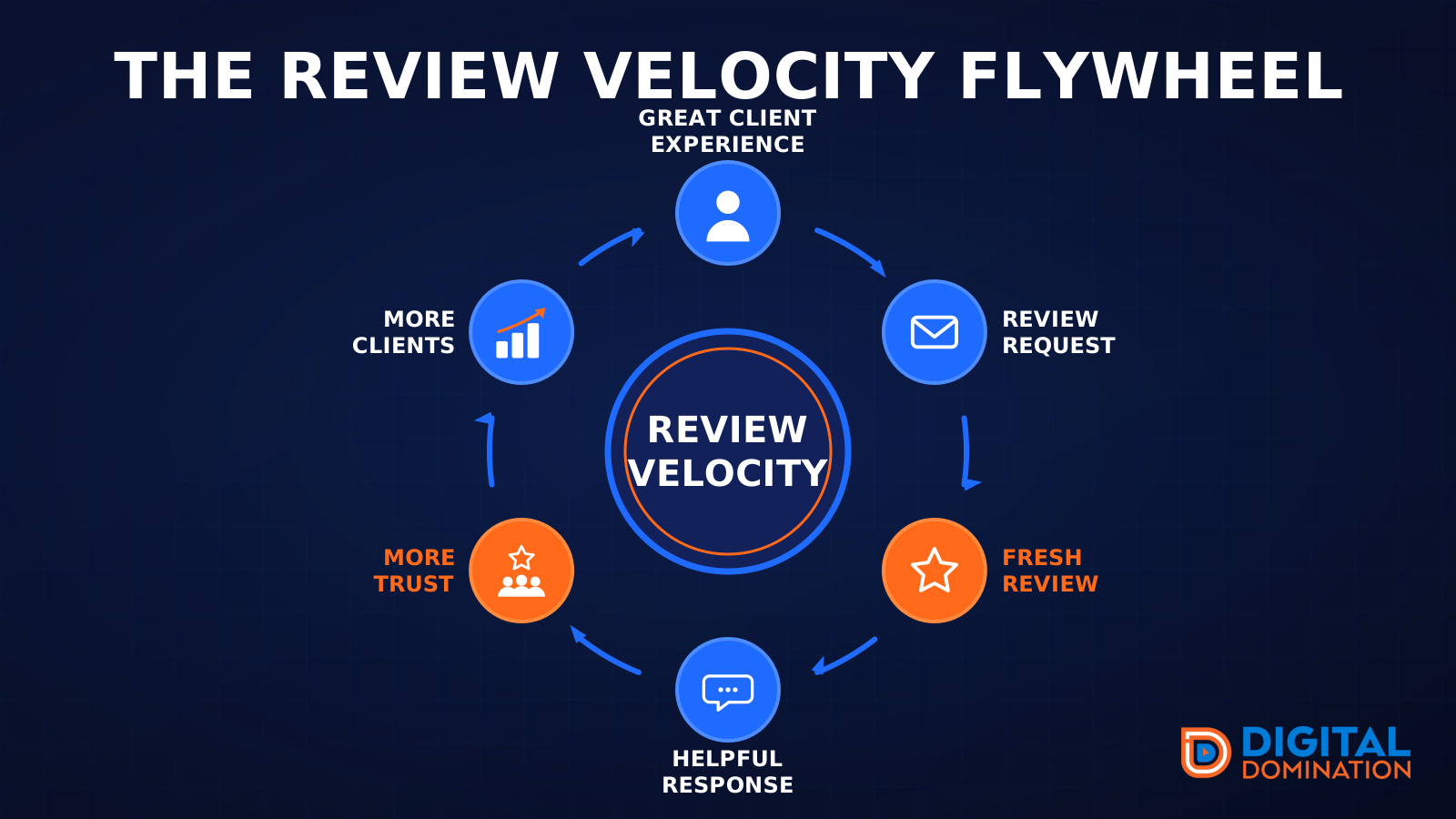
Reviews that read like a service call
Star average and count matter, but velocity and content matter more for a plumber. A shop with 400 reviews and nothing since spring looks dormant next to a competitor earning three a week. And a plumbing review is unusually rich: a happy customer names the technician, the problem, the neighborhood, how fast the truck arrived and whether the price matched the quote, tying your brand to your services and area in the customer's own words. A healthy profile has:
- ▸A review request texted from the field software within an hour of the job closing, while the relief is fresh.
- ▸Technicians who ask in person and say their own name, so the review names them too.
- ▸A steady weekly cadence through slow months, not a burst after a campaign.
- ▸Owner responses that mention the service and the area, and handle a pricing complaint calmly with facts.
- ▸Reviews on Google first, then Yelp, Nextdoor and the BBB, all with the same name, phone and address, and excerpts on the landing page sorted by service.
Schema for a plumbing company, and why the type is Plumber
Schema is JSON-LD that labels what the visible content means. With it, a crawler is told that Example Plumbing is a Plumber, that Maria Lopez is its master plumber and holds a specific license, that it offers tankless installation from a stated price across named cities, and that its Google profile, Yelp page and PHCC listing all refer to the same company. Schema.org has a dedicated Plumber type under HomeAndConstructionBusiness, so use it instead of generic LocalBusiness. Most plumbing sites we audit ship the default output of a WordPress plugin or a franchise template, which never models these relationships. The architecture we recommend:
- ▸The company: Plumber, with name, telephone, address, openingHoursSpecification (24 hours only if true), priceRange, image and hasCredential pointing to the contractor license.
- ▸The license: EducationalOccupationalCredential or a PropertyValue under identifier, carrying the number and the issuing state board.
- ▸Master plumber and technicians: Person nodes with jobTitle, worksFor, hasCredential and knowsAbout (sewer repair, tankless systems, gas lines).
- ▸Each service line: a Service node (Drain Cleaning, Sewer Line Repair, Water Heater Installation, Repiping) linked from the Plumber with makesOffer or hasOfferCatalog.
- ▸Pricing: Offer and PriceSpecification nodes for the dispatch fee, flat-rate starting prices and financing shown on the page.
- ▸Coverage and corroboration: areaServed with City nodes matching the GBP service area, brand for the manufacturers you install, and sameAs to the Google profile, Yelp, BBB, the state license lookup and dealer pages.
- ▸Permanent @id values such as example.com/#plumber, example.com/team/maria-lopez/#person and example.com/water-heaters/#service, so every page references the same company, person and service.
PageSpeed on a phone in a wet garage
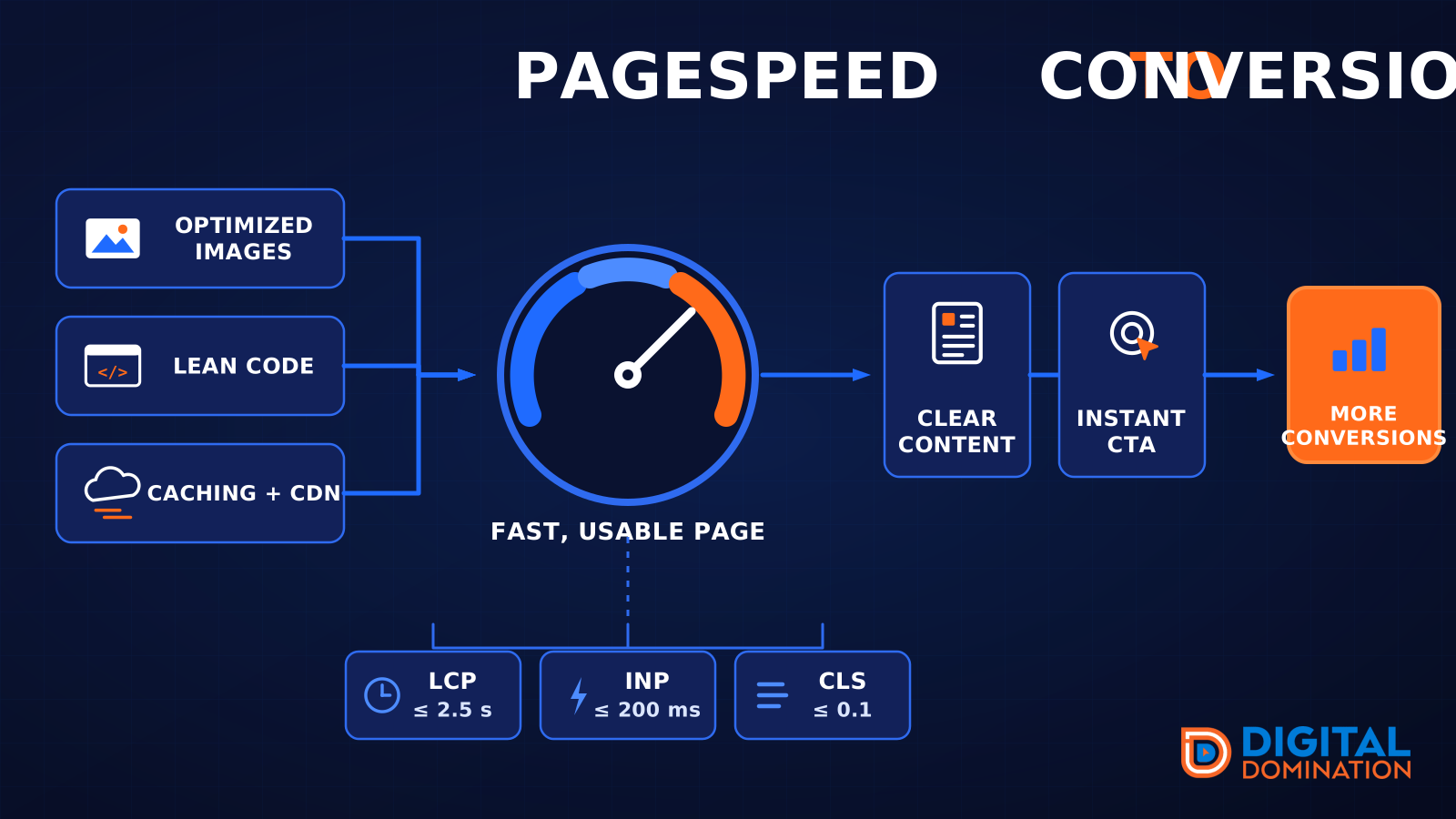
The person searching for you is on a phone, on cellular, stressed, possibly standing in water. Every second before the phone number renders is a second spent tapping the next result. Google's good thresholds for Core Web Vitals are Largest Contentful Paint of 2.5 seconds or less, Interaction to Next Paint of 200 milliseconds or less and Cumulative Layout Shift of 0.1 or less, at the 75th percentile of field data. At Digital Domination we target a PageSpeed Insights performance score of 90 or higher and a 2/2 result on the agentic-browsing check, because AI agents now open plumbing sites for customers and abandon slow ones too. Typical plumbing sites fail for the same reasons:
- ▸A full-screen hero video of a truck pulling up. Replace it with one compressed WebP still, preloaded, never lazy-loaded.
- ▸The field-service platform's booking widget loading on every page at first paint. Load it on click, with a plain phone link above it.
- ▸Chat widgets, call-tracking scripts and three tag managers left by past agencies. Delete what nobody reads, delay the rest.
- ▸Coupon banners that inject after load and push the phone button down as the thumb reaches it. Reserve the space or remove them; this is what wrecks CLS.
- ▸Full-size job galleries on a slow shared host. Use responsive sizes, lazy-load below the fold, add caching, a CDN and compression.
- ▸A sticky call bar built as a heavy script. Make it plain HTML and CSS so the call button works the instant the page paints.
Dispatch fees, flat rates and the price question AI keeps getting asked
Ask an AI assistant what a plumber charges in your city and it answers with whatever concrete numbers it can find. If a competitor publishes a dispatch fee that is waived with repair and a starting price for drain cleaning, and you publish 'call for pricing', the assistant has something to say about them and nothing about you. Plumbing pricing is unusually publishable because most shops already run a flat-rate price book. Put the structure on service pages, the FAQ, the GBP services list and in Offer schema:
- ▸The dispatch or trip fee, and whether it is credited toward the repair.
- ▸After-hours and weekend rates, stated up front rather than discovered on the invoice.
- ▸Flat-rate starting prices for common calls: drain clearing, water heater replacement by tank size or tankless, disposal, toilet rebuild.
- ▸Whether a sewer camera inspection is free with a drain call, and what a free estimate includes.
- ▸Financing, membership plans, and the variables that move a quote: access, permits, pipe material, slab versus crawlspace.
Content that follows the leak from symptom to invoice
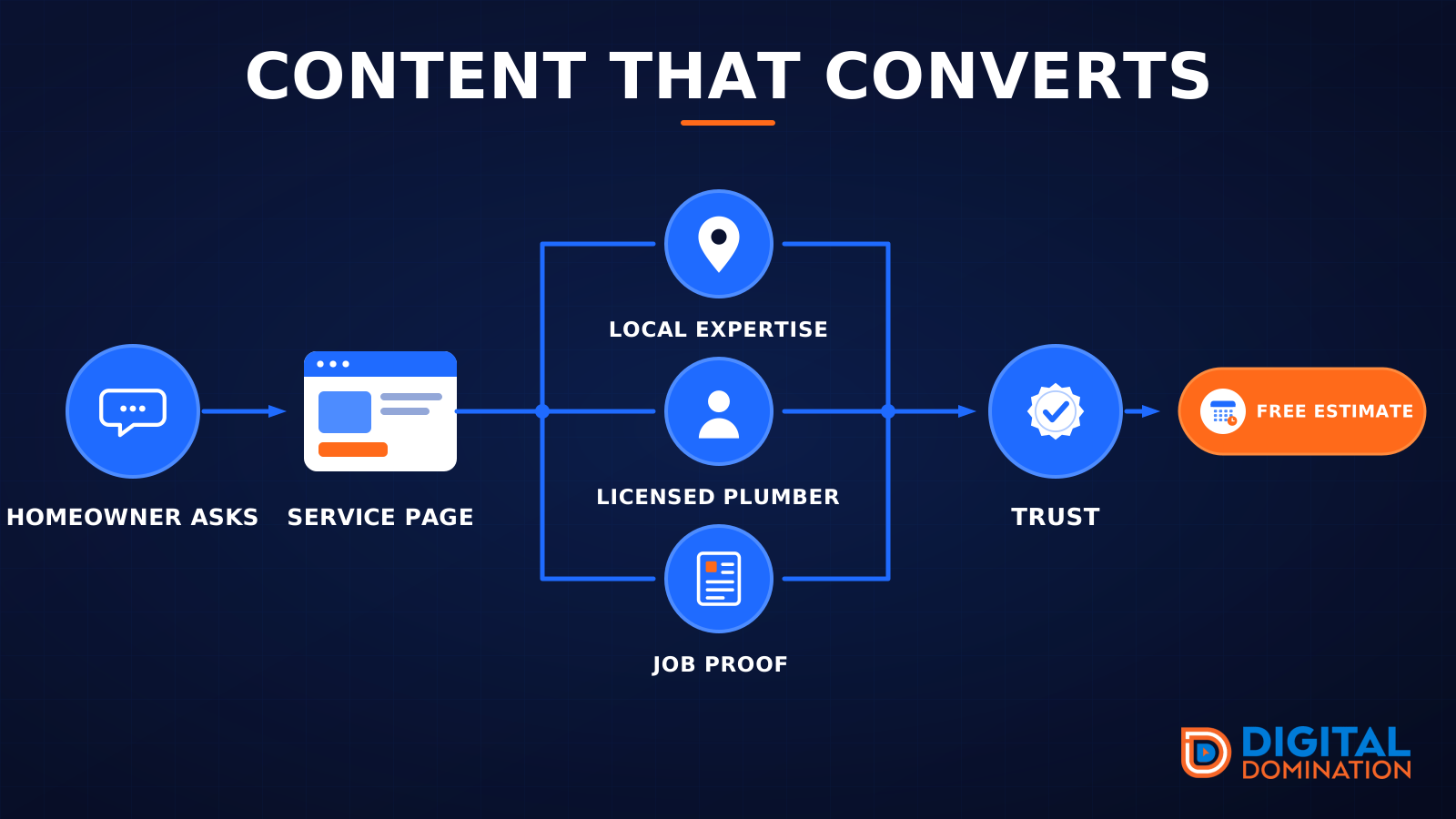
Homeowners search for what they can see and hear: water heater making a popping sound, sewage smell in the basement, toilet gurgling when the washer drains. Each symptom is a page that names it, explains the likely causes, says what to shut off right now and what the visit looks like and roughly costs. Local specifics make it rank and make it believable: your city's water hardness and what it does to tankless heat exchangers, the cast iron and Orangeburg sewer lines in older neighborhoods, the county permit for a water heater swap, the utility rebate for a heat pump water heater. Also add:
- ▸A named author who is a licensed plumber, with published and updated dates.
- ▸Short direct answers under question-shaped headings, then the longer explanation.
- ▸Original job photos captioned with the neighborhood and the problem, and short field videos with transcripts.
- ▸Comparison tables: tank versus tankless, snaking versus hydro jetting, spot repair versus trenchless.
- ▸Internal links from every symptom page to the service page, the pricing section and the specialist technician.
Search Console, GA4 and the dispatch board
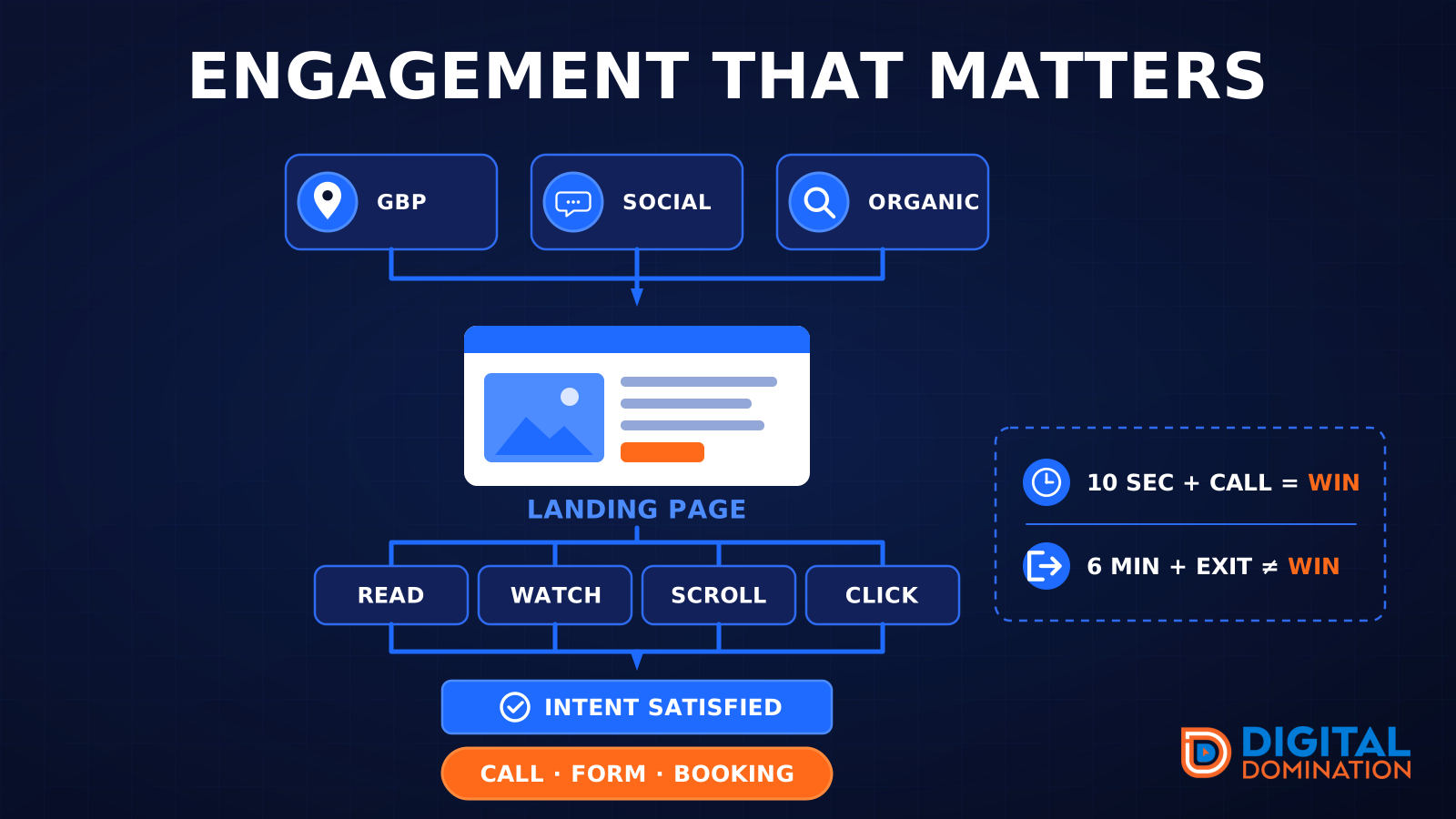
Search Console and GA4 do not rank you. They tell you what to fix next. Search Console shows the queries you get impressions for, position, click-through rate and field Core Web Vitals. GA4 shows which landing pages produced click-to-call taps, form starts and bookings. Your field-service software (ServiceTitan, Housecall Pro, Jobber) shows which calls became booked jobs and what they invoiced. Read the three together:
- ▸Impressions for tankless water heater installation in a suburb but few clicks: rewrite the title, add that suburb to the page and to areaServed, and post a recent install there on GBP.
- ▸Clicks but few calls: check mobile field speed, whether the number is visible before the first scroll, and whether price and warranty language is there.
- ▸Calls but few bookings: listen to recordings. Often the profile promises 24/7 and nights go to voicemail, or the CSR cannot quote a dispatch fee.
- ▸Bookings but a low average ticket: drain-clearing pages rank while sewer replacement and repipe pages sit on page two. Shift content and links there.
- ▸Make one focused group of changes, note the date, compare calls, booked jobs and revenue, keep what worked and repeat.
Trucks, job photos and neighborhood mentions
Social posting for a plumber is not about going viral. It is about putting the same technicians, services and neighborhoods in front of people until they search for you by name and mention you to neighbors. A GBP post about a repipe in a named subdivision, the same photos on Facebook, a sewer camera clip on YouTube Shorts and a Nextdoor reply when someone asks for a plumber all reinforce one entity. Google's Search Console now reports supported social and video platform properties, which shows how far social and search discovery have converged.
Brand mentions without links still carry meaning. A Nextdoor comment saying Example Plumbing came out to Willow Creek on a Sunday, Dan replaced the water heater and the price matched the quote connects a company, a technician, a service, a neighborhood and a trait in one sentence. Reddit is part of this but not the whole of it: Axios reported in August 2026 that Reddit's share of visible ChatGPT Search citations fell roughly 86 percent, even though OpenAI keeps a Reddit data partnership. Citation choices change fast; the durable play is a footprint across sources that all agree with your site on name, phone, address, license and services:
- ▸The state license lookup, the BBB profile and the PHCC or local trade association directory.
- ▸Manufacturer dealer locators for the brands you are certified on, and utility rebate contractor lists.
- ▸Nextdoor, Yelp, Angi and Facebook pages with matching hours and categories.
- ▸Local news, home-show and youth sports sponsorships, and supplier spotlights where they exist.
A 90-day plan built around your busy season
Plumbing demand is seasonal: water heaters fail as the first cold water hits in the fall, burst pipes follow the first hard freeze, drains spike around the holidays, repipes fill the spring. Time the roadmap so the foundation is in place before your market's next spike:
- ▸Days 1-14, baseline: run a GeoGrid scan for emergency plumber, water heater repair, drain cleaning and sewer repair. Audit every GBP field and service against the price book. Pull field Core Web Vitals, current schema, review velocity by month and booked-job counts. List every place your name, phone or license appears differently.
- ▸Days 15-30, repair the foundation: fix categories, services, hours and service area. Rebuild the landing page above the fold with license, insurance, warranty, rating and a plain phone link. Publish technician pages. Ship the Plumber schema graph with permanent @id values. Fix the heavy hero, the eager booking widget and the layout shift. Connect Search Console, GA4 and call tracking to the CRM.
- ▸Days 31-60, expand relevance and proof: publish symptom pages and seasonal pages for what is about to break, with local specifics and pricing language. Turn on the post-job review request and coach techs to ask. Post job photos to GBP and social weekly. Align the license lookup, BBB, PHCC, manufacturer and rebate listings.
- ▸Days 61-90, optimize on data: find high-impression, low-click queries and high-traffic, low-call pages. Compare booked jobs and average ticket by landing page. Move content and links toward higher-ticket services. Recheck Core Web Vitals and the agentic check. Rerun the GeoGrid and compare to day one.
One plumbing company, described the same way everywhere
None of this works as separate projects. A polished profile with a slow site, plugin schema that calls you a generic LocalBusiness, or great reviews attached to a phone number that does not match your license record all leave Google and the AI systems guessing. The goal is one clearly defined plumbing entity, with its license, people, services, prices, service area and reputation described the same way on Google Business Profile, the website, the schema, the reviews, social platforms and the directories that already list licensed plumbers. Then Search Console, GA4, GeoGrid data and the dispatch board tell you what to tighten next month.
At Digital Domination this is the system behind our Maps Domination work, and it is why we can offer plumbing companies a simple guarantee: top 3 in the Google Map Pack in 12 weeks or you do not pay. Before the next water heater season, see where you actually rank. Our free GeoGrid scan at digitaldomination.ai/scan checks 169 points across your market and shows, block by block, where the Sunday-morning call is going to someone else.
Keep reading
Related guides
- ▸Google review management for HVAC companies
- ▸Google review management in Las Vegas
- ▸Google review management near me
Put it into action
Frequently Asked Questions
Which Google Business Profile category should a plumbing company use?
Use Plumber as the primary category in almost every case. Add secondary categories only for real revenue lines, such as Drainage service, Water heater installer or Gas installation service, and let the services list and website narrow it further.
Should a plumber claim 24/7 hours on Google?
Only if a person answers at 2 am, whether on-call staff or a live answering service that can book. A profile that says open while calls roll to voicemail produces one-star reviews and missed jobs. If after-hours service is limited, say so in the description instead.
Should a plumbing company publish its prices online?
Yes, at least the structure: the dispatch fee and whether it is credited, after-hours rates, flat-rate starting prices for common calls, and financing. Homeowners and AI assistants both look for it, and the competitor who publishes numbers is the one an AI answer describes. Mark it up with Offer schema.
Does schema markup directly improve a plumber's Map Pack ranking?
Not as a direct boost. Schema helps search systems understand the entity, its license, its services and its area, and makes pages eligible for supported result features. Its value comes from accurately describing strong visible content with the specific Plumber type and connected Person, Service, Offer and areaServed nodes.
How fast does a plumbing website need to be?
Aim for Google's good thresholds in field data: LCP under 2.5 seconds, INP under 200 milliseconds and CLS under 0.1 at the 75th percentile, plus a PageSpeed Insights score of 90 or higher. The practical test: on a mid-range phone on cellular, does the phone number appear and respond before the visitor goes back to the results.
Do social posts help a plumber rank on Google Maps?
Google does not confirm that likes or followers move local rankings. Consistent posting of real job photos, technicians and neighborhoods does drive branded searches, Nextdoor mentions, reviews and return visits, all of which feed prominence.
Do I need a separate page for each service area?
You need one page per real location with its own Google Business Profile, plus neighborhood pages only where you can say something specific: common pipe materials, permit rules, recent jobs. Thin pages that swap only the city name tend to be ignored or filtered.
Ready to dominate your map?
Top 3 in the Google Map Pack in 12 weeks, or you don't pay.