
Digital Marketing Company for Local Service Businesses: The 2026 Playbook
Most agencies charge monthly retainers disconnected from results; a performance-based model with territorial exclusivity and a timeline commitment is the better alternative for local service operators.

The Retainer Model Is the Problem
Conventional retainer structures create misaligned incentives. They remove the urgency to deliver results quickly, since the agency gets paid whether or not you rank.
They also force agencies to serve competitors at the same time and obscure the actual methodology behind vague terminology, so you never really know what you're buying.
What a 2026 Digital Marketing Company Should Deliver
A real engagement should be specific, auditable, and tied to outcomes. Here's what that looks like in practice.
- ▸A named, auditable methodology (S2 Cell Occupancy, BERT Optimization, Hub-and-Spoke Silo architecture)
- ▸Google Business Profile optimization with structured review programs
- ▸Service page rewrites and schema markup
- ▸Neighborhood-targeted content silos
- ▸Entity trust building across directories
- ▸A backlink strategy focused on quality over quantity
- ▸AI Overview citation auditing
- ▸Weekly reporting with independent verification
- ▸Post-ranking competitive defense
Territorial Exclusivity Is Structural, Not Marketing
The Google Map Pack contains only three positions. An agency that represents multiple competitors in one market creates a mathematical conflict of interest: it literally cannot win the top three for all of them.
Exclusivity isn't a sales pitch. It's the only structure that lets an agency fully commit to your result.
The Fee Structure That Actually Aligns Incentives
Performance-based pricing ties the entire fee to the outcome: stronger visibility on Google Maps, with pricing set per market on a call.
That structure puts the agency's payday on the same side of the table as your result.
How to Tell a Real Digital Marketing Company from a Retainer Farm
Five qualifying questions cut through the noise. Ask any agency to answer them directly.
- ▸How deep and specific is your methodology?
- ▸Do you practice territorial exclusivity?
- ▸What timeline will you commit to?
- ▸Are your fees contingent on the outcome?
- ▸How do you verify rankings transparently?
Why This Matters for Local Service Businesses
For local operators, Google Map Pack placement generates the lowest cost-per-lead compared to paid channels. It is the highest-ROI marketing lever available.
Evaluate any shortlist for 2026 against published methodologies, exclusivity contracts, weekly deliverables, independent verification, and specific scope definitions.
Keep reading
Related guides
- ▸Google Business Profile Government Id Verification
- ▸Google Business Profile optimization for HVAC
- ▸Google Business Profile optimization in Henderson
Put it into action
Frequently Asked Questions
What's the best digital marketing company for a local service business?
The one with a named methodology, territorial exclusivity, and a commitment to stronger visibility on Google Maps.
How much does a digital marketing company cost?
Generic retainers range from $1,500 to $10,000 per month with no outcome guarantees. Performance-based programs set pricing per market on a call The work aims to improve Map Pack visibility. Results vary.
How long does digital marketing take to work?
Map Pack optimization requires a minimum of using current methodology. Traditional retainers often run 6-12 months or more without guarantees.
Can I do digital marketing myself?
Yes, using the published playbook. Most operators choose professional implementation after weighing the 75-120 hour DIY time commitment.
What metrics should a digital marketing company report on?
GeoGrid coverage percentages, competitor positions, review velocity, Map Pack click-through rates, and phone and form submissions, not vanity metrics like impressions.
Is SEO the same thing as digital marketing?
SEO is a subset. Digital marketing also includes paid ads, email, social, and affiliate channels, though Google Maps SEO typically delivers the highest ROI for local service businesses.
Do you work with my industry?
Primary verticals include roofing, HVAC, plumbing, electrical contracting, legal services, and wellness, but the methodology applies across verticals.
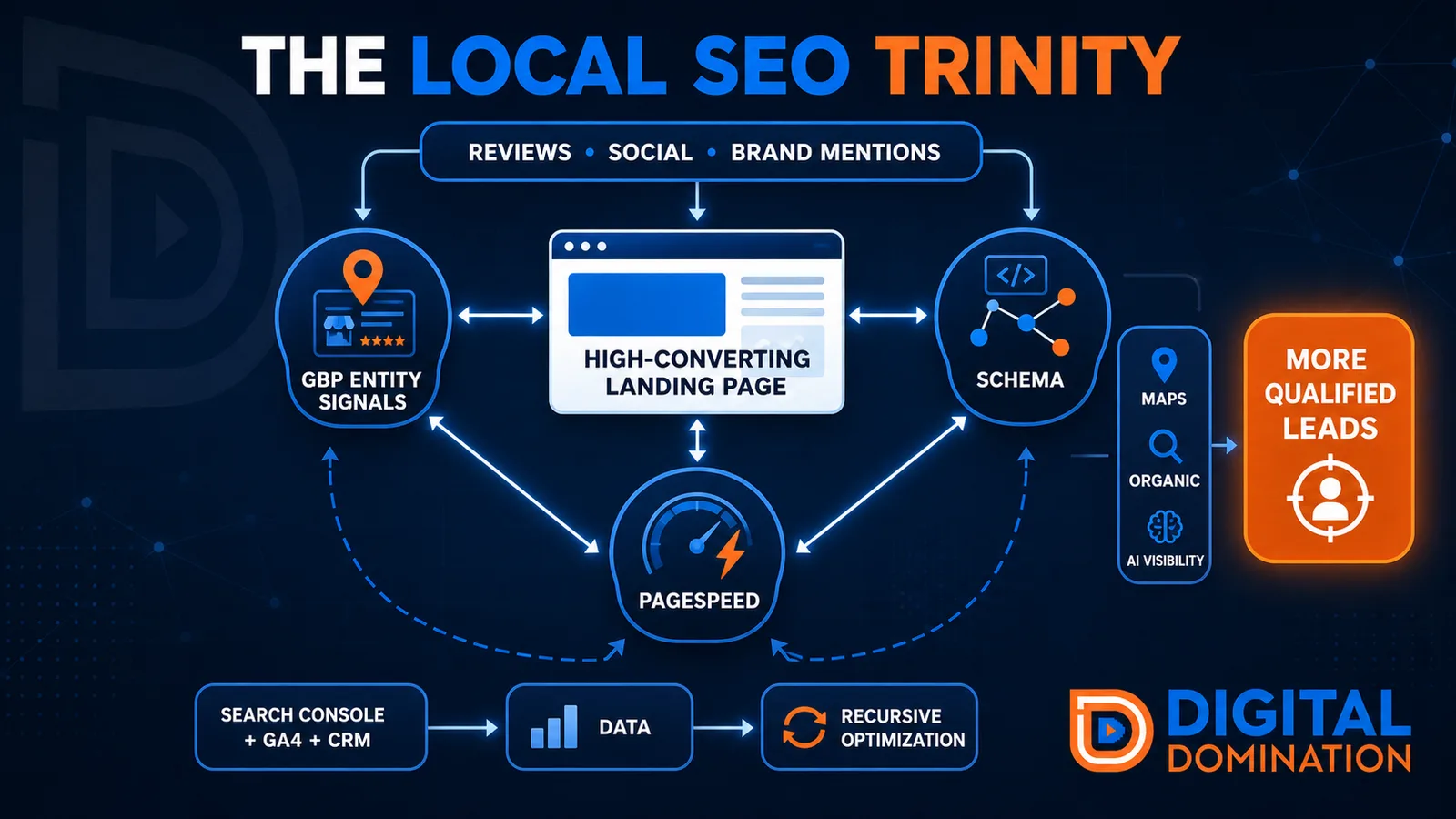
The Local SEO Trinity
Think of a three-legged stool. Your Google profile, your website, and your reviews all have to hold you up. If one leg is short, the whole thing wobbles.
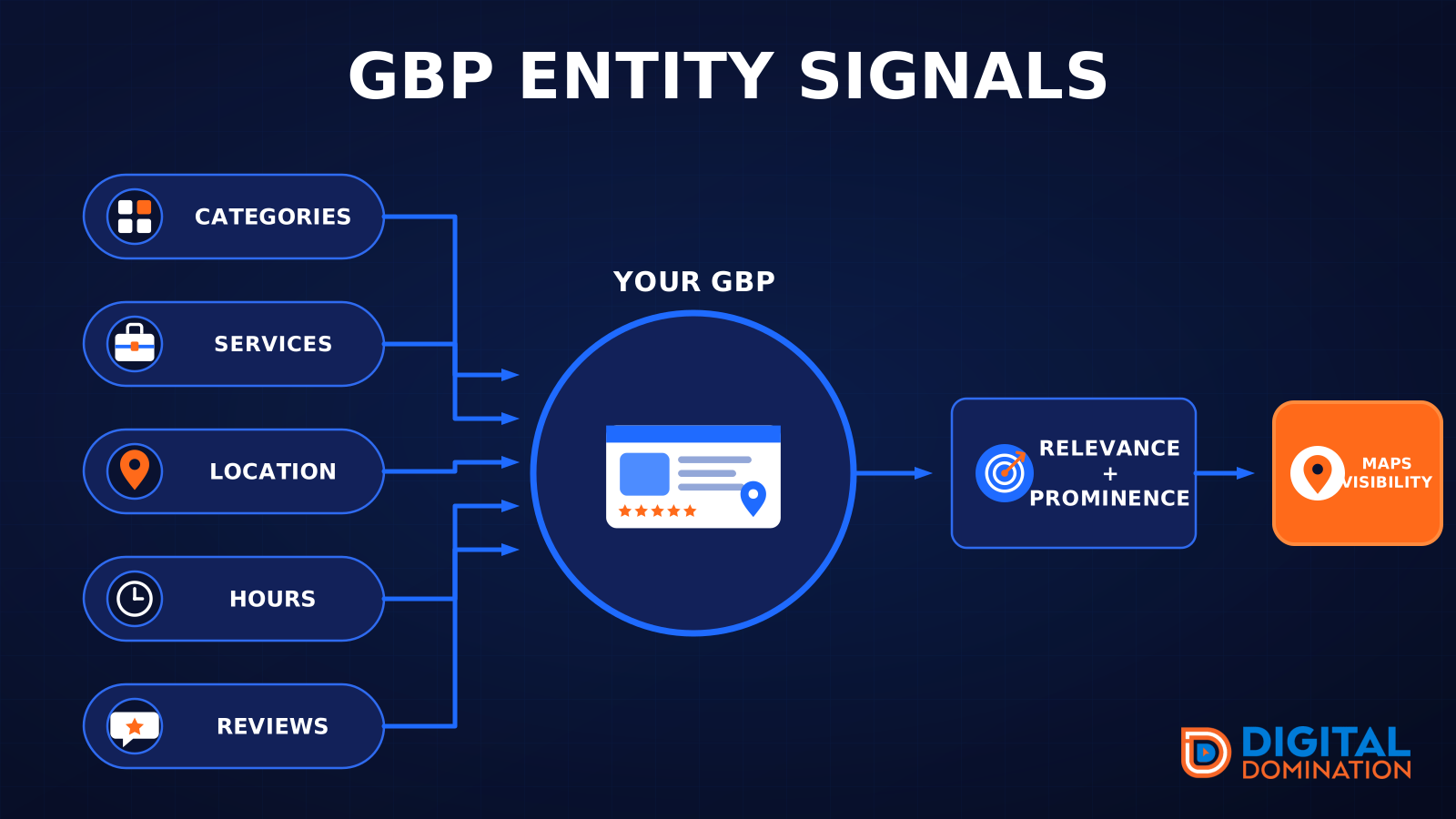
GBP entity signals
This leg is your Google Business Profile. GBP means Google Business Profile. It covers your categories, your services, your location, your hours, and your reviews. Google uses those facts to decide who to show.
Your Google profile is your storefront sign. If the sign is missing, or it names the wrong shop, people drive past.
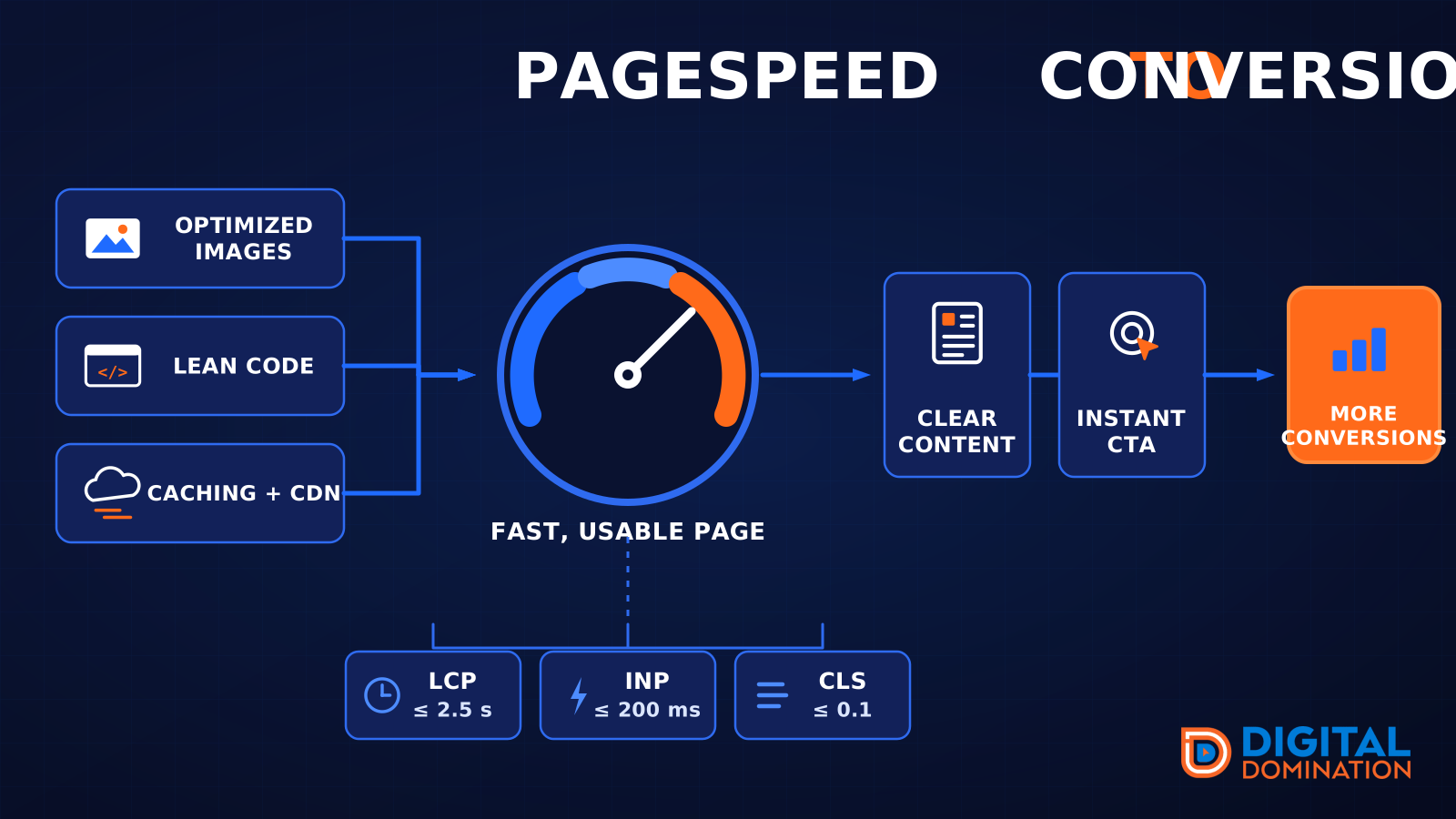
PageSpeed to conversion
This leg is your website, above all on a phone. Small images, lean code, and caching make a page fast. A fast, clear page is what turns a visit into a call. Phone speed is one of the 12 Trinity checks because a slow page loses the call before anyone sees your offer.
Your website is the showroom. If the door sticks, people leave before they look around.
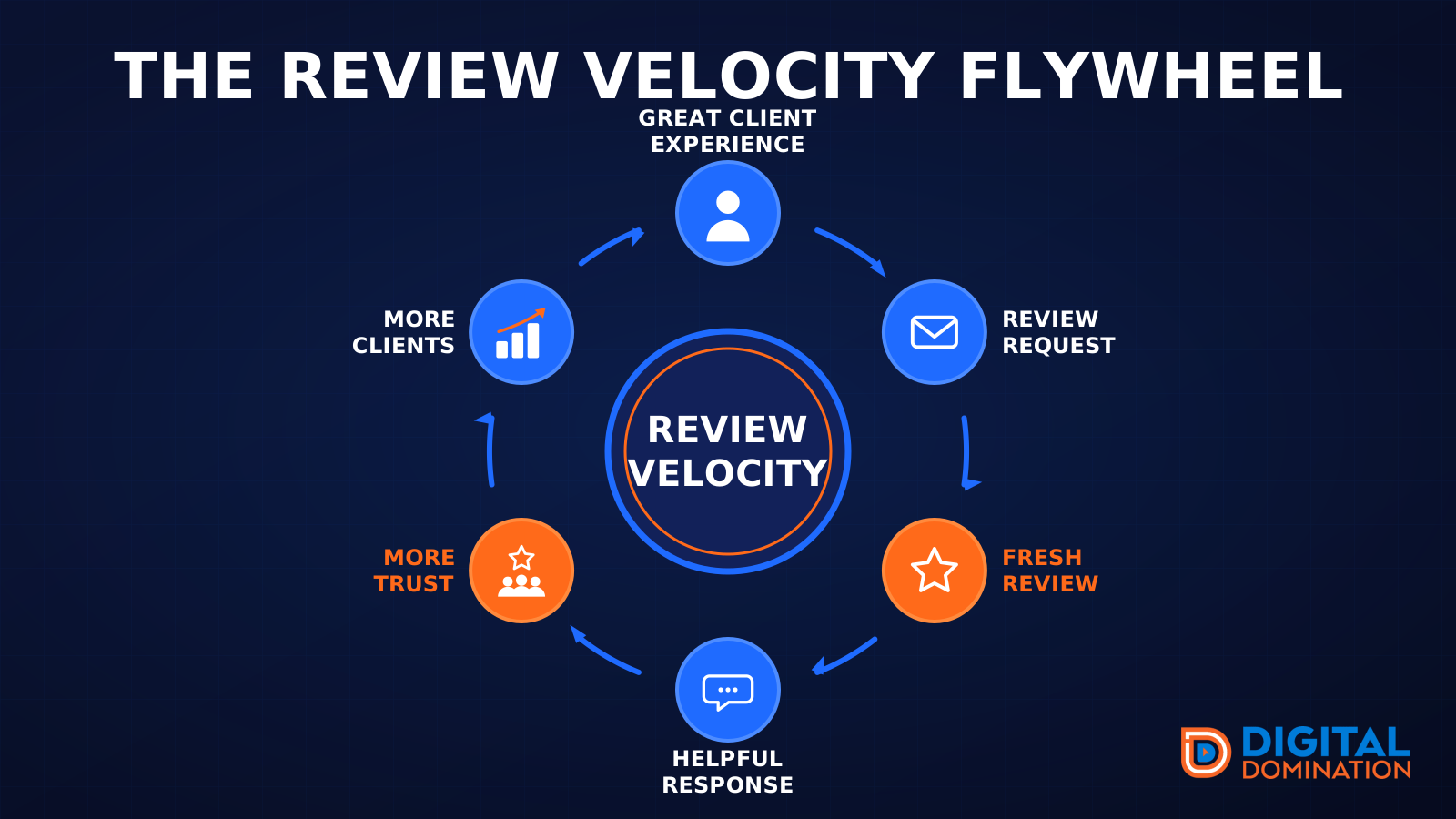
The review velocity flywheel
This leg is reviews and reputation. A good visit leads to a review request, then a fresh review, then a helpful reply, then more trust, then more customers. When the scan can find your Google listing, it shows your rating, your recent reviews, and how many you answered.
Reviews are word of mouth. One kind word helps. A steady stream of real reviews, and a reply from you, helps more.
How this turns into revenue
Being found in more searches leads to more calls. More calls lead to more booked jobs. More booked jobs lead to more revenue.
Example numbers, not a real business: 40 calls from search in a month, a 25 percent close rate, and a $400 average job. That is 10 booked jobs. That is $4,000. The math is the lesson. It is not a promise.
The full page has a box where you can type your own average job value and close rate.
One real story, from our car dealership case study: Medina Auto Group went from invisible on Google Maps to dominating every high-intent search across their market. The turnaround spanned all four of their rooftops at once. The same page says the team eliminated 89 unfair one-star reviews that had been dragging the dealership's reputation down and keeping it out of the Map Pack. It also says: “Results described here are exceptional and non-typical. Outcomes vary based on market conditions, competition, and implementation. No guarantees are made regarding earnings, rankings, or conversions.”
Free strategy call
More booked jobs start with a clear plan
Book a free strategy call. We look at your Google profile, your website, and your reviews, and we tell you what to fix first.
Free. You pick the time. A real person shows up.