
Electrician local SEO: how GBP entity signals, schema and PageSpeed win the panel job
The homeowner with a breaker that will not reset is not reading your About page. Here is how to make Google, the AI answer and the customer recognize the same licensed electrical contractor in ten seconds.
Half the kitchen goes dark on a Tuesday night
The microwave dies mid-cycle, the island outlets go dead, and the breaker trips again the moment it is reset. There is a faint smell of warm plastic near the panel. The homeowner stands in the garage with a phone flashlight and types electrician near me open now. They tap the first Map Pack result with a rating they can live with, skim the top of the site for a license number and a real phone number, and call. The whole decision takes under a minute.
The shop that got that call may not be the best electrical contractor in the county. It was the one Google could identify as an electrician, place near that garage, and vouch for with reviews and consistent facts across the web. The homeowner confirmed that judgment on a phone screen in seconds. Google's local algorithm and the customer run the same test: relevance, distance and prominence, then trust.
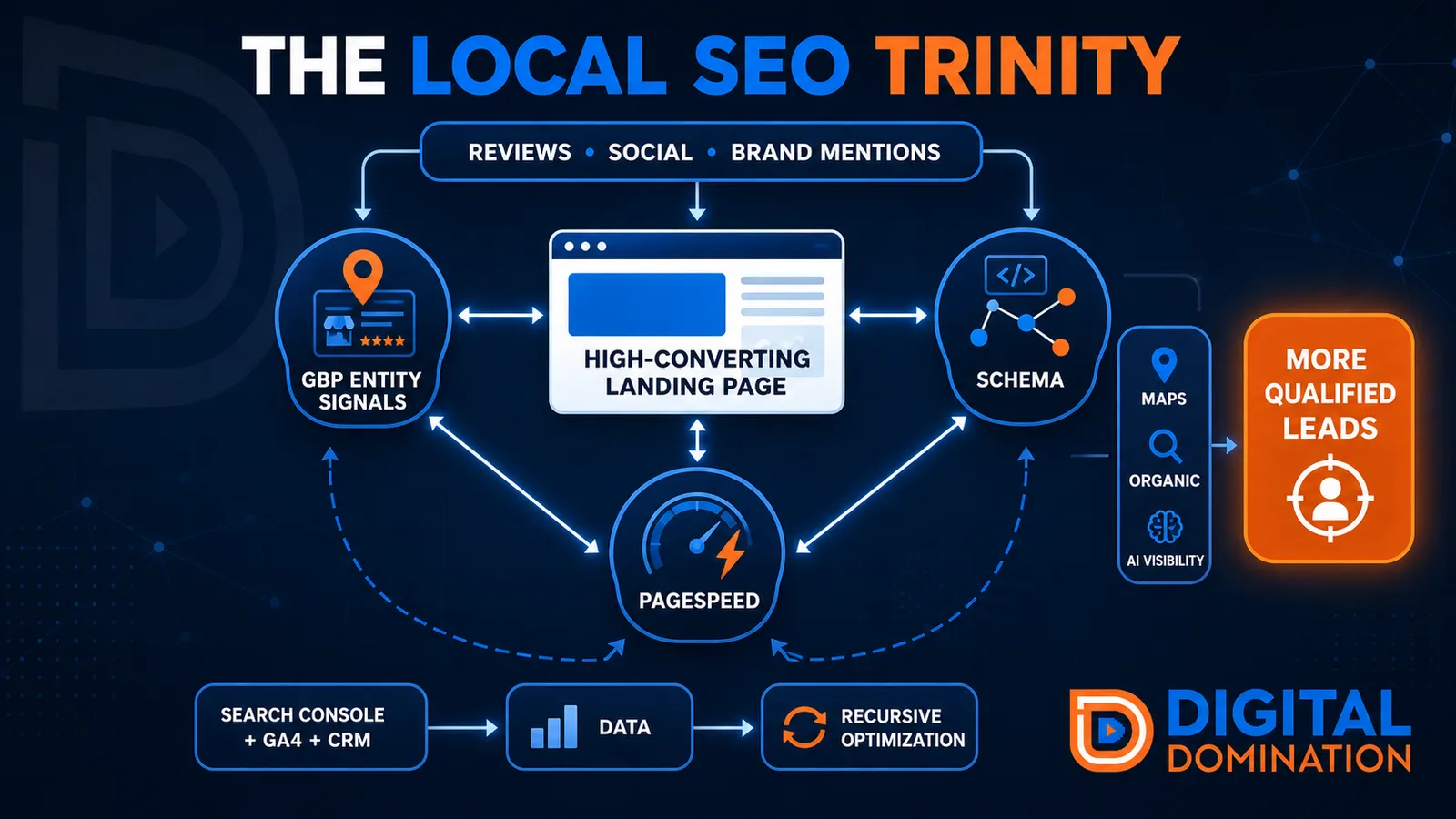
At Digital Domination we treat the foundation for that test as a trinity: Google Business Profile entity signals that establish what kind of electrician you are and where you work, schema that connects the company, the master electrician, the license, the services and the service area into one machine-readable graph, and PageSpeed that gets the phone number and the proof in front of a stressed homeowner instantly. A conversion-built landing page carries all three. Search Console, GA4 and your dispatch software close the loop.
The short version for an owner between service calls
Google has to understand the business before it can rank it. The homeowner has to trust it before they let a stranger open the panel. The site has to convert before the back button. Then the data has to say what to fix next. Each layer answers a different question:
- ▸Google Business Profile: what electrical work do you do and which neighborhoods do you actually roll trucks to? Outcome: Map Pack visibility and calls.
- ▸Landing page proof: why this electrician over the other two in the pack? Outcome: calls and booked estimates.
- ▸Schema: how are the company, the licensed electrician, the license number, the services and the service area connected? Outcome: machine understanding and rich-result eligibility.
- ▸PageSpeed: can a person in a dark garage on one bar of LTE use the page right now? Outcome: fewer abandoned visits.
- ▸Reviews and off-site authority: does the market confirm the claims? Outcome: prominence.
- ▸Search Console, GA4 and the CRM: what produces panel upgrades versus tire kickers? Outcome: the next fix.
- ▸Social and brand mentions: is the company named in the town's Facebook group, on Nextdoor, on the realtor's referral list? Outcome: corroboration and branded demand.
Teach Google the difference between a handyman and a licensed electrician
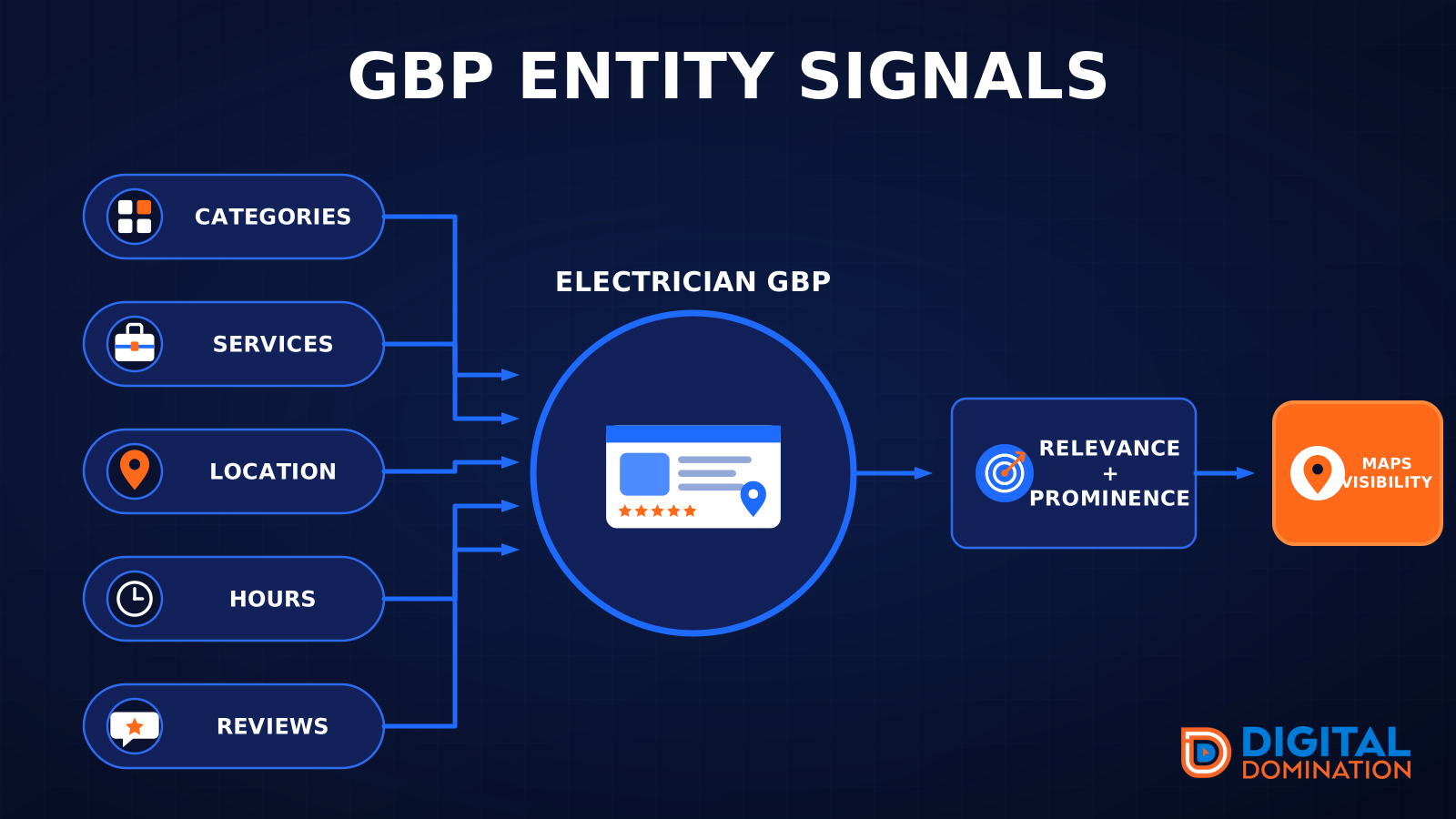
For an electrical contractor the primary category is Electrician. Secondary categories should reflect real lines of business: Electrical installation service, Electric vehicle charging station contractor, Lighting contractor, and the generator category where you sell and install standby units. Categories for work you do not do dilute the entity and attract the wrong calls.
Set hours to when a human answers, and add an after-hours line only if you genuinely run one. Turn on the attributes homeowners look for: licensed, insured, free estimates if true. Fill the opening date so years in business is a fact, not a claim. Upload photos of your work, not a stock hard hat: labeled panels, a replaced Federal Pacific panel before and after, a mounted EV charger, a generator pad, wrapped trucks, your crew in company shirts. If you have no showroom, hide the address and set the service area to the cities you actually dispatch to.
Every profile needs a landing page that matches it, not the homepage. A second yard or licensed location gets its own page with its own local number, the electricians who work from it, the services handled there, the towns and permit jurisdictions covered, and a tap-to-call button above the fold, with the profile link tagged with UTM parameters. The Services section is where the electrical vocabulary lives, and every service there should exist on the site in the same words. A residential and light-commercial shop typically lists:
- ▸Electrical panel upgrade (100 amp to 200 amp service)
- ▸Federal Pacific and Zinsco panel replacement
- ▸Level 2 EV charger installation
- ▸Whole-home standby generator and transfer switch installation
- ▸Knob-and-tube and aluminum wiring remediation
- ▸Troubleshooting: tripping breakers, dead outlets, flickering lights
- ▸GFCI and AFCI protection and code corrections for home sale
- ▸Recessed lighting, ceiling fans and dedicated appliance, hot tub and pool circuits
- ▸Whole-house surge protection and hardwired smoke and CO detectors
- ▸Commercial tenant improvement and lighting retrofits
The proof a homeowner checks before you open the panel
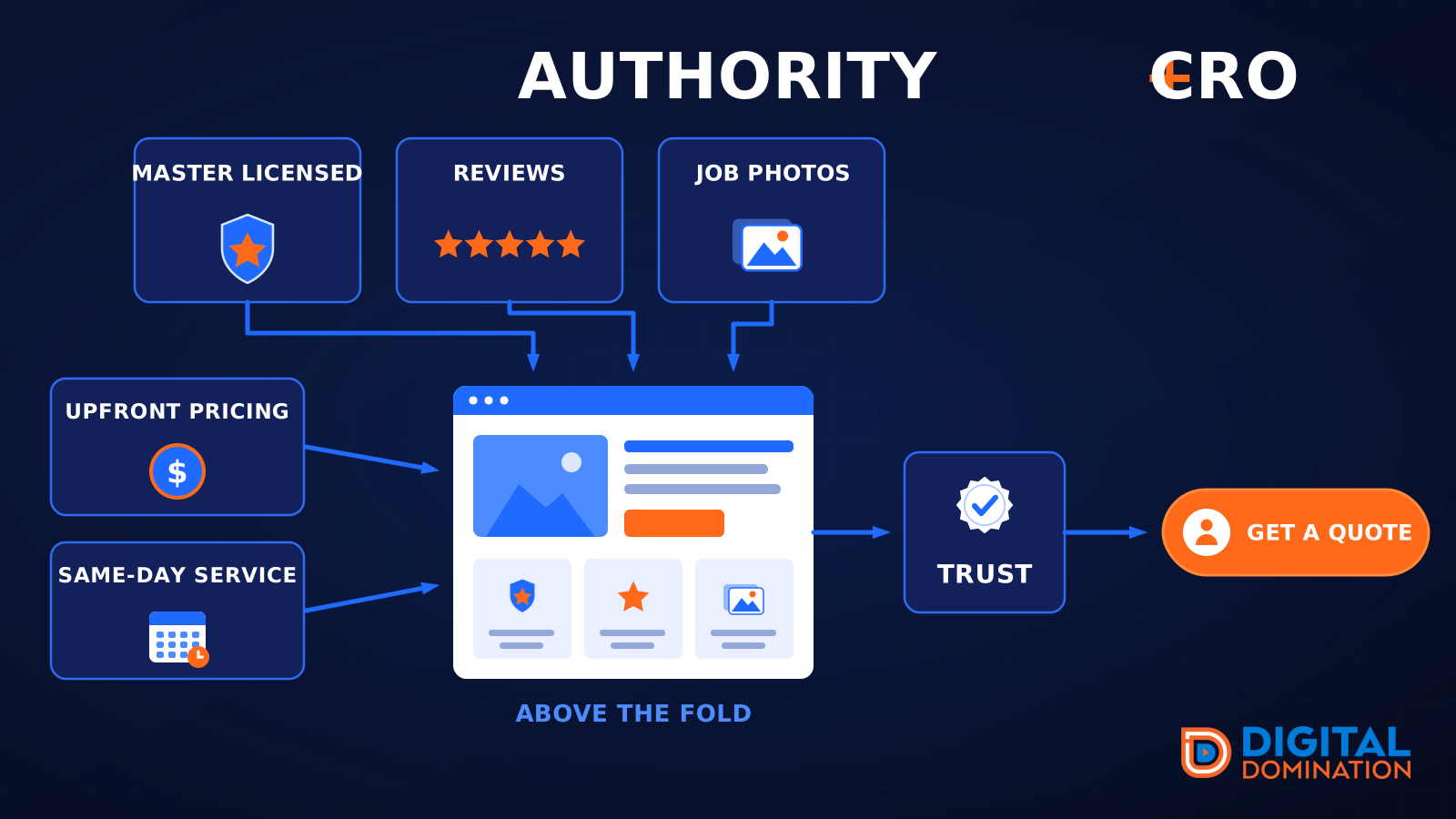
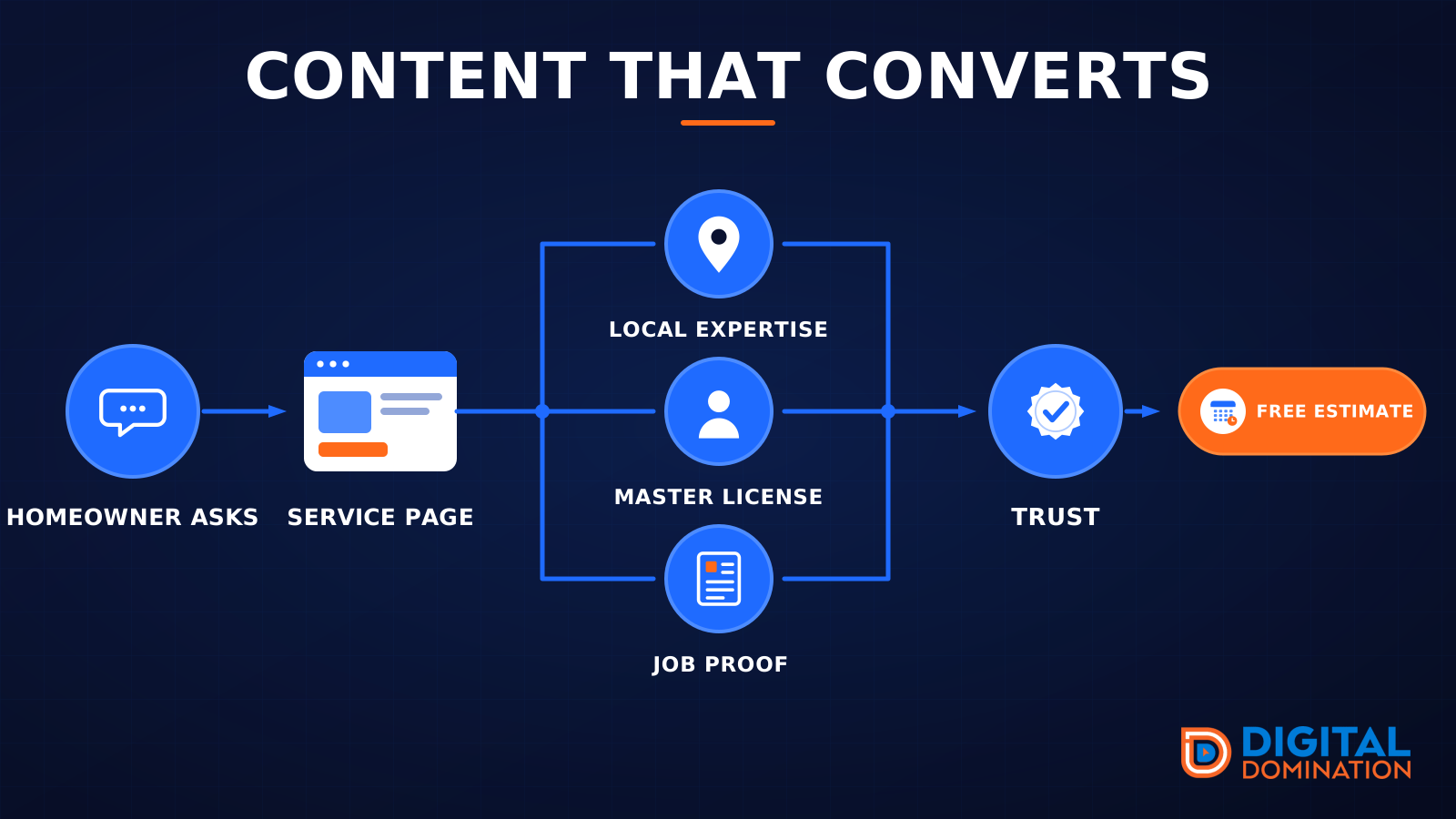
Electrical work is invisible once the drywall closes, it can burn a house down when done wrong, and it is the trade most often impersonated by unlicensed handymen. The first screen of your landing page has to answer two questions: is this a real licensed contractor, and will they show up?
Your state license number is the most powerful trust element in this trade, and most electrician sites bury it in the footer or leave it off. Put it in the header or hero, formatted the way your state board displays it, linked to the board's public lookup. As an illustrative example only, a strip for a generic two-truck shop might read: State License C-2 000000 | Master Electrician on Every Panel Job | 4.9 Stars from Local Homeowners | Generac Authorized Dealer | Permits Pulled, Inspections Passed. The figures are placeholders; the structure is the point, and every claim should click through to a credentials page carrying the license class, issuing board, master status, manufacturer certifications, association memberships, insurance carrier, and links to the board lookup, dealer locator and BBB (your future sameAs targets). A strong first screen includes:
- ▸Service and city in the headline (Panel upgrades and EV charger installation in Henderson)
- ▸License number, visible, linked to the board lookup
- ▸Licensed, bonded and insured stated with the coverage type, not as a slogan
- ▸The master electrician's name and a real photo
- ▸Google rating and review count linked to the reviews
- ▸Real manufacturer credentials: Generac authorized dealer, Tesla Certified Installer, Qmerit certified, Lutron or Span partner
- ▸We pull the permit and meet the inspector
- ▸Same-day or 24/7 availability only if true, a workmanship warranty in years, and a local tap-to-call number
Reviews that mention the breaker, the permit and the cleanup
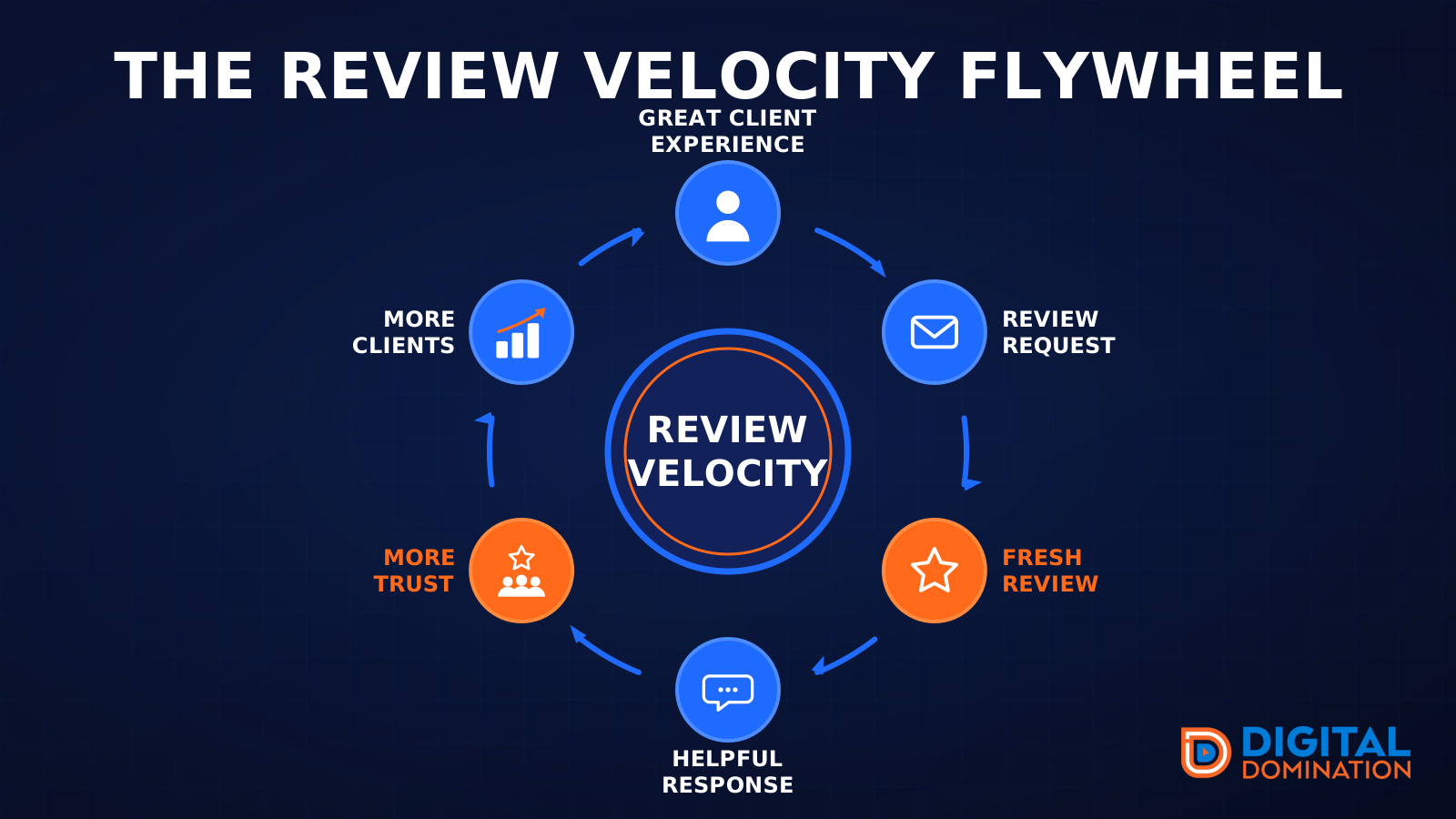
Star average matters, but for an electrician the content and cadence of reviews matter more. A shop with a large count and nothing new since last winter looks less alive than a competitor earning a few real reviews every week. Ask by text the moment the inspector signs off or the lights come back on, and let the customer write it in their own words.
The best electrician reviews read like a service call: he found the loose neutral in twenty minutes, they replaced our Federal Pacific panel and it passed inspection the first time, the charger was in before the car arrived, they vacuumed the drywall dust. That language ties the brand to the service and the town in a way no keyword can. Reply to every review and name the same service in your reply. On the site, summarize the combined rating above the fold and group excerpts by service below, so a homeowner researching a panel upgrade reads panel upgrade reviews.
Schema for an electrical contractor: the Electrician type and the nodes around it
Schema is JSON-LD that tells search engines and AI systems what the visible content means. Without it a crawler sees a name, a license number, some services and a few towns. With it the crawler knows the company is an Electrician, that a specific Person holds a specific license issued by a specific board, that the company offers panel upgrades in a defined set of cities, and that the Generac dealer page and the board lookup refer to the same organization. Most electrician sites we audit have no schema or a plugin default: a LocalBusiness with a name and phone.
The piece that makes it a graph instead of disconnected snippets is the permanent @id. Give the company one identifier such as your domain followed by #electrician, the master electrician one such as the team page URL followed by #person, and each service one such as the panel upgrade URL followed by #service, then reference those same identifiers from every page. Schema must also describe what is visible: a license number in the JSON-LD but nowhere on the page is a mismatch, not an optimization. Validate with the Rich Results Test after every deploy. The recommended architecture:
- ▸Company: Electrician (a HomeAndConstructionBusiness subtype) with telephone, address or service area, openingHoursSpecification, priceRange, image and foundingDate
- ▸Second yard: a distinct Electrician node with its own address and phone, linked via parentOrganization
- ▸Master electrician: Person, connected with worksFor and the company's employee property
- ▸Contractor license: EducationalOccupationalCredential under hasCredential, plus a PropertyValue under identifier naming the board and the license number
- ▸Each service line: Service, connected with makesOffer from the company and provider back to it
- ▸Diagnostic fee or flat-rate item: Offer with PriceSpecification on the relevant Service
- ▸Towns dispatched to: areaServed with City nodes or a GeoCircle around the yard
- ▸Board lookup, dealer locator, BBB, Nextdoor, Facebook, YouTube: sameAs on the company and Person
- ▸Location and service pages: WebPage with about pointing at the Electrician or Service node, plus BreadcrumbList
- ▸Guides and job videos: Article or FAQPage with author set to the Person, and VideoObject with a transcript
PageSpeed for a homeowner standing in a dark garage
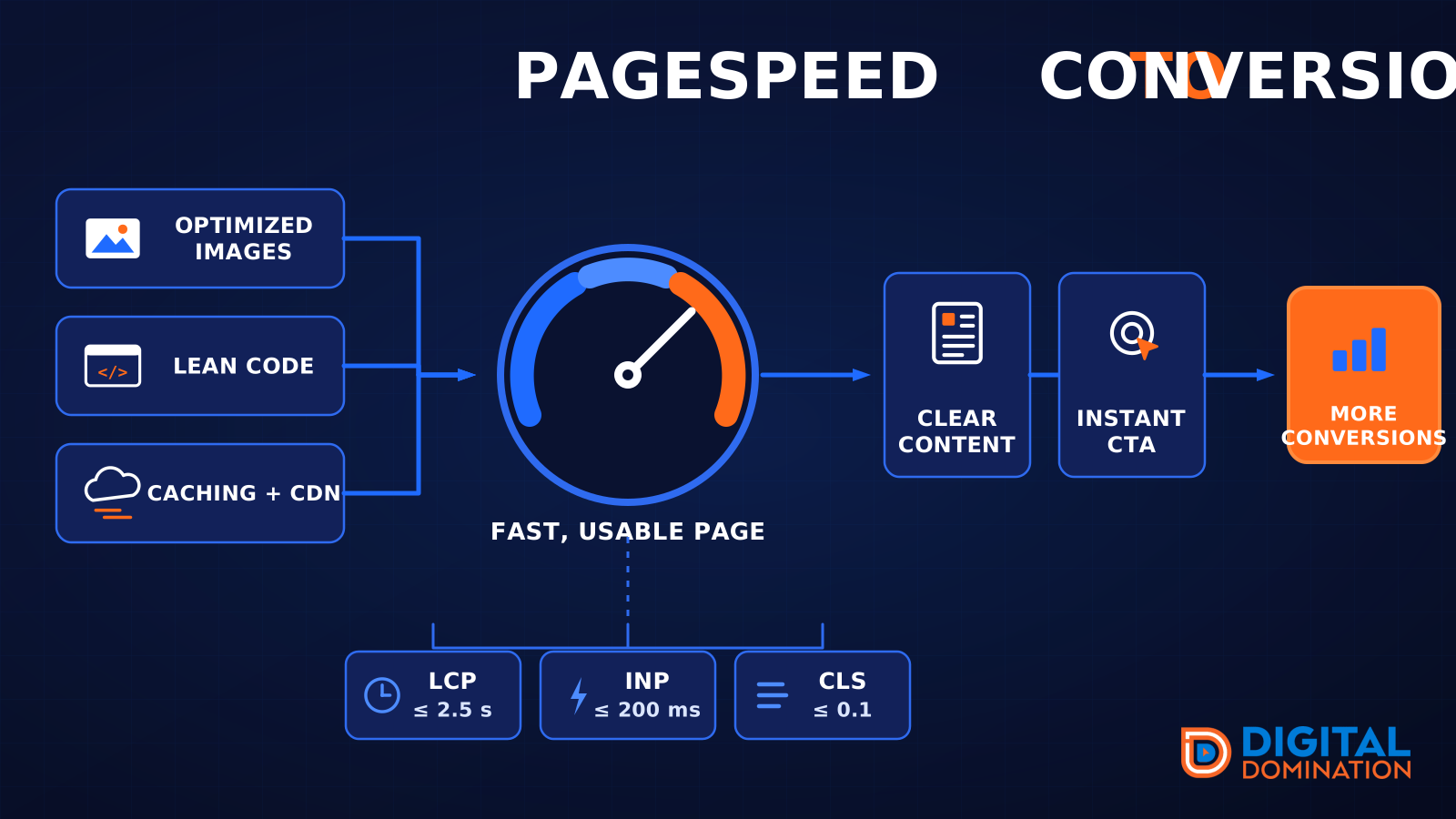
The person searching for an electrician is often on a phone, in a room with no power, sometimes with a smell they are worried about. They will not wait for a hero video, a chat widget, three pixels and a lead-gen vendor's embedded form. Google's good thresholds are a Largest Contentful Paint of 2.5 seconds, an Interaction to Next Paint of 200 milliseconds and a Cumulative Layout Shift of 0.1, measured at the 75th percentile of field data. At Digital Domination we build to a PageSpeed Insights score of 90 or higher and a 2/2 agentic-browsing check, because the AI agents that book appointments on a customer's behalf give up on slow, shifting pages the way people do.
Electrician sites share the same weaknesses: a national lead-gen template, a hero slider of stock photos, uncompressed truck photos straight off a phone, a live map embed on every page, chat and review widgets on first paint, and a phone number rendered as an image. The fixes that matter most:
- ▸One static hero image as WebP or AVIF, responsive sizes, preloaded, never lazy loaded
- ▸Compress every job photo; a 4 MB panel photo becomes a 60 KB WebP with no visible loss
- ▸A static map image that loads the live map on tap
- ▸Chat, review and heat-map scripts delayed until first interaction
- ▸The phone number as real text in a tap-to-call link, for people, screen readers and AI agents
- ▸Fixed dimensions reserved for the estimate form and badges so nothing jumps under the thumb
- ▸One or two self-hosted subset fonts with font-display swap
- ▸A tag manager trimmed to GA4, call tracking and one ad pixel
- ▸CDN caching, modern compression, and server response under 600 milliseconds
- ▸A sticky mobile call bar in plain HTML and CSS
Service call fees, flat-rate pricing and what AI answers need to see
Homeowners ask AI assistants what they ask on the phone: how much is a panel upgrade, is there a fee to come out, what does an EV charger install cost, hourly or by the job. An assistant that cannot find pricing facts on your site answers from a competitor's site or a national average, and it recommends the business it can describe. Publish your real pricing model on the service pages, the FAQ and the profile's Services section. Language AI systems can use includes:
- ▸A stated service call or diagnostic fee and whether it is credited toward the repair
- ▸Flat rates on defined jobs (a Level 2 charger on an existing 240 volt circuit, a ceiling fan swap, a surge protector) with a starting-at figure and what changes it
- ▸A range for a 200 amp panel upgrade with the variables named: meter relocation, utility coordination, permit, grounding
- ▸Free estimates on installs, paid diagnostics on troubleshooting
- ▸After-hours rates, financing and the provider
- ▸Utility and federal rebates you help file, especially on EV charger and panel work
- ▸Workmanship warranty in years and the manufacturer's term on equipment
Content that follows the homeowner from the tripping breaker to the final inspection
Each service page should walk the customer from symptom to inspected job. The person on a panel upgrade page wants to know how to tell if their panel is a Federal Pacific or Zinsco, whether their insurer will demand replacement, how long the power is off, whether the utility comes out, what permit and inspection look like in their county, and what it roughly costs. Answer each under its own heading in two or three direct sentences, then expand.
Local relevance for an electrician is concrete: the permit jurisdiction, the utility, local NEC amendments, inspection scheduling, the utility's rebate programs and the housing stock. A 1960s neighborhood page talks about aluminum branch wiring and two-prong outlets; a new-build suburb page talks about EV-ready circuits and standby generators. Name the master electrician as author, date the page, link the county permit portal and the rebate page, and cross-link services, credentials and locations. A short video of a real panel swap with a transcript gives the customer and the AI retriever something original to cite.
Search Console, GA4 and the dispatch software close the loop
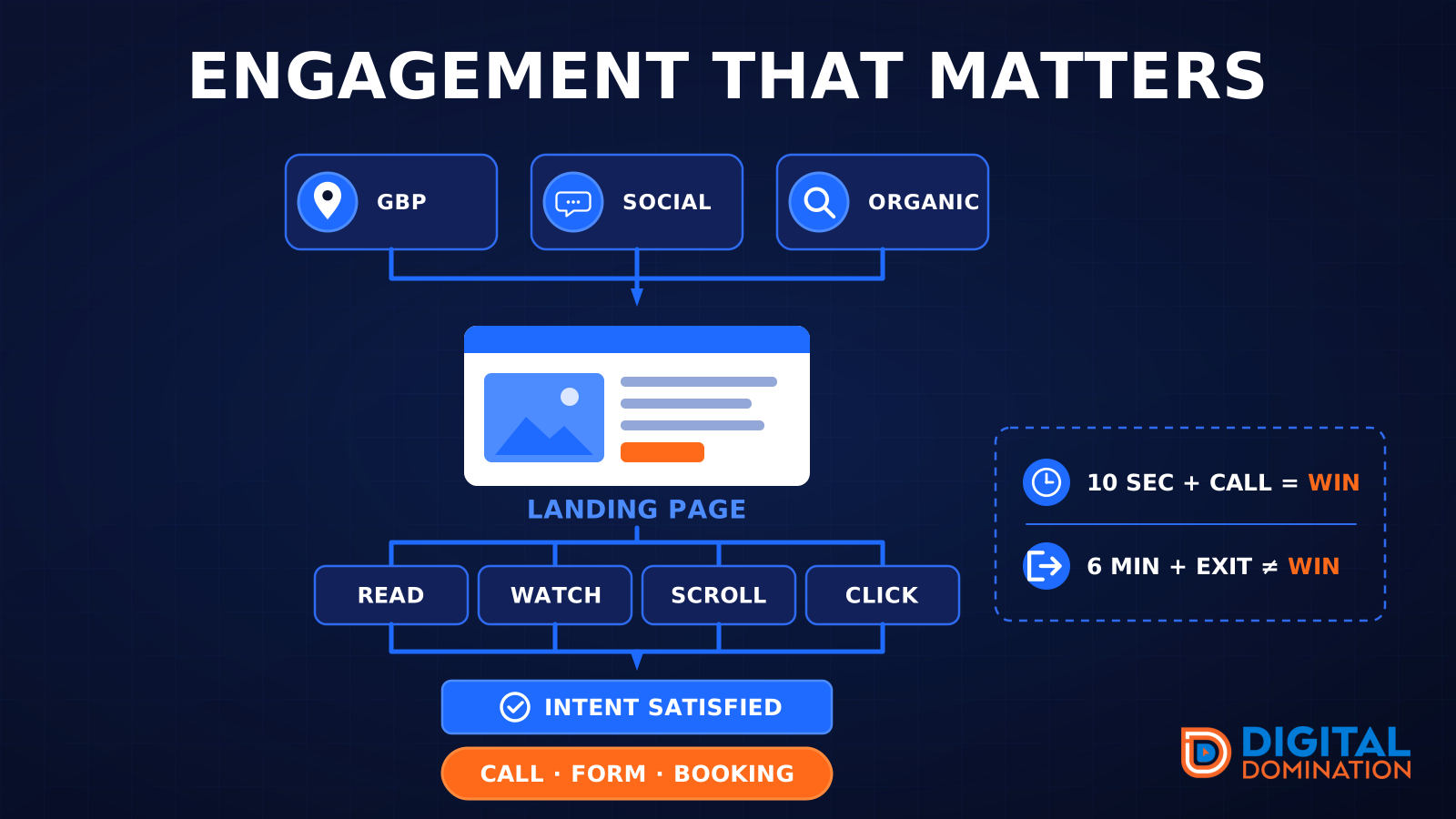
Search Console shows how Google finds you: the queries earning impressions, the pages Google ties to EV charger or generator installation, position, click-through rate, indexing problems, Core Web Vitals failures and structured-data errors. Heavy impressions for panel upgrade plus a town name but few clicks means the title, first screen and schema of that page are the next job. A page suddenly showing for breaker keeps tripping with nothing plugged in means a new FAQ or troubleshooting article.
GA4 shows what happens after the click: tap-to-call events, estimate form completions, scroll depth, which landing pages produce calls, mobile against desktop. Your dispatch or CRM software (ServiceTitan, Housecall Pro, Jobber, GoHighLevel) then tells you which calls became a sold panel upgrade and revenue, with call tracking tying each call back to its page and profile. Run the cycle monthly: measure, pick the biggest gap, ship one focused change, note the date, compare booked jobs, keep what worked. Impressions without clicks is a relevance problem. Clicks without calls is a speed, proof or offer problem. Calls without booked jobs is an intake problem, and it belongs to the dispatcher, not the website.
Truck wraps, Nextdoor threads and the realtor who recommends you
Electricians get talked about in places they never see: the neighborhood Facebook group asking who replaced your panel, the Nextdoor thread about a scary inspection report, the home inspector's referral list, the EV owners' forum where someone posts their install with the installer's name. A sentence like we used Example Electric for our Federal Pacific swap in Summerlin and Mike had the inspector out the next day connects company, electrician, service, town and experience with no link at all, and search engines and AI systems learn from exactly that context.
Publish the same entity everywhere: every before-and-after job photo, every short video on why a breaker trips, every rebate deadline reminder goes to the profile as a post, to Facebook and Instagram, to YouTube with a transcript, to Nextdoor, and to the local subreddit when it genuinely answers a question. Google's Search Console now reports supported social and video platform properties, which shows how far search and social discovery have merged. Axios reported in August 2026 that Reddit's share of visible ChatGPT Search citations fell roughly 86 percent, even as OpenAI holds a Reddit data partnership. The lesson is not to abandon community threads but to never depend on one platform: your own site, the board lookup, dealer locators, BBB, Nextdoor, YouTube, the local news segment about electrical fires after a storm, and the groups where your customers actually ask for names.
A 90-day roadmap timed to the EV rebate deadline and storm season
Electrical demand has seasons: panel and EV charger work spikes when utility rebates open or expire, generator calls spike the week after the first big outage, AC circuit trips climb with summer heat, and code corrections follow the spring home-sale rush. Fix the foundation before your next peak, not during it.
- ▸Days 1-14, baseline: GeoGrid scans for panel upgrade, EV charger installation and electrician near me; audit every profile field and photo; benchmark impressions, calls and booked jobs; audit Core Web Vitals; inventory license, insurance, manufacturer credentials and warranty facts; list NAP inconsistencies across the board lookup and dealer locators; configure GA4 events, call tracking and CRM attribution.
- ▸Days 15-30, foundation: align the profile with the site's vocabulary; build location pages and point profile links at them with UTM tags; move license, master electrician and proof above the fold; add pricing language to every service page; ship the Electrician schema graph with permanent @ids; fix hero, images, map and widgets until mobile clears 90.
- ▸Days 31-60, relevance and authority: publish symptom-to-inspection guides, starting where the GeoGrid is weakest; post real job photos and short videos weekly; launch the text review request at job completion; complete dealer profiles, BBB and Nextdoor with identical NAP; ask the inspectors and realtors who already refer you for a listing on their resources pages.
- ▸Days 61-90, recursive optimization: rewrite titles and first screens for high-impression, low-click queries; fix speed, proof or offer on high-traffic, low-call pages; compare booked jobs by landing page and profile in the CRM; expand the FAQ from real queries; recheck Core Web Vitals and the agentic check; rerun the GeoGrid and repeat the highest-impact change.
One licensed electrician, described the same way everywhere
The goal is not a polished profile, a fast site or an active Facebook page in isolation. It is one clearly defined electrical contractor whose license, master electrician, services, service area, pricing model, warranty, reviews and manufacturer relationships read the same on the profile, the site, the schema, the board lookup, the dealer locators, the reviews and the community threads. When every source agrees, Google can rank the entity, an AI assistant can recommend it, and a homeowner in a dark garage can trust it in the seconds they are willing to spend.
Then use Search Console, GA4, call tracking, the CRM and GeoGrid data to make that entity more relevant, more prominent and more profitable every month. At Digital Domination that is the work behind our guarantee: top 3 in the Google Map Pack in 12 weeks or you do not pay. If your Map Pack coverage is a wall of red with one green square over your own shop, start by seeing exactly where you rank. Our free GeoGrid scan checks 169 points across your market and shows how you appear to a homeowner three neighborhoods over, not just from your own driveway.
Keep reading
Related guides
Put it into action
Frequently Asked Questions
What Google Business Profile category should an electrical contractor use?
Use Electrician as the primary category. Add secondary categories only for real lines of business, such as Electrical installation service, Electric vehicle charging station contractor or Lighting contractor. Then list specific services in the Services section using the same names as the website so the profile and the site reinforce each other.
Should I put my contractor license number on the website?
Yes, above the fold, not in the footer. The license number, the master electrician's name and a link to the state board lookup are the strongest trust signals in this trade because unlicensed handymen are the main competition for small jobs. Mark the same license up in schema as a credential and identifier so the fact is machine readable.
Does schema markup directly raise my Map Pack ranking?
Not by itself. Schema helps Google and AI systems understand who the company is, who holds the license, what it offers and where, and it makes pages eligible for supported rich results. Its value is greatest when it accurately describes strong visible content and matches a profile that says the same thing.
Should an electrician publish prices for panel upgrades and EV charger installs?
Publish the pricing model you actually use: service call fee, flat-rate items with starting-at figures, a range for panel upgrades with the variables named, free estimates on installs, financing and rebate help. Exact quotes still depend on the site visit, but clear pricing language gives AI assistants and homeowners something concrete to compare, and the business that can be described is the one that gets recommended.
How fast does an electrician's website need to be?
Target Google's good thresholds: Largest Contentful Paint under 2.5 seconds, Interaction to Next Paint under 200 milliseconds and Cumulative Layout Shift under 0.1 at the 75th percentile of real users. In practice that means one compressed hero image, no slider, a click-to-load map, delayed widgets and a text phone number. Digital Domination builds to a mobile PageSpeed Insights score of 90 or higher.
How should a service-area electrician with no storefront handle the address?
Hide the address on the profile if customers never visit it, and set the service area to the cities and zip codes you actually dispatch to. Use areaServed in schema for the same places and write location pages that name the local permit jurisdiction, utility and housing stock. Never create fake office addresses; Google suspends profiles for it and it breaks the consistency you are building.
Do Facebook posts and Nextdoor recommendations affect local rankings?
Google does not confirm that likes or followers move Map Pack rankings directly. They still matter because they create branded searches, referral visits, reviews, links and contextual mentions that tie your company to specific services and towns. Those effects support prominence, and Search Console now reports supported social and video properties alongside your site.
How many reviews does an electrician need to compete?
There is no fixed number; cadence and content beat a one-time surge. Ask by text the moment the job is inspected or the power is back on, and let customers describe the electrician, the problem, the town and the cleanup in their own words. A steady flow of recent, specific reviews reinforces relevance in a way a high count from two years ago does not.
Ready to dominate your map?
Top 3 in the Google Map Pack in 12 weeks, or you don't pay.