
Estate planning attorney local SEO: how GBP entity signals, schema and PageSpeed win the family before the first consultation
The attorney who drafts the cleanest trust in the county does not automatically get the signing. The one Google can read as a single entity, an adult child can verify in a minute and a phone can load in a parking lot does.

Sunday afternoon in a memory care parking lot
It is Sunday, 3:40 p.m. A daughter sits in her car outside an assisted living community after touring it with her mother, who scored poorly on the cognitive screening her doctor ordered last month. On the drive over, her mother said twice that the house should go to the grandchildren, and the daughter has no idea whether the 2004 will in the fireproof box still says that. A friend told her that once a parent is declared incapacitated the family needs a guardianship, not a power of attorney. She types power of attorney lawyer near me, then, a minute later, does my mom need a trust.
Two firms fit the search. One has drafted trusts in the county for twenty-two years and holds a board certification in estate planning, but its profile says Law firm, its site opens on a stock gavel and its fee page says every situation is different. The other opened four years ago, is categorized Estate planning attorney, lists Durable power of attorney and Revocable living trust with starting prices, shows the attorney at the signing table and loads in two seconds with a button that books this week. The daughter never learns the first firm exists.
Estate planning has two front doors. One is slow: a couple in their forties finally naming a guardian. The other is triggered: a diagnosis, a death, a sibling's probate mess, and that client searches like an emergency for a week, then goes quiet. Google, the AI answer engines and the daughter in that car judge the firm the same way. They collect facts, check them against each other and decide who is relevant, prominent and safe to trust with a lifetime of paperwork.
The short version for a firm whose product is a signed binder
At Digital Domination we describe the foundation as three pillars that only work together. Google Business Profile entity signals establish who the firm is, what it drafts and where it sits. Schema connects the firm, its attorneys, their credentials, plan types and fees into one machine-readable graph. PageSpeed makes all of it usable on a phone in a parking lot or an iPad at a kitchen table. Reviews, seminars and outside mentions corroborate the three, and Search Console, GA4 and the practice management system show which pages became signed engagement letters.
Google describes local ranking in terms of relevance, distance and prominence. Distance is fixed by where the searcher stands, which here means the 55-plus communities and hospital corridors where the trigger happens, not the office. Relevance and prominence are the levers, and both are built from one set of facts stated the same way everywhere: the firm's category, its services vocabulary, its attorneys' credentials, its fee posture and its addresses. Every section below is a place where those facts either agree or drift.
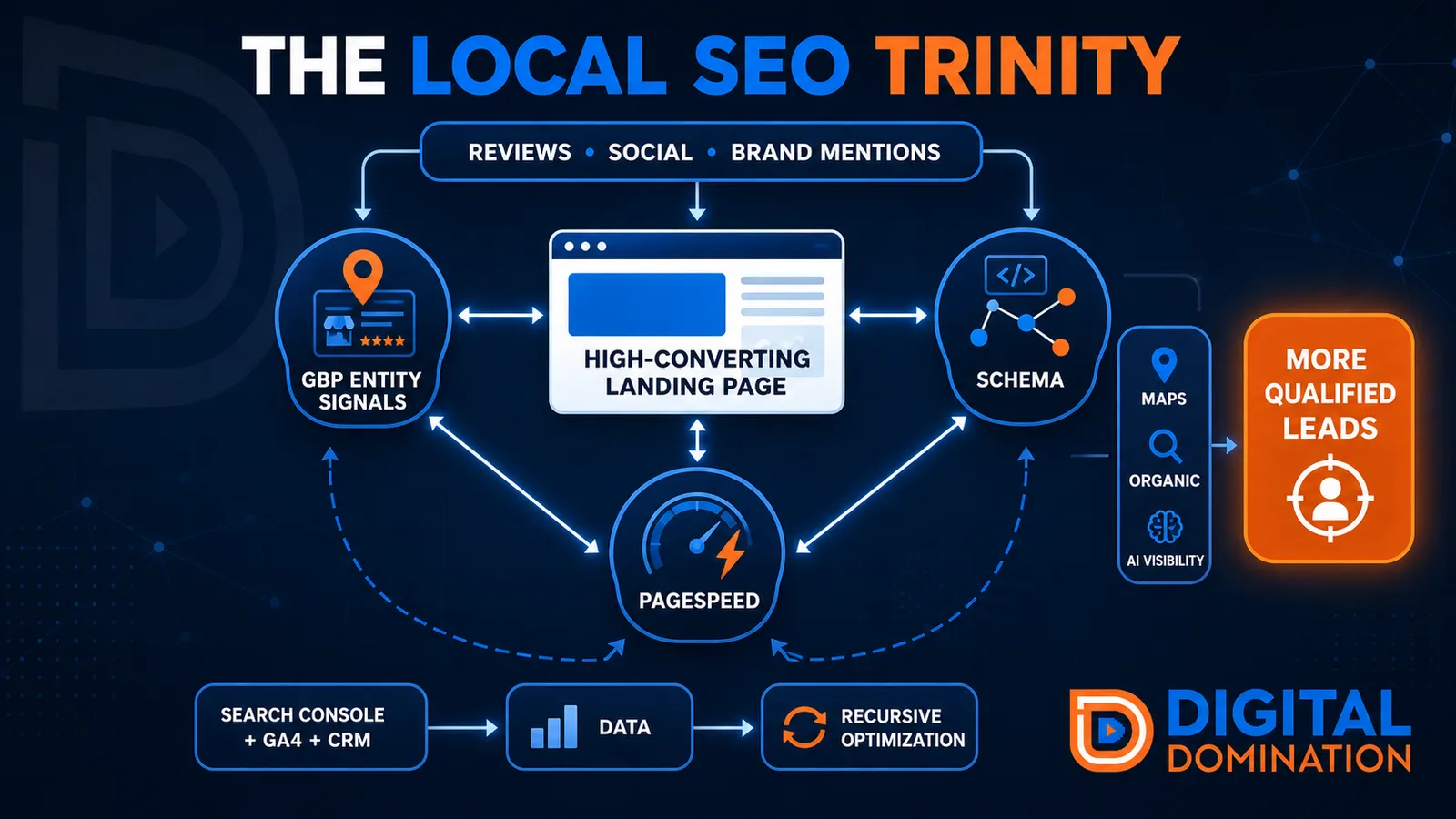
GBP entity signals for a practice Google files under Estate planning attorney
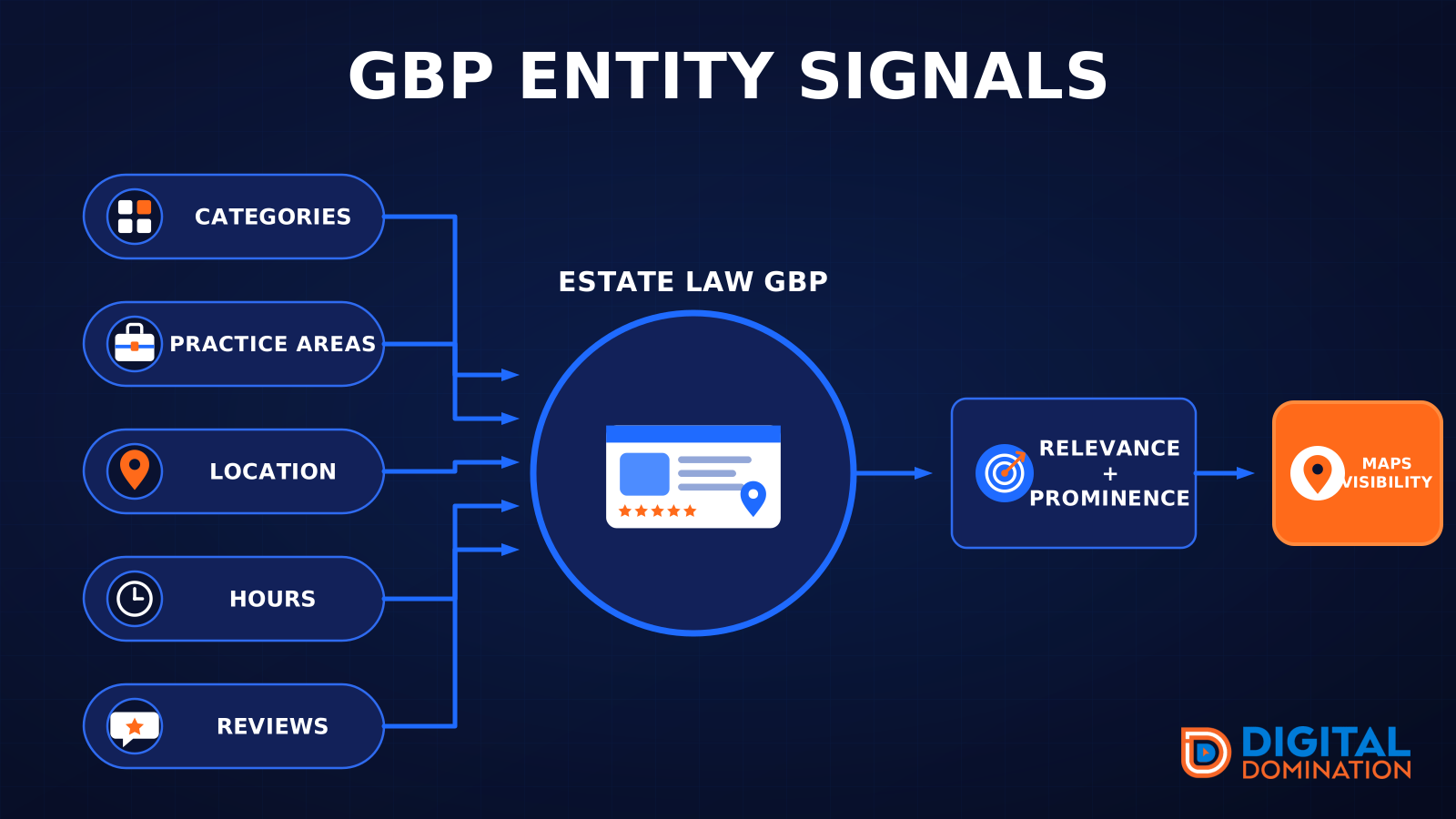
Estate planning attorney is a real Google Business Profile category and it should be the primary one, not Law firm or Attorney, because the searcher is not comparing you to an injury shop. Elder law attorney is the right secondary for a practice that handles Medicaid planning and guardianships; Tax attorney belongs only if the firm truly does estate tax work. Probate and trust administration are not primary categories, so they live in the services list and the page structure, and the two must match: a service the site never mentions weakens the entity.
The services list is where the client's vocabulary and the firm's meet. Families search for a will, a trust and a power of attorney; the firm thinks in plan packages. Load both, give each a plain description and a starting price where the firm quotes flat fees, and give each a page with the same name. Say whether evening or Saturday consultations exist, because that is when the adult child is free. The fields to audit this week:
- ▸Primary category Estate planning attorney; secondaries Elder law attorney and Law firm where true; never Notary public, which pulls the wrong searches.
- ▸Services in the client's words: Revocable living trust, Last will and testament, Durable power of attorney, Healthcare directive, HIPAA authorization, Guardianship nomination for minor children, Special needs trust, Probate administration, Trust administration, Business succession plan, Trust funding and deed transfers.
- ▸Attributes this client reads: Online appointments, Onsite services if the attorney signs at homes or care facilities, Wheelchair accessible entrance and parking, languages spoken, and a line about free parking or an elevator.
- ▸Photos: the attorney at the conference table, the signing room, the entrance and parking so an older client knows where to go, the binder the client leaves with. Never a client, never a gavel.
- ▸One landing page per office as the profile's website link with UTM parameters, naming the attorneys who sit there, the probate court for that county, accessibility, and the suburbs and retirement communities the firm actually drives to for signings.
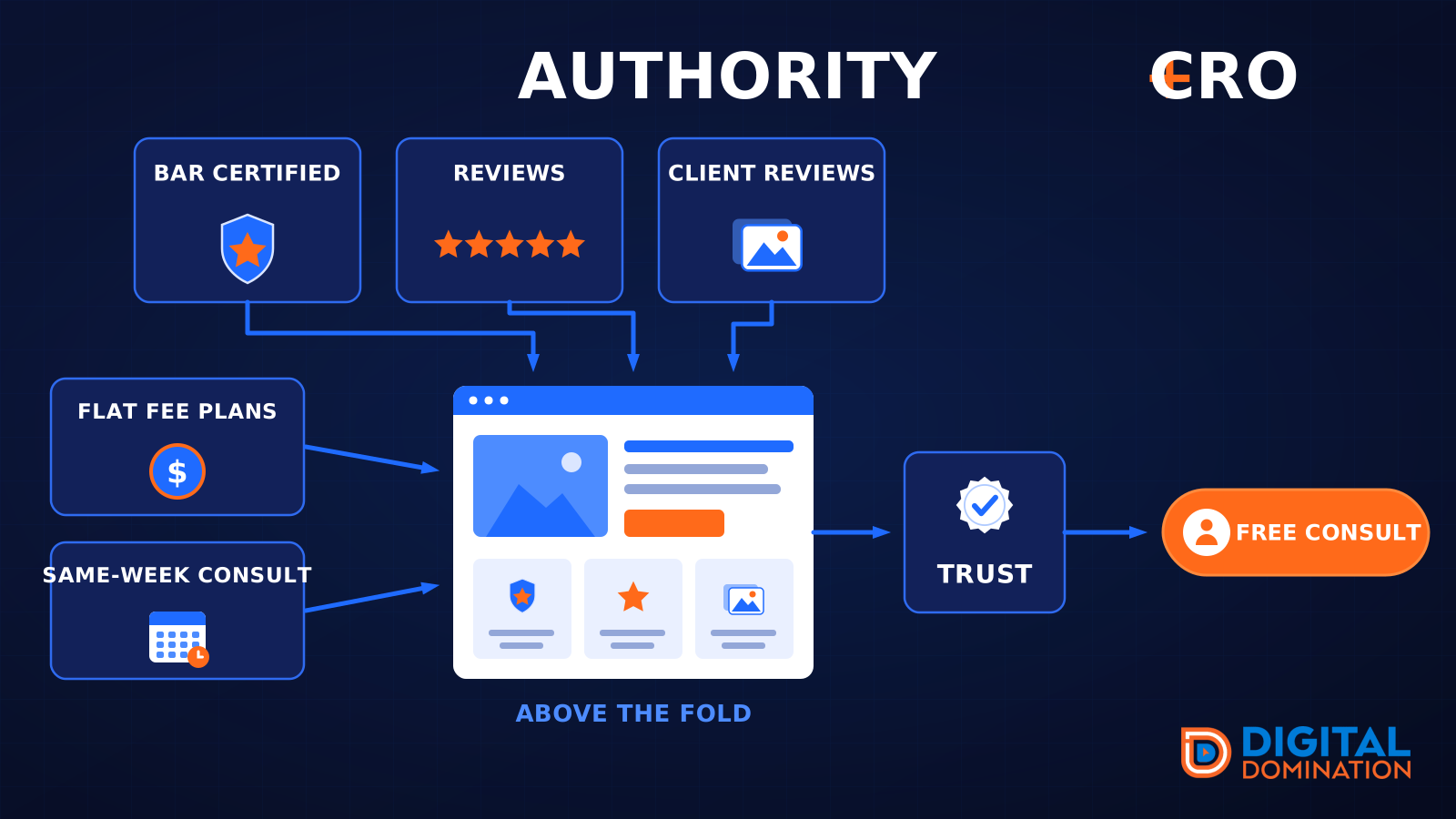
Proof an adult child can verify before bringing a parent in
The person choosing the estate planning attorney is often not the client. It is a son or daughter vetting a firm for a parent, checking two things in the first screen: is this attorney actually a trust and estates specialist, and can I hand them my mother's house, her accounts and her signature. Compassionate and experienced do not survive that test. Verifiable credentials do, and most firms bury them on page three of the About section.
The first screen should carry the plan type and city in the headline, the attorney's name and real photograph, the bar admission and any board certification, the fee posture and one button that books a consultation. An example strip for a fictional Example Trust Law might read: Board certified in estate planning and probate law, 22 years drafting trusts in the county, flat-fee plans quoted before you sign, 4.9 stars on Google. Those figures are placeholders; the firm's own must be exact and provable one click away. The credentials that are real in this niche, each linked to its source on the attorney's biography:
- ▸State bar number, admission year and a direct link to the bar's public profile.
- ▸Board certification in estate planning, trust and probate law where the state offers it (Texas, Florida and California among them), with the certifying body named.
- ▸ACTEC Fellow status, the peer-elected credential other estate planners recognize, linked to the ACTEC directory.
- ▸Certified Elder Law Attorney designation and NAELA membership for firms doing Medicaid and guardianship work; an LL.M. in Taxation or CPA license for those planning around estate and gift tax.
- ▸WealthCounsel membership stated as membership, not as an award; years in practice; the plan types the attorney personally drafts; community roles such as a hospice board seat, each with a year.
- ▸Links to the Avvo, Martindale-Hubbell, Justia and LinkedIn profiles that describe the same person, so machines can confirm identity.
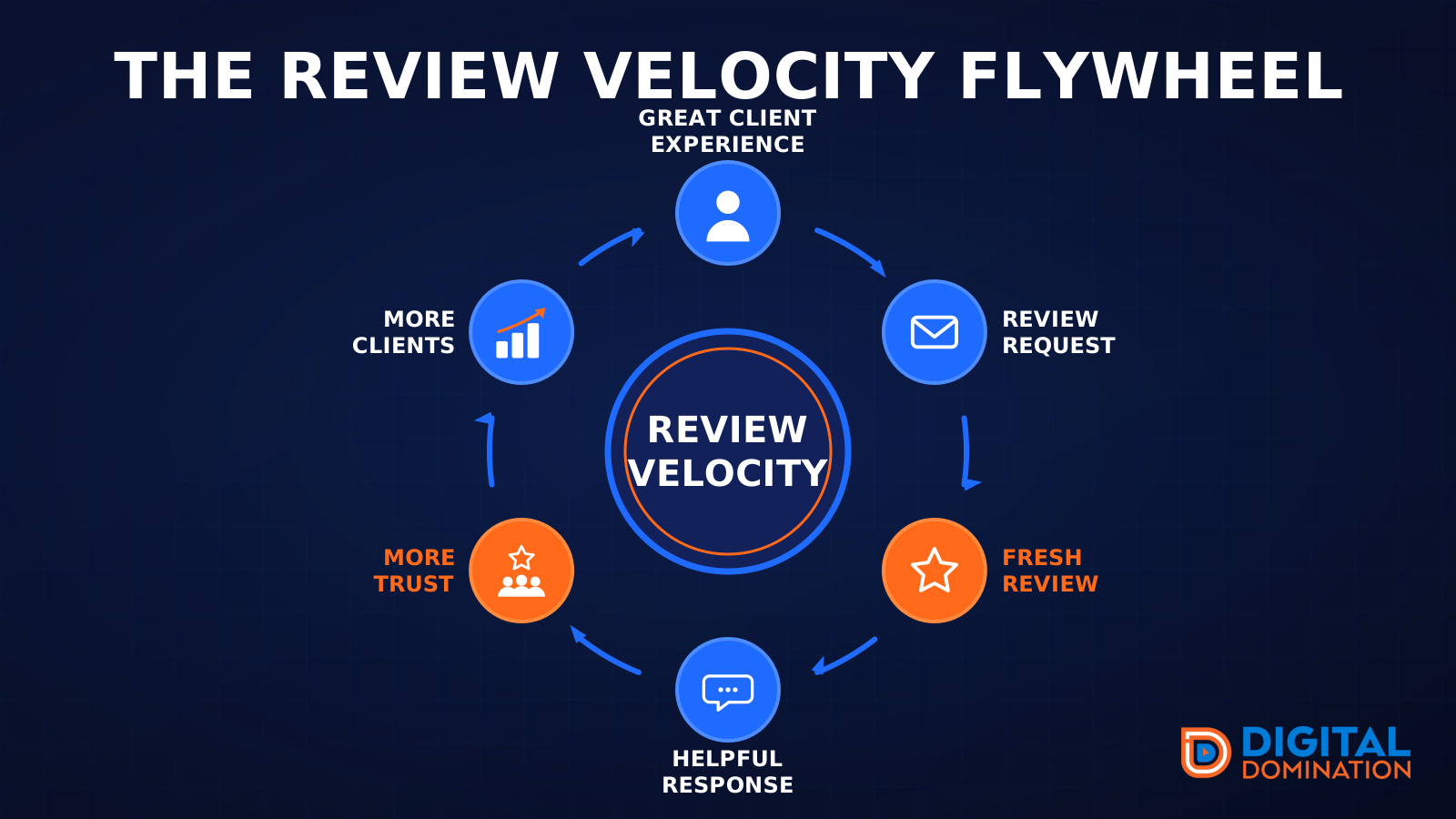
Review velocity when the best moment to ask is the signing table
Estate planning clients are private, often older, and they do not review a law firm the way diners review a restaurant, which makes review velocity, the steady arrival of new reviews, a differentiator. A firm with 60 reviews and one new one a week reads as active; a firm with 300 and nothing since last spring reads as a firm whose attorney may have retired. The natural moment to ask is the signing meeting: the documents have just been notarized, the relief is real and the attorney is in the room. A card with a QR code handed over with the binder, followed by one text the next morning, beats any automated campaign sent three weeks later. For probate and trust administration, ask the personal representative when the final distribution letter goes out.
What the review says matters as much as the stars. A review that names the attorney, the plan type, the town and the experience (explained the trust in plain English, the fee was exactly what was quoted, met us at my father's care facility) ties the entity to its services and geography in a client's own words. Responses should thank the reviewer without confirming or describing the matter. Never offer anything for a review, and read the state bar's advertising rules before quoting one on the site.
Schema built on LegalService for a trust and estates firm
Schema is JSON-LD that labels what the visible page already says so a machine can connect the pieces. Without it, Google sees a name, some counties, a law school and the word trust. With it, Google reads that the firm is a LegalService, that a specific Person is an attorney who works for it and holds a board certification, that her identifier is a bar number, that the firm drafts revocable living trusts in a named county at a stated flat fee, and that the ACTEC directory, the bar profile and the Avvo page describe the same people. Every node carries a permanent @id (the site URL followed by #firm, #office, #person or #service) so thirty pages reference the same entities instead of thirty disconnected copies. A Yoast or Rank Math default emits one generic node and stops. The architecture for an estate planning practice:
- ▸The firm: LegalService, with name, address, telephone, openingHours, priceRange, areaServed for the counties served, and sameAs to the bar profile, Avvo, Martindale-Hubbell, LinkedIn and Facebook.
- ▸Each office: a distinct LegalService location node with its own @id, geo coordinates and the probate court it appears in.
- ▸Each attorney: Person with jobTitle, worksFor pointing to the firm @id, alumniOf, hasCredential for the board certification or LL.M., identifier as a PropertyValue holding the bar number, memberOf for ACTEC or NAELA, knowsAbout for trusts, probate and Medicaid planning, and sameAs to every directory that describes the same person.
- ▸Each plan type and matter: Service (revocable living trust plan, will-based plan, powers of attorney, special needs trust, probate administration, trust administration, business succession) with provider pointing to the firm and areaServed naming the counties.
- ▸Fee terms: Offer or PriceSpecification on each Service stating the flat fee, starting price or hourly range exactly as the page shows it.
- ▸Seminars: Event with location, startDate, offers and a performer pointing to the attorney's Person @id. Almost no competitor marks up its seminar calendar.
- ▸Guides and pages: Article or BlogPosting with the attorney as author and an honest dateModified, because exemption amounts change; WebPage plus BreadcrumbList on every page; VideoObject with a transcript for seminar recordings.
PageSpeed for a page read on an iPad at a kitchen table
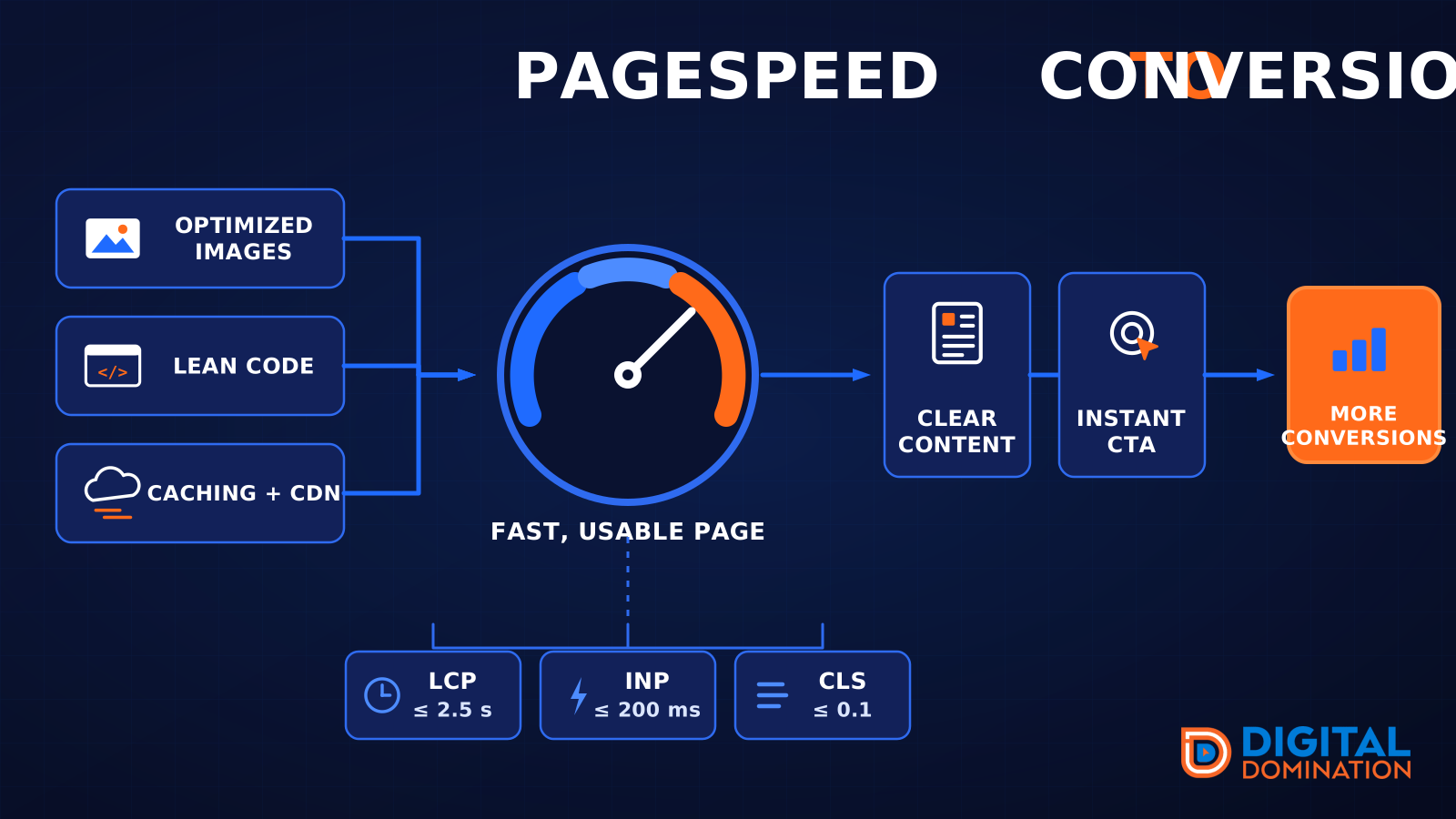
The typical estate planning site is a WordPress theme bought in 2019: a rotating hero slider, a 4 MB headshot, a YouTube seminar recording that loads on every visit, a booking widget in an iframe, a chat bubble and a seminar popup. This audience is the least forgiving on the web for that stack; older clients on slow home Wi-Fi and adult children on cellular both leave when the page shifts under a thumb aimed at the phone number. Google measures Core Web Vitals from real users at the 75th percentile, and the good thresholds are Largest Contentful Paint at 2.5 seconds or less, Interaction to Next Paint at 200 milliseconds or less and Cumulative Layout Shift at 0.1 or less. At Digital Domination we target a PageSpeed Insights performance score of 90 or higher on the home, trust and probate pages and a 2/2 result on the agentic browsing check, because the adult child increasingly sends an AI assistant to find the firm and book the consultation. The fixes that move this kind of site:
- ▸Replace the slider with one static hero image served as WebP or AVIF at the displayed size, preloaded and never lazy-loaded.
- ▸Turn the seminar video and any map into click-to-load facades; a live YouTube iframe alone can cost a second.
- ▸Load the booking widget inside a reserved-height container, or replace it with a plain form that posts to the intake system, and defer the chat widget and pixels until after first interaction.
- ▸Self-host and subset the fonts, set font-display so text renders immediately, and keep body text at a size a 74-year-old reads without pinching.
- ▸Reserve dimensions for headshots, review widgets and the phone number, and keep the call and booking buttons in the first screen on mobile, large enough to tap without zooming.
Flat fee language an AI Overview can repeat without misquoting you
Estate planning is the rare legal niche that already prices like a product. Most firms quote flat fees for a will-based plan and a trust-based plan, single or married, and hourly or statutory fees for probate, yet the fee page on most sites says only that every family is different. AI Overviews and LLM answers compare firms on concrete facts, and when a firm publishes nothing the answer engine skips it or fills the gap from a directory that guessed. Publish ranges, state what is included, and repeat the same language on the service pages, the FAQ and the GBP services, with an Offer node in the schema. The questions the fee page must answer plainly:
- ▸How much a revocable living trust plan costs for a single person and for a married couple, as a range or a starting price.
- ▸Whether the flat fee includes the pour-over will, powers of attorney, healthcare directive, the deed moving the house into the trust and a funding letter for the financial institutions.
- ▸Whether the initial consultation is free, and how probate is billed: hourly with a range, a flat fee by estate size, or a statutory percentage where the state sets one.
- ▸Whether amendments, plan reviews, house calls, facility signings and rush turnaround before a surgery or a trip carry their own prices.
Content for the years between the first question and the funded trust
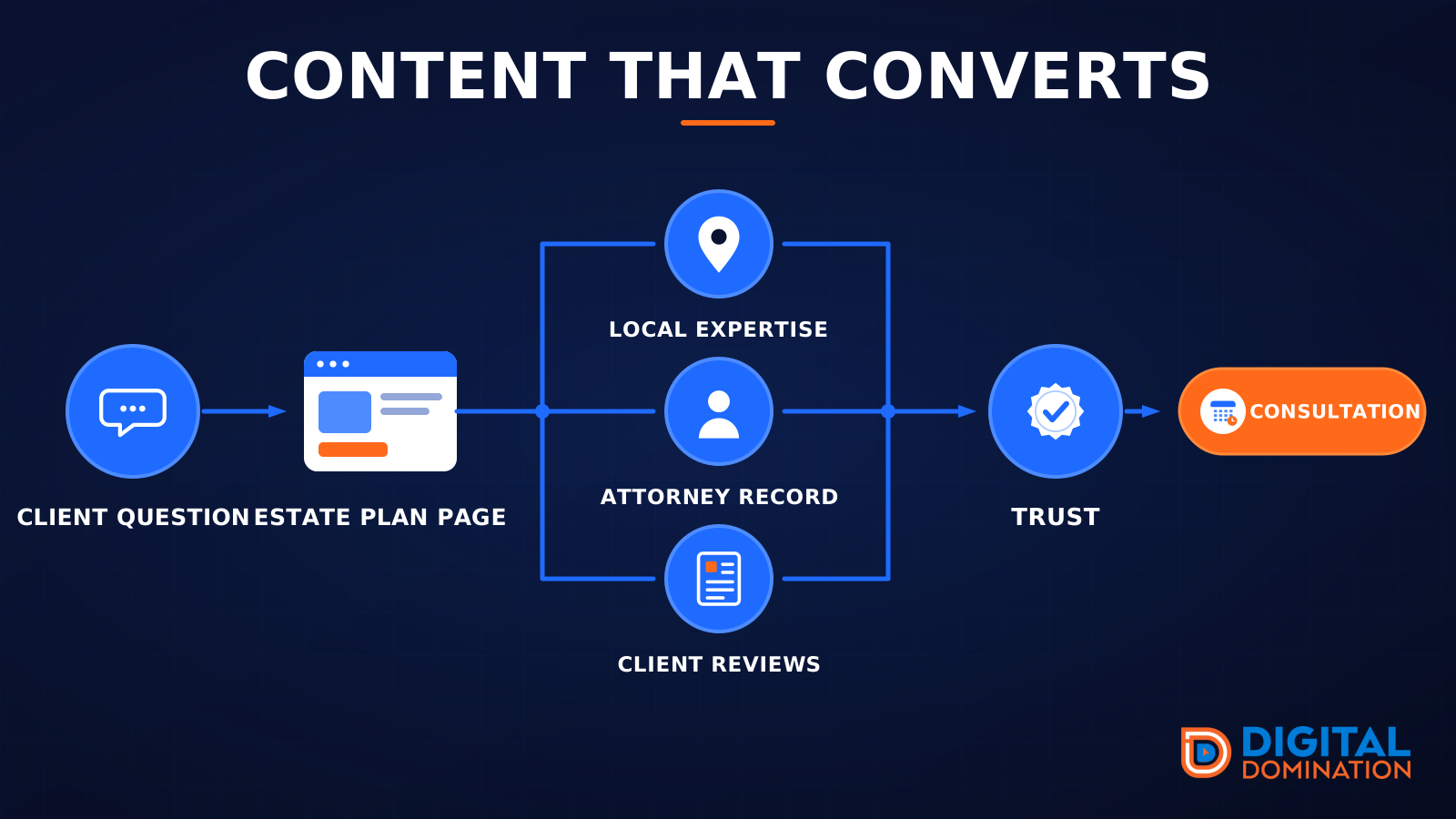
The estate planning client's journey is long and made of questions, most of them about the law rather than about lawyers. Do I need a trust or is a will enough. What happens to the house if my husband dies first. Is a power of attorney still valid after a dementia diagnosis. The firm that answers those in the state's own terms, under a named attorney, wins the research phase weeks before the consultation, and those pages are what AI systems retrieve when someone asks the same question in a chat window. National explainers cannot compete on state law.
Each guide opens with the direct answer in the first two sentences, then covers the state rule, the county process, the exceptions and the next step. Every page shows author and dateModified, because the federal estate tax exemption and state probate thresholds change and a stale number is a credibility problem. The page set that covers the journey:
- ▸Trust versus will in this state, including the small-estate affidavit threshold and whether the state offers a transfer-on-death deed.
- ▸How probate works in the county: the court, the timeline, the fee model and when it can be avoided.
- ▸Powers of attorney and capacity: what can still be signed after a diagnosis and when guardianship becomes the only route.
- ▸What to do when a parent dies: a first-30-days checklist for the personal representative that intake can send by text.
- ▸Life-event pages: new parents naming a guardian, blended families, a child with special needs, a family business, a second home in another state, snowbirds and dual residency.
- ▸How to fund a trust and why unfunded trusts fail, a glossary (pour-over will, successor trustee, per stirpes, step-up in basis) at a tenth-grade reading level, and seminar recordings with transcripts linked to the guides they cover.
Search Console, GA4 and the intake calendar as one loop, from question to engagement letter
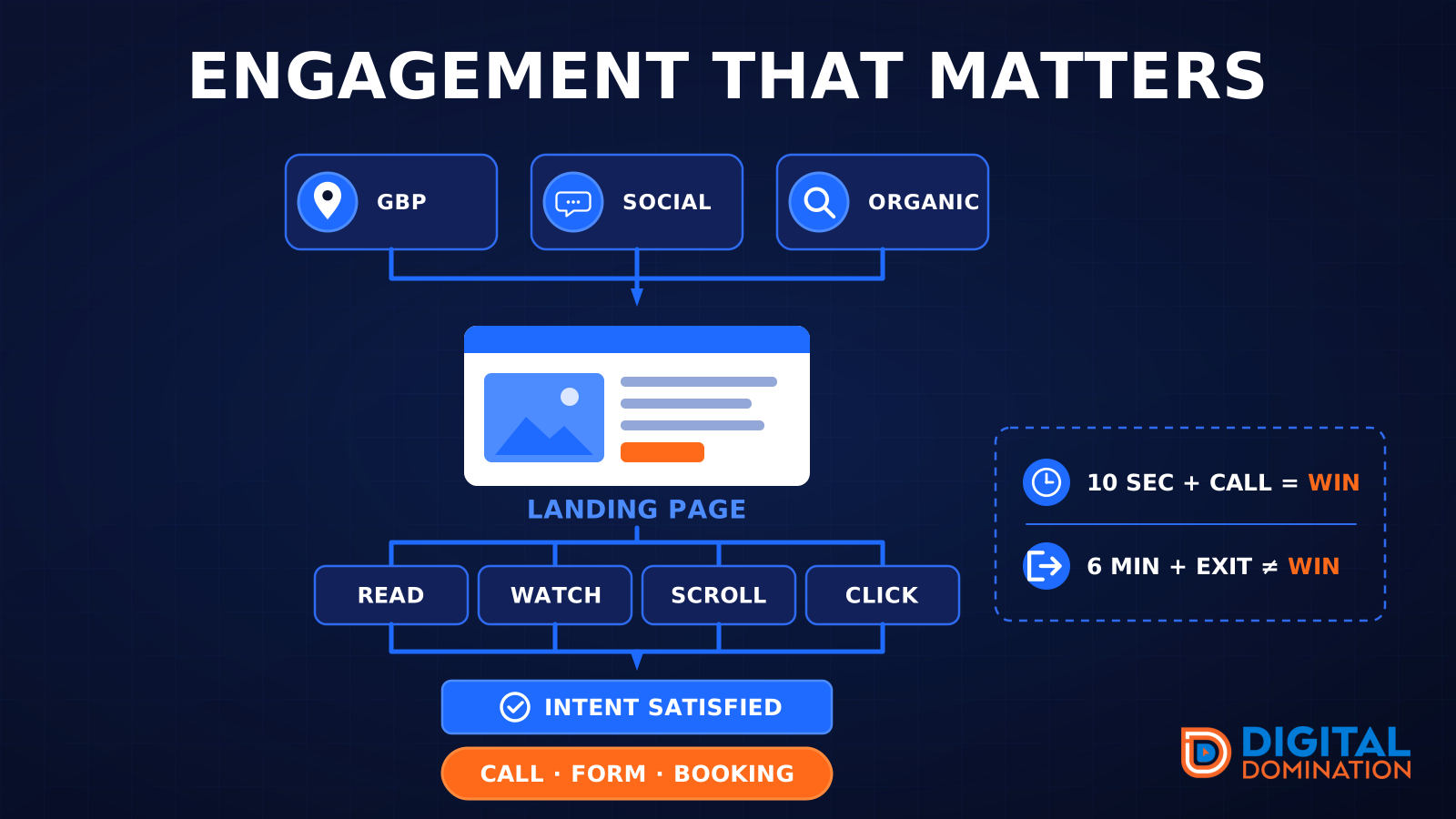
Search Console shows how the firm is found; GA4 shows what visitors did; the practice management or intake system shows which of them signed an engagement letter and for what plan. Together they tell the firm which page produced the trust client from the 55-plus community and which produced the probate matter from the hospital district. Because the research client takes weeks, judge changes on 60- to 90-day windows and annotate every deployment. The signals to read each month:
- ▸Search Console: impressions and clicks split between concept queries (trust vs will, avoid probate) and firm queries (estate planning attorney plus city, the attorney's name); a guide with high impressions and weak clicks needs a sharper title and first answer, and new queries Google shows an existing page for become the next guide or GBP question.
- ▸GA4: click-to-call, consultation bookings, intake worksheet downloads and seminar registrations as events, attributed to the landing page and to the GBP profile through its UTM link, plus mobile versus tablet conversion rates, which in this niche can move in opposite directions.
- ▸Intake system: consultation-to-engagement rate, plan type, fee and referral source per landing page, so a page that books consultations that never sign gets rewritten around qualification.
- ▸The loop in one line: impressions but no clicks means fix relevance and the snippet; clicks but no bookings means fix speed, proof and the offer; bookings but no engagement letters means fix qualification and the consultation itself.
Seminars, advisor referrals and the community mentions that corroborate the firm
Estate planning firms already run the best brand-mention engine in local law: the seminar. A workshop at a library, a 55-plus clubhouse or a financial advisor's office produces a GBP post, an Event node, a YouTube recording with a transcript, a Facebook event in the community's group and questions the firm can answer publicly afterward. Financial advisors, CPAs, hospice social workers and memory care admissions staff all name estate attorneys in conversation, and increasingly in LinkedIn posts and Nextdoor threads. A line like 'Example Trust Law did my mother's trust in Henderson and the attorney came to her facility' connects the firm, the attorney, the service, the place and the experience without a link, and search engines and AI systems read that context.
Reddit's estate planning and personal finance communities ask the exact questions the guides answer, and answering honestly without pitching builds the same corroboration. Axios reported in August 2026 that Reddit's share of visible ChatGPT Search citations fell roughly 86 percent, while OpenAI still holds a Reddit data partnership, so treat that as a reason to diversify rather than leave. A footprint across the firm's site, the bar and ACTEC directories, YouTube, the Facebook groups where the 55-plus audience actually is, Nextdoor and LinkedIn does not depend on any one platform. Google's Search Console now reports supported social and video platform properties, a clear sign that social content and search discovery have merged.
A 90-day roadmap that starts at the signing table
This plan assumes one office, one to three attorneys and a steady calendar of signings, and it treats the signing meeting as the most valuable moment in the marketing system: where reviews, referrals to the client's adult children and the next seminar invitation all begin. Rankings are the by-product of doing these in order.
- ▸Days 1-14, baseline: GeoGrid scan for estate planning attorney, living trust attorney and probate attorney across the county's retirement communities and hospital corridors; audit every GBP field; benchmark consultations, engagement letters and plan mix by referral source; run PageSpeed Insights on the home, trust and probate pages; inventory credentials with source links; dump the existing schema; check name, address and phone across the bar directory and Avvo.
- ▸Days 15-30, foundation: set Estate planning attorney as primary and load the services list with fee language; publish the office page with the probate court and accessibility; rebuild the first screen around the board certification, years and one booking button; publish full attorney biographies; deploy the LegalService, Person, Service, Offer and Event graph with permanent @id values; remove the slider and auto-loading video and reach a mobile score of 90 or higher; start the signing-table review card; configure GA4 events and the UTM link.
- ▸Days 31-60, relevance and corroboration: publish the state-specific trust versus will, probate, capacity and when-a-parent-dies guides under named authors; add life-event pages; run two seminars marked up as Events and post the recordings and transcripts on GBP, Facebook and LinkedIn; ask advisor and CPA partners to link to the guide that answers their clients' most common question; complete the ACTEC, NAELA, bar and Avvo profiles so every source agrees.
- ▸Days 61-90, optimize: rewrite titles and first answers on guides with impressions but weak clicks; find the page whose consultations did not sign and fix its qualification language; compare plan mix and fee per engagement by landing page; expand the guide set from the new queries Google surfaced; recheck Core Web Vitals and the agentic browsing result; rerun the GeoGrid scan and compare it point by point against day one.
One firm, one entity, from the first worried search to the funded trust
The daughter in the parking lot did not compare law firms. She compared what she could see in ninety seconds: a category that matched her need, services with prices, an attorney with a credential she could look up, a page that loaded and a button that booked this week. Google and the AI answer engines ran the same comparison at scale, on the same facts, before she typed a word. The firm that wins exists as one clearly defined entity: one name, one set of credentials, one services vocabulary and one fee posture, repeated identically on the Google Business Profile, the website, the schema, the reviews, the bar and ACTEC directories, the seminar listings and the community's Facebook group.
That is the system we build at Digital Domination for estate planning firms, and the promise attached to it is exact: top 3 in the Google Map Pack in 12 weeks or you do not pay. Every engagement starts with the same measurement, because a firm that ranks first from its own conference room can be invisible twelve miles away in the community where its next client is touring a care facility. Our free GeoGrid scan checks 169 points across the market and shows where the firm appears and where it does not. Run it before you change anything, so the first thing you fix is the thing costing you the most signings.
Keep reading
Related guides
- ▸Google Maps SEO near me
- ▸Google Maps SEO vs doing local SEO yourself
- ▸Google Business Profile post view counts are back
Put it into action
Frequently Asked Questions
Should an estate planning firm use Estate planning attorney or Law firm as its Google Business Profile primary category?
Use Estate planning attorney. The primary category is the strongest single relevance signal on the profile, and Law firm puts you in competition with every practice area in the city for a searcher who wants a trust. Add Elder law attorney if the firm handles Medicaid planning or guardianships, and treat probate as a service and a page rather than a category.
How do we ask estate planning clients for reviews without breaching confidentiality or bar rules?
Ask at the signing meeting with a printed card and one follow-up text, and let the client decide what to say. Respond with thanks and never confirm or describe the client's plan, even if the client mentioned it. Offer nothing of value for a review, and read your state bar's advertising rules before quoting client reviews on the site.
Should we publish flat fees for trusts and wills on the website?
Yes, as ranges or starting prices with a plain list of what is included. Most firms already quote flat fees in the consultation, so publishing them costs nothing and gives AI Overviews and LLM answers a fact to repeat instead of a directory's guess. Add an Offer or PriceSpecification node to each Service so the fee is machine-readable too.
Does Event schema for our seminars help local SEO?
It helps Google understand that the firm runs recurring estate planning workshops in named locations, adds one more corroborated fact and can make the seminar eligible for event results. The larger value is the content chain each seminar creates: a GBP post, a recording with a transcript, a Facebook event and a follow-up guide.
Do we need separate pages for probate and estate planning?
Yes. The probate client is a personal representative dealing with a death and a court; the planning client is trying to spare their own family that outcome. They search, read and convert differently, so each needs its own Service node, page, fee language and FAQ, linked to each other because the probate client usually needs a plan of their own within a year.
Does schema directly raise a trust and estates firm's rankings?
Schema is not a ranking boost by itself. It helps Google and AI systems understand that the firm, its attorneys, credentials, plan types and fees are one connected entity, and it makes pages eligible for supported result features. Its value is highest when it describes accurate visible content and every node uses a permanent @id.
How fast does the site need to be for an older audience?
Fast enough to meet the Core Web Vitals good thresholds at the 75th percentile of real visits: LCP at 2.5 seconds or less, INP at 200 milliseconds or less and CLS at 0.1 or less. Layout shift matters most for this audience, because a phone number that moves while an older visitor is aiming at it ends the visit. A PageSpeed Insights score of 90 or higher on mobile is the practical target.
Ready to dominate your map?
Top 3 in the Google Map Pack in 12 weeks, or you don't pay.