
Should you buy AI SEO before fixing Google Maps visibility?
New 2026 research connects Google Map Pack visibility with ChatGPT local recommendations, which makes local AI visibility a market-by-market SEO problem.

What changed and who it hits
A new 2026 study from Inspeccia, titled What makes ChatGPT recommend a business? We checked thousands of them, reports that local businesses in Google’s Map Pack were named by ChatGPT in 81% of cases. Businesses outside the Map Pack were named in 47% of cases. That does not prove Google Maps rankings are the only reason ChatGPT names a business, but it makes one thing hard to ignore: if you are weak in Google’s local results, you may also be weak in AI recommendations.
This matters most for plumbers, roofers, dentists, med spas, attorneys, HVAC companies, electricians, restoration companies and other local businesses that depend on being picked at the exact moment a customer is searching. A separate arXiv audit from 2026-10-16, Location, Location, Generation: Where You Ask Matters for Generative Engine Optimization, found that generative search recommendations can change based on user location. In plain English, AI visibility is not one national ranking. It can change by city, suburb and service area.
For an owner, the buying decision is now more serious. AI SEO may be worth doing, but paying for it before fixing Google Maps visibility, service-area coverage and your Google Business Profile can mean putting a new label on an old local SEO problem.
What the Inspeccia study says in plain English
Inspeccia’s 2026-10-26 study compared whether local businesses were in Google’s Map Pack with whether ChatGPT named those businesses in local recommendations. The headline finding is simple: Map Pack businesses appeared in ChatGPT answers much more often than businesses outside the pack.
That does not mean ChatGPT is copying the Map Pack one for one. It also does not mean every Map Pack business will always be recommended. The practical point is that Google’s local visibility appears to be a strong signal, or at least a strong reflection of the signals AI systems can recognize.
Here is what a local owner should take from the study:
- ▸If you are invisible in the Map Pack, you should not assume AI tools will rescue you.
- ▸If your Google Business Profile is incomplete or inconsistent, AI systems may have less confidence in your business.
- ▸If your competitors dominate Maps, they may also be more likely to show up in AI-generated local shortlists.
- ▸If an AI SEO vendor never asks about Google Maps, they may be missing a core visibility signal.
The arXiv audit adds the location problem
The arXiv paper, Location, Location, Generation: Where You Ask Matters for Generative Engine Optimization, tested how generative recommendations change when the user’s location changes. That is important because most local business owners do not need to rank everywhere. They need to be recommended where customers can actually hire them.
A roofer in one suburb may be recommended in that suburb but not in the next city over. A dentist may show up near the office but disappear across town. A service-area business may have a strong citywide brand but still look weak in certain ZIP codes.
That means AI visibility needs to be checked locally, not guessed nationally. Owners should ask these questions before they spend money:
- ▸Where do we currently rank in Google Maps across our real service area?
- ▸Where do we show up when AI tools are asked from different nearby locations?
- ▸Are our strongest service pages tied to the neighborhoods we actually serve?
- ▸Do our citations, reviews and business descriptions send the same location signals?
Why this turns Map Pack work into an AI visibility decision
Google’s local ranking factors are relevance, distance and prominence. Those factors already decide a lot of Google Maps visibility. The new data suggests the same local strength may also influence whether AI tools feel confident naming your business.
Think of your Map Pack presence as a public confidence file. It includes your business category, services, reviews, photos, hours, location, website, citations and overall prominence. If those signals are clear and consistent, AI systems have more to work with when forming an answer. If those signals are thin or contradictory, your business may be easier to skip.
This is why buying AI SEO without local SEO discipline is risky. If your Google Business Profile says one thing, your website says another, and your directory listings use old addresses or phone numbers, the issue is not only a Google issue. It is an entity clarity issue.
What a real AI SEO audit should include
The phrase AI SEO is getting used for many different services. Some are useful. Some are just traditional SEO with new wording. For a local business, the question is not whether the report mentions ChatGPT. The question is whether it measures the local signals that appear to affect ChatGPT recommendations.
A serious audit should connect the dots between Maps visibility, website content, business profile accuracy and actual AI mentions. It should show where you are visible, where you are not visible and which signals need to be cleaned up first.
Before you approve an AI SEO proposal, ask whether the audit includes these items:
- ▸Google Map Pack rankings by location, not just one office search.
- ▸Google Business Profile categories, services, hours, photos and description consistency.
- ▸Service-area coverage for the cities and neighborhoods that matter.
- ▸Local AI recommendation tests using realistic customer prompts.
- ▸Citation consistency across major directories and industry sites.
- ▸Website pages that clearly connect services to locations.
- ▸Review quality, recency and topic patterns, not just total star rating.
Five things to check on your profile this week
You do not need to wait for a big AI project to improve the signals that help customers, Google and AI tools understand your business. Start with your Google Business Profile because it is one of the easiest places to find errors and one of the most visible places for local search.
Set aside time this week and check these profile items:
- ▸Primary category: Make sure it matches your most valuable service, not a vague umbrella term.
- ▸Services: Add the actual services customers search for, using normal customer language.
- ▸Hours: Confirm regular hours, holiday hours and emergency availability if it applies.
- ▸Photos: Add recent job, office, team, vehicle or storefront photos that prove the business is active.
- ▸Business description: Explain who you serve, where you serve them and what you do without stuffing keywords.
What to do about it this week
The best move is not to ignore AI SEO. The best move is to put it in the right order. Fix the local entity signals first, then test whether AI tools are naming you in the places where customers search.
Start with a market map. Pick the cities, suburbs and neighborhoods that produce the best jobs. Then check Google Maps visibility from those areas, not just from your office. If you only search from your own phone at your own location, you are seeing one tiny version of the market.
Here is a practical owner-level plan for the next few days:
- ▸Search your main service plus city from several locations, or use a grid rank tracker.
- ▸Compare your Google Business Profile to your top Map Pack competitors.
- ▸Update incorrect categories, services, hours, photos and business description details.
- ▸Check your website’s title tags and service pages for clear city and service language.
- ▸Search ChatGPT with realistic local prompts and record which businesses are named.
- ▸Repeat the AI searches from different locations if the tool allows location context.
- ▸Make one shared spreadsheet for Maps rank, AI mentions and profile issues.
Where owners waste money on AI SEO
The biggest waste is buying AI SEO as a stand-alone label when the business has not fixed basic local visibility. If a provider promises to make ChatGPT recommend you but does not review your Google Business Profile, your Map Pack coverage or your local citations, ask what exactly they are optimizing.
Another common waste is treating AI visibility like one national keyword ranking. The arXiv audit shows why that is a problem. Where the question is asked can influence the answer. A business can look strong in one part of town and weak in another.
Be careful if you hear these sales claims without proof behind them:
- ▸We will get you into ChatGPT without checking Google Maps.
- ▸You only need blog posts for AI visibility.
- ▸Your business can win AI search nationally, even though you only serve one metro area.
- ▸Map Pack rankings do not matter anymore.
- ▸We do not need to test location-specific prompts.
The website still matters, but it must support local proof
Your website should make it easy for search engines, AI systems and customers to understand your services and service area. Thin city pages, copied service text and confusing navigation can make that harder. Strong local pages answer basic buyer questions clearly: what you do, where you do it, who you help and how to contact you.
Technical performance also matters because slow or unstable pages hurt the customer experience. Google’s Core Web Vitals good thresholds are LCP 2.5 s, INP 200 ms and CLS 0.1 at the 75th percentile of field data. You do not need to become a developer, but you should know whether your site passes basic speed and stability checks.
This week, ask your web person or SEO provider to confirm these items:
- ▸Each main service has its own clear page.
- ▸Important service areas are mentioned naturally where they are actually served.
- ▸Your name, address and phone number match your Google Business Profile.
- ▸The contact button works on mobile.
- ▸The site loads quickly on a normal phone connection.
- ▸Pages explain real services instead of repeating the same city text over and over.
How to decide whether to buy AI SEO now
Buy AI SEO now if the work includes local measurement, Map Pack diagnostics, Google Business Profile cleanup, location-based AI testing and website entity improvements. Wait, or narrow the scope, if the plan is only content production with no local search measurement.
The right question is not, Should I do AI SEO? The better question is, What visibility gap are we fixing first? If the biggest gap is that you do not rank in the Map Pack where your best customers search, that is where the work should begin.
A good buying decision should include these requirements:
- ▸The provider shows your current Maps visibility across the market.
- ▸The provider tests AI recommendations with local intent prompts.
- ▸The provider explains which signals will be fixed first and why.
- ▸The provider tracks both Google Maps movement and AI mention changes.
- ▸The provider does not treat AI SEO as separate from local SEO.
What this means for your next marketing decision
The new Inspeccia study does not mean every local business should buy a separate AI SEO package tomorrow. It means Map Pack visibility has become part of the AI visibility conversation. The arXiv audit adds that AI recommendations can shift by location, so the work needs to be checked across the local market, not judged from one search.
From our perspective at Digital Domination, the safest next step is to measure Google Maps visibility and local AI mentions together before you spend on a broad AI campaign. Our AI SEO service page at digitaldomination.ai/ai-seo/ explains how local AI visibility, Google Business Profile signals, website content and market coverage fit together for service businesses.
If you want to see the Maps side first, Digital Domination’s free GeoGrid scan checks 169 points across a market so you can see where you are visible and where competitors are beating you. Start with the free GeoGrid scan at digitaldomination.ai/scan/.
Keep reading
Related guides
Put it into action
Frequently Asked Questions
Does Google Map Pack ranking affect ChatGPT recommendations?
Inspeccia’s 2026 study found that businesses in Google’s Map Pack were named by ChatGPT in 81% of cases, compared with 47% for businesses outside the pack. That does not prove direct causation, but it strongly suggests Map Pack visibility and AI recommendations are connected for local searches.
Should my local business buy AI SEO right now?
Consider AI SEO if it includes Google Maps rank tracking, Google Business Profile cleanup, local website signals and location-based AI mention testing. If the offer is only blog content or vague ChatGPT promises, fix your Maps visibility and local entity signals first.
Why does location matter for AI search recommendations?
The 2026 arXiv audit found that generative search recommendations can change based on where the user asks from. For a local business, that means AI visibility should be tested by city, suburb or service area, not treated like one national ranking.
What should an AI SEO audit include for a service business?
It should include Map Pack visibility by location, Google Business Profile accuracy, service-area coverage, citation consistency, website service pages and local AI recommendation tests. The audit should show where customers can find you now and where competitors are being recommended instead.
Can I improve AI visibility without changing my website?
Sometimes you can improve signals by fixing your Google Business Profile, citations and review strategy first. Your website still matters because it helps confirm what you do, where you work and whether your business information is consistent.
How do I know if my Google Business Profile is hurting AI visibility?
Look for wrong categories, missing services, outdated hours, thin descriptions, old photos and inconsistent contact details. If your profile is unclear to a customer, it may also be unclear to search engines and AI systems.
Is ChatGPT SEO different from local SEO?
For local businesses, the two now overlap heavily. AI SEO should not ignore Google Maps, local prominence, service-area signals or the Google Business Profile because those are central to how customers discover local providers.
What should I fix before paying for ChatGPT SEO?
Fix your primary Google Business Profile category, service list, business description, citations, reviews and main service pages. Then test whether AI tools name your business for realistic local prompts in the areas you actually serve.
The Local SEO Trinity
Think of a three-legged stool. Your Google profile, your website, and your reviews all have to hold you up. If one leg is short, the whole thing wobbles.
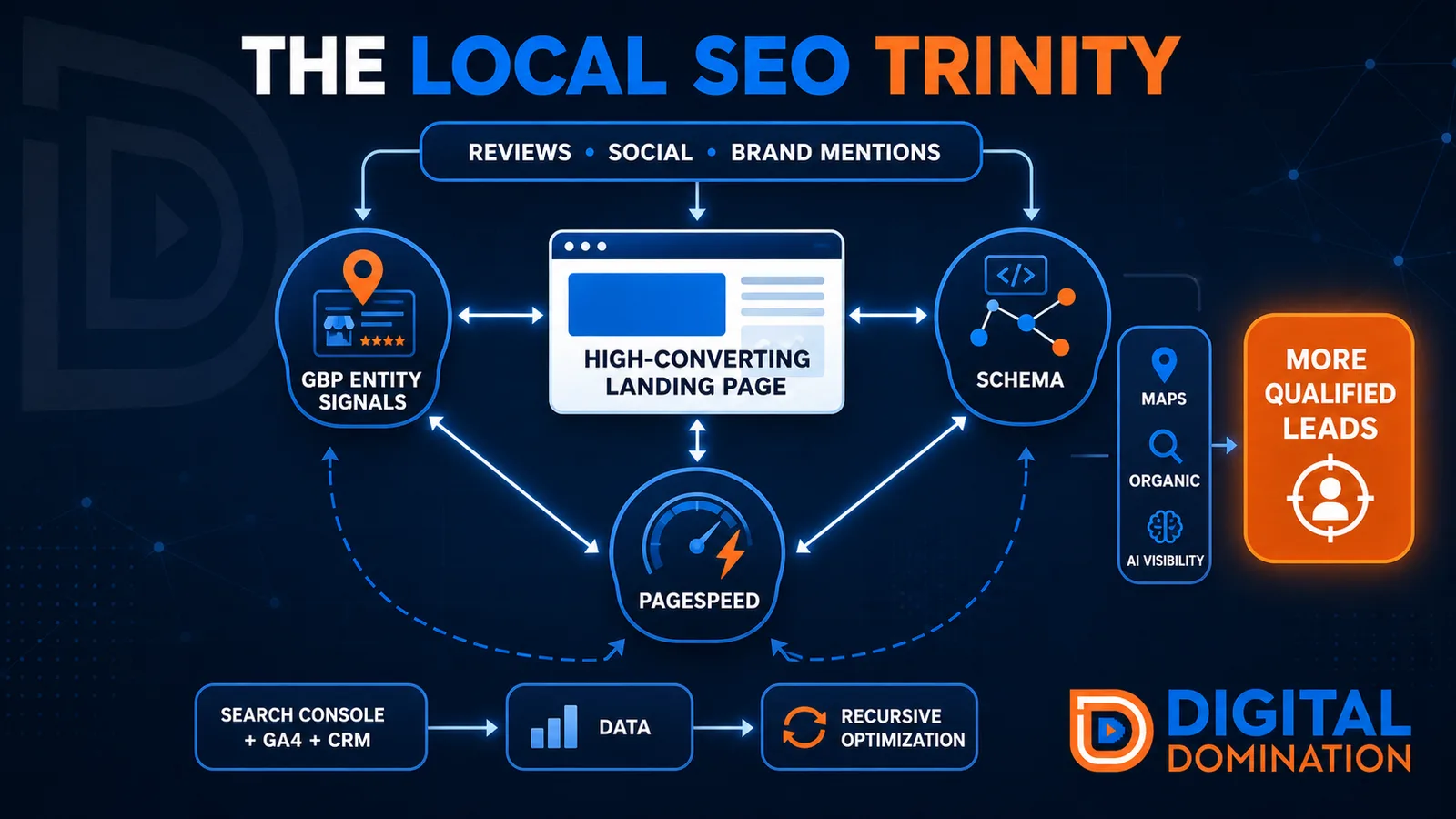
GBP entity signals
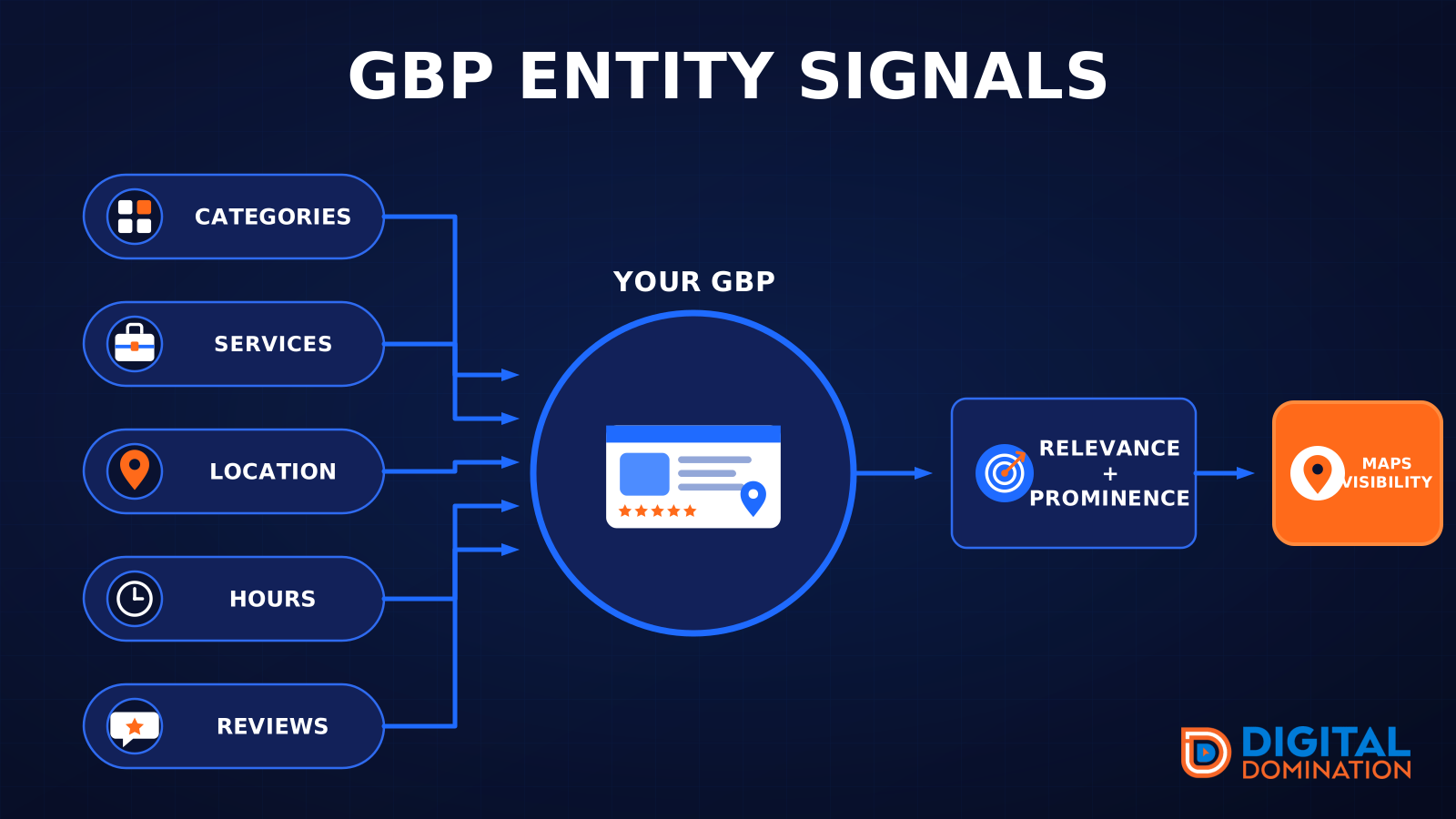
This leg is your Google Business Profile. GBP means Google Business Profile. It covers your categories, your services, your location, your hours, and your reviews. Google uses those facts to decide who to show.
Your Google profile is your storefront sign. If the sign is missing, or it names the wrong shop, people drive past.
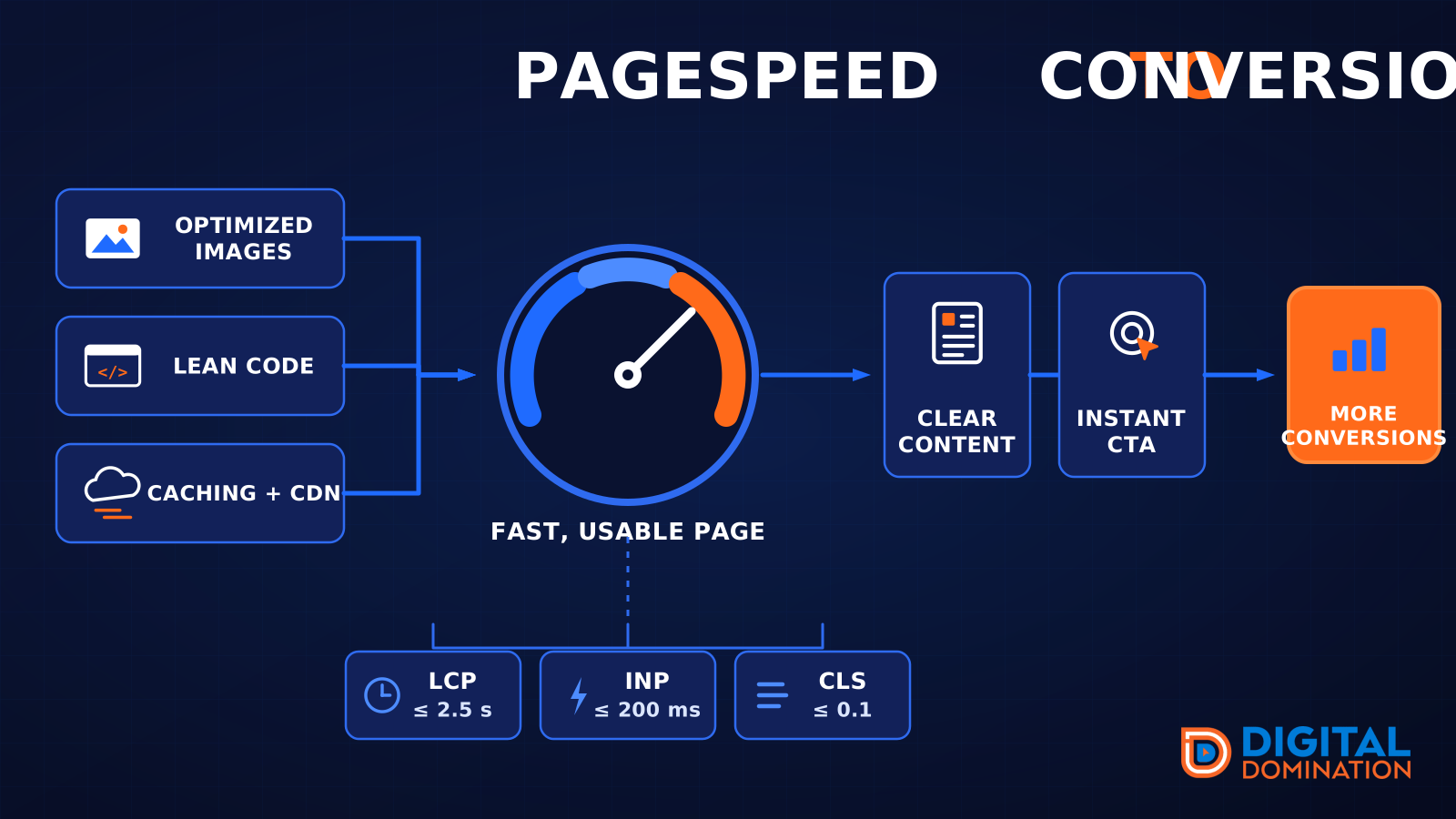
PageSpeed to conversion
This leg is your website, above all on a phone. Small images, lean code, and caching make a page fast. A fast, clear page is what turns a visit into a call. Phone speed is one of the 12 Trinity checks because a slow page loses the call before anyone sees your offer.
Your website is the showroom. If the door sticks, people leave before they look around.
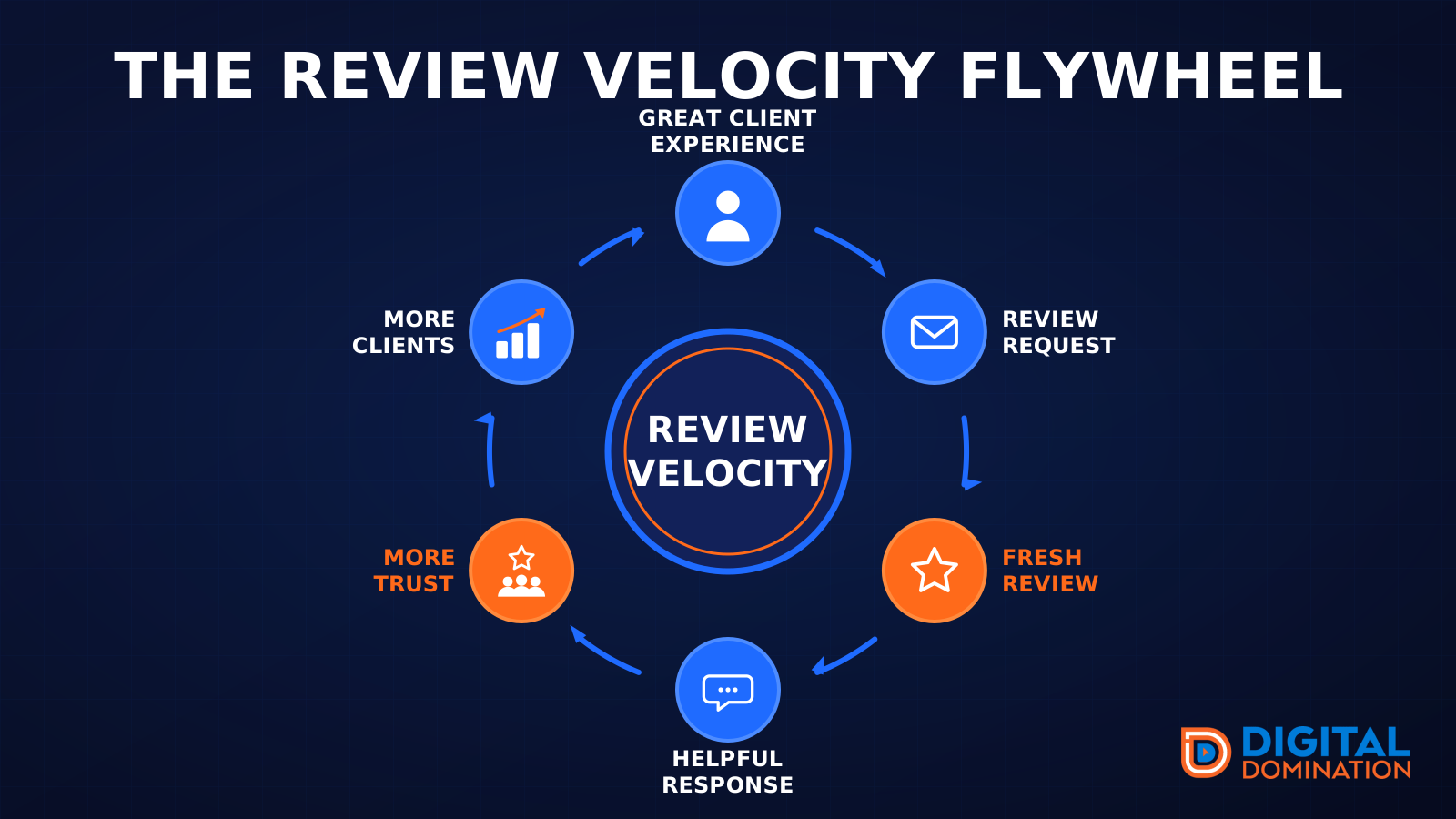
The review velocity flywheel
This leg is reviews and reputation. A good visit leads to a review request, then a fresh review, then a helpful reply, then more trust, then more customers. When the scan can find your Google listing, it shows your rating, your recent reviews, and how many you answered.
Reviews are word of mouth. One kind word helps. A steady stream of real reviews, and a reply from you, helps more.
How this turns into revenue
Being found in more searches leads to more calls. More calls lead to more booked jobs. More booked jobs lead to more revenue.
Example numbers, not a real business: 40 calls from search in a month, a 25 percent close rate, and a $400 average job. That is 10 booked jobs. That is $4,000. The math is the lesson. It is not a promise.
The full page has a box where you can type your own average job value and close rate.
One real story, from our car dealership case study: Medina Auto Group went from invisible on Google Maps to dominating every high-intent search across their market. The turnaround spanned all four of their rooftops at once. The same page says the team eliminated 89 unfair one-star reviews that had been dragging the dealership's reputation down and keeping it out of the Map Pack. It also says: “Results described here are exceptional and non-typical. Outcomes vary based on market conditions, competition, and implementation. No guarantees are made regarding earnings, rankings, or conversions.”
Free strategy call
More booked jobs start with a clear plan
Book a free strategy call. We look at your Google profile, your website, and your reviews, and we tell you what to fix first.
Free. You pick the time. A real person shows up.