
Gutter installer local SEO: how GBP entity signals, schema and PageSpeed beat the national gutter guard ads
A practical system for seamless gutter companies that want the homeowner watching water pour over the front door to find them first, trust them fast and book the estimate.
The first real storm on a house that never had gutters
The family closed on the house in June. The first hard rain hits in late August, and the homeowner stands at the front door watching a sheet of water come off the roof edge like a curtain. Mulch is washing across the walkway, a puddle is growing against the stem wall by the garage, and a brown line is forming on the stucco where the splash comes back up. She pulls out her phone on the porch and searches for gutter installation near me.
The three companies in the Map Pack get the call. One that did not is a two-truck seamless gutter outfit that has run a machine in that county for fifteen years and does cleaner miters than anyone in the market. It lost because Google could not tell what it was, the homeowner could not tell whether to trust it, and its website took eleven seconds to show a phone number on a phone in the rain.
Google ranks local results on relevance, distance and prominence. A gutter installer cannot move the searcher's porch, so the fight is over the other two, plus the conversion that turns a click into a scheduled estimate. This article stays specific to gutters: aluminum gauge, downspout placement, guard brands and per-foot pricing.
The short version for an owner who is on a ladder right now
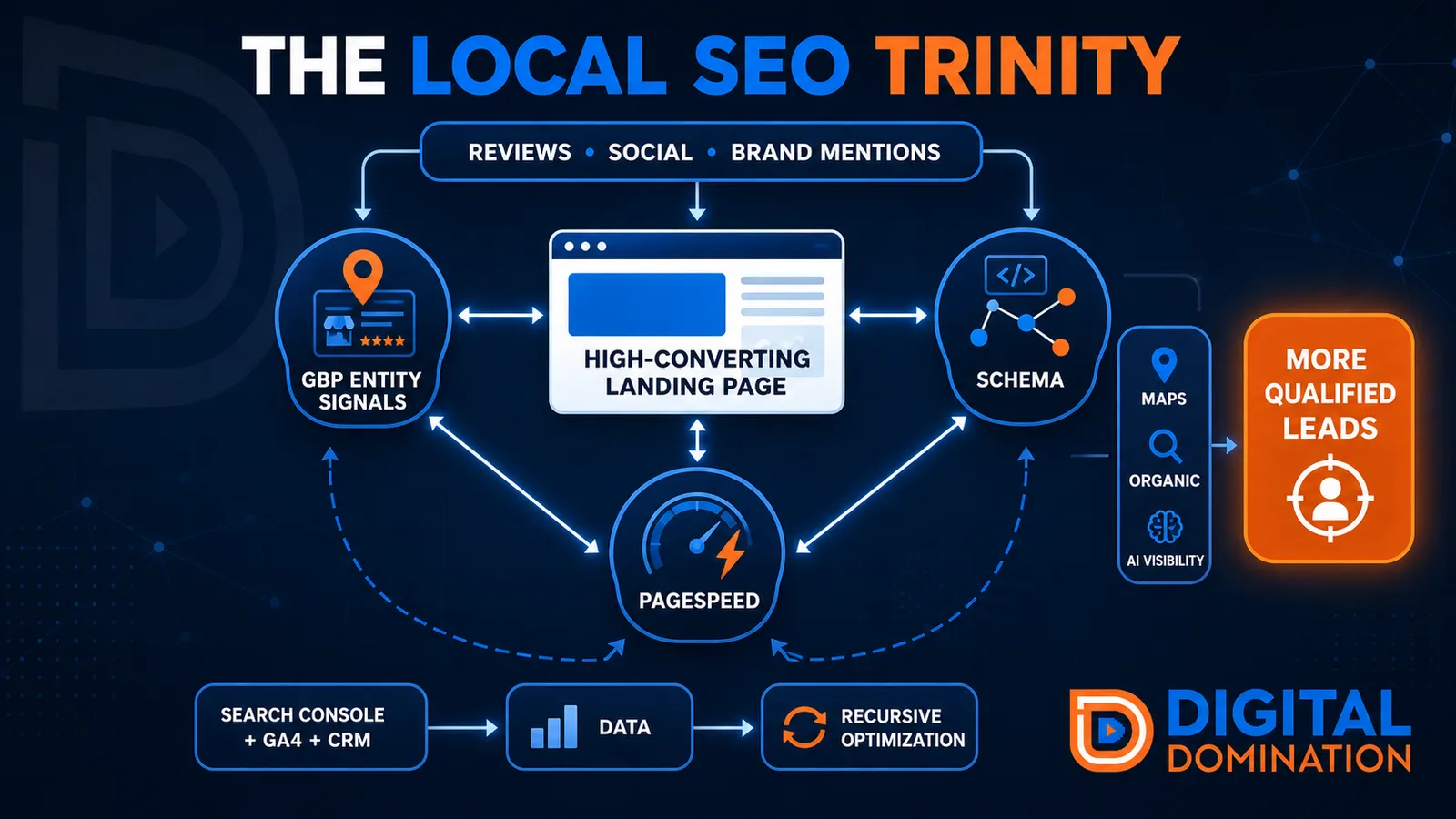
At Digital Domination we treat the foundation as three connected pieces, supported by a landing page that converts and a measurement loop that says what to fix next. Here is what each piece does for a gutter installation business:
- ▸Google Business Profile entity signals: the categories, service list, service area, photos and hours that tell Google you install seamless gutters, not just clean them, and where you drive to do it.
- ▸Schema: the machine-readable layer that ties the company, its owner, its services, its per-foot pricing, its service area and its third-party profiles into one entity Google and AI systems can read without guessing.
- ▸PageSpeed: the difference between a homeowner seeing your phone number in under two seconds and tapping back while your job gallery loads.
- ▸The landing page carries the proof: license, insurance, warranty terms, the material you run and reviews that mention color match and cleanup.
- ▸Search Console, GA4 and your estimating software close the loop by showing which searches produced booked estimates and which produced tire kickers.
Teaching Google you install gutters, and where the trucks actually go
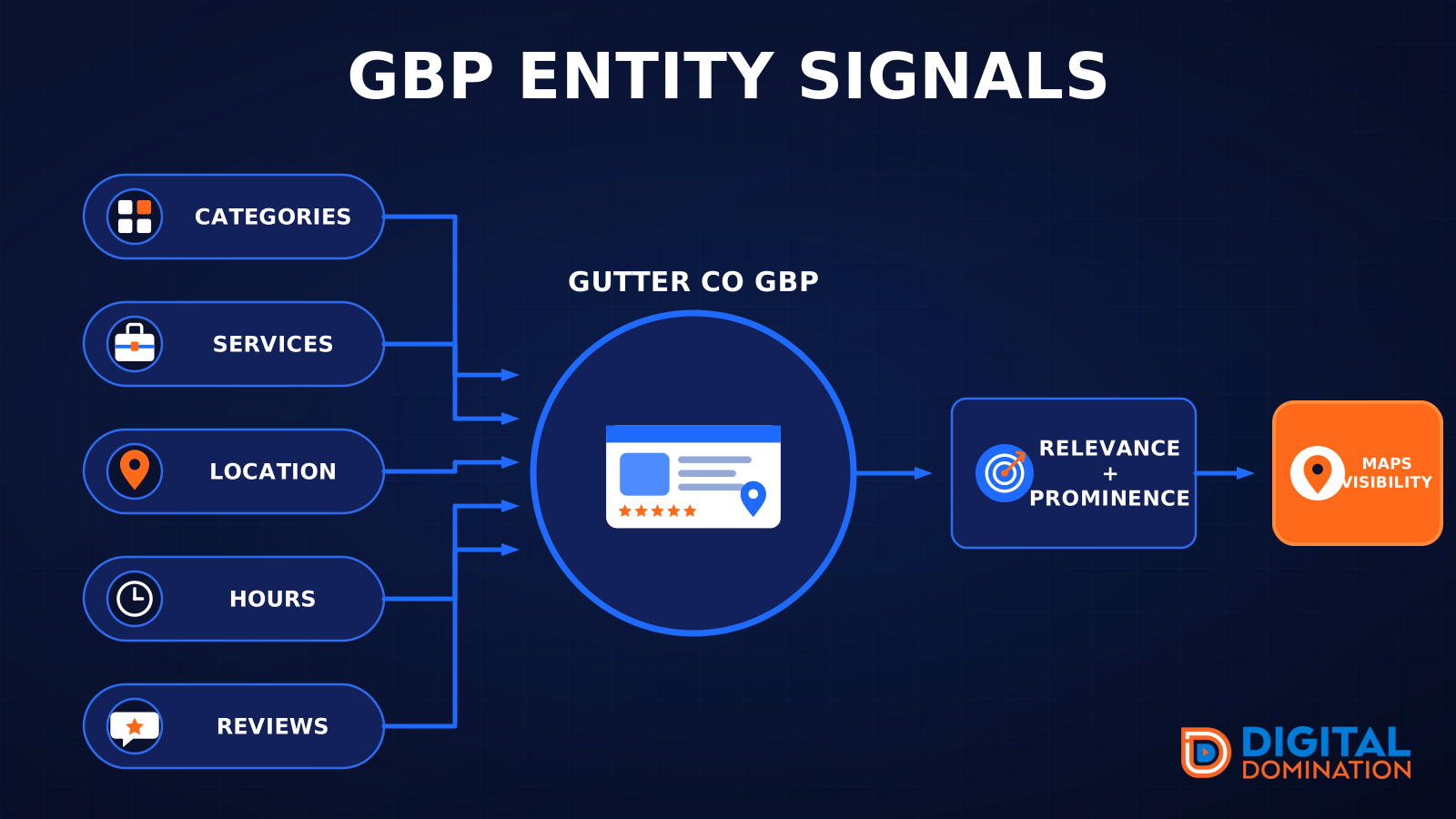
The most common GBP mistake in this trade is a category that undersells the business. A company that hangs 6-inch K-style all day sits under a cleaning category because that was the first result when the owner typed gutter into the picker, so Google shows it for cleaning searches and hands installation searches to competitors or to the national gutter guard brands buying the top of the page. Search the picker for gutter and choose the option that matches installation as your primary. Add roofing contractor if you handle drip edge and fascia, siding contractor if you replace soffit, and the cleaning category only if you still take that work.
Gutters are a visual trade and the profile should show it. Upload finished runs photographed from the ground the way a homeowner sees them, close-ups of hidden hangers and clean inside miters, a color sample board held against fascia, and the machine on the trailer at a real job. Set hours to the times a human answers and set seasonal hours ahead of your rush: September through November in leafy markets, the weeks before monsoon season in the Southwest.
List the cities and unincorporated communities you actually drive to, not a 100-mile circle you hope to sell into. If you have more than one yard, each verified location needs its own landing page as the profile's website link, with that location's phone number, crews and towns, plus a UTM tag so GA4 separates its estimate requests. A single shop with a wide service area builds a city page for each major town instead.
The service list underneath the categories is where the real vocabulary lives, and every item on it should match a page or section on your website. A strong service list for a gutter installer usually includes:
- ▸Seamless aluminum gutter installation, with 5-inch and 6-inch K-style called out separately
- ▸Half-round gutter installation, including copper and galvanized steel where you offer them
- ▸Downspout installation and relocation, including oversized 3x4 downspouts
- ▸Gutter guard and leaf guard installation, naming the systems you are authorized to install
- ▸Fascia and soffit repair or replacement ahead of a gutter hang
- ▸Gutter repair, resealing and re-pitching for sagging runs
- ▸Underground drain and downspout extension tie-ins, plus commercial box gutters if you do them
Proof a homeowner checks before letting you put 40 feet of aluminum on the house
A gutter job is not an emergency purchase and it is not a commodity either. The homeowner is about to let a crew work off ladders around the roofline, and the result will be screwed to the house for twenty years. She is asking two things in the first five seconds on your site: are these people legitimate, and will the gutters look right and stay put.
An authority strip for a fictional company might read: Licensed and Insured, License Number on File | 4.9 Stars on Google | .032 Seamless Aluminum | 20-Year Finish Warranty | Free On-Site Estimates. That is an illustrative example only, and every element on your version has to be true and provable with a click. Behind it, the about page carries the owner's name, years in the trade, the license number and issuing board, and any manufacturer authorized installer status, each a node in your schema that a third party can corroborate. Vague claims like quality craftsmanship sit on every gutter site in the country and persuade nobody.
The first screen has to settle both questions before she scrolls. Here is what belongs above the fold, all of it verifiable farther down the page:
- ▸The service and the market in the headline: seamless gutter installation in your city, not a slogan about protecting what matters
- ▸Your state contractor license number where your state requires one, with a link to the licensing board lookup
- ▸General liability and workers' compensation stated plainly, because ladders and rooflines are exactly where uninsured crews cause problems
- ▸The material you run (.032 aluminum versus .027, seamless on site), the workmanship warranty and the manufacturer finish warranty on the coil or guard system
- ▸Star rating and review count pulled from Google, plus any BBB, Angi or Houzz badges you have earned
- ▸The owner's name and a photo of an actual crew member, not a stock model
- ▸A free on-site estimate promise with a scheduling window, and a phone number that is tappable on mobile

Reviews that mention the color match, the downspout and the cleanup
Gutter reviews are short and specific when they are real. Customers write about the color matching the trim, the crew moving a downspout so it stopped dumping on the walkway, the yard being cleaner than when the crew arrived, and the first storm afterward being quiet. That language sells the next homeowner and ties your business to the services and towns in the review text.
Velocity matters as much as the count. A profile with 180 reviews and nothing since last spring looks dormant next to a competitor earning three a week during the fall rush. Send the ask by text with a direct link the day the job is finished, while the homeowner is still looking at the new gutters, and reply to every review by name and service. A healthy gutter review profile shows:
- ▸Steady new reviews every week through the busy season and a few a month off-season
- ▸Mentions of the gutter type, guard brand, color or downspout work, not just a star
- ▸Neighborhood or city names appearing naturally in customer language
- ▸Google first, with Angi, Houzz, Nextdoor recommendations and BBB as supporting sources
- ▸Owner responses that add a detail about the job rather than a canned thank-you
- ▸Photos attached by customers, which Google increasingly surfaces on the profile

Schema for a gutter company: HomeAndConstructionBusiness and the nodes around it
There is no dedicated gutter type in schema.org, so the company should be marked up as HomeAndConstructionBusiness, the type Google recognizes for contractors, with additionalType pointing at a descriptive URL for gutter installation. Most gutter sites we audit have no schema or a plugin's default LocalBusiness block, which tells Google nothing it did not already read in the footer. A real implementation is about relationships: this owner works for this company, this company offers this service in these towns at roughly this price, and these external profiles are the same business.
The part that makes it work is the permanent @id. Every page should reference the same company, Person and Service @ids instead of spinning up a fresh anonymous block. When the Henderson city page, the gutter guard page and the owner bio all point at yourdomain.com/#company, Google reads one entity with many facets; when each page invents its own, Google reads a dozen partial businesses sharing a phone number. Keep it honest, too: a per-foot price in an Offer that is nowhere in the copy erodes trust with the algorithm and the homeowner alike. Here is the architecture we build, one type per row:
- ▸Company: HomeAndConstructionBusiness with a permanent @id such as yourdomain.com/#company, name, telephone, address, geo, openingHours, priceRange and image
- ▸Owner or lead installer: Person with worksFor pointing at the company @id, jobTitle, image and knowsAbout for seamless gutters and gutter guards
- ▸Each service: Service with a permanent @id, serviceType, provider pointing at the company, and areaServed listing the towns
- ▸Per-foot pricing: Offer with a UnitPriceSpecification for the linear foot, referenceQuantity set to one foot, and priceCurrency, attached through makesOffer
- ▸License: PropertyValue under identifier holding the state license number, with the issuing board as propertyID
- ▸Service area: areaServed using City or AdministrativeArea nodes that match the GBP service area exactly
- ▸External profiles: sameAs pointing to GBP, Angi, Houzz, BBB, Yelp, Nextdoor, your social channels and any manufacturer authorized installer page
- ▸Pages and content: WebSite, WebPage and BreadcrumbList everywhere, FAQPage for pricing and material questions, ImageObject for captioned job photos, Article for guides and VideoObject for install videos
PageSpeed when the homeowner is on the porch on a phone in the rain
The gutter site that loses most often is not ugly. It is heavy. Owners are proud of their work, so the homepage carries forty full-resolution phone photos, a hero slider, a chat widget, a financing widget and a Google Map embed, all firing at once on a mobile connection during a storm. The homeowner needed a phone number and an estimate button. She got a spinner.
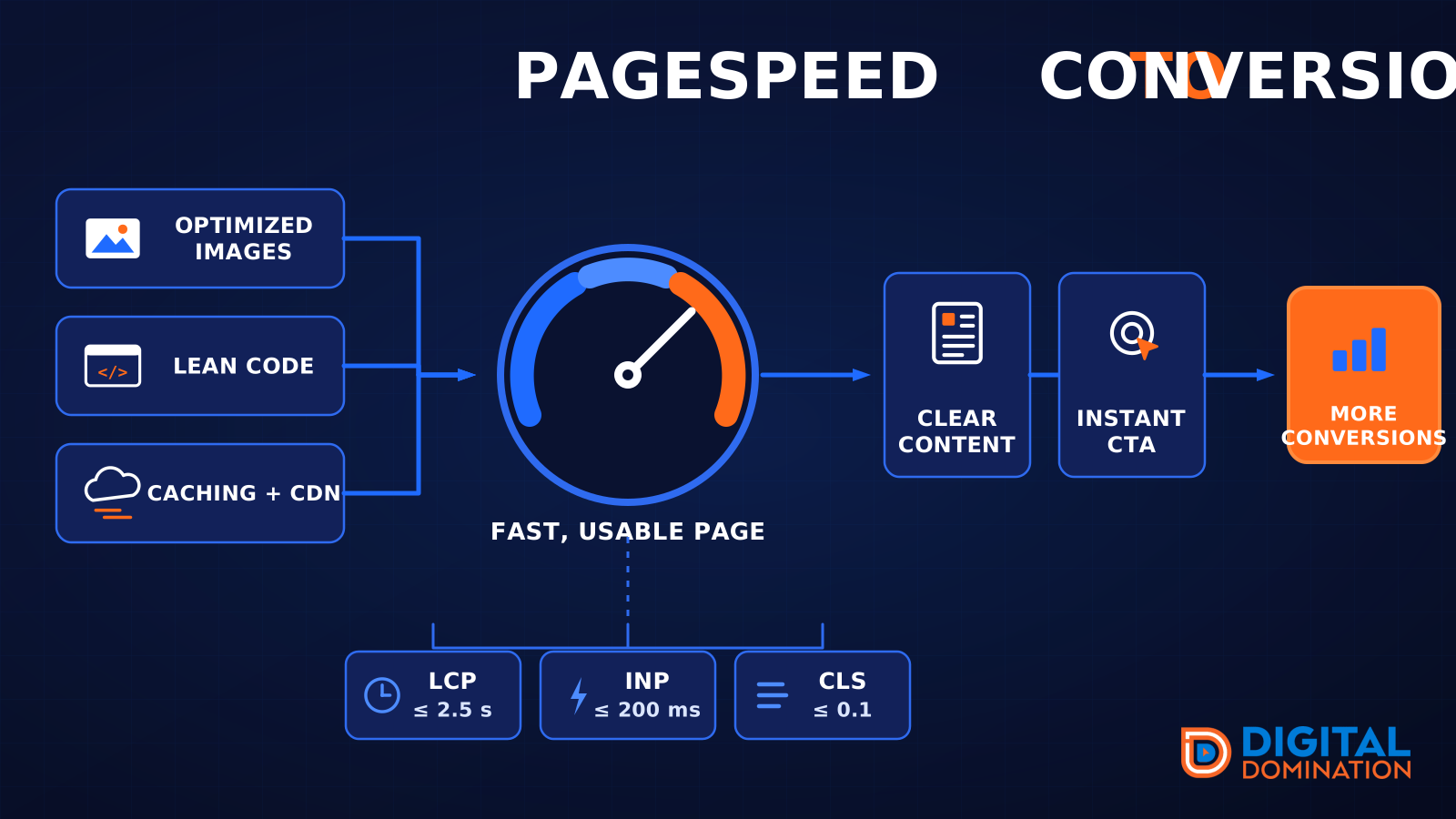
Google's good thresholds for Core Web Vitals are a Largest Contentful Paint of 2.5 seconds or less, an Interaction to Next Paint of 200 milliseconds or less and a Cumulative Layout Shift of 0.1 or less, measured at the 75th percentile of real field data. At Digital Domination we target a PageSpeed Insights performance score of 90 or higher and a 2/2 result on the agentic browsing check, because an AI agent fetching your page to answer a question gives up on a slow one just like a human does. For a typical gutter installer site the fixes that move the score most are:
- ▸Resize and convert every job photo to WebP at display size, and move the big gallery to its own lazy-loaded page instead of the homepage
- ▸Replace the hero slider with one static image of a finished run, preloaded and never lazy-loaded
- ▸Make the Google Map a click-to-load image so it stops pulling scripts on first paint
- ▸Defer the chat widget, the financing widget and any lead-form vendor script until after the page is interactive
- ▸Reserve fixed dimensions for the review widget and the estimate form so the phone number does not jump while she is trying to tap it
- ▸Self-host and subset the one or two fonts you actually use, and drop the icon font
- ▸Cut the theme's unused plugins and tag manager containers, serve through a CDN with caching and compression on, and check server response time on the host you are paying for
Per-foot pricing, guard costs and the questions AI answers keep getting asked
Homeowners ask AI assistants and Google how much gutters cost per foot, whether gutter guards are worth it, and what separates 5-inch from 6-inch. The businesses named in those answers are the ones whose pages state the facts plainly, and a gutter installer has an advantage here because the pricing model is already structured by the foot, the downspout and the add-on.
Publish a pricing page with honest ranges for your market and explain the variables: linear footage, stories and roof pitch, material and gauge, corners and downspouts, tear-off, fascia condition and guard system. Repeat the same language in GBP service descriptions and FAQ schema. A range with a clear explanation beats a call-for-quote wall every time. Useful pricing language for a gutter company includes:
- ▸Seamless aluminum gutters typically run a stated per-foot range in your market, installed, with downspouts priced separately
- ▸6-inch K-style costs a stated amount more per foot than 5-inch and is recommended for steep or large roof planes
- ▸Gutter guards are priced per foot by system, with the brands you install named
- ▸Copper and half-round quoted per project because of material pricing
- ▸Fascia repair priced per foot of board replaced, approved before the hang
- ▸Free on-site estimates, and a final price confirmed after measuring the roofline, so the range is a range
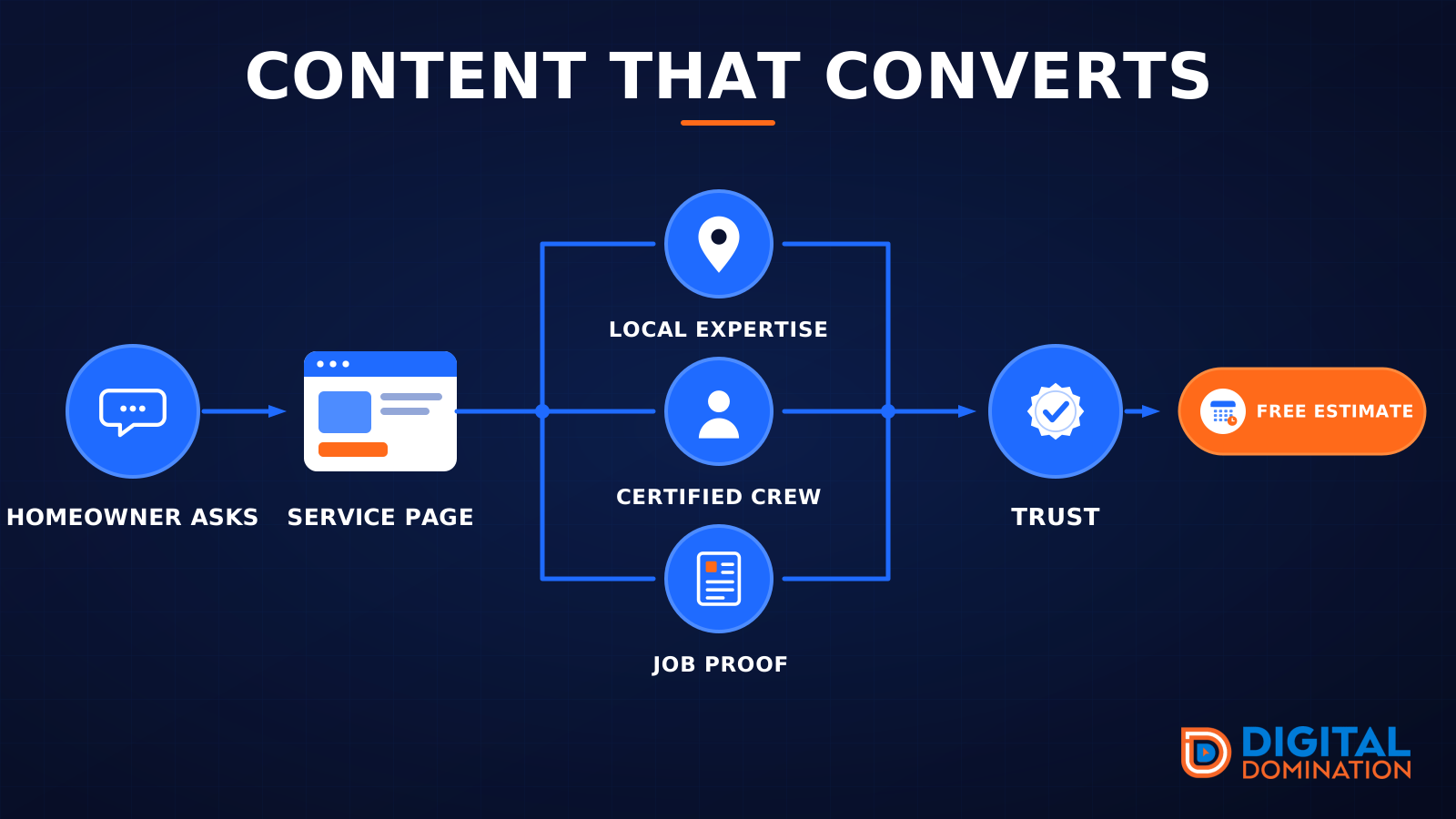
Content that follows the homeowner from the overflow to the first quiet storm
Beyond the service pages, the content that ranks and converts for gutter installers answers the questions a homeowner works through between noticing a problem and signing. Do I need gutters in a dry climate. Why is water pouring over the gutter in one spot. Are gutter guards worth it with pine needles. What does a downspout dumping at the wall do to my foundation. Seamless versus sectional. How long does a two-story install take.
Each of those is a page or a section with the question as the heading and a direct two or three sentence answer under it, then the detail. Write them for your climate: monsoon downpours and stucco staining in the Southwest, ice dams and heat cable in the North, oak and pine debris in the Southeast. Name your towns, the builder-grade problems in their subdivisions and the HOA color rules you run into. Add the owner as the named author, published and updated dates, captioned job photos, a short video of the machine running a seamless length, and internal links to the matching service and city pages. That is the material Google and AI answer engines pull from when a homeowner asks the question you already answered.
Search Console, GA4 and the estimate calendar close the loop
Search Console tells you how homeowners found you. GA4 tells you what they did on the page. Your estimating software or CRM tells you which of them turned into a measured roofline and a signed contract. Read together, they turn the site from a brochure into a system that gets better every month.
In Search Console, look for queries with high impressions and low clicks, such as gutter guards plus a town name, and fix the title, opening copy and proof on that page. Turn new questions Google starts showing your pages for into FAQs or guides, and check the Core Web Vitals and structured data reports monthly, since a theme update can quietly break both. In GA4, track click-to-call, estimate form starts and completions and pricing page views, and compare mobile to desktop conversion, because gutter traffic skews heavily mobile. Then match booked estimates and closed jobs in the CRM back to the landing page and source. The rhythm is simple:
- ▸Measure the baseline in all three tools before changing anything
- ▸Pick the single biggest gap: impressions without clicks, clicks without calls, or calls without booked estimates
- ▸Make one focused set of changes and note the date
- ▸Wait a full cycle, compare, keep what worked and revert what did not
- ▸Feed the next change from the new data, and repeat every month
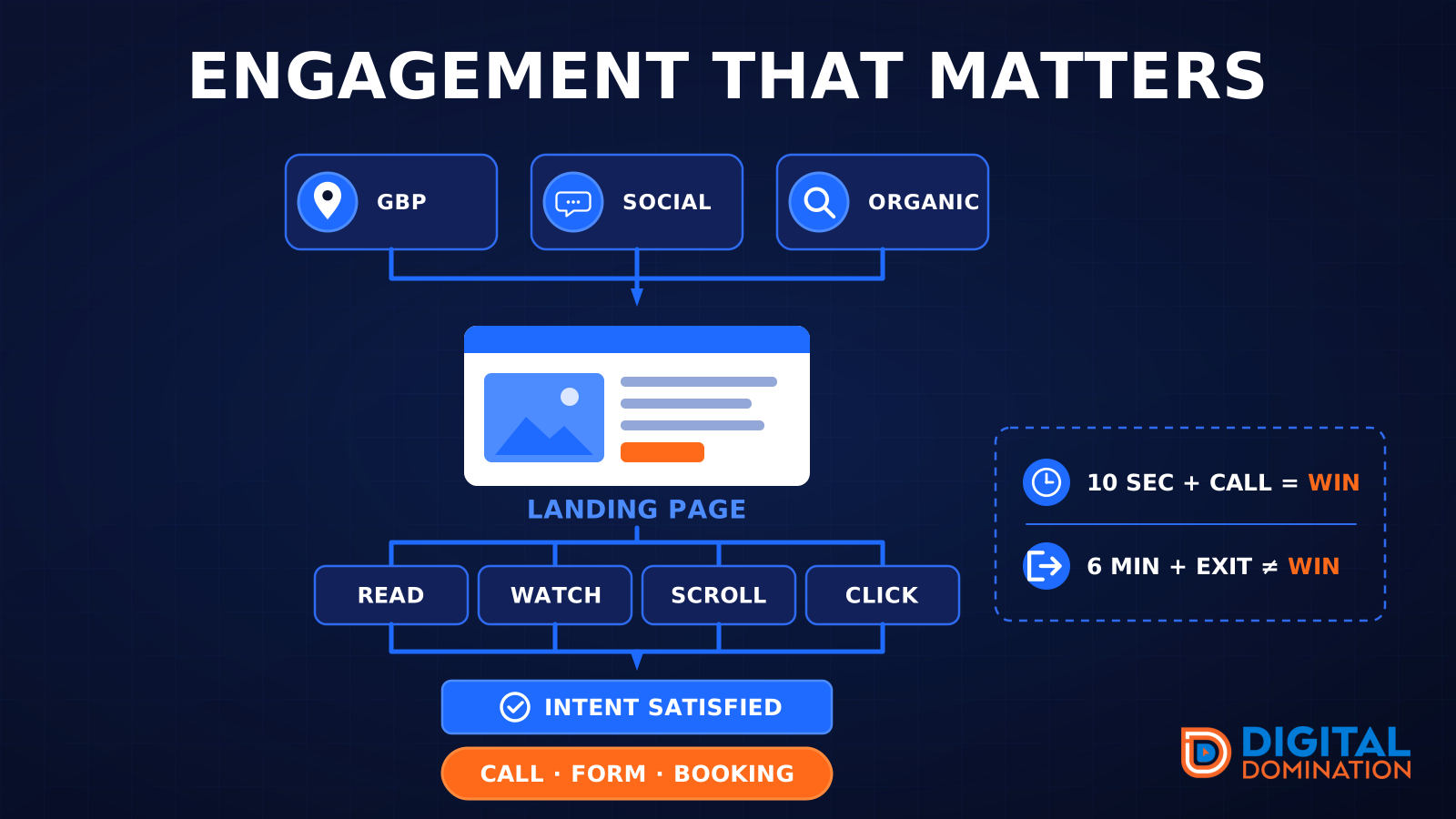
Before-and-after photos, Nextdoor threads and the guard manufacturer's dealer page
Gutters are made for social. A 20-second clip of the machine extruding a 38-foot seamless run, a before-and-after of sagging sectional gutters replaced with clean 6-inch K-style, a slow pan along a copper half-round install: that content earns saves and shares on Instagram, Facebook, YouTube and TikTok, and every post should carry the same company name, town and service vocabulary as the website and GBP. Post the same job to GBP with the neighborhood in the caption. Search Console now reports on supported social and video platform properties, so you can see when that content shows up in Google.
Off the platforms you own, the mentions that matter are the ones a homeowner would trust: a Nextdoor thread where three neighbors name your company, a manufacturer's authorized installer page, a local news segment on storm-season home prep, a builder association directory. Each repeats your name, town and service in a place Google can read, and each is a sameAs candidate in your schema. On Reddit, Axios reported in August 2026 that Reddit's share of visible ChatGPT Search citations fell roughly 86 percent, but OpenAI still has a Reddit data partnership, so a helpful answer in a local homeowner subreddit remains worth writing. Just do not build the plan on any single platform.
A 90-day roadmap timed to finish before the fall rush
Start this in early summer in a leafy market or late winter in a monsoon market and the whole build is in place before the season when homeowners actually search. Here is the sequence:
- ▸Days 1-14, baseline: run a GeoGrid scan for gutter installation and gutter guards across your service area, audit every GBP field and category, inventory license, insurance, warranty and manufacturer credentials, export current schema, run PageSpeed on the home, service and city pages, and set up GA4 events for calls and estimate forms
- ▸Days 15-30, foundation: fix the primary category and build the full service list, rewrite the above-the-fold proof, publish the pricing page with per-foot ranges, build city and per-location pages with UTM links, ship the HomeAndConstructionBusiness schema graph, and clear the image, slider and widget weight killing mobile speed
- ▸Days 31-60, relevance and authority: publish the climate-specific guides, start the same-day review text, post job photos to GBP weekly, complete Angi, Houzz, BBB, Nextdoor and manufacturer installer profiles with matching name, address and phone, and start short-form video of real installs
- ▸Days 61-90, optimize: pull high-impression low-click queries from Search Console, find high-traffic low-call pages in GA4, compare booked and closed jobs by source in the CRM, expand the pages that are winning, recheck Core Web Vitals and the agentic check, rerun the GeoGrid scan and repeat what moved it most
One gutter company, described the same way everywhere the homeowner looks
None of this works as a checklist of separate tasks. It works when the GBP, the website, the schema, the reviews, the social posts and the third-party profiles all describe the same company in the same words: this owner, this license, these services, these towns, this per-foot range, this warranty, these reviews. Google reads a consistent entity and ranks it. An AI assistant reads the same entity and names it. The homeowner on the porch reads it in five seconds and calls.
At Digital Domination we build exactly that for local service companies, and we back it with one promise: top 3 in the Google Map Pack in 12 weeks or you do not pay. Before any of it, you need to know where you stand, and your own front door is the worst place to check. Our free GeoGrid scan checks 169 points across your market and shows you, street by street, where the gutter installer that homeowner finds is you and where it is someone else. Run it, then start with the section above that your map says is broken.
Keep reading
Related guides
- ▸When To Choose The Trinity AI Accelerator Instead Of Doing Local SEO Y
- ▸When To Choose White Label Local SEO Instead Of Doing Local SEO Yourse
- ▸White label local SEO for HVAC
Put it into action
Frequently Asked Questions
Which Google Business Profile category should a gutter installer use?
Search the word gutter in the category picker and choose the option that matches installation as your primary category, not the cleaning category, unless cleaning is your main business. Add roofing contractor or siding contractor as secondaries only if you really do that work, then build the service list underneath with seamless aluminum, gutter guards, downspouts and fascia repair so the profile and the website share one vocabulary.
Should a gutter company publish per-foot pricing on its website?
Yes, as an honest range with the variables explained. Homeowners and AI assistants both ask how much gutters cost per foot, and the businesses that answer plainly get named in those results. State the range for seamless aluminum, a separate range for guard systems by brand, per-unit downspout pricing, and note that the final number is confirmed after measuring the roofline.
What schema type is right for a gutter installation business?
Use HomeAndConstructionBusiness for the company, since schema.org has no gutter-specific type, and add an additionalType that describes gutter installation. Connect Person nodes for the owner, Service nodes for each installation type, Offer nodes with a UnitPriceSpecification for per-foot pricing, areaServed for your towns and sameAs links to your directory and manufacturer profiles, all sharing permanent @id values across every page.
How do I compete with national gutter guard brands buying the top of the search results?
You compete on the local entity they cannot fake: a real address in the market, a state license number, job photos from recognizable neighborhoods, reviews that name towns and products, and pages written for your climate. Their ads run above the Map Pack, but the Map Pack and the AI answer both favor the specific local business with consistent, verifiable facts, and publishing per-foot pricing next to their call-for-quote model is a direct advantage.
Does schema by itself raise a gutter company's rankings?
Not directly. Schema helps Google and AI systems understand who you are, what you install and where, and it makes your pages eligible for features like FAQ and business rich results. Its value comes from accurately describing strong visible content, so a license number in the schema must also be on the page.
How fast does a gutter installer website need to be?
Aim for Google's good Core Web Vitals thresholds: LCP at or under 2.5 seconds, INP at or under 200 milliseconds and CLS at or under 0.1 at the 75th percentile of field data, plus a PageSpeed Insights performance score of 90 or higher. For most gutter sites the fastest win is compressing the job photo gallery and moving it off the homepage, then removing the hero slider and deferring the chat and financing widgets.
When is the best time of year to start local SEO for a gutter business?
Start roughly 90 days before your search season so the foundation is live when homeowners are looking. In leafy markets that means early summer for the September through November rush, and in monsoon markets it means late winter. Rankings and reviews compound, so off-season work is what shows up in the Map Pack when the first storm hits.
Ready to dominate your map?
Top 3 in the Google Map Pack in 12 weeks, or you don't pay.