
How much should a contractor spend on marketing?
A budget you can defend is built from two numbers: the jobs you need next quarter, and what one booked job currently costs you.

What is a realistic marketing budget for a contractor?
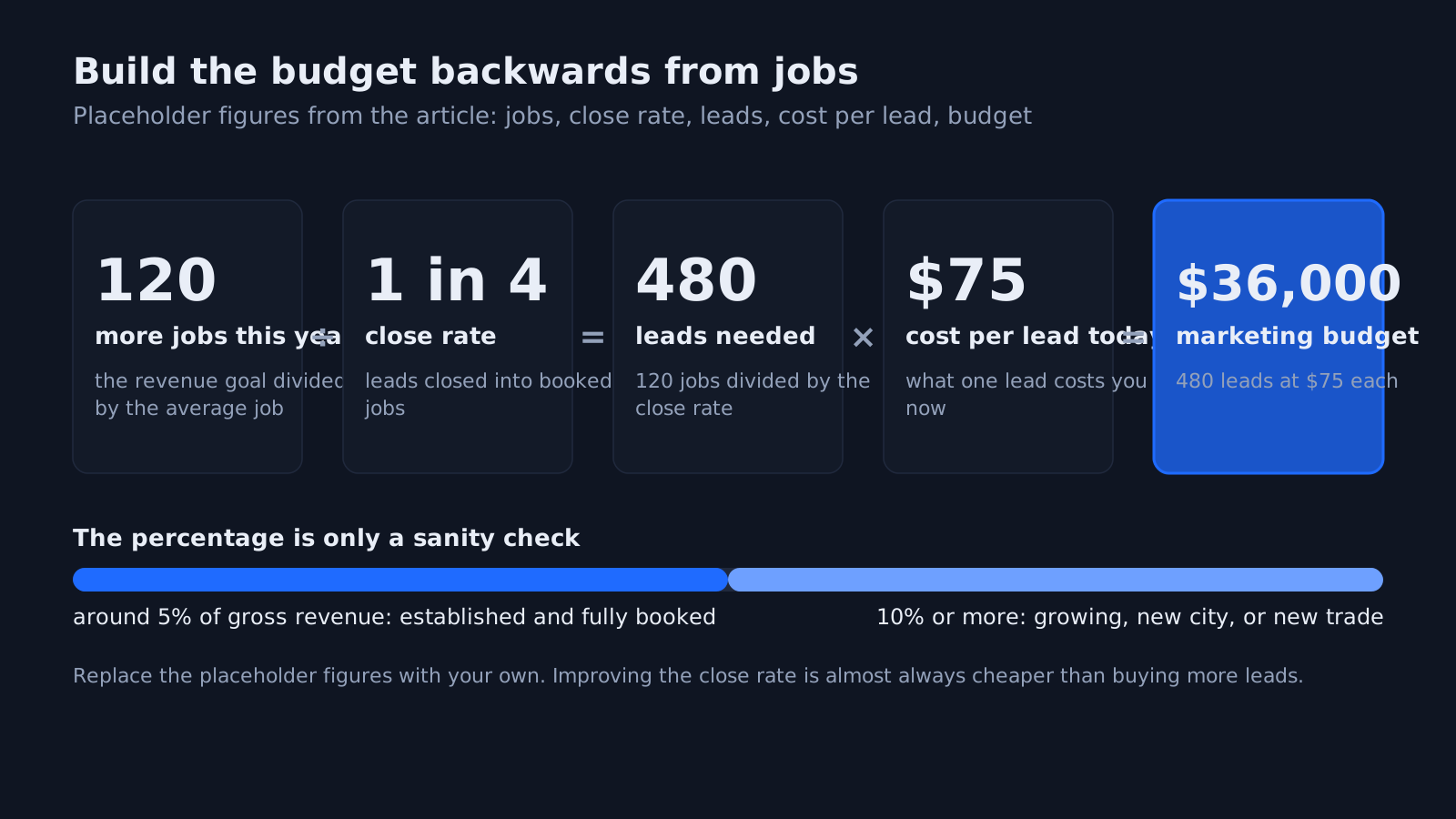
Most contractors should plan on roughly 5% to 10% of gross revenue for marketing: nearer 5% when the schedule is already full and the phone rings on reputation, nearer 10% when you are growing, entering a new city, or trying to replace bought leads. That percentage is only a sanity check. The budget that holds up under pressure is built backwards from jobs: decide how many jobs a month you need, divide by your close rate to get the leads required, and multiply by what a lead costs you today.
Percentages get quoted because they are easy, not because they are precise. A remodeler with a large average ticket and a long sales cycle and a drain cleaning company with a small ticket and same-day decisions cannot use the same fraction of revenue and expect the same outcome.
Two adjustments are worth making before you commit. Businesses that are brand new, or entering a new service area, should sit at the high end or above it, because they are buying awareness they do not have yet. Businesses with a genuinely strong repeat and referral base can sit at the low end, as long as they are actually working that base and not just assuming it.
One rule beats every benchmark: never set the budget before you know the cost of one booked job. Without that figure you are picking a number and calling it a plan.
- ▸Established and fully booked: around 5% of gross revenue
- ▸Growing, new city, or new trade: 10% or more of gross revenue
- ▸Brand new business: expect to run above the benchmark for the first year
- ▸Always sanity check the percentage against your cost per booked job
How do you build a marketing budget backwards from jobs?
Start with the revenue you want, divide by your average job value, and you have the number of jobs. Divide that by your close rate and you have the number of leads. Multiply the leads by what one lead costs you today and you have a budget tied to something real instead of a percentage borrowed from a blog.
Here is the arithmetic with placeholder figures you should replace with your own: you want 120 more jobs this year, your average job is $2,400, and you close one lead in four, so you need about 480 leads. At $75 a lead that is $36,000. If that number horrifies you, the fix is usually not a smaller budget. It is a better close rate or a cheaper channel, and both are fixable.
Notice what the method exposes. Moving your close rate from one in five to one in three cuts the leads you need dramatically, and that is far cheaper than buying more leads. Most contractors have a conversion problem sitting in front of a budget problem, and it usually lives in the first phone call or the follow-up that never happened.
Rebuild the number every quarter. Lead costs move, close rates move, and your crew capacity moves. A budget set once in January is a guess by March.
- ▸Revenue goal divided by average job value = jobs needed
- ▸Jobs needed divided by close rate = leads needed
- ▸Leads needed multiplied by cost per lead = your marketing budget
- ▸Improving the close rate is almost always cheaper than buying more leads
How should the budget split between SEO, ads, and everything else?
Split it by what each channel actually buys. Paid channels (Local Services Ads, Google search ads, lead marketplaces) buy speed: they turn on this week and they stop the day the card stops. Local SEO, your Google Business Profile, and your website buy an asset: they take months to build and keep producing after the spend levels off. Most contractors need both, weighted by how urgently they need work.
If your calendar has holes right now, weight toward paid and accept the cost per job while the foundation gets built underneath. If your calendar is reasonably full and the problem is that every job costs too much to acquire, weight toward the owned side, because that is the only lever that lowers cost per lead over time instead of raising it.
Whatever the split, reserve a slice for the things that make both sides work harder: photographs of real finished jobs, a review process the crew actually follows, a site that loads fast and answers the question the searcher typed, and call handling that does not send buyers to voicemail. Paying for traffic while the phone goes unanswered is the most expensive mistake in the trades.
Review the split quarterly against cost per booked job by channel. Let the number move the money instead of letting last year's habit decide.
- ▸Paid ads and marketplaces buy speed and stop when you stop paying
- ▸Local SEO, profile, and reviews build an asset that compounds
- ▸Foundation spend: job photos, reviews, site speed, call handling, follow-up
- ▸Weight toward paid when you need work now, toward owned when cost per job must fall
How much does SEO or a website cost for a contractor?
Local SEO for a single-location contractor is usually billed as a monthly retainer, priced by how many services and how many cities you are trying to own. Very cheap retainers are usually cheap because the work is automated directory submissions and a monthly report, so ask what is physically produced each month before you compare two prices.
A custom contractor website typically starts in the low thousands for a fast, clean, well-structured build and rises into five figures once you need many service pages, many city pages, and real integrations. Template builders cost less and are fine as a placeholder. They tend to fall down on speed, on page structure, and on the ability to add the pages that ranking in multiple cities actually requires.
Watch the costs that get quoted separately: content, hosting, call tracking, review software, and the ad spend itself, which is not part of a management fee. Ask for the all-in monthly number and get it in writing.
For reference on our side: Digital Domination includes a free custom website with the AI system at $297 per month, we work with one client per trade per service area so your plan is not duplicated for your competitor, and we rank you in the top 3 of the Google Map Pack within 12 weeks or you do not pay.
- ▸Local SEO retainer: monthly, priced by services and cities covered
- ▸Custom website: low thousands up to five figures for large multi-city builds
- ▸Ask what gets produced each month, not just what it costs
- ▸Ad spend sits outside management fees, so always confirm the all-in number
What is a healthy cost per lead and cost per booked job?
There is no universal healthy number, and anyone quoting one without asking your average job value is selling. The only threshold that matters is yours: the cost to acquire a booked job has to sit comfortably below the gross profit on that job, with room left for overhead and actual profit.
Work it in gross profit, not revenue. A $600 acquisition cost on a $12,000 job with healthy margin is fine. That same $600 on a $900 service call is a business losing money very efficiently. Same number, opposite verdict, and revenue-based math hides the difference.
Track cost per booked job by channel and by month. You are looking for direction, not a benchmark. Paid channels tend to get more expensive as competitors bid up the same demand, while owned channels tend to get cheaper as the fixed cost spreads across more leads. When those two lines cross, the budget should move.
And measure it after the phone, not before it. A channel that delivered 40 calls and booked 6 is not automatically a bad channel if 34 of those calls went to voicemail. Fix the answering problem before you cut the line item.
- ▸Compare acquisition cost to gross profit per job, never to revenue
- ▸Track by channel and by month and watch the trend line
- ▸Paid cost per lead tends to rise, owned cost per lead tends to fall
- ▸Audit call handling before you blame a channel
What should you do before you set next quarter's number?
Three things, in this order. Pull your cost per booked job by channel for the last 90 days. Count how many calls went unanswered or unreturned in that same window. Then run the backwards math on the jobs you actually need.
If you want help doing that, book a free 15-minute call. We will look at where you rank across your whole service area rather than just at your own address, what it would take to get into the top 3 of the map pack, and which part of your current spend is buying speed versus building something you keep.
No slide deck. Bring your numbers and we will tell you which line to cut and which one to fund.
Keep reading
Related guides
- ▸Free agency roster review vs DIY local SEO with Google tools
- ▸A free GeoGrid scan near me
- ▸Free GeoGrid scan vs DIY local SEO tools
Put it into action
Frequently Asked Questions
What percentage of revenue do most home service businesses spend on marketing?
The common rule of thumb is 5% to 10% of gross revenue, with established and fully booked companies at the low end and growing companies at the high end. Treat it as a sanity check on a budget built from your own job math, not as the budget itself.
Should a brand new contractor spend more or less?
More, as a share of revenue, because you are buying awareness that established competitors already have. Expect to sit above the benchmark for the first year and to lean on faster paid channels while your owned assets are being built.
Does a truck wrap count as part of the marketing budget?
Yes. Wraps, yard signs, uniforms, door hangers, and local sponsorships are marketing, and they deserve the same test as everything else: what did it cost, and how many booked jobs can you trace back to it.
How much does a contractor website cost?
A custom build usually starts in the low thousands for a fast, well-structured site and climbs into five figures once you need many service and city pages plus integrations. Digital Domination includes a free custom website with the AI system at $297 per month.
Is SEO or Google Ads better for contractors?
Ads are better when you need work this week, and SEO is better when you need your cost per job to fall over time. Most contractors run both and shift the weighting as the owned channels start producing.
Should I do my own SEO or hire an SEO company?
Do it yourself if you can commit several focused hours a week, because the profile, photo, and review work matters most and is genuinely doable in-house. Hire it out when the work has to cover multiple services and cities, or when those hours are worth more to you spent selling jobs.
How do I know if my marketing budget is working?
Cost per booked job by channel, tracked monthly against your gross profit per job. Traffic, impressions, and ranking screenshots on their own never tell you whether the money worked.
What should I cut first when work slows down?
Not the channels producing traceable booked jobs. Cut spend you cannot trace to a job, renegotiate annual commitments, and pause the channels with the worst cost per booked job while protecting the ones still paying for themselves.
Ready to dominate your map?
Top 3 in the Google Map Pack in 12 weeks, or you don't pay.