
HVAC local SEO: how GBP entity signals, schema and PageSpeed win the emergency call
A homeowner with a dead air conditioner gives you about eight seconds. This is how to make sure Google, the AI answer and the homeowner all pick your company in that window.

The company that got the call was not the best one in town
It is 3:40 on a Saturday afternoon in July. The thermostat reads 84 and climbing, the outdoor unit hums but the fan is not turning, and a two-year-old is trying to nap down the hall. The homeowner types "ac repair near me" with one thumb.
She taps the Map Pack result that says Open 24 hours, shows a 4.8, and has a photo of a clean van. The site loads, the phone number is right there, and she calls. Elapsed time: under a minute.
The company with the best technicians in the county, the one that would have swapped her capacitor for a fair price, was listed fourth. It showed Closed because nobody set weekend hours, and its site spent six seconds painting a hero video. She never saw it.
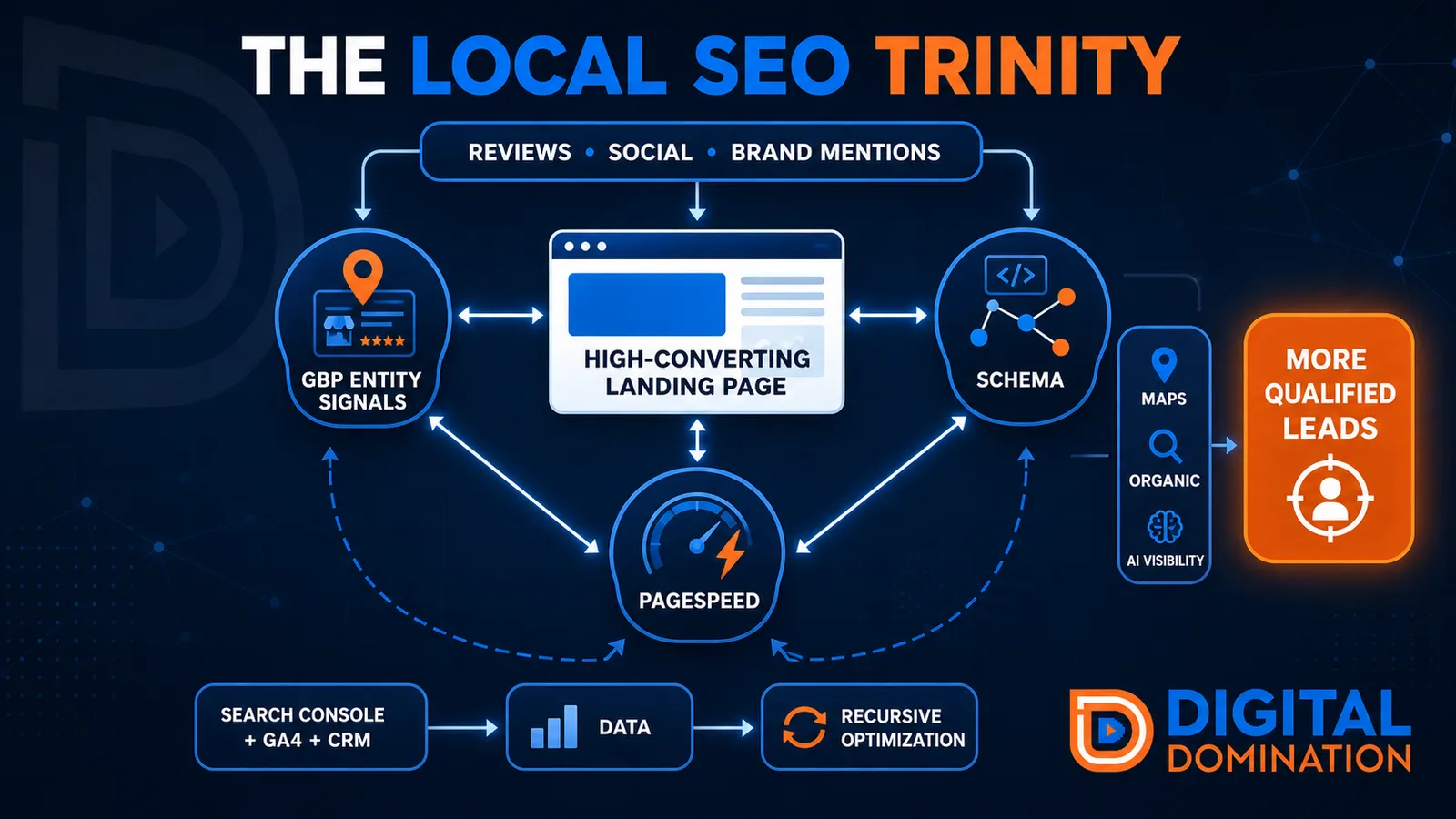
Google and the AI systems that answer "who should I call for AC repair" run the same process at scale. At Digital Domination we treat the foundation as a trinity: Google Business Profile entity signals, schema and PageSpeed, supported by a converting landing page, reviews, and a loop that runs on Search Console, GA4 and dispatch data.
The short version for a busy owner
Google ranks local results on relevance, distance and prominence. You cannot move the searcher's house closer to your shop, so the work is relevance, prominence and conversion:
- ▸Google Business Profile: who you are, what you service and where you roll trucks.
- ▸Landing page: why a homeowner should let your technician in the door.
- ▸Schema: how the company, technicians, licenses, services and service area connect.
- ▸PageSpeed: whether the phone number is usable before the visitor bounces.
- ▸Reviews and authority: whether the market backs your claims.
- ▸Search Console, GA4 and the CRM: what is working and what to change next.
Your Google Business Profile is the dispatch board Google reads
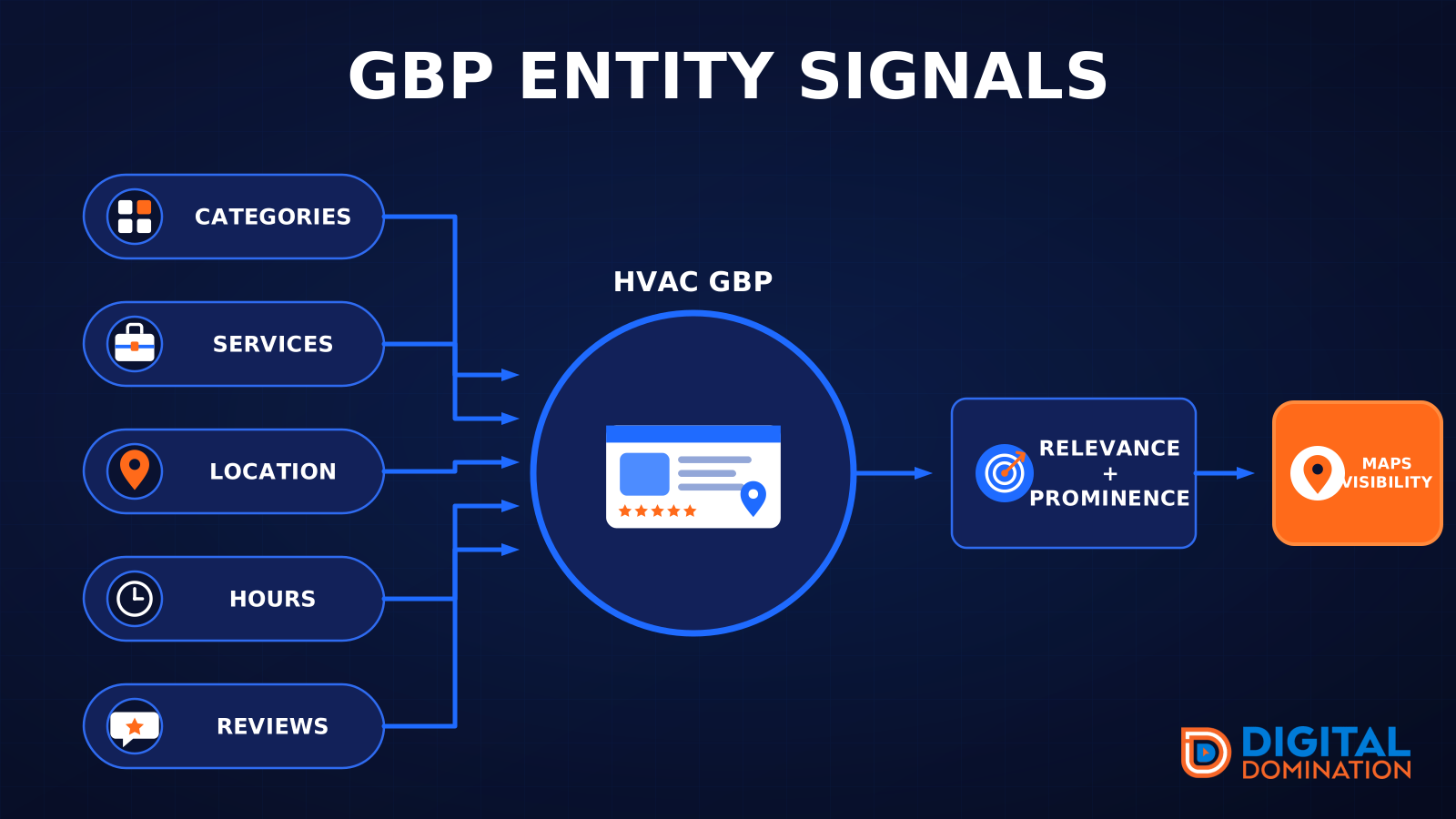
HVAC contractor is the right primary category for most full-service residential companies. Secondary categories such as Air conditioning repair service, Heating contractor, Furnace repair service and Heat pump supplier refine the picture. Do not add Plumber unless you hold that license.
Most HVAC companies are service-area businesses: if customers never visit the shop, hide the address and define the service area by the cities you will actually drive to on a Saturday. If you answer at 9 pm in August, your hours should say so. Fill the Services section with the words a homeowner types (AC repair, furnace repair, heat pump installation, ductless mini split, duct cleaning) and give each a matching page on the site. The profile should also carry:
- ▸Real photos: wrapped vans, uniformed technicians, finished installs, before-and-after coil cleanings.
- ▸A UTM-tagged website link so profile calls and form fills show separately in GA4.
- ▸One landing page per legitimate branch, never the homepage, with the local number, the cities dispatched from it and the technicians based there.
Proof a homeowner checks before letting a stranger into the utility closet
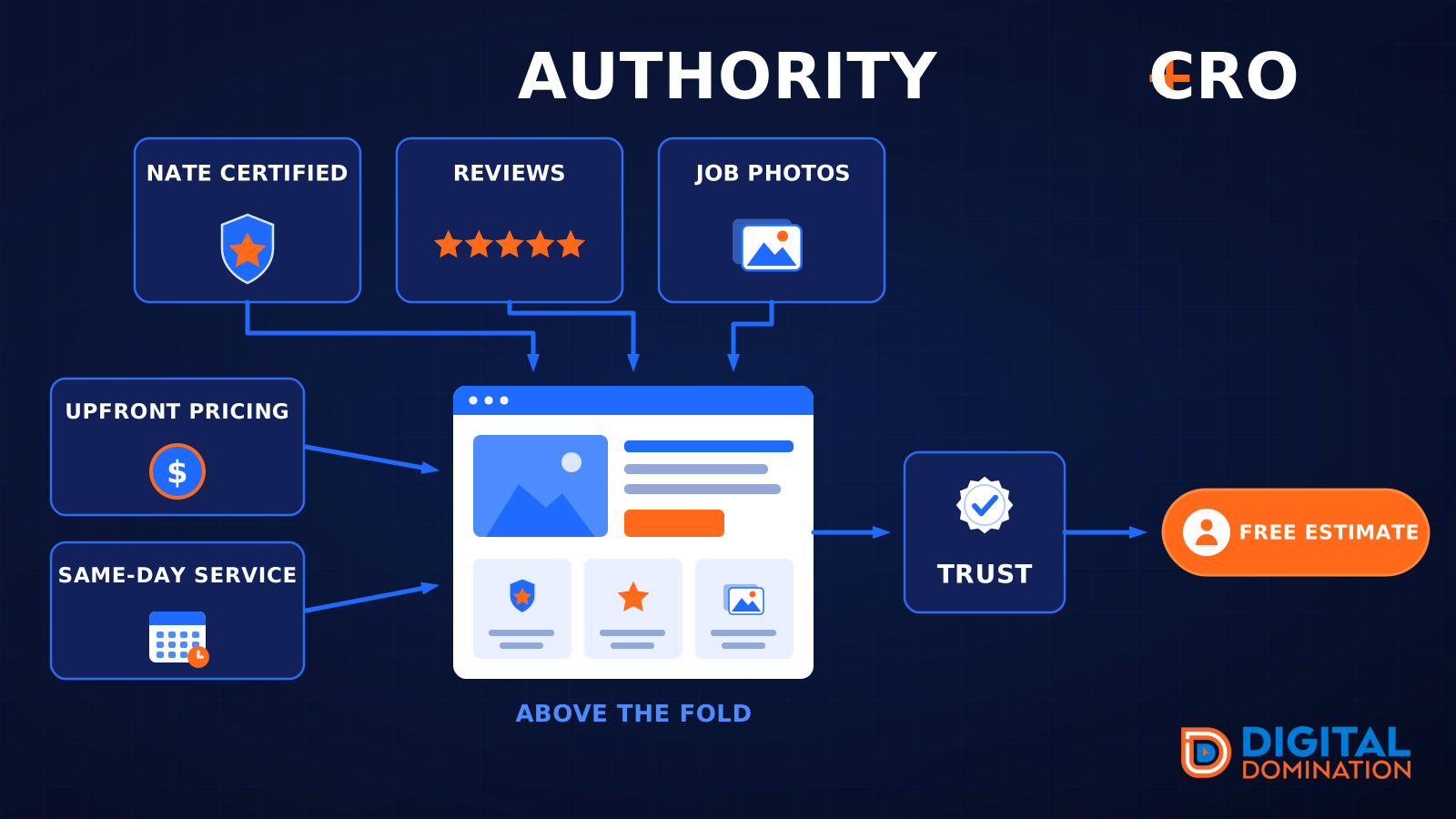
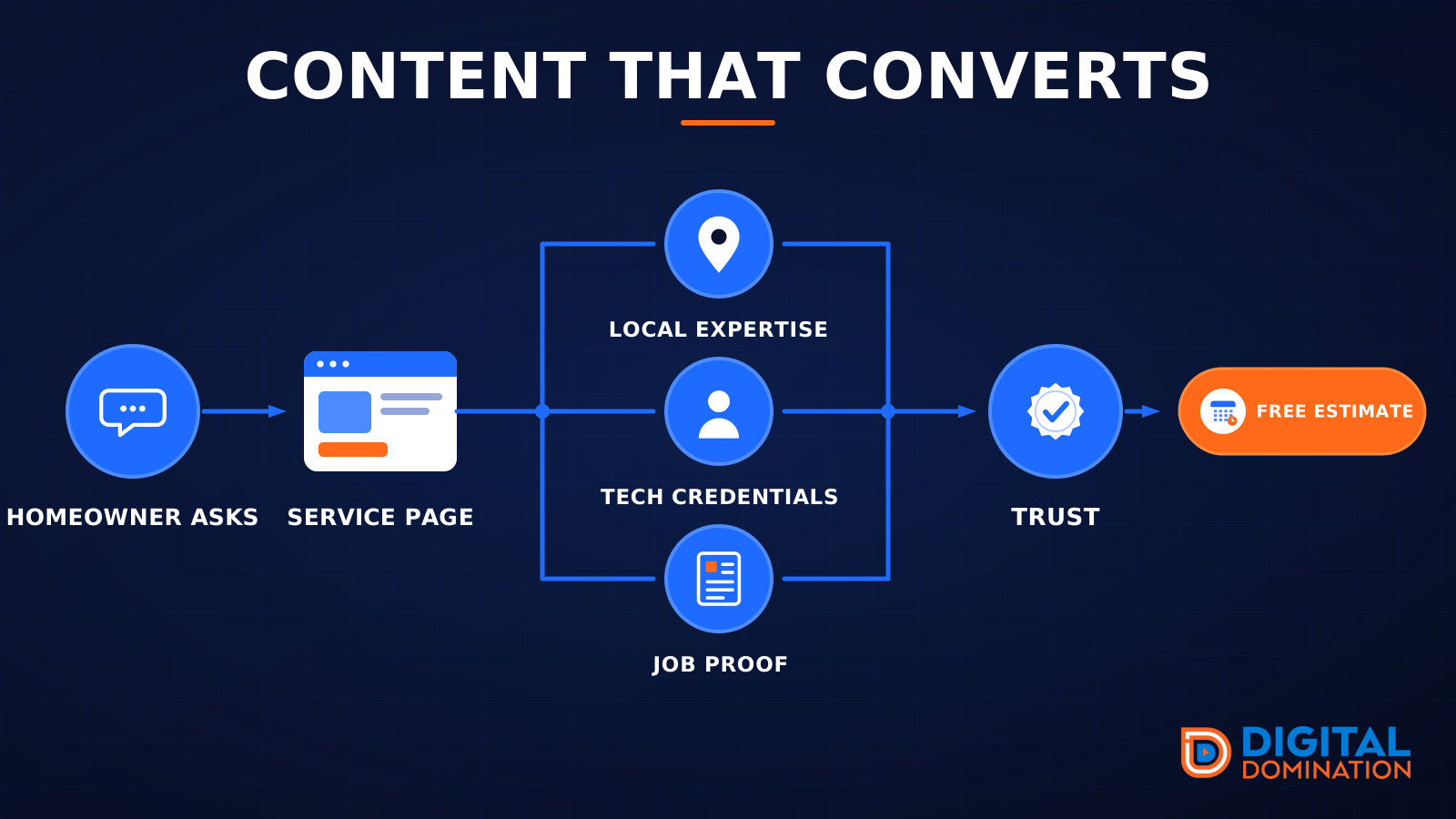
HVAC is a trust purchase made under stress. The repair customer wants to know you will not turn a $300 capacitor into a $9,000 replacement pitch. The replacement customer is about to spend the price of a used car and wants the install backed up in year eight.
An authority strip for a fictional company might read: Licensed and insured (State License #000000) | EPA 608 certified technicians | 4.8 stars on Google | Carrier Factory Authorized Dealer. Those are placeholder figures, an example of the shape only; every real element should link to something a visitor can check. The credentials that carry weight:
- ▸State contractor license number, linked to the board lookup (CSLB C-20 in California, TDLR ACR in Texas, DBPR CAC in Florida, or your state's equivalent).
- ▸EPA Section 608 certification for every technician who handles refrigerant, a federal requirement rather than a badge.
- ▸NATE certification and dealer status (Carrier Factory Authorized Dealer, Trane Comfort Specialist), verifiable on the manufacturer's dealer locator.
- ▸Labor warranty terms in plain language next to the manufacturer parts warranty.
- ▸Technician bio pages with photo, certifications and specialties, and memberships that mean something: ACCA, your state HVAC association, BBB.
Reviews that name the technician, the heat wave and the fix
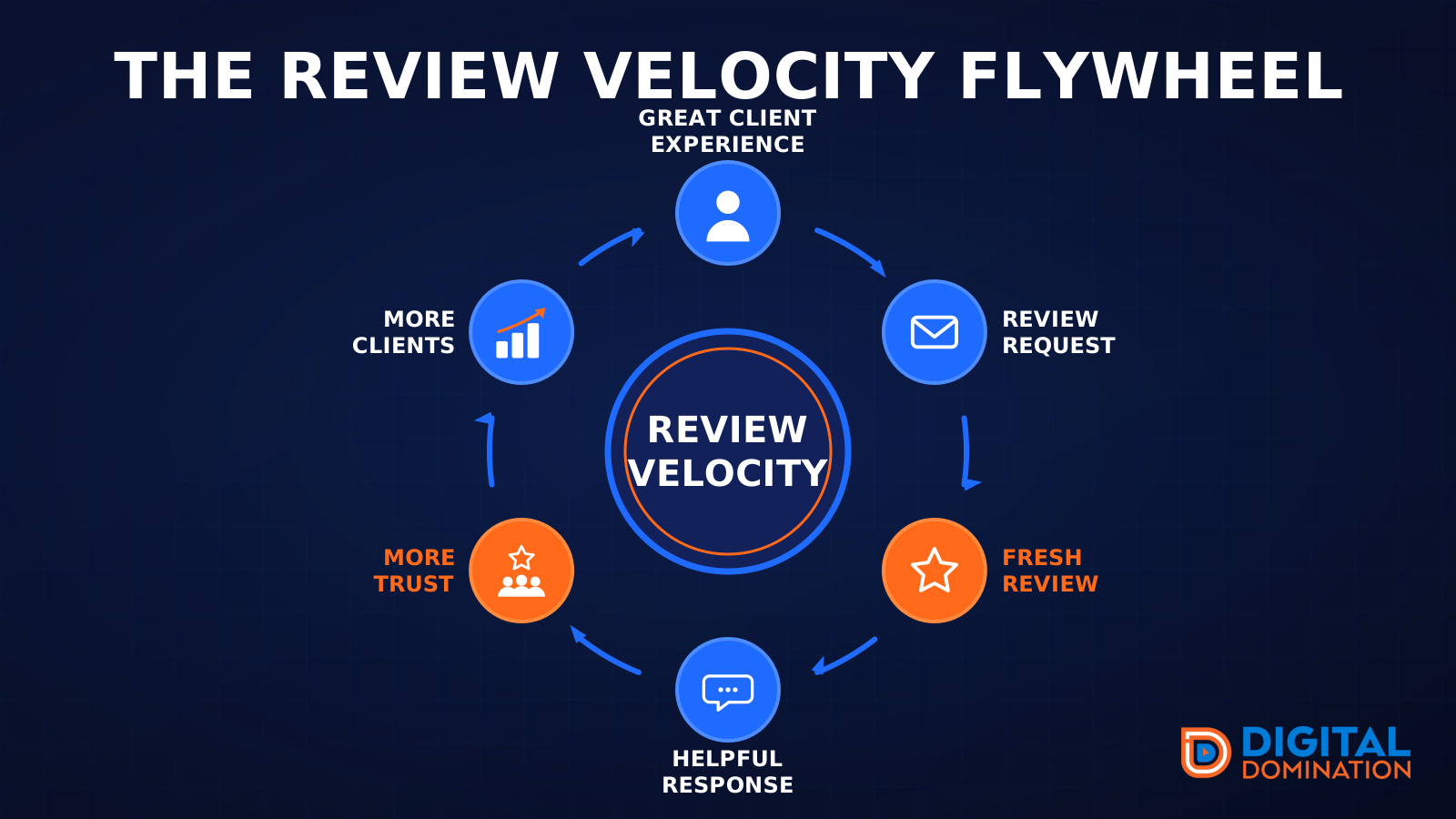
HVAC review velocity is seasonal by default. Forty reviews in July and none from October to March looks less active than a competitor collecting a steady handful every week through tune-up season. Build the ask into the close-out on every ticket, and let the dispatch software send the link when the job is marked complete.
The best HVAC review reads like this: "Our AC died in the heat wave, Marcus was here in two hours, found a bad capacitor, showed me the reading, and did not try to sell me a new system." One sentence connects the technician, the service, the urgency and the outcome. Reply to every review and name the technician and the city back. A healthy profile shows:
- ▸New reviews every week all year, including maintenance visits and duct work.
- ▸Technician names recurring, which supports the Person nodes in your schema.
- ▸Specific repairs named (compressor, blower motor, furnace ignitor) and cities that match your service area.
- ▸Owner replies that answer pricing or scheduling complaints directly instead of pasting a template.
Schema for an HVAC company: HVACBusiness and the nodes around it
Schema.org has a type built for this trade. HVACBusiness is a subtype of HomeAndConstructionBusiness and LocalBusiness, so it inherits address, telephone and openingHoursSpecification while telling the crawler exactly what kind of contractor you are. Most HVAC sites we audit emit a bare Organization with a name and logo from the theme.
Every node should carry a permanent @id such as https://example-hvac.com/#business or https://example-hvac.com/ac-repair/#service, so every page references the same entity instead of a disconnected copy. The architecture:
- ▸The company: HVACBusiness with telephone, priceRange, openingHoursSpecification including emergency hours, and identifier as a PropertyValue holding the state license number.
- ▸Each branch: a distinct HVACBusiness node, with geo plus areaServed and no street address for a service-area business, linked with parentOrganization.
- ▸Each technician: Person with worksFor, hasCredential as EducationalOccupationalCredential for EPA 608 and NATE, and knowsAbout for heat pumps or ductless systems.
- ▸Each service: Service with serviceType, provider pointing at the business @id, and areaServed as City nodes matching the GBP service area.
- ▸Diagnostic fee, tune-up special and maintenance plan: Offer or PriceSpecification attached to the service.
- ▸sameAs on the business: the GBP listing, state license lookup URL, dealer locator page, BBB, Nextdoor and YouTube.
- ▸Scaffolding: WebSite, WebPage, BreadcrumbList and FAQPage on service pages.
PageSpeed when the customer is standing in a 90-degree living room
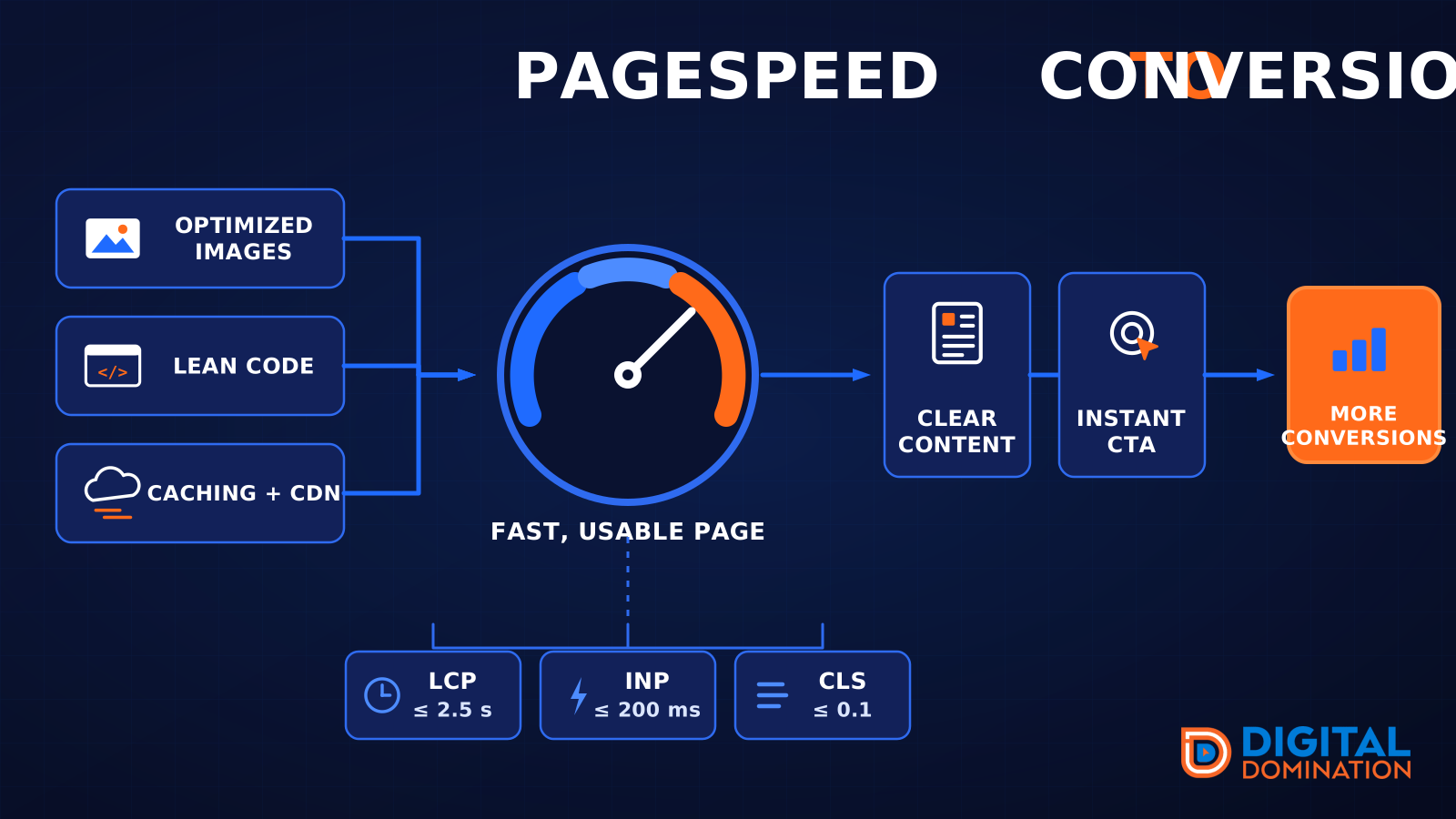
The person searching for emergency AC repair is hot, irritated and on shaky LTE. HVAC sites are among the slowest we test, and the causes repeat: an autoplay drone video of the fleet, a rotating slider, a scheduler iframe on every page, a financing widget, two chat tools, and a tag manager nobody has cleaned out.
Google's good thresholds for Core Web Vitals are LCP at 2.5 seconds or less, INP at 200 milliseconds or less and CLS at 0.1 or less, measured at the 75th percentile of field data. At Digital Domination we target a PageSpeed Insights performance score of 90 or higher and a 2/2 pass on the agentic browsing check, because an AI agent booking service needs the same clean page a human does. The fixes that matter most:
- ▸Replace the hero video and slider with one compressed WebP image of your actual crew, preloaded and never lazy loaded.
- ▸Make the scheduler a click-to-load button instead of an iframe on every page.
- ▸Delay chat widgets, heatmaps and the financing calculator until after first interaction.
- ▸Remove every tag manager tag that does not feed GA4, call tracking or your ad platforms.
- ▸Reserve dimensions for the review carousel and the sticky call bar so nothing jumps under the thumb.
Diagnostic fees, flat-rate pricing and what AI answers need to see
AI Overviews and LLM search cannot recommend a company without facts to compare, and in HVAC the questions are predictable: what does the service call cost, is the diagnostic fee waived if I approve the repair, is the replacement estimate free. Most HVAC sites answer none of these, which pushes the AI answer toward the competitor that publishes a diagnostic fee.
You do not need a full price list. Publish the pricing model you already use on the phone, in crawlable text on the service pages and the GBP, and mirror it in the Offer nodes:
- ▸Diagnostic or service call fee as a number, with whether it is credited toward the repair.
- ▸Flat-rate pricing quoted before work begins, with the parts and labor warranty attached.
- ▸Free in-home estimate on replacement, and whether a load calculation is included.
- ▸Installed price range for a central AC, furnace or heat pump, labeled as a range that depends on tonnage, efficiency and ductwork.
- ▸After-hours policy and maintenance plan price, with what each includes.
Content that follows a homeowner from breakdown to replacement
An HVAC customer moves through a predictable journey: something is wrong, they try to diagnose it, they weigh repair against replacement, they compare contractors, then they think about maintenance. Each stage is a search, and each page should answer it in direct sentences under descriptive headings, which is how AI systems retrieve answers.
Local relevance in this trade is real. A heat pump page in Phoenix should talk about desert heat loads and the local utility rebate; a furnace page in Minneapolis should talk about AFUE and gas permits. A national template with the city swapped in reads thin. Pages that carry the journey answer:
- ▸Why the AC runs but does not cool, and what to check before calling.
- ▸Repair or replace: how old is too old, and when the 50 percent rule applies.
- ▸What a new system costs installed in this city, and why the cheapest bid usually skips the load calculation.
- ▸Which rebates, tax credits and utility programs apply to heat pumps here right now.
Search Console, GA4 and the dispatch software close the loop
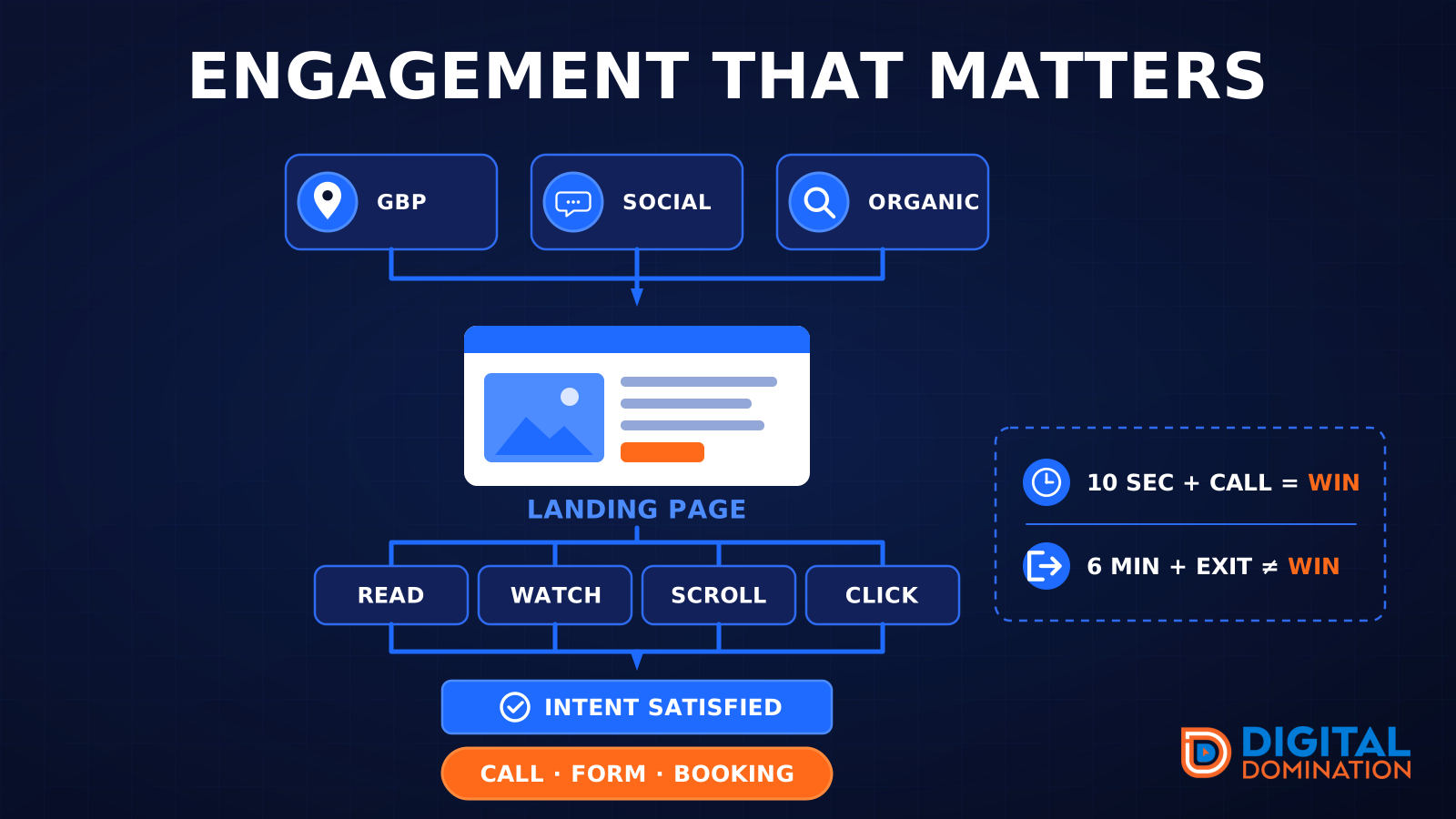
Search Console shows how Google found you: the queries earning impressions, which pages Google ties to which cities and services, and click-through rate. GA4 shows what visitors did: click-to-call taps, booking completions and which landing pages produce calls. Your field service platform (ServiceTitan, Housecall Pro, Jobber) shows what the calls became: booked jobs, average ticket, revenue by source.
A page with impressions for "heat pump installation" plus your city but few clicks needs a better title and stronger local proof. A page with clicks but no calls has a speed, trust or CTA problem. Calls that never book are a dispatch problem, and no SEO fixes that. The cycle we run:
- ▸Measure the baseline: GeoGrid rankings by service, clicks, calls, booked jobs and revenue by source.
- ▸Pick the single highest-value gap, usually a high-ticket service that ranks poorly in half the market.
- ▸Ship one focused group of changes, annotate the date, and compare four weeks of calls and booked revenue against the baseline.
- ▸Keep what worked and let the data pick the next test.
Nextdoor, YouTube and the brand mentions that happen without you
HVAC recommendations happen in neighborhood Facebook groups and on Nextdoor before they happen on Google. A reply that says "Call Example Heating, Marcus fixed our heat pump in Henderson same day and did not upsell us" connects the brand, the technician, the service, the city and a real experience without a link, and AI systems read that context.
Google now reports supported social and video platform properties in Search Console, a sign of how far search and social have converged. Visible AI sources shift fast: Axios reported in August 2026 that Reddit's share of visible ChatGPT Search citations fell roughly 86 percent, even though OpenAI holds a Reddit data partnership. So diversify:
- ▸Short technician videos on YouTube and the GBP: a capacitor swap, a coil cleaning, what a failed contactor looks like.
- ▸GBP posts for seasonal specials and heat advisories that point to the matching page.
- ▸A real presence on Nextdoor and the neighborhood groups where your reviews already cluster, answering without pitching.
- ▸Consistent name, phone and license number across BBB, Angi and the dealer locator.
A 90-day plan built around the shoulder season
Run this in early spring or early fall so the entity is complete and the pages are fast before the first heat wave or hard freeze puts the phones under load. The four phases:
- ▸Days 1-14, baseline: GeoGrid scans for AC repair, furnace repair and heat pump installation across the whole service area; a field-by-field GBP audit; PageSpeed and field Core Web Vitals on the homepage, AC repair page and a city page; an inventory of licenses, dealer status and current schema output.
- ▸Days 15-30, repair the foundation: align the GBP, build per-branch landing pages, publish technician pages and pricing language, implement the HVACBusiness schema graph, fix the hero, scheduler and tag manager problems, and wire GA4 call events.
- ▸Days 31-60, expand relevance and authority: publish the repair-or-replace, rebate and cost guides, launch the review ask on every closed ticket, complete the BBB, dealer locator and Nextdoor profiles, and start the technician videos.
- ▸Days 61-90, optimize on data: find high-impression, low-click queries in Search Console and high-traffic, low-call pages in GA4, compare average ticket by source, recheck Core Web Vitals, re-run the GeoGrid, and repeat what moved rankings and revenue.
One HVAC entity, stronger every month
The goal is not a finished profile, a schema plugin or a green Lighthouse score in isolation. It is one clearly defined HVAC company whose license, technicians, services, service area, pricing and reputation say the same thing on the profile, the website, the structured data, the review platforms and the neighborhood groups where homeowners ask for names.
Then Search Console, GA4, dispatch data and GeoGrid data tell you which piece to strengthen next. That system stands behind our guarantee: top 3 in the Google Map Pack in 12 weeks or you do not pay.
If your company shows strong around the shop and disappears three suburbs over, start by seeing the whole market. The free GeoGrid scan checks 169 points across your service area and shows exactly where the emergency call is going to someone else.
Keep reading
Related guides
Put it into action
Frequently Asked Questions
Which Google Business Profile category should an HVAC company use as primary?
HVAC contractor is the right primary for most full-service residential companies because it covers heating and cooling intent together. Refine it with secondary categories such as Air conditioning repair service, Heating contractor, Furnace repair service and Heat pump supplier. Only add categories for licensed work you actually perform.
Should an HVAC company hide its address on Google Business Profile?
If customers never visit the shop and every job happens at their home, you are a service-area business and should hide the address and define a service area. Keep the address visible only if you run a showroom or parts counter that customers actually visit. Either way, the service area should match where you dispatch trucks, not the widest circle you would drive for a large install.
Does HVACBusiness schema improve rankings by itself?
No. Schema helps Google and AI systems understand who the company is, which technicians work there, what license it holds, what it offers and where, and it can make pages eligible for rich results. The value comes from accurately describing strong visible content, not from the markup alone.
Should we publish our diagnostic fee and installation prices?
Yes, in the form you already use on the phone. Publish the diagnostic fee and whether it is credited to the repair, your free estimate policy, the after-hours policy, maintenance plan pricing and a clearly labeled installed price range. Homeowners and AI answers both compare on those facts, and the company that publishes them tends to be the one recommended.
How fast does an HVAC website need to be?
Aim for Google's good thresholds in field data: LCP at 2.5 seconds or less, INP at 200 milliseconds or less and CLS at 0.1 or less at the 75th percentile, plus a mobile PageSpeed Insights score of 90 or higher. On most HVAC sites the biggest gains come from replacing the hero video, making the scheduler click-to-load and trimming the tag manager.
Do reviews from maintenance visits matter as much as emergency repairs?
They matter more for consistency. Emergency repairs cluster in summer and winter, so a company that only asks after breakdowns shows long gaps in review velocity. Asking after every tune-up, duct cleaning and thermostat install keeps reviews arriving all year and adds technician names and service vocabulary that support the rest of the entity.
Do Nextdoor and Facebook group recommendations affect Google rankings?
Google has not confirmed social mentions as a direct local ranking factor. Their value is indirect but real: branded searches, referral visits, reviews and mentions that connect your company, a technician, a service and a city in one sentence. Those are the signals that build prominence and that AI systems use to learn what a company is known for.
Ready to dominate your map?
Top 3 in the Google Map Pack in 12 weeks, or you don't pay.