
Immigration lawyer local SEO: how GBP entity signals, schema and PageSpeed win the client who searches in Spanish first
The attorney with twenty years before the immigration court does not automatically get the case. The one Google can read in both languages, a worried daughter can verify is a real licensed attorney, and a prepaid phone can load inside WhatsApp does.
Saturday morning, a folder of receipt notices and a notario who stopped answering
Saturday, 10 a.m. A US-citizen daughter sits in a parked car outside a church, her mother in the passenger seat and a folder of USCIS receipt notices on the dashboard. The notario who filed her mother's last form has stopped answering. She checks the WhatsApp family group, where a cousin sent a name, then opens Google and types "abogado de inmigracion cerca de mi".
Three pins appear. One shows a licensed attorney's face, says Se habla español, lists Petición familiar (I-130) and Renovación de residencia under services and is open until 2 p.m. on Saturdays. The page opens in Spanish, names the attorney's state bar and offers a Monday consultation. She books it before Mass ends.
The firm with the former immigration court trial attorney and two decades of removal wins was not in that list. Its primary category is Law firm, its hours end Friday at 5 p.m. and its only Spanish is a translate widget Google cannot index. She judged the firms by what Google showed her in ten seconds, and Google and the AI assistants judge them the same way: by the facts they can read and corroborate.
The three pillars, explained the way you would explain them to a new paralegal
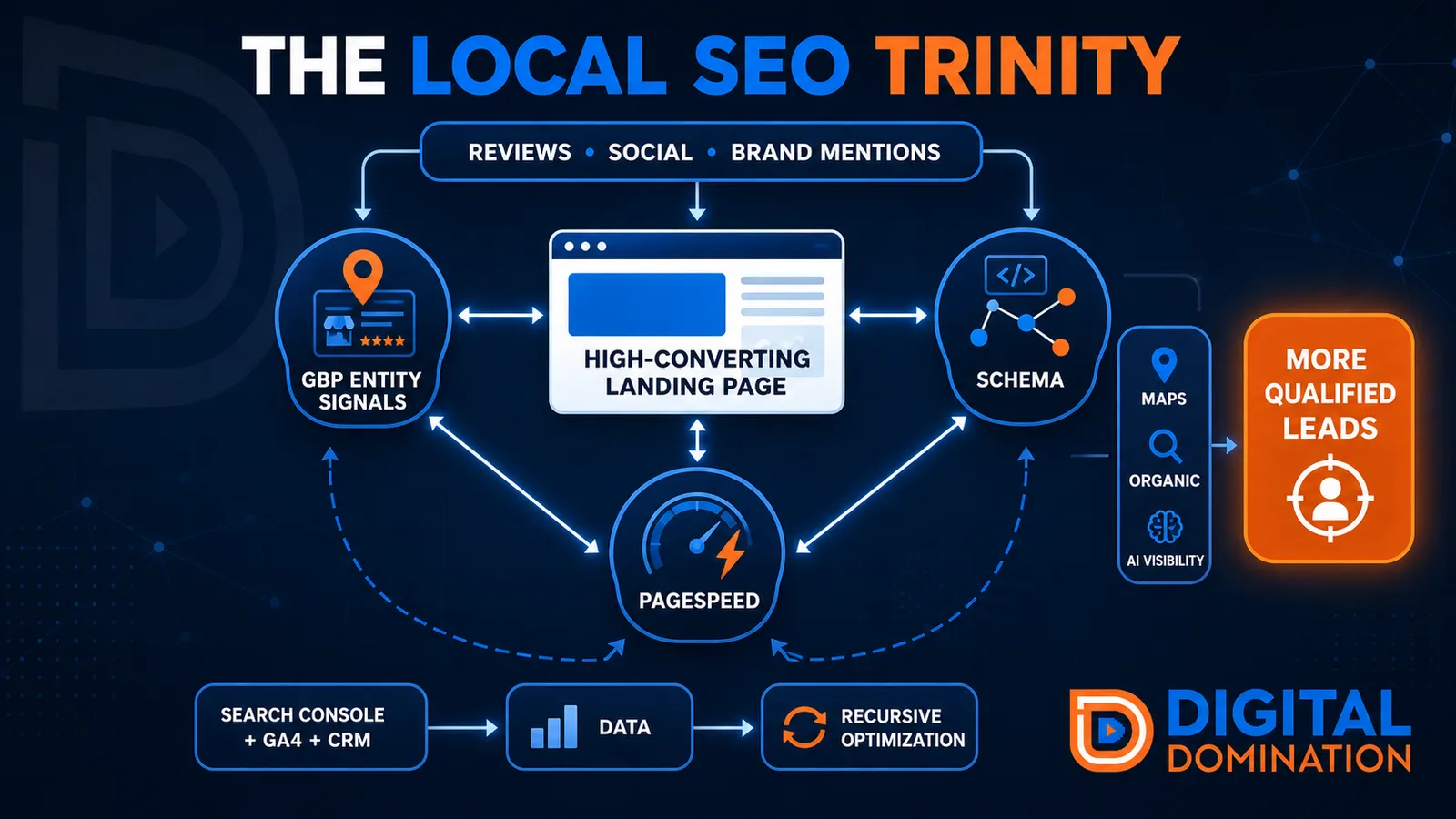
Google ranks local results on relevance, distance and prominence. Immigration practice is federal, but the client's search is local and often in a second language, and that changes what each pillar has to carry. At Digital Domination we build immigration local SEO as three pillars and a loop:
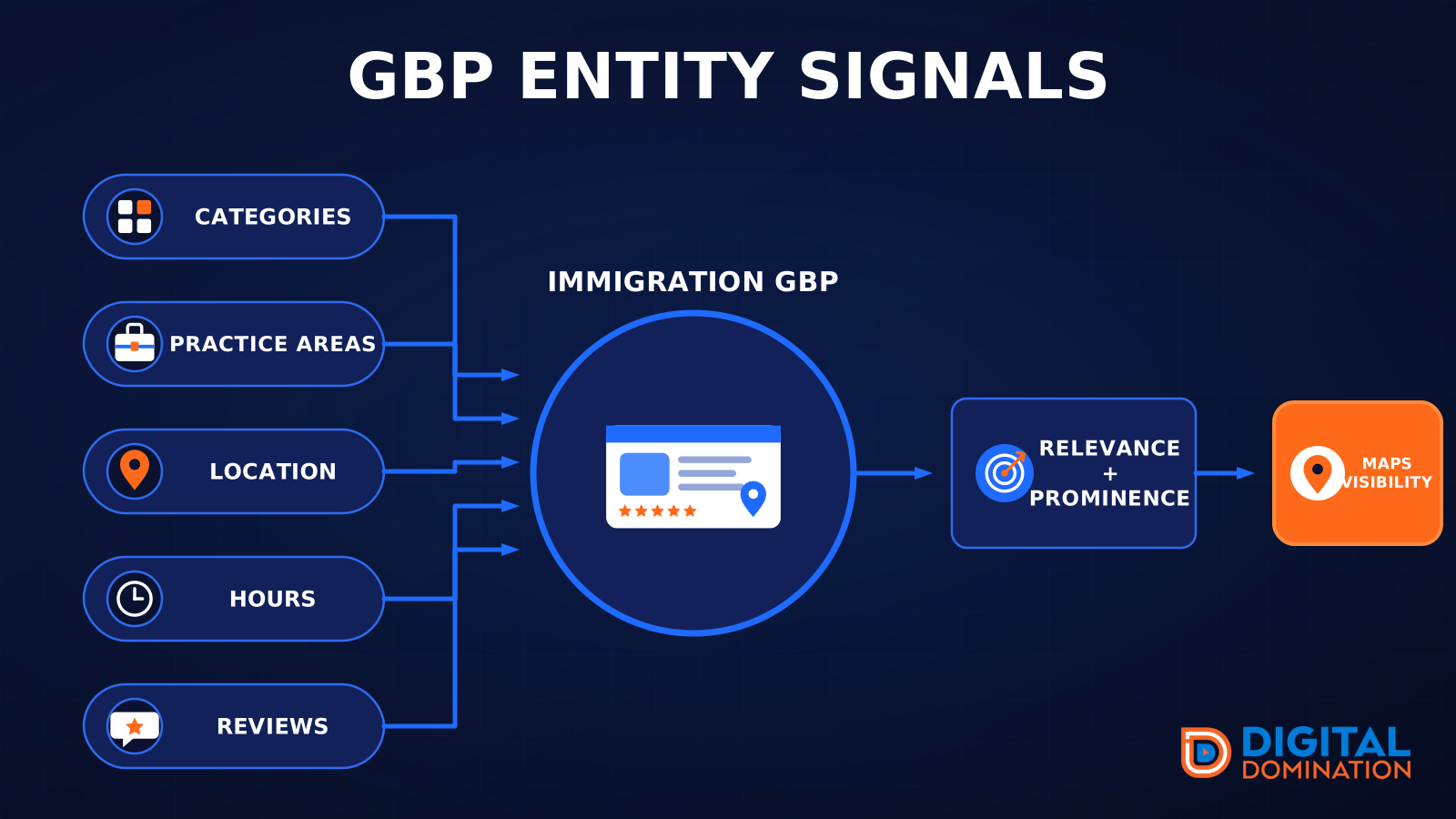
- ▸Google Business Profile entity signals tell Google who the firm is, which case types it handles, which languages it answers in and where a client can walk in with a folder of documents.
- ▸Schema connects the firm, its attorneys, bar numbers, languages, AILA membership, case types, fee offers and service area into one machine-readable graph, in every language the site publishes.
- ▸PageSpeed makes sure a prospect on a prepaid Android phone, a crawler and an AI agent reach the attorney's name and the booking button without waiting.
- ▸Search Console, GA4 and the case management system, split by language, show which searches became consultations and which consultations became retained cases.
GBP entity signals for a practice that is federal but searched locally
The primary category should be Immigration attorney, the category Google actually offers, with Law firm as a secondary. Do not add Immigration and naturalization service: that category describes the government office and pulls the profile toward people looking for a USCIS appointment rather than a lawyer.
Immigration clients work hospitality, construction and healthcare shifts, so a firm that opens Saturday mornings or one evening a week should say so, and a firm that does not should not pretend. Write the description in English and in the market's second language, name the languages staff speak, and post the photo of the actual office door, because a client afraid of notario fraud wants to see a real office before she walks in.
Each office profile should link to its own office page, not the homepage: address, parking, the bus routes that reach it, the languages spoken at that desk, the USCIS field office and immigration court it serves, and a UTM-tagged link so each location's calls and bookings are measured separately.
The services list is where immigration firms leave the most relevance on the table. A single Immigration services entry tells Google nothing. Each service should mirror a page on the website, written in the vocabulary of the case type and repeated in the second language:
- ▸Family-based petitions and adjustment of status (I-130 and I-485), including consular processing
- ▸Naturalization and citizenship (N-400), including the interview and the civics test
- ▸Green card renewal and removal of conditions (I-90 and I-751)
- ▸Removal defense, bond hearings and appeals before the immigration court
- ▸Asylum, U visa, VAWA and T visa cases
- ▸TPS and DACA renewals, and provisional unlawful presence waivers (I-601A)
- ▸Employment-based sponsorship and fiance visas (K-1)
Proof that separates a licensed attorney from a notario in the first screen
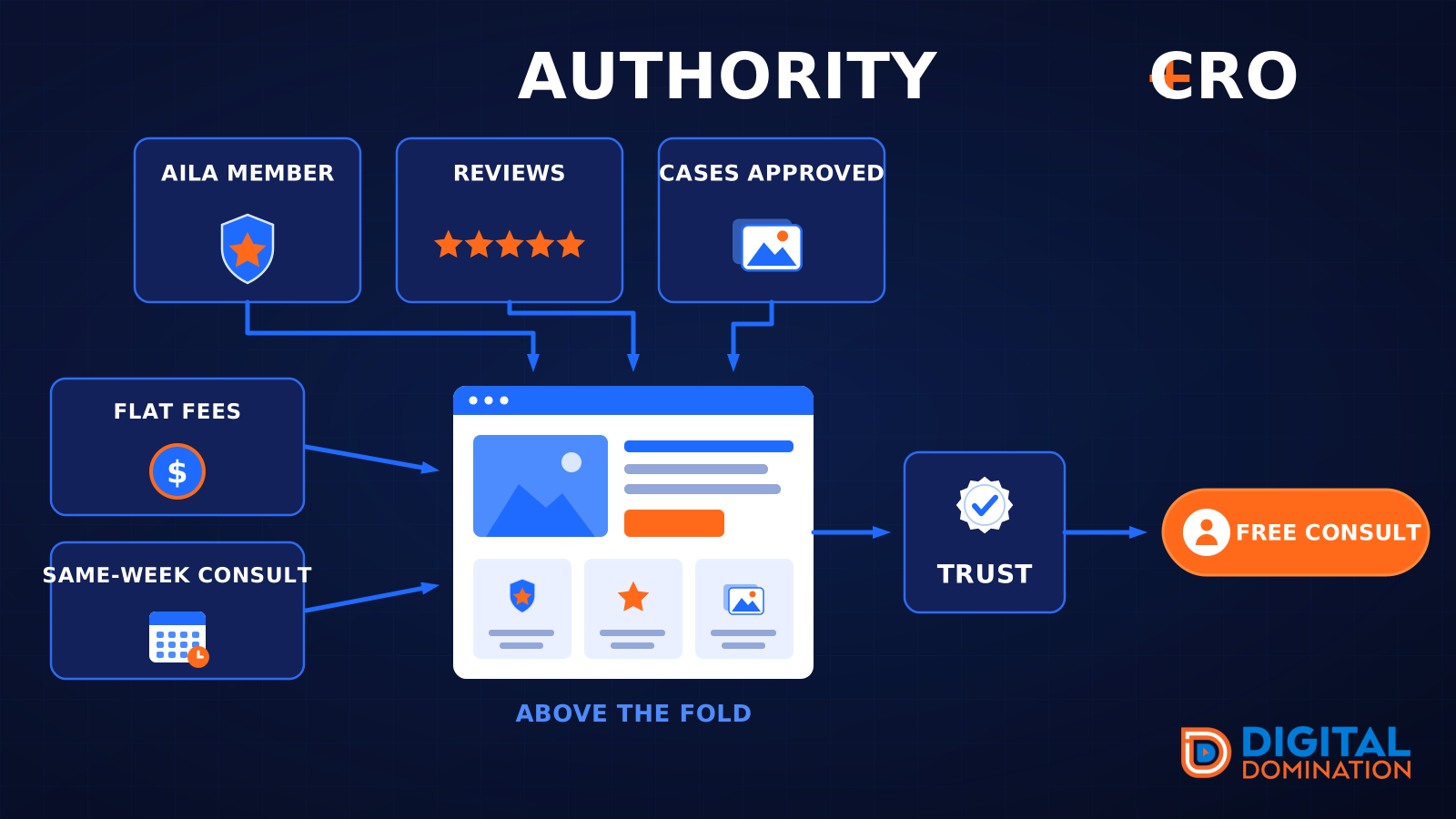
An immigration prospect is asking two questions: is this person a real attorney, and have they handled my kind of case. Immigrant communities have been burned by notarios and immigration consultants for decades, so the first screen has to prove licensure before it sells anything. Bar advertising rules still apply, and any outcome statement needs the disclaimer that past results do not guarantee a similar result.
An example strip for a generic firm, clearly an example, might read: Licensed attorney, State Bar of Nevada. AILA member. Former immigration court trial attorney. Consultations in English and Spanish. Below the fold, each attorney gets a full biography with bar number, courts admitted and links to the bar profile and the AILA directory. Above the fold, what a daughter can verify in a minute is what works:
- ▸State bar admission with the bar number linked to the public bar profile, plus a plain statement that every case is handled by a licensed attorney
- ▸Board certification in immigration and nationality law where the state offers it (Texas, California, Florida and North Carolina do)
- ▸Membership in the American Immigration Lawyers Association, linked to the firm's entry in the AILA lawyer search
- ▸Former government experience when true: USCIS adjudicator, immigration court trial attorney, asylum officer
- ▸Languages the attorneys themselves speak, distinguished from languages an interpreter covers
- ▸Google rating and review count, whether the consultation is free or paid, and the next available appointment
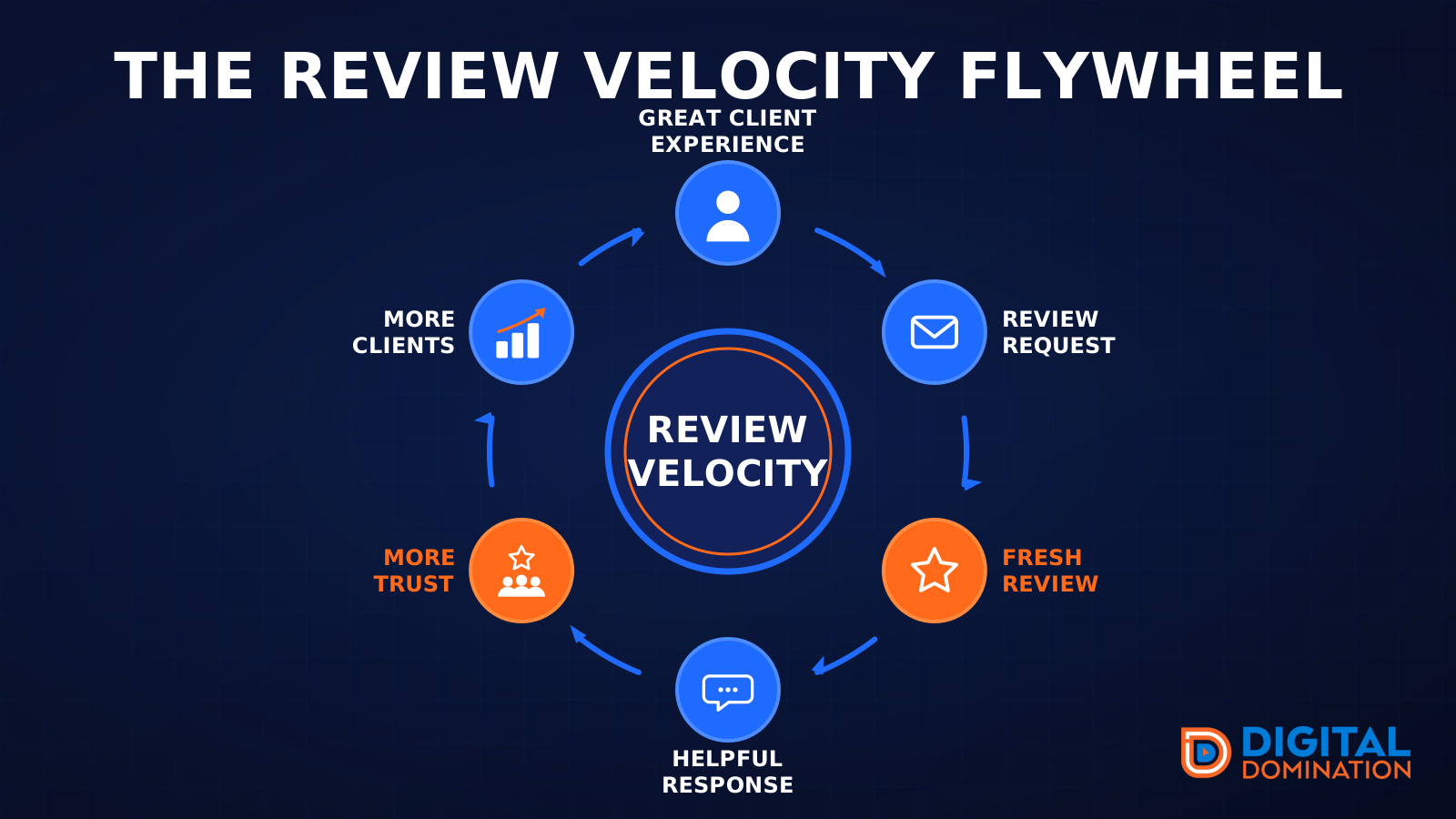
Review velocity in a practice where the best moment to ask is the oath ceremony
Immigration clients are cautious about anything public that touches their status, so the ask has to be timed to relief and made in person: the approval notice, the green card arriving in the mail, the naturalization oath ceremony. A client who just took the oath is the happiest client in law, and most firms never ask.
Tell clients they can review under a first name and never need to mention their case type or country. Invite the review in the client's language and reply in that language. A sentence such as "la abogada respondió cada mensaje y mi mamá ya tiene su residencia" ties the attorney, the responsiveness, the case type and the outcome together in text Google and AI systems can read, and it earns relevance for the Spanish query the next daughter will type. Never confirm in a reply that the reviewer was a client; thank them and stop.
Schema built on LegalService with languages, credentials and case types
Schema is JSON-LD that labels what the visible page already says. With it, Google understands that Example Immigration Law is a LegalService, that a named attorney works for it, holds a specific bar number and speaks Spanish, that naturalization is a Service offered from a specific office, and that the state bar, AILA and Avvo profiles describe the same people. The Spanish pages carry the same graph, with inLanguage set and hreflang pointing each page at its counterpart.
Every page references a permanent @id for each entity (the site root followed by #firm, the bio URL followed by #person, the naturalization page followed by #service) so both language versions describe one firm rather than two:
- ▸The firm: LegalService, with telephone, address, openingHoursSpecification, priceRange, knowsLanguage for every language staff answer in and a ContactPoint with availableLanguage
- ▸Each office: a distinct LegalService location node with its own address and permanent @id
- ▸Each attorney: Person, with worksFor, alumniOf, knowsLanguage, memberOf for AILA and knowsAbout for case types
- ▸Bar number: PropertyValue under identifier; board certification: EducationalOccupationalCredential
- ▸Each case type: Service, with provider pointing at the firm @id and areaServed listing the cities and counties the office actually serves
- ▸Consultation and flat fees: Offer or PriceSpecification attached to the Service, with the government filing fee described separately
- ▸External profiles: sameAs pointing at the state bar, the AILA directory, Avvo, Justia and LinkedIn
- ▸Guides and policy updates: Article with author pointing at the attorney's Person @id and inLanguage on each translation
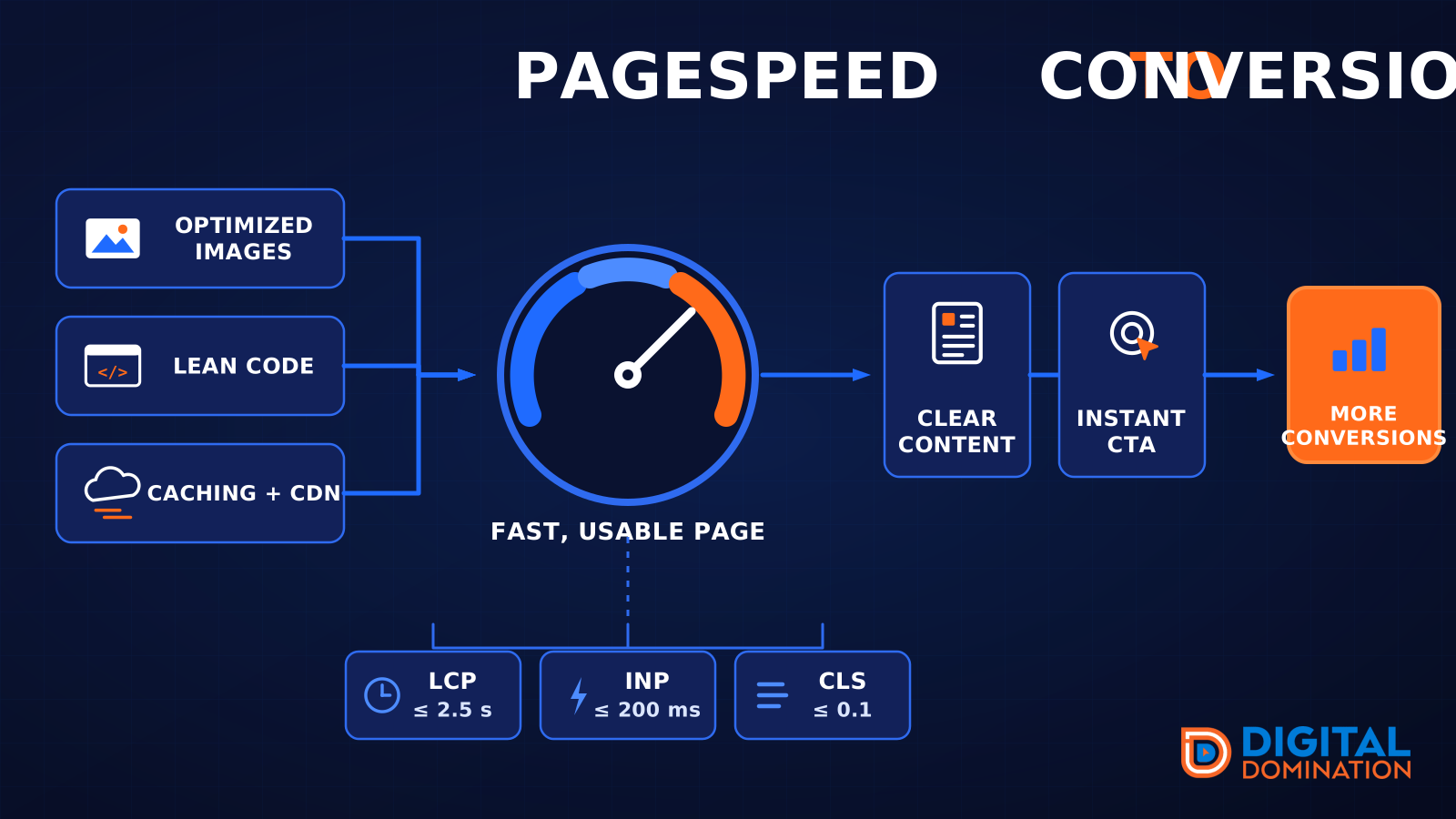
PageSpeed for a link opened inside WhatsApp on a prepaid phone
The prospect is on a budget Android phone, often prepaid, often opening the link inside the WhatsApp in-app browser after a relative forwarded it. Google measures Core Web Vitals from real users at the 75th percentile, and the good thresholds are LCP at 2.5 seconds or less, INP at 200 milliseconds or less and CLS at 0.1 or less. A site that passes on the partner's iPhone at the office can fail for the people it is trying to reach.
At Digital Domination we hold immigration sites to a PageSpeed Insights performance score of 90 or higher and a 2/2 pass on agentic browsing checks, because AI agents now read these pages on a client's behalf. Immigration sites share a specific set of weight problems, and these fixes move the number most:
- ▸Replace the flag-and-Statue-of-Liberty hero slider with one compressed WebP photo of the attorney, preloaded and never lazy-loaded
- ▸Serve real Spanish pages as static HTML instead of a translation plugin that rewrites the page in the browser after it loads
- ▸Keep one chat or WhatsApp button, load it after first interaction, and never let it auto-open over the phone number
- ▸Defer call tracking, pixels and the appointment widget until the page is interactive, and reserve their dimensions so nothing shifts under a thumb
- ▸Self-host and subset one font family that includes the accented characters both languages need; remove unused page builder CSS and JavaScript
- ▸Keep the consultation form to name, phone, language and case type; never ask for status or an A-number before a human has spoken
Flat fee and filing fee language an AI Overview can repeat without misleading anyone
Immigration is a flat-fee practice for most case types, which is an advantage in AI search: when someone asks what an immigration lawyer charges for citizenship, the firm that publishes a clear structure gets quoted and the firm that says call for pricing does not. The trap is the government filing fee, which USCIS sets and changes; the copy has to separate the attorney fee from the filing fee or the AI answer will misstate the total. Statements that work:
- ▸Whether the consultation is free or paid, what it costs, how long it lasts and that it is available in Spanish
- ▸A flat attorney fee for each common case type such as naturalization or a family petition, stated as a range if it varies, with the variables that move it
- ▸A plain statement that USCIS filing fees are separate, set by the government and listed on the USCIS site
- ▸How removal defense is billed, by stage or by hearing, since one flat fee rarely fits a case that can run for years
- ▸Payment plans available, with the deposit needed to open the file and enter the G-28 appearance
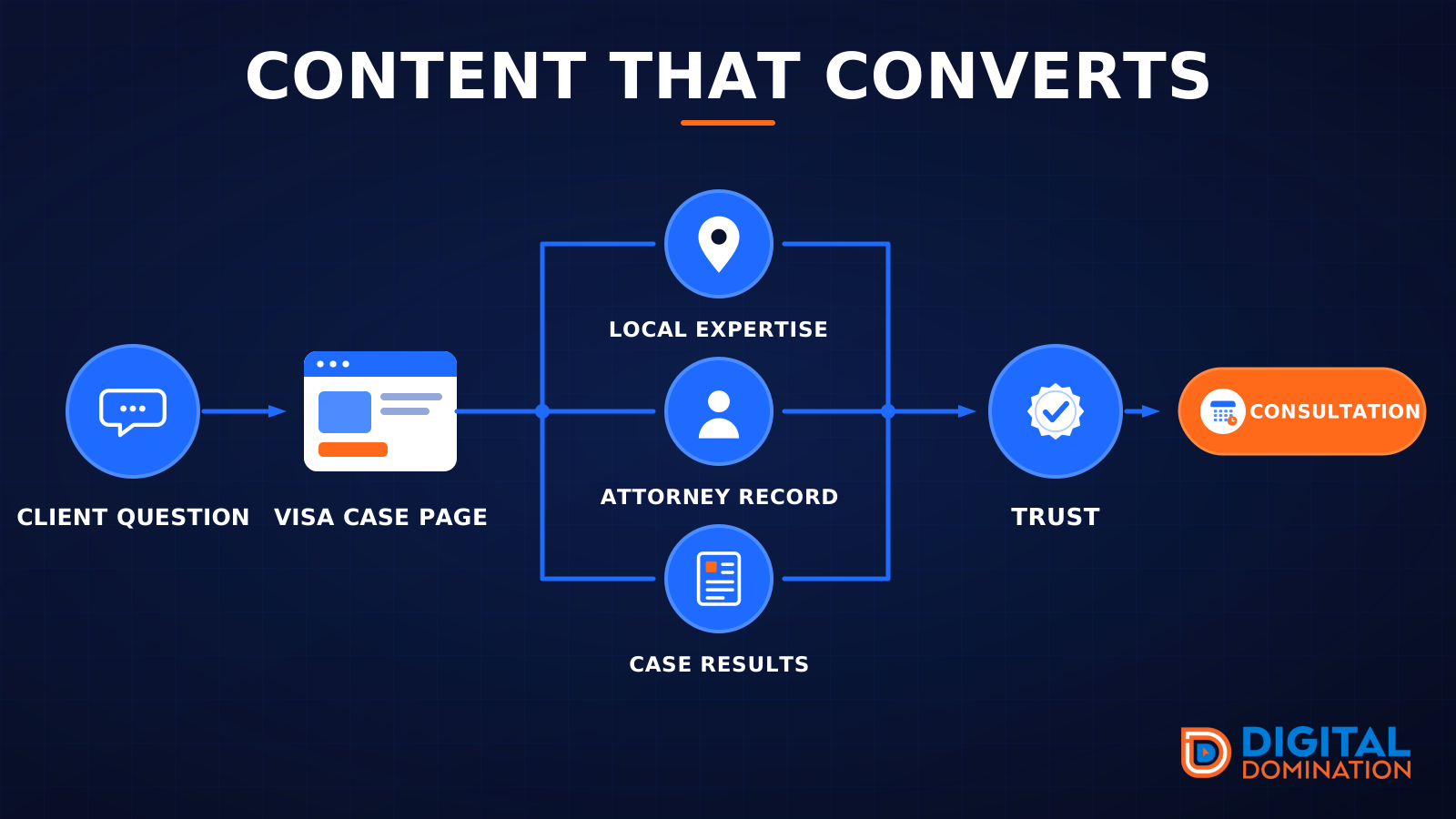
Content for the years between the first consultation and the oath
An immigration client's journey is long and procedural, and each stage produces searches the site should answer directly under a plain heading, in both languages. Eligibility comes first: who qualifies, who does not and what could disqualify. Then the document checklist, the filing, the receipt notice, the biometrics appointment, the interview and the decision. For the family in crisis the path is different: how to find someone in ICE custody with the online detainee locator, what a bond hearing decides and what a notice to appear means.
Local specificity separates a page Google trusts from a national template with the city swapped in. Name the USCIS field office and immigration court that serve the metro, how to reach them by bus and where to park. Point to the USCIS processing times tool rather than publishing a number that will be wrong next month. Demand in this niche moves with the news rather than the calendar, so a dated, attorney-authored update on each policy change (a new TPS designation, a DACA ruling, a visa bulletin movement) captures the search spike while it lasts and links to the Service page it affects.
Search Console, GA4 and the case management system, split by language
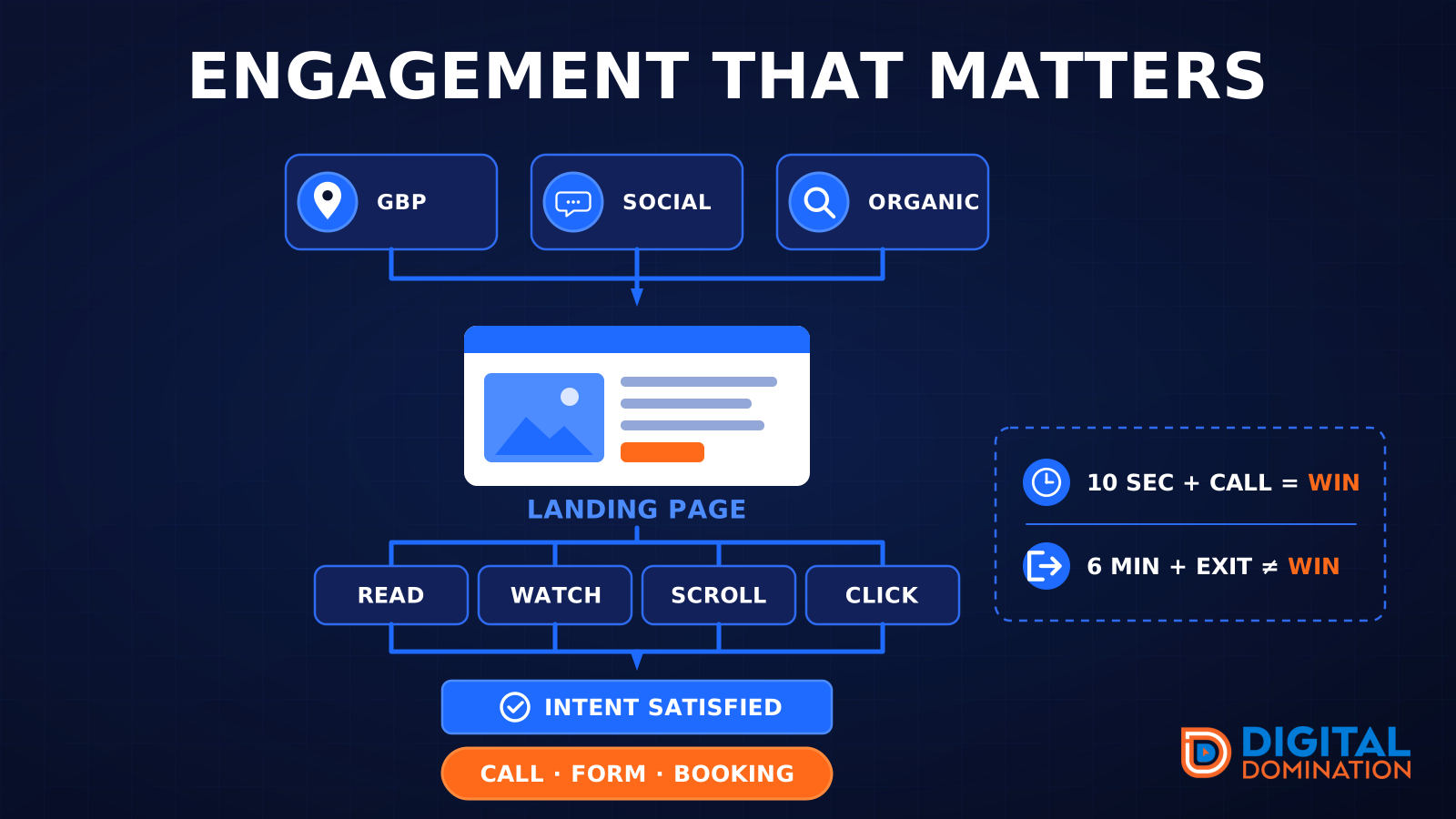
Search Console shows which queries produced impressions and clicks per page, and for an immigration firm the first filter is language. Spanish impressions with no clicks usually mean the Spanish page exists but its title is a machine translation nobody would tap. English impressions landing on the Spanish page mean hreflang is wrong. GA4 shows click-to-call, WhatsApp taps and form starts by device and language, and the case management system closes the loop with retained cases by case type.
Reading the data is specific to this practice. Many callers are not eligible for anything, so a high consultation count with a low retained rate is usually a content problem: the eligibility page is not screening honestly. Clicks without calls on the Spanish pages point at speed or a form that asks too much. Clients who retain but pay late point at fee language that hid the filing fee.
WhatsApp groups, Spanish radio and forums: the mentions that corroborate the firm
Immigrant communities share lawyer names in WhatsApp and Facebook groups, on Spanish-language radio call-in shows and at church and consulate events, and none of those mentions carry a link. They still carry context: firm name, attorney, case type, language and outcome, which is what search engines and AI systems use to learn what a firm is known for. Short videos in Spanish on what to bring to a biometrics appointment or what happens at the naturalization interview are the natural social format, and Google's Search Console now reports supported social and video platform properties, so their reach is measurable.
Forums matter too, with a caveat. Axios reported in August 2026 that Reddit's share of visible ChatGPT Search citations fell roughly 86 percent, yet OpenAI holds a Reddit data partnership, and visible citation, retrieval and training are different processes. The durable move is diversification: a segment on the local Univision or Telemundo affiliate, an AILA directory entry, Avvo answers and community organization pages, all carrying the same firm name, address, phone and attorney names in both languages.
A 90-day roadmap that ships in two languages from day one
Most immigration firms build the English site first and promise the Spanish version later, so later never arrives and half the market stays invisible. This plan builds both languages in the same sprint and treats the news cycle as a content calendar.
- ▸Days 1-14, baseline: run GeoGrid scans for the top case types in English and in the market's second language; audit every GBP field, especially category, hours and languages; benchmark consultations, retained cases and the language of first contact.
- ▸Days 15-30, foundation: set Immigration attorney as primary and align services to case-type pages in both languages; publish office pages naming the field office and the court; rebuild the first screen around bar number, AILA membership and one booking button; implement the LegalService, Person, Service and Offer graph with permanent @id values, knowsLanguage and hreflang; remove the slider and the translation plugin.
- ▸Days 31-60, relevance and authority: write the case-type pages along the eligibility-to-decision path in both languages; publish the first dated policy updates; start the in-person review ask at approval and oath; record the first short videos in Spanish; complete the AILA, state bar and Avvo profiles.
- ▸Days 61-90, recursive optimization: rewrite high-impression, low-click Spanish titles from Search Console; fix clicks-without-calls pages found in GA4; compare consultation-to-retained rates by case type and tighten the eligibility content; repeat the highest-impact changes and re-run the GeoGrid in both languages.
One firm, one entity, in every language the market searches in
The goal is not a finished Google Business Profile, a schema plugin or a fast home page in isolation. It is one immigration firm whose attorneys, bar numbers, languages, case types, fees and reviews say the same thing on Google Maps, on the website in every language it publishes, in the schema, on the state bar site and in the AILA directory. Digital Domination builds exactly that for immigration firms, with a guarantee of top 3 in the Google Map Pack in 12 weeks or you do not pay.
The daughter in the parked car will book whoever Google shows her, in the language she searched in. If you are not certain that is you from every neighborhood your clients live in, run the free GeoGrid scan and see where your firm ranks across 169 points in your market, not just from the office door.
Keep reading
Related guides
- ▸Case studies vs doing local SEO yourself
- ▸ChatGPT local SEO now depends on directory proof too
- ▸Chiropractor local SEO
Put it into action
Frequently Asked Questions
What primary Google Business Profile category should an immigration law firm use?
Use Immigration attorney, the category Google offers for this work, with Law firm as a secondary. Avoid Immigration and naturalization service, which describes the government office and attracts people looking for a USCIS appointment rather than a lawyer.
Is a Google Translate widget enough to rank for Spanish immigration searches?
No. A widget rewrites the English page in the visitor's browser, so Google never indexes a Spanish page and the firm is not eligible for Spanish queries at all. Build real Spanish pages with their own titles, headings and schema, connect them to the English versions with hreflang, and write the GBP description and services in Spanish as well.
Immigration law is federal, so why does local SEO matter?
Because the practice is national but the search is local. Clients add near me or a city name because they want an office they can walk into with a folder of documents, and the comparison happens in the Map Pack. Winning the local pins is the higher-intent and cheaper fight compared with competing nationally for a generic term.
How can an immigration lawyer get Google reviews from clients who worry about their status?
Ask in person at the moment of relief: the approval notice, the green card arriving or the naturalization oath ceremony. Tell clients they can review under a first name and never need to mention their case type or country, invite the review in their language and reply in that language. Never confirm in a reply that the reviewer was a client.
Should an immigration firm publish its flat fees?
Publish as much accurate fee information as the firm can stand behind: the consultation fee, a flat attorney fee or range for common case types and how removal defense is billed. State clearly that USCIS filing fees are separate and set by the government, so an AI Overview does not misquote the total when someone asks what a citizenship lawyer costs.
What schema should an immigration law website use?
Anchor the graph on LegalService for the firm and each office, Person for each attorney with worksFor, knowsLanguage, memberOf and a PropertyValue identifier for the bar number, Service for each case type with areaServed, and Offer for fees. Use permanent @id values so the English and Spanish pages describe the same entities, and set inLanguage on every page.
What PageSpeed score should an immigration firm's site hit?
Target a PageSpeed Insights performance score of 90 or higher on mobile and pass Core Web Vitals in field data: LCP under 2.5 seconds, INP under 200 milliseconds and CLS under 0.1 at the 75th percentile. Test on a budget Android device, since that is what many prospects use, and remove the hero slider and the browser-side translation plugin first.
Ready to dominate your map?
Top 3 in the Google Map Pack in 12 weeks, or you don't pay.