
Chiropractor local SEO: how GBP entity signals, schema and PageSpeed turn a search from the nursery floor into a new-patient exam
The practice with the best hands does not automatically get the patient. The practice Google can read, patients can trust in five seconds and a phone can load in two does.
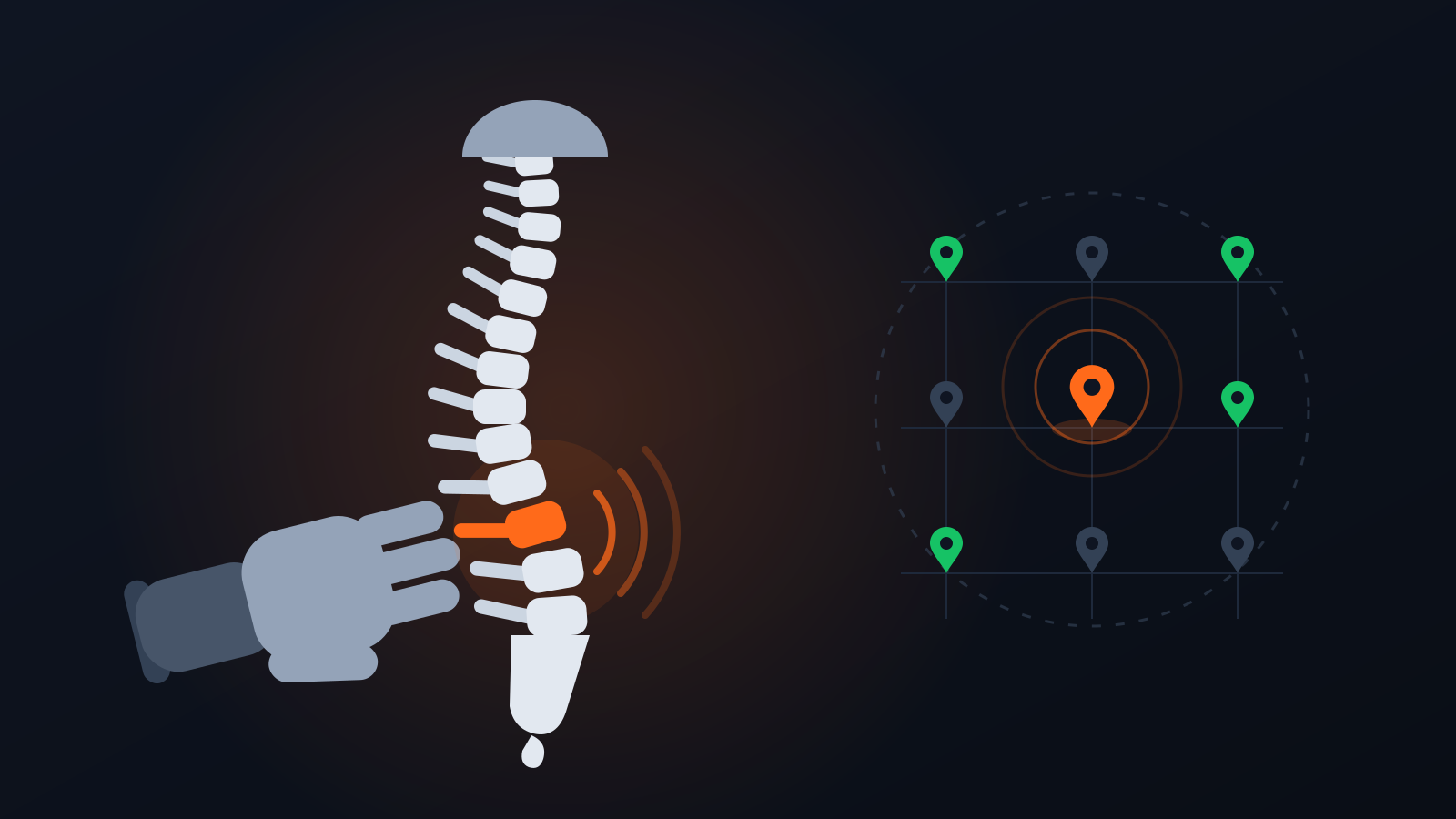
Why the better chiropractor loses the patient who cannot stand up
It is 6:40 on a Tuesday morning. A dad lifts his toddler out of the crib, feels his low back seize, and ends up on the nursery floor with his phone. He types "chiropractor near me open now" with one thumb, scans three star ratings, taps the practice marked Open and Accepts new patients, and hits Call. Ninety seconds after the injury he has chosen a doctor, and the choice had nothing to do with who is the better adjuster.
The DC with twenty years in practice may not have been in that three-pack at all. Maybe the profile said Closed because nobody entered the lunch gap, or the site spent seven seconds rendering an autoplay video.
The short version: three pillars and a loop
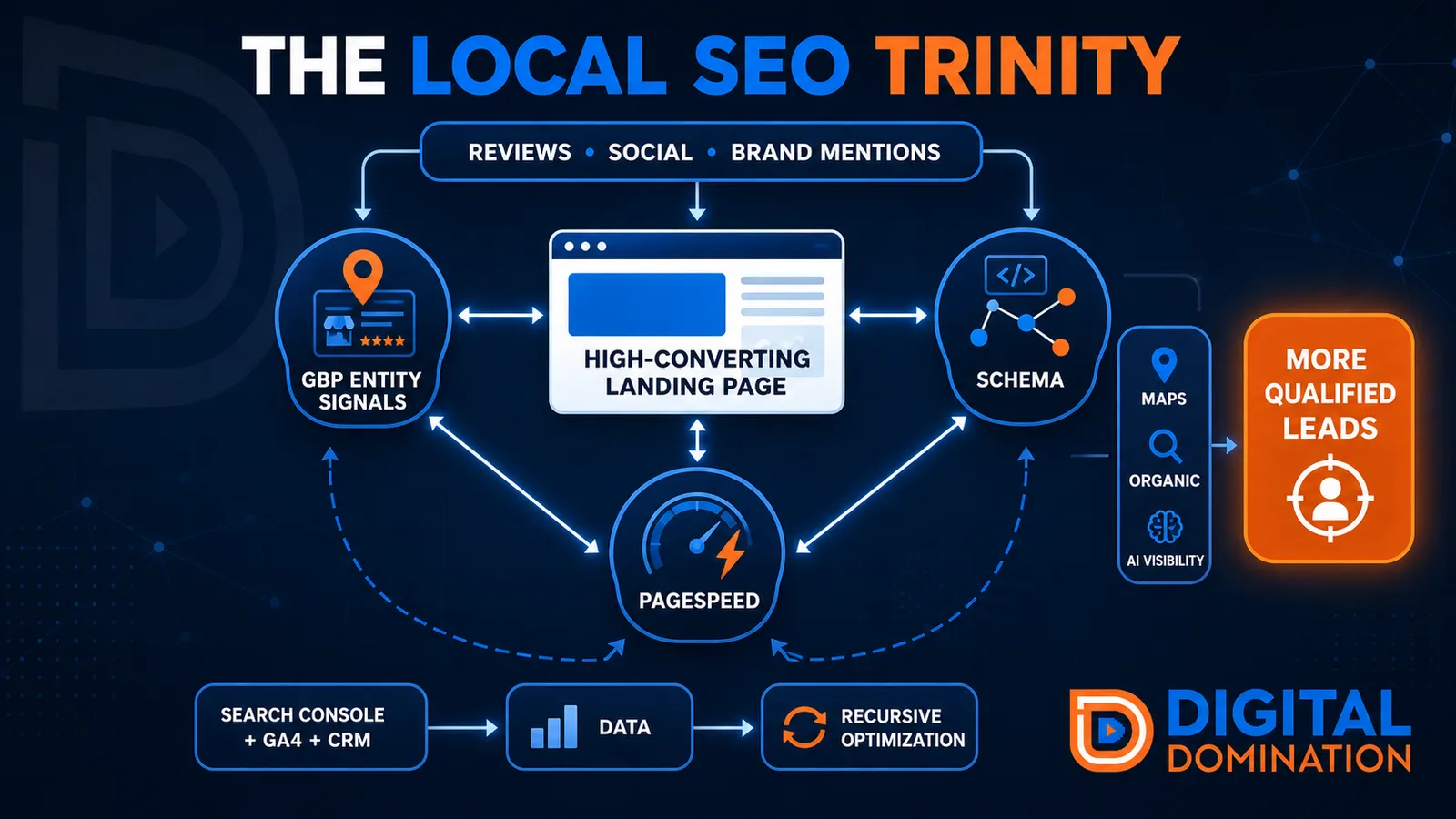
Google ranks local results on relevance, distance and prominence. Distance is fixed by where the patient is standing, so the winnable fight is relevance, prominence and conversion. At Digital Domination we build chiropractic local SEO as a trinity with a measurement loop around it:
- ▸Google Business Profile entity signals establish who the practice is, which doctors work there, what it treats and whether it is open now.
- ▸Schema turns doctors, licenses, techniques, offers and locations into a machine-readable graph with permanent identifiers.
- ▸PageSpeed makes sure a patient in pain, a crawler and an AI agent can all use the page immediately.
- ▸Search Console, GA4 and the practice management system show what found you and what converted.
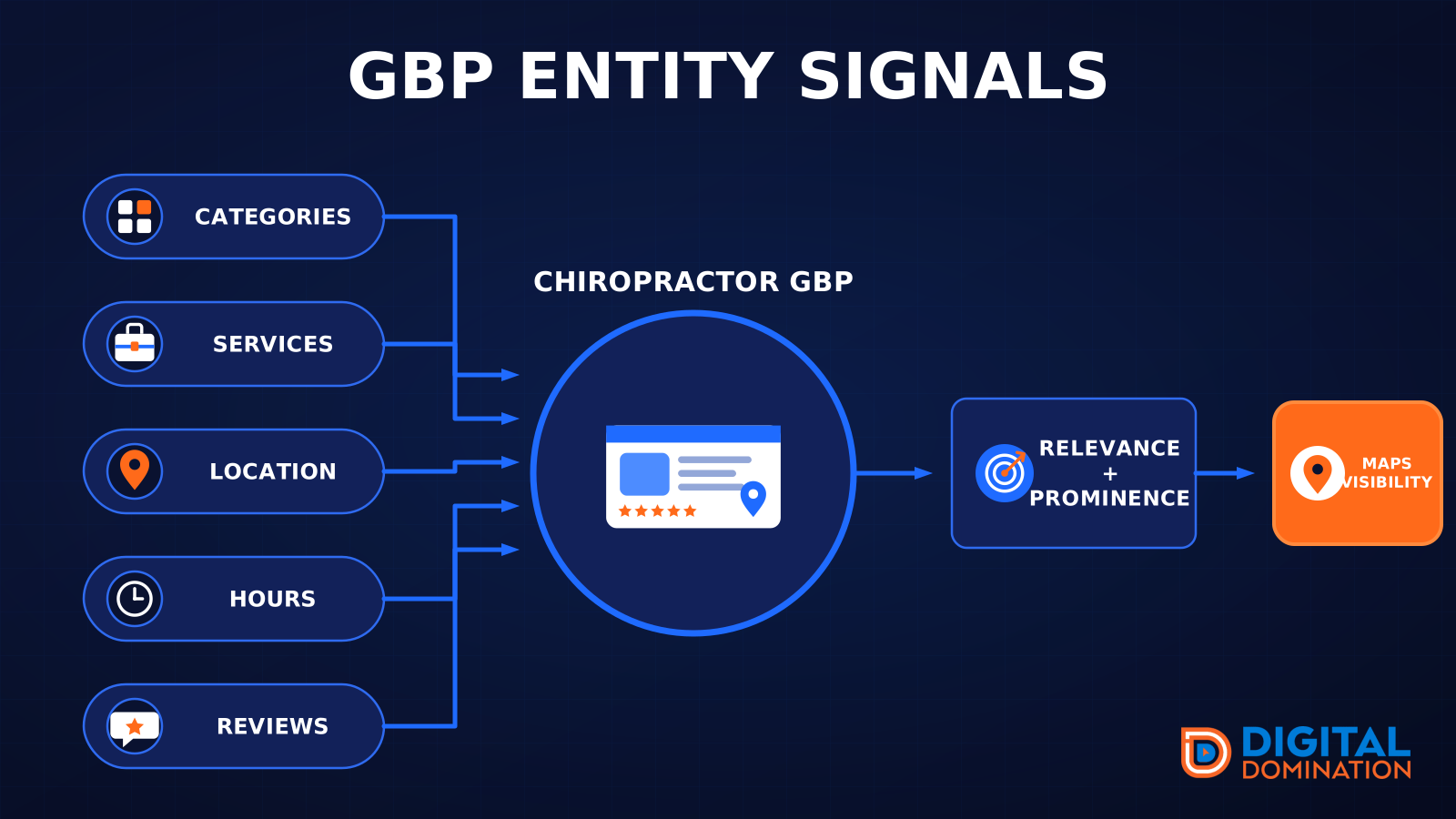
GBP entity signals for a chiropractic practice
The primary category is almost always Chiropractor. Secondary categories are only for services delivered with the right license on staff: Sports medicine clinic, Massage therapist or Acupuncturist. Adding Pain management physician because it sounds bigger can violate state board advertising rules. Services define the clinical vocabulary, and the same words must appear on the website:
- ▸Adjustment named the way patients search (Diversified, Gonstead, Thompson drop, Activator).
- ▸Auto accident and whiplash care, sciatica and disc care, spinal decompression, headache and sports injury care.
- ▸Webster prenatal and pediatric care only if the doctor holds the training; dry needling only where state scope allows.
- ▸Attributes patients filter by: Accepts new patients, Walk-ins, Wheelchair accessible.
- ▸Hours that match the door, including the midday closure, because Open now is the first filter a patient in pain uses.
- ▸Real photos of adjusting rooms and doctors, and a UTM-tagged landing page per location as the website link.
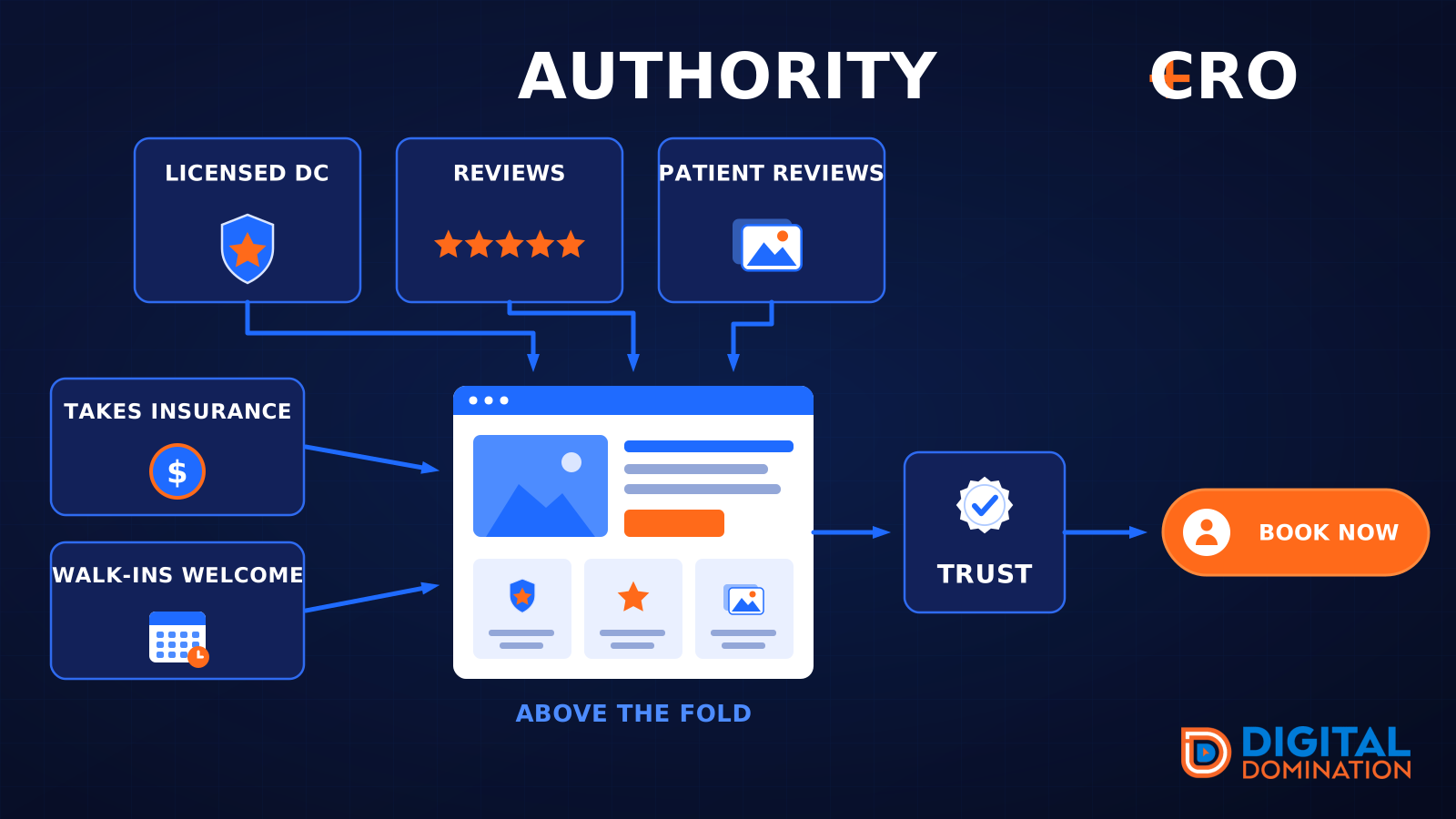
Authority a patient can verify before the first adjustment
Chiropractic is a Your Money or Your Life category. Google holds health pages to a higher bar, and so does a patient who has read about high-pressure 40-visit care plans. As a placeholder example only, an authority strip might read: Doctor of Chiropractic since [year] | [rating] stars from [count] reviews | Licensed by the [State] Board of Chiropractic Examiners | In-network with [carriers]. Each doctor's bio should carry:
- ▸Chiropractic college and graduation year (Palmer, Life, Logan, Parker or another CCE-accredited school).
- ▸State license number linked to the board's public lookup, plus NBCE board examination completion.
- ▸Certifications spelled out: CCSP or DACBSP for sports, Webster certification through the ICPA, DACNB, ART or Graston.
- ▸ACA and state association membership, team physician roles, and links to the same doctor on Healthgrades, Zocdoc and Vitals.
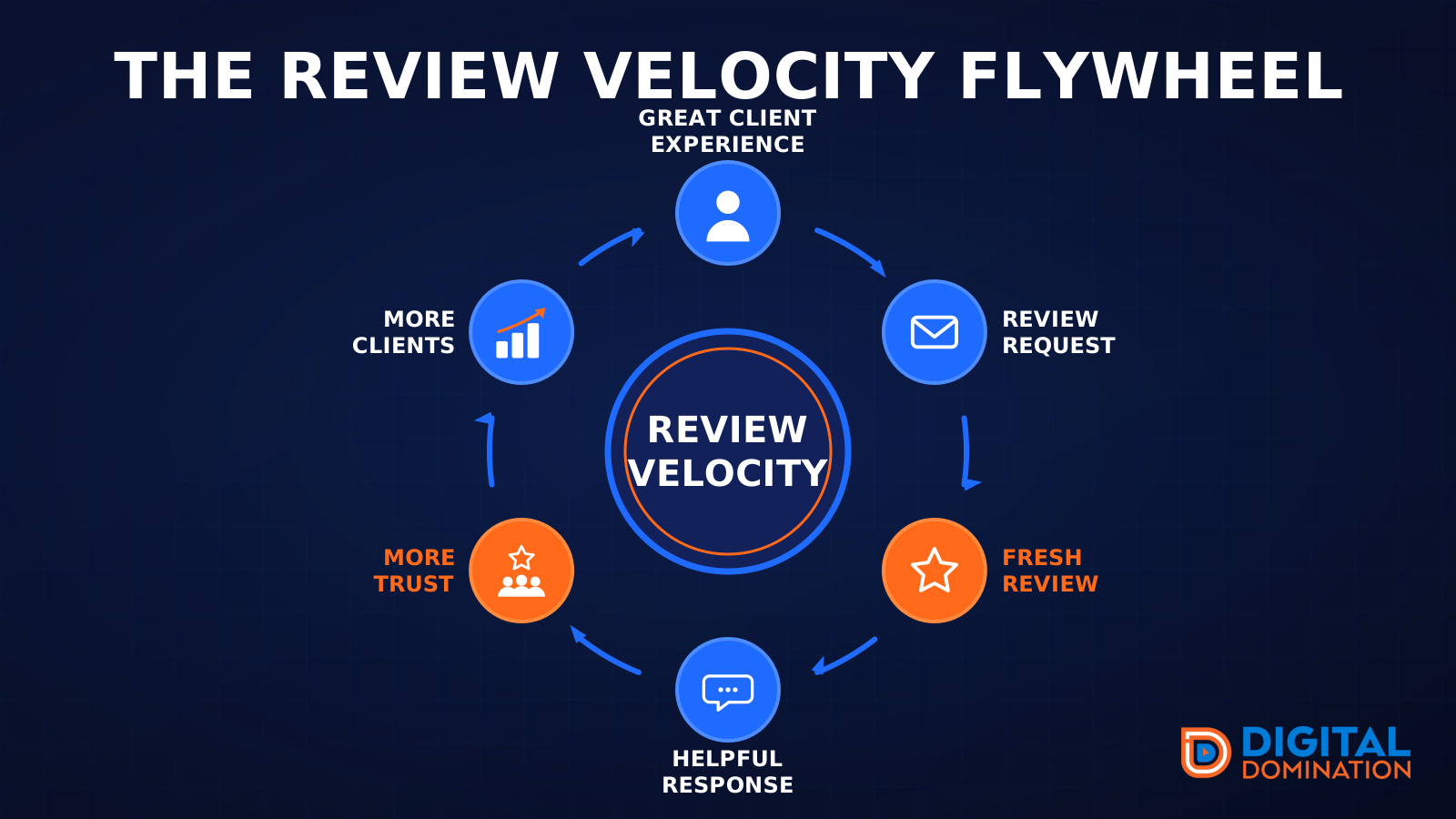
Review velocity, and what a chiropractic review needs to say
Chiropractic reviews are unusually rich because patients describe the problem, the doctor and the result in one breath. Ask at the visit where the patient first reports real relief, usually visit two to four, by text while they are still in the parking lot. A healthy profile shows:
- ▸New reviews every week, on Google first and then Healthgrades, Zocdoc and Facebook.
- ▸Mentions of the specific condition and the specific doctor, and comments about care-plan honesty.
- ▸Owner responses that never confirm the reviewer is a patient or mention health details, because HIPAA applies to what the office writes back.
Schema architecture anchored on the Chiropractic type
Schema.org gives chiropractors a purpose-built type. Chiropractic is a subtype of MedicalBusiness, so it inherits every LocalBusiness property and adds medicalSpecialty and isAcceptingNewPatients. A plugin's generic LocalBusiness block cannot say that Dr. Example works at the clinic, holds a state license, practices Gonstead and treats sciatica in a named county. Every entity needs a permanent @id, such as example.com/doctors/jane-example/#person, so every page references the same nodes:
- ▸The practice: Chiropractic (a MedicalBusiness) with medicalSpecialty, isAcceptingNewPatients, openingHoursSpecification, priceRange and sameAs to the GBP and directory profiles.
- ▸Each office: its own Chiropractic node with a distinct @id, tied to the parent with parentOrganization.
- ▸Each doctor: Person with jobTitle Doctor of Chiropractic, worksFor, alumniOf, hasCredential as EducationalOccupationalCredential, and identifier as a PropertyValue holding the license number.
- ▸Each technique or condition: Service (or MedicalTherapy) with provider set to the practice @id and areaServed listing cities and counties.
- ▸New-patient offers and cash pricing: Offer or PriceSpecification on the matching Service.
- ▸Education as Article with a licensed DC author; videos as VideoObject with transcripts.
PageSpeed for the patient searching with one thumb
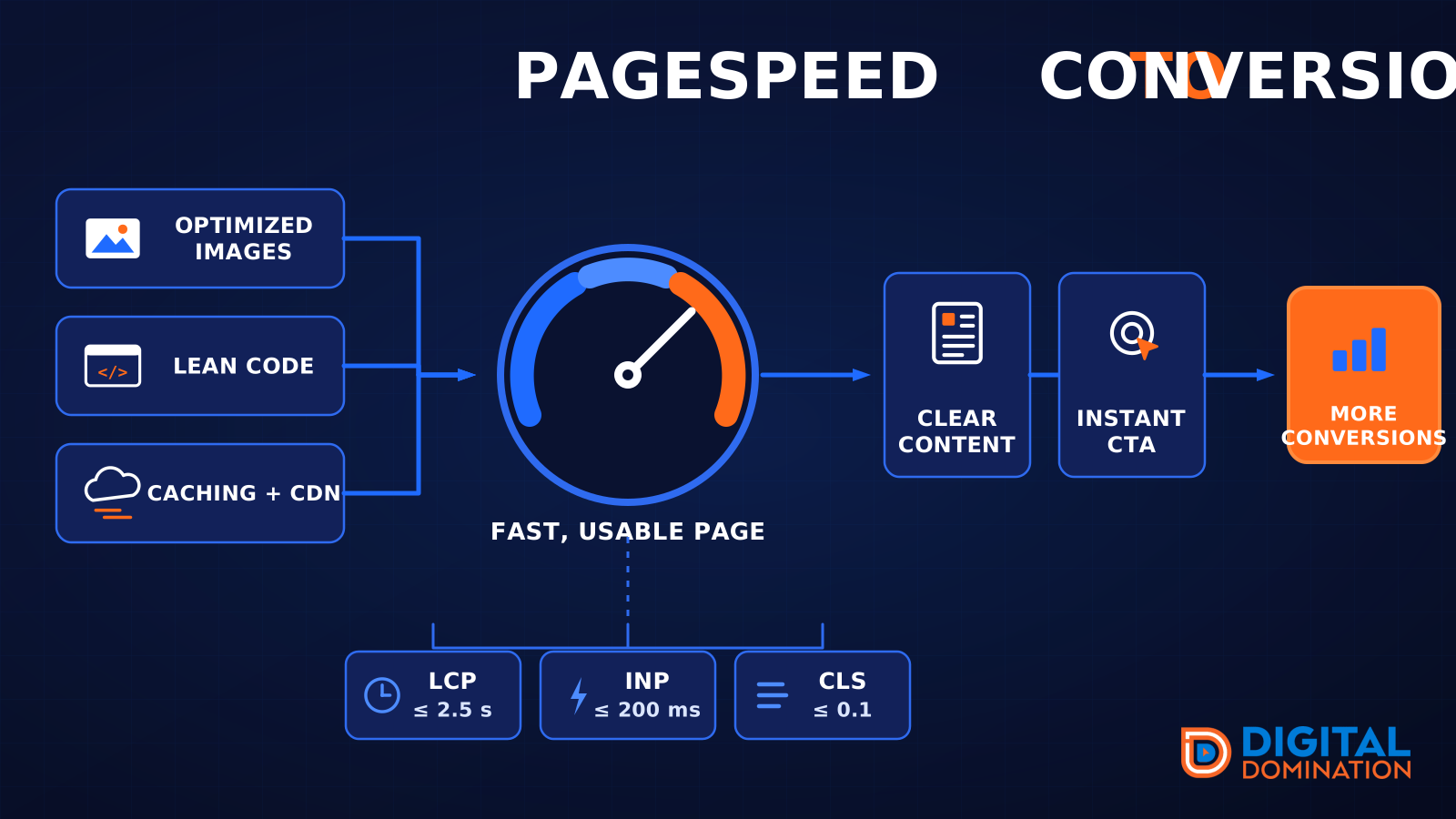
Chiropractic websites are some of the heaviest small-business sites we audit: an autoplay adjustment video in the hero, a scheduler that loads its whole application on every page, a review widget, a chat bubble, a popup and two tag managers. Google's good thresholds for Core Web Vitals are LCP at 2.5 seconds or less, INP at 200 milliseconds or less and CLS at 0.1 or less, measured at the 75th percentile of field data. We ship chiropractic sites to a PageSpeed Insights performance score of 90 or higher and a 2/2 agentic-browsing check:
- ▸Replace the autoplay hero video with a compressed WebP still of the doctor.
- ▸Load the scheduler (Jane, ChiroTouch, Genesis, SKED) only when the patient taps Book.
- ▸Make the map a static image that loads on click; delay chat and review scripts until first interaction.
- ▸Kill the popup that fires on load and shifts the page; put the new-patient offer in a fixed call bar.
- ▸Reserve dimensions for widgets, and keep tap-to-call and Book buttons plain HTML.
Insurance, cash pricing and lien language that AI Overviews can quote
A patient wants three money questions answered: do you take my insurance, what does it cost if you do not, and do I pay anything now if this was a car accident. AI Overviews need the same facts in crawlable text, and most chiropractic sites hide them behind Call for pricing:
- ▸New-patient exam with a stated cash price or range, noting whether X-rays and the first adjustment are included.
- ▸In-network carriers named in plain text, Medicare acceptance (it covers manual spinal manipulation only), HSA and FSA.
- ▸Auto accident language: treatment on a lien or through med-pay so the patient pays nothing while the claim is open, within your state's rules.
- ▸The variables that change the price, mirrored in Offer or PriceSpecification schema so page and graph agree.
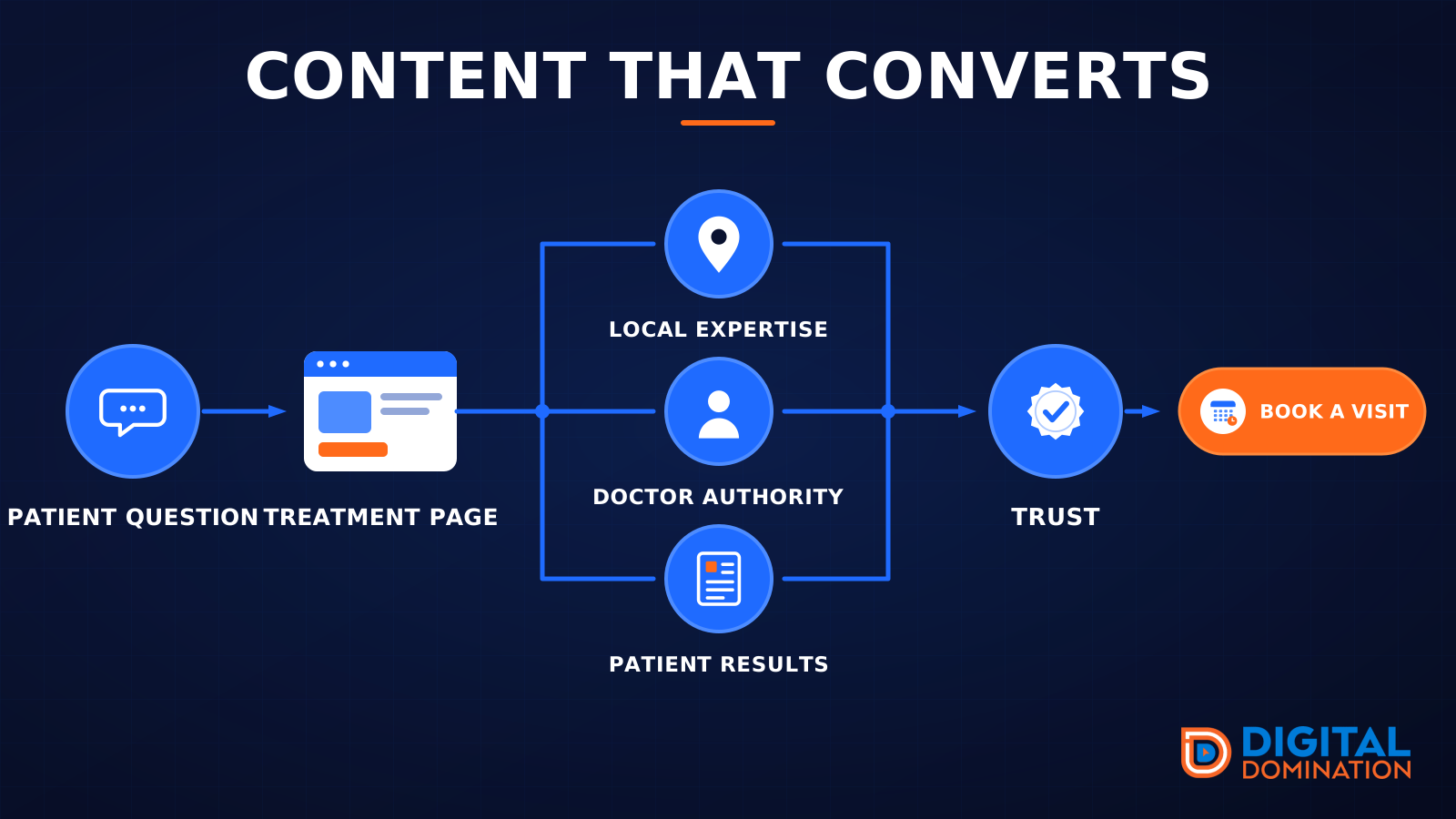
Content that follows the patient from first twinge to discharge
Condition and technique pages should answer the questions a real patient asks between the first twinge and discharge, with a licensed DC as named author, an updated date, primary sources for clinical claims, and language inside your state board's advertising rules (no cure claims, no specialist wording without board certification). A strong sciatica or whiplash page answers:
- ▸Is this something a chiropractor treats, and when should I go to urgent care instead? Red-flag symptoms belong on the page.
- ▸What happens at the first visit, how many visits do most people need, and how will I know it is working?
- ▸Which techniques do you use, and can I ask for a gentler option like Activator or flexion-distraction?
- ▸Is it safe during pregnancy, for my child, or after a fusion? Does insurance cover it, and what if the injury came from a crash?
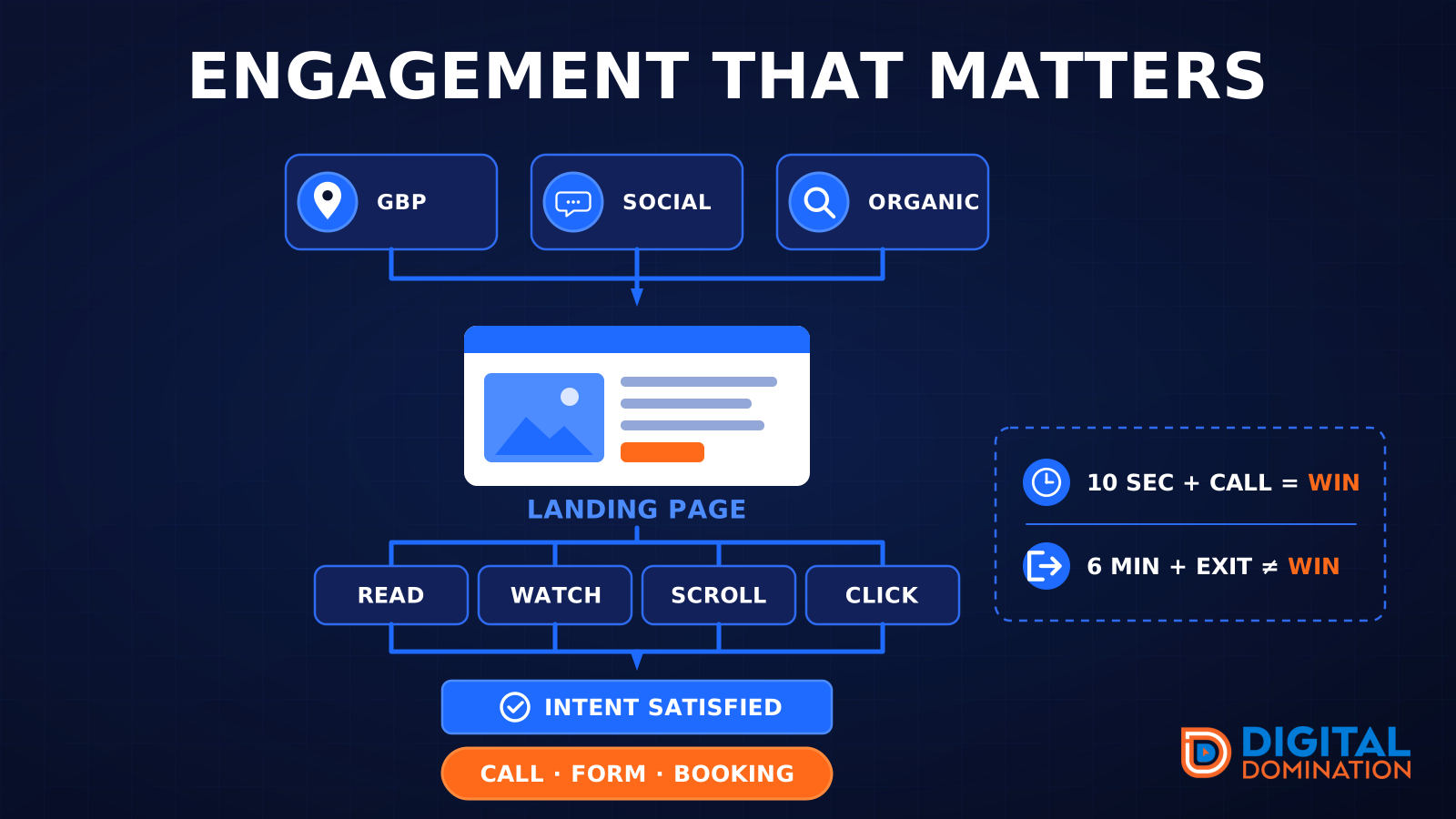
Search Console, GA4 and the EHR: closing the loop on kept exams
Search Console shows which queries the condition pages earn impressions for, where click-through lags, and whether structured data is failing. GA4 shows what the visitor did: tap-to-call, scheduler opened, booking completed. The practice management system tells you which of those became a kept new-patient exam or a personal injury case. Impressions but few clicks: fix the title and GBP relationship. Clicks but few bookings: fix speed, trust or the money questions. Bookings that never show: fix scheduling friction, not SEO. The cycle:
- ▸Measure the baseline: GeoGrid rank, Search Console clicks, GA4 booking and call events, new-patient exams by source.
- ▸Pick the single highest-value gap, ship one focused change, annotate the date.
- ▸Compare four weeks later on visibility, bookings and kept exams, and let the data choose the next test.
Adjustment videos, referral partners and brand mentions
Chiropractic has a built-in content advantage: adjustment videos and mobility drills perform on TikTok, Reels and Shorts better than almost any other local health category. Google's Search Console now reports on supported social and video platform properties. A like does not move a Map Pack ranking, but consistent publishing produces branded searches, links, mentions and reviews, which do. The mentions that matter most:
- ▸Weekly GBP posts tying a doctor, a condition and a location to a landing page.
- ▸Adjustment videos with written patient consent, transcribed and embedded on the matching condition page.
- ▸Gyms, youth leagues, personal injury attorneys and auto body shops that list the practice as a resource.
- ▸Reddit and local forums, handled carefully: Axios reported in August 2026 that Reddit's share of visible ChatGPT Search citations fell roughly 86 percent despite OpenAI's Reddit data partnership, so treat forums as one diversified signal.
A 90-day roadmap for a chiropractic practice
Fix what Google reads first, then what patients see, then the machine layer, then the loop:
- ▸Days 1-14, profile and baseline: run a GeoGrid scan, audit categories against licensed services, rewrite GBP services in patient vocabulary, correct hours, upload real photos, point each profile at a UTM-tagged location page.
- ▸Days 15-30, landing pages and authority: rebuild each location page with the authority strip, doctor bios, pricing and lien language, and a plain HTML call bar. Start the relief-visit review routine.
- ▸Days 31-60, schema and speed: deploy the Chiropractic, Person, Service and Offer graph with permanent @ids, validate it, then push every key page to a performance score of 90 or higher.
- ▸Days 61-90, loop and amplification: connect Search Console, GA4 events and the EHR source field, publish four condition pages with DC authorship, start weekly GBP posts and short videos, and run the second GeoGrid scan.
Build one chiropractic entity and make it stronger every month
The goal is one clearly defined chiropractic entity, with its doctors, licenses, techniques, offices, pricing and reputation saying the same thing on the profile, the website, the structured data, the review platforms and the state board. When that entity is consistent, Google can rank it with confidence, AI systems can recommend it with specifics, and a dad on a nursery floor can trust it in the ninety seconds he gives the decision.
Then the data loop makes that entity stronger every month. At Digital Domination that is the work we guarantee: top 3 in the Google Map Pack in 12 weeks or you do not pay. If your practice looks like a wall of red across the map instead of green, the free GeoGrid scan checks 169 points across your market, so you see how your practice appears to the patient across town, not just the one in your parking lot.
Keep reading
Related guides
Put it into action
Frequently Asked Questions
What should a chiropractor's Google Business Profile categories be?
Chiropractor should be the primary category for almost every practice. Add secondary categories only for services you deliver with the appropriate license on staff, such as Sports medicine clinic or Massage therapist. Stretching into Pain management physician confuses the entity and can breach state board rules.
Can a chiropractic office respond to Google reviews without violating HIPAA?
Yes, as long as the response never confirms the reviewer is a patient or shares any health information, even if the reviewer mentioned it first. Thank them and invite anyone with concerns to call the office.
Which schema type should a chiropractic website use?
Use Chiropractic, which schema.org defines as a subtype of MedicalBusiness, for the practice and each office. Model each doctor as a Person with worksFor, alumniOf and hasCredential, and each technique as a Service with areaServed, connected by permanent @id values.
Should a chiropractor publish cash prices and insurance information online?
Yes. Patients and AI systems both need to know whether you take their insurance, what a new-patient visit costs in cash and whether an auto-accident patient pays anything up front. State the model and the variables that change the price, and mirror the numbers in schema.
How fast does a chiropractic website need to be?
Aim for Google's good Core Web Vitals in field data: LCP at 2.5 seconds or less, INP at 200 milliseconds or less and CLS at 0.1 or less at the 75th percentile. The biggest wins are usually removing the autoplay hero video and loading the scheduler on demand.
Do adjustment videos on TikTok and Instagram help chiropractic local SEO?
Not directly; a view count is not a ranking factor. Indirectly they generate branded searches, links, mentions and reviews. Embed each video on its condition page with a transcript so the effort feeds the entity.
Ready to dominate your map?
Top 3 in the Google Map Pack in 12 weeks, or you don't pay.