
Jewelry store local SEO: how GBP entity signals, schema and PageSpeed get the heirloom stone reset in your shop
The jeweler with the best bench and the best GIA credentials still loses the proposal to the store Google understands first. Here is the whole system, built for a jewelry store, with the things you can check this week.
Nineteen days, a grandmother's diamond and a parking lot search
Tuesday, 12:20 pm. A man sits in his car outside his office with a small velvet pouch in the cup holder. Inside is his girlfriend's grandmother's diamond, handed over by her mother last weekend with instructions to have it reset into something modern. He is proposing in nineteen days on a trip that is already booked. He types 'reset diamond engagement ring near me' into his phone, then 'custom engagement ring' plus the name of his city.
Three jewelers appear in the Map Pack. The first shows a 4.9 rating, a photo of a bench jeweler at the torch, a service called 'Heirloom stone resetting' with a starting price and hours that say open until 6:00 pm. The second is a mall brand with no services listed. The third has 40 more reviews, but its photos are all product shots and its website spends six seconds loading a rotating banner of bridal sets. He taps the first one. He never learns that the third store has a GIA Graduate Gemologist on staff and a CAD designer who could have shown him a render in 48 hours. Google did not know either.
Jewelry is a trust purchase with a hard deadline more often than people admit: the proposal date, the anniversary, the wedding, the funeral where a repaired chain has to be worn. The store that is easiest for Google, for AI assistants and for a nervous buyer to understand wins the visit, and the visit is where jewelers close.
The jeweler's version in one glance
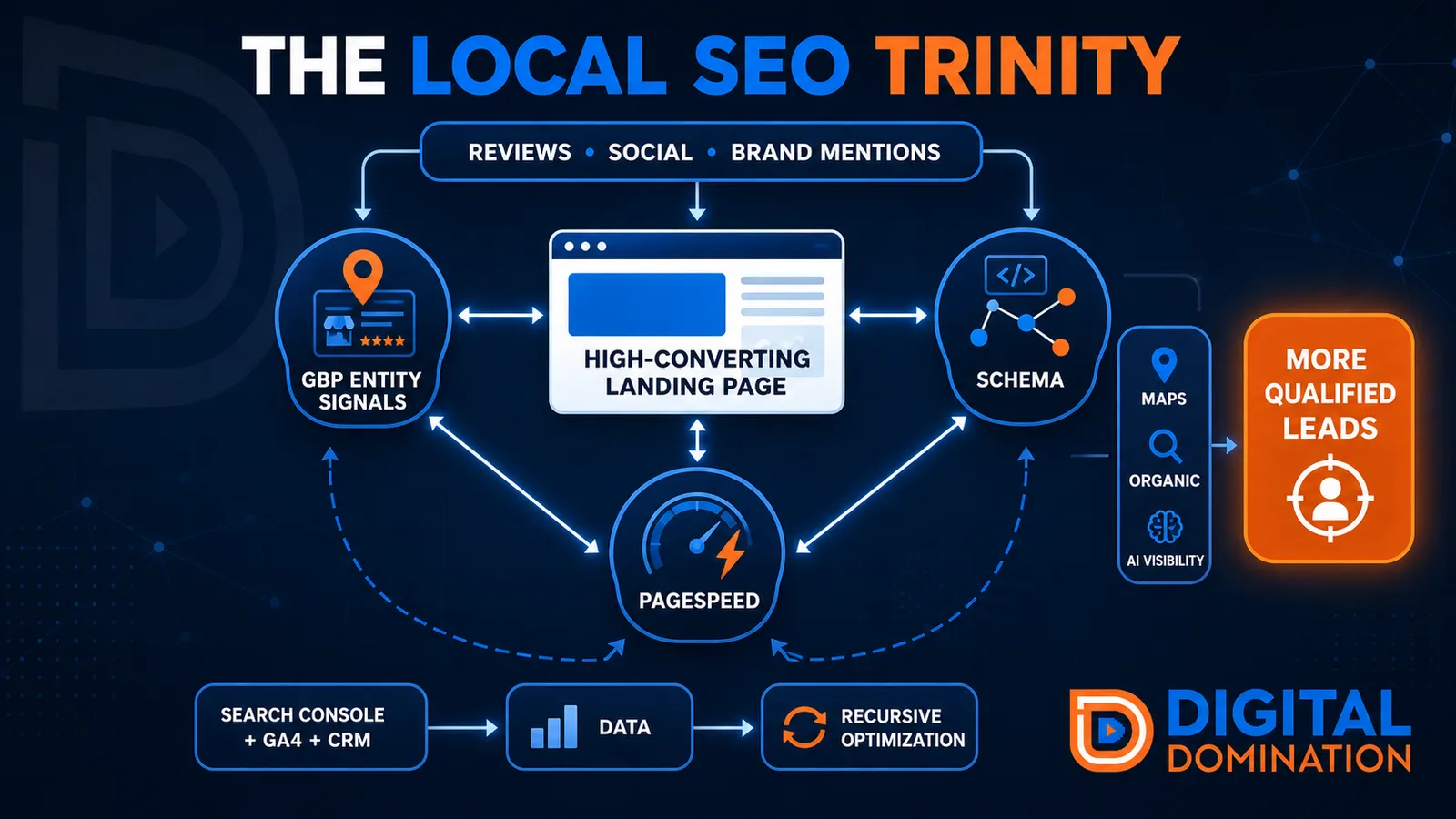
Google ranks local results on relevance, distance and prominence. You cannot move the store closer to the searcher, so the work is relevance (does Google know you do custom design, repairs, appraisals and estate buying, not just sell rings) and prominence (do reviews, mentions and credentials make you the safe choice). At Digital Domination we build that on three foundations and support them with the rest of the stack:
- ▸Google Business Profile entity signals: categories, services, attributes, photos, hours and one real landing page per store.
- ▸Schema: a JewelryStore node linked to your gemologists, services, offers, products and authoritative profiles.
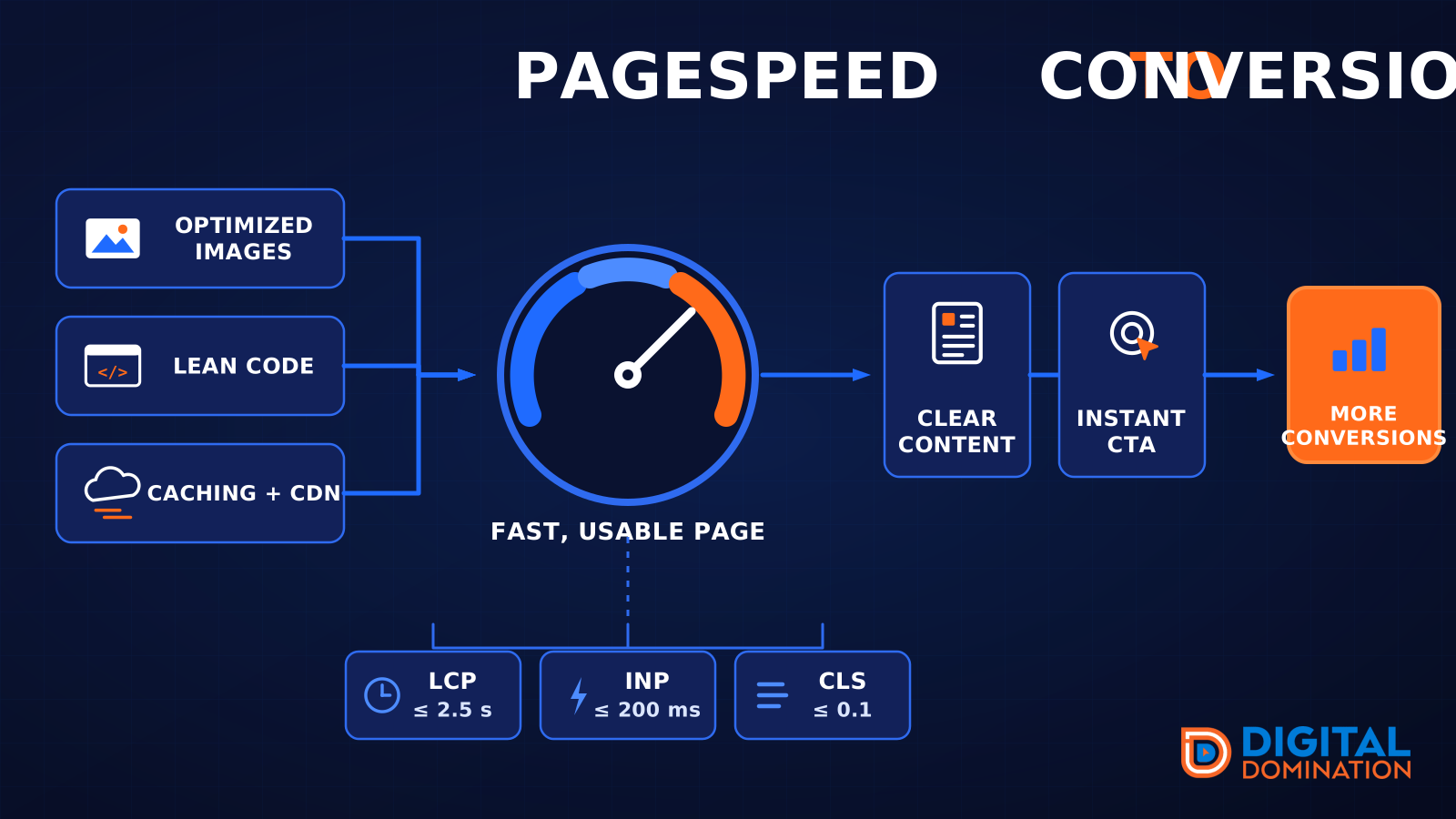
- ▸PageSpeed: a product-heavy site that shows the ring, the price and the phone number inside 2.5 seconds on a phone in a parking lot.
- ▸Supporting layers: an above-the-fold proof strip, review velocity from the repair counter, honest price language for AI answers, content for the whole buying journey, social and brand mentions, and a Search Console, GA4 and point-of-sale loop that says what to fix next.
Profile signals that separate a jeweler from a mall counter
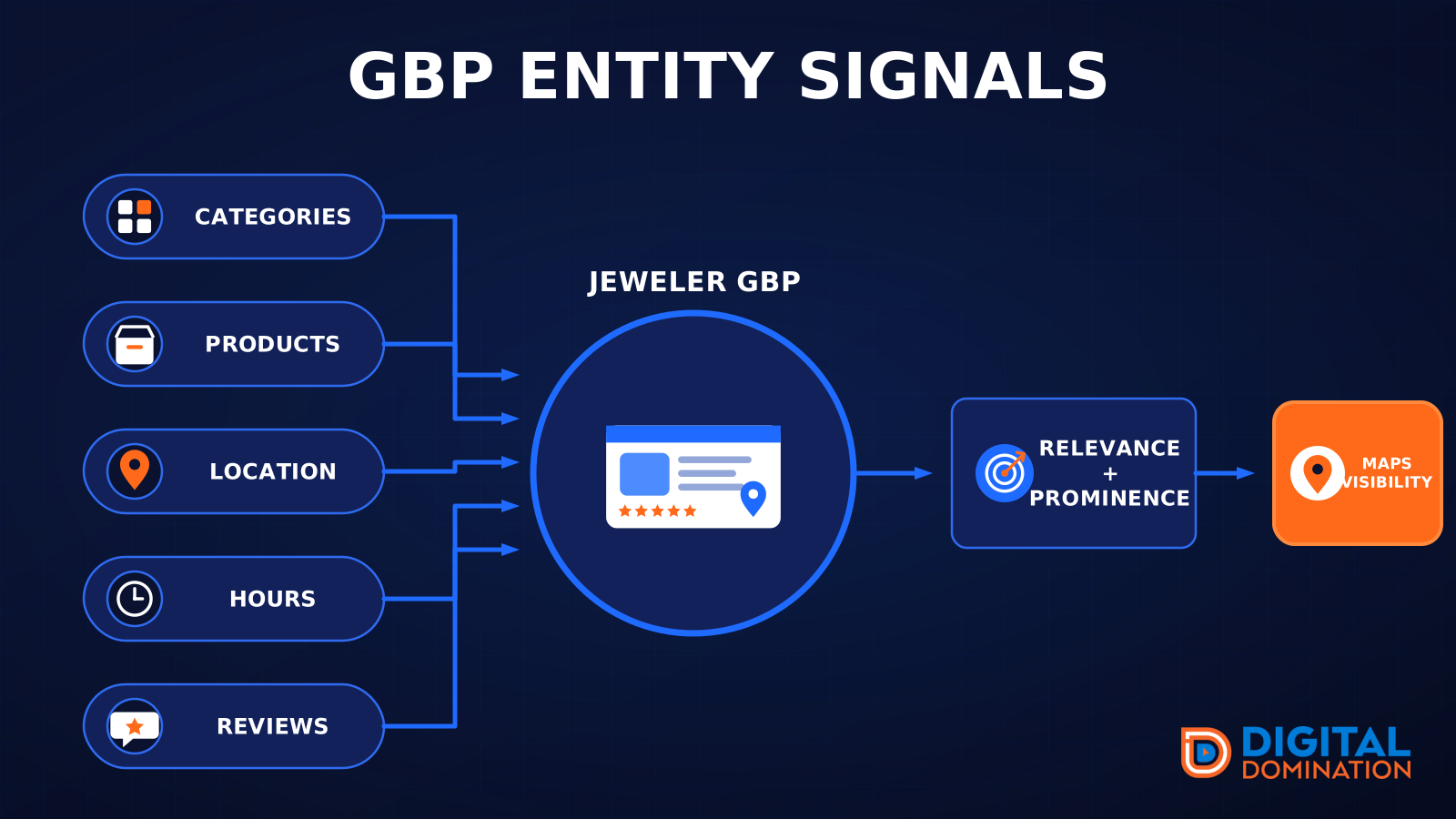
Most jewelry store profiles stop at 'Jewelry store' as the primary category and a few product photos. That describes a retailer, not the business the man in the car was looking for. A jeweler has more legitimate secondary categories and services than almost any retail niche. Audit your profile and the landing page it links to against this list:
- ▸Primary category Jewelry store. Secondary categories where true: Jewelry repair service, Jewelry designer, Watch repair service, Jewelry appraiser, Diamond dealer, Jewelry buyer, Goldsmith.
- ▸Services with descriptions and starting prices: custom engagement ring design, heirloom stone resetting, ring sizing, prong retipping, chain and clasp repair, rhodium plating, watch battery replacement, insurance appraisals, pearl restringing, gold and estate buying, engraving.
- ▸Attributes this buyer reads: family-owned or women-owned if true, appointments available, in-store repairs, accessible entrance.
- ▸Photos with a purpose: the bench jeweler at work, the CAD screen with a render, the appraisal microscope, the storefront, finished custom pieces on real hands rather than stock renders.
- ▸Hours that match reality, including extended December hours, Valentine's week and the Sunday before Mother's Day. A profile that shows closed at 5:00 pm on December 23 loses the last-minute buyer to whoever shows open.
- ▸A store landing page as the website link, with UTM parameters, carrying the store name and city, the in-house custom and repair promise, the credential that proves it, rating and count, phone number and an appointment button in the first screen.
- ▸Below the fold on that page: parking and entrance notes, a click-to-load map, the gemologist and bench jeweler who work there with links to their bios, services with turnaround (same-day watch batteries, sizing in 2-3 days, custom in 3-6 weeks), towns customers drive from, reviews naming this store, and a statement about insurance for items left in your care.
The proof a jeweler can actually show above the fold
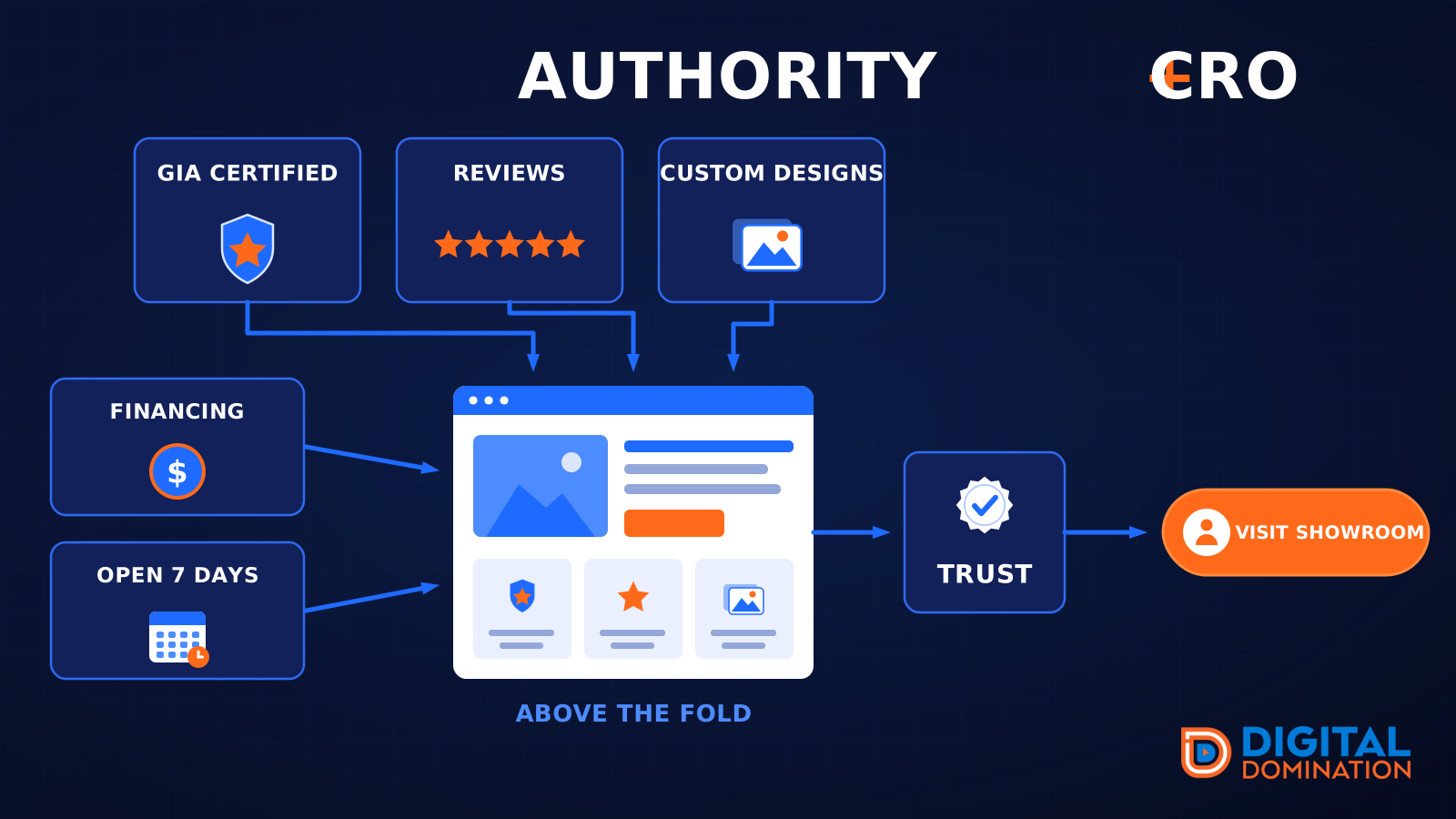
Jewelry has real, checkable credentials, and most stores bury them on an About page nobody reads. A GIA Graduate Gemologist diploma, American Gem Society membership, Jewelers of America membership, a master bench jeweler on site, Jewelers Mutual coverage for customer goods, decades at the same address and authorized dealer status for the watch or designer lines you carry are facts a buyer can verify and Google can corroborate. Put them in a strip under the headline. As an illustration only, a strip for a made-up store might read: 'Family owned since 1987 | GIA Graduate Gemologist on staff | 4.9 stars from 500+ reviews | AGS member | Custom design and repairs done in-house'. Link each claim to its source. Every gemologist, designer and bench jeweler also needs a bio page with:
- ▸Full name, role and a real headshot at the bench or microscope.
- ▸Credentials with issuing body and year: GIA GG, GIA Diamonds Graduate, AJP, JA Certified Bench Jeweler, watchmaking certifications.
- ▸Years at the bench and specialties: antique restoration, platinum work, hand engraving, CAD design.
- ▸A portfolio of finished custom pieces, each with the heirloom stone, the constraint, the design and the timeline.
- ▸Links to a GIA alumni profile, LinkedIn, Instagram and any published or judged work.
Reviews that mention the stone, the jeweler and the deadline
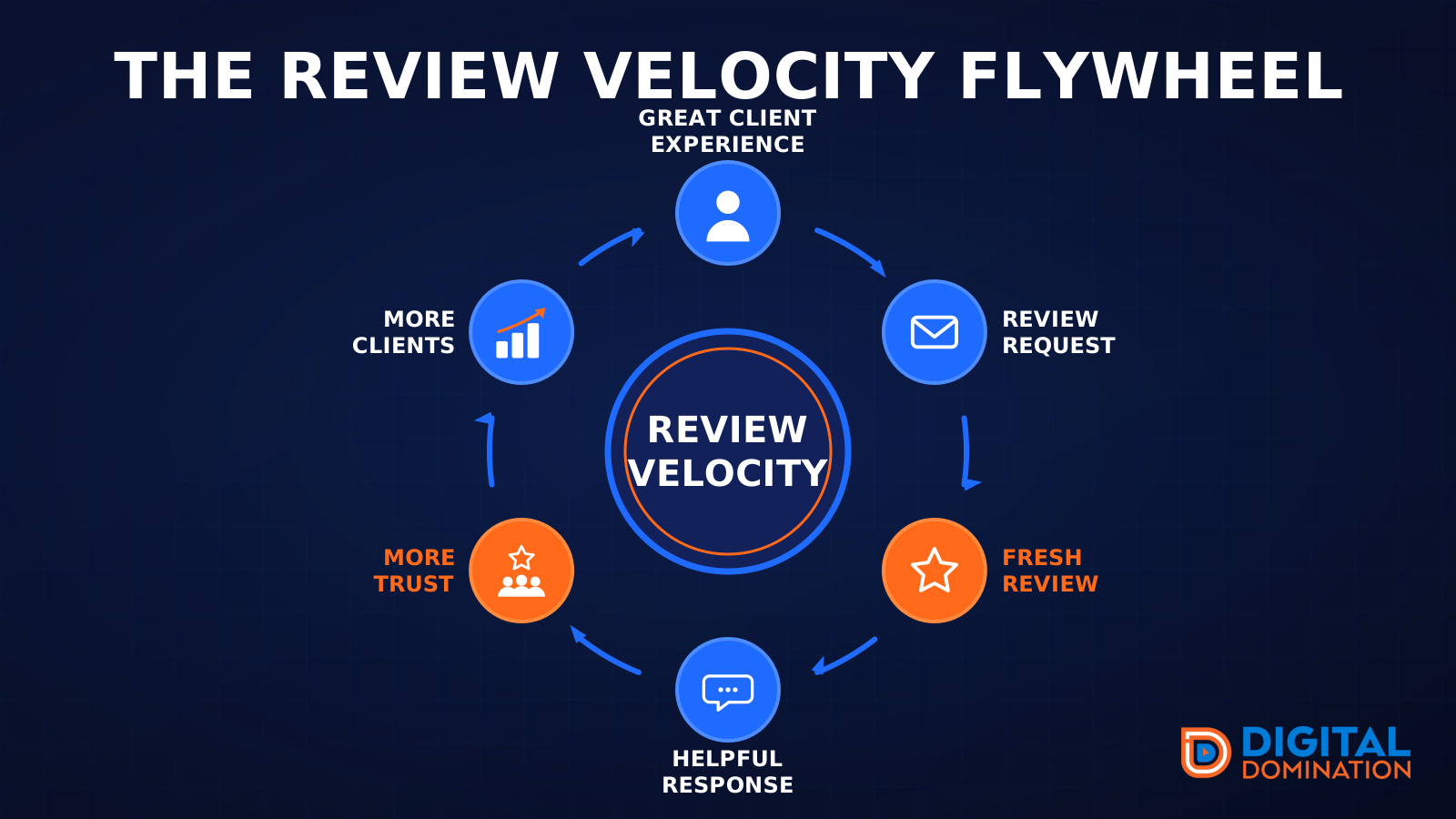
A jewelry store's reviews arrive in bursts: after engagement season, after Mother's Day, then quiet. Review velocity, meaning how steadily new reviews land, is what keeps you looking active in the slow months, and repairs are the answer. A store that does 40 repairs a week has 40 chances to ask at pickup, and repair customers write about sizing, prong work, watch batteries and turnaround, which is exactly the service vocabulary your profile needs corroborated.
The best jewelry reviews read like small stories: the customer names the designer, the piece (custom engagement ring, grandmother's diamond, vintage watch), the city, the deadline that was met and how it looked in person. That text connects your brand to your services and your people the way schema does, only written by a stranger. On the site, show combined reputation rather than a testimonial slider: Google rating and count, The Knot and WeddingWire for bridal, Yelp if it is strong, and any Best of the City award, each linked to its source. Bridal buyers cross-check The Knot against Google before they book.
Schema architecture for a jewelry store, anchored on JewelryStore
Schema is JSON-LD that labels the facts already on the page so machines can read them without guessing. Schema.org has a type for this niche, JewelryStore, a subtype of Store and LocalBusiness, and almost no independent jeweler uses it: most sites ship nothing or the generic Organization block a WordPress or Shopify theme emits. The architecture we implement, written here as a list rather than a table:
- ▸The store: JewelryStore with name, address, geo, telephone, openingHoursSpecification, priceRange and a permanent @id such as https://examplejewelers.com/#store.
- ▸Each additional location: its own JewelryStore node and @id, tied to the parent with parentOrganization.
- ▸Gemologist, designer, bench jeweler: Person with jobTitle, worksFor pointing at the store @id, hasCredential (EducationalOccupationalCredential naming GIA or the issuing body), knowsAbout, and sameAs to GIA alumni, LinkedIn and Instagram profiles.
- ▸Services: Service nodes for custom design, resetting, sizing, repairs, appraisals and buying, with provider set to the store @id and areaServed listing the cities you actually draw from.
- ▸Prices: Offer or PriceSpecification attached to each Service (sizing from a stated price, appraisal fee per item, custom deposit) and to featured products.
- ▸Products: Product with brand, material, gemstone details you control, image, and an Offer with price and availability, for curated pieces only, never a raw supplier feed.
- ▸Brands carried: brand entries on the store node for authorized watch and designer lines, matching the dealer pages those brands publish.
- ▸Corroboration: sameAs on the store node to the Google Business Profile, Jewelers of America and AGS listings, The Knot, WeddingWire, Yelp, Facebook and Instagram.
- ▸Pages: WebSite, WebPage and BreadcrumbList everywhere, Article on guides, FAQPage where a real FAQ appears, all referencing the store and person @ids instead of recreating them.
PageSpeed for a site built on product photography
Jewelry sites are among the heaviest local sites we audit: 3,000-pixel product photos, 360-degree spinners, a ring builder pulling a third-party diamond feed, a live Instagram wall, a chat widget and a hero slider of bridal campaigns. The buyer in the parking lot has two bars of signal. Google's good thresholds for Core Web Vitals are a Largest Contentful Paint of 2.5 seconds or less, an Interaction to Next Paint of 200 milliseconds or less and a Cumulative Layout Shift of 0.1 or less, measured at the 75th percentile of real users. At Digital Domination we target a PageSpeed Insights performance score of 90 or higher and a 2/2 pass on the agentic browsing check, because AI shopping agents now read these pages too. The fixes that matter most on a jeweler's site:
- ▸Convert product and hero images to WebP or AVIF, serve responsive sizes, and preload the one hero image without lazy loading it.
- ▸Replace the auto-rotating bridal slider with one still, one headline and one CTA. Sliders cost speed and hide the message.
- ▸Lazy load galleries and spinners, and load the ring builder and diamond feed only on the pages that need them, after the visitor interacts.
- ▸Turn the live Instagram embed into a static grid of six images that link out.
- ▸Delay chat, heatmap and retargeting scripts until first interaction, and remove pixels for platforms you no longer advertise on.
- ▸Reserve fixed dimensions for images, price blocks, review widgets and the appointment form so nothing jumps while a thumb reaches for the phone number.
- ▸Self-host and subset the serif display font most jewelry themes pull from a third party, and preload only the weight used above the fold.
Price language AI assistants can repeat without embarrassing you
Jewelers hesitate to publish prices because every piece is different. AI Overviews and assistants do not need an exact figure; they need a crawlable, honest range so they can answer 'how much does it cost to reset a diamond' or 'ring sizing cost near me' with your name attached instead of a national article. Silence hands that answer to a chain. Language that works on service pages, FAQs, GBP services and in Offer schema:
- ▸Ring sizing from a stated price, noting that platinum, eternity bands and more than two sizes cost more.
- ▸Custom engagement rings starting at a stated figure for the setting, center stone priced separately, lab-grown and natural both offered.
- ▸Heirloom resetting quoted after a free in-person evaluation, with a typical range and a 3-6 week timeline.
- ▸Watch batteries at a flat installed price, with a separate range for pressure testing and full service.
- ▸Insurance appraisals as a per-item fee, lower for each additional item.
- ▸Gold and estate buying explained: weight, purity and the day's spot price, with free no-obligation quotes.
- ▸Financing and layaway terms stated plainly, since they decide whether the appointment gets booked at all.
Content that follows the customer from panic to pickup
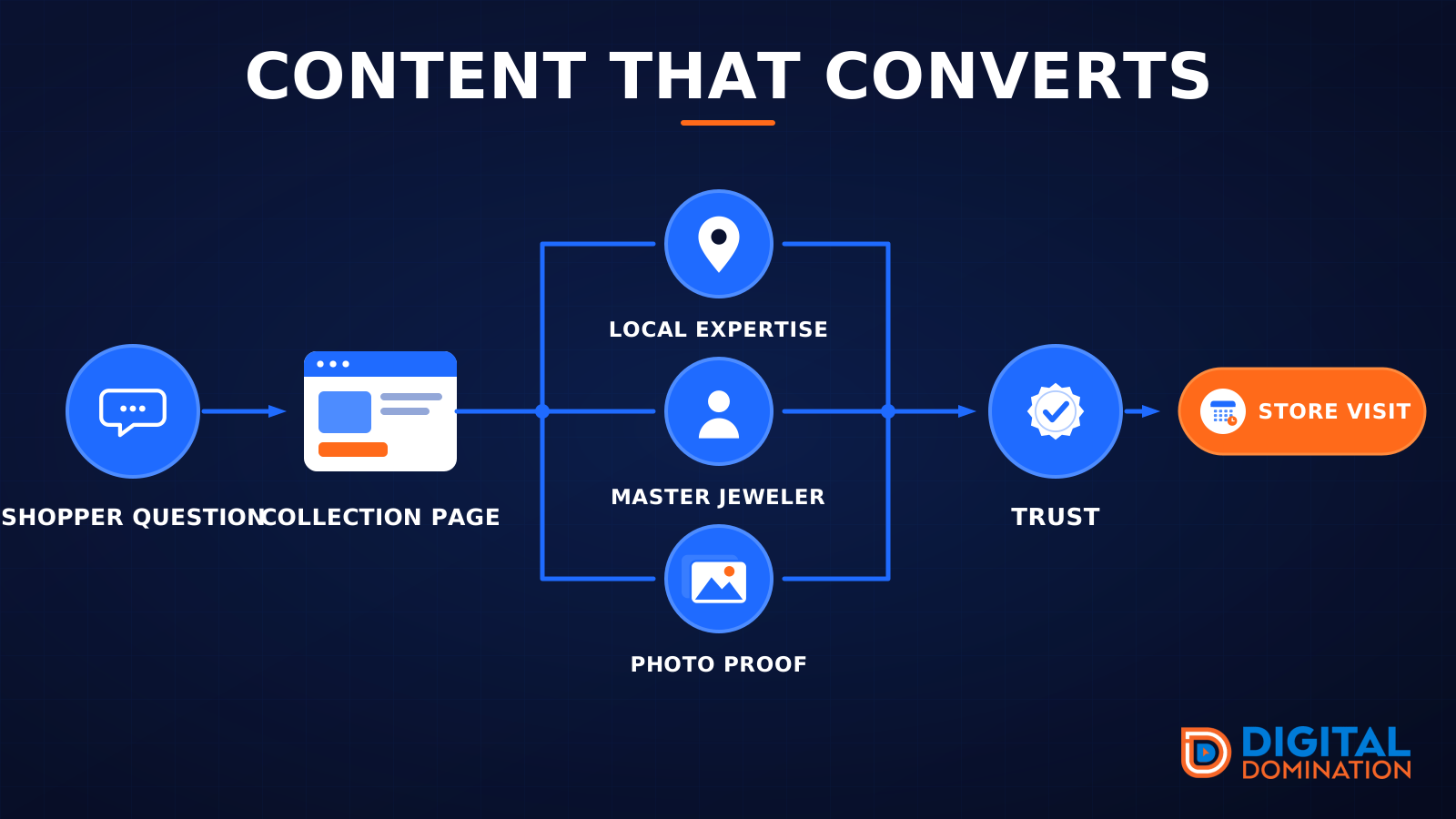
The bridal buyer researches for weeks: the 4Cs, lab-grown versus natural, how much to spend, whether an heirloom stone can be reset, how long custom takes, what happens at the consultation. The repair customer wants one answer and a phone number. Every page should carry direct answers under descriptive headings, a named author (your gemologist, not 'admin'), published and updated dates, and internal links between the service, the person who performs it and the store where it happens. Build these first:
- ▸Custom engagement ring process page: timeline, the CAD render step, the deposit and a portfolio of real pieces.
- ▸Heirloom and estate redesign guide: what can be reset, which stones are too fragile, how to honor the original.
- ▸Lab-grown versus natural comparison written by your gemologist, including your disclosure and grading report policy.
- ▸Repair menu with turnaround, prices and before-and-after photos from your own bench.
- ▸Appraisal guide explaining why insurance value differs from resale value and how often to update.
- ▸Selling gold and estate jewelry guide: how offers are calculated and what to bring.
- ▸Seasonal pages for engagement season, Valentine's Day, Mother's Day and graduation, refreshed yearly rather than recreated.
Search Console, GA4 and the point-of-sale system as one loop
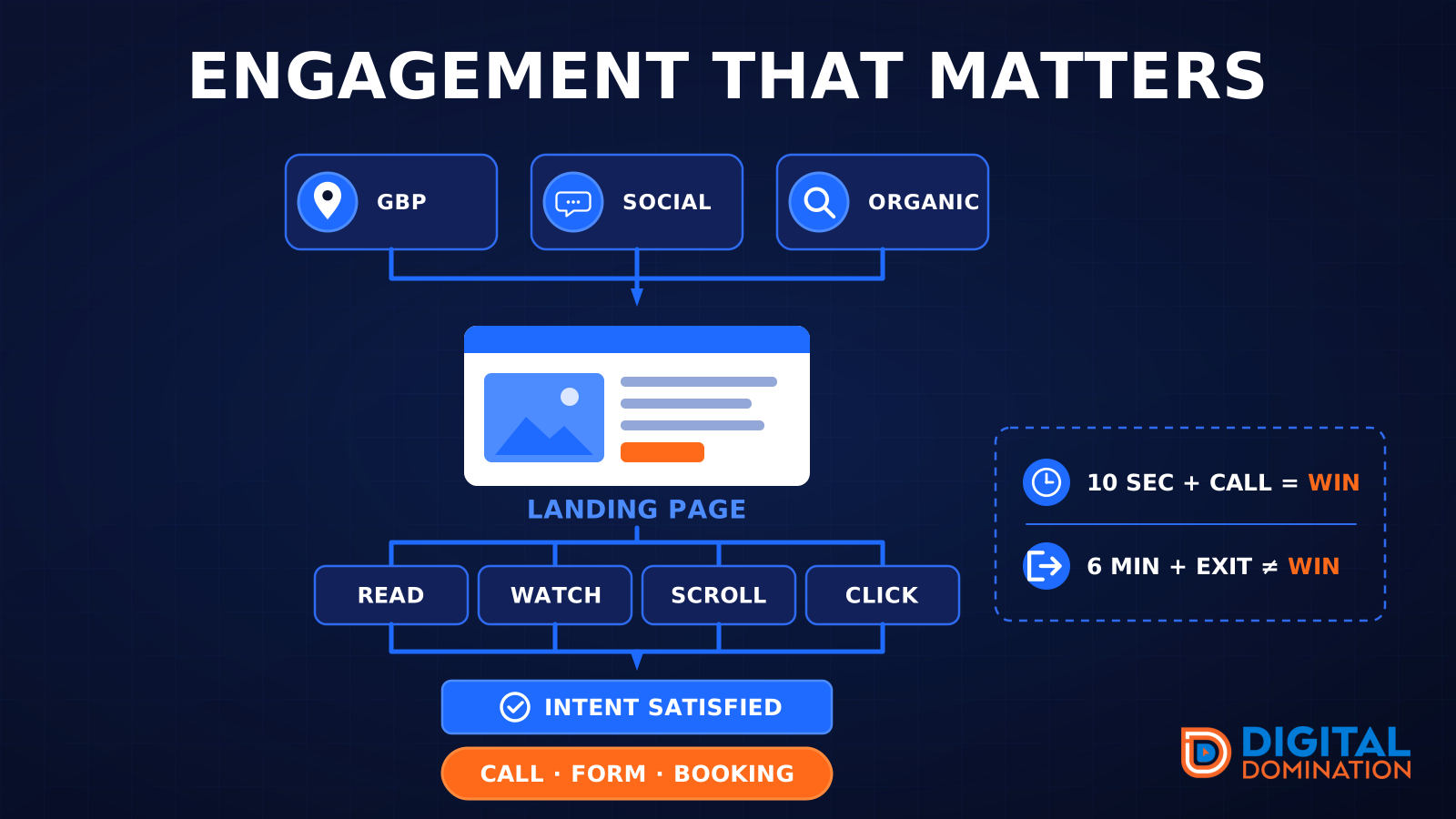
Analytics does not rank you. It tells you what to change next, which is worth more. Search Console shows the queries producing impressions for each page, click-through rate, pages Google is starting to show for new questions (a repair page suddenly appearing for 'antique watch repair' is a page waiting to be written), and Core Web Vitals or structured data errors. GA4 shows what visitors did: click-to-call from the repair menu, appointment form starts and completions, ring builder engagement, direction requests, and which landing pages produce them on mobile. Your point-of-sale or CRM closes the loop by recording which appointments became custom deposits, which repair tickets came from the website and the average ticket by source.
Read it the same way every month. Impressions but few clicks: fix the title, opening line and proof. Clicks but no calls or appointments: fix speed, price clarity or trust. Appointments that do not become deposits: fix the consultation, not the website. Make one focused set of changes, note the date, and compare GeoGrid rankings, GBP actions, appointments and deposits before changing anything else.
Instagram, The Knot, the local paper and the thread that names you
Jewelry is the most visual local category, and social content should amplify the same people, services and store the profile and website describe. A short video of the bench jeweler retipping prongs, a before-and-after of an heirloom reset, a designer walking through a CAD render or the owner reading a grading report belongs on Instagram, TikTok, YouTube, Pinterest and Facebook and as a Google Business Profile post, each linking to the matching service page. Google's Search Console now reports supported social and video platform properties, which shows how close social content and search discovery have become.
Mentions without links still carry meaning. A comment in a city subreddit that says 'Example Jewelers reset my grandmother's diamond, Maria designed it and it was ready in three weeks' connects a store, a person, a service, a city and a customer experience in one sentence. Axios reported in August 2026 that Reddit's share of visible ChatGPT Search citations fell roughly 86 percent, while OpenAI keeps a Reddit data partnership. Read that as a reason to diversify, not to leave: The Knot and WeddingWire vendor profiles, the local paper's Best Jeweler poll, the chamber of commerce, Jewelers of America and AGS member directories and the authorized dealer pages of the brands you carry all corroborate the same facts, and all need a matching name, address and phone.
A 90-day roadmap timed to engagement season
Proposals cluster between Thanksgiving and Valentine's Day, so this roadmap is built to finish before the November rush. Start in August and you are stable when the first 'engagement ring near me' spike arrives. In another season, run the same four blocks ahead of Mother's Day or the fall wedding calendar.
- ▸Days 1-14, baseline: GeoGrid scan for 'jewelry store', 'engagement rings', 'jewelry repair' and 'custom jewelry'; audit every profile field, category and service; inventory credentials and portfolio photos; check schema output and Core Web Vitals; set GA4 events for calls, appointment forms and directions; connect the POS.
- ▸Days 15-30, foundation: complete the profile with every legitimate category and priced service; publish the store landing page and gemologist bios; build the proof strip; implement the JewelryStore schema graph; remove the slider and fix the images and scripts dragging LCP.
- ▸Days 31-60, relevance: publish the custom process, heirloom redesign, lab-grown comparison, repair menu and appraisal pages; start the repair-counter review ask; post weekly bench and design content to GBP and social; claim and clean The Knot, WeddingWire, JA and AGS listings.
- ▸Days 61-90, refine: pull high-impression, low-click queries from Search Console; find high-traffic, low-appointment pages in GA4; compare appointment-to-deposit rates in the POS; add the FAQs real searchers asked; recheck Core Web Vitals and the agentic check; measure GeoGrid movement; set December hours early.
One jeweler, described the same way everywhere
The store that won the parking lot search did not have the better gemologist. It had the clearer entity: a profile that said custom and repair in Google's vocabulary, a page that loaded and proved it, schema that let machines confirm it, reviews that repeated it in customer language and directories that agreed. Build your store as one entity across the Google Business Profile, the website, JewelryStore schema, reviews, social platforms, industry memberships and the places customers talk, then use Search Console, GA4, GeoGrid data and your POS to make it more relevant and more prominent every month. At Digital Domination that is the work behind our guarantee: top 3 in the Google Map Pack in 12 weeks or you do not pay.
Start by seeing where you stand. Our free GeoGrid scan checks 169 points across your market for the searches that bring jewelry buyers through the door, so you can see whether the man with the velvet pouch two miles away would ever have found you.
Keep reading
Related guides
- ▸Digital Marketing Company for Local Service Businesses
- ▸Divorce lawyer local SEO
- ▸DUI lawyer local SEO
Put it into action
Frequently Asked Questions
Which Google Business Profile categories should a jewelry store use?
Use Jewelry store as the primary category. Add secondary categories only for work you truly do in-house, such as Jewelry repair service, Jewelry designer, Watch repair service, Jewelry appraiser, Diamond dealer and Jewelry buyer. Each one opens a search intent you would otherwise miss, and each should be backed by a matching service on the profile and a page on the site.
Should a jeweler use JewelryStore schema or the generic LocalBusiness type?
Use JewelryStore. It is a recognized schema.org subtype of Store and LocalBusiness, so it inherits everything the generic type offers while saying exactly what kind of business you are. Connect it to Person nodes for your gemologists, Service and Offer nodes for repairs and custom work, and sameAs links to your industry and review profiles.
Does publishing prices hurt a jewelry store?
In our experience it helps, because buyers and AI assistants both need a starting point before an appointment gets booked. Publish starting prices and ranges for sizing, repairs, watch batteries, appraisals and custom settings, and explain what moves the number. You are not committing to a quote; you are staying in the conversation.
How do we keep reviews coming outside engagement season?
Ask at the repair counter. Repairs, sizing and watch batteries happen every week of the year, the customer is standing in front of you at pickup, and the reviews they write name the exact services your profile needs corroborated. A card with a QR code and a sentence from the person who did the work is enough.
Does schema by itself raise a jewelry store's Map Pack ranking?
Not on its own. Schema helps Google and AI systems understand who you are, who works for you, what you sell and where, and it makes pages eligible for supported result features. Its value is highest when it describes accurate, visible content on a fast page attached to a complete profile.
Why is our jewelry website so slow, and what should we fix first?
Jewelry sites usually carry oversized product photography, a rotating hero slider, a ring builder with a third-party diamond feed, a live Instagram embed and several chat and tracking scripts. Fix the hero first: one compressed WebP image, preloaded, no slider. Then lazy load galleries, defer the builder and chat until interaction, and reserve dimensions so the page does not shift while someone taps the phone number.
Do Instagram and TikTok posts improve our Google ranking?
Google has not confirmed that likes or followers move local rankings directly. Consistent posts of real bench work, custom pieces and your people do drive branded searches, profile visits, reviews, links and mentions, all of which support prominence. Treat social as distribution for the same entity, not a separate brand.
Is Reddit still worth a jeweler's attention for AI search?
Yes, as one piece of a wider footprint. Axios reported in August 2026 that Reddit's share of visible ChatGPT Search citations dropped roughly 86 percent, yet OpenAI keeps a Reddit data partnership, and local wedding and city threads still shape how people and models describe your store. Answer honestly where you are mentioned, and build the same presence on The Knot, WeddingWire, industry directories and local press.
Ready to dominate your map?
Top 3 in the Google Map Pack in 12 weeks, or you don't pay.