
Landscaper local SEO: how GBP entity signals, schema and PageSpeed win the yards you want, not only the mows you tolerate
Landscaping is two businesses wearing one truck wrap: recurring maintenance and once-a-decade design-build. Here is how the profile, the schema and the site decide which of those calls you get, and from which streets.

A July water bill, a brown front lawn and a search typed from the driveway
The water bill lands in the second week of July at a house with a front lawn that has never once looked like the lawn on the seed bag. The number is nearly double what it was in March. The homeowner already knows the neighbor two doors down went to gravel, desert willows and a drip line last fall and got a rebate check from the water district for doing it. She stands in the driveway at dusk with a hose in one hand, watering a lawn she has just decided to kill, and types "turf removal near me" into her phone.
The AI Overview at the top answers a question she has not asked yet, what a lawn-to-desert conversion costs per square foot, and cites two local companies. The Map Pack under it shows three landscapers. She taps the one with a 4.9, a Landscaper category and a before-and-after photo of a front yard that looks like hers. The site opens in about a second. The header carries a state contractor license number, the first screen says the company handles the water district rebate paperwork, a review three lines down names the crew lead and her street, and there is a button to book an on-site design visit. She books Saturday at 9.
The company that would have done the better job, fifteen years of conversions, a designer who knows which trees survive August and a foreman who has never left a valve box open, was sitting seventh. Its profile still said Lawn care service from the years when it was a mowing route, the newest photos were striped green lawns, and the homepage opened with a drone reel of an estate lawn that took eight seconds to get out of the way of the phone number. The services list ended with "and much more." She never saw it.
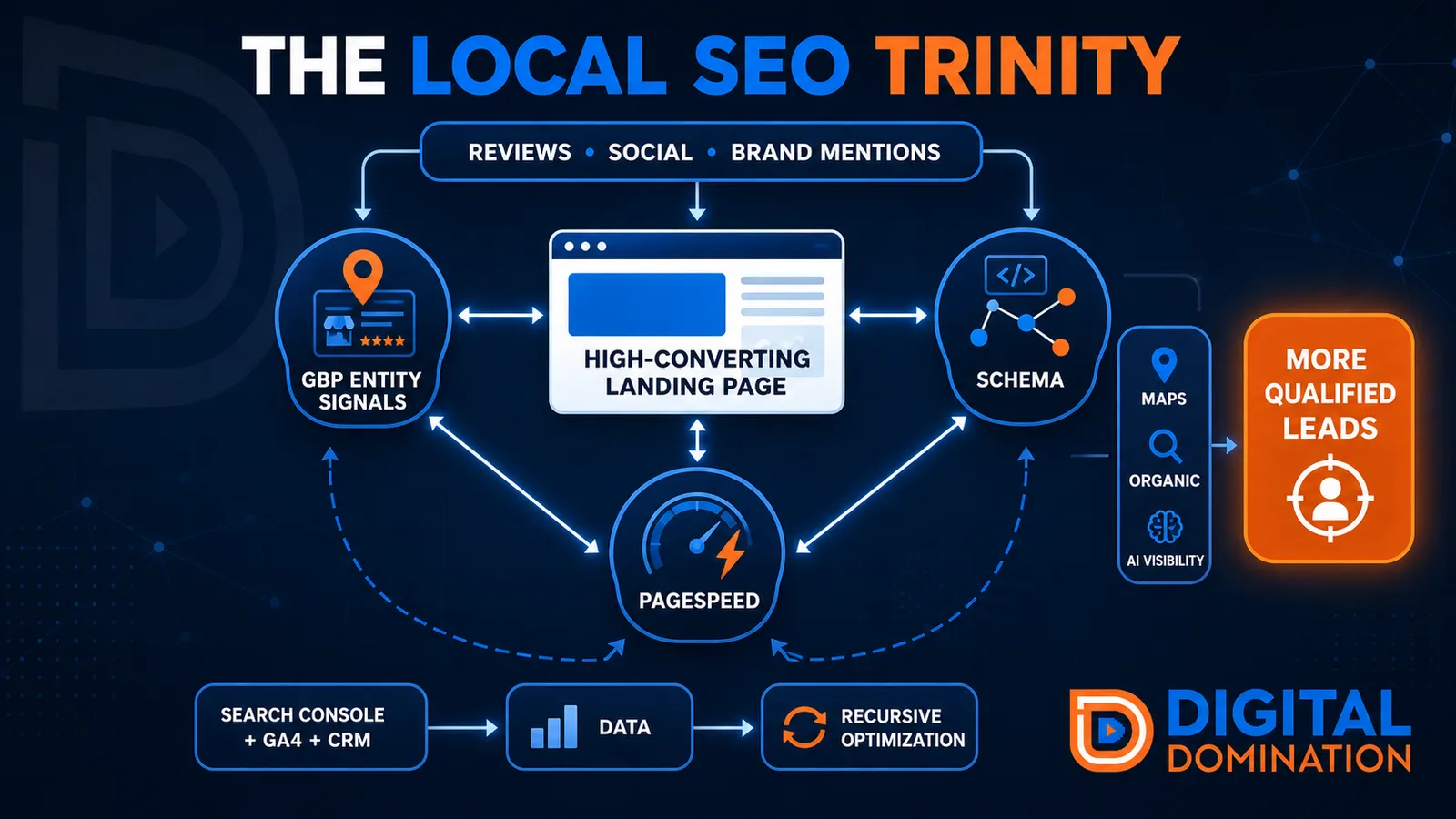
Design-build landscaping is a small number of large contracts, and maintenance is a large number of small ones you have to keep for years. Both are decided in that driveway moment, by a homeowner and by the machines that judge you the same way she did: what kind of company you are, whether you are licensed and insured, what your finished yards look like, what people on her street say, and whether the site works on a phone in full sun. At Digital Domination we treat the foundation as a trinity, Google Business Profile entity signals, schema and PageSpeed, supported by a landing page that converts, a review rhythm that fits both kinds of customer, and a loop that runs on Search Console, GA4 and your field service software.
The short version, in the order a crew would build it
A paver patio goes in as compacted base, edge restraint, bedding sand, pavers and joint sand, and every layer fails if the one under it is wrong. Local SEO stacks the same way. Google ranks local results on relevance, distance and prominence. Distance is wherever the homeowner is standing, and you cannot move her yard closer to your shop, so the work is relevance, prominence and conversion across every neighborhood your trucks already drive to. Each layer answers one question the homeowner, or the machine, is asking:
- ▸Google Business Profile: are you a landscape contractor, a mowing route, an irrigation company or a tree service, and where do you work.
- ▸Landing page: why a stranger should let a crew and a skid steer through the side gate and hand over a deposit.
- ▸Schema: how the company, its license, its designer and crew leads, its services, its prices and its service area connect into one entity.
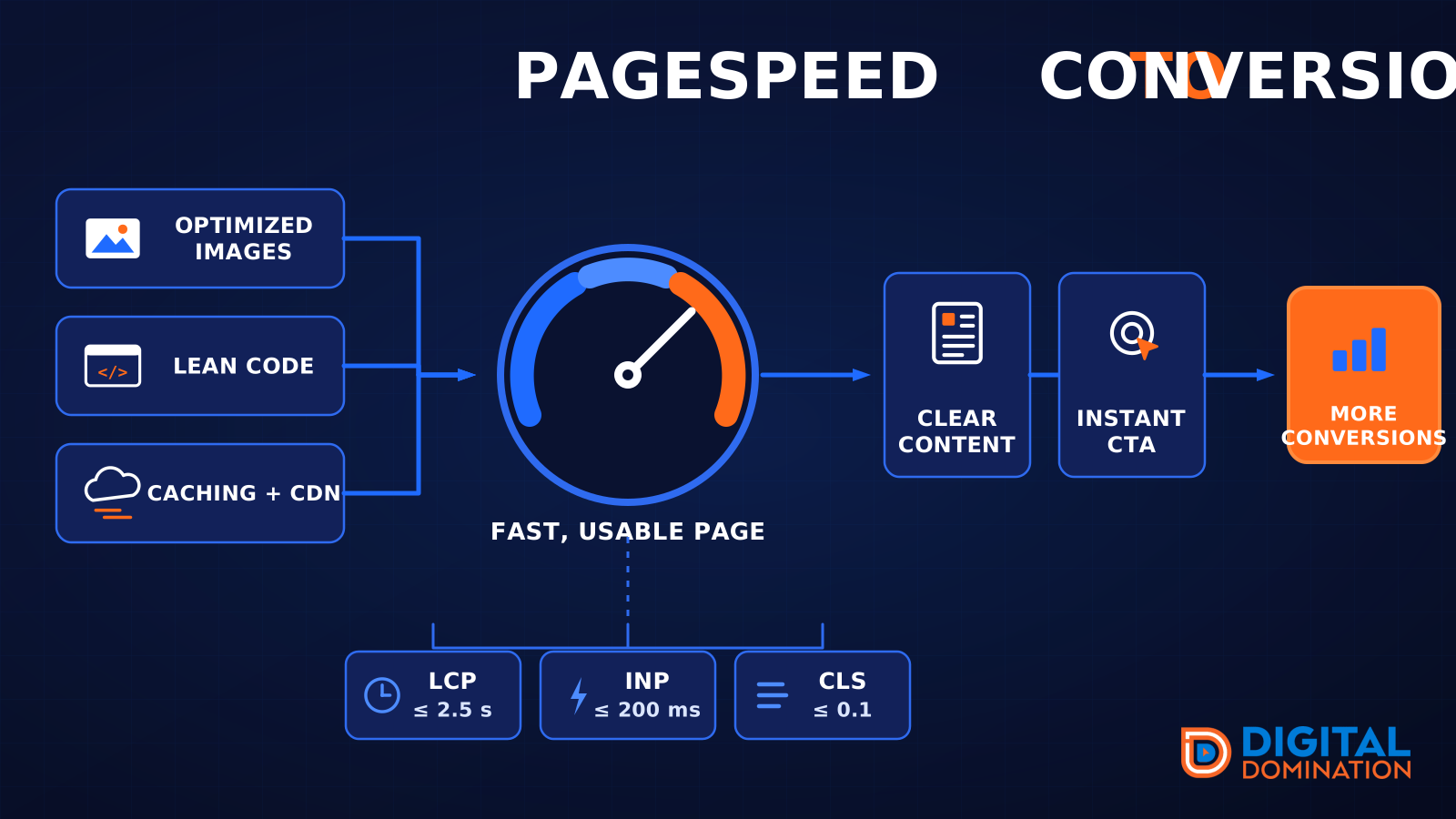
- ▸PageSpeed: whether the before-and-after photos and the estimate button are usable before she taps the next listing.
- ▸Reviews and authority: whether people on her street say you showed up every week, or finished the patio the week you promised.
- ▸Search Console, GA4 and the field service software: which searches became estimates, and which estimates became signed maintenance contracts or installs.
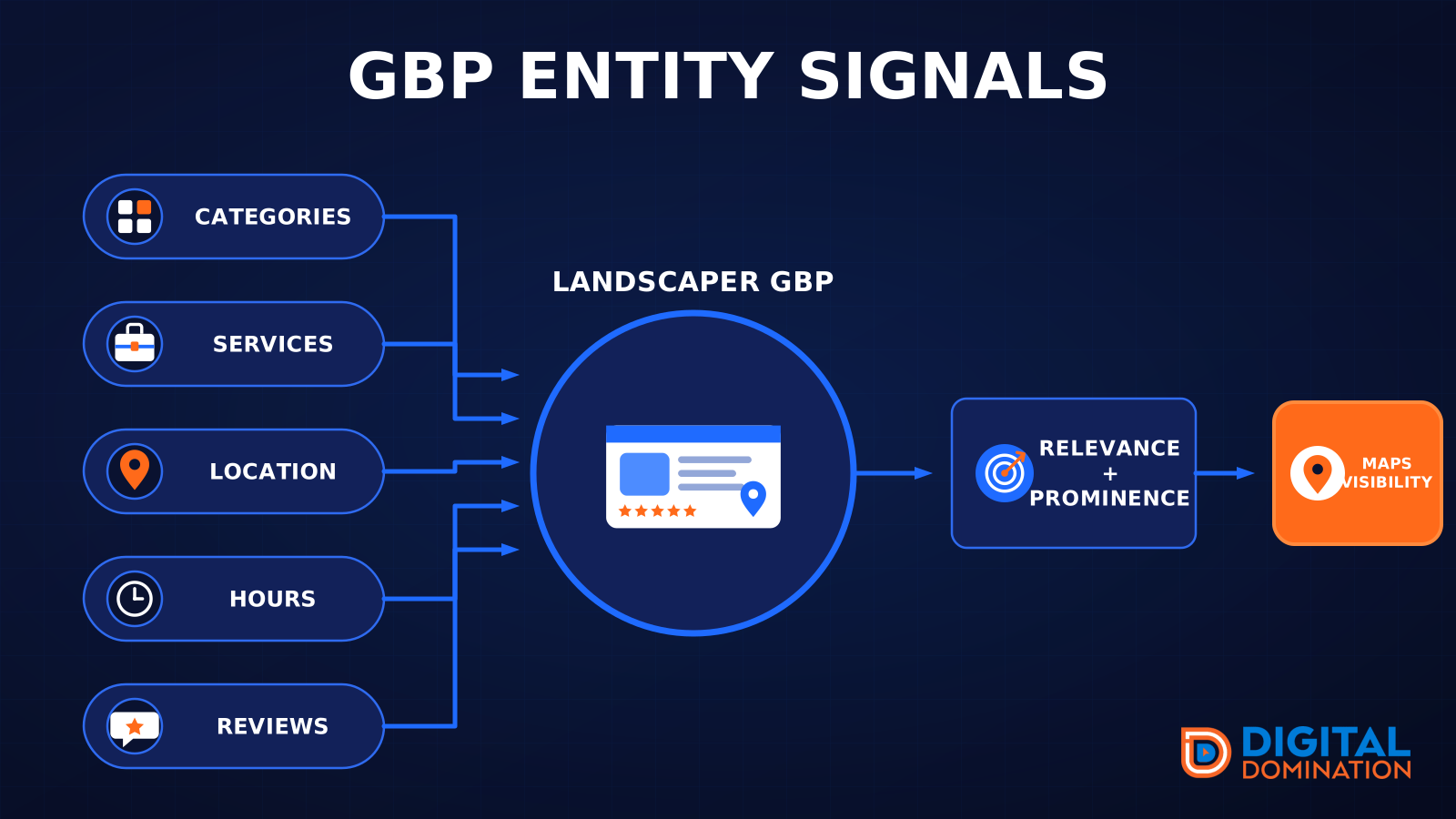
Landscaper, Lawn care service or Landscape designer: the category decides which calls you get
Most landscaping companies started as one thing and became another, and the profile never caught up. The primary category is the first fact Google reads, and it sorts you into the set of searches you will be shown for. Set Landscaper as the primary if you design and install. Set Lawn care service as the primary only if maintenance is the business you want to grow. Add secondaries only for divisions you actually run with your own crews: Landscape designer if you produce plans, Lawn sprinkler system contractor if you install and repair irrigation, Tree service if you have climbers and a chipper, Landscape lighting designer if you install low-voltage systems, Snow removal service if you plow, Landscape architect only if someone on staff holds that state license. A design-build company that leaves Lawn care service as its primary keeps pulling mowing calls at a price it cannot serve, and keeps losing patio searches to a competitor whose profile says what it does.
Then fill the services list with the words homeowners type: weekly lawn maintenance, spring and fall cleanup, mulch installation, sod installation, artificial turf installation, turf conversion or xeriscape, drip irrigation installation, sprinkler repair, irrigation winterization, paver patio installation, retaining walls, outdoor kitchens, landscape lighting, drainage and French drains, tree and shrub planting, fertilization and weed control programs. Give each a one-line description and a starting price where you honestly can, and make sure each has a matching page on the site. The rest of the profile should establish:
- ▸Finished-yard photos shot from the same angle as the before photo, plus in-progress shots (excavation, base compaction, drip lines before the rock goes down) that prove your crews do the work rather than a sub.
- ▸Photos that match the business you want. If the newest twenty images are striped lawns, Google and the homeowner both conclude that you mow.
- ▸A yard or office address if customers visit it, or a service-area profile if they do not. A storage lot with no sign is not a storefront.
- ▸A service area drawn to the cities and neighborhoods your routes actually cover, not a 50-mile circle. Route density is money in this trade, and a promise to mow two hours away is a promise you will not keep.
- ▸Hours that match when the office phone is answered, not when the crews start, with seasonal hours updated before the first cleanup call rather than after.
- ▸A UTM-tagged link to a landing page about landscaping in that city, so profile clicks show up in GA4 separately from organic clicks.
- ▸One profile per real location. A second yard in the next county gets its own profile, its own page, its own photos and its own reviews. A second profile for your irrigation division at the same address does not.
Proof that separates a licensed landscape contractor from a truck, a trailer and a mower
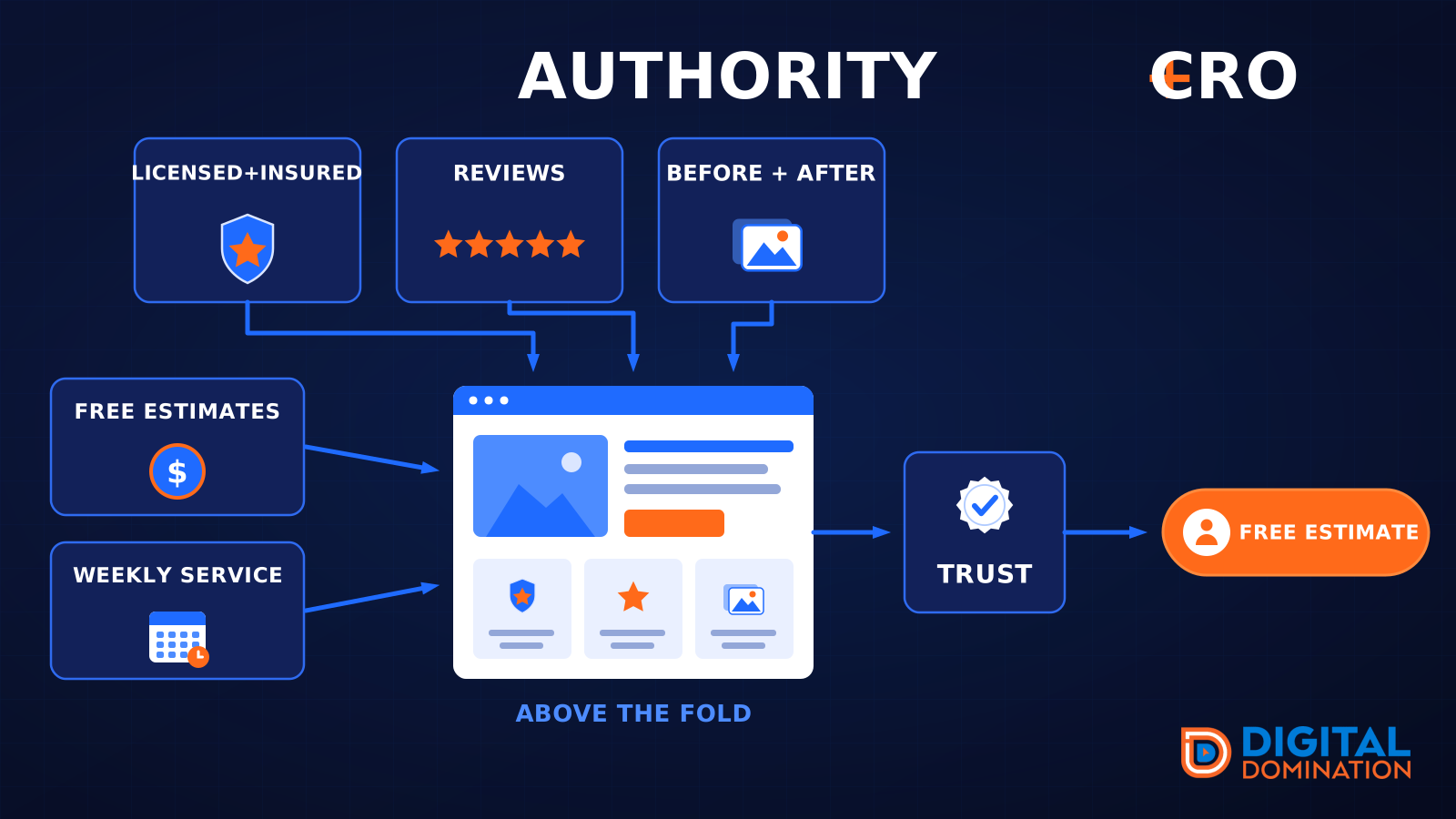
Anyone with a pickup and a used mower can call himself a landscaper, and every homeowner has a story about the one who took a deposit for a patio and disappeared, or the crew that cut the cable line and the sprinkler main in one afternoon. "Family owned" and "we treat your yard like our own" do nothing against that. A visible license number that matches the state board's record, a named designer and foreman, proof of insurance and a written warranty on hardscape and plants do.
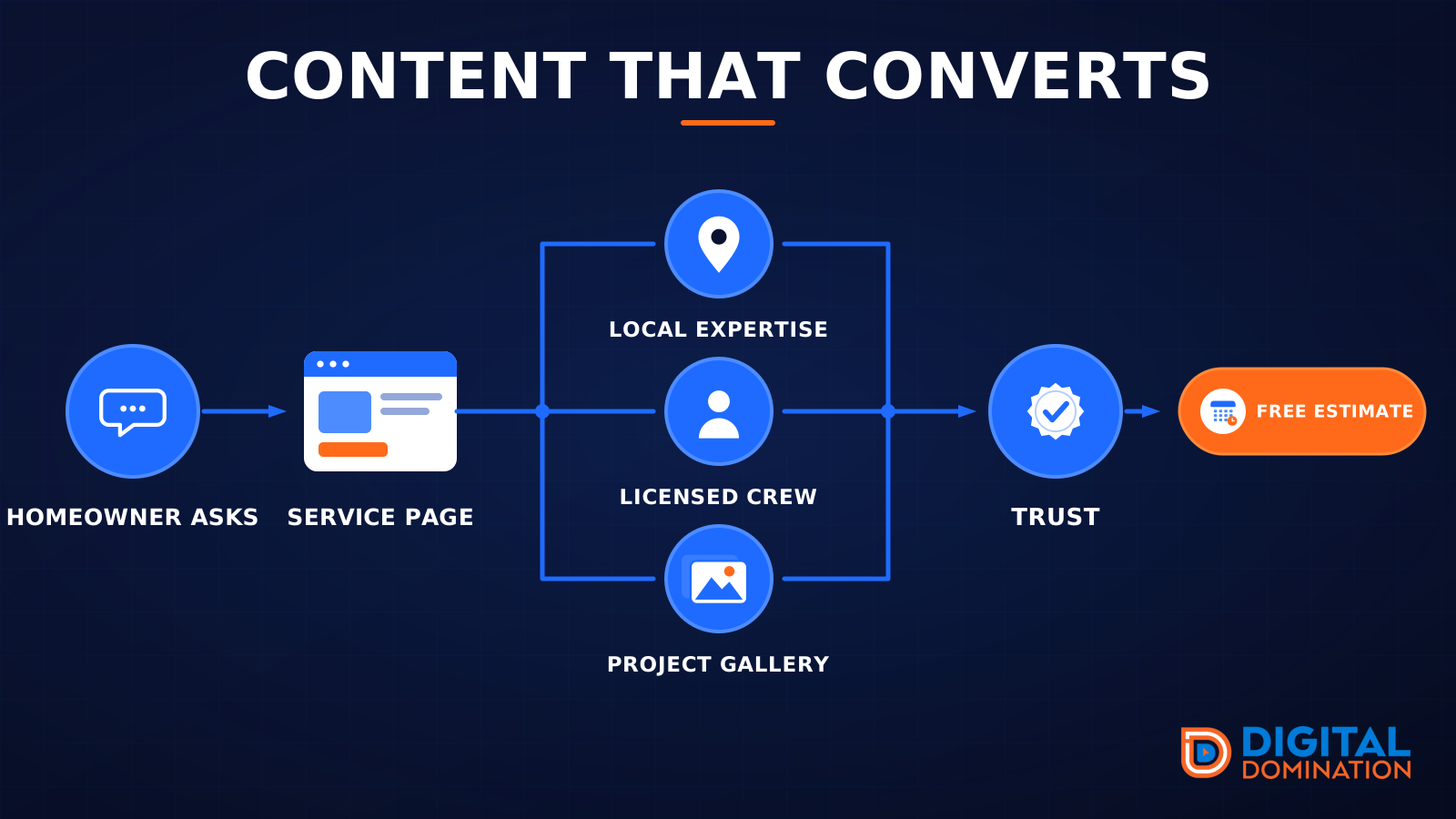
The first screen should show the service and city in the headline, a live star rating with the count, the license number and classification (in California the CSLB C-27 Landscaping Contractor license, in Nevada the State Contractors Board C-10 Landscape Contracting classification, in Texas a TCEQ Licensed Irrigator number for anyone touching a sprinkler system), years in business, the certifications your crews actually hold and a button to book an on-site visit. An illustrative authority strip (placeholder figures, not real results) might read: Licensed Landscape Contractor No. 000000 | 4.9 Stars From 300+ Google Reviews | 18 Years, 900+ Yards | ICPI Certified Paver Installers | Water District Rebate Partner | Free On-Site Estimates. Below that, the proof has to be checkable:
- ▸The contractor license linked to the state board lookup, with general liability and workers' compensation stated in plain terms, because a crew on her property with a skid steer and a trencher is a liability question she is already thinking about.
- ▸The commercial pesticide applicator license from your state department of agriculture if you run fertilization or weed control programs. Parents with kids and dogs check this, and regulators do too.
- ▸Named owner, designer and crew leads with photos, years in the trade, and credentials such as NALP Landscape Industry Certified, ICPI (now CMHA) certified concrete paver installer, or an Irrigation Association Certified Irrigation Contractor or Designer.
- ▸Manufacturer programs you are actually enrolled in, such as a Belgard, Unilock or Techo-Bloc authorized contractor listing or an irrigation or lighting brand's contractor program, because they extend product warranties and are verifiable on the manufacturer's own locator.
- ▸Warranty terms in plain language: how long you stand behind hardscape settling, how long plants are covered and under what watering conditions, and how irrigation repairs are handled inside a maintenance contract.
- ▸The deposit and payment schedule for installs, the minimum term and cancellation terms for maintenance, and whether you handle the water district rebate paperwork or the HOA architectural approval.
- ▸A portfolio organized by service and neighborhood, with a one-year-later photo wherever you have one, because a yard that still looks good after its first summer is the proof no competitor can fake.
Review velocity when one customer sees you every Tuesday and the other sees you once
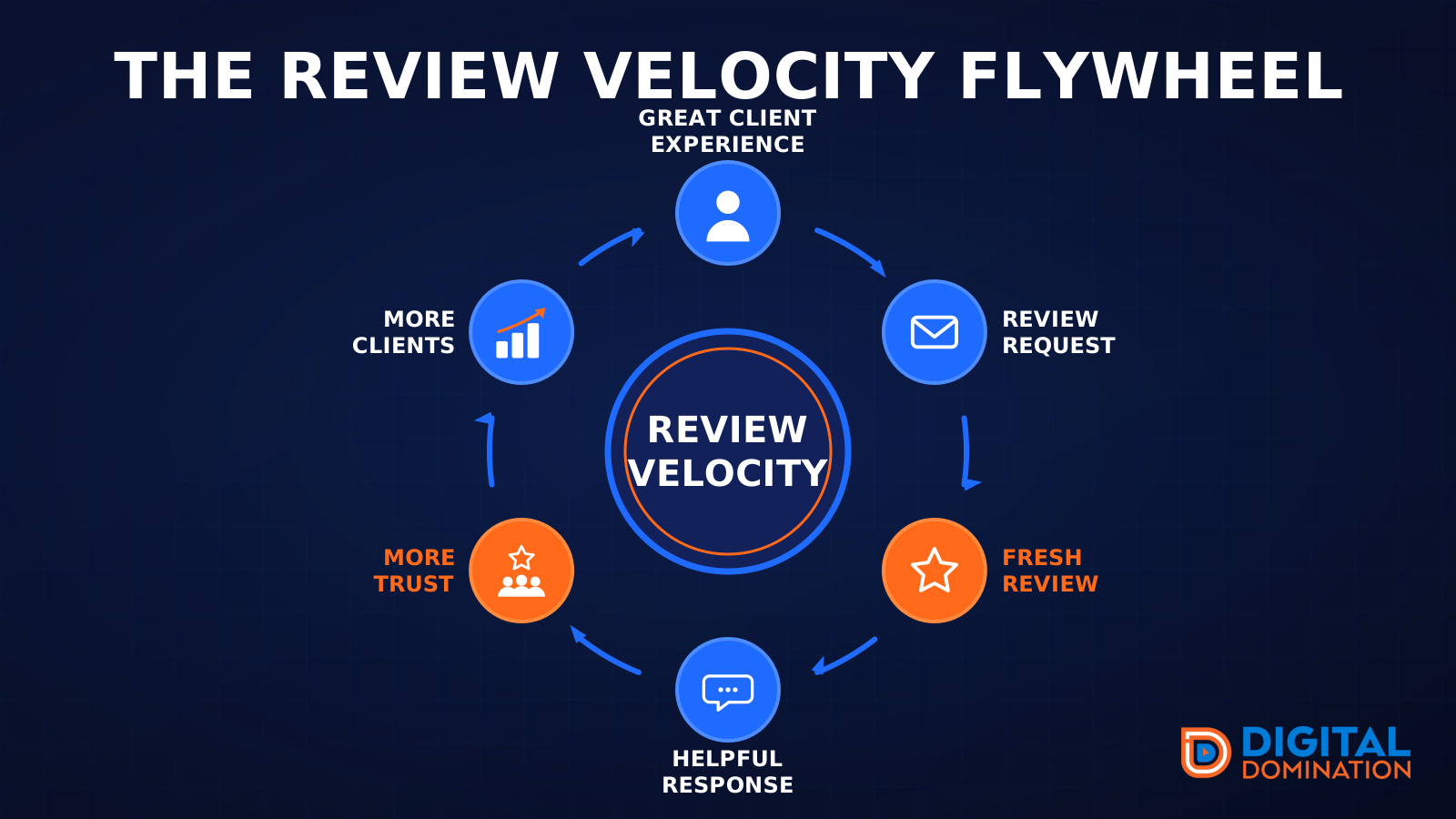
Landscaping has a review problem no other trade has in quite the same shape. Maintenance customers see your crew every week for years and never hit a moment that feels like the time to leave a review. Install customers hit that moment once, at the final walkthrough, and if nobody asks that day it is gone. A profile with a strong rating but nothing new since last spring looks dormant next to a competitor earning a review a week, and Google reads recency as well as count.
Build two asks into two workflows. For installs, the foreman asks at the walkthrough with a tablet and a direct review link, and the office follows up at the 30-day plant check with a second ask that mentions the designer by name. For maintenance, ask after the first full month, after the spring cleanup, after any irrigation repair you fixed the same day, and at renewal. Never gate the ask behind a happy-customer survey. A useful landscaping review sounds like this:
- ▸It names the crew lead or designer, the service and the street or subdivision, which is exactly the language that ties your entity to that service in that place.
- ▸For maintenance it mentions the things that actually matter: the same crew every week, a text before arrival, gates closed, edges clean, the dog still in the yard.
- ▸For design-build it mentions the plan and the result matching, the schedule holding, the cleanup, and how the yard looked after the first summer.
- ▸It is answered by the owner in a reply that repeats the service and the neighborhood without sounding like a keyword list, and thanks the crew by name.
- ▸It appears on more than one platform: Google first, then Nextdoor recommendations, Houzz for design-build, Facebook, and Yelp or Angi if you are already listed there, with the same business name and phone on each.
- ▸It is summarized above the fold on the site (rating, count, platforms) and expanded into a service-by-service proof section farther down, instead of a generic testimonial slider.
Schema anchored on HomeAndConstructionBusiness: one graph for the routes and the design-build side
Schema is JSON-LD that labels what your pages already say so a machine can connect the pieces. Without it, Google sees a company name, a license number, some photos and a services page. With it, Google can read that Example Landscaping is a HomeAndConstructionBusiness, that its license number is an identifier tied to the state board, that Maria Ortiz is its landscape designer, that paver patio installation is a Service it provides in three named cities at a stated starting price, and that the Houzz profile and the Belgard contractor page are the same company. Schema.org has no Landscaper type, so HomeAndConstructionBusiness is the anchor, with the description and the services doing the work of saying you are a landscape contractor. The recommended architecture, entity by entity:
- ▸The company: HomeAndConstructionBusiness, with name, telephone, address or service area, license as an identifier, opening hours, price range and a permanent @id such as https://examplelandscaping.com/#company.
- ▸Each real location: a distinct HomeAndConstructionBusiness node with its own @id, address, phone and areaServed, tied to the company with parentOrganization.
- ▸Owner, designer and crew leads: Person nodes with worksFor pointing at the company @id, jobTitle, image, and knowsAbout for xeriscape design, hardscape or irrigation.
- ▸Contractor license and pesticide applicator license: PropertyValue under identifier, with the issuing board named, so the number on the page matches the number on the profile and the board record.
- ▸Certifications such as ICPI, NALP or Irrigation Association: EducationalOccupationalCredential under hasCredential, with the recognizing organization named.
- ▸Each service, from weekly maintenance to retaining walls: a Service node with provider pointing at the company, serviceType, areaServed and a permanent @id such as /paver-patios/#service.
- ▸Prices and fees: Offer or PriceSpecification attached to the Service, carrying the monthly maintenance rate, the per-square-foot starting price or the design fee exactly as the page states it.
- ▸Service area: areaServed listing the cities and neighborhoods your routes cover, as City and AdministrativeArea nodes, matching the profile's service area.
- ▸Portfolio projects: CreativeWork or Article with ImageObject nodes for the before and after photos, about the Service and the Person who designed it, and VideoObject for timelapse installs.
- ▸Reviews collected on your own site: Review and AggregateRating on the company node, following Google's rules and never pasted in from Google's own reviews.
- ▸Every page: WebPage with BreadcrumbList under one WebSite node, so the city page, the service page and the designer bio all point at the same company @id.
- ▸sameAs: the Houzz profile, Facebook, Instagram, YouTube, the Nextdoor business page, the manufacturer's authorized contractor page and the chamber listing, each one describing the same name, phone and address.
PageSpeed when the homepage is an Instagram feed and 300 phone photos
The typical landscaping site is a WordPress theme built for contractors, with a parallax hero, a slider of six full-resolution phone photos, an Instagram feed plugin, a Houzz badge, a chat widget, a quote-form plugin, an embedded map of the service area and a gallery page of every job since 2014 loading at full size. The homeowner opening it is standing in her yard in full sun on a cellular connection, comparing three companies in a row. If the estimate button moves while she reaches for it, or the phone number sits under eight seconds of drone footage, she taps the next listing, and no authority strip in the world gets seen.
Google's good thresholds for Core Web Vitals are a Largest Contentful Paint of 2.5 seconds or less, an Interaction to Next Paint of 200 milliseconds or less and a Cumulative Layout Shift of 0.1 or less, measured at the 75th percentile of real field data, not in a lab run on your office Wi-Fi. At Digital Domination we build to a PageSpeed Insights performance score of 90 or higher and a 2/2 result on the agentic-browsing check, so an AI agent asked to find a licensed landscaper can read the page as easily as a person can. For a landscaping site, the fixes that move the numbers most are:
- ▸Convert every portfolio and hero image to WebP or AVIF, serve responsive sizes, and cap the gallery at a sensible resolution. A 5 MB phone photo of a mulch bed is the single most common problem on these sites.
- ▸Preload the hero image and never lazy-load it. Lazy-load everything below the fold, including the gallery grid and the map.
- ▸Replace the Instagram feed plugin with a static grid of six optimized images that link to the account. The plugin loads a third-party script on every visit for content that changes once a week.
- ▸Replace the live service-area map embed with a static image that loads the interactive map on tap.
- ▸Delete the slider. One before-and-after pair with a fixed aspect ratio converts better and cannot shift the layout.
- ▸Defer the chat widget, the Houzz badge script, the Facebook pixel and any heat-map tool until after the page is interactive, and put them under one tag manager container.
- ▸Self-host and subset the fonts, preload only the one used in the headline, and set font-display so the headline never flashes invisible.
- ▸Reserve dimensions for every image, form and widget so the estimate button stays where her thumb expects it.
- ▸Cache the pages, serve them from a CDN, enable modern compression and fix a slow host. A quote form that submits in under a second is a form that gets submitted.
Monthly rates, per-square-foot hardscape and design fees: the price language AI answers need
The questions an AI Overview or a chatbot gets asked about landscaping are almost all price questions: how much does lawn service cost per month, how much does a paver patio cost per square foot, what does a landscape design cost, how much to convert a lawn to desert landscaping, do landscapers charge for estimates. A site that answers none of them is invisible in those answers and then gets a call from a homeowner who was quoted a number by a chatbot and is anchored to it. A site that states its pricing model clearly gets quoted, and gets calls from people who already know the range.
You do not have to publish a price list. You have to publish how you price, with real starting points where you can stand behind them, and the variables that move the number. Each service page, the FAQ, the GBP services list and the Offer nodes in the schema should carry the same language. For a landscaping company that usually means:
- ▸Maintenance: priced per month for a stated visit frequency and lot size, with the minimum term, what a visit includes (mow, edge, blow, bed weeding) and what is extra (irrigation checks, seasonal color, fertilization applications).
- ▸Fertilization and weed control: priced per application for a stated turf area, with the number of applications in the program and the products used.
- ▸Irrigation: a stated service call or diagnostic fee, per-head and per-valve repair pricing, and per-zone pricing for new drip or spray systems.
- ▸Hardscape: a per-square-foot starting range for pavers, travertine and concrete, with the variables named (base depth, pattern, borders, steps, drainage), and a per-face-foot range for retaining walls with the permit and engineering threshold explained.
- ▸Design-build: the design fee, whether it is credited toward the install, the minimum project size you accept, and the deposit and draw schedule.
- ▸Turf conversion: the per-square-foot range and, if your water district offers a rebate, how it works and who files the paperwork, without promising a rebate amount the district sets.
- ▸Estimates: whether on-site estimates are free, whether you quote maintenance from satellite imagery, and how fast a written estimate arrives.
Content for the two journeys: the weekly mow and the once-a-decade backyard
A maintenance buyer and a design-build buyer ask different questions on different timelines, and one services page that lists thirty things serves neither. The maintenance buyer wants to know today: what does a visit include, is it the same crew, do I have to be home, when do you fertilize in this climate, why is my lawn brown in patches, why is the sprinkler flooding the sidewalk at 5 am. The design-build buyer researches for months: pavers versus stamped concrete, sod versus seed, artificial turf pros and cons, how long an install takes, whether a retaining wall over a certain height needs a permit and an engineer, what the design process looks like, what plants survive the summer here.
Build a page per service, a hub per journey and a page per neighborhood you actually route to, and let them link to each other and to the designer and crew lead bios. Local relevance in this trade is real and specific: the soil, the frost dates or the heat, the mandatory watering days many cities enforce, the HOA approval process for front yards, the water district rebate, the native and adapted plant palette. A page about landscaping in your city should read like it was written by someone who has dug in that dirt, not a national article with the city name swapped in. Pages that pull their weight include:
- ▸A seasonal calendar page, updated every year and dated, that says what your crews do in each month in your climate, from spring cleanup and irrigation startup to aeration, overseeding, fall cleanup and winterization or, in the desert, summer watering schedules and fall planting.
- ▸One page per hardscape service with a cost section, a process section, a portfolio filtered to that service and the certifications behind it.
- ▸A turf conversion or xeriscape page that walks through the rebate, the plant palette, the drip system and the one-year-later photos.
- ▸A maintenance page that answers the ten questions above in plain sentences under descriptive headings, with the crew photo and the contract terms.
- ▸Neighborhood pages built where you already have route density, naming the subdivisions, the typical lot and the yards you have done there, with the reviews from that neighborhood.
- ▸Named authors, published and updated dates, and internal links from every post back to the service and neighborhood pages it supports.
Search Console, GA4 and the field service software: which searches became contracts
Installing Search Console and GA4 does not rank anything. It turns the site from a project into a loop. Search Console shows which queries produce impressions and clicks, which page Google chose for them, the average position, mobile versus desktop, Core Web Vitals status and structured-data errors. If the homepage is getting impressions for paver patio cost and the patio page is not, the patio page needs the cost section, the internal links and the schema. If a query you never targeted starts showing up, such as artificial turf for dogs, that is a page waiting to be written.
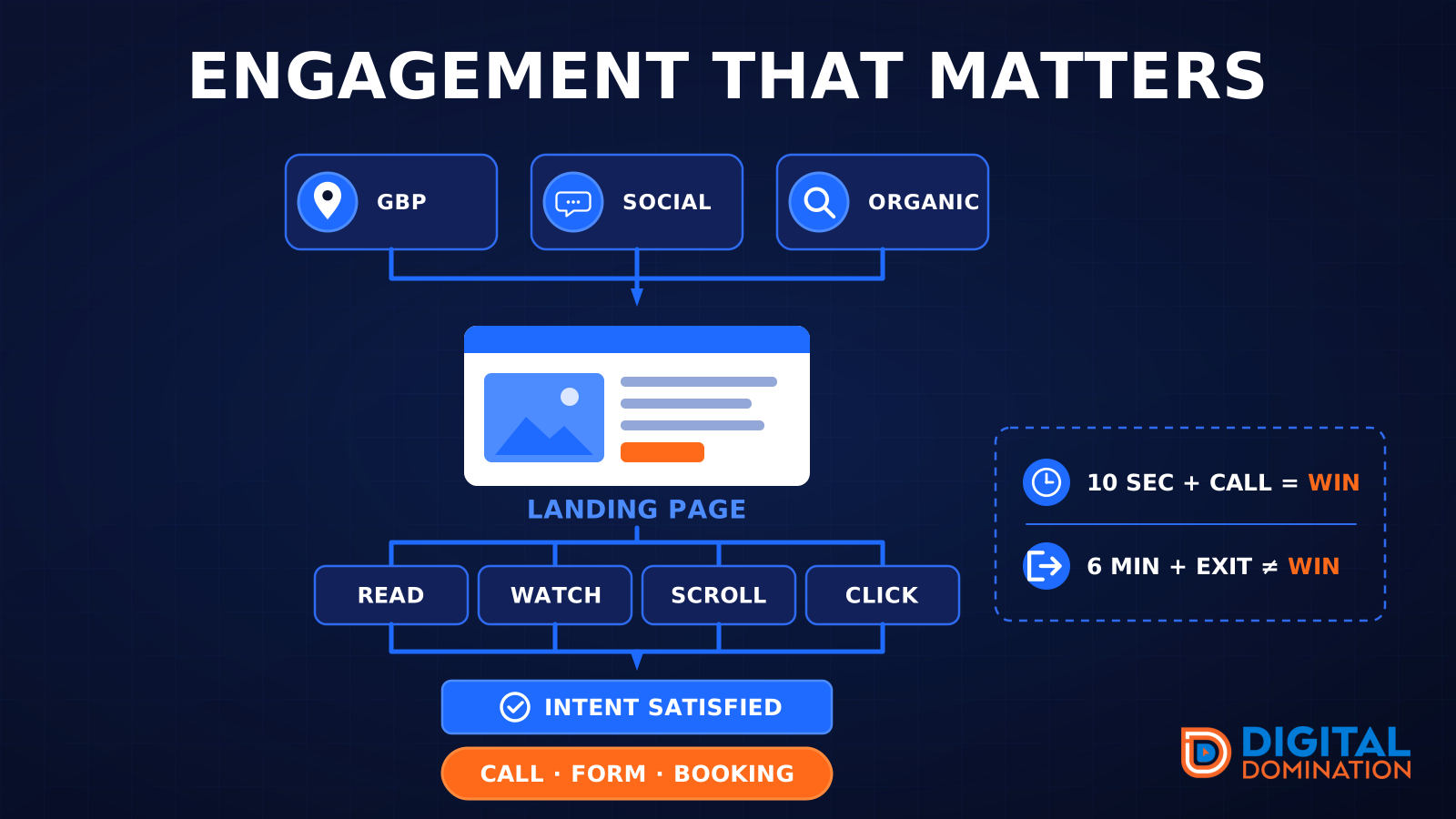
GA4 shows what happened after the click: which landing pages produced click-to-call, estimate form submissions and design-visit bookings, how far people scrolled on the portfolio, which pages convert on mobile and which lose people. Then the field service software or CRM, whether that is Jobber, Service Autopilot, LMN, Aspire or a spreadsheet, closes the loop: which leads became signed maintenance contracts, which became installs, the contract value, and the street address, which matters more in landscaping than in almost any other trade because a new weekly stop on a street where you already have four is worth far more than one across town. Run the loop like this:
- ▸Measure the baseline: GeoGrid position for landscaper, lawn care and paver patio searches separately, since they rank differently, plus impressions, clicks, calls, estimates and signed contracts by source.
- ▸Pick the highest-value gap, make one focused group of changes, and annotate the date in GA4 and in the CRM.
- ▸Impressions without clicks: fix the title, meta description, opening copy, proof and schema on that page. Clicks without calls: fix speed, price language, trust and the mobile layout. Calls without contracts: fix the service-area fit, the minimums and the intake script.
- ▸Feed route density back into content: build the next neighborhood page where the CRM says your trucks already are, not where a keyword tool says the volume is.
- ▸Keep what moved contracts, revise what did not, and re-scan the GeoGrid before deciding the next change.
Drone reveals, the neighbor who asks who did your yard, and the manufacturer's contractor locator
Landscaping is the most visible trade there is. The finished work sits in the front yard where every neighbor walks past it, and the single most common referral in this industry is someone asking over the fence who did the yard. Social publishing and brand mentions should amplify that fact, not run as a separate marketing project. The same designer, crew lead, service, neighborhood and proof that live on the site and the profile should show up everywhere else:
- ▸Before-and-after reels shot from the same angle, timelapse installs of paver patios and retaining walls, drone reveals, and the one-year-later video almost nobody makes, posted to Instagram, Facebook, YouTube and TikTok with the neighborhood and the service in the caption.
- ▸A GBP post every week with the job, the service and the neighborhood, linking to the matching service or neighborhood page. Google Search Console now reports supported social and video platform properties, so this content is part of search, not adjacent to it.
- ▸Nextdoor: a claimed business page, and the who-does-your-lawn threads answered by your customers, which is where a maintenance company's reputation actually lives in most subdivisions.
- ▸Houzz for design-build, with the same name, phone and address as the profile and the portfolio organized by project.
- ▸The manufacturer's authorized contractor locator (Belgard, Unilock, Techo-Bloc, the irrigation or lighting brand you install), the Irrigation Association or NALP member directory, and your water district's list of qualified contractors if it publishes one for its rebate program.
- ▸Referral partners who mention you by name in writing: the pool builder who does not do decking, the realtor whose listing needs curb appeal, the HOA management company, the garden center you buy from.
- ▸Reddit and the city subreddit, as one input rather than a strategy. Axios reported in August 2026 that Reddit's share of visible ChatGPT Search citations fell roughly 86 percent, and OpenAI still has a Reddit data partnership, so a thread that names your company, your designer and the neighborhood still corroborates the entity even when it stops being the linked source.
A 90-day roadmap that starts at the end of mowing season and lands before spring bids
The landscaping year has two selling windows. Maintenance contracts are won in late winter and early spring, when homeowners decide who mows this year. Design-build is planned in winter and dug in spring and early summer before the heat, or in fall in cooler markets. A roadmap that starts in late summer can be ranking for fall cleanup and irrigation winterization within weeks, and have the design-build pages and the review base in place before January planning begins. The four phases:
- ▸Days 1-14, baseline: run GeoGrid scans for landscaper, lawn care near me and your top design-build service and compare them with where the routes and the install jobs actually are; audit every profile field and settle the primary-category question; go through the photo library for images that match the business you want; inventory license, insurance, applicator license, certifications and manufacturer programs against the issuing records; test Core Web Vitals on the homepage, a service page and a city page; tag lead sources in the field service software so every estimate has an origin.
- ▸Days 15-30, the base layer: fix the category, services and service area; write the first screen with license, certifications and price basis; publish separate maintenance and design-build hubs with the top three install services under them, each with its own Offer; deploy the schema graph with permanent @ids; replace the drone reel and the slider, compress the gallery, and wire GA4 call, form and booking events through to the CRM.
- ▸Days 31-60, season content and proof: publish the fall cleanup, winterization or fall planting pages before the first calls come in, plus the seasonal calendar and the turf conversion or hardscape cost pages; start the walkthrough ask on every install and the end-of-season ask on every maintenance account; post one before-and-after or timelapse a week; match the Houzz, Nextdoor, manufacturer locator and water district listings to the profile; ask three referral partners to list you.
- ▸Days 61-90, the loop and the spring setup: find impressions without clicks and clicks without calls and rewrite the weakest first screens; compare lead sources against signed contracts in the CRM and build the next neighborhood pages where the routes are dense; publish the winter design-build content so it ranks when January planning starts; queue the maintenance renewal campaign; recheck Core Web Vitals and the agentic check; rerun the GeoGrid scan and compare it with day one.
One landscaping company, described the same way on the truck door, the profile and the schema
The goal is not a finished profile, a fast site or a schema plugin. It is one clearly defined landscape contractor whose license, designer, crew leads, services, prices, service area, reviews and portfolio are described the same way on the Google Business Profile, the website, the schema, Houzz and Nextdoor, the manufacturer's locator, the water district's list and the truck door, and then made more relevant, more prominent and more profitable every month with Search Console, GA4, the field service software and GeoGrid data.
That is the entity a homeowner in a driveway at dusk decides to trust, and it is the entity an AI answer cites when someone asks who converts lawns in her city. At Digital Domination we build it in that order, and we stand behind it with one promise: top 3 in the Google Map Pack in 12 weeks or you do not pay. If your company ranks from its own yard and disappears three neighborhoods over, start with the free GeoGrid scan. It checks 169 points across your market and shows you exactly which streets see you and which do not.
Keep reading
Related guides
Put it into action
Frequently Asked Questions
Should my primary Google Business Profile category be Landscaper or Lawn care service?
Pick the category for the business you want to grow, not the one you started with. If you design and install, Landscaper is the primary and Lawn care service is a secondary only if you still run routes. If maintenance is the business, Lawn care service is primary and Landscaper is the secondary. The category decides which searches you appear in, so a design-build company sitting on Lawn care service keeps attracting mowing calls it cannot serve profitably.
Do I need separate pages for maintenance and design-build?
Yes, and usually separate hubs with their own service pages under each. Maintenance buyers ask about visit frequency, crews and contract terms, while design-build buyers ask about materials, cost per square foot, timelines and permits. Each service gets its own Service node in the schema, its own price language and its own portfolio, and the two hubs link to each other for the customer who wants both.
Does my contractor license or pesticide applicator license belong on the website?
Both belong on the site, on the profile and in the schema as identifiers, matched exactly to the issuing agency's record. Homeowners check the contractor license because they have heard the deposit-and-disappear stories, parents check the applicator license because of kids and dogs, and Google and AI systems use the same numbers to confirm the company on the profile is the company on the record. A mismatch between the site, the profile and a directory listing is a common reason a legitimate contractor stalls just outside the top 3.
Should a landscaping company publish prices?
Publish how you price and honest starting points, not a full price list. State the monthly maintenance model, the per-square-foot hardscape range with the variables that move it, the design fee and whether it is credited, and the estimate policy. AI Overviews and chatbots get asked landscaping cost questions constantly, and the companies whose pages answer them are the ones that get quoted.
Why does site speed matter when a backyard project takes months to decide?
Because the first contact happens on a phone, outside, often on cellular, while the homeowner compares three companies in a row. A slider of full-resolution photos and an Instagram feed plugin can push the estimate button under several seconds of loading, and she taps the next listing. The Core Web Vitals targets are LCP under 2.5 seconds, INP under 200 milliseconds and CLS under 0.1 at the 75th percentile of field data, and the payoff shows up in booked estimates more than in rankings.
Does schema directly improve landscaper rankings?
Schema is not a ranking boost on its own. It helps Google and AI systems understand that the company, its license, its designer, its services, its prices and its service area are one connected entity, and it makes pages eligible for supported search features. Its value is highest when it describes facts a homeowner can verify on the page, and it does nothing to rescue a slow site or a services page that ends with the words and much more.
Should I create a separate profile for my irrigation or tree division?
Not if it operates from the same address with the same staff and phone. Google wants one profile per real location, and a second profile for a service line at the same yard risks suspension and splits your reviews. Add the division as a secondary category and a set of services on the existing profile, and give it its own hub on the site. A truly separate business, with its own name, license, phone and location, is a different story.
Are Nextdoor, Houzz and Reddit still worth a landscaper's time for AI visibility?
Yes, as a diversified footprint rather than a single bet. Axios reported in August 2026 that Reddit's share of visible ChatGPT Search citations fell roughly 86 percent, and OpenAI still holds a Reddit data partnership, so citation patterns change faster than a contractor can chase them. A claimed Nextdoor page where neighbors name your crews, a matched Houzz portfolio and a manufacturer listing corroborate the entity regardless of which platform an answer engine cites this quarter.
Ready to dominate your map?
Top 3 in the Google Map Pack in 12 weeks, or you don't pay.