
Medical malpractice attorney local SEO: how GBP entity signals, schema and PageSpeed decide which firm the family calls after reading the records
Malpractice clients search months after the harm, usually a daughter or a spouse, and they start with a question rather than a lawyer's name. This is how to be the firm Google, the AI answer and the referring attorney all point to.

Eleven weeks after the funeral, page 612 of the records
It is 9:30 on a Tuesday night, eleven weeks after the funeral. The records a daughter requested from the hospital arrived this afternoon as a 1,140-page PDF in a patient portal, and she has been reading since dinner. On page 612 a nursing note records a call to the attending physician at 2:15 a.m. The next physician entry is at 7:40 a.m. Nobody at the family meeting mentioned those five hours. She opens a new tab and types "is a delay in treatment malpractice or a complication."
That search does not contain the word lawyer, and it will not for another two weeks. She will ask whether an "expected complication" on a discharge summary can still be negligence, how long she has to file, and whether a case is worth pursuing if the state caps damages. Only then will she type "medical malpractice attorney near me" and look at a Map Pack. A firm with more trials to verdict, a board-certified partner and a nurse on staff can lose her at every one of those steps to a firm that answered the questions, loaded quickly on her laptop and looked like a malpractice specialist to Google.
The referring attorney behaves the same way. A personal injury lawyer whose client's routine surgery ended in a second operation does not remember a name; he searches, sees who holds the pins and reads the reviews. Google and the AI systems run that evaluation at scale, collecting facts about the firm from the profile, the site, the schema, the bar directory and the mentions, then deciding whether it is relevant, prominent and trustworthy enough to show.
The three pillars, explained for a firm that declines nine intakes out of ten
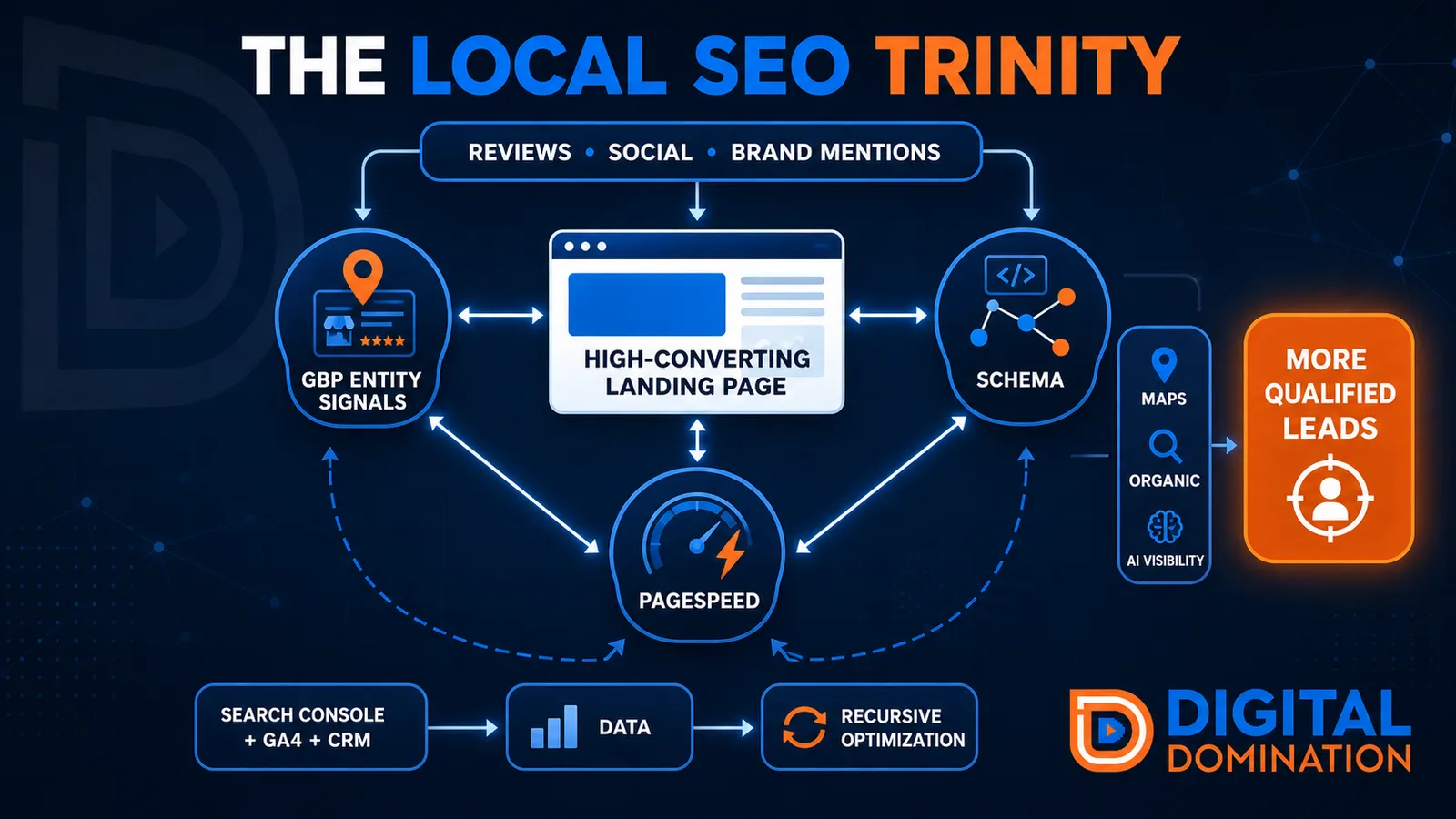
Google's local ranking factors are relevance, distance and prominence. A malpractice firm cannot move its office closer to every hospital and nursing home in the county, so the work is relevance and prominence, plus a third thing this practice area demands: screening. Raw call volume is a cost in a firm that declines most of what comes in. At Digital Domination we think of the foundation as a trinity, supported by the landing page and fed by a measurement loop. Each layer answers one question.
- ▸Google Business Profile entity signals: who the firm is, which medical errors it handles and where it files. Outcome: Map Pack visibility and records-review requests.
- ▸Schema: how the firm, its attorneys, their board certification, the case types and the fee arrangement connect in machine-readable form. Outcome: the AI answer names the firm and gets the facts right.
- ▸PageSpeed: whether a daughter on an old laptop and a referring attorney on his phone can read the page immediately. Outcome: the proof is seen before the visitor leaves.
- ▸The landing page: first-screen proof, fee language and a next step that fits a slow, careful decision. Outcome: qualified intakes rather than calls.
- ▸Reviews and authority: whether families and peers validate the claims. Outcome: prominence and confidence.
- ▸Search Console, GA4 and the intake log: what drew people in, what they did and which contacts were signed, with social and legal-press mentions corroborating all of it. Outcome: the next change is chosen from data.
Teaching Google you are a malpractice specialist and not a general injury shop
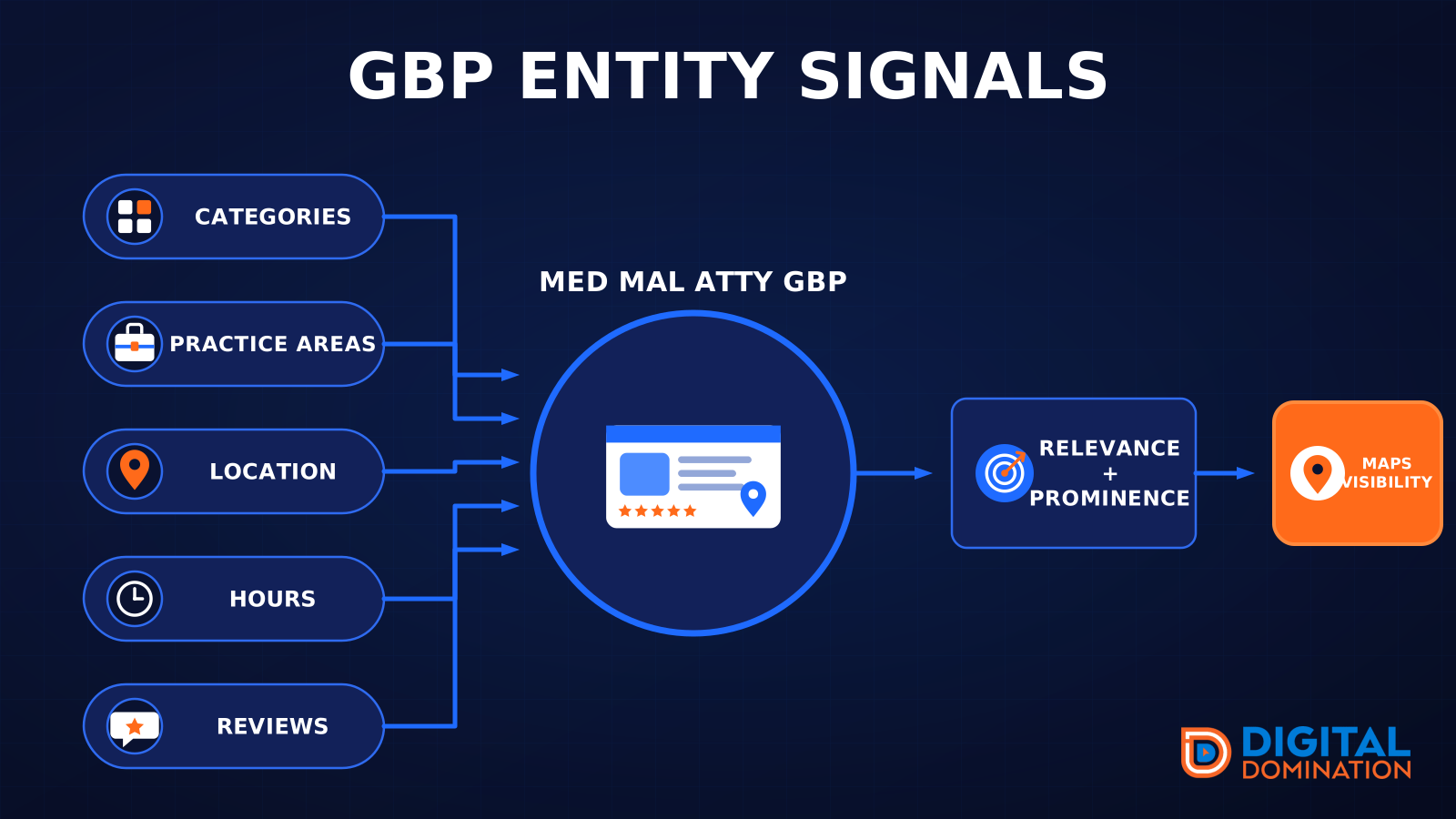
Malpractice is an awkward fit for Google's category list. At the time of writing there is no clean medical malpractice category for most firms, so the usual choice is Personal injury attorney as primary with Trial attorney and Law firm as secondaries where they are true. The category does only the broad work. Telling Google the firm handles a missed cancer diagnosis and not a fender bender falls to the services list, the posts, the photos and the page the profile links to. Re-check the category list quarterly, because Google adds categories quietly.
Services are where a malpractice profile separates itself from the injury shops around it. List every case type you actually sign, described the way a family would say it, and use the same names on the matching website pages so the profile and the site share one vocabulary. Then finish the entity.
- ▸Services named the way families search: misdiagnosis and delayed diagnosis, surgical error, birth injury, anesthesia error, medication error, emergency room negligence, nursing home neglect, wrongful death from medical error, and a separate entry for attorney referrals and co-counsel.
- ▸A service area that matches venue, not ambition: the counties where you actually file, plus the neighboring county whose hospital sends you cases.
- ▸Photos of the real office, the conference room where families sit with the records, and the attorneys, with no stock scrubs or gavels, plus a short video of the lead attorney explaining what a records review involves.
- ▸Hours that say what the phone does after hours, because the daughter on page 612 calls at 9:45 p.m., and an unanswered call in this practice area rarely comes back.
- ▸One landing page per office, naming the attorneys who sit there, the case types handled, the court you file in and parking for a family arriving with a banker's box, with a UTM-tagged link from the profile so each office's leads are measured separately.
Proof a family checks before handing over a parent's medical records
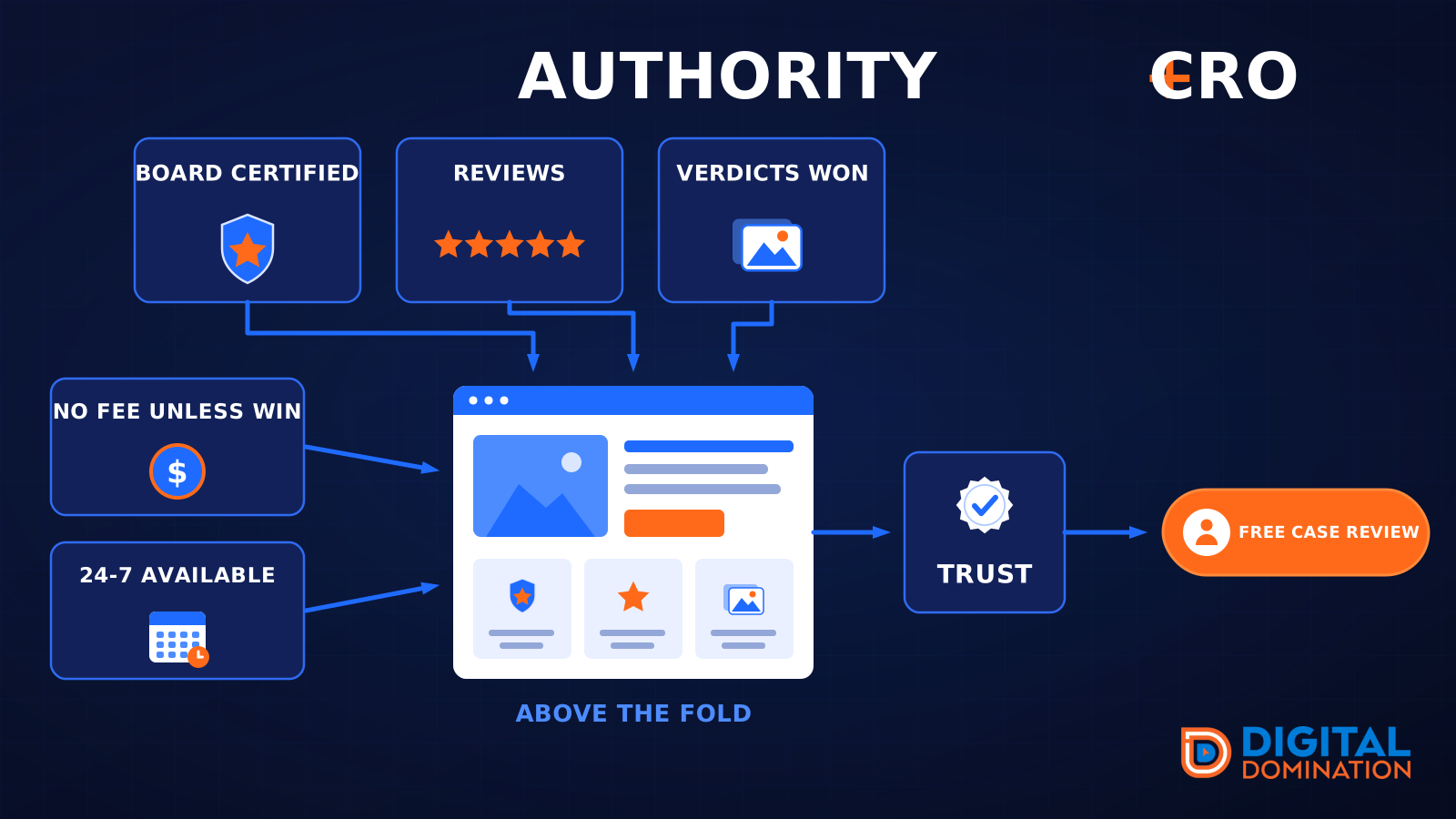
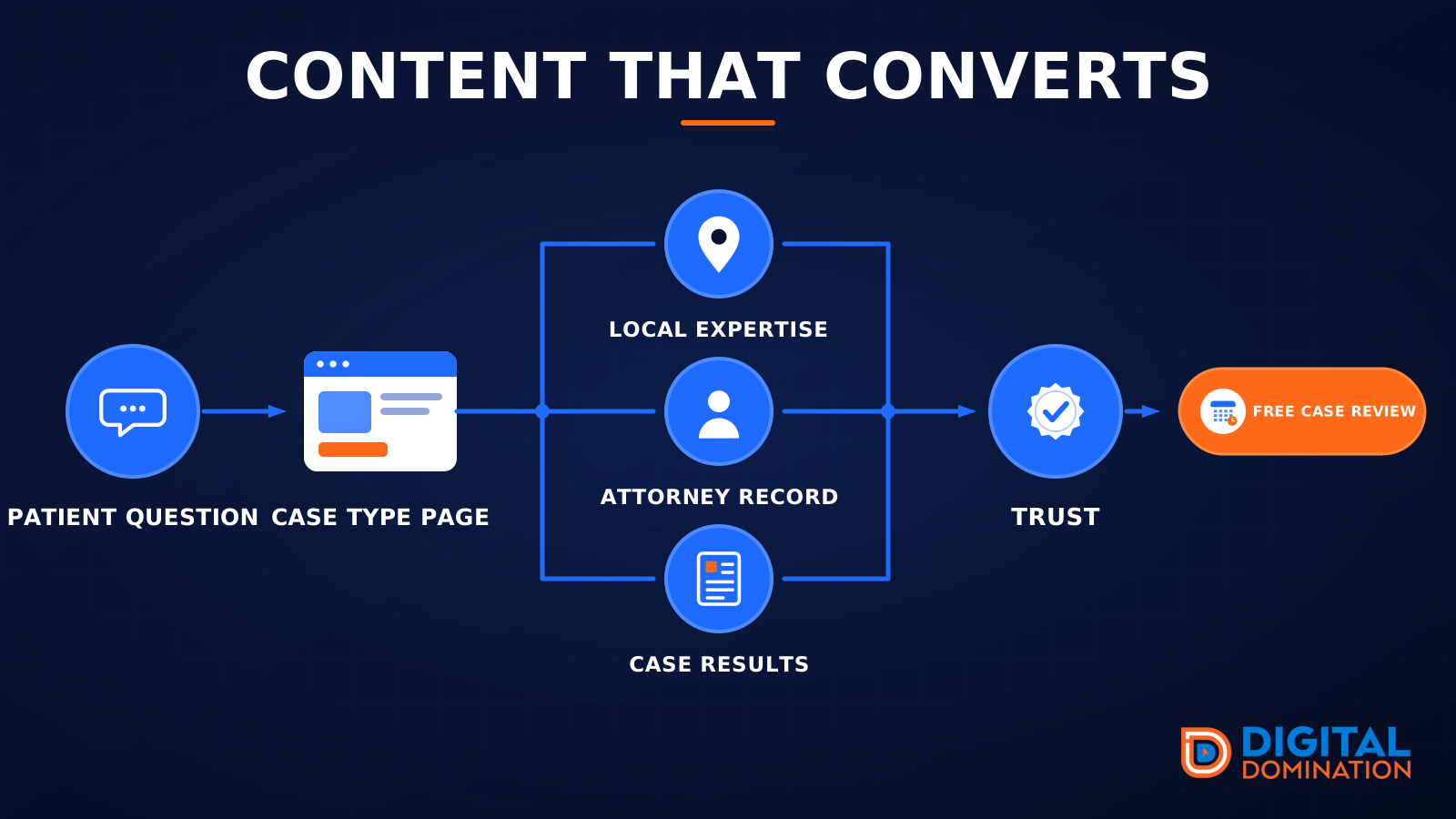
A family that has just learned to distrust a hospital will not trust a law firm on adjectives. Before uploading 1,140 pages to a stranger they check whether the firm really does this work and whether the people are real. The first screen has to answer both, with every claim verifiable one click away. Verdicts and settlements belong there only in the form your state bar's advertising rules allow, with the required disclaimer. Beyond results, what moves a malpractice family is specialization proof.
- ▸Board certification where it exists: certification in medical professional liability from the American Board of Professional Liability Attorneys, or your state's civil trial certification, named and linked to the certifying body's directory.
- ▸Cases tried to verdict, and years handling medical negligence specifically, not years in practice generally.
- ▸Medical staff in the building: a registered nurse or legal nurse consultant who reads the chart before an attorney does, and any attorney who also holds a medical or nursing degree.
- ▸Memberships peers recognize: the American Association for Justice, the state trial lawyers association and any invitation-only trial college.
- ▸The intake promise in plain words (free case evaluation, no-cost review of the records once received, an honest answer if the case is not viable), beside the Google rating, the Avvo and Martindale ratings, and a bar number that links to the state bar profile for every named attorney.
Review velocity when you sign a handful of cases a year and most settle confidentially
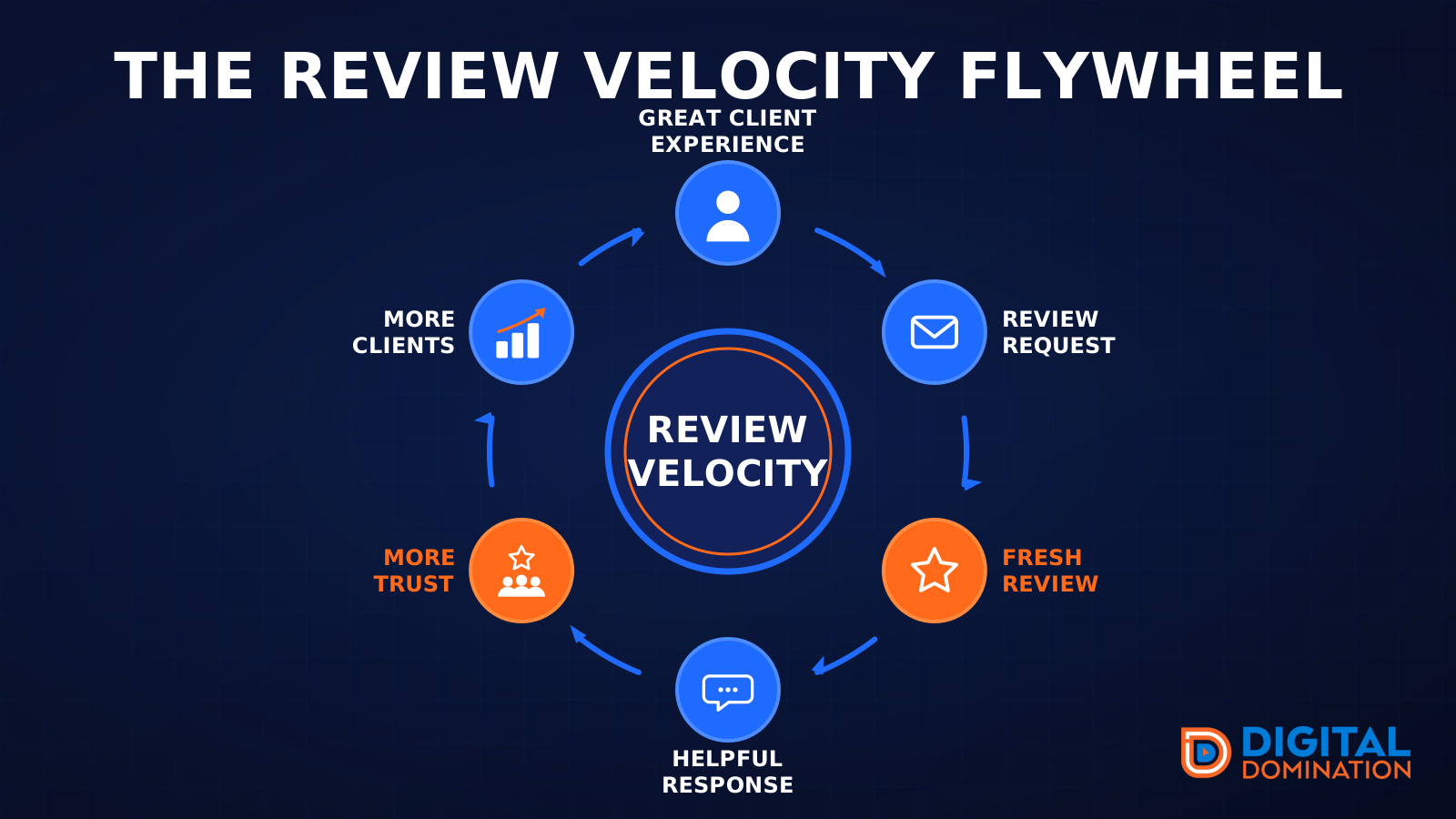
Velocity, the steady arrival of new reviews, is the hardest local input for a malpractice firm to produce. Cases take two to four years, confidential settlements forbid naming the defendant and many clients are grieving. A profile with 40 reviews and nothing new in a year reads as dormant next to a general injury firm collecting three a week. The answer is not to ask less often but to ask at more moments, including moments that never end in a signed case. A family told clearly and kindly why the outcome was a known complication and not negligence will often say so publicly, and that review teaches Google and the next reader exactly what the firm does.
- ▸Ask after the records review is explained, at the expert's opinion in either direction, at settlement or verdict, and at the close of a well-handled declined intake; ask referring attorneys for peer reviews on Avvo and Martindale.
- ▸A strong review names the attorney, the type of error, the city and how the firm explained the process, without medical detail the client would regret publishing.
- ▸Reply to every review without confirming the reviewer was a client or referencing any medical fact: thank them, restate the firm's approach in one sentence, stop.
- ▸Summarize the combined rating above the fold, expand the sources farther down, and place attorney-specific reviews on the biography pages.
A LegalService graph that names the case types, the board certification and the co-counsel offer
Without structured data a crawler sees a firm name, a bar number, the letters ABPLA and a list of medical terms. With schema it reads that Example Medical Negligence Law is a LegalService, that Jane Example is a Person who worksFor it and hasCredential a board certification in medical professional liability, and that the firm makesOffer of birth injury representation in a named county. One caution for this niche: case-type pages are about a legal service, not a medical condition, so do not mark them up as MedicalWebPage or MedicalCondition. Mislabeling a misdiagnosis page as medical content confuses the entity you are building. Most malpractice sites we audit have no schema, or plugin defaults that never model a multi-attorney firm and its credentials. The architecture, node by node.
- ▸The firm: LegalService with name, telephone, address, openingHours, a plain fee note and a permanent @id such as https://examplefirm.com/#firm; each office its own LegalService location node with its own @id.
- ▸Each attorney: a Person node with jobTitle, alumniOf, hasCredential (EducationalOccupationalCredential for the law degree, any board certification and any nursing or medical degree), identifier as a PropertyValue for the bar number, memberOf for the trial lawyer associations, knowsAbout for the case types, worksFor pointing at the firm @id, and sameAs to the state bar, the certifying board's directory, Avvo, Justia and LinkedIn.
- ▸Each case type: a Service node (misdiagnosis, surgical error, birth injury, nursing home neglect) with areaServed listing the counties where you file, connected back through makesOffer, plus a separate Service node for attorney referrals so the machine can tell the family audience from the referring-lawyer audience.
- ▸The fee: an Offer with a PriceSpecification whose text states the contingency arrangement, advanced case costs and the free records review in sentences a search system can quote.
- ▸Results and articles: Article or CreativeWork with about pointing at the Service and author pointing at the Person; every page carries WebPage and BreadcrumbList, with FAQPage only where the visible page shows the questions.
- ▸Permanent @id values throughout, so the attorney referenced on thirty pages is one entity rather than thirty duplicates.
PageSpeed for a laptop at the kitchen table and a phone in a nursing home parking lot
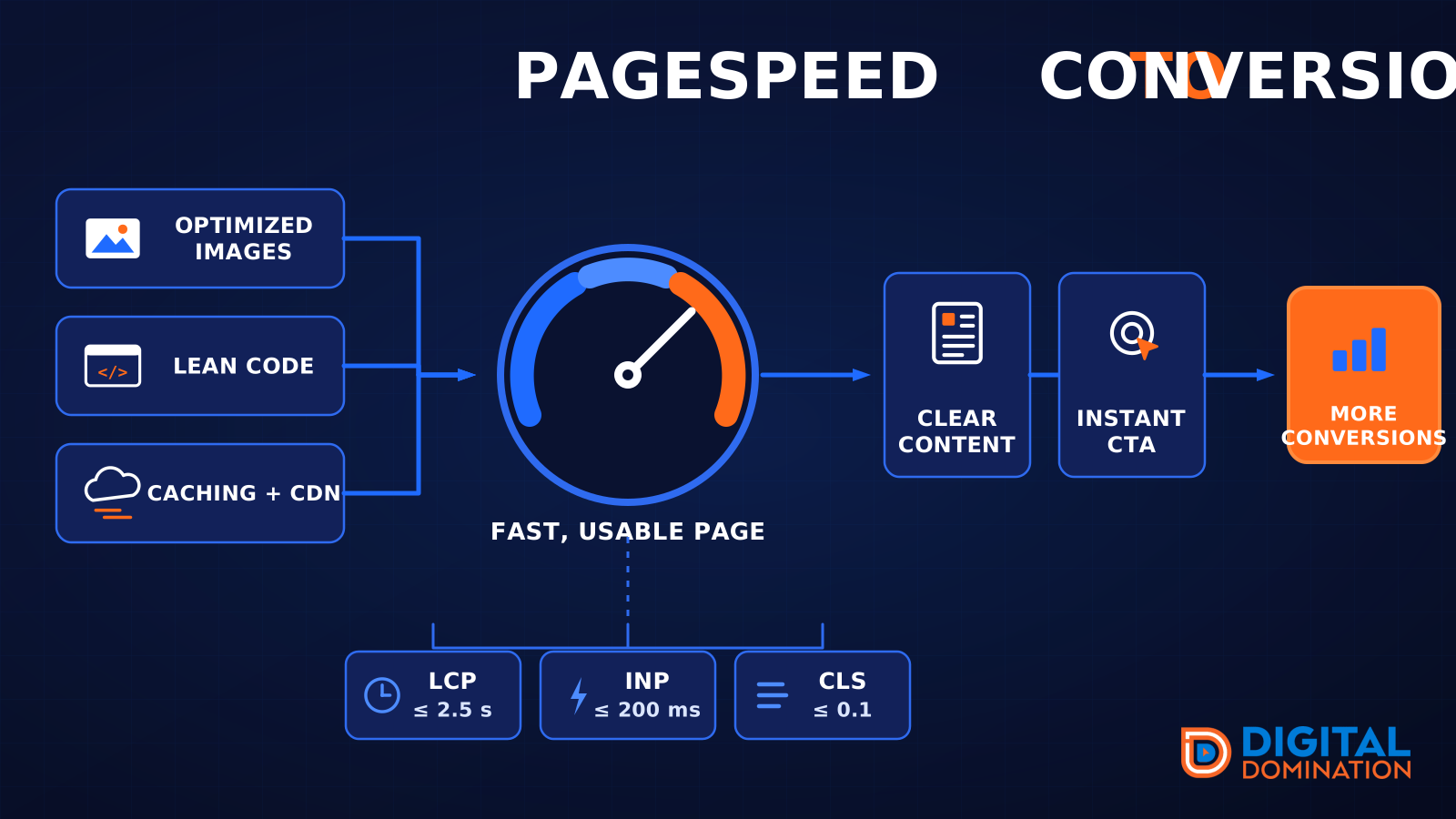
Malpractice sites are usually built by the agencies that build injury sites and carry the same weight: an autoplay video of the partners walking a courthouse hallway, a verdict counter, two chat widgets from different vendors, three call-tracking scripts and a Tag Manager container full of pixels from campaigns that ended years ago. The daughter is on an older laptop over home Wi-Fi, the son who just moved his father out of a facility is on a phone in the parking lot, and the referring attorney is on his phone between depositions. All three leave when the page takes six seconds to become usable and the number jumps as the review widget loads.
Google's good thresholds are LCP 2.5 seconds, INP 200 milliseconds and CLS 0.1, measured at the 75th percentile of field data. At Digital Domination we target a PageSpeed Insights performance score of 90 or higher and a 2/2 agentic-browsing check, because the AI agents that fetch your page to answer "who handles birth injury cases in this county" abandon heavy scripts as readily as a tired family does. The fixes that pay most on a malpractice site.
- ▸Replace the autoplay hallway video with a preloaded WebP or AVIF still of the lead attorney, video on click, and compress the headshots and award badges on the long biography pages.
- ▸Keep one chat vendor and one call-tracking script, load both after first interaction, and delete pixels for channels you no longer run.
- ▸Reserve fixed dimensions for the verdict counter, the review widget and the case evaluation form so nothing shifts while a visitor reaches for the number.
- ▸Publish verdict reports as HTML pages rather than embedded PDFs, self-host and subset the fonts, lazy load the office map, and keep the phone number and the records review button as plain HTML that renders before any script runs.
Fee language that answers who pays for the expert and what happens if we lose
The questions a family asks an AI Overview before calling are not about your percentage. They are about exposure. Malpractice cases require paid medical experts, and families have heard those experts cost tens of thousands of dollars. If your site never says who advances that money and what happens to it if the case is lost, the AI answer gets assembled from a competitor or a directory, and the family arrives at intake already anxious about a bill you never intended to send.
Percentages are a separate decision. Some states set a sliding scale or a cap on contingency fees specifically for medical malpractice, and bar rules govern what you may advertise, so you need not publish a number to be quotable. State these sentences on the case-type pages, the fee page, the FAQ and the GBP services, and connect them in schema through the Offer on the Service node.
- ▸The case evaluation and the initial records review are free, and the firm will say plainly if the case is not viable.
- ▸The fee is contingent on a recovery, with the percentage governed by state law where that applies.
- ▸The firm advances case costs, including expert reviews, records, depositions and filing fees, and states how those costs are handled if there is no recovery.
- ▸One sentence on how the expert requirement works in your state, so the family understands why a review takes weeks rather than days, and one on how referral fees are shared with co-counsel in the language your state's rule permits.
Content for the months between the discharge summary and the affidavit of merit
The malpractice buyer's journey is the longest in local legal marketing, and most of it is spent not looking for a lawyer. It runs from an uneasy feeling through records, validation, the deadline question and the damages-cap question before it reaches a firm, and it is often carried out by an adult child in another state on a parent's behalf. A site that publishes only case-type pages is absent from the first two-thirds of that journey. Each stage deserves a page that gives the direct answer under a descriptive heading, cites the statute or federal rule it relies on, names its attorney author and reviewer, and shows a published and updated date. Written well, these pages do the screening your staff now does by phone.
- ▸Validation: what generally separates a breach of the standard of care from a known complication, with the phrases families see on discharge paperwork explained.
- ▸Evidence: how to request a complete record under the HIPAA right of access, which generally requires a provider to respond within 30 days, who may request a deceased parent's records, and how to obtain an autopsy or incident report.
- ▸Process: the expert affidavit or certificate of merit your state requires, pre-suit notice or screening panels where they exist, and why a serious firm will not file until an expert has reviewed the chart.
- ▸Deadlines and damages: the professional negligence limitation period in your state, how the discovery rule affects it and any repose period, then what a non-economic cap does and does not limit and how future care costs are calculated, because families read about caps and give up.
- ▸Case types, one page each, plus a co-counsel track for referring attorneys covering what you accept, how fast you screen and how fee sharing works.
Search Console, GA4 and the intake log: measuring qualified intakes, not calls
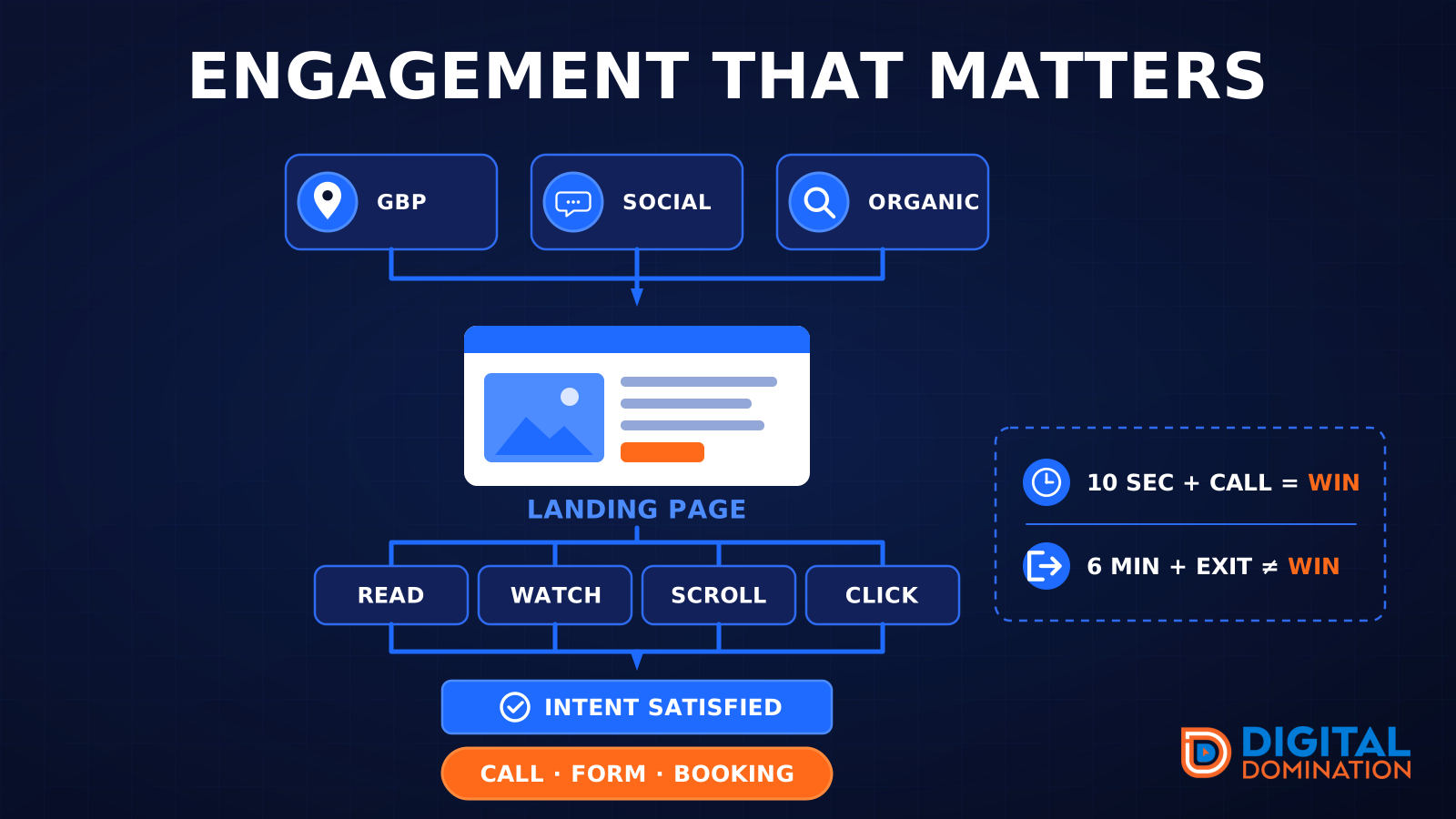
None of these tools ranks a page; they turn the work into a loop. Search Console shows how Google found the firm: which pages earn impressions for validation queries versus case-type queries versus co-counsel queries, which office page ranks in which county, where structured data throws errors and which URLs fail Core Web Vitals in the field. GA4 shows what visitors did next: click-to-call, the records review form, engaged time on the deadline page, biography views, and the gap between the laptop visitor at night and the phone visitor at midday.
The intake log makes the loop honest in this practice area. Log every contact with its source, case type, whether records were received, whether an expert reviewed them, whether it was signed and, if declined, why. Declined reasons are content instructions: if a quarter of your calls are known complications, the validation page is not doing its job. The loop, in order.
- ▸Measure the baseline: GeoGrid position for the top three case types, impressions by query class, calls, records reviews requested, expert reviews ordered and signed cases.
- ▸Diagnose by stage: impressions without clicks means the title, snippet or proof is losing; clicks without contacts means speed, fee clarity or trust; contacts without signed cases means the screening content or the intake script.
- ▸Change one group of things, annotate the date in GA4 and compare the next 30-60 days against the baseline before touching anything else.
- ▸Feed the winners back: a validation query that starts producing signed cases becomes a longer page, a GBP post, a short video and a schema update.
LinkedIn, CLE rooms, verdict reporters and the mentions that corroborate a malpractice firm
A malpractice firm's most valuable social audience is other lawyers, and they live on LinkedIn, in bar newsletters, in CLE rooms and in the verdict reporters that publish trial results. A partner who presents a CLE on expert affidavit requirements, writes for the state trial lawyers' journal and posts a two-minute explanation of the discovery rule is building corroboration that Google and AI systems can attribute to the same entity that appears on the profile and in the schema. Search Console now reports supported social and video platform properties, a sign of how far social content and search discovery have converged.
Family communities matter too, with different rules: caregiver groups for nursing home families and patient safety forums reward useful explanation and punish solicitation. An unlinked sentence in one of them saying a named firm in a named city explained why a case was not viable and did not charge for the review still connects the firm, the location, the service and a trait. On Reddit specifically, Axios reported in August 2026 that Reddit's share of visible ChatGPT Search citations fell roughly 86 percent, yet OpenAI keeps a Reddit data partnership, so fewer visible citations do not mean those conversations stopped informing retrieval or entity understanding. Build the footprint wide rather than betting on one platform.
- ▸LinkedIn and YouTube: one post a week from a named attorney on a real case-type or procedural question, short clips explaining one deadline or what a records review involves, transcripts on the site, and the same clips reused as GBP posts.
- ▸Legal press and verdict reporters: submit every reportable result; those pages are read by referring attorneys and become sameAs-worthy corroboration.
- ▸Directories: the state bar profile, the certifying board's directory, Avvo, Justia and Martindale carrying the same name, address, phone and case types as the profile and the schema.
A 90-day roadmap paced to the records request, not the ranking report
For a malpractice firm the roadmap is paced to how long a family takes to move from uneasy to ready, roughly the time it takes to receive and read a full chart. Speed and intake are fixed first because they lose the contacts you already have, the entity is repaired second, journey content and the review system come third, and the last month belongs to data.
- ▸Days 1-14, baseline and stop the losses: run GeoGrid scans (169 points each) for your top three case types, log 30 days of intakes with declined reasons, benchmark calls, records reviews and signed cases, strip the heaviest scripts and the hallway video, confirm what the phone does at 9:45 p.m., and audit every GBP field and directory listing for mismatches.
- ▸Days 15-30, repair the entity: set the category and the service list, publish one page per office, rewrite the first screen around board certification, trials to verdict, nurse review and the fee promise, complete every attorney biography with bar number and sameAs links, deploy the LegalService, Person, Service and Offer graph, and connect Search Console, GA4 and the intake log.
- ▸Days 31-60, expand relevance and prominence: publish the validation, evidence, process, deadline and damages pages, one page per case type and the co-counsel track, launch the review ask at each milestone including well-handled declines, submit reportable results to the verdict reporters, and start the weekly LinkedIn cadence.
- ▸Days 61-90, optimize on data: pull high-impression low-click queries and high-traffic low-contact pages, compare declined reasons against the validation content, fix the weakest proof and CTAs, recheck Core Web Vitals, re-run the GeoGrid scan and repeat what moved.
One firm, one entity, from the first diagnostic search to the expert's signature
The daughter on page 612 will never see your schema or your Search Console report. She will see an AI answer that either names your firm or does not, a Map Pack, a rating, a first screen that loads or does not, a board certification she can click, a sentence about who pays for the expert, and a phone number that is answered. The referring attorney will see the same things on a smaller screen. Everything above exists so that ten-second impression matches what Google and the AI systems have already concluded about the firm. A malpractice firm is one entity, and its attorneys, certifications, case types, fee arrangement, offices and reputation should read identically on the Google Business Profile, the website, the schema, the bar directory, the review platforms and the legal press.
At Digital Domination we build and run this system for medical malpractice firms under one promise: top 3 in the Google Map Pack in 12 weeks or you do not pay. If your firm is green from the office and red across the hospital corridor and the retirement communities where the cases begin, the first step is to see the whole market. Run the free GeoGrid scan and find out where families and referring attorneys are searching without seeing you.
Keep reading
Related guides
- ▸Google Business Profile Collected Info
- ▸Google Business Profile Gluten Free Menu Fields
- ▸Google Business Profile Government Id Verification
Put it into action
Frequently Asked Questions
What primary Google Business Profile category should a medical malpractice firm choose?
At the time of writing Google's list does not offer a clean medical malpractice category for most firms, so Personal injury attorney is usually the closest primary, with Trial attorney and Law firm as secondaries where they are true. Carry the malpractice vocabulary in the services list, the posts and the landing page the profile links to. Re-check the category list in your dashboard periodically, since Google adds categories without announcing them.
How can a malpractice firm build review velocity when it signs a few cases a year and settlements are confidential?
Ask at more moments rather than more often: after the records review is explained, at the expert's opinion, at resolution, and at the close of a declined intake that was handled kindly. Ask referring attorneys for peer reviews as well. A review never needs to name a defendant or a diagnosis; the attorney, the type of error, the city and how the family was treated are enough.
Can we publish verdicts and settlements on the website?
Usually yes, within your state bar's advertising rules, which typically require a disclaimer that past results do not guarantee future outcomes and may restrict how amounts are presented. Confidential settlements can be described by case type and outcome without naming the defendant. Pair each result with a short account of the problem, the expert issue and the strategy, which persuades more than a number and gives AI systems original material to cite.
How should we respond to a Google review that mentions a patient's medical details?
Never confirm that the reviewer was a client and never reference any medical fact, even to correct it. Thank the reviewer, restate the firm's approach in one sentence and stop. If a review discloses more than the client would want public, contact the client privately rather than addressing it in the reply.
Does LegalService schema directly improve Map Pack rankings?
Schema is not a confirmed ranking boost on its own. It helps search systems and AI models understand the entity, its attorneys, credentials, case types and fee arrangement, and it makes pages eligible for supported result features. Its value is highest when it describes facts a visitor can verify on the page.
Why publish content about whether something was malpractice when those readers are months away from hiring anyone?
Because that is where the search begins, and the firm that answers it is the firm the family already knows when they finally type lawyer. It also screens: a reader who learns what separates a known complication from a breach of the standard of care resolves many non-cases without a call. Measured by qualified intakes rather than raw calls, this content is often the strongest on the site.
Should a malpractice firm build pages for referring attorneys?
Yes. A short co-counsel track covering what case profile you accept, how quickly you screen, how records and experts are handled and how fee sharing works under your state's rule serves an audience that brings pre-screened matters. It is low volume and rarely contested, and it deserves its own Service node in the schema so the machine can tell the two audiences apart.
Do we need to publish our contingency percentage for AI Overviews to quote us?
No. Some states set a sliding scale or cap for medical malpractice fees, and your bar rules govern what you may advertise. The sentences that matter to families are that the evaluation and records review are free, that the fee is contingent on a recovery, and that the firm advances expert and case costs, with a plain statement of what happens to those costs if the case is lost.
Ready to dominate your map?
Top 3 in the Google Map Pack in 12 weeks, or you don't pay.