
Optometrist local SEO: how GBP entity signals, schema and PageSpeed turn a red-eye search into a booked exam
Independent optometrists lose patients to retail chains and urgent care every week, not because of the exam, but because of what the patient saw on a phone before they ever walked in. Here is how to fix that at the source.

Why the better optometrist loses the patient with the red eye
Sunday, 8:15 in the morning. A contact lens wearer wakes up with a right eye that is red, watering and painful in the light. She slept in her lenses again. She types "eye doctor open today near me" and gets a Map Pack with an urgent care, a retail optical inside a big-box store, and one independent practice. The independent shows Closed with no note about emergency eye care. The urgent care is Open. She taps it, waits ninety minutes, and gets a referral to see an optometrist tomorrow anyway.
The O.D. with a therapeutic license, a slit lamp twenty feet from her house and an open same-day slot did not lose that patient on clinical grounds. The practice lost her because the profile never said it handled emergencies, the site spent six seconds rendering a frame carousel, and nothing above the fold said "urgent eye care, call now". Google and the AI answer engines judged the practice the same way she did: on the facts they could read.
The optometry version in one glance
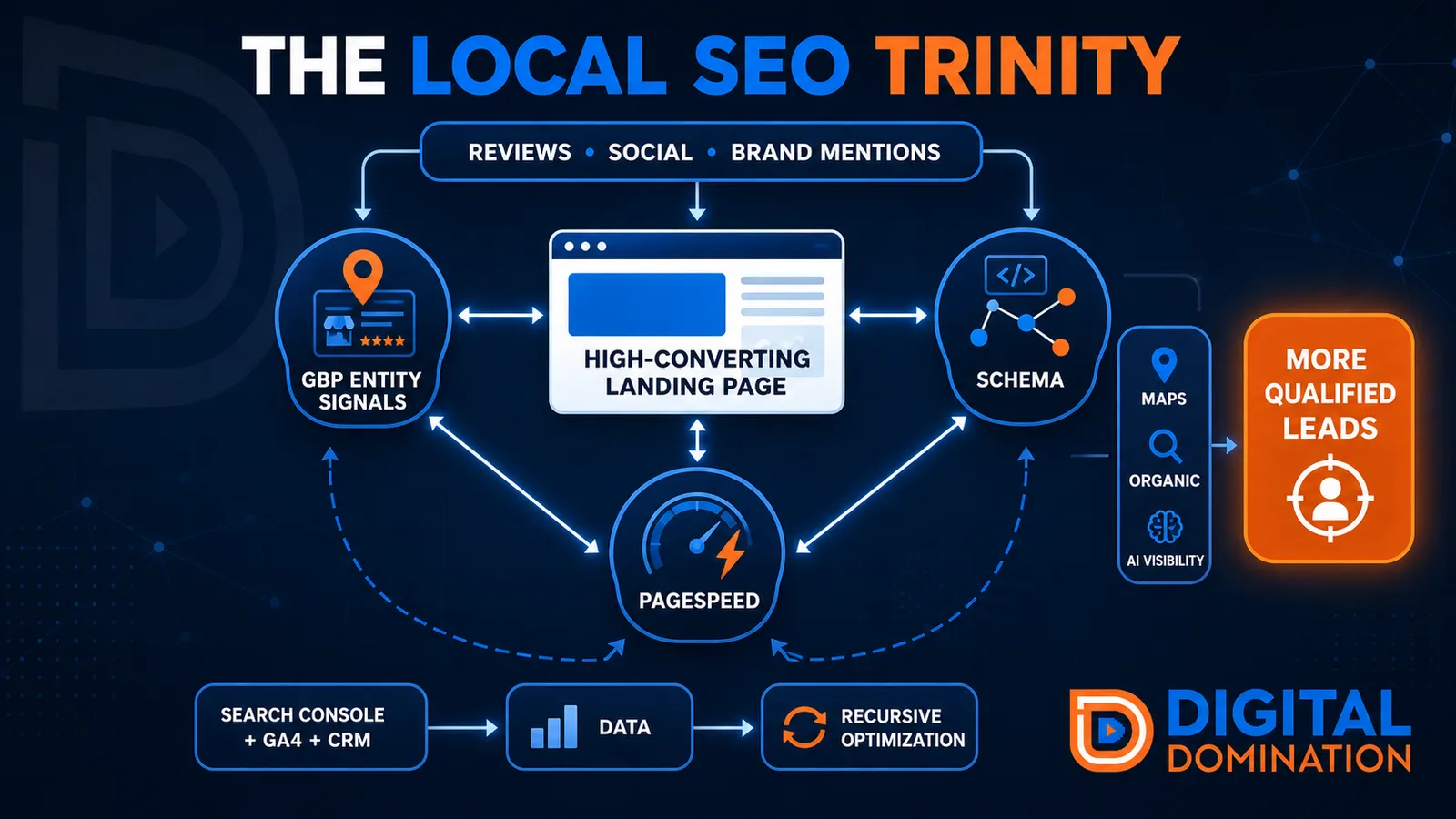
Google ranks local results on relevance, distance and prominence. Distance is set by where the patient is standing, so the winnable ground is relevance, prominence and conversion. At Digital Domination we build optometry local SEO as three pillars with a measurement loop around them:
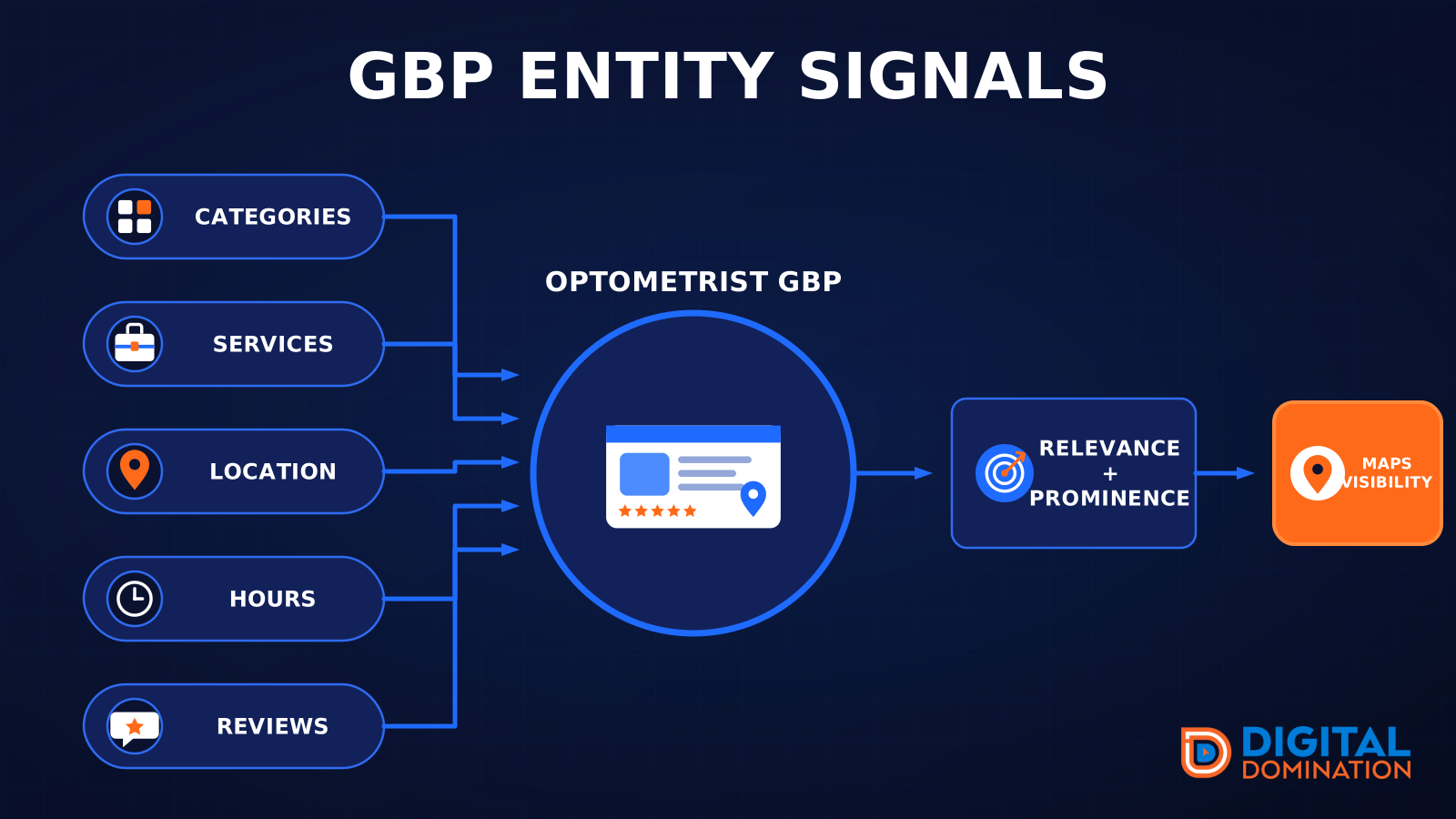
- ▸Google Business Profile entity signals tell Google what kind of eye care practice this is, which doctors see patients, which insurance and services it handles, and whether it can see someone today.
- ▸Schema turns the practice, the optometrists, their licenses, the exam and contact lens services, the frame lines and every location into one machine-readable graph with permanent identifiers.
- ▸PageSpeed makes sure the patient in pain, the crawler and the AI browsing agent can all read the phone number and the booking button in under three seconds on a phone.
- ▸Search Console, GA4 and the practice management system (Crystal PM, RevolutionEHR, Eyefinity and the like) show which searches booked exams and which ones bounced to a chain.
GBP signals that separate an eye doctor from an eyeglass store
The primary category should be Optometrist wherever an O.D. examines patients. Secondary categories describe what is real: Eye care center, Contact lenses supplier, Optician, Sunglasses store, and Pediatric optometrist if that appointment type exists. Do not add Ophthalmologist without an M.D. on staff; that is a state board complaint waiting to happen. Services should mirror the appointment types in your scheduler: comprehensive eye exam, contact lens exam and fitting, pediatric eye exam, diabetic eye exam, dry eye evaluation, myopia management, emergency red eye visits, glaucoma testing, LASIK co-management, scleral lens fitting.
GBP has no vision-plan attribute, so put the in-network plans (VSP, EyeMed, Davis Vision, Spectera, plus the medical plans you bill for medical eye exams) in the business description and in each service description. Enter Saturday hours and the lunch closure, and use More hours to publish a separate set for same-day or emergency appointments. A profile that says Closed on a Sunday with no on-call note is how the red-eye patient ends up at urgent care.
Photos should show what the patient is comparing: the exam lane with the slit lamp, the retinal camera or OCT, the frame boards with recognizable brands, the kids' section, the doctors with their names, the entrance and parking. Each location needs its own landing page as the GBP website link, tagged with UTM parameters, carrying:
- ▸Practice name, suite number, local phone and a map with parking notes.
- ▸The optometrists who see patients there, with headshots, O.D. credentials and links to their bio pages.
- ▸Exam types offered at that location, including same-day red eye visits and contact lens trials.
- ▸Accepted vision plans and medical insurance, with a plain note on how a medical eye exam bills differently from a routine one.
- ▸Frame brands and lens technologies actually stocked in that optical.
- ▸Online booking, click-to-call and after-hours instructions.
Authority a patient can verify from the parking lot
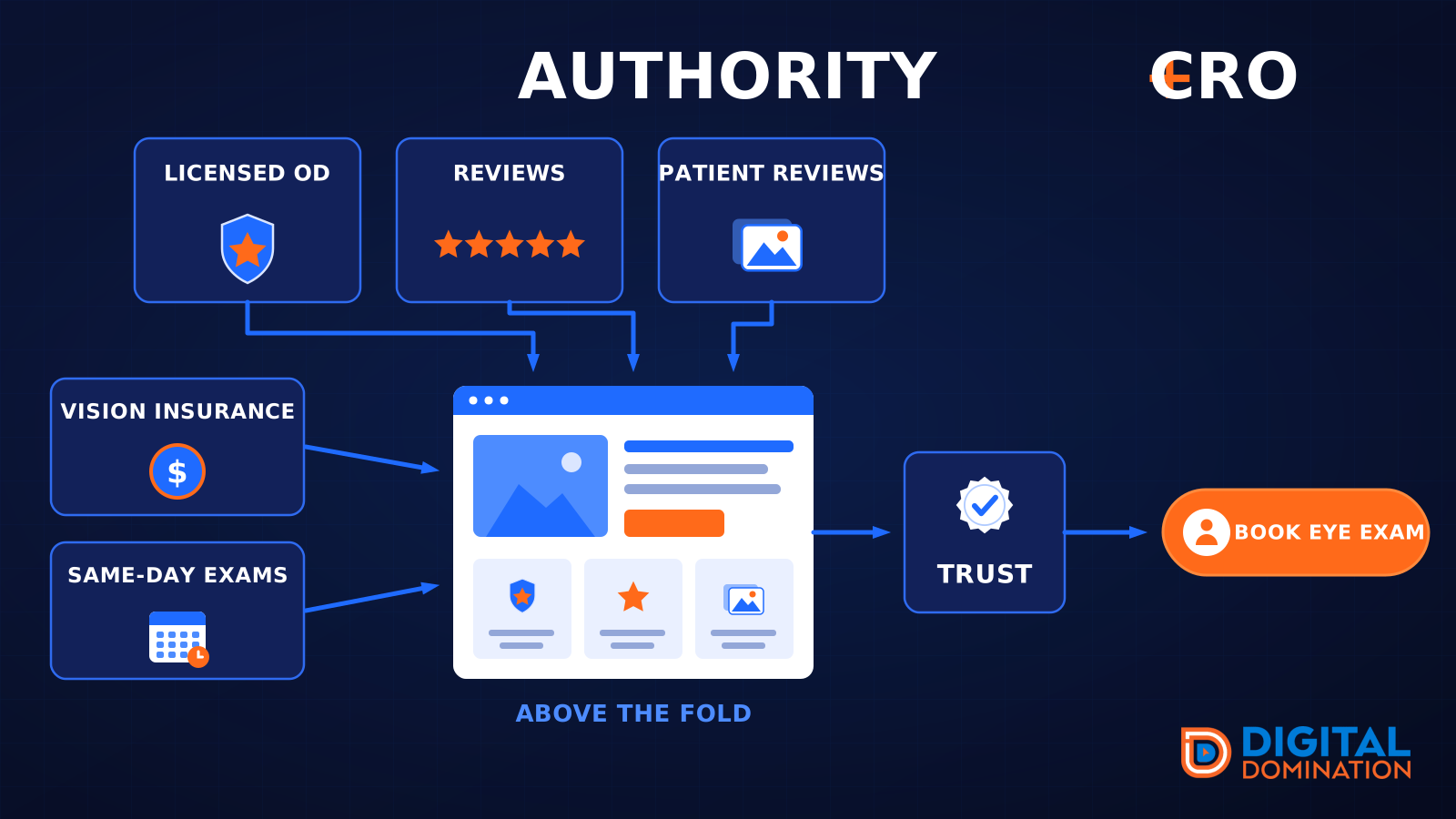
A patient is deciding whether to trust a stranger with the only pair of eyes they get, and whether the optical will sell them lenses they do not need. The first screen has to answer both. A useful above-the-fold strip for an optometry landing page, and this is an illustrative example, not a real practice, reads: Doctors of Optometry since 2009 | 4.9 stars from local patients | In network with VSP and EyeMed | Same-day red eye appointments | Book online.
Below the fold, each optometrist needs a full biography page. That is where the proof lives and where the schema will point. Include what is real for an O.D.:
- ▸Doctor of Optometry degree, the college of optometry and graduation year.
- ▸State Board of Optometry license number with a link to the board's license lookup.
- ▸Therapeutic pharmaceutical agents certification, and glaucoma privileges where the state issues them separately.
- ▸American Board of Optometry certification, Fellowship in the American Academy of Optometry (FAAO), residency training and specialty (pediatrics, cornea and contact lenses, ocular disease, low vision).
- ▸American Optometric Association and state association membership, plus co-management relationships with local ophthalmology or LASIK surgeons.
- ▸Languages spoken, years in practice, and community roles such as school vision screenings.
- ▸Links to the doctor's profiles on the AOA doctor locator, the VSP and EyeMed provider directories, Healthgrades and Zocdoc.
Review velocity, and what patients actually say about an eye exam
Optometry reviews grade two businesses at once: the doctor and the optical. A patient can love the exam and leave three stars because the frames took three weeks or the benefit was explained badly at checkout. Read your last fifty reviews and the pattern is clear: "took time to explain", "got my prescription right", "did not push expensive lenses", "great with my kids", "helped me understand my benefits". That language is what future patients and AI systems use to decide what the practice is known for.
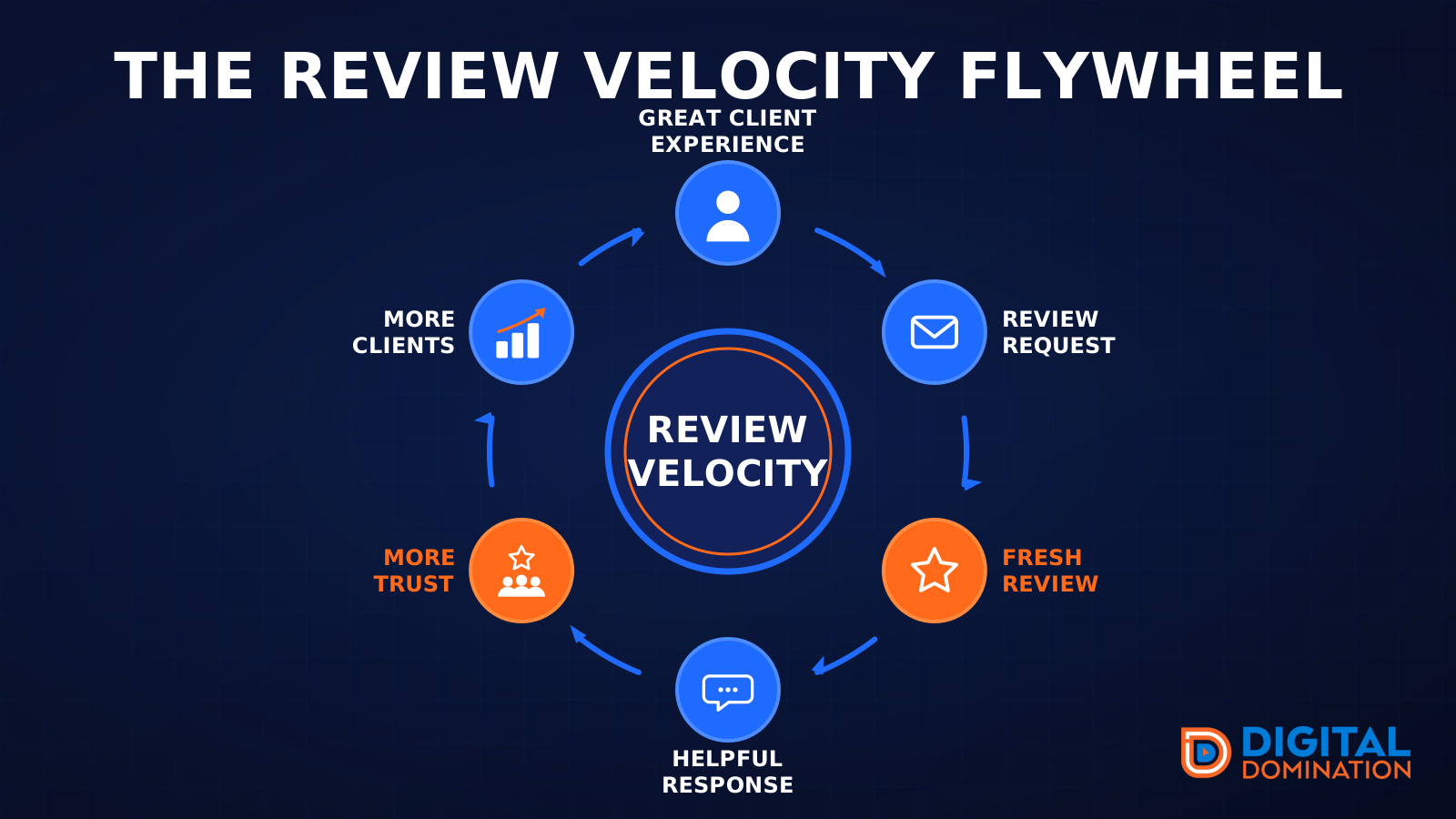
Velocity beats volume. A practice with 400 reviews and nothing new since the last benefit-reset rush looks dormant next to one earning a few every week. Ask at the moment the patient is happiest: when the new glasses are dispensed and they can read the sign across the street. Send the request by text from the practice management system and coach the front desk to say the doctor's name so it lands in the review. Respond to every review, including the insurance complaints, with a factual explanation of routine versus medical billing. A review profile that works for optometry includes:
- ▸Steady new Google reviews that mention the optometrist, the service (contacts, kids' exam, dry eye) and the neighborhood naturally.
- ▸Reviews on Healthgrades, Zocdoc and Facebook that repeat the same doctor names and location.
- ▸Optical-specific praise about frame selection, turnaround and adjustments, because that is where the negative reviews cluster.
- ▸Owner responses that explain benefits and the prescription release policy under the FTC Contact Lens Rule without arguing.
Schema architecture anchored on the Optician type
Schema.org offers Optician, a subtype of MedicalBusiness, which fits a practice that both examines eyes and dispenses eyewear. Most optometry sites either have no structured data or ship the generic LocalBusiness block their template vendor injects on every page, with no doctors, no services and no relationship between them. Every node below gets a permanent @id (for example example-eyecare.com/#practice, /locations/henderson/#office, /doctors/dr-jane-doe/#person) so every page references the same entity instead of creating a fresh copy:
- ▸The practice: Optician (MedicalBusiness), with name, telephone, address, openingHoursSpecification, image, priceRange, paymentAccepted, and sameAs to the AOA locator, VSP and EyeMed directories, Healthgrades and social profiles.
- ▸Each additional location: its own Optician node, linked to the practice node with parentOrganization, with its own geo and hours.
- ▸Each optometrist: Person, with jobTitle Doctor of Optometry, worksFor the practice, alumniOf the college of optometry, hasCredential as EducationalOccupationalCredential for the O.D. degree and board certification, identifier as a PropertyValue for the state license number, memberOf for AOA, knowsAbout for specialties, and sameAs to directory profiles.
- ▸Each exam or treatment: Service (comprehensive eye exam, contact lens fitting, myopia management, dry eye therapy, emergency eye care), with provider set to the practice and areaServed listing the cities and neighborhoods.
- ▸Exam fees and packages: Offer with PriceSpecification attached to the Service, plus a plain statement of which plans are in network.
- ▸Frame and lens lines: Brand nodes on the optical page, so the practice is connected to the names patients search for.
- ▸Every page: WebPage with BreadcrumbList; articles as BlogPosting with the reviewing optometrist as author; eye-health videos as VideoObject.
PageSpeed for the vendor template most optometrists are running
Most independent optometry sites come from a handful of eye care template vendors and share the same weight problems: a rotating hero slider of frame lifestyle shots, an embedded virtual try-on script, a scheduling widget that loads its full app on the homepage, insurance logos served as full-size PNGs, and a chat bubble. The patient with the red eye, the crawler and the AI browsing agent all wait on the same bloat.
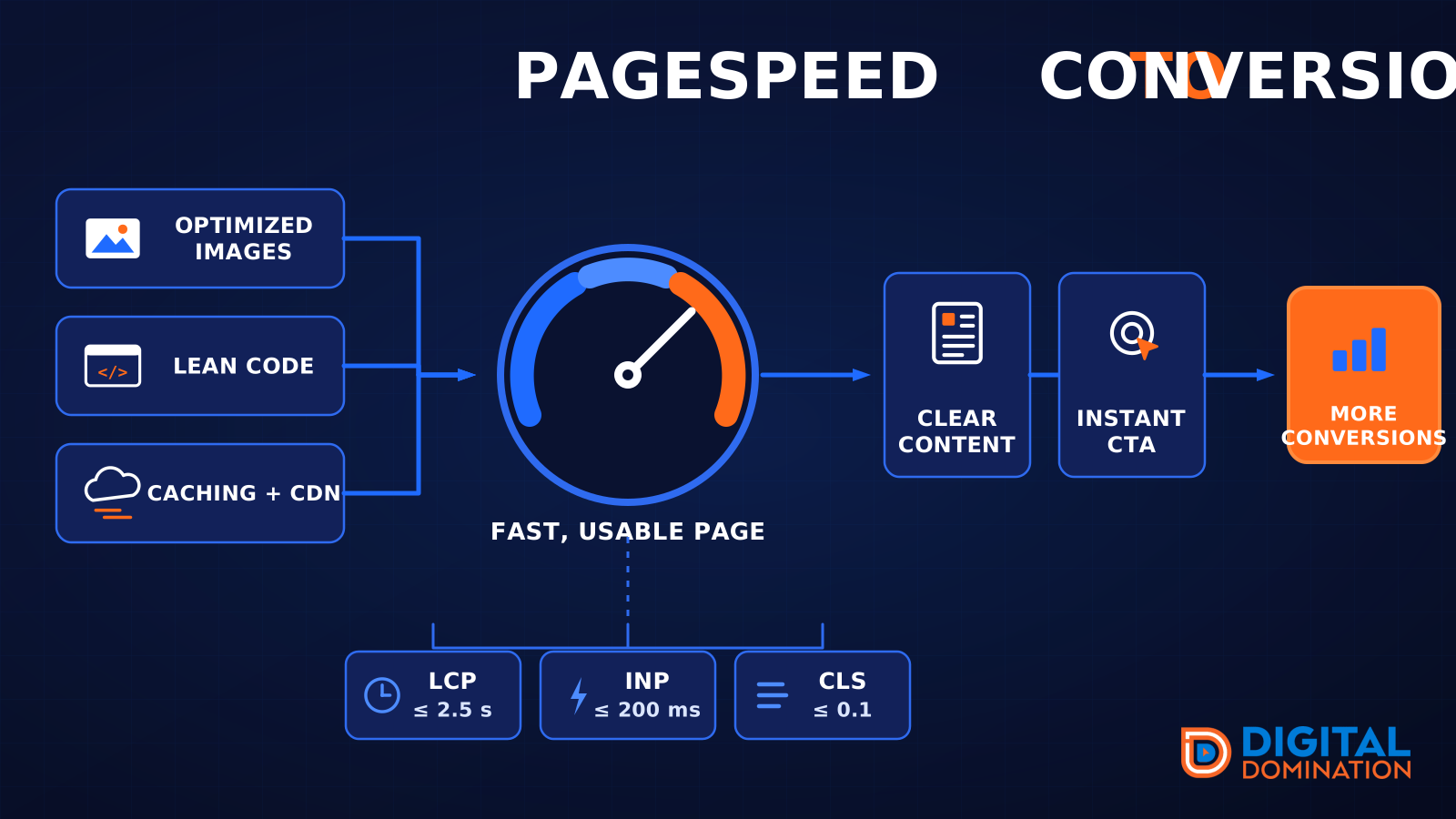
Google's good thresholds for Core Web Vitals are a Largest Contentful Paint of 2.5 seconds or less, Interaction to Next Paint of 200 milliseconds or less, and Cumulative Layout Shift of 0.1 or less, measured at the 75th percentile of field data. At Digital Domination we target a PageSpeed Insights performance score of 90 or higher and a 2/2 result on the agentic browsing check, because an AI agent booking on a patient's behalf has less patience than the patient. The fixes with the biggest payoff on an optometry site:
- ▸Replace the frame slider with one preloaded WebP hero image of the exam lane or the doctor, sized for mobile.
- ▸Lazy-load the virtual try-on, the frame gallery and the map; load the scheduler only when the Book button is tapped.
- ▸Serve insurance and brand logos as one small SVG sprite with fixed dimensions so they stop shifting the page.
- ▸Delay chat, heatmap and review-widget scripts until after the first interaction, and remove the vendor plugins nobody uses.
- ▸Self-host and subset the fonts; preload only the one used in the headline and phone button.
- ▸Reserve height for the booking widget and review carousel so the click-to-call button does not jump.
- ▸Turn on caching, compression and a CDN, and check hosting response time, since many optical templates sit on slow shared servers.
Exam fees, vision plans and price language that AI Overviews can quote
Optometry is one of the few medical niches where patients openly shop on price, because the chains advertise it. A patient asks an AI assistant whether an eye exam near them costs less than the two-for-one offer down the street, whether VSP is accepted, and whether a contact lens fitting is extra. If your site is silent, the assistant answers from the chain's page. Publish the facts in plain crawlable text on the service pages, the insurance page and the GBP services, and mirror them in Offer and PriceSpecification schema:
- ▸The self-pay fee, or a range, for a comprehensive eye exam and a contact lens exam, noting that the fitting fee depends on lens type (spherical, toric, multifocal, scleral).
- ▸The vision plans accepted in network, and the medical plans you bill when the visit is for dry eye, diabetes, glaucoma or a red eye.
- ▸How routine versus medical billing changes what the patient pays, in two sentences a non-clinician can follow.
- ▸Frame and lens package starting points, second-pair pricing, and whether FSA and HSA cards are accepted.
- ▸Your prescription release policy and the annual-supply contact lens discount, which answers the 1-800 Contacts question before it becomes a review.
- ▸What a same-day emergency visit costs without insurance, since that is exactly what the Sunday-morning patient is weighing against urgent care.
Content that follows the patient from blurry to annual recall
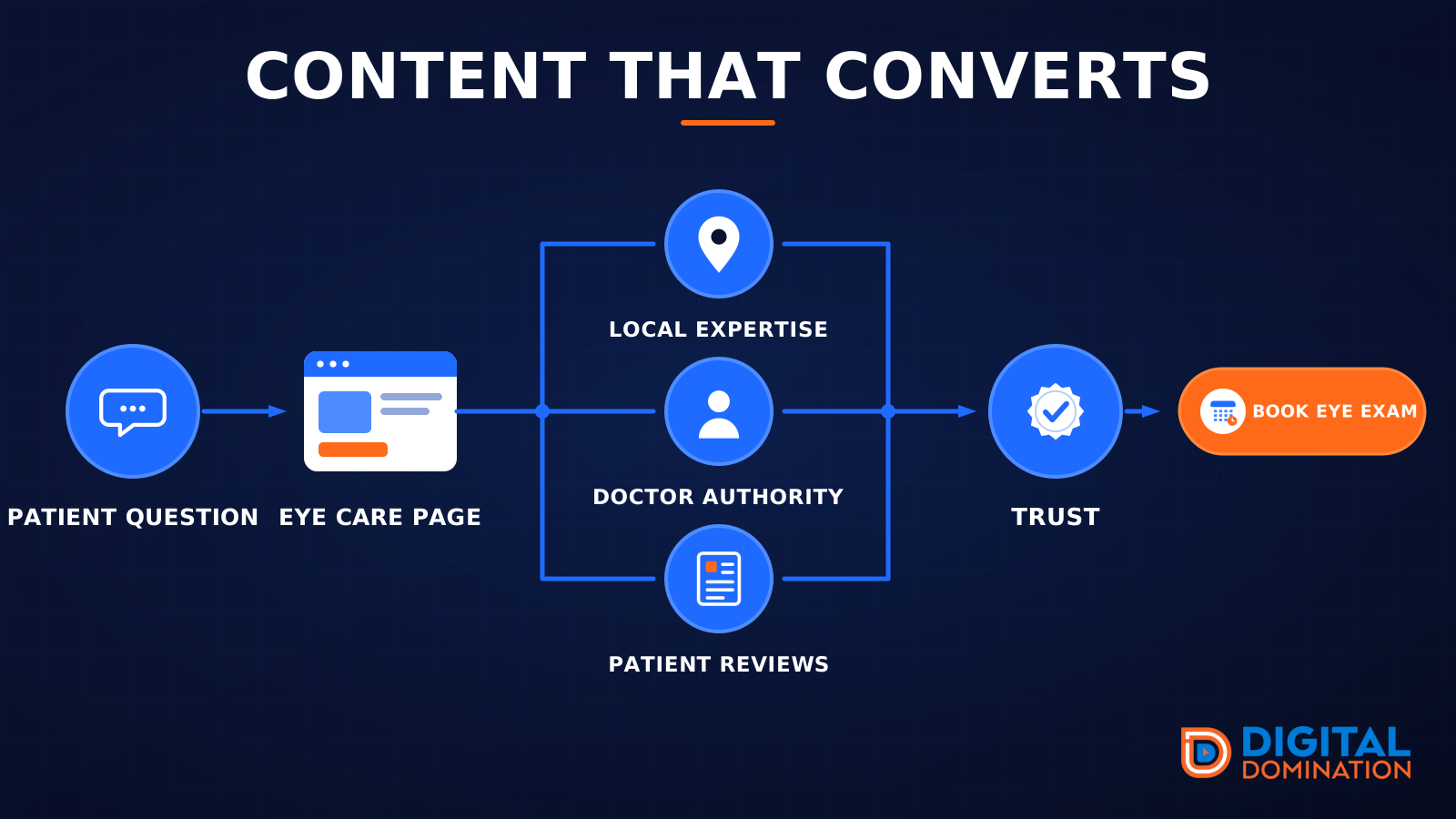
Optometry demand runs on a calendar: back-to-school exams in August, the failed school screening note that comes home in October, the year-end rush when FSA dollars and vision benefits expire December 31, and spring allergy season full of itchy red eyes. Organize content around those moments and the question a patient actually types, in short blocks under descriptive headings so a parent on a phone and an AI system can both pull the answer:
- ▸"My child failed the school vision screening, what happens next" leading to the pediatric exam page, with what the exam involves and whether dilation is needed.
- ▸"Can I use my vision benefits before they reset" leading to the insurance page, with a December reminder that doubles as a GBP post.
- ▸"Contact lens exam vs regular eye exam" and "why is there a fitting fee", answered honestly.
- ▸"Red eye: optometrist or urgent care", with your same-day policy and phone number in the first paragraph.
- ▸"Myopia management for kids" explaining ortho-k, soft multifocal and atropine options with the doctor named as author.
- ▸Dry eye, diabetic eye exam and glaucoma pages that explain the medical billing side and earn the medical searches competitors ignore.
- ▸Internal links in every direction: service to doctor, doctor to location, location to service, article to booking.
Search Console, GA4 and the EHR: closing the loop on booked exams
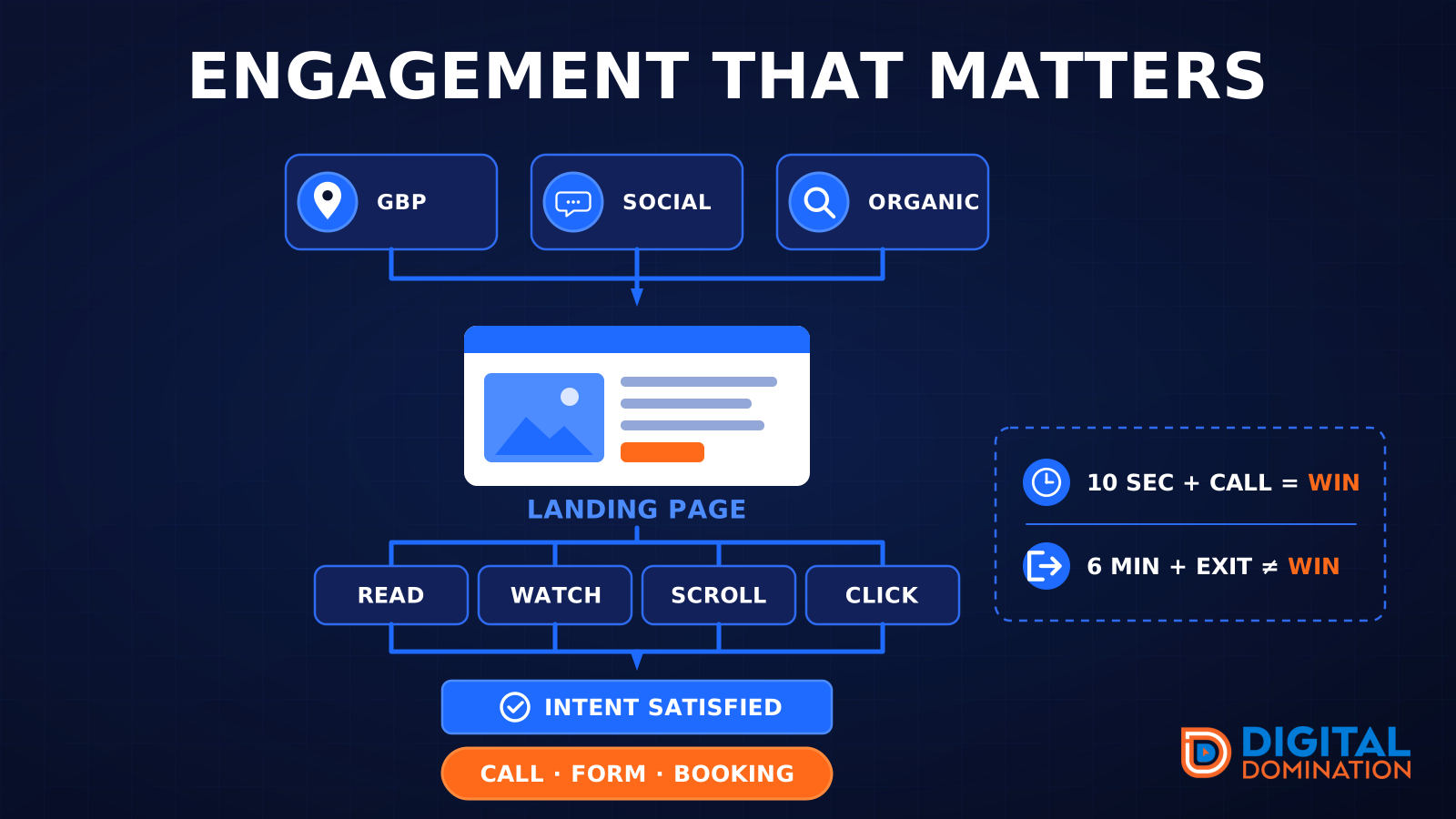
Search Console shows which queries produce impressions and clicks for each page: the exam page pulling "eye exam near me" impressions but few clicks, the location page that suddenly appears for "scleral lenses" because one doctor started fitting them, the Core Web Vitals report flagging the frame gallery, structured data errors on the doctor bios. GA4 shows what happened next: click-to-call taps, booking starts and completions, insurance page views before a booking, the mobile versus desktop gap. The practice management system finishes the story with kept exams, no-shows, and whether the patient bought eyewear or walked the prescription out the door.
Impressions without clicks means the title, review snippet or price language needs work. Clicks without bookings means speed, trust or the scheduler is the problem. Bookings without kept exams means reminders or insurance verification are failing. A monthly cycle for a practice looks like this:
- ▸Pull the top 20 queries per location page and mark which ones map to a service without a page.
- ▸Compare bookings by landing page and source, with UTM tags separating each GBP location from organic.
- ▸Match booking source to kept-exam and eyewear capture data in the EHR, so you know which searches produce patients who buy glasses.
- ▸Change one group of things, annotate the date, wait three to four weeks, then compare before touching the next group.
Frame try-ons, school screenings and the mentions that corroborate the practice
Social content for an optometry practice works when it repeats the same doctors, services and locations the website and GBP already claim. Short videos of a doctor explaining a retinal photo, a stylist doing a try-on with a new shipment, or a two-minute answer to "why does my child squint at the board" get saved and shared, and they send branded searches back to the practice. Post to the GBP first, then Instagram, Facebook, TikTok and YouTube. Google's Search Console now reports supported social and video platform properties, a clear sign the two channels have converged.
Brand mentions without links still carry meaning. A parent in a neighborhood Facebook group writing "we took our daughter to Example Eye Care in Summerlin, Dr. Doe caught her astigmatism and the staff were great with insurance" connects the practice, the doctor, the location, a service and a sentiment in one sentence. PTA pages, youth sports leagues where the practice runs screenings, and Nextdoor are where those sentences appear. On Reddit, Axios reported in August 2026 that Reddit's share of visible ChatGPT Search citations fell roughly 86 percent, while OpenAI still holds a Reddit data partnership. Fewer visible citations does not mean the conversations stopped informing the models, so treat Reddit as one input in a spread-out footprint. The off-site sources that should all agree on practice name, address, phone and doctor names:
- ▸State Board of Optometry license records and the AOA doctor locator.
- ▸VSP, EyeMed, Davis Vision and Spectera provider directories, which patients check before they book.
- ▸Healthgrades, Zocdoc, Vitals and WebMD listings.
- ▸Chamber of commerce, school district vendor pages, youth sports sponsorships and local news coverage of screenings.
- ▸Frame brand dealer locators and LASIK surgeon co-management pages.
A 90-day roadmap timed to the benefit calendar
Optometry has two peaks that most practices simply react to: back-to-school and the year-end benefit deadline. The roadmap below assumes you start about 90 days before one of them, so the foundation is in place when demand arrives rather than being built during it.
- ▸Days 1-14, baseline: run a GeoGrid scan for eye exam, optometrist and contact lens terms from every location; audit every GBP field, category, service and hours set; pull Search Console and GA4 baselines; inventory each doctor's license, certifications and directory profiles; export current schema and Core Web Vitals; wire GA4 booking and call events with UTM tags per location.
- ▸Days 15-30, repair: fix categories and services, add emergency hours and plan language to the profile, publish a real landing page per location, rewrite the above-the-fold strip, publish full doctor bios, add fee and plan language, deploy the Optician, Person and Service graph with permanent @ids, and clear the worst template PageSpeed problems.
- ▸Days 31-60, expand: publish the seasonal pages (screening follow-up, benefits before they reset, red eye versus urgent care, myopia management, dry eye), start the dispense-day review request, align every directory and vision plan listing, and begin a weekly doctor video posted to GBP first.
- ▸Days 61-90, optimize: rewrite titles for high-impression low-click queries, fix speed or trust on high-click low-booking pages, match bookings to kept exams and eyewear capture in the EHR, rerun the GeoGrid scan and Core Web Vitals, and schedule the benefit-deadline campaign across GBP posts, email and social.
One eye care entity, stronger every benefit cycle
The independent optometrist does not need to out-advertise the chain or out-wait the urgent care. The practice needs to be one clearly defined entity: the same doctors, licenses, services, plans, locations, prices and reputation stated consistently on the Google Business Profile, the website, the schema, the review platforms, the vision plan directories, the state board record and the places patients talk about eye doctors. Then it needs a loop that reads Search Console, GA4 and the EHR every month and makes that entity a little more relevant, prominent and fast before the next benefit season.
At Digital Domination that is the whole method behind our Map Pack guarantee: top 3 in the Google Map Pack in 12 weeks or you do not pay. It starts with knowing where you stand. Our free GeoGrid scan checks 169 points across your market and shows where the practice appears for eye exam and optometrist searches from every neighborhood your patients live in, not just your own front door. Run the scan and see which part of the trinity to fix first.
Keep reading
Related guides
Put it into action
Frequently Asked Questions
Should an optometry practice use Optometrist or Eye care center as its primary GBP category?
Use Optometrist as the primary category anywhere a Doctor of Optometry examines patients, because that is what the exam-intent searches match. Add Eye care center, Optician, Contact lenses supplier and Sunglasses store as secondaries to cover the optical. Never add Ophthalmologist without an M.D. on staff.
Which schema type fits an optometrist, and do the doctors need their own markup?
Anchor the practice on Optician, the MedicalBusiness subtype that covers both eye exams and eyewear dispensing. Each optometrist should be a Person node with a Doctor of Optometry jobTitle, worksFor pointing at the practice, the state license as an identifier and credentials as EducationalOccupationalCredential. Give every node a permanent @id so location, doctor and service pages all reference the same entities.
Does listing vision insurance on the website and GBP help rankings?
It mostly helps conversion and AI answers rather than rankings directly. Patients and AI assistants ask whether VSP or EyeMed is accepted before anything else, and a page that answers in plain text gets quoted while a silent page gets skipped. It also reduces the insurance complaints that drag down optometry review scores.
How can an independent practice compete with a chain that advertises two pairs for one price?
Publish your own exam fee, fitting fee and package starting points, then surround them with proof a chain cannot show: named doctors with board certifications, retinal imaging, same-day red eye visits and reviews that praise the exam itself. Patients comparing on a phone choose the option whose facts they can read. Silence on price sends them to the chain by default.
What PageSpeed problems are most common on optometry websites?
Vendor templates typically load a frame lifestyle slider, a virtual try-on script, a full scheduling app and heavy insurance logos on the homepage. Those push Largest Contentful Paint well past the 2.5 second threshold and cause layout shift around the booking button. Preloading one hero image, lazy-loading the try-on and gallery, and loading the scheduler on tap fixes most of it.
When is the best time to ask an eye care patient for a review?
At dispensing, when the patient puts on the finished glasses or leaves with contact lens trials and the result is immediate and positive. Send the request by text from the practice management system that day and mention the doctor by name so it appears in the review. A steady weekly flow matters more than a one-time push.
Does the drop in Reddit citations in ChatGPT mean forums no longer matter for an eye doctor?
No. Axios reported that Reddit's share of visible ChatGPT Search citations fell about 86 percent in August 2026, but citation selection, retrieval and training are different processes, and OpenAI still has a Reddit data partnership. Neighborhood Facebook groups, PTA pages and Nextdoor are where parents actually recommend eye doctors, so build a footprint across all of them rather than betting on one.
Ready to dominate your map?
Top 3 in the Google Map Pack in 12 weeks, or you don't pay.