
Personal injury lawyer local SEO: how GBP entity signals, schema and PageSpeed decide who gets the call from the hospital
Injury clients hire from a phone, in pain, within hours of the crash. This is how to become the firm Google, the AI answer and the injured person all agree on.
The search that happens in a hospital waiting room
It is 2 am in an emergency department. A mother is waiting on scans for her son, thrown from his motorcycle when a pickup turned left across his lane. The other driver's insurer has already left a voicemail asking for a recorded statement. She types motorcycle accident lawyer near me, sees three firms in the Map Pack, taps the one with the most recent reviews, and when its hero video stalls she goes back and taps the next one. That firm answers on the second ring. The first firm was better on paper and never knew it lost the case.
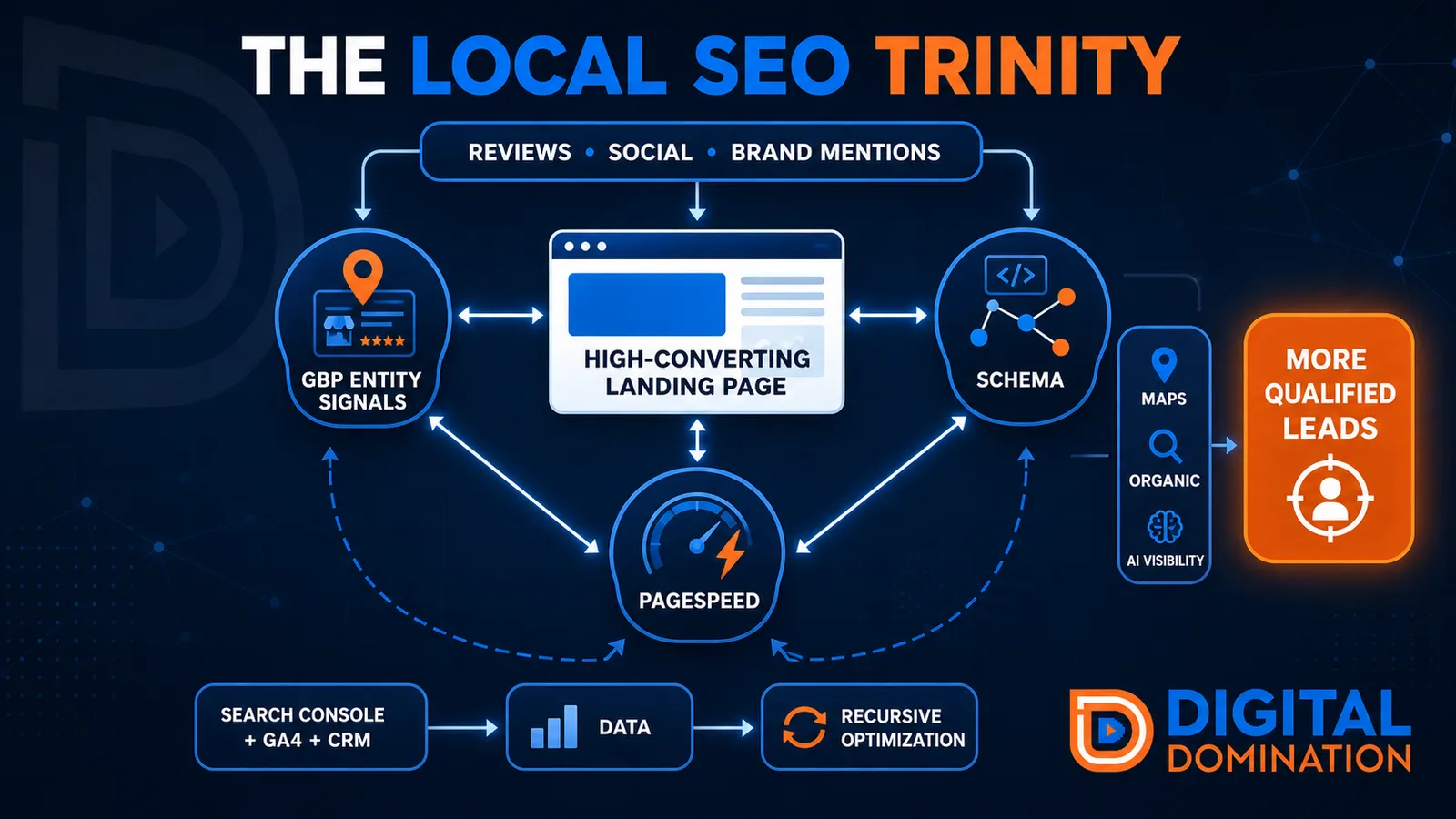
This is how injury clients are acquired: frightened, pressured by an adjuster, choosing the firm that looks most credible and reaches them fastest. Google and the AI systems above the results run the same evaluation at scale. At Digital Domination we treat the foundation as three connected pillars, with the landing page underneath and a Search Console, GA4 and intake-CRM loop feeding the next round of changes.
The short version for a busy managing partner
Google ranks local results on relevance, distance and prominence. You cannot move where the injured person is standing, so the fight is over relevance (does Google understand you handle this case type here), prominence (does the market corroborate it) and whether the page converts the click into an intake call. Each pillar carries one job.
- ▸Google Business Profile entity signals tell Google who the firm is, which injury matters it takes, where its offices are and which attorneys stand behind it.
- ▸Schema connects the firm, attorneys, offices, case types, the contingency fee offer and case results into one graph that AI Overviews and LLM search can read without guessing.
- ▸PageSpeed makes the phone number, star rating, attorney's face and free case review button usable within about two seconds on hospital Wi-Fi.
- ▸Reviews, credentials and third-party mentions supply the prominence; Search Console, GA4 and the intake CRM show which of it produces signed cases.
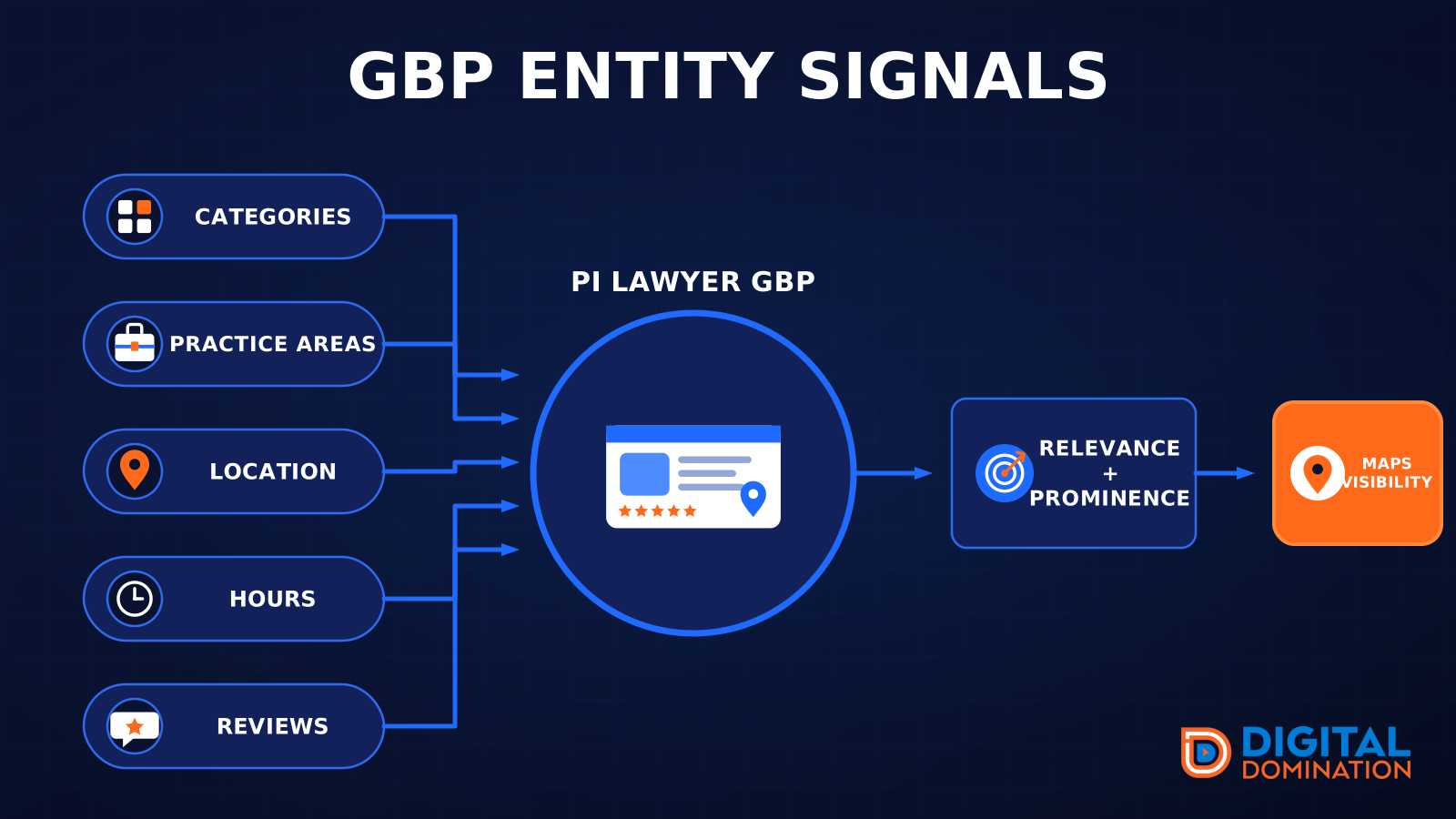
GBP entity signals for an injury practice
The primary category should be Personal injury attorney, not Law firm or Lawyer, with Trial attorney as a secondary only if it is honest. Build the services list around the matters you actually sign, each with the fee language: car accidents, truck crashes, motorcycle accidents, rideshare accidents, slip and fall, dog bites, wrongful death, brain injury. Every service name should also exist as a page on the site with the same wording; if the profile says rideshare and the site never does, the entity relationship is weak. Beyond categories, these fields matter most.
- ▸Hours that reflect reality: set 24-hour availability only if a live intake team actually answers; if an answering service takes overnight calls, say so in the description.
- ▸Attributes for online appointments, wheelchair accessible entrance and language assistance (Spanish-speaking intake decides cases in many markets).
- ▸Photos of the real attorneys, reception area and building exterior; no stock gavels or handshakes.
- ▸A local number that rings intake in the primary phone field, a service area matching the counties you sign cases from, and practitioner profiles for qualifying attorneys pointing to their bio pages.
- ▸One landing page per office with address, parking, the attorneys based there, the courts and counties served, and a UTM-tagged profile link so each location's calls are measured separately.
Authority proof an injured person can verify in ten seconds
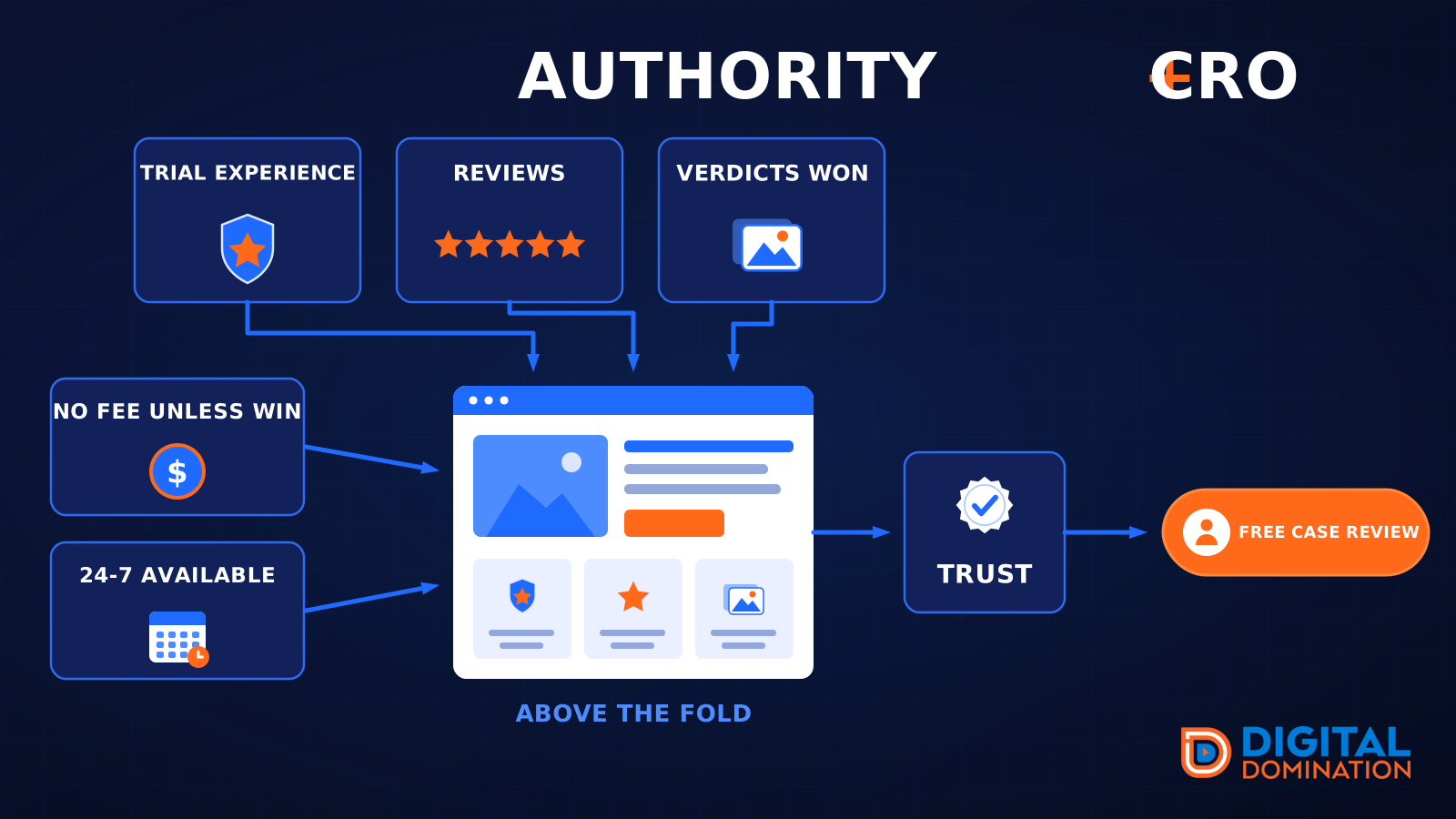
An injury client is trusting a stranger with a claim that may fund surgery and replace two years of wages. The first screen must answer two questions: does this firm handle my exact injury, and can I believe them. Vague claims (we fight for you, aggressive representation) fail both because every competitor makes them. The verifiable authority you actually hold belongs above the fold, with the detail linked farther down.
- ▸State bar admission with the bar number and a link to each attorney's official bar profile.
- ▸Board certification in civil trial or personal injury trial law where a body actually issued it (Texas Board of Legal Specialization, the Florida Bar, the National Board of Trial Advocacy).
- ▸Membership in the American Association for Justice and the state trial lawyers association, each with the year.
- ▸Verdicts and settlements shown as case type, injury and venue, with the disclaimer your state bar's advertising rules require.
- ▸An example authority strip, placeholder figures only: 20+ years handling injury claims | 4.9 stars from 400+ reviews | Board certified in civil trial law | No fee unless we win | Available 24/7.
Review velocity when cases take eighteen months to close
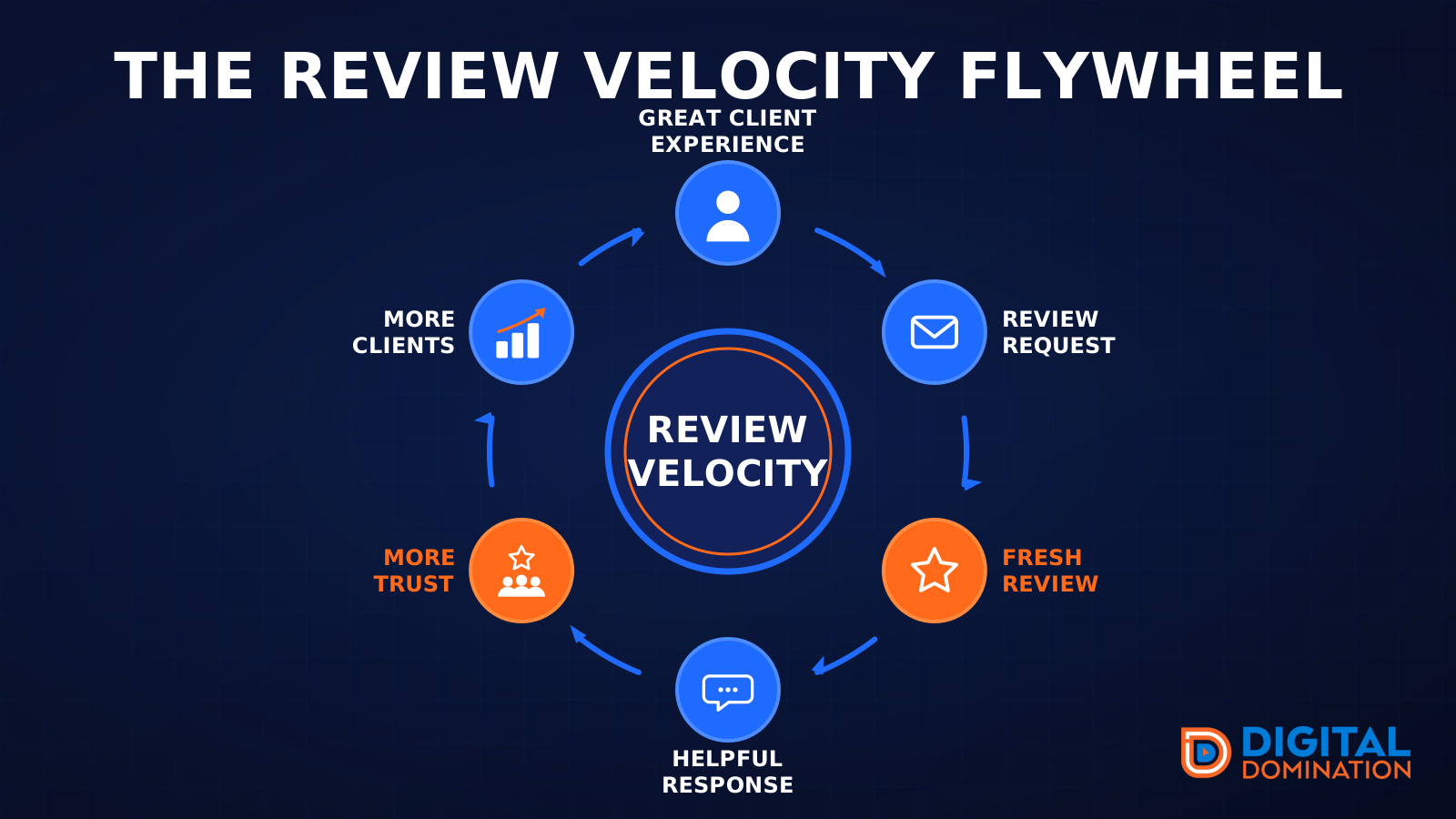
Injury firms have a structural review problem: the client does not feel finished until the settlement check clears, often a year after signing. Firms that ask only at closing get bursts and long silences, and a profile with 300 reviews and nothing since spring looks less active than a competitor earning three a week. Ask instead at every moment of relief: property damage resolved, medical bills deferred, the demand sent, the offer beating the adjuster's first number. The case manager the client already trusts makes the ask and steers it toward specifics.
- ▸The case type and city (my car accident case in Henderson) rather than a bare five stars.
- ▸The attorney or case manager by name, which strengthens the practitioner entity as well as the firm.
- ▸Responsiveness language: returned my calls, explained every step, dealt with the insurer so I did not have to.
- ▸Reviews spread across Google, Avvo and Facebook, with owner responses that thank the client without revealing case details.
Schema that maps the firm, its attorneys and its case types
Without structured data a crawler sees names, addresses, a bar number and a list of accident types. With schema it reads that Example Injury Law is a LegalService, that Maria Example is an attorney who worksFor it, and that the firm makesOffer of motorcycle accident representation in Clark County. Most injury sites we audit have no schema or generic plugin output that never models a multi-attorney, multi-office firm. The architecture, by node.
- ▸The firm: LegalService with name, telephone, address, openingHours, a plain fee note and a permanent @id such as https://examplefirm.com/#firm; each office a distinct LegalService location node with its own @id.
- ▸Each attorney: a Person node with jobTitle, alumniOf, hasCredential (EducationalOccupationalCredential for the law degree and any board certification), identifier (PropertyValue for the bar number), knowsAbout, worksFor pointing at the firm @id, and sameAs to the state bar profile, Avvo, Justia and LinkedIn.
- ▸Each case type: a Service node with areaServed listing counties and cities, connected back through makesOffer.
- ▸The fee: an Offer with a PriceSpecification stating the contingency arrangement and free consultation in text search systems can quote.
- ▸Case results: Article or CreativeWork with about pointing at the Service and author pointing at the Person; practice pages carry WebPage, BreadcrumbList and FAQ markup where the visible page has it.
- ▸Permanent @id values everywhere, so the attorney referenced on twenty pages is one entity, not twenty duplicates.
PageSpeed on a phone in an emergency room
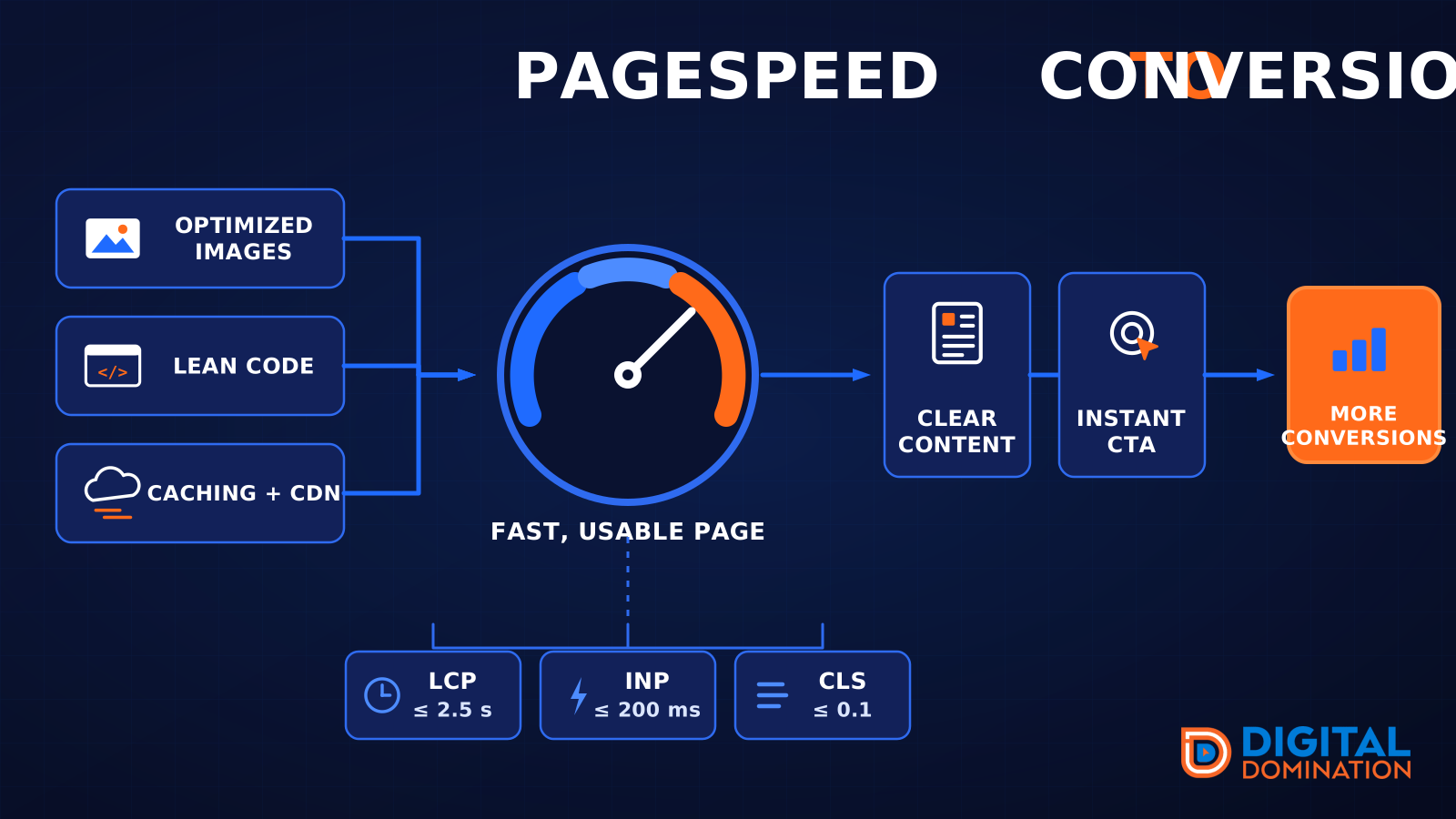
Injury sites are among the heaviest local sites on the web: an autoplay hero video of the attorney walking toward the camera, a settlement counter, an Ngage or Intaker chat widget, two call-tracking scripts and a Tag Manager container full of old pixels. On a phone in a hospital corridor it takes five seconds to become usable, and the phone number jumps when the review widget finally loads.
Google's good thresholds are LCP 2.5 seconds, INP 200 milliseconds and CLS 0.1, measured at the 75th percentile of real field data. We target a PageSpeed Insights performance score of 90 or higher and a 2/2 agentic-browsing check, because AI agents fetching your page give up on heavy scripts the same way an injured person does. The fixes with the biggest payoff on an injury site.
- ▸Replace the autoplay hero video with a preloaded WebP or AVIF still of the lead attorney, with the video available on click.
- ▸Load the chat widget and call-tracking swap script after first interaction, and strip pixels from campaigns that ended years ago.
- ▸Reserve fixed dimensions for the review widget, settlement counter and intake form so nothing shifts under the visitor's thumb.
- ▸Self-host and subset the brand fonts, lazy load the office map and case videos, and keep the phone and free case review buttons as plain HTML.
Contingency fee language that AI Overviews can quote
AI Overviews and LLM search answer the questions injured people ask before they call: do I pay anything up front, what percentage does the lawyer take, do I owe anything if we lose. A site that never states its fee model in plain sentences cannot be the source of that answer, so it gets built from a competitor or a directory. You need not publish a precise percentage if your state's rules make that unwise, but say what can be said honestly on the practice pages, the FAQ and the GBP services.
- ▸Free case review by phone, video, or at the hospital or the client's home.
- ▸No attorney fee unless there is a recovery, and how case costs (records, experts, filing fees) are handled if there is none.
- ▸Whether treatment can continue on a letter of protection or medical lien while the case is pending, connected in schema through the Offer on the Service node.
Content for the days between the crash and the signature
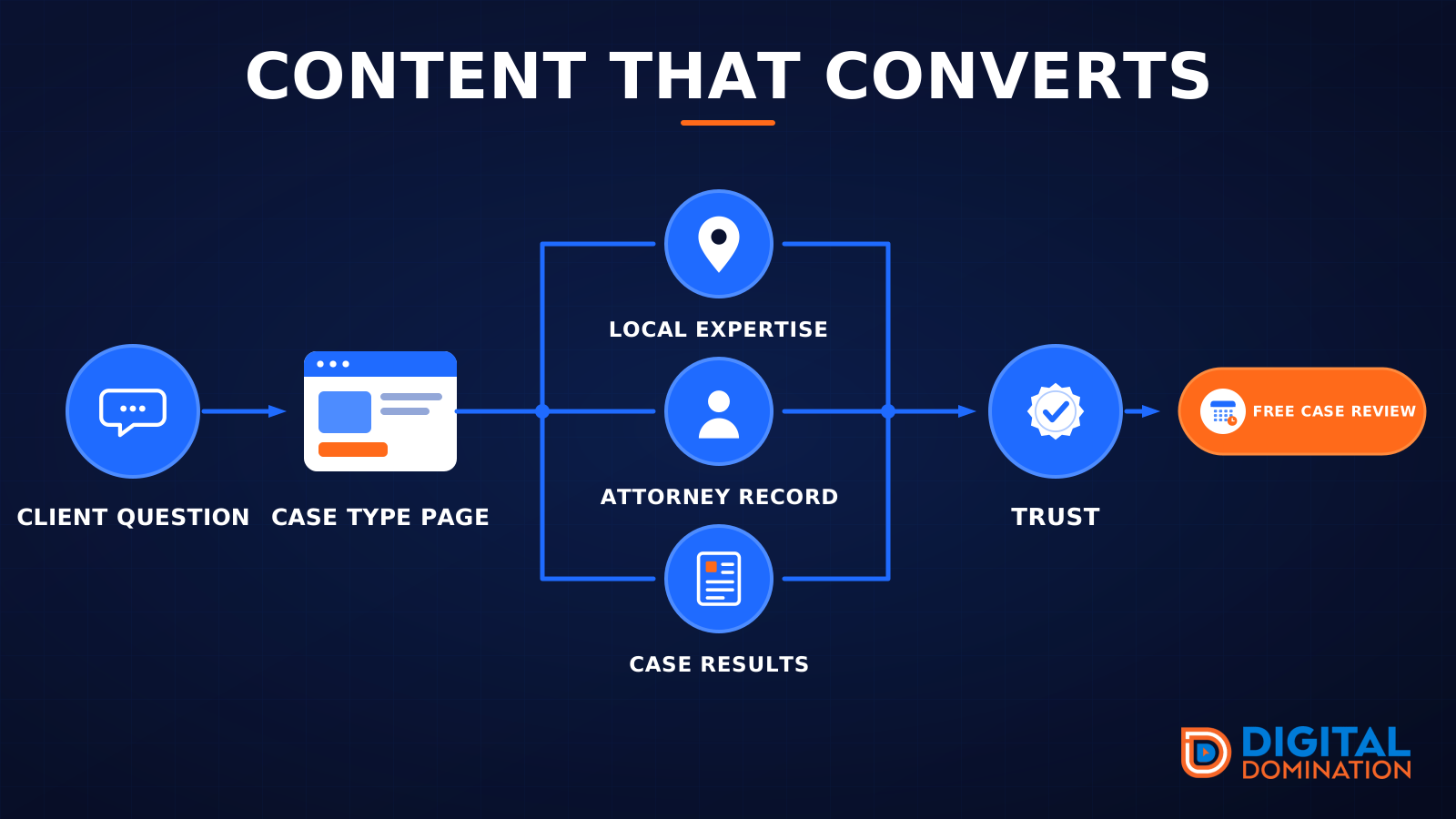
Injury clients move through a predictable set of questions, and a page that answers them in order beats a page that repeats the firm's slogan. Each practice page should walk the accident type from the client's side, with local law and venues, reviewed by a named attorney with a visible updated date. The questions a car accident, truck accident or slip and fall page should answer under scannable headings.
- ▸Should I give the adjuster a recorded statement, and what if I already did.
- ▸What is the statute of limitations for this claim in this state, and which exceptions apply (government defendants, minors, wrongful death).
- ▸What evidence to preserve now: photos, the crash report number, witness contacts, the vehicle before repair.
- ▸How comparative fault works here, what damages are recoverable, and how medical liens are handled at settlement.
- ▸How long a case like this takes, which attorney handles it, and what the free case review involves.
Search Console, GA4 and the intake CRM as one loop
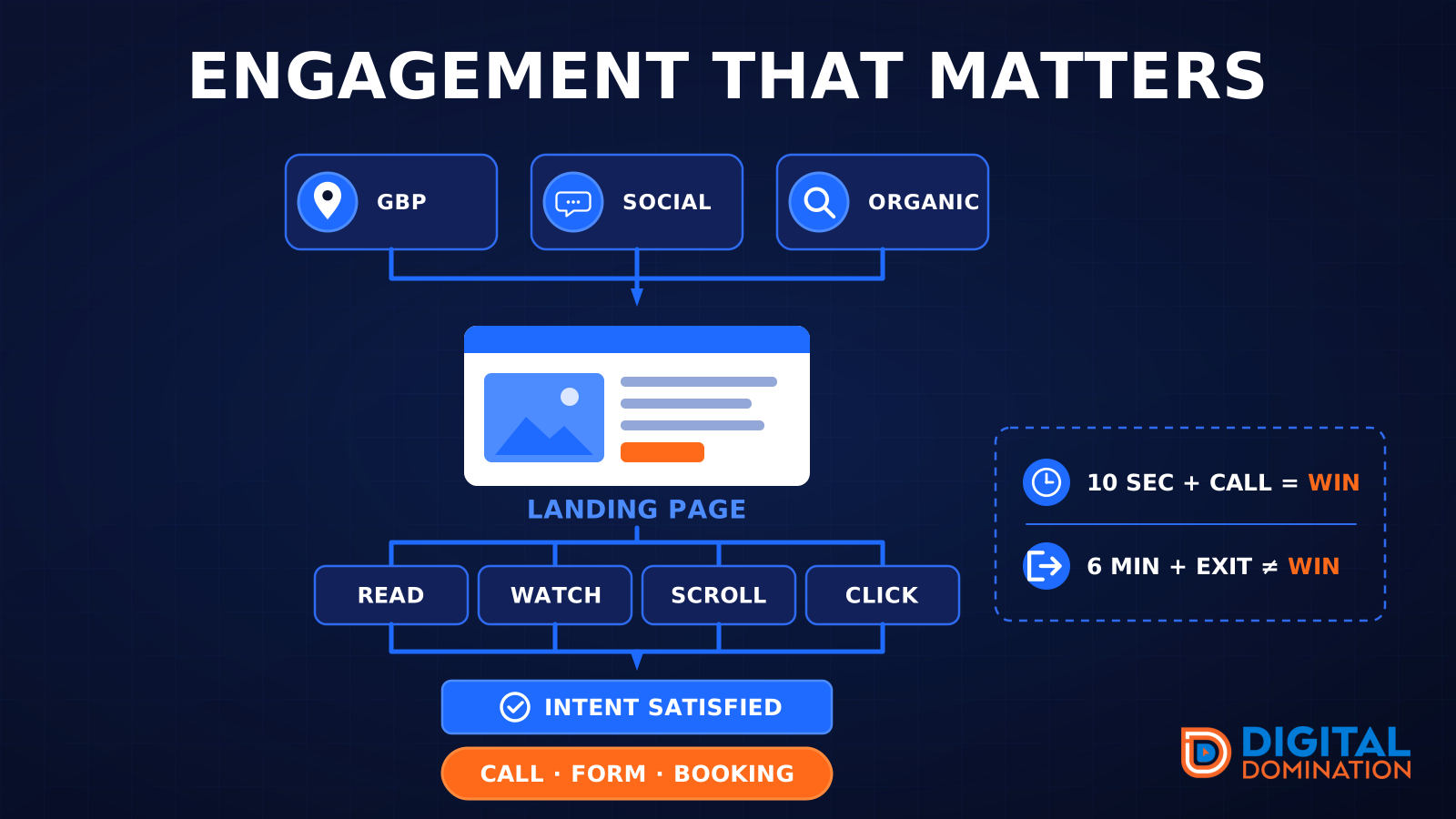
Installing Search Console and GA4 ranks nothing. Their value is turning the site into a system that improves monthly. Search Console shows which queries Google already associates with the firm and where impressions are high but clicks are low. GA4 shows what happened after the landing: click-to-call taps, form completions, engaged time. The intake CRM closes the loop by recording which leads became signed retainers. Read together, they say which lever to pull.
- ▸High impressions, low clicks for truck accident lawyer plus a city: rewrite the title, meta and opening proof, tighten the schema and the GBP link.
- ▸Clicks but few calls: check mobile speed, the phone button, the fee promise and the attorney proof above the fold.
- ▸Calls but few retainers: look at intake scripting, after-hours answer speed, and whether the page attracts case types the firm declines.
- ▸Every change annotated by date, then compared against impressions, calls, retainers and revenue before the next round.
Social clips, forums and mentions that corroborate the entity
Social publishing for an injury firm restates the same attorneys, case types and proof in front of more people. Short attorney-to-camera clips answering one question (what to do after a hit and run, why not to sign the first offer) work on YouTube, Instagram and TikTok, and Search Console now reports supported social and video platform properties, a sign of how far social content and search discovery have merged.
Off-site mentions do the corroboration. A post in a local riders' group saying Example Injury Law handled my crash in Reno and Maria always called back connects firm, attorney, case type, city and responsiveness, hyperlink or not. Axios reported in August 2026 that Reddit's share of visible ChatGPT Search citations fell roughly 86 percent, yet OpenAI keeps a Reddit data partnership, so fewer visible citations does not mean those conversations stopped counting. Diversify the footprint.
- ▸State bar, Avvo, Justia, FindLaw and Martindale-Hubbell listings with identical firm name, attorney names, addresses and phones.
- ▸AAJ and state trial lawyer association directories, plus law school alumni profiles.
- ▸Local news quotes on crash trends or notable verdicts, and sponsorships that fit the practice (helmet giveaways, safe driving programs) that earn real mentions rather than paid badges.
A 90-day plan built around intake, not just rankings
For an injury firm the roadmap protects the thing that pays for everything: the signed retainer. The first two weeks fix speed and intake before anything else is touched, and the last month is spent on data rather than more pages.
- ▸Days 1-14, baseline and stop the bleeding: run GeoGrid scans for the top three case types (169 points per scan), benchmark calls and retainers, fix the heaviest scripts and hero video immediately, verify after-hours intake answers, and audit every GBP field and directory for NAP mismatches.
- ▸Days 15-30, repair the entity: set the category and services, publish one page per office, rewrite above-the-fold proof with real credentials and the fee promise, complete every attorney bio with bar number and sameAs links, deploy the LegalService, Person, Service and Offer graph, and connect Search Console, GA4 and the CRM.
- ▸Days 31-60, expand relevance and prominence: publish client-journey pages for the case types you want most, write case results within the bar rules, launch the milestone review ask, film short attorney clips for GBP posts and social.
- ▸Days 61-90, optimize on data: pull high-impression low-click queries, high-traffic low-call pages and low-retainer case types, fix the weakest proof and CTAs, recheck Core Web Vitals, re-run the GeoGrid scan, repeat what worked.
One firm, one entity, stronger every month
The mother in the waiting room will never see your schema or your Search Console report. She will see a Map Pack, a star rating, a page that loads or does not, an attorney's face, a fee promise and a phone number. Everything here exists to make that ten-second impression match what Google and the AI systems have already concluded about the firm. A personal injury firm is one entity, and its attorneys, offices, case types, credentials, fee model and reputation should read identically on the Google Business Profile, the website, the schema, the review platforms, the bar directories and the community mentions.
At Digital Domination we build and run this system for injury firms under one promise: top 3 in the Google Map Pack in 12 weeks or you do not pay. If your firm is green at the office and red three miles out where the crashes happen, the first step is to see the whole market. Run the free GeoGrid scan and find out where the next injured client is searching without seeing you.
Keep reading
Related guides
Put it into action
Frequently Asked Questions
What should a personal injury firm choose as its primary Google Business Profile category?
Use Personal injury attorney rather than Law firm or Lawyer, because it matches the intent behind car accident, motorcycle accident and slip and fall searches. Add Trial attorney or Legal services as secondaries only if they describe the practice. Then list the exact case types you sign as services so the profile and the website share one vocabulary.
Can an injury firm publish settlement and verdict amounts on its website?
In most states yes, subject to bar advertising rules that commonly require a disclaimer that results vary and past results do not guarantee a similar outcome. Present each result as a case type, injury and venue rather than a bare number, and keep the same claims consistent across the site, the GBP and directory profiles. Check your own state bar's rules first.
How can a firm earn steady reviews when cases take a year or more to settle?
Ask at the moments of relief during the case rather than only at closing: when property damage is resolved, when medical bills are deferred, when the demand goes out and when the offer improves. Have the case manager the client already speaks with make the ask. That turns a once-a-year burst into steady review velocity.
Does LegalService schema directly improve Map Pack rankings?
Schema is not a guaranteed ranking boost on its own. It helps Google and AI systems understand the firm, its attorneys, offices, case types and fee model as one connected entity, and it makes pages eligible for supported result features. Its value is highest when it describes accurate, visible content and shares permanent @id values across the site.
Why is PageSpeed such a big deal for injury firm websites specifically?
Injury clients search from phones, often in a hospital or at the roadside, on weak connections, in pain and under pressure from an adjuster. Injury sites also tend to carry autoplay video, chat widgets, call-tracking scripts and heavy tag containers. A page that takes five seconds to become usable loses the call before the firm's credentials are ever seen.
Should a firm publish its contingency fee percentage?
Publish whatever can be stated honestly and within your state's rules. At minimum, say that the case review is free, that there is no attorney fee unless there is a recovery, and how case costs are handled if there is none. Clear fee language on the practice pages and in an Offer node lets AI Overviews quote the firm instead of a directory.
Do social clips and Reddit mentions help an injury firm rank locally?
Google does not confirm that likes or followers move Map Pack rankings. Social clips and forum mentions work indirectly: they produce branded searches, referral visits, reviews and contextual mentions that connect the firm, its attorneys, its case types and its city. Reddit's visible share of ChatGPT citations dropped sharply in August 2026, so treat it as one part of a diversified footprint.
Ready to dominate your map?
Top 3 in the Google Map Pack in 12 weeks, or you don't pay.