
Pest control local SEO: how GBP entity signals, schema and PageSpeed win the panic call and the plan behind it
The scratching in the ceiling books the initial service. The recurring plan that follows pays for years. Here is how the profile, the structured data and the page decide which pest company gets both.
1:12 in the morning, something dragging insulation across the ceiling
It is a Tuesday in October and something above the master bedroom is dragging insulation toward the closet, stopping, then starting again. The homeowner has listened for three nights and has stopped pretending it is the water heater. She picks up her phone in the dark and types "rats in attic near me".
The Map Pack gives her three companies. She taps the one showing 4.9 stars, a Pest control service category, a line saying it answers after hours, and a photo of a technician on a roof with a headlamp. The page opens in about a second: a state applicator license number in the header, free inspection, rodent exclusion with a written warranty, and a review from someone two streets over naming roof rats and the technician who sealed the roofline. She books the first morning slot.
The company that would have done the better job, whose owner has sealed rooflines in that subdivision for eighteen years, sat fifth. Its profile said Pest control service and nothing else: no services listed, no recent photos, hours ending at 5 pm, and a link to a homepage from a template hundreds of other pest companies share. The site opened with a slider of stock insect photos and took seven seconds to show a phone number.
Pest control lives on that moment twice over. The panic search books the initial service, and the initial service is the front door to a recurring plan that pays for years. Google and the AI systems answering "how do I get rid of roof rats" sort companies on the evidence she used: what kind of company you are, whether you are licensed, which pests you treat, what customers say, and whether the page works on a phone in a dark hallway. At Digital Domination we build that into three layers: the Google Business Profile entity signals, the schema connecting them and the PageSpeed that lets anyone use the result.
The short version, written on a route sheet
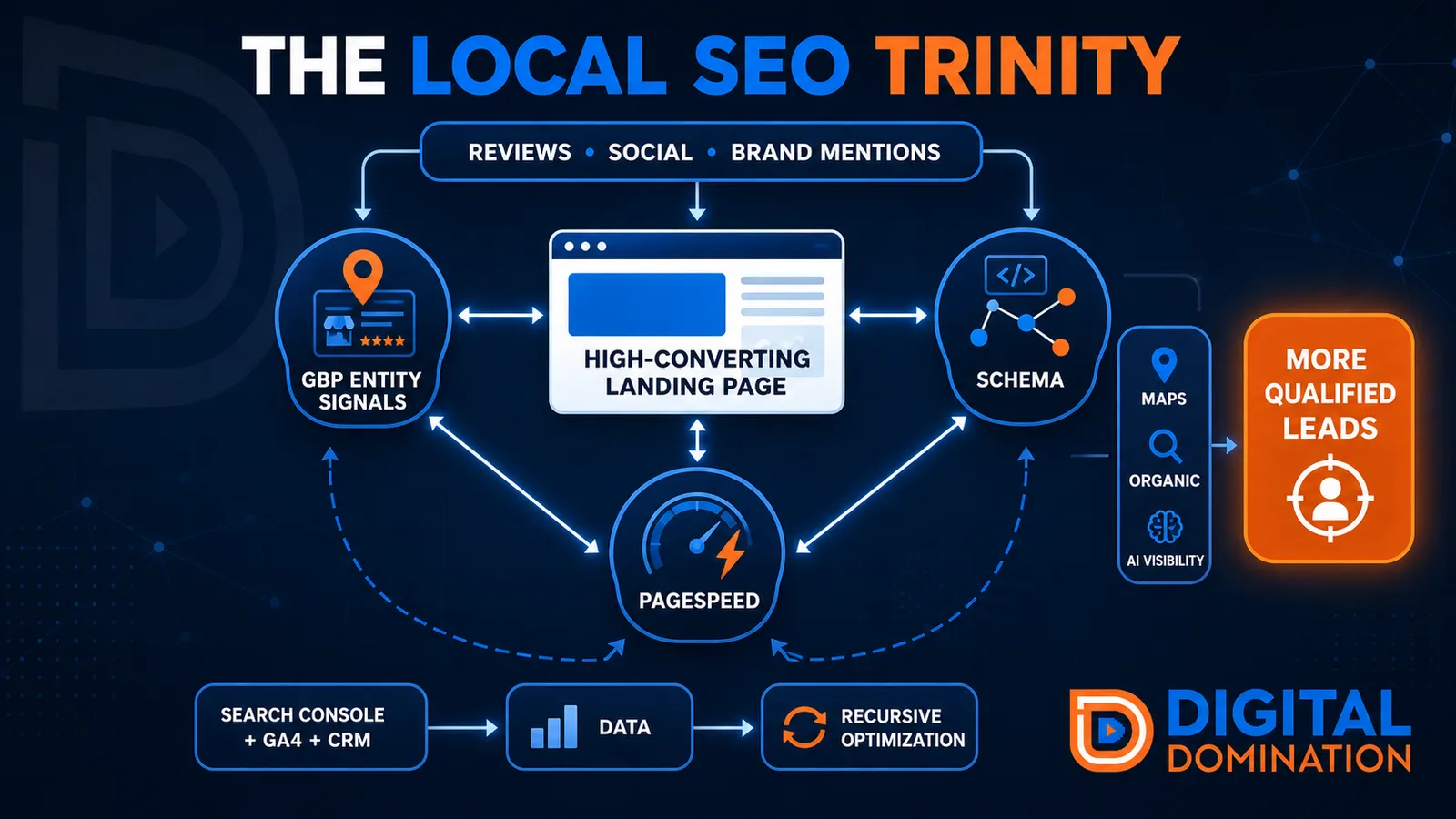
Google describes local ranking as relevance, distance and prominence. Distance is set by where the customer stands when she hears the scratching, so the work that is genuinely yours is relevance, prominence and conversion, repeated across every route you run. Each layer answers one question the customer, or the machine, is already asking:
- ▸Google Business Profile: are you a general pest company, a termite specialist or a wildlife operator, which pests do you treat, and which streets do your trucks reach.
- ▸Landing page: why she should let a stranger with a sprayer walk through her kids' bedrooms tomorrow morning.
- ▸Schema: how the company, the applicator license, the technicians, each program, the plan price and the service area connect.
- ▸PageSpeed: whether the phone number and the booking button are usable before she taps the next listing.
- ▸Reviews and authority: whether the neighborhood says the ants actually stopped coming back.
- ▸Search Console, GA4 and the routing software: which searches became initial services, and which of those became recurring plans.
Teaching Google which pests you actually treat
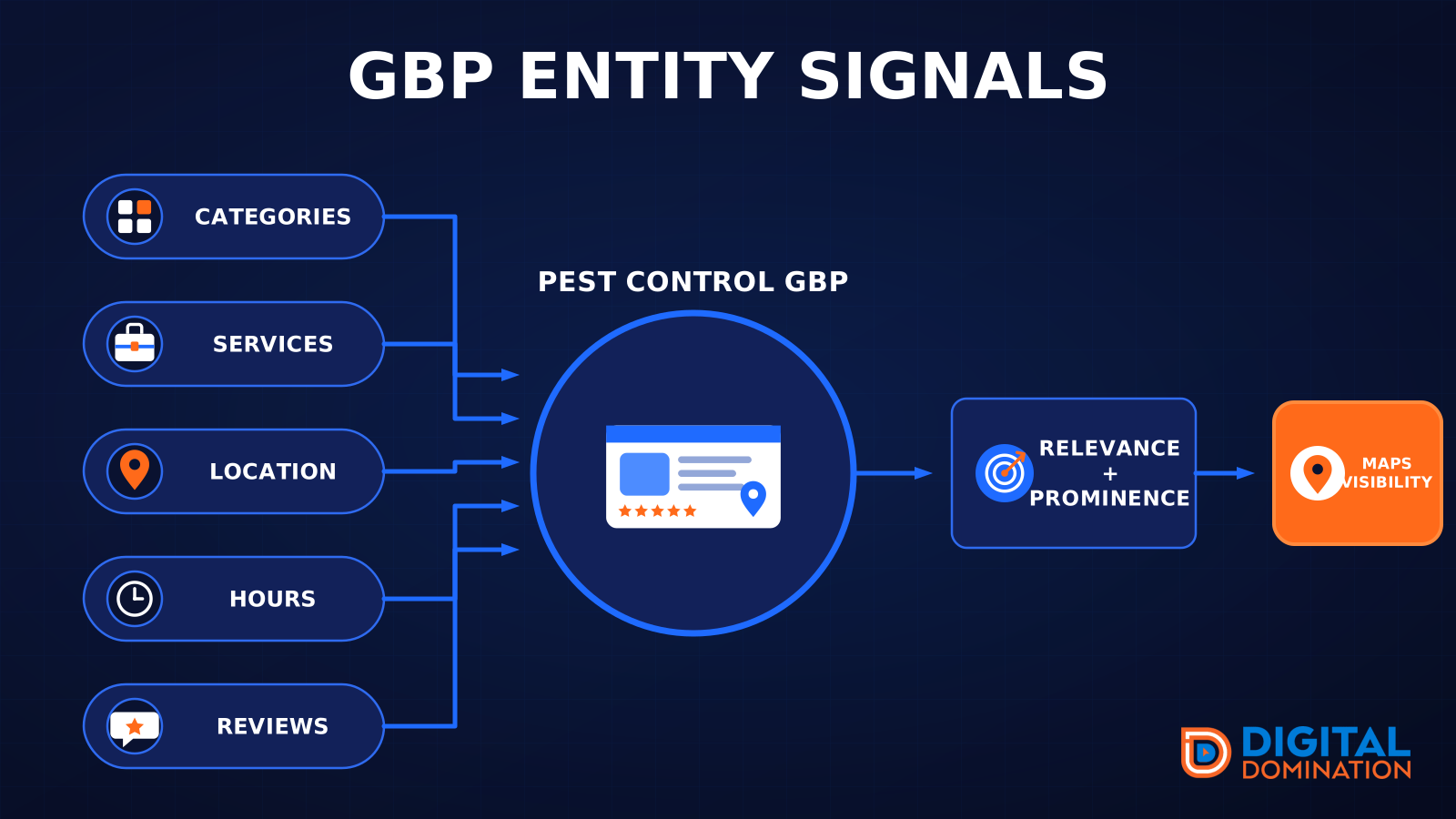
Google's category list for this trade is short, which makes the primary easy and the secondaries important. Pest control service is the primary for nearly every company. Add secondaries only for divisions you license and staff yourself: Animal control service for wildlife trapping and exclusion, Insulation contractor for attic cleanout after a rodent job, Lawn care service for mosquito programs. A category for work you sub out teaches Google to send calls your technicians cannot close.
The Services section is where a pest company separates itself, because a category cannot tell Google whether you handle German cockroaches, bark scorpions or drywood termites. Fill it with the words customers type: general pest control on a quarterly or bi-monthly schedule, ant control, German cockroach cleanout, rodent control and exclusion, attic restoration, termite inspection, liquid termite treatment, termite baiting, wood destroying organism reports for escrow, bed bug heat treatment, mosquito reduction, wasp nest removal, live bee removal, scorpion control, flea and tick, bird exclusion, and commercial pest management. Give each a plain description, a starting price where you have one, and a page using the same vocabulary. The profile should also carry:
- ▸Photos your technicians take on route: an exclusion seal on a roofline, a bait station at a foundation, a heat treatment setup, the crawl space nobody wants to enter. Stock insect art says nothing about you.
- ▸Hours that match how you really answer, including whether somebody picks up on a Saturday when a yellowjacket nest goes up over a back door.
- ▸A service area drawn to the routes you run by day and zip code, not a hundred-mile circle you would drive once for a termite job.
- ▸A booking link and a UTM-tagged website link, so scheduling and profile calls show separately in GA4 instead of collapsing into direct traffic.
- ▸One profile and one landing page per real branch, each with its local number, its own technicians and the communities it services, never all pointed at the homepage.
The license, the label and the proof a parent checks before you spray
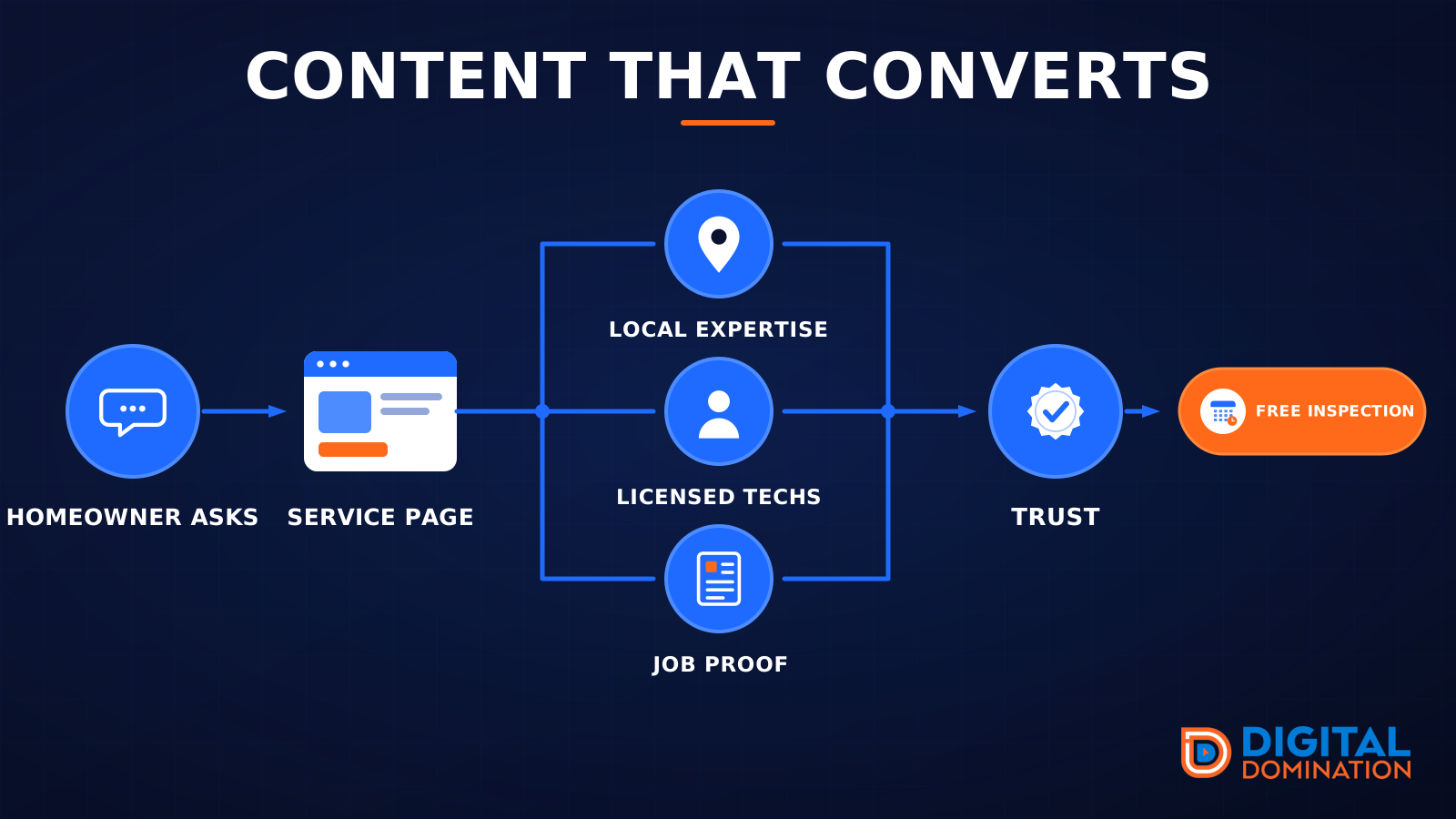
In pest control the customer is deciding whether to allow a chemical into the room where her toddler crawls. Half the questions on the first call are not about pests: what are you applying, how long do we stay out, is it safe for the dog, what if the ants are back in three weeks. The first screen has to answer those before the phone rings.
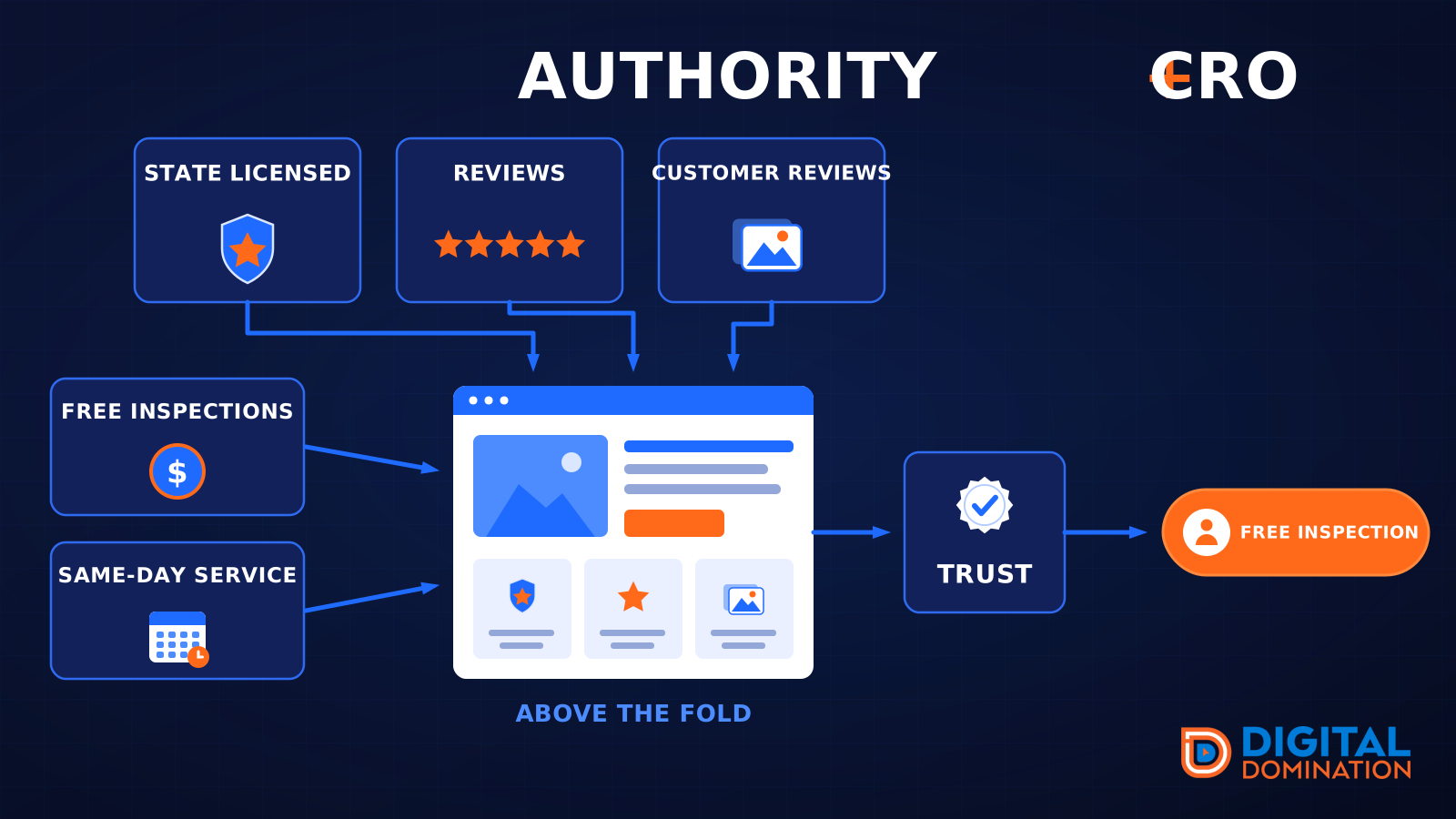
That screen should carry the service and city in the headline, the live rating with its count, the state license number, the re-service promise and one button to book. An illustrative authority strip (placeholder figures, an example of the shape rather than real results) might read: Licensed and Insured, Applicator License No. 000000 | 4.9 Stars From 400+ Reviews | QualityPro Accredited | Free Re-Service Between Visits. Underneath it, every claim needs something a customer can verify:
- ▸The state license number linked to the public lookup, since this trade is regulated by a department of agriculture or structural pest control board (Branch 2 and Branch 3 in California, a Structural Pest Control Service license in Texas) and the record is searchable.
- ▸Certified applicators named, with their categories such as general household pest and wood destroying organisms, and how long each has run a route.
- ▸Accreditations that take work to earn: QualityPro or GreenPro through the National Pest Management Association, your state association, and certification through the National Wildlife Control Operators Association.
- ▸Manufacturer credentials a customer can check on a locator: Sentricon Certified Specialist, Termidor Certified Professional, licensed structural fumigator, or a certified bed bug detection dog and handler.
- ▸The written terms of the guarantee: free re-services, how fast you return, whether the termite warranty is a retreat or repair bond, and contract versus cancel anytime.
- ▸Insurance stated plainly, with product labels and safety data sheets on request, because the parent asking about the dog wants that sentence.
Review velocity is easier here than in any trade, and almost nobody collects it
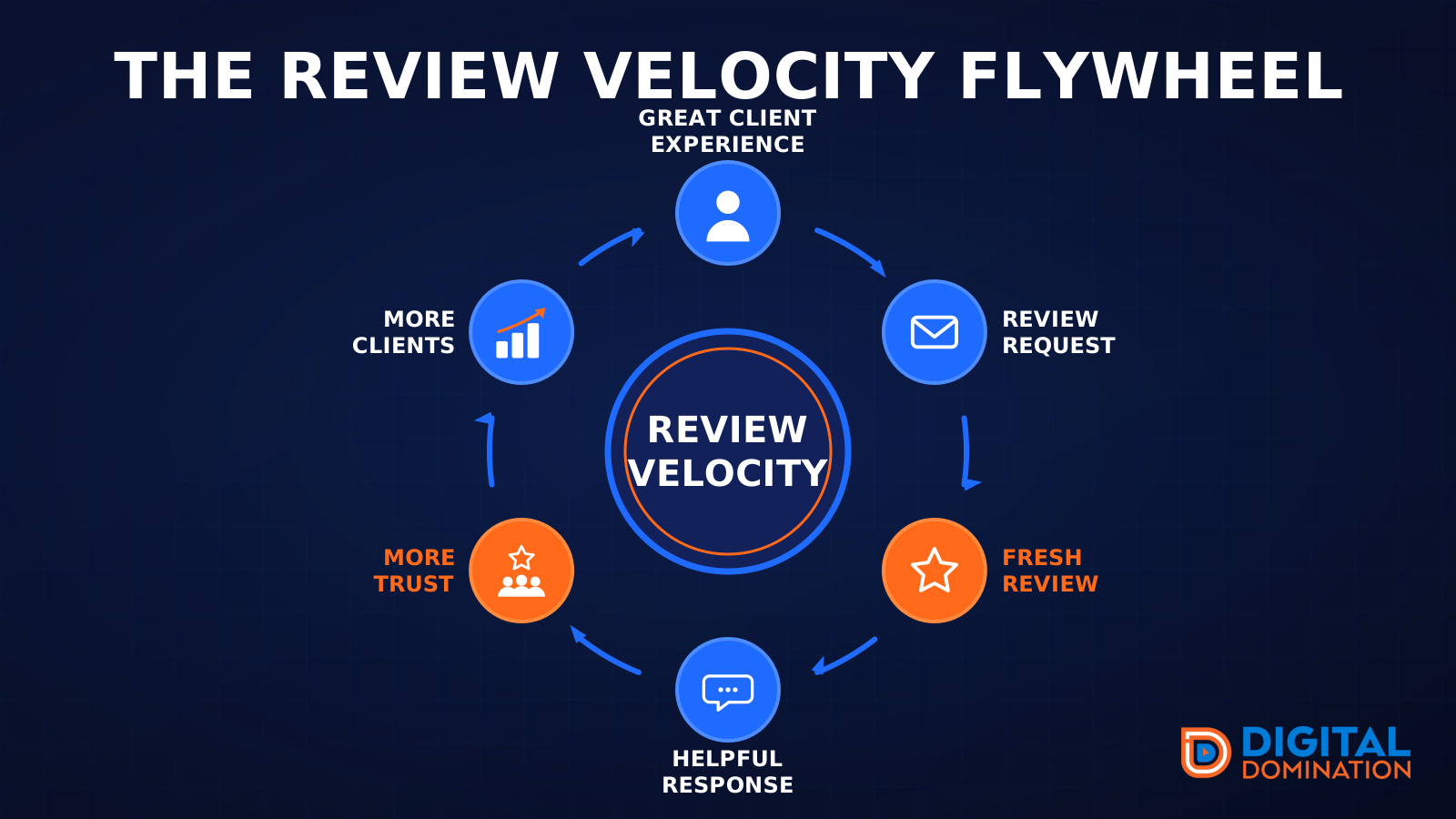
No home service has a shorter path to steady reviews than pest control, and few waste it as completely. One technician makes a dozen stops a day and finishes each face to face at the door. Yet the reviews that arrive cluster around emergencies, so the profile looks busy in July and dead in February, which reads as a company that stopped working.
Build the ask into the route instead of into a monthly marketing task. The technician asks at the door after the walk-through, the routing software texts the link when the stop is closed out, and the office asks again after the first service on a new plan, when a customer decides the plan was worth keeping. Reply to every review naming the pest and the neighborhood. The reviews that do the most work read like a service report:
- ▸The pest named, because "the German roaches were gone after the second visit" ties your company to the search someone else is about to type.
- ▸The technician named, which corroborates the Person nodes in your schema and is what keeps a customer from cancelling in month seven.
- ▸The neighborhood or city, matching the route you run and how the next customer searches.
- ▸The outcome over time on a recurring plan: what the follow-up visit found and whether the ants came back after the rain.
- ▸An owner reply that answers the hard ones directly, including a missed window or a re-service that took two visits, without a template.
Schema for a pest company: the PestControl node and everything hanging off it
Schema.org has a type for this trade, which not every trade gets. PestControl sits under HomeAndConstructionBusiness and LocalBusiness, so it inherits address, telephone, hours and geography while telling a crawler exactly what kind of company you are. Most pest sites we audit run no structured data or the generic LocalBusiness block from an industry template, which models none of the relationships that decide this market.
Give every node a permanent @id, such as yourdomain.com/#business or yourdomain.com/rodent-control/#service, so every page references the same entity instead of a disconnected copy. The architecture that holds together:
- ▸The company: PestControl with name, telephone, hours including after-hours availability, priceRange and areaServed, at a permanent @id.
- ▸The license: hasCredential pointing at an EducationalOccupationalCredential, the number as a PropertyValue under identifier, and recognizedBy naming the state department of agriculture or pest control board.
- ▸People: Person nodes for the owner, the branch manager and the certified applicators, with worksFor pointing back to the business @id, a jobTitle and knowsAbout for termites, bed bugs or wildlife exclusion.
- ▸Each program: a Service node for general pest control, termite treatment, rodent exclusion, bed bug heat treatment, mosquito reduction and commercial pest management, with serviceType and a provider pointing at the business.
- ▸Pricing: an Offer on each Service, with a UnitPriceSpecification carrying the plan price and its billing period and a separate PriceSpecification for the initial service, so an AI answer can quote both numbers.
- ▸Territory: areaServed on the business and on every Service, as City or AdministrativeArea entries matching the profile service area rather than a mileage radius.
- ▸Corroboration: sameAs to the state license record, the Google Business Profile, the NPMA or QualityPro listing, the BBB, manufacturer specialist pages, Nextdoor and YouTube.
- ▸Support: WebSite, WebPage and BreadcrumbList on service and city pages, FAQPage on the safety and pricing answers, ImageObject for real job photos, and Review with AggregateRating drawn only from reviews shown on that page.
PageSpeed for a customer standing in a dark hallway on one bar of signal
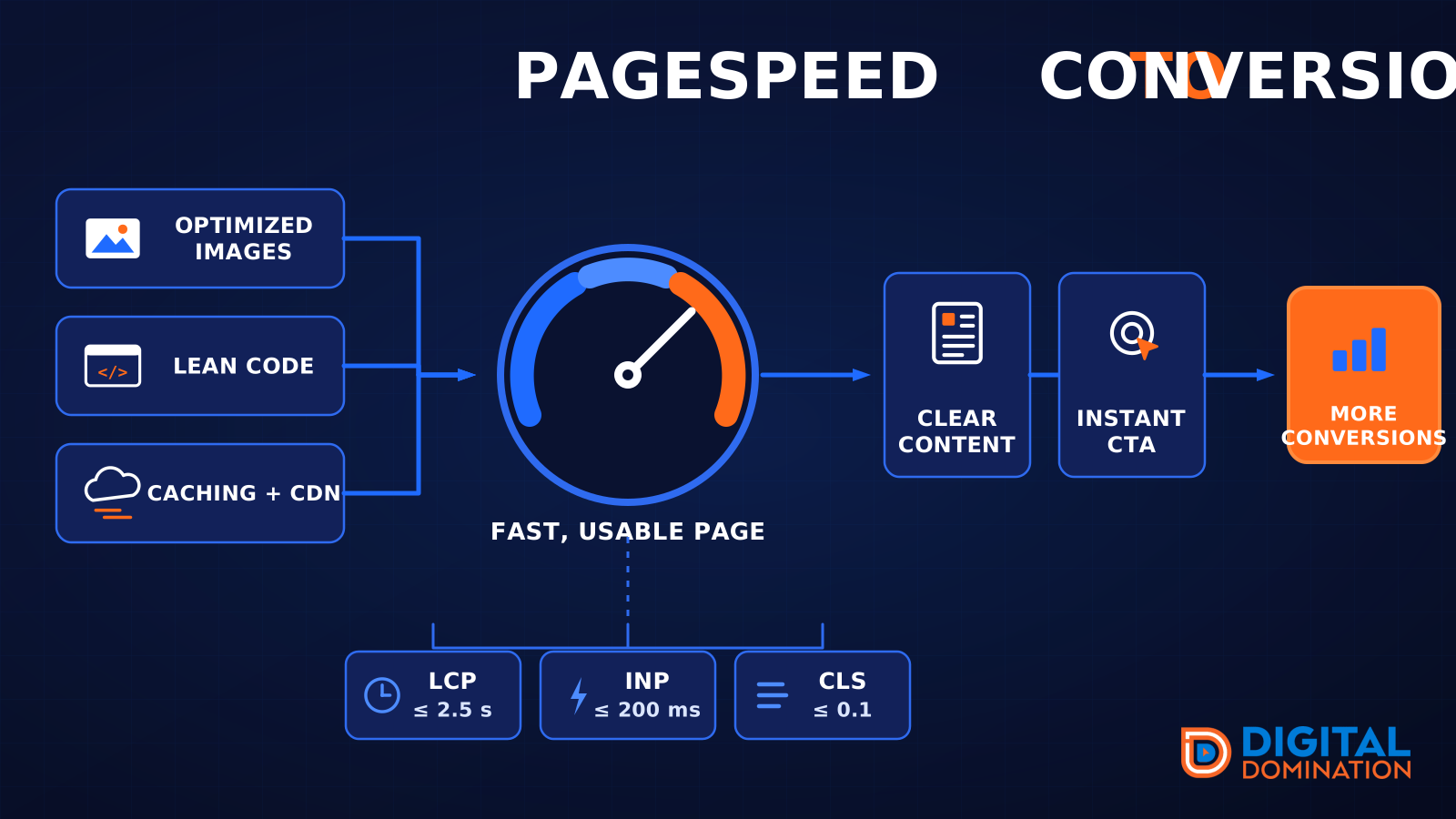
The pest customer is usually on a phone, at night, standing in a garage or hallway on whatever signal reaches the back of the house. Pest control websites are slow in a specific way, because so many come from the same few industry template vendors: a rotating slider of stock insects, an autoplaying video, a pest library loading sixty full-resolution bug photos, a quote calculator iframe, a chat bot and a tag manager nobody has opened in two years.
Google's good thresholds for Core Web Vitals are a Largest Contentful Paint of 2.5 seconds or less, an Interaction to Next Paint of 200 milliseconds or less and a Cumulative Layout Shift of 0.1 or less, measured at the 75th percentile of real field data. At Digital Domination we target a PageSpeed Insights performance score of 90 or higher and a 2/2 pass on the agentic browsing check, because AI agents now open pest company pages on a customer's behalf. The fixes that pay off fastest here:
- ▸Replace the slider with one compressed photo of your own technician at a real house, preloaded and never lazy loaded, with the headline, license number and call button as text on top.
- ▸Move the pest library images off the homepage, size every photo to the width it displays at, convert to WebP or AVIF, and lazy load everything below the first screen.
- ▸Make the scheduler and the map click-to-load buttons instead of iframes loading on every page.
- ▸Delay chat, heatmap and pixel scripts until first interaction, and delete every tag that does not feed GA4, call tracking or your ad platforms.
- ▸Reserve width and height for the review widget and the sticky call bar so nothing shifts under a thumb reaching for the phone number at one in the morning.
Plan pricing that an AI answer can quote without calling you
Ask an assistant what quarterly pest control costs and it answers with your numbers or somebody else's. Pest pricing is unusually easy to publish because it is already structured: an initial service plus a recurring plan, quoted by home size and pest pressure. Most pest sites still say call for a free quote, which reads to a machine as no information and to a homeowner comparing three companies at midnight as a reason to skip you.
You are not printing a rate card for competitors. You are qualifying customers before your office spends fifteen minutes on someone who was never going to buy. Put the numbers in crawlable text on the program pages, in the FAQ and in the profile services, then mirror them in the Offer nodes:
- ▸The initial service price and the recurring plan price, with the frequency named (monthly, bi-monthly or quarterly) and what moves the number: square footage, lot size and pest pressure.
- ▸One-time service pricing where you offer it, with the honest note about which pests (German cockroaches, bed bugs, rodents) rarely finish in one visit.
- ▸Termite pricing the way it works: the inspection fee or free inspection, treatment quoted by linear foot or by system, and the annual renewal on a retreat or repair bond.
- ▸Bed bug pricing by treatment type and number of rooms, since heat and conventional treatments are different jobs at different numbers.
- ▸The wood destroying organism inspection fee and turnaround, because agents and escrow officers search that separately and choose on speed.
Content that starts with a photo of a bug, not a service name
The pest customer begins with a photograph, not a service. She has something on the counter or bites on her arm and wants to know what it is before she wants to know who you are. That first question is the cheapest traffic in the trade, and most local companies hand it to national brands by never publishing an identification page. Answer it with your own photos of the species that live in your county, and the reader is already on your site when she asks who should treat it.
Write the rest of the sequence in direct sentences under descriptive headings, which is how a scanning homeowner and an AI system both pull an answer out of a page. The pages that earn their place:
- ▸Identification pages with local photos: a bark scorpion under a black light, odorous house ants versus carpenter ants, drywood versus subterranean termite droppings, and the bites people photograph at 2 am.
- ▸Cost pages by pest and by program, using the pricing language you publish on the profile.
- ▸Safety pages: what you apply, re-entry times, pets, children, bees and pollinators, and how integrated pest management reduces what goes inside the house at all.
- ▸Preparation pages customers need before the appointment: the bed bug prep sheet, the roach cleanout prep, what to do with aquariums and pet dishes.
- ▸Seasonal pages tied to your market: the first warm rain that brings termite swarms, summer mosquito and wasp pressure, the first cold night when rodents move indoors.
- ▸City and route pages naming the neighborhoods, the housing stock and the pests that come with it, backed by reviews from those streets rather than a template with the city swapped in.
The accounts that buy on a schedule: property managers, restaurants and agents
Two audiences never appear in a homeowner-only strategy, and both buy on a schedule instead of on panic. Commercial accounts (restaurants, food processing, apartment communities, hotels, schools) sign annual agreements and choose on documentation as much as price. Agents, escrow officers and property managers refer repeatedly whenever a deal needs a wood destroying organism report before a closing date. Neither is served by one line reading commercial pest control on the homepage:
- ▸Restaurant and food service pages naming what a health inspector looks for, your logbook practice, and how after-hours service keeps a kitchen open.
- ▸Multifamily and property management pages covering unit turns, bed bug protocols across shared walls, resident notification and the reporting a regional manager needs.
- ▸A real estate page written for agents: the inspection fee, how fast the report comes back, and how a re-inspection works when a deal is on a clock.
- ▸A referral loop that asks the agents and managers already using you to leave reviews, since those mention escrow deadlines and turn schedules no homeowner review will contain.
Search Console, GA4 and the routing software: which searches became recurring plans
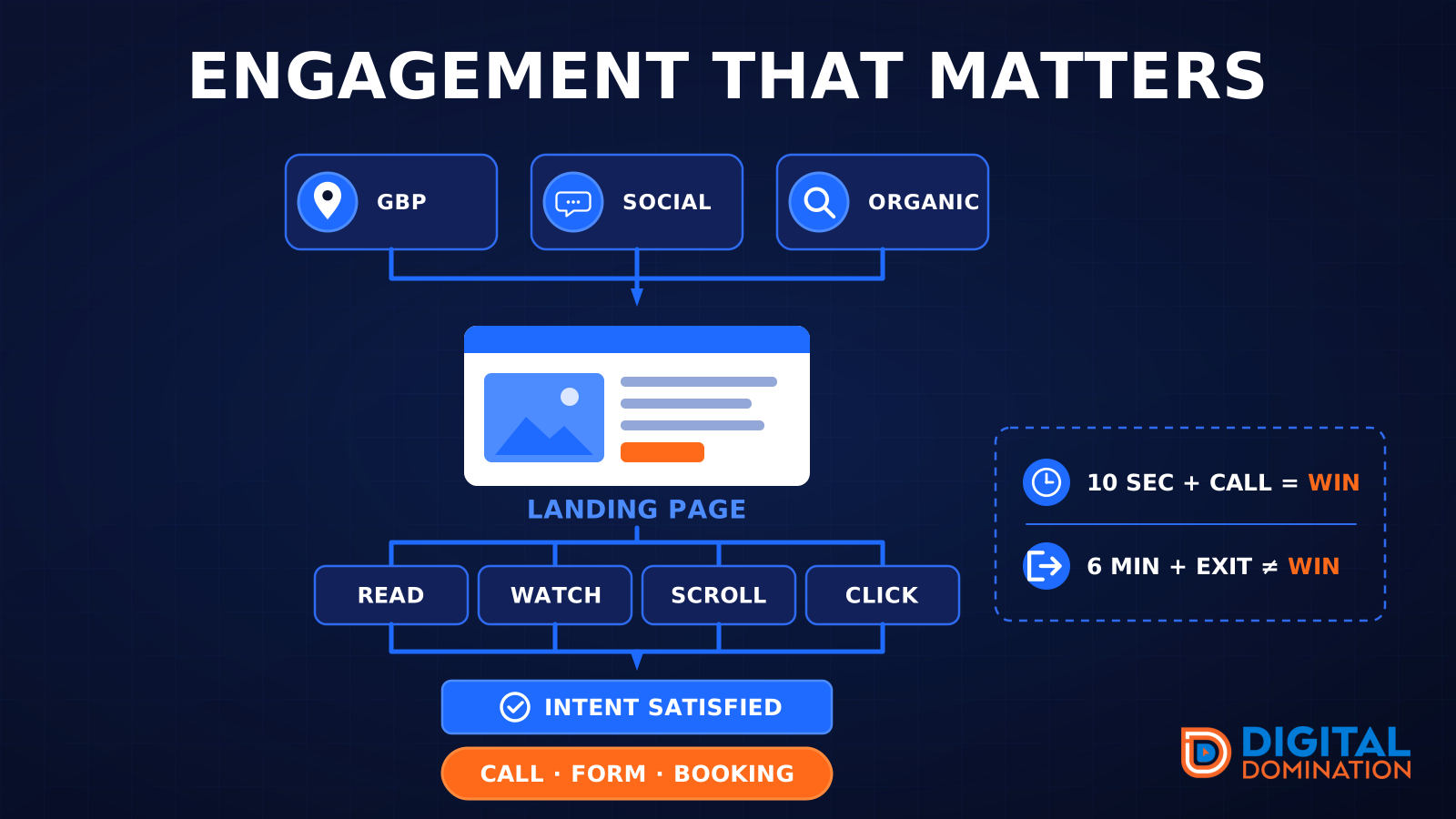
Pest control is a subscription business driving a service truck, so a loop that counts phone calls will mislead you. The number that matters is not how many people called about wasps in July, it is how many are still on a quarterly plan next April. Search Console shows which queries and pages earn impressions and clicks by pest and city. GA4 shows which landing pages produce calls and bookings. Your routing software (PestPac, FieldRoutes, Briostack, GorillaDesk) shows which became initial services, which converted to plans and which cancelled after two visits. Run the loop monthly, one group of changes at a time, annotated on the day it shipped:
- ▸Impressions but few clicks for a pest in a city: rewrite the title, meta description and first screen around the rating, the license and the plan price, then confirm the profile points at that page rather than the homepage.
- ▸Clicks but no bookings: test the page on a phone on cellular, move the booking button above the fold, and cut the form to name, address and pest.
- ▸Bookings that never convert to plans: that is an office and pricing conversation, not an SEO one, and the routing data shows it long before the rankings do.
- ▸Queries you have no page for yet, such as a pest arriving early this season, which is the cheapest page you will write all quarter.
Nextdoor, the neighborhood group and the bug photo posted at midnight
Pest recommendations happen in neighborhood groups before they happen on Google, usually attached to a photo of something on a kitchen counter with a caption asking what it is and who to call. A reply saying Example Pest handled our roof rats in Silverado Ranch, Marcus sealed the roofline and they never came back ties a company, a technician, a pest, a neighborhood and an outcome together in one sentence with no link, and both search engines and AI systems read that context.
Google now reports supported social and video platform properties in Search Console, a sign of how far social content and search discovery have converged. Visible AI citations move quickly: Axios reported in August 2026 that Reddit's share of visible ChatGPT Search citations fell roughly 86 percent, even though OpenAI holds a Reddit data partnership, so no single platform deserves the whole bet. What is worth the time:
- ▸Short technician videos on YouTube and the profile: a rodent entry point on a roofline, a bait station check, a termite mud tube on a block wall, a heat treatment coming up to temperature.
- ▸Answering identification posts in local Facebook groups and on Nextdoor as a licensed operator under a real name, with the identification first and the pitch never.
- ▸Seasonal profile posts matching the pressure outside, each pointing at the right page: swarm season, monsoon scorpions, the first cold night.
- ▸One consistent name, phone number and license across the BBB, the NPMA and QualityPro listings, Angi, Yelp and every manufacturer locator.
A 90-day roadmap that finishes before swarm season starts
Time this so the entity is complete before the phones get loud: in most markets that means January or February, ahead of the first warm rain that brings the termite swarms and the ant calls, or late summer if rodents are your heaviest season. The four phases:
- ▸Days 1-14, baseline: GeoGrid scans on your highest-value pests, a field-by-field profile audit, name, phone, address and license matched to the state record and every directory, Core Web Vitals on the homepage and two city pages, and GA4 events wired into the routing software.
- ▸Days 15-30, foundation: correct categories and services, publish the city and program pages the profile points to, rebuild the first screen around license, rating, guarantee and plan price, ship the PestControl schema graph, and fix the slider, the pest library images and the tag manager.
- ▸Days 31-60, relevance and authority: publish the identification, safety, preparation and seasonal pages, turn on the at-the-door and post-service review asks, complete the NPMA, QualityPro, BBB and manufacturer profiles, and build the commercial and real estate pages.
- ▸Days 61-90, the loop: pull high-impression low-click queries by pest and city, find pages with traffic and no bookings, compare initial services to plan conversions, re-test speed and the agentic check, and re-run the GeoGrid before the season peaks.
One pest control entity, from the first search to the fifth year on the route
None of this is a profile project or a website project. It is one licensed pest control company described the same way everywhere a customer or a machine might look: the state license record, the profile, the landing page, the structured data, the review platforms, the industry directories and the neighborhood thread where somebody posts a photo of a bug at midnight. When the license number, the technicians' names, the programs, the plan prices and the routes all agree, Google can rank you with confidence, an AI answer can name you, and the woman lying awake listening to the ceiling books you without a second search.
At Digital Domination that is the system we install for pest companies, and the commitment behind it is plain: top 3 in the Google Map Pack in 12 weeks or you do not pay. Most pest companies rank well within a mile of the shop and disappear three subdivisions over, where the newest construction and the thinnest routes are. The free GeoGrid scan checks 169 points across your market and shows which streets are calling somebody else. Start there, at digitaldomination.ai/scan/, before another season goes by.
Keep reading
Related guides
- ▸Google Maps SEO vs doing local SEO yourself
- ▸Google Business Profile post view counts are back
- ▸Google review management for HVAC companies
Put it into action
Frequently Asked Questions
Which Google Business Profile categories should a pest control company use?
Pest control service is the primary for nearly every company in this trade. Add secondaries only for divisions you license and staff yourself, such as Animal control service for wildlife exclusion, Insulation contractor for attic restoration, or Lawn care service for mosquito programs. Categories covering work you sub out blur what Google thinks you are and bring calls your technicians cannot close.
Should a pest control company publish prices when every home is different?
Yes, in the structure you already quote on the phone: an initial service price and a recurring plan price, with the frequency named and the factors that move it. Add termite inspection and treatment pricing, bed bug pricing by treatment type, and the wood destroying organism report fee. AI answers and comparison shoppers quote whoever published a number, and publishing it filters out callers who were never going to buy.
How does a pest control company build steady review velocity?
Attach the ask to the route rather than to a monthly marketing task. The technician asks at the door after the walk-through, the routing software texts the link when the stop is closed out, and the office asks again after the first service on a new plan. That rhythm keeps reviews arriving in February as well as July, with the technician names, pests and neighborhoods that make each one useful.
Do we need a separate page for every pest, or is one pest control page enough?
Build a page for every pest you price and treat differently. Rodents, termites, bed bugs, cockroaches and mosquitoes are different searches with different urgency, budgets and questions, and one combined page competes weakly for all of them. Each needs its own Service node, pricing language and profile service entry.
How does a local company compete with the national pest brands in the Map Pack?
The nationals usually win the paid results and the broad informational pages, but the Map Pack is decided on relevance, distance and prominence at neighborhood level, where their local profiles are often thinner than yours. A corporate profile with stock photos and no service detail loses to a local one with named technicians, route-level service areas, per-pest services and reviews that mention the subdivision.
Does PestControl schema improve rankings by itself?
No. Schema helps Google and AI systems understand that the company, its license, its technicians, its programs, its plan pricing and its service area are one connected entity, and it makes pages eligible for supported search features. It works only when it describes facts a customer can verify on the page, so the markup follows strong visible content rather than substituting for it.
How fast does a pest control website need to be?
Aim for Google's good thresholds in field data: LCP at 2.5 seconds or less, INP at 200 milliseconds or less and CLS at 0.1 or less at the 75th percentile, plus a mobile PageSpeed Insights score of 90 or higher. On most pest sites the gains come from three places: the stock-photo slider, the pest library images on the homepage, and the scheduler iframe. The payoff shows up in bookings before rankings.
Are Nextdoor and Reddit still worth the time for AI visibility?
Yes, as part of a diversified footprint rather than a single bet. Axios reported in August 2026 that Reddit's share of visible ChatGPT Search citations fell roughly 86 percent while OpenAI still holds a Reddit data partnership, so citation patterns shift faster than any company can chase them. A matched directory profile, a technician video and a neighborhood thread naming your company, a pest and a street corroborate the same entity whichever source gets cited this quarter.
Ready to dominate your map?
Top 3 in the Google Map Pack in 12 weeks, or you don't pay.