
Guarantee vs DIY local SEO: which gets more calls?
If your goal is more phone-call opportunities from Google Maps and Search, the right choice depends on time, skill, urgency, and whether you want to carry the ranking risk yourself.
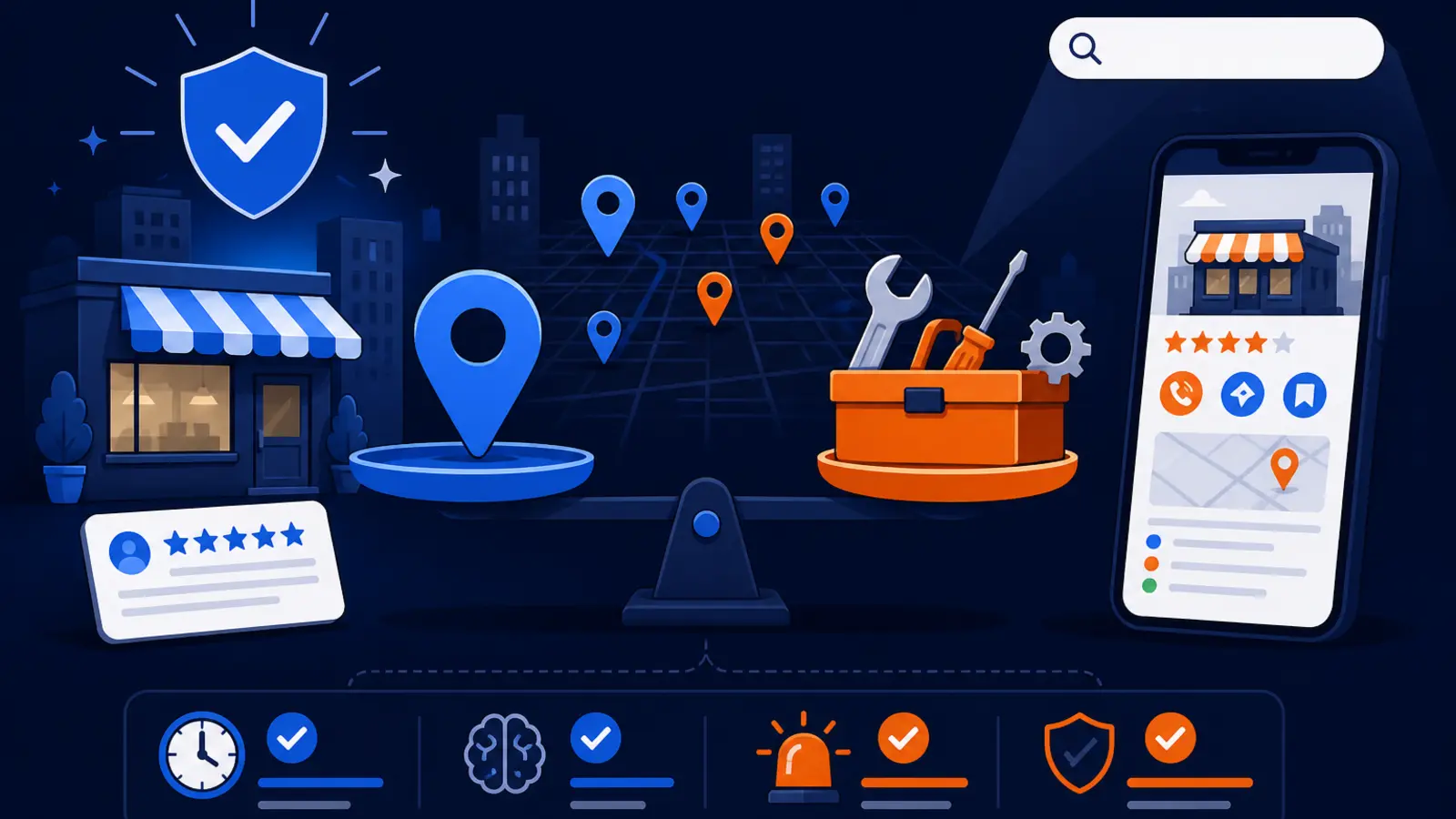
The short answer for a busy local owner
If you have the time to learn, test, track, and keep improving, the DIY path can be a smart place to start. Google gives local businesses free tools to claim a Business Profile, update important information, monitor profile interactions, and see search data for a website. A local rank tracker can add visibility into where you show up from different locations.
If your main goal is more phone-call opportunities and you do not want to manage the work yourself, a done-for-me local SEO offer with a real outcome commitment is usually the better fit. The value is not that someone can pay Google for better rankings. Google Business Profile Help says local results are mainly based on relevance, distance, and prominence, and that there is no way to request or pay for a better local ranking on Google. The value is having a team work on the inputs, watch the map, report the movement, and be accountable to an agreed outcome.
Digital Domination's offer is built around one specific commitment: top 3 in the Google Map Pack in 12 weeks or you do not pay. That is different from buying hours, buying reports, or buying vague SEO activity. It is also not a promise that Google sells placement. It is an agency taking on the work and tying pricing to the ranking outcome.
What the DIY path actually includes
DIY local SEO is not just opening a free profile and waiting. Google Business Profile Help says a business can add or claim a Business Profile at no charge, then control how its business information shows up on Google. Google also says a business must add or claim the business and verify the Business Profile to show the business on Search, Maps, and other Google services.
Once verified, Google Business Profile Help says owners can update address, hours, contact info, photos, categories, service areas, website, attributes, products, services, and business descriptions. That is useful, but it also means someone has to keep the profile accurate and complete.
A practical DIY routine usually includes these jobs:
- ▸Claim and verify the Google Business Profile.
- ▸Keep hours, services, categories, service areas, and photos current.
- ▸Request reviews in a policy-safe way and reply to them.
- ▸Watch Business Profile performance for calls, clicks, direction requests, and other interactions.
- ▸Use Search Console to see queries, impressions, and clicks for the website.
- ▸Use a rank tracker to monitor selected keywords in selected locations.
- ▸Make website and content changes when the data shows gaps.
What free Google tools can and cannot tell you
Google's free tools are valuable. Google Business Profile performance reports let owners and managers check views, clicks, and other customer interactions with a profile on Search and Maps. Google defines the Business Profile calls metric as the number of times a customer clicked the call button on the Business Profile, and says a phone number must be added to track it.
Google Search Console is also free. Google Search Console Help says it helps users monitor, maintain, and troubleshoot a site's presence in Google Search results. It can show how often a site appears in Google Search, which search queries show the site, and how often searchers click through for those queries.
The limit is that these tools do not do the work for you. They show signs of activity and opportunity, but they do not decide which services to feature, fix weak pages, improve review flow, build a better local content structure, or compare your visibility across a full service area.
Where a rank tracker fits
A rank tracker helps answer a different question: where do we show up when someone searches from a specific place for a specific phrase? BrightLocal says a local rank tracker monitors selected keyword rankings in search engine results based on location across a period of time, and its Local Rank Tracker monitors up to 100 keywords from Google Search and Google Maps.
That can be useful because a business may rank well near its office but poorly across town. It can also help you see whether a change is helping, doing nothing, or hurting. But a rank tracker is still a measuring tool. It does not create the ranking improvement by itself.
Use rank tracking to avoid guessing about these issues:
- ▸Whether you rank differently in Maps versus regular Search.
- ▸Whether visibility changes by neighborhood or suburb.
- ▸Whether your main services are visible or only your brand name.
- ▸Whether a recent update appears to help over time.
- ▸Whether calls are increasing in the same areas where rankings improve.
What a done-for-me offer changes
A done-for-me local SEO offer changes the work burden and the accountability structure. Instead of the owner interpreting tools, assigning tasks, writing updates, checking rankings, and deciding when to pivot, the provider owns the process. The owner still needs to answer business questions, approve important changes, and serve customers well, but the daily SEO work is not sitting on the owner's desk.
Google Search Central says many SEOs and agencies provide services such as site content or structure review, technical advice, content development, online business development campaign management, keyword research, SEO training, and market or geography expertise. Google also says small local businesses can probably do much of the SEO work themselves, but can hire a professional if they still need extra help.
With Digital Domination, the Maps Domination Program is priced per market on a qualification call and tied to the ranking outcome. The company also offers territory exclusivity: one client per trade per service area. That matters if you want to know the agency is not helping your direct same-trade competitor in the same area at the same time.
The main change is ownership of execution across these areas:
- ▸Profile completeness and service alignment.
- ▸Review strategy inside Google policy.
- ▸Local ranking measurement across the service area.
- ▸Website and page improvements tied to Maps and Search visibility.
- ▸Weekly GeoGrid tracking reports with visual proof of rankings and call volume.
- ▸Ongoing interpretation of what to do next.
Who should choose DIY instead
The DIY path genuinely suits some owners. If you have time, patience, and a willingness to learn, using free Google tools plus a rank tracker can be a responsible way to control costs and understand your own market. It is especially reasonable when cash is tight, call demand is not urgent, or you already have someone on staff who can handle marketing operations.
DIY also makes sense if you want to keep every change in-house. Some owners like seeing the raw data, reading Google's help documents, and testing one improvement at a time. That approach can work, but it should be treated as an operating responsibility, not a side task you check once a quarter.
Choose DIY if these statements are true:
- ▸You can verify and maintain the Business Profile yourself.
- ▸You can request and answer reviews within Google's policies.
- ▸You can monitor profile calls, website clicks, queries, and ranking movement.
- ▸You can make or manage website changes.
- ▸You can wait weeks or months before judging results.
- ▸You are comfortable deciding what to change when the data is unclear.
- ▸You would rather save agency fees than save owner time.
What to look for before choosing either path
Whether you go DIY or hire help, you need checkpoints you can verify. Google Search Central says SEO changes can take a few hours to several months to be reflected, and that users should generally wait a few weeks to assess whether work had beneficial effects in Google Search results. That means you should not judge everything from a single day of rankings or one quiet afternoon of calls.
You should also separate activity from progress. A filled-out profile, new photos, or a fresh service page may be useful, but the practical question is whether more qualified searchers can find you and whether call opportunities are improving.
Before you commit to either approach, check these items:
- ▸Is the Business Profile verified and complete?
- ▸Are the primary categories, services, hours, service areas, and phone number accurate?
- ▸Are reviews being requested without incentives, discounts, or pressure?
- ▸Are calls from the Business Profile being measured?
- ▸Is Search Console showing the queries that bring people to the website?
- ▸Is rank tracking location-specific rather than based on one office search?
- ▸Is there a weekly or monthly decision rhythm, not just a report?
- ▸Is there a clear definition of success before work starts?
Seven questions to ask before you sign
A fair comparison comes down to risk, time, and proof. Free tools lower cash cost but put more responsibility on the owner. A done-for-me guarantee can reduce uncertainty, but only if the promise is specific, measurable, and tied to the outcome you actually care about.
Ask these questions before you choose:
- ▸Who is responsible for making changes when rankings do not move?
- ▸How will calls, rankings, and website search data be reviewed together?
- ▸What exact locations and services will be tracked?
- ▸What happens if ranking movement is limited after several weeks?
- ▸Does the provider work with another same-trade business in my service area?
- ▸Is the offer tied to activity, rankings, calls, or a clearly stated outcome?
- ▸Can I see visual ranking proof across the service area, not just a single keyword report?
The review factor you cannot ignore
Reviews are one of the few local SEO areas where owner involvement is always needed. Google Business Profile Help says more reviews and positive ratings can help a business's local ranking. That does not mean you can buy, trade, or pressure your way into better reviews.
Google Business Profile Help says offering incentives such as free or discounted goods or services in exchange for reviews, review changes, or removing negative reviews is strictly prohibited. This matters because a shortcut that violates policy can create long-term problems for the Business Profile.
A good review process is simple, consistent, and policy-safe. Your team should ask real customers, make the link easy to find, respond professionally, and never offer anything in exchange for review behavior.
How to think about calls, not just rankings
The buying question is not really, who can make a report look good? The real question is, which path gives your business more chances to receive calls from people who need what you sell? Rankings matter because visibility drives opportunity, but calls are the business outcome you can feel.
For DIY, that means you should watch Business Profile calls, website clicks, Search Console queries, and local rank tracking together. If rankings improve but call clicks do not, you may have a conversion issue, a weak offer, poor photos, unclear services, or a mismatch between keywords and buyer intent.
For a done-for-me program, ask how ranking proof and call volume are reported. Digital Domination provides weekly GeoGrid tracking reports with visual proof of rankings and call volume. Its free GeoGrid scan checks 169 real Google results across the service area, which gives an owner a clearer picture than checking from one phone at one location.
Judge both options by the same practical signals:
- ▸More visibility for real service keywords.
- ▸Better coverage across the service area.
- ▸More qualified phone-call opportunities.
- ▸Cleaner tracking of where demand is coming from.
- ▸A repeatable process for deciding the next move.
Bottom line and next step
Choose DIY if you have the time and discipline to run the process yourself. Google gives you useful free tools, and a rank tracker can help you see local movement. For an owner who can maintain the profile, request reviews properly, monitor calls and queries, make website changes, and wait long enough to evaluate results, DIY can be the right call.
Choose a done-for-me guarantee if calls from Google Maps and Search are important enough that you want expert execution and a measurable commitment. Digital Domination's Guarantee page explains the Maps Domination Program, the outcome commitment, territory exclusivity, and how qualification works. The exact guarantee is: top 3 in the Google Map Pack in 12 weeks or you do not pay.
If you want to see where you stand before deciding, start with Digital Domination's free GeoGrid scan page. The scan checks 169 real Google results across your service area so you can compare your current visibility against the map you actually want to win.
Keep reading
Related guides
- ▸Is Review Gating Illegal, or Just Against Google's Policy?
- ▸Is Scorpion worth it for a local service business?
- ▸Is SEO Worth It For Law Firms
Put it into action
Frequently Asked Questions
Can I do local SEO myself with free Google tools?
Yes, many local businesses can start with free Google tools. Google lets you claim and verify a Business Profile, update key business information, and review performance data. The tradeoff is that you must also decide what to change, keep the work consistent, and wait long enough to judge results.
Is a rank tracker enough to get more calls from Google Maps?
No. A rank tracker can show where you rank for selected keywords in selected locations, but it does not improve rankings by itself. It is useful for measurement, not execution.
Does Google let businesses pay for better local rankings?
No. Google Business Profile Help says local results are mainly based on relevance, distance, and prominence, and there is no way to request or pay for a better local ranking on Google. A local SEO provider works on the inputs that can influence visibility, not by buying a better organic Maps position from Google.
How long should I wait before judging DIY local SEO?
Google Search Central says SEO changes can take a few hours to several months to be reflected, and users should generally wait a few weeks to assess whether work helped. For local SEO, it is smart to look for patterns over time rather than reacting to one day of rankings or calls.
What does the Business Profile calls metric mean?
Google defines the Business Profile calls metric as the number of times a customer clicked the call button on the Business Profile. Google also says a phone number must be added to track it. It is a helpful signal, but it should be reviewed alongside rankings, website clicks, and actual call quality.
Who should not buy a done-for-me local SEO program?
If you have the time, skill, and patience to manage the work yourself, you may not need a provider yet. DIY can suit an owner who can maintain the profile, manage reviews within policy, monitor calls and queries, and make website changes. It is also a fair option if you are not in a hurry for more call opportunities.
What should I ask a local SEO company before signing?
Ask what outcome they are responsible for, how rankings are measured, what locations are tracked, and whether they work with another same-trade business in your service area. Also ask how they report call volume and what happens if rankings do not move.
Where can I compare the guarantee with my current rankings?
Start with Digital Domination's free GeoGrid scan page to see your current visibility across the service area. Then review the Guarantee page to understand the Maps Domination Program, the qualification process, territory exclusivity, and the outcome commitment.
Ready to dominate your map?
Top 3 in the Google Map Pack in 12 weeks, or you don't pay.