
AI can know your local business and still not recommend it
New local AEO benchmarks show the real risk for service businesses is not whether AI can find your name. It is whether AI suggests you when a buyer asks who to hire.
What changed this week
Insites published its October 2026 Local AEO Benchmark on November 9, and the headline should get the attention of every local service business owner. The study tested 7,907 local businesses across ChatGPT, Gemini, Copilot, Perplexity, Grok, Google AI Overviews and Google AI Mode. It found that 99.9% of businesses could be identified by at least one assistant, but 36.1% were never recommended for any of the service-based local questions tested.
That means the AI tools may know your business exists when someone types your exact name. The problem is that buyers usually do not search that way. They ask for the best roofer near them, a plumber open now, an emergency HVAC company, or a dentist that takes new patients. If AI skips you there, the phone may not ring and your normal rank tracker may never show the loss.
This hits local service businesses first because the buyer intent is direct. A homeowner asking an AI assistant who to call is already close to choosing a vendor. If your business is known but not recommended, you are visible in the database but missing at the moment that matters.
Known by AI is not the same as chosen by AI
The Insites report makes an important distinction. Identification is a name lookup. Recommendation is a hiring suggestion. For a local owner, those are very different business outcomes.
A buyer who already knows your name may still find you. The bigger opportunity is the unbranded search, where someone has a problem and wants a short list of options. That is where AI assistants are starting to act like a recommendation layer on top of search, maps, reviews, directories and websites.
Before you buy any AI SEO program, separate the questions into these practical buckets:
- ▸Branded: Can AI find your business by name?
- ▸Service-based: Does AI recommend you for the jobs you want most?
- ▸City-based: Does AI connect you to the right service area?
- ▸Urgency-based: Does AI know if you handle emergency or same-day work?
- ▸Trust-based: Does AI understand why a buyer should choose you over nearby competitors?
SOCi shows recommendations are becoming a real channel
SOCi’s November 6 preview, Winning the Recommendation: How Multi-Location Brands Earn Visibility in AI-Powered Local Search, found AI recommendations for multi-location brands rising to 36.1%, roughly level with Google local 3-pack visibility in its benchmark. Search Engine Land also reported on the drivers of local AI visibility for multi-location brands on November 10.
The takeaway for an independent local business is not that AI has replaced Google Maps. It has not. The takeaway is that AI recommendations are becoming another place where customers form a short list. Your Google Business Profile, website, reviews and citations now feed more than one discovery path.
Think of it as another storefront. You already care whether your sign is visible from the street and whether your Google profile is accurate. Now you also need to know whether AI assistants describe your business correctly and include you when buyers ask for help.
Should a local business pay for AI SEO now
Maybe, but not blindly. Paying for AI SEO makes sense if the provider is auditing the actual questions buyers ask and tracing why your business is or is not recommended. It does not make sense if the pitch is vague, focused only on writing more blog posts, or cannot show where the AI tools are getting their facts.
For Google local search, the known ranking factors are relevance, distance and prominence. AI recommendations appear to rely on many of the same business facts, but they can combine those facts from different places. That is why wrong phone numbers, thin service pages, weak review language, and inconsistent listings can create real risk.
A credible AI SEO provider should be able to show you these things before asking for a long commitment:
- ▸Which services AI recommends you for today
- ▸Which services AI ignores or gives to competitors
- ▸Which cities or neighborhoods AI connects to your business
- ▸Whether the phone number, address and hours are correct
- ▸Which sources AI appears to cite or echo
- ▸What should be fixed first on your GBP, website, reviews and citations
Five things to check on your profile this week
You do not need to understand large language models to do a useful first pass. Open a few AI assistants, ask the same local buying questions your customers ask, and write down what happens. Do this from the mindset of a customer, not a marketer.
Use your main services and your real city or service area. If you serve multiple cities, test them separately. The goal is not to prove AI is perfect. The goal is to find obvious gaps before they cost you leads.
Start with these checks:
- ▸Ask who to hire for your highest-value service in your city
- ▸Ask for an emergency version of that service if you offer it
- ▸Ask for your business by name and confirm the phone, website, address and hours
- ▸Ask why someone should choose your business and look for missing proof
- ▸Ask the same questions in more than one AI assistant
Where bad AI answers often come from
When AI gives the wrong answer, the problem is often not inside the AI tool alone. It may be repeating confusion that already exists around your business. That confusion can come from old citations, outdated websites, duplicate profiles, thin service pages, mismatched business names, or reviews that never mention the services you want to win.
This is why an AI SEO audit should look beyond prompt testing. If an assistant recommends a competitor, you need to know whether that competitor has stronger service pages, clearer location signals, better review language, more consistent citations, or simply a cleaner profile across the web.
Common causes to check include:
- ▸Old phone numbers on directories
- ▸A website that lists services vaguely or hides them in images
- ▸A Google Business Profile with missing services or weak categories
- ▸Different business names across major listings
- ▸Reviews that praise the company but do not mention specific jobs
- ▸Service area pages that do not clearly say what you do and where you do it
Your website still matters in AI-local search
AI search has not made your website optional. If anything, it makes clear, specific website content more important because assistants need evidence. A generic homepage that says quality service in your area gives the assistant very little to work with.
Each priority service should have a plain-language page that explains what you do, who it is for, where you do it, and when a customer should call. If you serve multiple cities, your location content should be useful, not just copied city names. Add proof that a customer would actually care about, such as licensing information, service process, warranties, emergency availability, financing, or the kinds of problems you handle.
This week, check whether your key pages answer these buyer questions:
- ▸Do you clearly name the service?
- ▸Do you clearly name the city or service area?
- ▸Do you explain when a customer should call?
- ▸Do you show trust signals a buyer can verify?
- ▸Do your page titles and headings match real customer searches?
- ▸Can a visitor quickly find your phone number and request form?
What to do about it
The practical response is not to chase every AI trend. It is to tighten the facts that AI, Google and customers already use to judge your business. Start with your most profitable services and the cities where you most want calls.
Make a simple spreadsheet with the questions you tested, the assistants you used, whether your business appeared, what information was wrong, and which competitors were recommended. Then compare those findings against your Google Business Profile, website pages, reviews and top citations. That gives you an action list instead of a mystery.
For the next 2-3 weeks, focus on these owner-level actions:
- ▸Update your Google Business Profile categories, services, hours, description and service areas
- ▸Fix mismatched name, address and phone information on major citations
- ▸Create or improve pages for priority services, not every service at once
- ▸Ask customers for reviews that honestly mention the service performed and city served
- ▸Remove outdated phone numbers or old addresses where you can
- ▸Retest the same AI questions after changes are published
What an AI SEO provider should prove
A good provider should not sell AI SEO as a black box. They should show the questions tested, the current answers, the bad data sources, and the specific fixes they recommend. If they cannot explain what they found in plain English, the program may be too vague for a local business budget.
Ask for reporting that connects AI visibility to the assets you control. That means your GBP, your website, your reviews, your citations and your local rankings. AI answers can change, so one screenshot is not enough. You want a repeatable audit that can be checked again after the fixes are made.
Before you sign, ask for proof of these items:
- ▸The exact prompts tested for your services and cities
- ▸Which AI tools were tested
- ▸Where your business was recommended, skipped or described incorrectly
- ▸Which competitors appeared and what evidence they had
- ▸Which fixes are highest priority
- ▸How the provider will retest after updates
How this changes your decision this month
The new benchmarks from Insites and SOCi point to the same owner-level lesson. Being findable by name is not enough. The money question is whether AI recommends you for the service, city and urgency that match a real buyer.
If you are considering AI SEO, pay for diagnosis before promises. You want to know where AI gets your facts, which services you are missing from recommendations, and whether your GBP, website, reviews and citations give assistants enough evidence to choose you over competitors.
Digital Domination is a Las Vegas local SEO agency serving local service businesses nationally. Our AI SEO page at digitaldomination.ai/ai-seo/ explains how we audit AI visibility, strengthen the local signals that feed recommendations, and connect that work to local search. If you want a starting point before buying anything, begin with a free GeoGrid scan that checks 169 points across your market at digitaldomination.ai/scan/.
Keep reading
Related guides
- ▸How Much Does AI Search Optimization (AEO and GEO) Cost?
- ▸AI SEO for Local Business
- ▸No AI click data yet
Put it into action
Frequently Asked Questions
What is AI local SEO for a small business?
AI local SEO is the work of making sure AI assistants can understand, describe and recommend your business for local service questions. It includes checking your Google Business Profile, website, reviews, citations and service area signals. The goal is not just to be found by name, but to be recommended when a buyer asks who to hire.
Why does AI know my business but not recommend it?
AI may be able to identify your business from your name, website or listings, but that does not mean it has enough evidence to recommend you for a specific service. Thin service pages, inconsistent listings, weak review detail or stronger competitor signals can all affect the answer. The fix starts with auditing the exact questions buyers ask.
Should I pay for AI SEO right now?
You should consider it if the provider can show what AI tools say about your business today and what needs to be fixed. Be cautious if the pitch is vague or only promises more content without checking your GBP, citations, reviews and service pages. Ask for proof before committing.
What AI questions should I test for my local business?
Test the questions a real buyer would ask, such as who is the best plumber in my city or who offers emergency AC repair near me. Also ask for your business by name to check the phone number, website, hours and address. Run the same questions in several assistants because answers can differ.
Does my Google Business Profile affect AI recommendations?
Your Google Business Profile is one of the clearest sources of local business facts, especially for services, categories, hours, photos and reviews. AI tools may use or reflect information that overlaps with Google, your website and other listings. Keeping your GBP accurate is one of the first owner-level fixes to make.
How do reviews help with AI local visibility?
Reviews can give AI more context about what you actually do, where you do it and how customers describe the experience. A review that honestly mentions the service and city can be more useful than a generic nice company review. Do not script reviews, but do make it easy for customers to mention the job they received.
Can wrong business information in AI cost me leads?
Yes. If an AI assistant shows an old phone number, sends a buyer to the wrong site, or recommends a competitor for your core service, that can cost you calls. The hard part is that you may not see that loss in a normal ranking report, which is why AI-specific prompt testing matters.
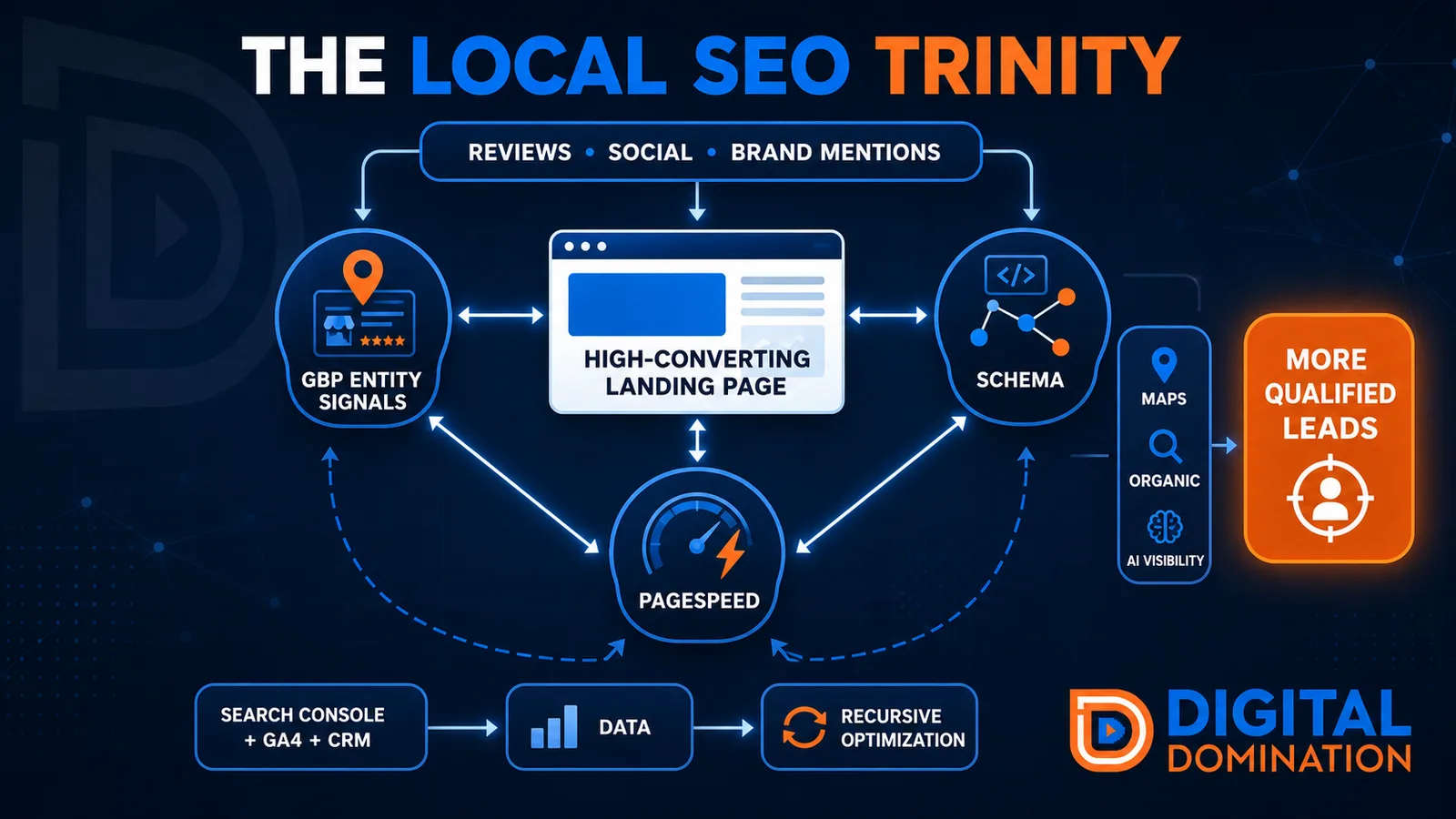
The Local SEO Trinity
Think of a three-legged stool. Your Google profile, your website, and your reviews all have to hold you up. If one leg is short, the whole thing wobbles.
GBP entity signals
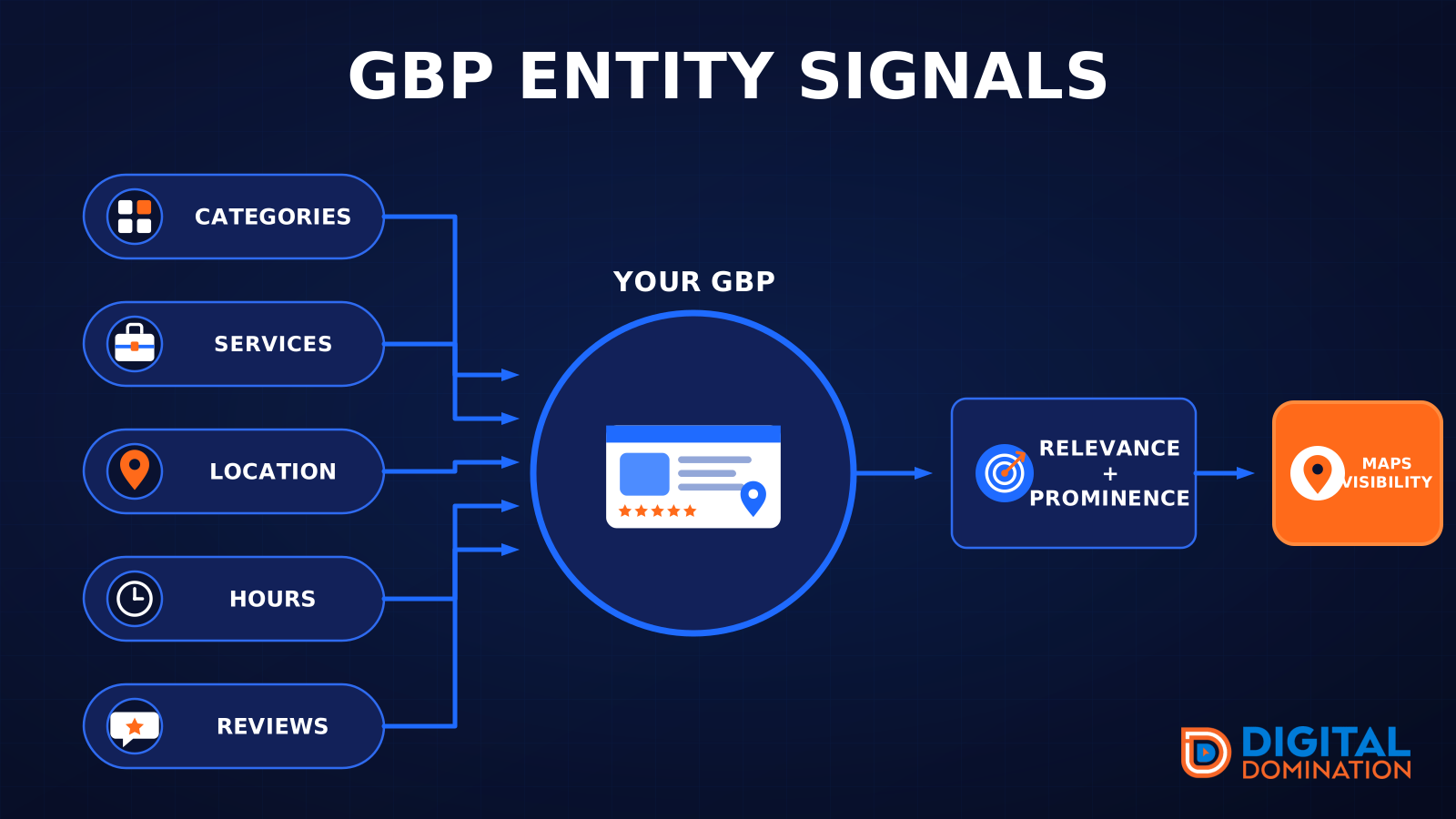
This leg is your Google Business Profile. GBP means Google Business Profile. It covers your categories, your services, your location, your hours, and your reviews. Google uses those facts to decide who to show.
Your Google profile is your storefront sign. If the sign is missing, or it names the wrong shop, people drive past.
PageSpeed to conversion
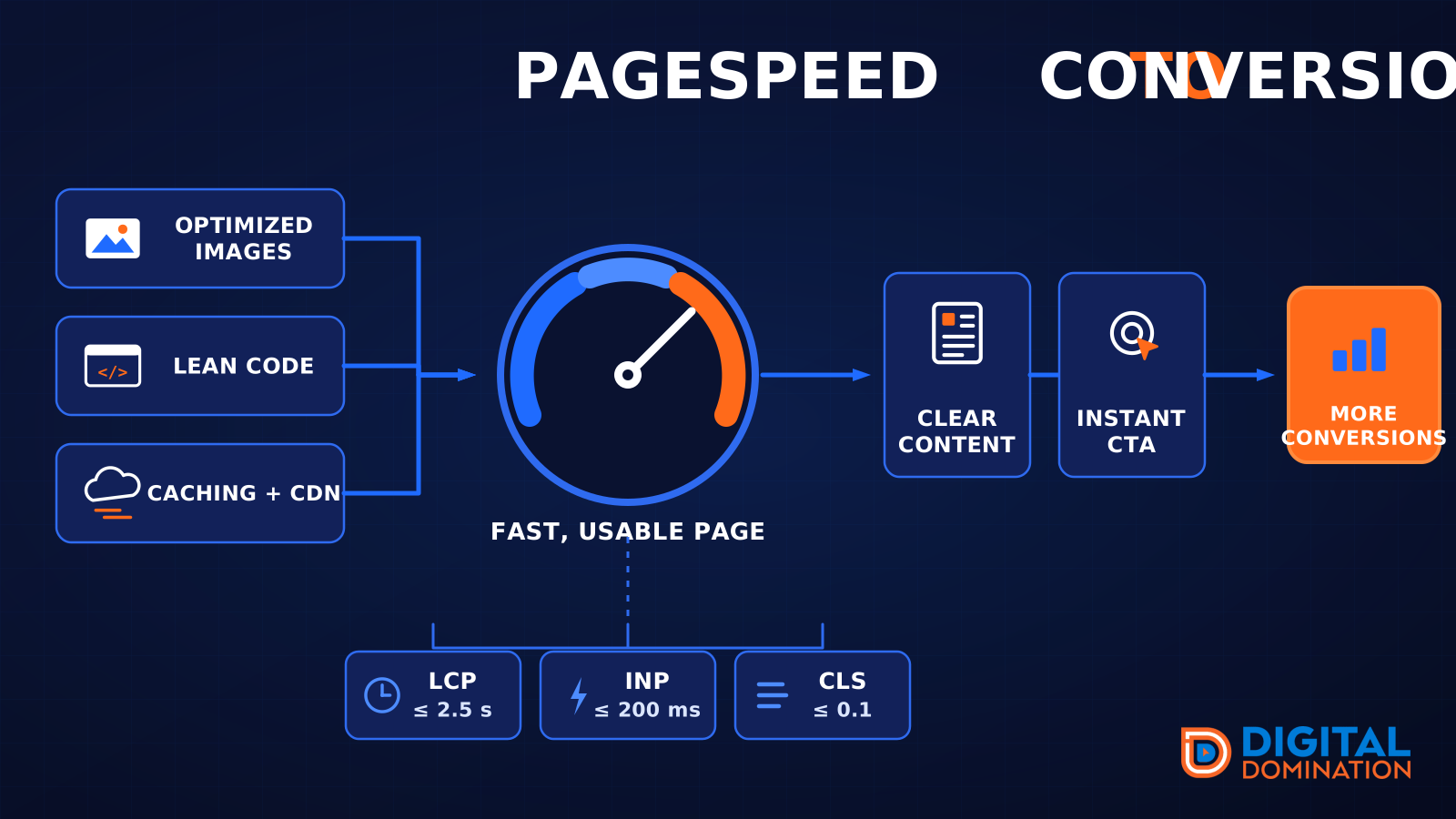
This leg is your website, above all on a phone. Small images, lean code, and caching make a page fast. A fast, clear page is what turns a visit into a call. Phone speed is one of the 12 Trinity checks because a slow page loses the call before anyone sees your offer.
Your website is the showroom. If the door sticks, people leave before they look around.
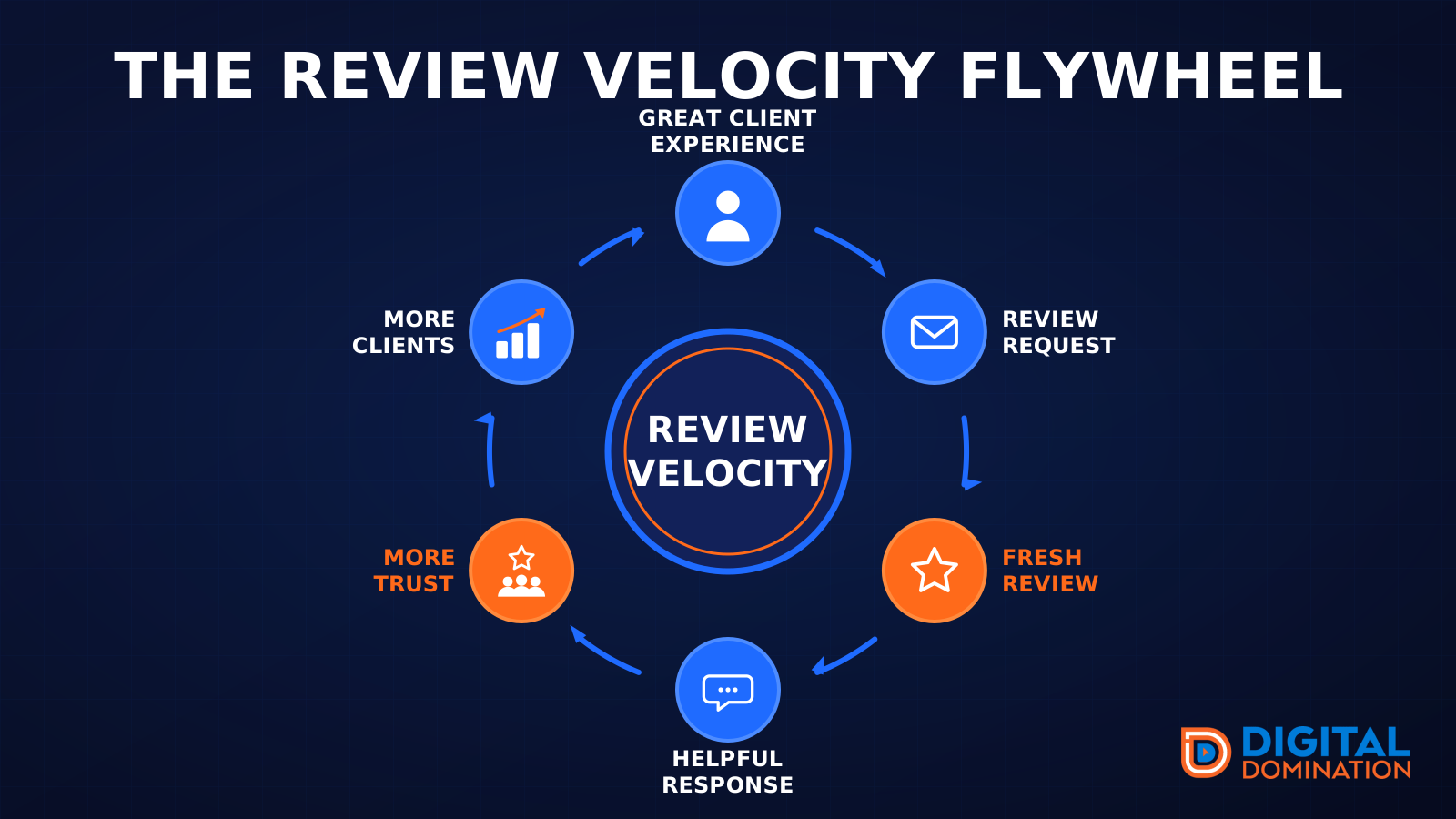
The review velocity flywheel
This leg is reviews and reputation. A good visit leads to a review request, then a fresh review, then a helpful reply, then more trust, then more customers. When the scan can find your Google listing, it shows your rating, your recent reviews, and how many you answered.
Reviews are word of mouth. One kind word helps. A steady stream of real reviews, and a reply from you, helps more.
How this turns into revenue
Being found in more searches leads to more calls. More calls lead to more booked jobs. More booked jobs lead to more revenue.
Example numbers, not a real business: 40 calls from search in a month, a 25 percent close rate, and a $400 average job. That is 10 booked jobs. That is $4,000. The math is the lesson. It is not a promise.
The full page has a box where you can type your own average job value and close rate.
One real story, from our car dealership case study: Medina Auto Group went from invisible on Google Maps to dominating every high-intent search across their market. The turnaround spanned all four of their rooftops at once. The same page says the team eliminated 89 unfair one-star reviews that had been dragging the dealership's reputation down and keeping it out of the Map Pack. It also says: “Results described here are exceptional and non-typical. Outcomes vary based on market conditions, competition, and implementation. No guarantees are made regarding earnings, rankings, or conversions.”
Free strategy call
More booked jobs start with a clear plan
Book a free strategy call. We look at your Google profile, your website, and your reviews, and we tell you what to fix first.
Free. You pick the time. A real person shows up.