
AI search optimization for plumbers
Get your plumbing company found in Google Search, AI answers, and the Google Map Pack for the repair, install, and emergency jobs that matter in your service area.
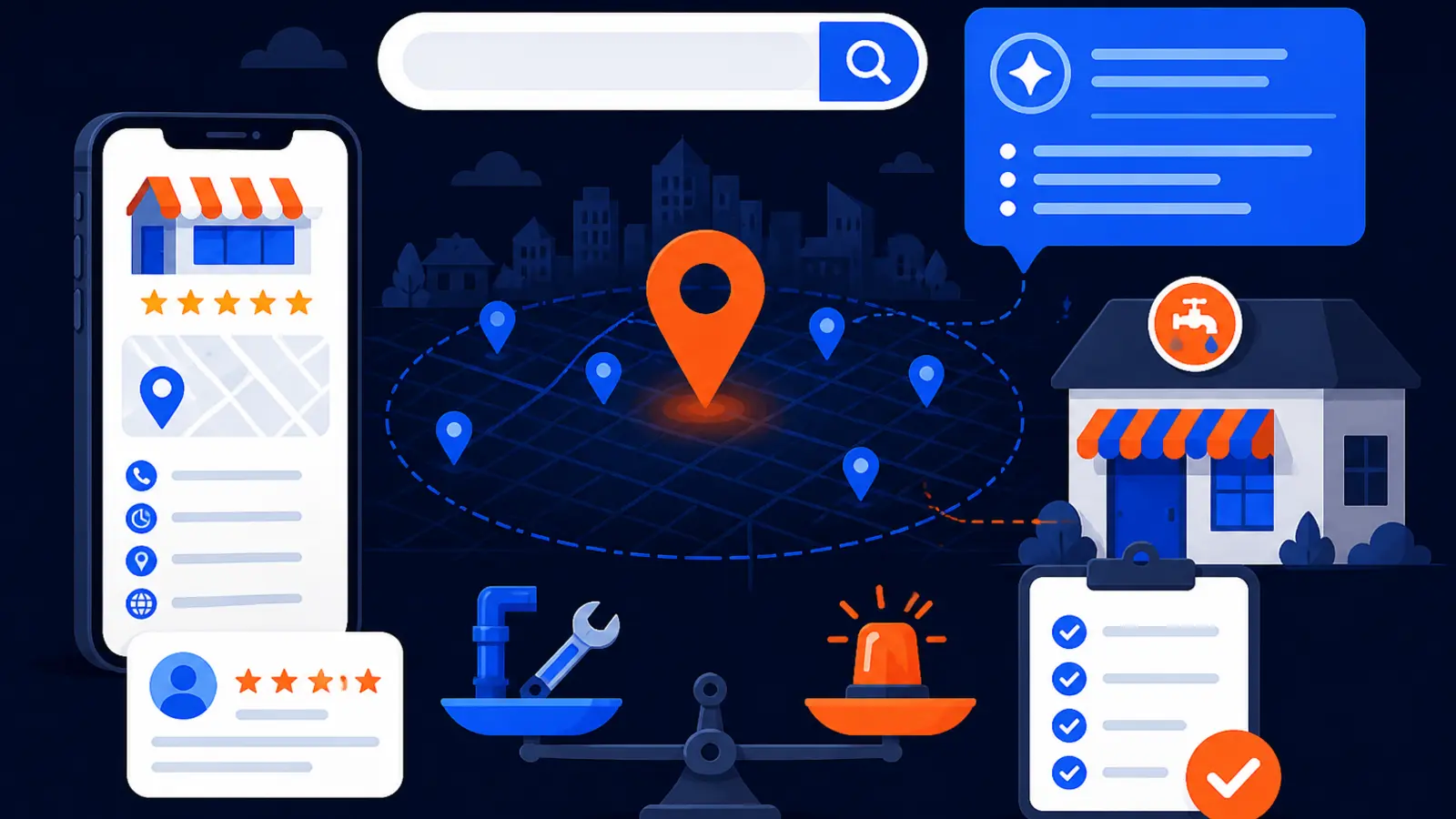
Can AI search optimization make your plumbing company visible where customers search
Yes. AI search optimization can help a plumbing company show up in Google Search, Google’s AI answers, and the Google Map Pack when the work is built on the same basics Google already rewards: a complete Google Business Profile, accurate service areas, clear service pages, strong reviews, and proof that your company is relevant and trusted in the places you serve.
Google Search Central says generative AI responses on Google can include information about local businesses, and that Google Business Profiles can help products and services be visible in AI responses and other Google Search results. That matters for plumbers because many buyers do not search only for a company name. They search for problems, services, and places, such as water heater repair near me, emergency plumber in a city, or drain cleaning in a neighborhood.
The practical goal is not to chase a secret AI trick. It is to make your plumbing company easy for Google and customers to understand, then prove that you are a real, trusted option for the services and service areas that generate calls.
What AI search optimization means for a plumbing company
For a plumbing company, AI search optimization means organizing your online presence so Google can confidently connect your business to specific plumbing jobs in specific places. It includes your Google Business Profile, your service list, your website pages, your reviews, your local mentions, and the way customers engage with your business online.
Google Search Central says businesses do not need LLMS.txt files, AI text files, special Markdown, or special schema.org markup to appear in Google Search generative AI capabilities. Google also says foundational SEO practices, including clear technical structure and unique, valuable content, are the foundation for visibility in generative AI search experiences and Google Search overall.
In plain English, a plumbing company should focus on the work that helps customers and Google understand the business. That usually includes these basics:
- ▸A clean Google Business Profile with accurate categories, services, hours, and service areas
- ▸Service pages for the work you actually want, such as sewer line repair, repiping, leak detection, and water heater replacement
- ▸City and service-area content that sounds like a real local company, not copied boilerplate
- ▸Fresh, compliant review requests and thoughtful review replies
- ▸Tracking that shows where you rank across the real service area, not only from your office
Why the Google Business Profile is central
Your Google Business Profile is one of the most important assets for local plumbing visibility because it feeds local results and can support visibility in Google’s AI experiences. Google Business Profile Help says complete and accurate Business Profile information makes businesses more likely to show up in local search results.
For plumbers, accuracy is especially important because Google treats many plumbing companies as service-area businesses. Google lists plumbers as an example of a service-area business and says service-area businesses can have only one profile for the whole area they serve. Google also says service-area businesses can set up to 20 service areas based on cities, postal codes, or other areas served, and that the overall service-area boundary should not be more than about two hours of driving time from where the business is based.
Your profile should make the right promises in the right places. The owner should be able to verify these items without being technical:
- ▸The business name matches the real-world business name
- ▸The primary category and added categories match your plumbing work
- ▸Service areas are realistic and not stretched far beyond your base
- ▸Hours, phone number, website, and booking links are accurate
- ▸Services are filled out with helpful descriptions where appropriate
- ▸Photos, updates, and review replies show that the company is active
Map Pack rankings still depend on relevance, distance, and prominence
AI search does not replace local ranking fundamentals. Google Business Profile Help says local results are mainly based on relevance, distance, and prominence. For a plumbing company, that means Google is trying to understand what you do, how close you are to the searcher or service area, and how well known and trusted your business appears to be.
This is why a plumber can rank well in one part of town and barely appear a few miles away. Local rankings are not one citywide score. They change based on the searcher’s location, the service searched, the strength of nearby competitors, and the proof Google can find about your business.
A good plumber SEO plan should improve all three local ranking factors in practical ways:
- ▸Relevance: clear services, categories, pages, and descriptions
- ▸Distance: realistic service areas and location signals tied to the market
- ▸Prominence: reviews, links, citations, brand mentions, and customer engagement
Service listings and service pages should match the jobs you want
Plumbing companies often lose calls because their online presence is too vague. A profile that only says plumber gives Google and customers less to work with than a profile and website that clearly show drain cleaning, slab leak repair, toilet repair, water heater installation, sewer camera inspection, emergency plumbing, and the other work the company wants.
Google Business Profile Help says certain service businesses may showcase offerings directly on their Business Profile, and that a service may be highlighted when local customers search for that offering. Google also says Business Profile services can include information such as price and description, and businesses can add custom services when a service is not listed.
Your website should support those same services in customer-friendly language. Each important service page should explain the problem, when to call, what the plumber does, what areas are served, and how to request help. The content should sound like your company, not like a generic national article.
Reviews matter for both rankings and buyer confidence
Google Business Profile Help says more reviews and positive ratings can help a business’s local ranking. It also says businesses may not offer incentives in exchange for reviews and may not discourage negative reviews or selectively solicit only positive reviews. That means review growth must be steady, real, and compliant.
Reviews are also a sales issue. BrightLocal’s 2026 Local Consumer Review Survey says 47% of consumers will not use a business with fewer than 20 reviews, 74% only care about reviews written in the last three months, and 31% will only use a business with 4.5 or more stars. For an emergency plumbing customer, those review signals can decide who gets the call.
A practical review system for a plumber should be simple enough that technicians and office staff will actually use it. It should help with these habits:
- ▸Ask every customer at the right time, without offering incentives
- ▸Make the request easy to send after a completed job
- ▸Reply to reviews in a way that sounds human and professional
- ▸Watch for patterns in service complaints or praise
- ▸Keep recent reviews coming, not just a burst once a year
What to look for before you pay for AI search optimization
A plumbing company should not have to guess whether the work is real. Before you pay for AI search optimization, ask for checkpoints you can verify with your own eyes. You are looking for a provider that can explain what will be changed, why it matters, and how progress will be measured across your service area.
Be cautious of anyone selling secret AI files, instant rankings, or paid local ranking access. Google Business Profile Help says there is no way to request or pay for a better local ranking on Google. Google Search Central also says special AI files and special markup are not required for visibility in Google Search generative AI capabilities.
Use these checkpoints to judge whether the offer is serious:
- ▸A before-and-after review of your Google Business Profile
- ▸A service-area audit that checks where you rank across the market
- ▸A clear list of target services tied to real plumbing revenue
- ▸Service pages that are written for homeowners, property managers, or commercial buyers
- ▸A compliant review plan that avoids incentives and review gating
- ▸Tracking that separates Map Pack movement from regular organic rankings
- ▸Plain-English reports that show rankings, calls, and work completed
Seven questions to ask before you sign
The right provider should welcome direct questions. If the answers are vague, too technical, or centered on tricks instead of customer visibility, keep looking.
Ask these questions before you choose an AI search optimization provider for your plumbing company:
- ▸How will you improve our Google Business Profile without risking suspension
- ▸Which plumbing services and service areas will you prioritize first
- ▸How will you measure rankings from different parts of our service area
- ▸What will you do for AI answers besides basic website edits
- ▸How will you help us get more recent reviews without breaking Google’s rules
- ▸What reports will show calls, ranking movement, and completed work
- ▸Do you work with more than one plumber in the same trade and service area
Who the cheaper or DIY path suits
The cheaper or DIY path can make sense for a plumber who has time to manage the work every week. If you or someone in your office can keep up with profile updates, service listings, service pages, review requests, review replies, and local tracking, you may not need a full outside program right away.
The challenge is consistency. Plumbing owners are usually busy with crews, dispatch, estimates, parts, callbacks, and cash flow. Search visibility work often gets pushed aside until calls slow down, which is the worst time to start rebuilding momentum.
A DIY plan should include a weekly routine like this:
- ▸Check that profile information and hours are accurate
- ▸Add or refine services tied to profitable jobs
- ▸Request reviews from recent customers in a compliant way
- ▸Reply to new reviews
- ▸Publish or improve one useful service or location page
- ▸Track rankings from several points in the service area
- ▸Review calls and form leads for quality
How Digital Domination approaches plumber visibility
Digital Domination builds local visibility around the services and service areas that matter to the plumbing company. The work starts with understanding where you show up now, where competitors show up, and which searches are most likely to turn into calls.
The free GeoGrid scan checks 169 real Google results across the service area. That matters because a single rank check from your office can hide weak spots across the city. A 169-point GeoGrid scan gives a clearer view of where the business is visible and where competitors own the Map Pack.
Digital Domination offers territory exclusivity: one client per trade per service area. For qualified markets, the Maps Domination Program is tied to this guarantee: top 3 in the Google Map Pack in 12 weeks or you do not pay. Pricing for the Maps Domination Program is set per market on a qualification call and tied to the ranking outcome.
The program is designed around practical plumbing visibility signals:
- ▸Google Business Profile improvements
- ▸Service and service-area targeting
- ▸Review growth systems and review replies
- ▸Local content built around real plumbing services
- ▸Weekly GeoGrid tracking reports with visual proof of rankings and call volume
- ▸Clear reporting that a business owner can understand
What tracking should prove
Good tracking should answer a simple question: are more people in the service area finding your plumbing company for the services that create calls. It should not rely only on one keyword or one location. A plumber needs to know whether visibility is improving across the actual neighborhoods, cities, and ZIP codes served.
Whitespark’s Local Search Ranking Factors report includes Google Business Profile signals, on-page signals, review signals, link signals, behavioral signals, citation signals, personalization signals, and social signals in its local ranking factor groups. That is a useful reminder that local visibility is built from several signals, not one setting.
Owner-friendly reporting should show these items:
- ▸Where your company appears on the map across the service area
- ▸Which plumbing services are gaining visibility
- ▸Which competitors are still outranking you and where
- ▸Whether calls are increasing from search activity
- ▸What work was completed during the reporting period
- ▸What will be fixed or improved next
Start with the plumber page and a free GeoGrid scan
If you want AI search optimization for a plumbing company, start with the Digital Domination plumbers industry page. It explains the plumbing-focused program, the local visibility approach, and how the work is tied to Google Search, AI answers, and the Google Map Pack.
You can also request the free GeoGrid scan on the scan page. It checks 169 real Google results across your service area so you can see where your plumbing company is visible now, where competitors are winning, and whether a Maps Domination Program qualification call makes sense.
Keep reading
Related guides
Put it into action
Frequently Asked Questions
Can AI search optimization help my plumbing company show up in Google AI answers
Yes, it can help when the work is based on strong local SEO fundamentals. Google Search Central says generative AI responses can include information about local businesses, and Google Business Profiles can help products and services be visible in AI responses and other Google Search results.
Do plumbers need an LLMS.txt file to show up in AI search
No. Google Search Central says businesses do not need LLMS.txt files, AI text files, special Markdown, or special schema.org markup to appear in Google Search generative AI capabilities. A complete profile, clear site structure, and useful service content matter more.
What matters most for a plumber in the Google Map Pack
Google Business Profile Help says local results are mainly based on relevance, distance, and prominence. For a plumber, that means your services, service areas, reviews, website pages, and local trust signals all need to support the searches you want.
Can I pay Google for better local plumbing rankings
No. Google Business Profile Help says there is no way to request or pay for a better local ranking on Google. You can pay for ads, but organic Map Pack ranking is earned through relevance, distance, prominence, and other local signals.
How many service areas can my plumbing Business Profile have
Google Business Profile Help says service-area businesses can set up to 20 service areas based on cities, postal codes, or other areas served. Google also says the overall service-area boundary should not be more than about two hours of driving time from where the business is based.
Should my plumbing company ask every customer for a review
You can ask customers for reviews, but the process must follow Google’s rules. Google says merchants may not offer incentives for reviews and may not discourage negative reviews or selectively solicit only positive reviews.
Is AI search optimization worth it if I already have a website
A website helps, but it is only one part of local visibility. Your Google Business Profile, services, reviews, service areas, local pages, and ranking proof all need to work together if you want calls from Google Search, AI answers, and the Map Pack.
How do I know if my plumber SEO is working
You should see reporting that shows where you rank across your service area, not just from one location. Digital Domination uses weekly GeoGrid tracking reports with visual proof of rankings and call volume so progress is easier to verify.
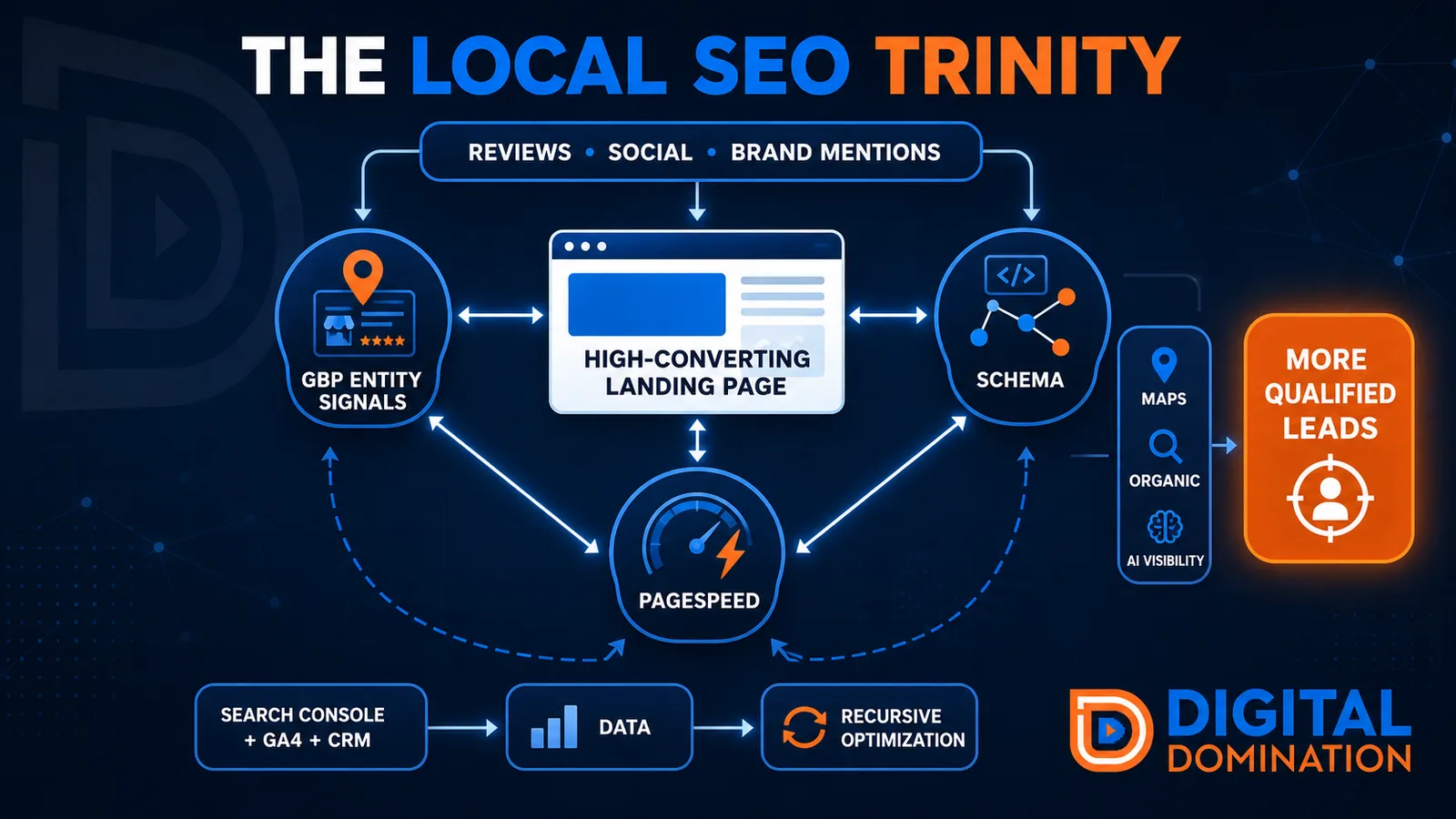
The Local SEO Trinity
Think of a three-legged stool. Your Google profile, your website, and your reviews all have to hold you up. If one leg is short, the whole thing wobbles.
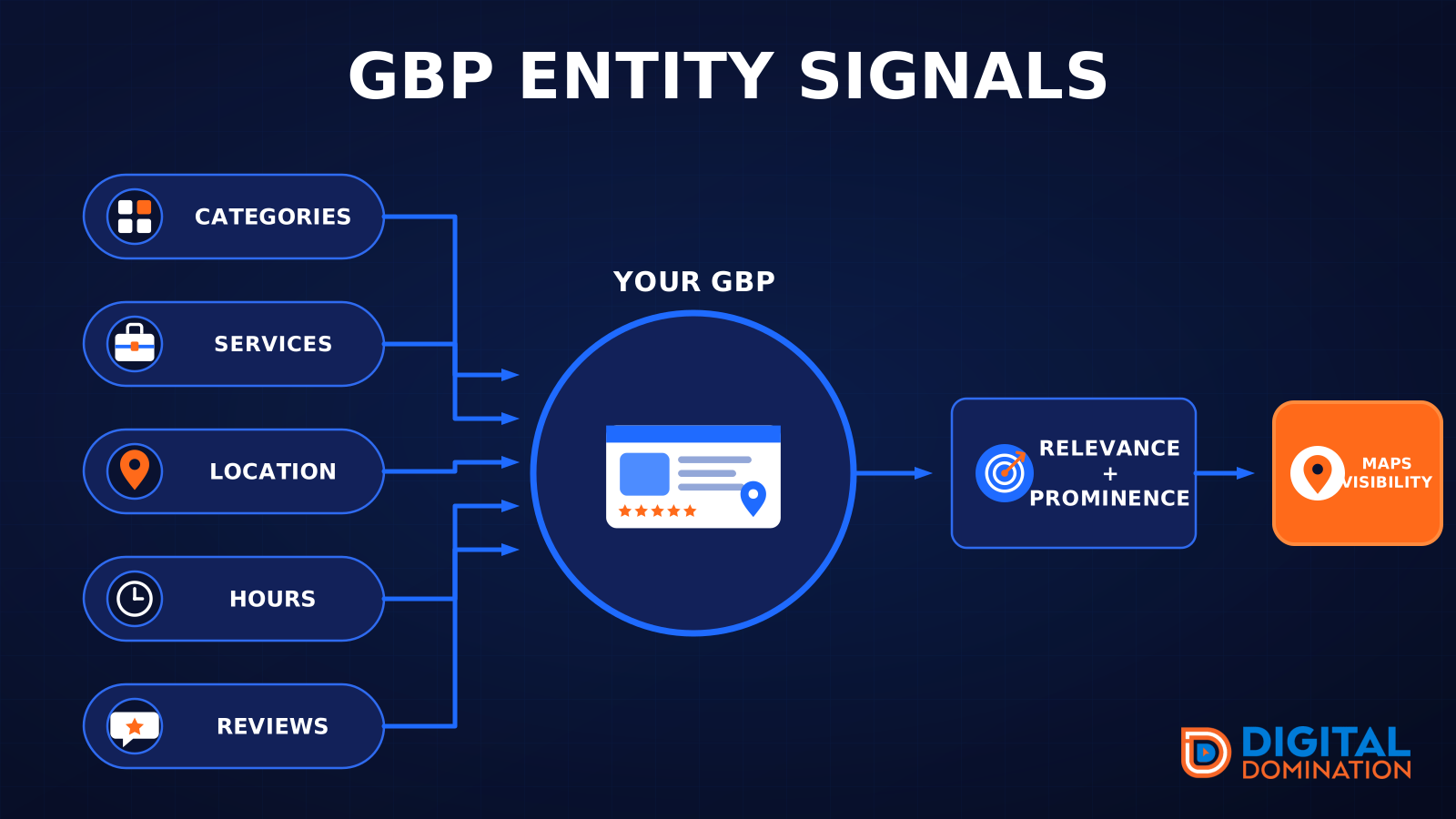
GBP entity signals
This leg is your Google Business Profile. GBP means Google Business Profile. It covers your categories, your services, your location, your hours, and your reviews. Google uses those facts to decide who to show.
Your Google profile is your storefront sign. If the sign is missing, or it names the wrong shop, people drive past.
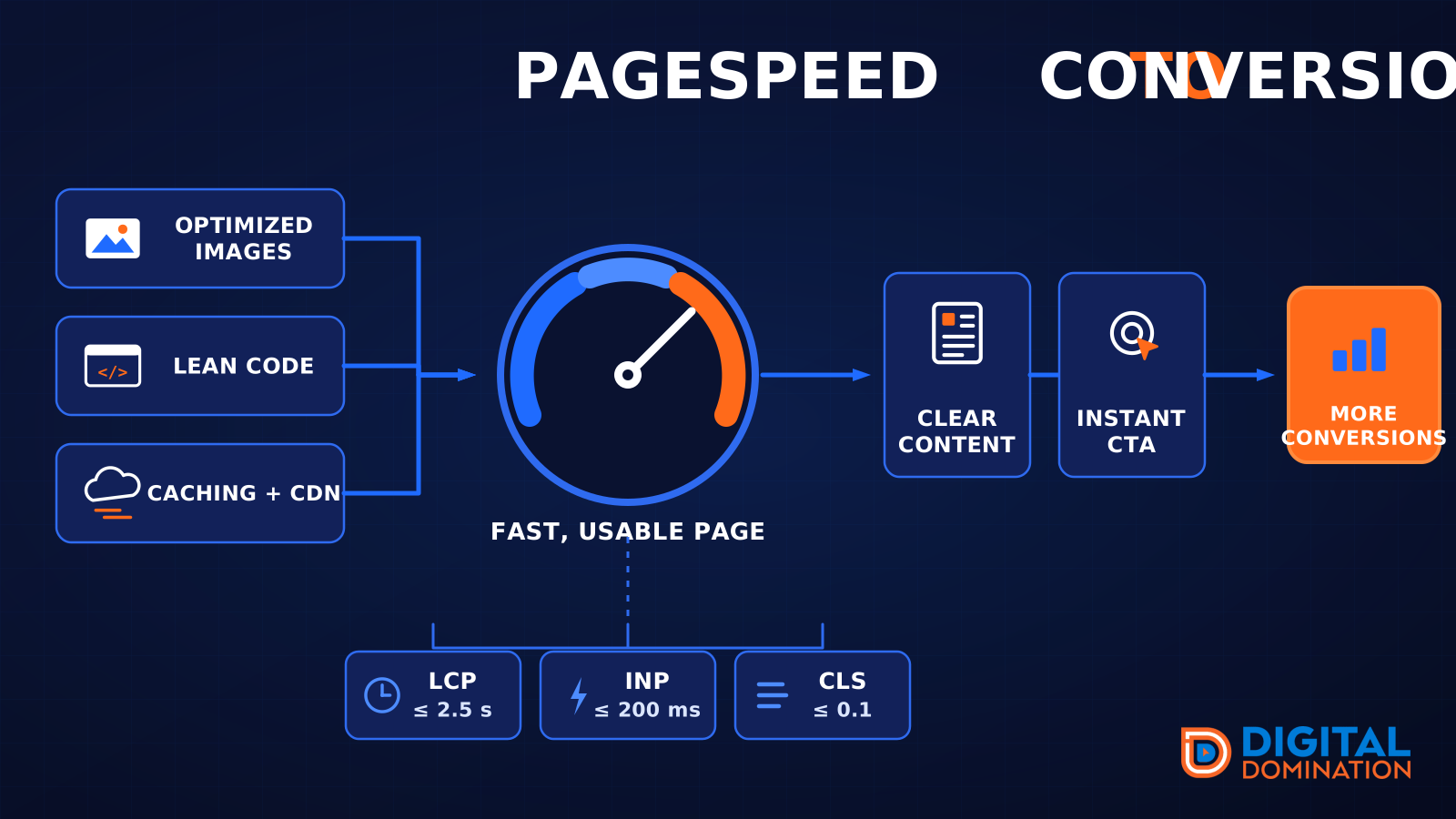
PageSpeed to conversion
This leg is your website, above all on a phone. Small images, lean code, and caching make a page fast. A fast, clear page is what turns a visit into a call. Phone speed is one of the 12 Trinity checks because a slow page loses the call before anyone sees your offer.
Your website is the showroom. If the door sticks, people leave before they look around.
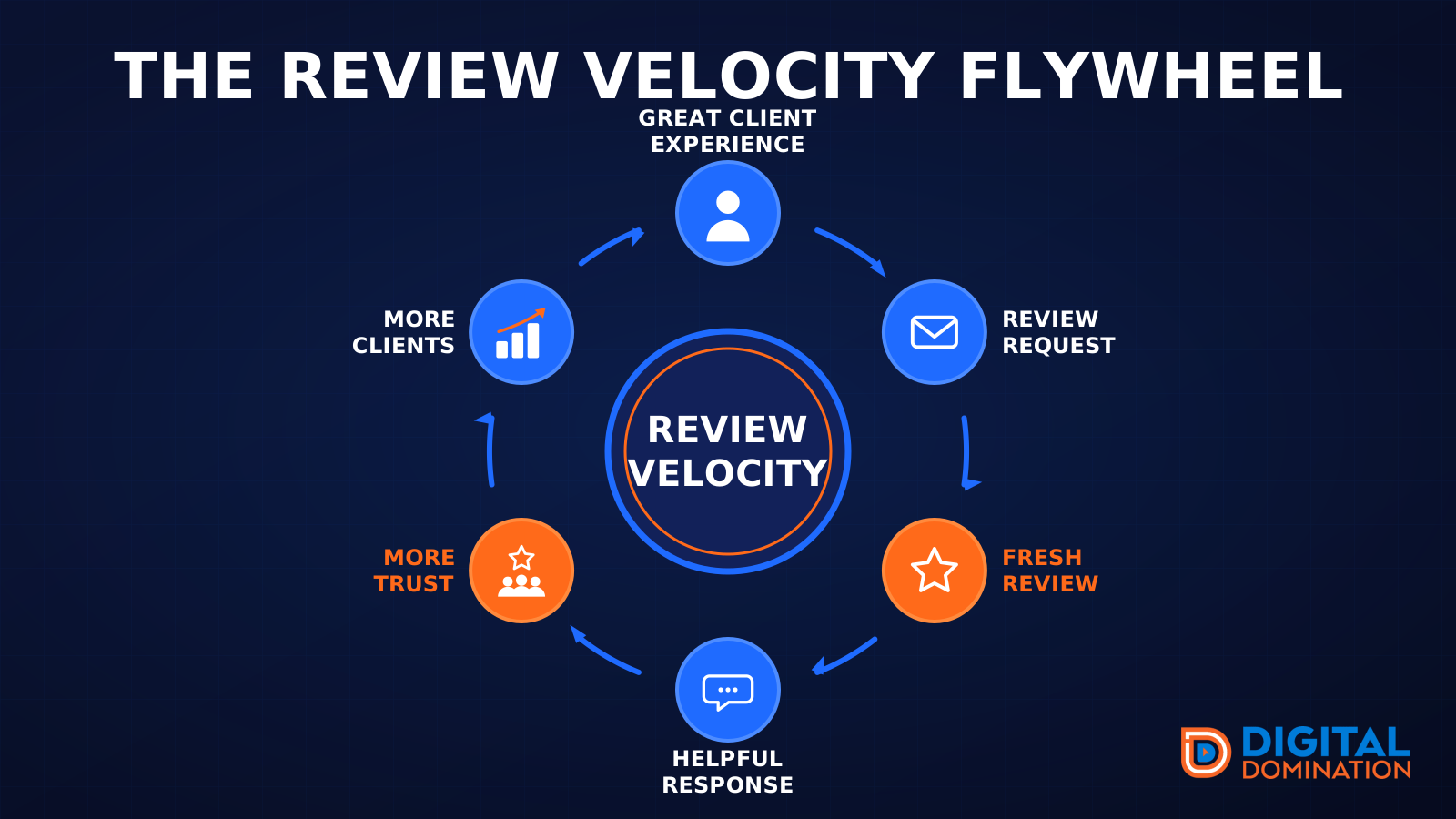
The review velocity flywheel
This leg is reviews and reputation. A good visit leads to a review request, then a fresh review, then a helpful reply, then more trust, then more customers. When the scan can find your Google listing, it shows your rating, your recent reviews, and how many you answered.
Reviews are word of mouth. One kind word helps. A steady stream of real reviews, and a reply from you, helps more.
How this turns into revenue
Being found in more searches leads to more calls. More calls lead to more booked jobs. More booked jobs lead to more revenue.
Example numbers, not a real business: 40 calls from search in a month, a 25 percent close rate, and a $400 average job. That is 10 booked jobs. That is $4,000. The math is the lesson. It is not a promise.
The full page has a box where you can type your own average job value and close rate.
One real story, from our car dealership case study: Medina Auto Group went from invisible on Google Maps to dominating every high-intent search across their market. The turnaround spanned all four of their rooftops at once. The same page says the team eliminated 89 unfair one-star reviews that had been dragging the dealership's reputation down and keeping it out of the Map Pack. It also says: “Results described here are exceptional and non-typical. Outcomes vary based on market conditions, competition, and implementation. No guarantees are made regarding earnings, rankings, or conversions.”
Free strategy call
More booked jobs start with a clear plan
Book a free strategy call. We look at your Google profile, your website, and your reviews, and we tell you what to fix first.
Free. You pick the time. A real person shows up.