
Bankruptcy attorney local SEO: how GBP entity signals, schema and PageSpeed turn a garnished paycheck into a filed case
The attorney who has filed the most Chapter 7 cases in the district does not automatically get the client. The one Google can read, a garnished debtor can trust before her break ends and a phone can load on break-room Wi-Fi does.

Friday payday, a pay stub line that says GARN, and a search that never includes the word bankruptcy
Friday, 6:10 a.m., a distribution center break room. The direct deposit is a quarter short, the payroll app shows a line she has never seen, GARN, and HR says court order. Rent is due on the first.
She does not type bankruptcy attorney. She types stop wage garnishment, then bankruptcy lawyer near me, in an incognito tab on break-room Wi-Fi. One firm in the Map Pack lists Wage garnishment relief as a service, has evening hours and a review that says nobody made me feel judged. It loads before her break ends and she books a 5:30 consult.
The firm with the most Chapter 7 filings in the district may have been fourth, behind a stock gavel, 9-to-5 hours and a six-second chat widget. Bankruptcy is the most private search in law, and it starts with the trigger, not the chapter. Google and the AI assistants judged the firm from the same facts she did.
The short version for a consumer bankruptcy firm
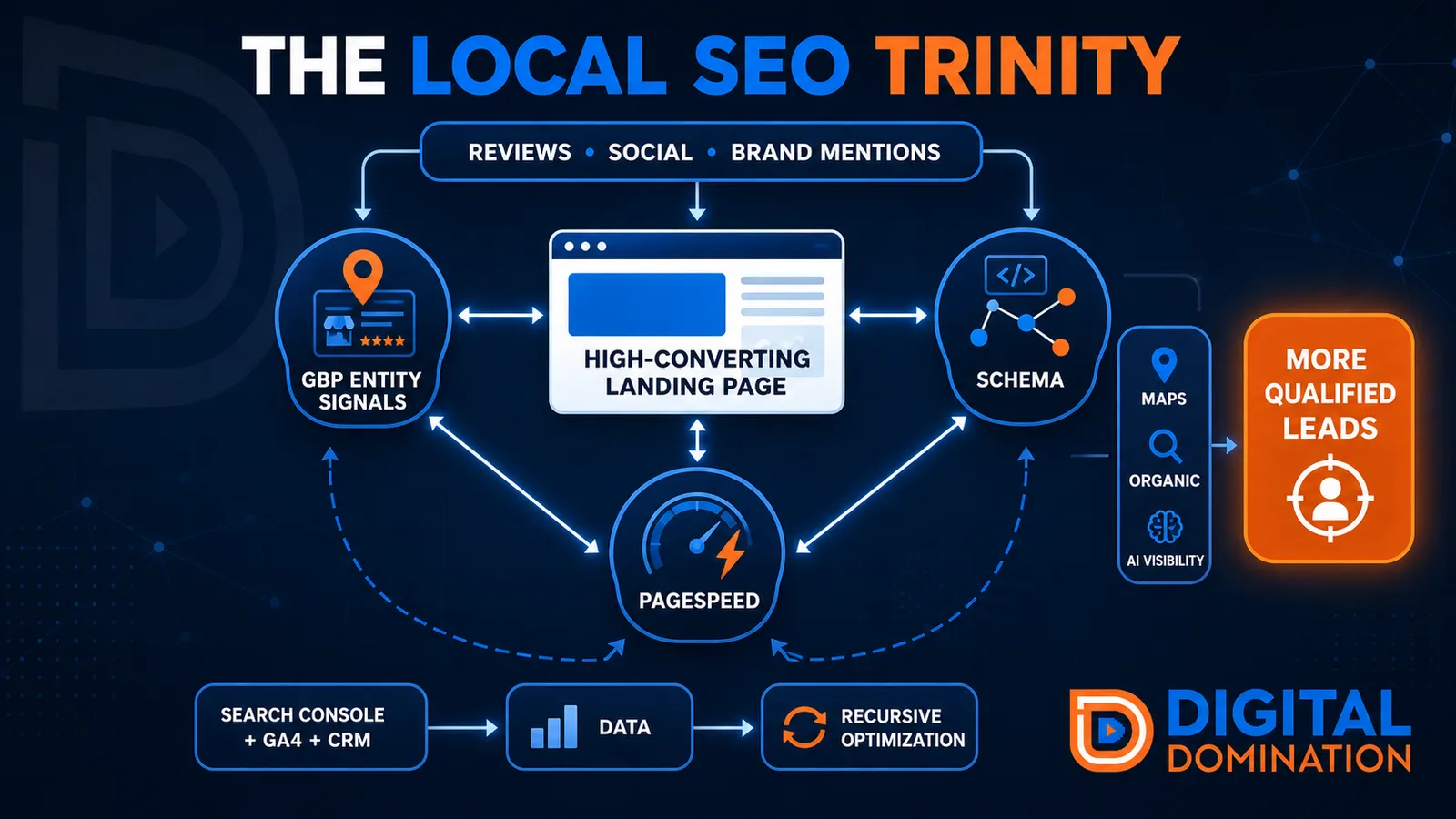
Google ranks local results on relevance, distance and prominence. A debtor firm cannot move the courthouse or the client, so the work is relevance and prominence for a reader who studies the firm for weeks. At Digital Domination we build bankruptcy attorney local SEO as three pillars and a loop:
- ▸GBP entity signals: a bankruptcy attorney, not a petition preparer, with the chapters and triggers it handles.
- ▸Schema: the firm, its attorneys, bar numbers, board certification, services, flat fee and federal district in one graph.
- ▸PageSpeed: a debtor, a crawler and an AI agent reach the fee and phone number without waiting.
- ▸The loop: Search Console, GA4 and intake software show which searches became consultations, filed cases and discharges.
Teaching Google you are a bankruptcy attorney, not a petition preparer or a debt settlement call center
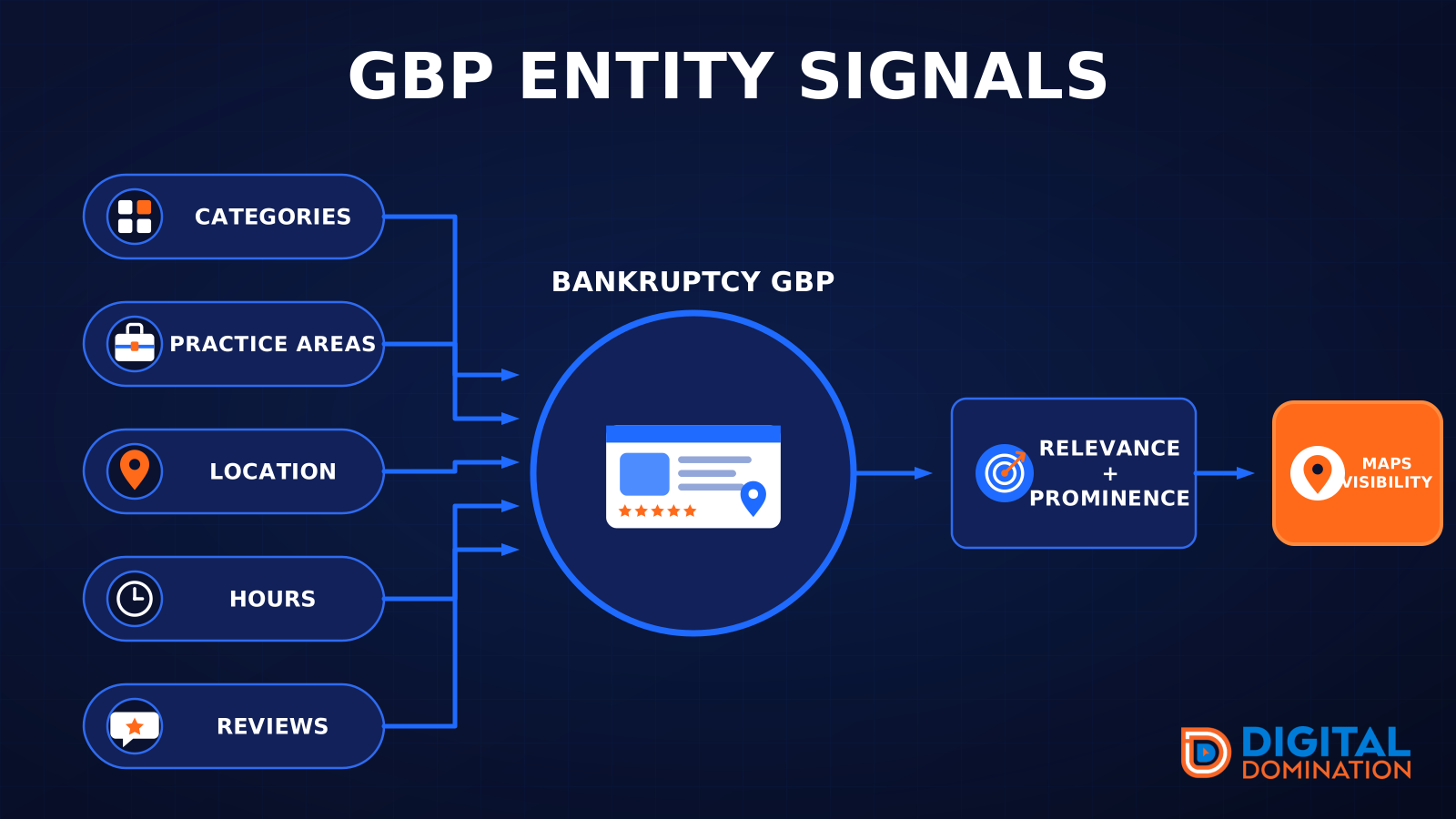
Bankruptcy attorney is the category Google offers, and it should be the primary. Bankruptcy service is a different category, shared with petition preparers and debt settlement outfits, and it dilutes the firm into that pool. Add Law firm as a secondary.
Debtors call before a shift or after the kids are asleep, so publish real evening or Saturday hours. Use photos of the attorney the client will meet, set the service area to the district where the firm files, and give each office a landing page with a UTM-tagged profile link. Services are where most profiles are thin; each should mirror a page in the debtor's words:
- ▸Chapter 7 and Chapter 13, described by what each does for a paycheck, a house and a car
- ▸Stop wage garnishment, frozen bank accounts and foreclosure, including curing arrears in Chapter 13
- ▸Repossession, redemption and reaffirmation, plus debt collection lawsuits and judgments
- ▸Medical, credit card and older tax debt, and sole proprietor filings including Subchapter V
Proof a debtor checks before telling a stranger the whole number
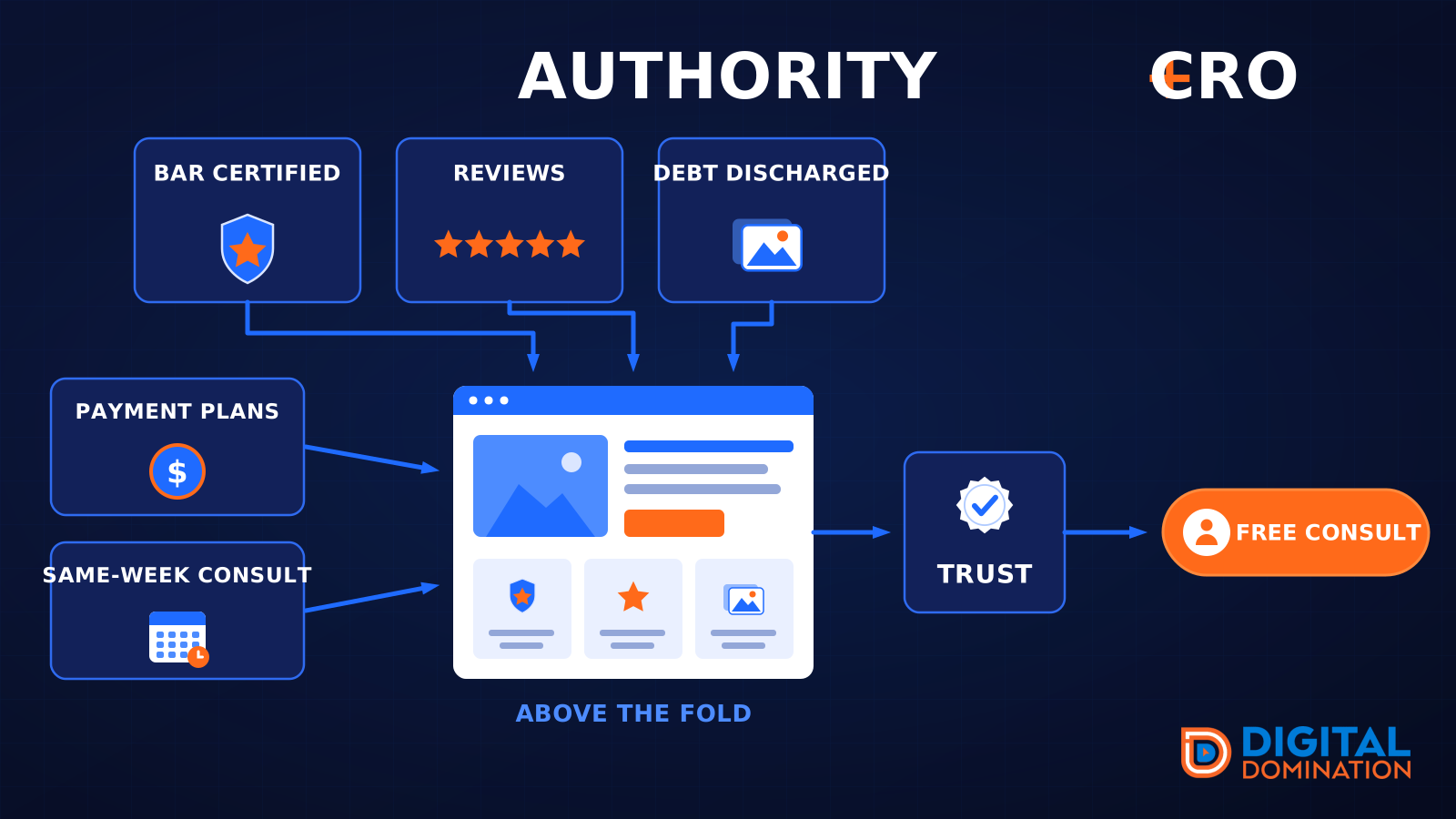
A bankruptcy prospect weighs two fears: will this lawyer stop the garnishment before the next paycheck, and will they be judged for the balance. An example strip for a generic firm, clearly an example: Board certified in consumer bankruptcy. Admitted to the district's bankruptcy court. Flat fee Chapter 7 with payment plans. Evening consultations. Se habla español.
Below the fold, each attorney gets a biography with bar number, courts admitted and links to the bar profile, Avvo and NACBA, and the federal debt relief agency disclosure sits where a reader can find it, not in gray footer type. What a debtor can verify in a minute:
- ▸State bar admission linked to the public profile, plus admission to the United States District Court where the firm files
- ▸Board certification from the American Board of Certification, or the state bar's specialization, and membership in NACBA and the American Bankruptcy Institute
- ▸A documented count of cases filed in the district, with no promise about outcomes, and the named paralegal who handles document collection
Review velocity when the relief arrives at discharge, months after the retainer
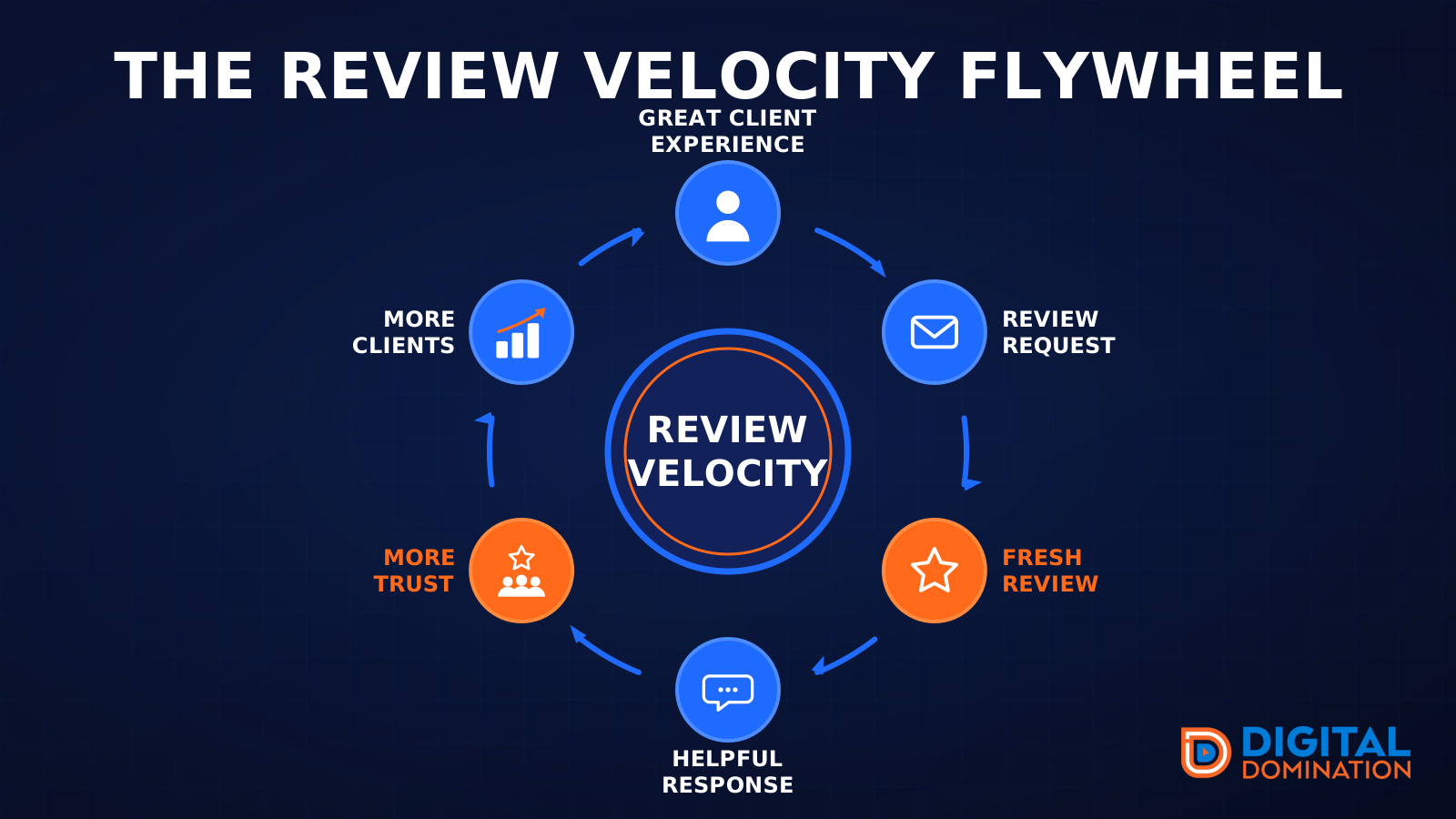
Nobody wants a public record of hiring a bankruptcy lawyer, so a steady trickle of new reviews matters more than a large old number. Ask at the two moments of relief: when the garnishment stops after filing, and when the Chapter 7 discharge arrives a few months later. In Chapter 13, ask at plan confirmation, not years later at completion.
Clients can review under a first name and never say the word bankruptcy. Reply with a thank you that never confirms anyone was a client. A useful bankruptcy review mentions:
- ▸The trigger: the garnishment, the foreclosure letter, the repossession, the lawsuit
- ▸How fast the calls and the garnishment stopped once the case was filed
- ▸Chapter 7 versus 13 explained without judgment, the house or car they kept, the county and a first name
Schema anchored on LegalService, with the bankruptcy district as the service area
Schema is JSON-LD that labels what the page already says so a machine can connect the facts: Example Debt Relief Law is a LegalService, a named Person works for it and holds a bar number and a consumer bankruptcy certification, and the firm provides Chapter 7 representation in a named federal district. The architecture for a debtor firm:
- ▸The firm: LegalService with address, telephone, openingHours including evening consults, priceRange, areaServed and sameAs to the state bar, Avvo, Justia, NACBA and LinkedIn; each office a distinct location node tied to it with parentOrganization.
- ▸Each attorney: Person, with worksFor pointing to the firm @id, hasCredential for the bar admission and board certification, identifier as a PropertyValue holding the bar number, and sameAs to the bar profile.
- ▸Each chapter and trigger: Service (Chapter 7, Chapter 13, stop wage garnishment, stop foreclosure, repossession, debt lawsuit defense) with provider pointing to the firm and areaServed naming the district, its divisions and counties.
- ▸Fees: Offer or PriceSpecification stating the flat Chapter 7 attorney fee and the separate court filing fee exactly as the page shows them.
- ▸The glue: a permanent @id for the firm, each office, attorney and service (the URL plus #firm, #office, #person or #service) so forty pages reference one entity instead of forty copies.
PageSpeed for a debtor on break-room Wi-Fi with a chat widget shouting free consultation
Bankruptcy websites have a recognizable shape: a directory-vendor template or aging WordPress theme, a slider of gavels, a chat window that opens on load, a free consultation modal on top of it, three directory badges and a PDF intake packet. On a break-room phone the fee and phone number appear six seconds after the chat bubble.
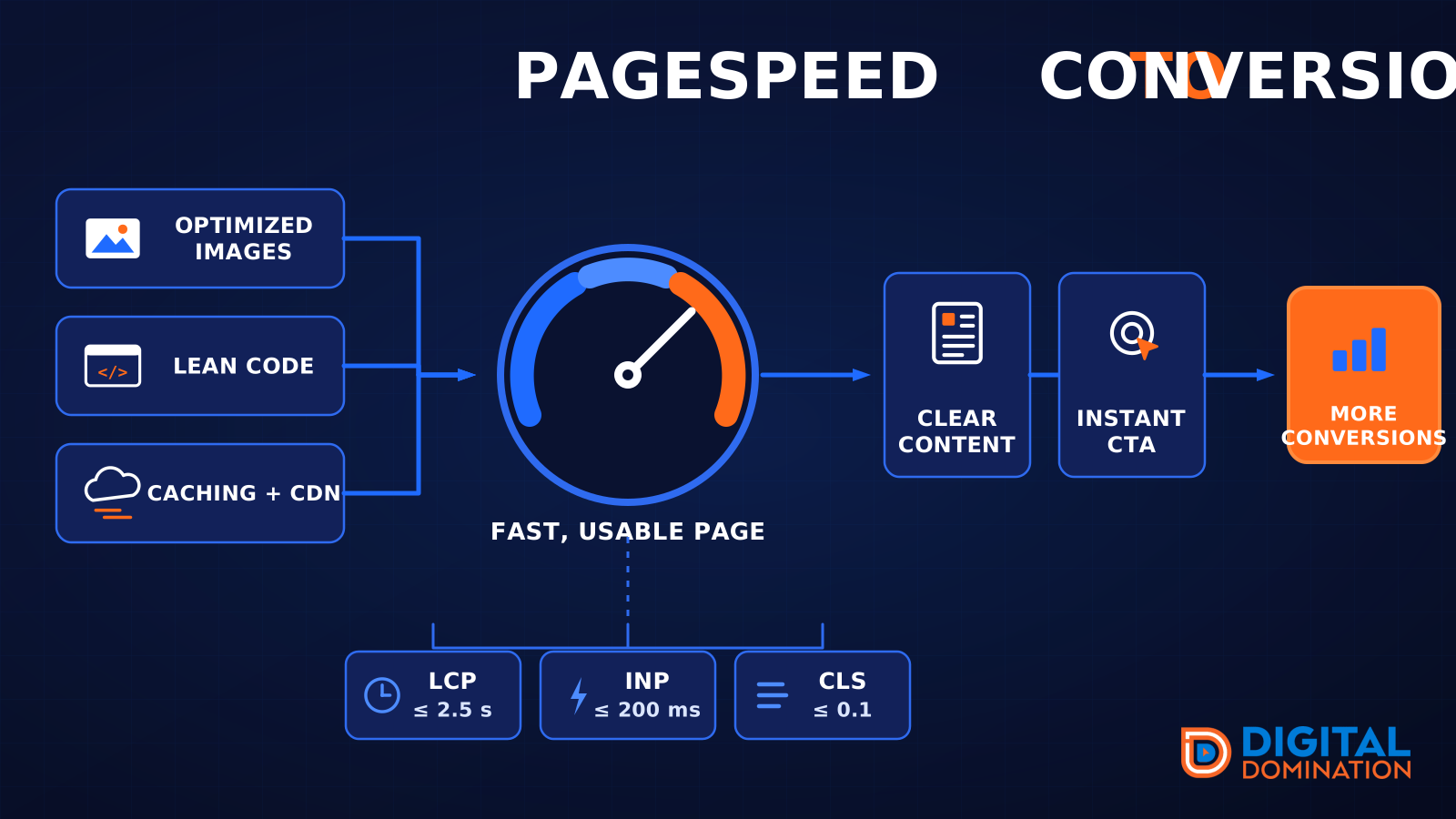
Google's good thresholds for Core Web Vitals are a Largest Contentful Paint of 2.5 seconds, an Interaction to Next Paint of 200 milliseconds and a Cumulative Layout Shift of 0.1, measured at the 75th percentile of field data. At Digital Domination we build to a PageSpeed Insights performance score of 90 or higher and a 2/2 on the agentic browsing check. The fixes that matter most here:
- ▸Replace the slider with one preloaded WebP of the attorney, never lazy-loaded, with the fee and phone number in the same viewport.
- ▸Delay the chat widget and the modal until first interaction; neither should open on its own on mobile.
- ▸Reserve dimensions for the review widget, badges and sticky call bar so nothing shifts under the thumb.
- ▸Turn the PDF intake packet into an HTML checklist page, cut unused theme CSS and JavaScript, self-host fonts, add caching and a CDN.
Flat fees, filing fees and $0 down language that AI Overviews can repeat without misleading anyone
How much does bankruptcy cost is one of the highest-volume questions in the niche, and the firm that answers it clearly is the one an AI Overview quotes. The fee structure is unusually explainable: a flat Chapter 7 attorney fee, generally paid before filing because a fee still owed at filing would itself be wiped out; a court filing fee set by the federal courts; and a Chapter 13 fee that in many districts follows a presumptively reasonable local amount, paid largely through the plan.
If the firm advertises $0 down or bifurcated Chapter 7 agreements, describe exactly how the post-filing portion works, because courts and trustees in several districts have examined these arrangements closely. Entering $1 in a GBP service is not a ranking trick. Language that earns the citation:
- ▸The Chapter 7 fee as a flat amount or narrow range, the filing fee listed separately, and what moves the total (a business, a prior filing, a contested exemption)
- ▸How much of the Chapter 13 fee is paid before filing and how much through the plan
- ▸Installment plans on the attorney fee, and whether a filing fee waiver or installment application is available for very low income clients
Content for the weeks between the first GARN line and the discharge order
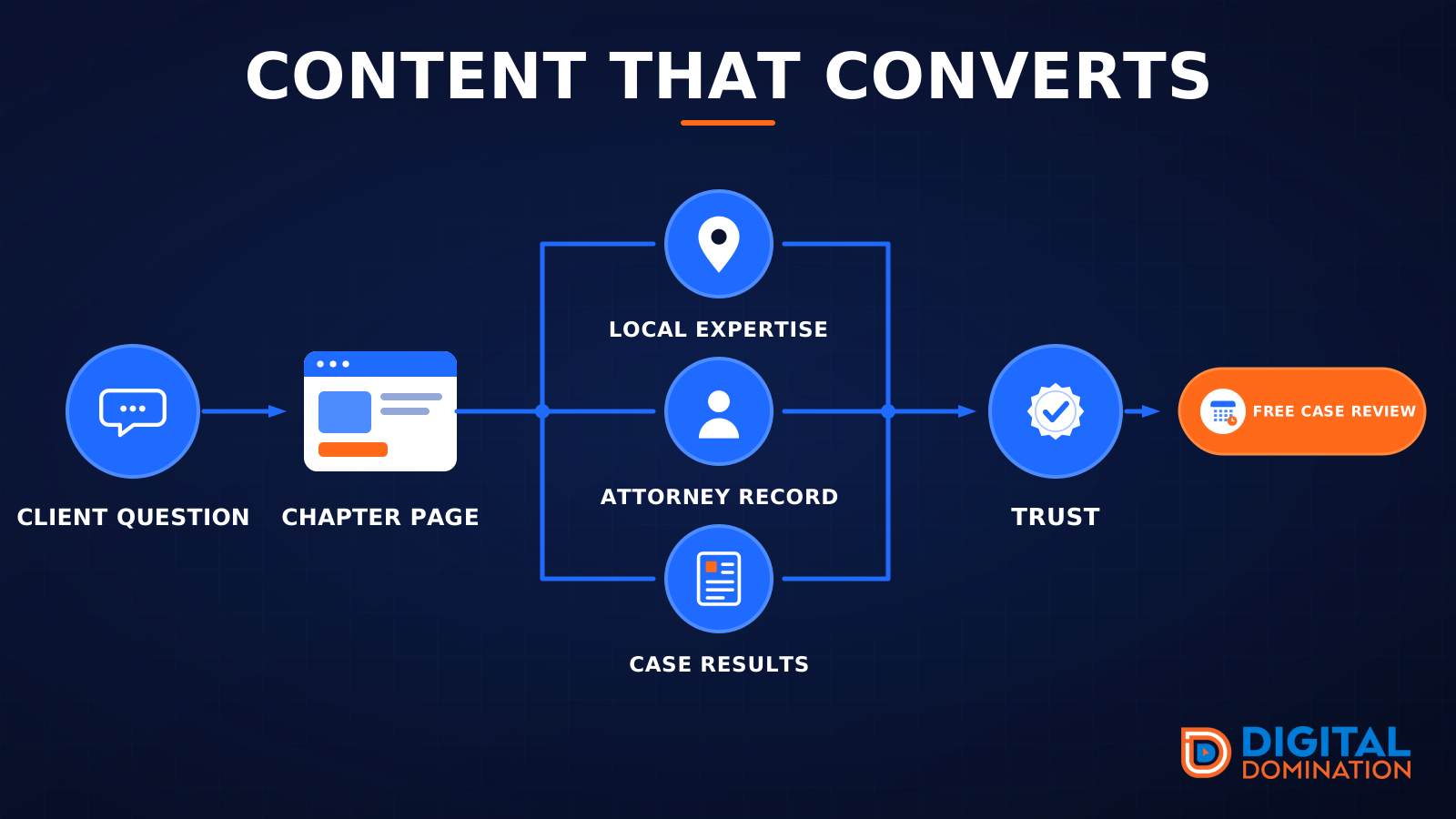
A debtor reads for two or three weeks before calling, so the site has to carry the relationship a phone call carries elsewhere. The pages that produce consultations are titled the way a frightened person types, open with the direct answer, use this state's exemptions instead of a national article with the city swapped, and name an attorney as author. The journey, in order:
- ▸Trigger pages: stop a wage garnishment, my bank account was frozen, I was served by a debt collector, notice of default, they repossessed my car
- ▸Will I lose my house or car, answered with this state's homestead and vehicle exemptions and what the automatic stay does on filing day
- ▸Chapter 7 versus Chapter 13, the means test and this state's median income, in a comparison a reader can scan
- ▸The 341 meeting of creditors, now held by video in most districts, which debts survive (student loans, recent taxes, child support), the required credit counseling and debtor education courses, and the document checklist
- ▸Life after discharge: the ten years a Chapter 7 and seven years a Chapter 13 stay on a credit report
Search Console, GA4 and the petition software: did the consultation become a filed case
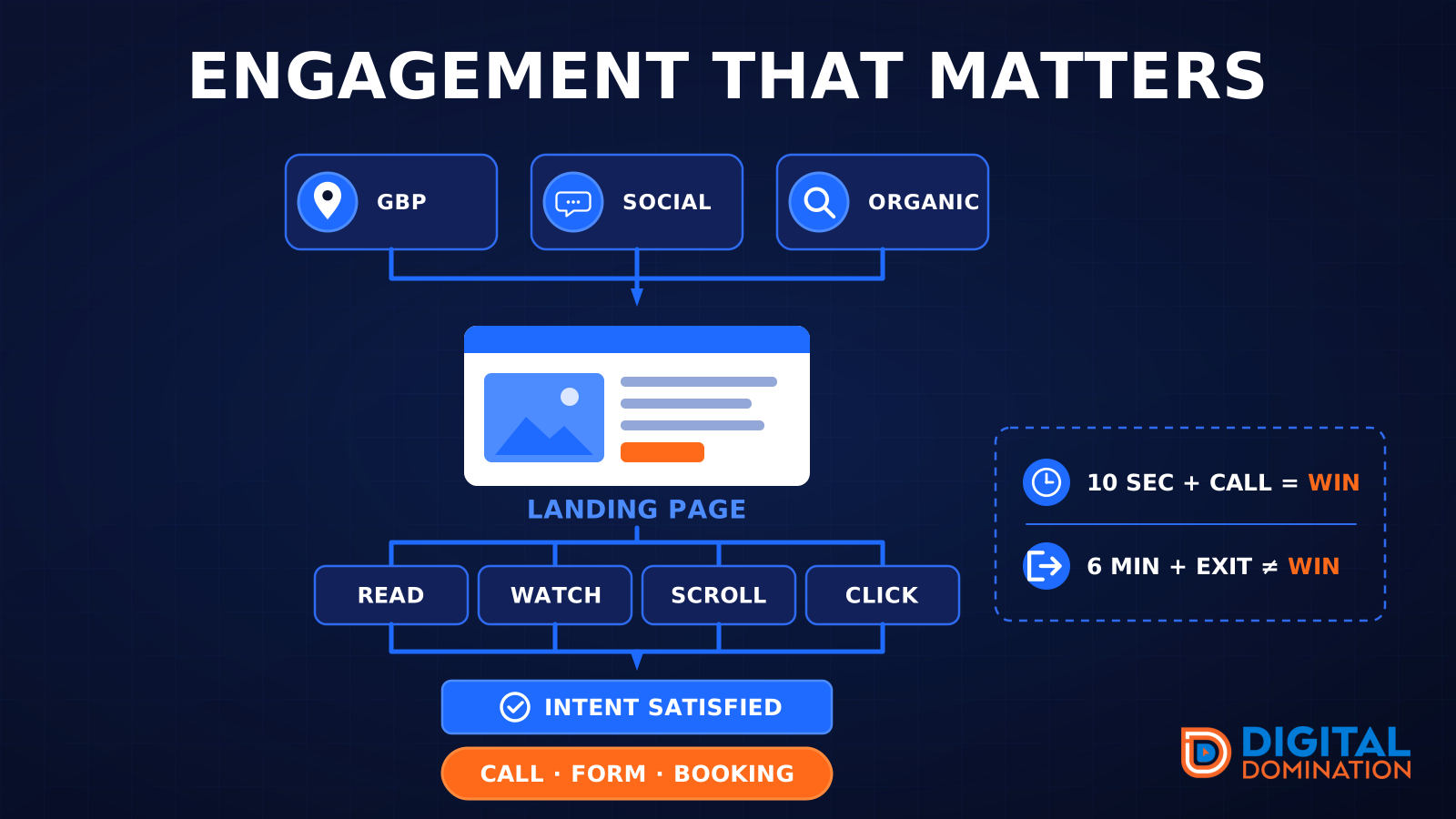
Search Console shows which questions Google already shows the firm for and where impressions outrun clicks. GA4 shows what the visitor did: read the fee page, opened a biography, tapped the number, booked. The intake CRM, or a spreadsheet beside the petition software, records the stages that matter: consult booked, kept, retained, documents collected, petition filed, 341 held, discharged. Document collection is where most files stall, and it is invisible unless someone tracks it.
Read the loop from the bottom up. Consults that never retain point at fee language or the wrong trigger page. Retained clients who never file point at the document process, which a checklist page and a reminder sequence fix. Pages with impressions and no clicks need a title written the way the debtor typed.
Short 341 videos, the bankruptcy subreddit and the mentions that corroborate the firm
A ninety-second video of the attorney explaining the 341 meeting, posted to the GBP and YouTube with a transcript, does more for a terrified reader than any slogan, and Google's Search Console now reports supported social and video platform properties, so the clip is measurable beside the pages.
A sentence in a local Facebook group naming the firm, the attorney, the garnishment it stopped and the county connects the same facts the schema declares, link or no link. Axios reported in August 2026 that Reddit's share of visible ChatGPT Search citations fell roughly 86 percent, while OpenAI still holds a Reddit data partnership, so answer honestly in the bankruptcy and personal finance subreddits without pitching. Sources worth making consistent:
- ▸The state bar profile, Avvo, Justia and the NACBA directory, with the same name, address and phone as the profile
- ▸The district's pro bono clinic pages where the firm volunteers, the legal aid and credit counseling agencies that refer out, and the real estate agents and mortgage brokers who see the pre-foreclosure client first
A 90-day roadmap that is ready before refund season
For most consumer firms the busiest weeks of the year arrive with tax refunds, when clients finally have the attorney fee in hand. This roadmap settles the entity, the trigger pages and the fee language before that wave, and measures filed cases rather than rankings alone. The four phases:
- ▸Days 1-14, baseline: GeoGrid scan for bankruptcy attorney and stop wage garnishment, audit of every GBP field and attorney profile, PageSpeed Insights on the home and fee pages, a schema dump, a NAP check across the bar directory, Avvo and NACBA, and GA4 events tied to intake stages.
- ▸Days 15-30, repair: Bankruptcy attorney as primary category, trigger and chapter services, evening hours and real photos, a page per office, the proof strip with the disclosure visible, biographies and the fee page, the LegalService, Person, Service and Offer graph, and the slider, auto-opening chat and modal removed.
- ▸Days 31-60, expand: trigger pages, the Chapter 7 versus 13 comparison for this state, the 341 explainer with video, the document checklist, the review ask at garnishment stop and at discharge, and the bar, Avvo, Justia and NACBA profiles aligned.
- ▸Days 61-90, optimize: impressions-without-clicks queries from Search Console, high-traffic low-consult pages from GA4 and retained-but-never-filed files from intake, the largest gap fixed first, Core Web Vitals and the GeoGrid scan re-run, then repeat monthly.
One firm, one entity, from the GARN line to the discharge order
The goal is one bankruptcy firm whose attorneys, certifications, chapters, fees, district and reviews say the same thing on Google Maps, the website, the schema, the state bar site, Avvo and NACBA, with a loop that measures filed cases instead of clicks. Digital Domination builds exactly that for debtor firms, with a guarantee of top 3 in the Google Map Pack in 12 weeks or you do not pay.
The woman in the break room will hire whoever Google shows her before her break ends. If you are not certain that is you from every part of your district, run the free GeoGrid scan and see where your firm ranks across 169 points in your market, not just from the office door.
Keep reading
Related guides
- ▸Fake Google Maps Listings Hijack Addresses
- ▸Family law attorney local SEO
- ▸Fence contractor local SEO
Put it into action
Frequently Asked Questions
What primary Google Business Profile category should a bankruptcy attorney use?
Use Bankruptcy attorney, the category Google offers for this work, with Law firm as a secondary. Avoid Bankruptcy service, which is shared with petition preparers and debt settlement companies and blurs what the firm is.
Should a bankruptcy firm publish its Chapter 7 fee on the website?
Yes, as a flat amount or narrow range, with the court filing fee listed separately and the variables that change it. AI Overviews quote the firm that answers the cost question clearly, so keep the numbers identical on the fee page, the GBP service and the Offer schema.
Is $0 down bankruptcy advertising safe to publish?
Only if it describes exactly what the firm does. Bifurcated Chapter 7 agreements, where part of the fee is paid after filing, have drawn close scrutiny from courts and trustees in several districts, so explain both portions and the total and have the firm's advertising compliance attorney review the page.
Does the debt relief agency disclosure have to appear on the website?
Federal bankruptcy law requires attorneys who qualify as debt relief agencies to state in their advertising that they help people file for bankruptcy relief under the Bankruptcy Code. Put it where a reader can find it, near the fee language and in the footer, and check your state bar's advertising rules too.
How does a bankruptcy attorney get Google reviews when clients are embarrassed?
Ask at the two moments of relief: when the garnishment or the collection calls stop after filing, and when the discharge order arrives. Let clients use a first name and skip the chapter, and reply with a thank you that never confirms anyone was a client.
What PageSpeed score should a bankruptcy law firm site target?
Target a PageSpeed Insights performance score of 90 or higher on mobile and pass Core Web Vitals in field data: LCP under 2.5 seconds, INP under 200 milliseconds and CLS under 0.1 at the 75th percentile. On bankruptcy sites the biggest wins are removing the slider and stopping the chat widget and modal from opening on load.
Ready to dominate your map?
Top 3 in the Google Map Pack in 12 weeks, or you don't pay.