
Case studies vs hiring an in-house marketer: which gets a local business more calls?
If phone calls from Google Search and Maps are the main goal, choose the path that gives you the clearest proof, the right daily capacity, and measurable local ranking work.
The short answer
If your main goal is more phone calls from local search, documented case studies are usually the better starting point for choosing a local SEO provider. They let you judge whether a provider has solved the same problem you have: turning Google Maps visibility, reviews, website signals, and profile activity into more customer actions.
Hiring an in-house marketer can be the right move, but it is a different decision. It fits a business that needs daily control over brand, campaigns, sales support, events, social media, email, promotions, and cross-channel marketing work. It also requires recruiting time, payroll, tools, training, and management.
For a local owner trying to decide this month, the practical question is not “agency or employee.” It is “who has the clearest plan and proof for getting found when nearby customers are ready to call.” Google Search Central recommends asking an SEO to show examples of previous work, share success stories, explain expected results, give a timeframe, and define how success is measured.
What case studies can tell you that a resume cannot
A good local SEO case study shows what was improved, where the business started, what changed, how long it took, and what was measured. It should not just say “we did SEO.” It should explain the search area, the local ranking problem, the Google Business Profile work, review growth, website improvements, and tracking method.
A resume tells you what one person has done in past roles. That can be useful, especially if you need a general marketer. But a documented case study shows whether a provider has a repeatable process across local markets. For a local service business, that proof matters because Google says local results are mainly based on relevance, distance, and prominence, not who has the biggest marketing wish list.
Strong case studies should help you verify these points:
- ▸The business type and market are clear.
- ▸The starting point is explained.
- ▸The work is tied to local search factors.
- ▸The timeframe is stated.
- ▸The measurement method is visible.
- ▸The result is specific, not vague.
- ▸The provider explains what changed and why.
Where an in-house marketer is the stronger choice
An in-house marketer is often the better choice when the business needs a steady internal person touching many parts of the company every day. That person can sit in meetings, coordinate with sales, help the owner respond quickly, prepare event materials, update offers, work with vendors, and keep the brand consistent across channels.
This is especially valuable for multi-service companies, franchises, medical practices, retail stores, or businesses with frequent promotions. If the owner wants someone on-site who understands internal operations and can support many departments, an employee may be worth the extra management load.
Choose the in-house path when these needs matter more than specialized local SEO proof:
- ▸Daily brand control.
- ▸Sales team support.
- ▸Event and community marketing.
- ▸Email and social posting cadence.
- ▸Internal project coordination.
- ▸Fast edits across many campaigns.
- ▸Hands-on work inside the business.
The cost and timing difference owners should not ignore
A provider chosen from strong case studies can usually start with an audit, a local ranking scan, and a focused plan. An employee takes longer because you have to recruit, interview, hire, onboard, train, and manage the role. SHRM’s 2025 recruiting benchmarking report defines time-to-fill as the calendar days from opening a job requisition to accepted offer, and reports 44 days as the 2025 median for nonexecutive positions.
Payroll is also a real factor. The U.S. Bureau of Labor Statistics reported that market research analysts and marketing specialists had a median annual wage of $78,760 in May 2025. That figure is not the full cost of an employee because owners also have to consider benefits, taxes, software, management time, and the risk of hiring someone who still needs outside SEO support.
That does not mean an agency is always cheaper or better. It means you should compare total capacity, not just monthly expense. A coordinator may be a great hire if the business already has strong SEO direction and needs execution. A specialist provider may be better if the business lacks local search expertise and needs calls faster.
What Google says actually affects local calls
More calls usually start with being visible in the places customers search. Google Business Profile Help says complete and accurate business information makes a business more likely to show up in local search results. Google also says verifying a Business Profile tells Google the representative is authorized and makes the business more likely to show up in search results.
Google Business Profile Help says local results are mainly based on relevance, distance, and prominence. It also says prominence is based on information such as websites linking to the business and reviews, and that more reviews and positive ratings can help local ranking. Google also says there is no way to request or pay for a better local ranking on Google.
That means a local call growth plan should cover the basics first:
- ▸Verified Google Business Profile.
- ▸Accurate name, address, phone, hours, and services.
- ▸Clear service categories and descriptions.
- ▸A website that supports local relevance.
- ▸A review process that follows Google rules.
- ▸Local authority signals and useful content.
- ▸Tracking for calls and profile actions.
What to look for before you choose either option
Whether you hire a provider or an employee, you need checkpoints you can verify. Google Business Profile Help says Business Profile owners and managers can check views, clicks, and other customer interactions with a profile on Search and Maps. It also says the Calls metric is the number of times a customer clicked the call button on the Business Profile, and a phone number must be added to track that metric.
Google Business Profile performance data is available only for verified Business Profiles. Google also says Business Profile managers can edit information, respond to reviews, manage posts, edit the phone number, edit services, and download insights. That gives an owner a practical way to judge whether the work is being done, not just discussed.
Ask for these checkpoints before you sign or hire:
- ▸Current map visibility by search area.
- ▸Verified access to the Business Profile.
- ▸Correct phone number tracking setup.
- ▸Baseline calls from the profile.
- ▸Baseline website leads and calls.
- ▸A written 30-day action plan.
- ▸Weekly or monthly reporting format.
- ▸A clear definition of success.
Seven questions to ask before you sign
A fair comparison requires the same questions for both sides. Ask the local SEO provider these questions during the sales process. Ask the in-house candidate the same questions during interviews. The goal is to see who can connect daily work to measurable calls, not who uses the most marketing terms.
Use these questions as your buying filter:
- ▸Can you show previous work and success stories?
- ▸What result do you expect, and in what timeframe?
- ▸How will you measure calls from Google Search and Maps?
- ▸What will you change in the first 30 days?
- ▸Who will manage reviews and responses?
- ▸How will you improve relevance, distance coverage, and prominence?
- ▸What reporting will I see, and how often?
The main risk of choosing from case studies
Case studies are useful, but they are not magic. A case study from another city, trade, or competitive situation may not match your market. Google Search Central says search-impact timing can range from a few hours to several months and recommends waiting a few weeks to assess whether changes had beneficial effects.
You should also be cautious of any provider who acts like local rankings can be bought directly. Google Business Profile Help says there is no way to request or pay for a better local ranking on Google. The better question is whether the provider can show a sound process, a realistic timeframe, and transparent measurement.
A case study is strongest when it shows the provider’s thinking, not just the finish line. You want to know what changed, how it was tracked, and whether the work maps to Google’s published guidance on local results.
The main risk of hiring in-house
The biggest risk of hiring in-house is expecting one person to be a full marketing department and a local SEO specialist at the same time. Google Search Central lists SEO services that can include site content or structure review, technical website advice, content development, online business campaign management, keyword research, SEO training, market and geography expertise, and generative AI optimization. That is a broad skill set.
A marketing coordinator may be excellent at keeping campaigns moving, but still need outside support for technical SEO, local ranking diagnosis, review strategy, content planning, call tracking, or Google Business Profile optimization. If you hire in-house, plan for tools, training, outside vendors, and owner oversight.
This option works best when the role is defined clearly from the start:
- ▸Brand and campaign coordination.
- ▸Sales and event support.
- ▸Vendor communication.
- ▸Content and social scheduling.
- ▸Basic reporting.
- ▸Internal follow-up.
- ▸Outside specialist management.
How Digital Domination approaches this decision
Digital Domination is built for local businesses that want measurable Google Maps growth, not vague marketing activity. Its free 169-point GeoGrid scan checks 169 real Google results across the service area, so an owner can see where the business ranks from different points in the market.
The company works with one client per trade per service area, which gives territory exclusivity. Its Maps Domination Program pricing is set per market on a qualification call and tied to the ranking outcome. The guarantee is: top 3 in the Google Map Pack in 12 weeks or you do not pay.
Digital Domination also provides weekly GeoGrid tracking reports with visual proof of rankings and call volume. Its published case studies include a Las Vegas barbershop, a Phoenix auto repair shop, a family-owned electrician, a Nashville mobile mechanic, and a Pensacola eyeglass store.
Which choice should you make?
Choose a provider based on documented case studies if your main problem is visibility in Google Maps, weak local rankings, inconsistent calls from search, or uncertainty about what SEO work is actually moving the needle. This path is especially strong when the provider can show a clear starting point, a local ranking scan, a plan tied to Google’s known local ranking factors, and reporting that tracks calls.
Choose an in-house marketer if your business needs daily operational marketing support across many channels. That person can be the right fit when you need brand control, campaign coordination, sales materials, event support, vendor management, and fast internal communication every day.
If you want to review proof first, visit Digital Domination’s Case Studies page. It shows documented local SEO outcomes by business type and market. If you want to see where your business ranks before deciding, request the free GeoGrid scan on Digital Domination’s scan page.
Keep reading
Related guides
- ▸GBP Messaging Ein Privacy Policy
- ▸Google Business Profile photo verification
- ▸GBP Reinstatement Checklist
Put it into action
Frequently Asked Questions
Should I hire a marketing coordinator or a local SEO company first?
If your main goal is more calls from Google Search and Maps, start by reviewing local SEO case studies and getting a ranking scan. If your main need is daily brand, campaign, sales, and event support, a marketing coordinator may be the better first hire.
Can an in-house marketer manage my Google Business Profile?
Yes, a Business Profile manager can edit information, respond to reviews, manage posts, edit services, edit the phone number, and download insights. The question is whether that person also has the local SEO experience to improve rankings and calls.
What should a local SEO case study include?
It should show the starting point, the market, the work performed, the timeframe, and the measurement method. For call growth, it should connect visibility changes to Business Profile actions, call clicks, or tracked phone calls.
How long does local SEO take to show results?
Google Search Central says search-impact timing can range from a few hours to several months. It also recommends waiting a few weeks to assess whether changes had beneficial effects, so be cautious of anyone promising instant ranking changes.
Can I pay Google to rank higher in the Map Pack?
No. Google Business Profile Help says there is no way to request or pay for a better local ranking on Google. Local results are mainly based on relevance, distance, and prominence.
How do I know if more calls are coming from Google?
Google Business Profile Help defines the Calls metric as the number of times a customer clicked the call button on the Business Profile. A phone number must be added to track that metric, and the profile must be verified to access performance data.
Is an agency better than an employee for local SEO?
Not always. An agency with strong case studies may be better for specialized local ranking work, while an employee may be better for daily marketing coordination. The right choice depends on whether your bottleneck is local search expertise or internal marketing capacity.
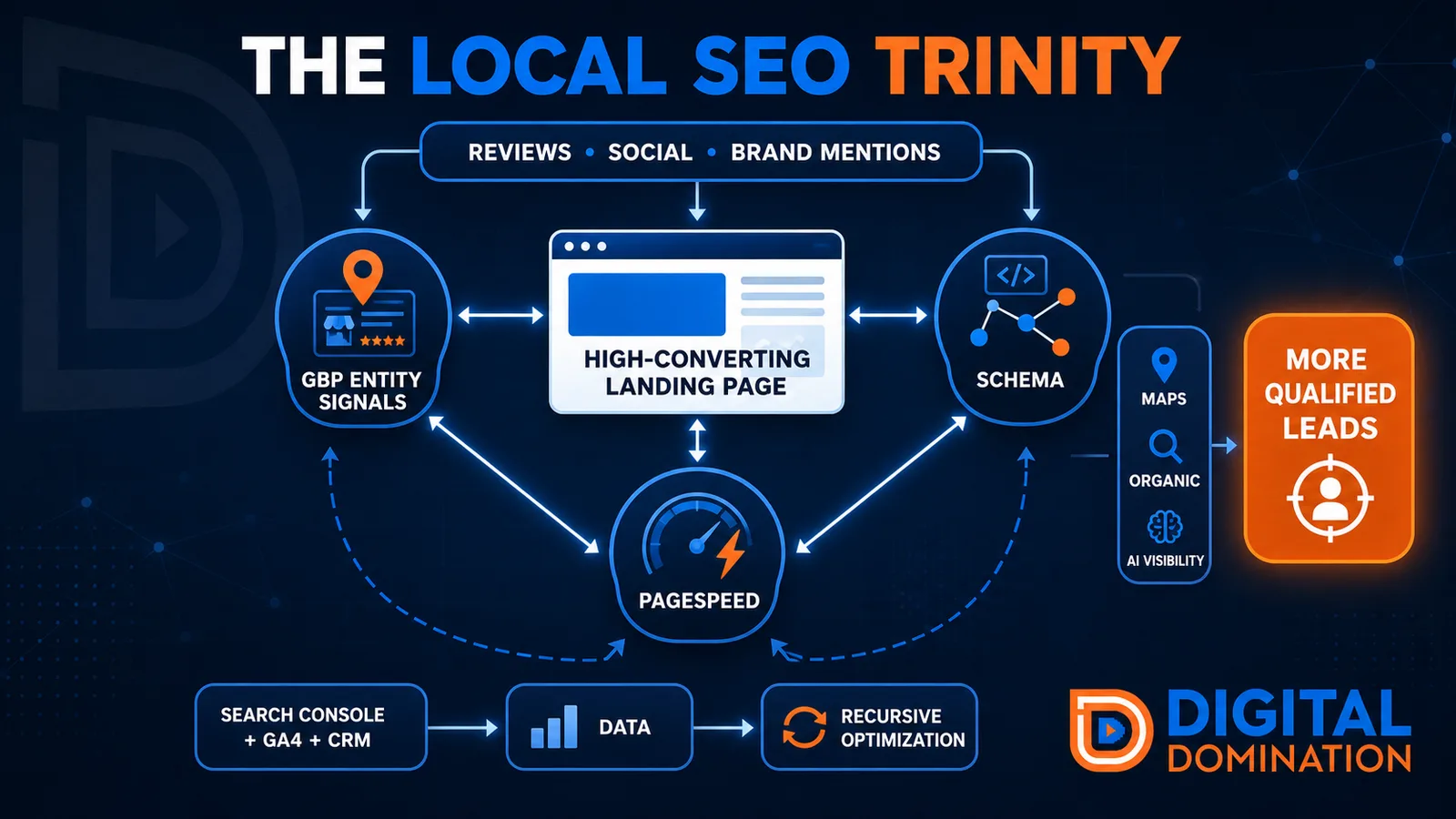
The Local SEO Trinity
Think of a three-legged stool. Your Google profile, your website, and your reviews all have to hold you up. If one leg is short, the whole thing wobbles.
GBP entity signals
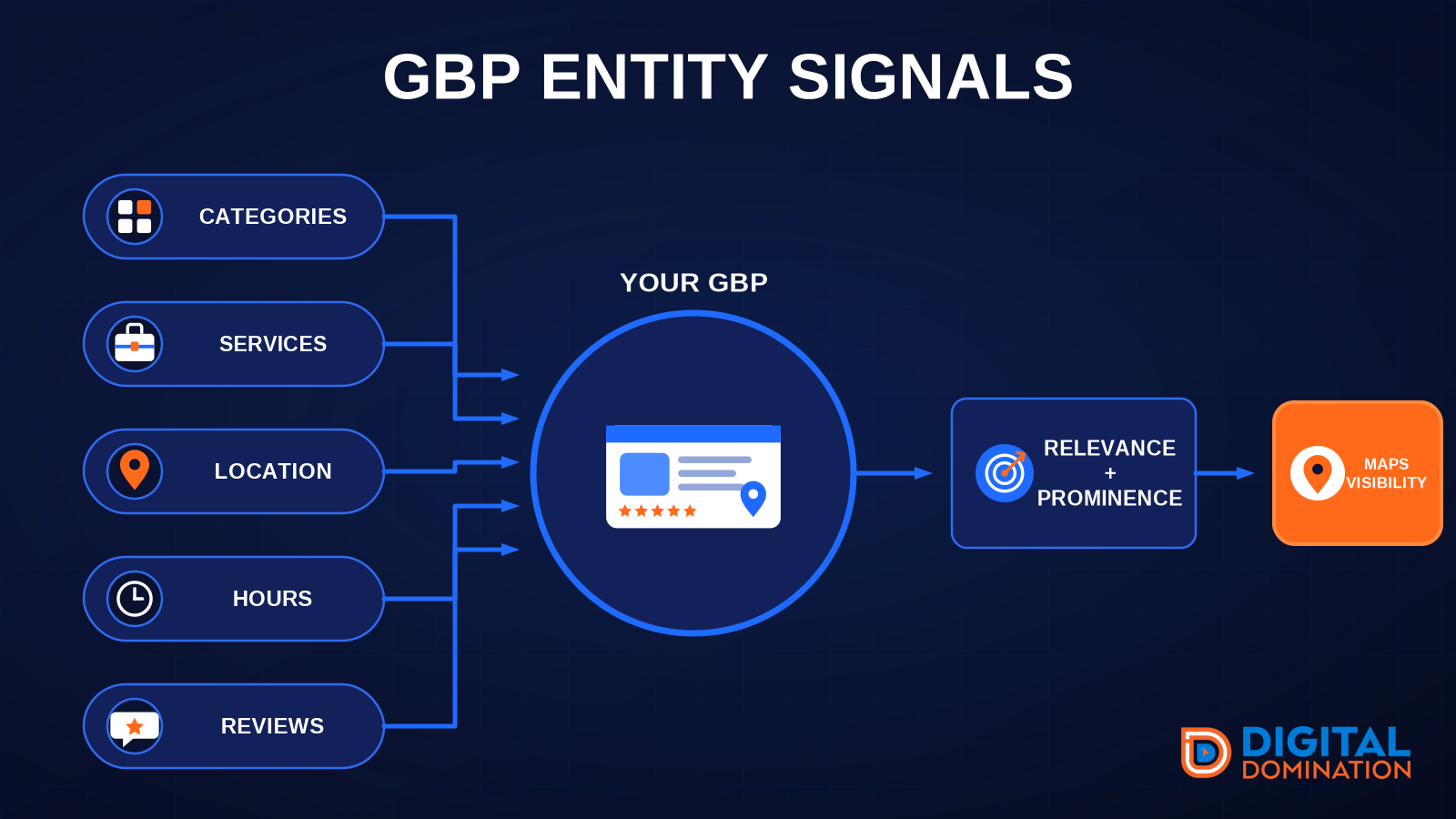
This leg is your Google Business Profile. GBP means Google Business Profile. It covers your categories, your services, your location, your hours, and your reviews. Google uses those facts to decide who to show.
Your Google profile is your storefront sign. If the sign is missing, or it names the wrong shop, people drive past.
PageSpeed to conversion
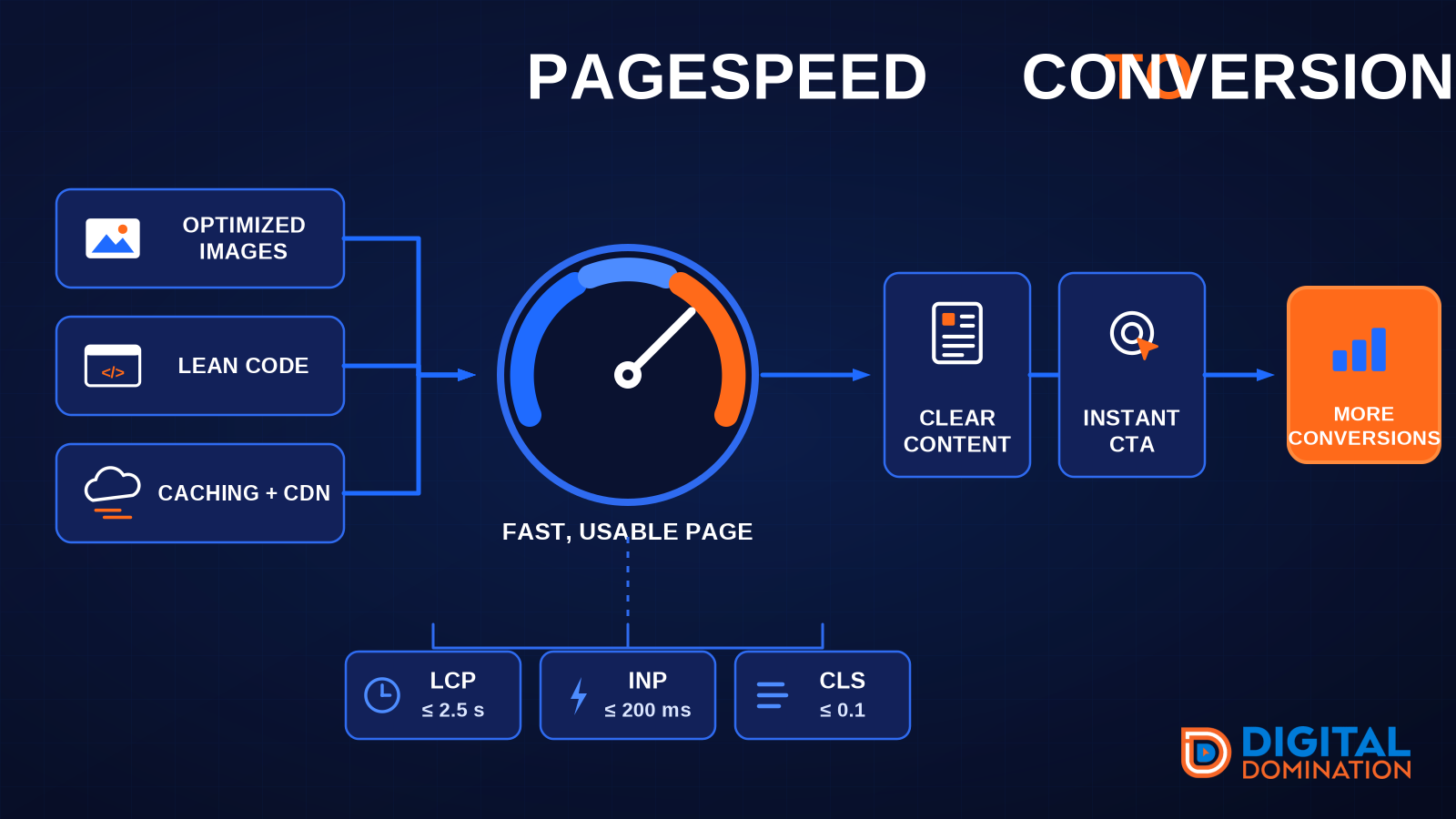
This leg is your website, above all on a phone. Small images, lean code, and caching make a page fast. A fast, clear page is what turns a visit into a call. Phone speed is one of the 12 Trinity checks because a slow page loses the call before anyone sees your offer.
Your website is the showroom. If the door sticks, people leave before they look around.
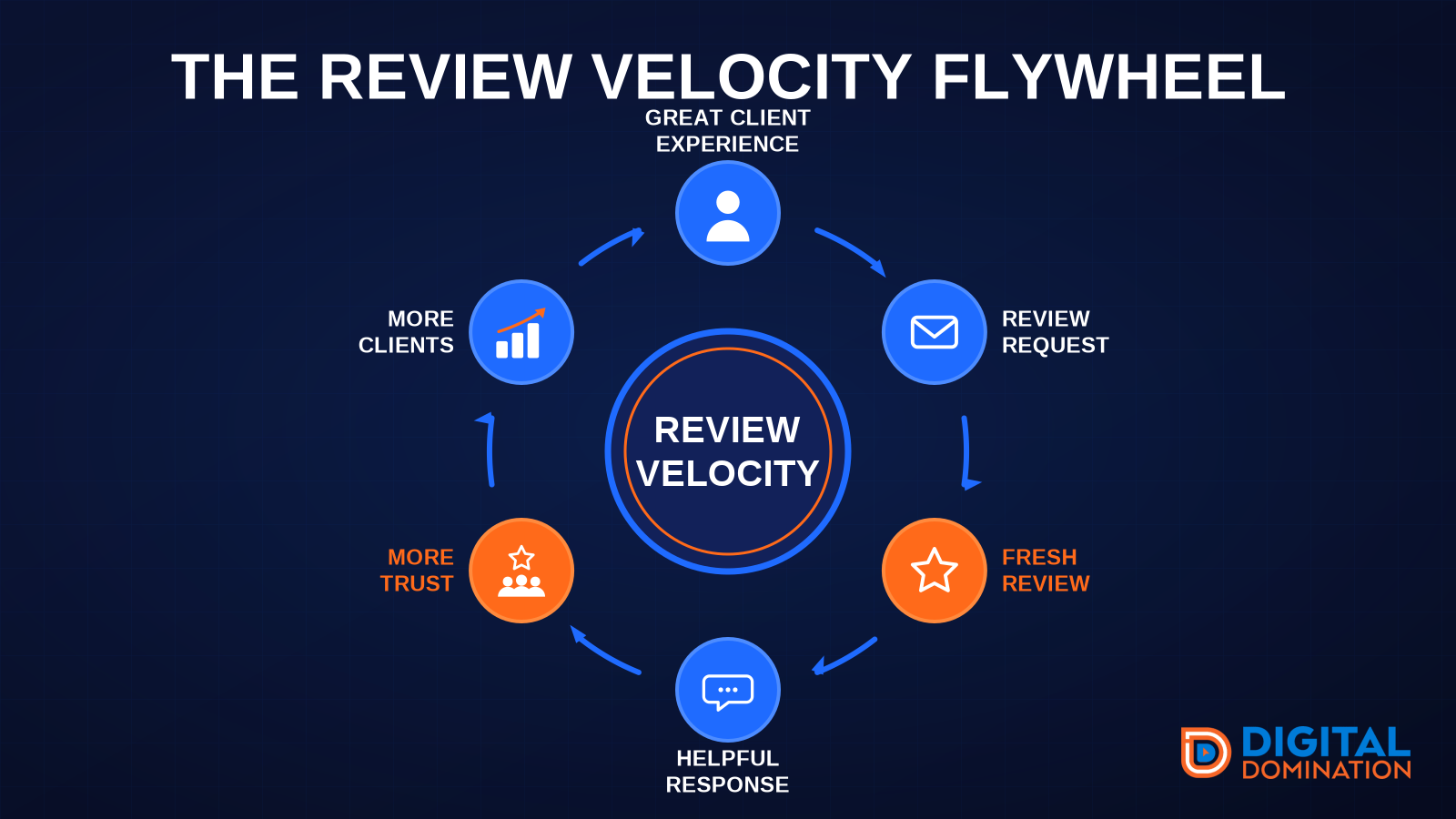
The review velocity flywheel
This leg is reviews and reputation. A good visit leads to a review request, then a fresh review, then a helpful reply, then more trust, then more customers. When the scan can find your Google listing, it shows your rating, your recent reviews, and how many you answered.
Reviews are word of mouth. One kind word helps. A steady stream of real reviews, and a reply from you, helps more.
How this turns into revenue
Being found in more searches leads to more calls. More calls lead to more booked jobs. More booked jobs lead to more revenue.
Example numbers, not a real business: 40 calls from search in a month, a 25 percent close rate, and a $400 average job. That is 10 booked jobs. That is $4,000. The math is the lesson. It is not a promise.
The full page has a box where you can type your own average job value and close rate.
One real story, from our car dealership case study: Medina Auto Group went from invisible on Google Maps to dominating every high-intent search across their market. The turnaround spanned all four of their rooftops at once. The same page says the team eliminated 89 unfair one-star reviews that had been dragging the dealership's reputation down and keeping it out of the Map Pack. It also says: “Results described here are exceptional and non-typical. Outcomes vary based on market conditions, competition, and implementation. No guarantees are made regarding earnings, rankings, or conversions.”
Free strategy call
More booked jobs start with a clear plan
Book a free strategy call. We look at your Google profile, your website, and your reviews, and we tell you what to fix first.
Free. You pick the time. A real person shows up.