
Gemini starts tagging outbound links. Here is what local businesses should ask AI SEO providers to prove
Some Gemini clicks may no longer hide inside Direct traffic. That is useful, but it is not a blank check for vague AI visibility reports.
What changed, and who it hits
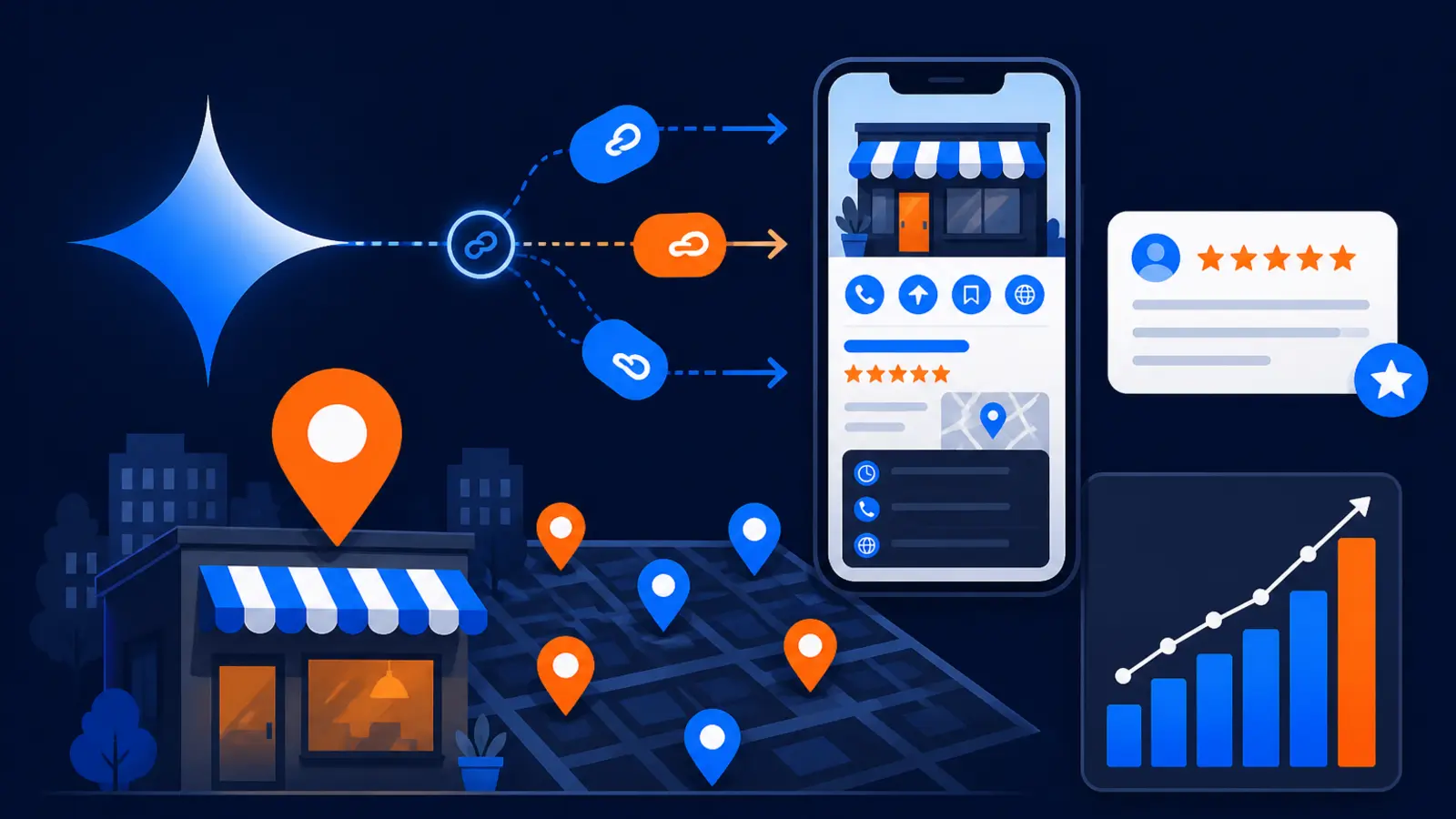
Search Engine Journal reported on October 1, 2026 that Google Gemini has begun adding UTM parameters to some outgoing links. In plain English, some people who click from a Gemini answer to your website may now show up in analytics with clearer source information instead of being buried as Direct traffic.
This hits any local business paying for AI SEO, answer engine optimization, content work, or local search consulting. If you run a plumbing company, med spa, HVAC company, law firm, dental office, roofing company, or other local service business, the buying conversation just changed. A provider should not only show that your business appears in an AI answer. They should start connecting AI discovery to pages, calls, form fills, booked jobs, and revenue conversations where possible.
The important word is some. Follow-up coverage from Index Lab on October 2, 2026 noted that Google has not documented exactly when Gemini adds these tags. That means Gemini-tagged traffic is useful proof, but it is not the whole proof.
Why UTM tags matter in plain English
A UTM tag is a label added to a link so your analytics tools can see where a visit came from. When a person clicks a normal untagged link from an app, browser, email, or AI tool, analytics can sometimes misread the visit or drop it into Direct traffic. Direct traffic is the bucket many owners see but cannot explain.
When Gemini adds UTM parameters to outbound links, a visit from Gemini can be easier to spot. That gives a local business owner a better way to ask, did AI search actually send someone to my site, or are we only talking about visibility screenshots?
For a local business, this can matter because AI search behavior often happens before a traditional Google search. A homeowner might ask Gemini for a local repair option, read a summarized answer, click through to compare services, and call later. Clearer tagging makes one part of that path less invisible.
What the sources actually said
The story started with a Reddit r/SEO thread titled Google Gemini add UTM to results, where users noticed the tagging. In that thread, Google Search Advocate John Mueller said he could see the tagging too. Search Engine Journal then reported the change, and Index Lab followed up by stressing that Google has not documented when the tags appear.
That matters because undocumented rollouts can be uneven. You may see Gemini traffic in one market, one device type, or one query path, but not another. You should not assume a blank analytics line means Gemini produced nothing, and you should not assume one tagged click represents the entire AI search picture.
The practical takeaway for an owner is simple: treat the new tagging as a minimum signal, not a complete scoreboard. Ask your provider to separate these four items in reporting:
- ▸Tagged Gemini visits that appear in analytics
- ▸Other AI referral traffic that is identifiable
- ▸Direct traffic changes that may include untagged AI clicks
- ▸Actual leads, calls, bookings, and qualified inquiries
The buying conversation has changed
Before this change, many AI SEO reports leaned heavily on screenshots. A provider might show that Gemini, ChatGPT, Perplexity, or another AI tool mentioned your business. That can be useful, but it does not prove that a person visited your site or became a lead.
Now that some Gemini clicks can carry attribution, a provider should be able to add a harder question to the report: did any tagged Gemini traffic reach a page that could generate a lead? That could be a service page, location page, estimate request page, booking page, contact page, or a page with a trackable phone number.
This does not make screenshots worthless. It makes screenshots incomplete. Visibility is the start of the trail. Visits, calls, forms, and booked work are the evidence an owner can use to decide whether AI SEO deserves more budget.
Five things to check in your reports this week
If you are already paying for AI SEO, ask for a short addendum to your next report. It does not need to be fancy. It needs to separate what is measured, what is inferred, and what is still unknown.
Here are the five checks to ask for this week:
- ▸A traffic report showing any visits where the source, medium, or campaign field indicates Gemini
- ▸A landing page report showing which pages received those visits
- ▸A conversion report showing whether those visits produced calls, forms, chats, quote requests, or bookings
- ▸A separate line for AI visibility screenshots, clearly marked as visibility and not leads
- ▸A note explaining what may still be hidden in Direct traffic because Google has not documented the rollout
Do not let tagged clicks become over-reporting
The biggest risk is not that the new Gemini tagging is useless. The risk is that it gets oversold. If a provider takes a few tagged visits and calls the entire campaign proven, that is not responsible reporting.
Local businesses need practical attribution, not inflated credit. A customer might discover you in Gemini, click your website, leave, search your brand later, read reviews, and call from your Google Business Profile. Another customer might never click from Gemini at all, but the AI answer may still influence the decision. Attribution should explain that path instead of pretending it is perfectly clean.
Ask your provider to avoid these reporting shortcuts:
- ▸Counting every Direct traffic increase as AI search impact
- ▸Treating an AI mention as a lead
- ▸Combining Gemini clicks with all other traffic without a separate line
- ▸Claiming full rollout coverage when Google has not documented when tags appear
- ▸Reporting visits without showing calls, forms, or qualified inquiries
What proof should your provider show now
A good AI SEO report for a local business should connect three levels of proof: visibility, traffic, and lead quality. Visibility tells you whether AI systems can find and cite your business. Traffic tells you whether some users clicked through. Lead quality tells you whether the work is creating real sales opportunities.
For most local owners, the report should be simple enough to read in a few minutes. You should not need to understand analytics jargon to know whether the campaign is moving toward booked work.
Ask for proof in this order:
- ▸Where your business appeared in AI answers, with screenshots and dates
- ▸Which pages were cited or clicked from Gemini when tagging is visible
- ▸Which service and location pages received those visits
- ▸Which calls, forms, chats, or bookings followed those visits
- ▸Which leads were qualified, spam, existing customers, or unrelated inquiries
What to do about it
You do not need to rebuild your marketing stack this week. You do need to make sure your reporting can catch the signal when it appears. Start with your website analytics, call tracking, lead forms, and service pages.
Make sure your most important pages are worth the click. If Gemini sends someone to a thin page with a vague headline, no service area, no proof, and no clear call option, attribution will not save the lead. The click still has to land on a page that helps a real person choose you.
Here is the owner-level action list:
- ▸Ask your provider whether analytics is already capturing UTM parameters
- ▸Create or review a report filtered for Gemini-tagged traffic
- ▸Check that phone calls, forms, chats, and booking buttons are tracked on key pages
- ▸Review your top service pages for clear service area language, trust signals, and a simple next step
- ▸Compare Gemini-tagged visits with Direct traffic trends, but keep them in separate lines
- ▸Ask your team to mark lead source notes when callers mention AI, Google, or online research
Where local SEO still fits
AI search does not replace local SEO. It sits on top of many of the same signals customers already use to trust a local business. Gemini and other AI tools may summarize information from across the web, but a weak local footprint still creates a weak trust trail.
Google's local ranking factors are relevance, distance, and prominence. Those still matter for the Google Map Pack, and they also matter indirectly because AI systems need consistent, credible information to understand who you are, what you do, and where you serve.
This week, check the local assets that AI tools and customers are likely to encounter:
- ▸Your Google Business Profile categories, services, hours, and service areas
- ▸Your core service pages and city pages
- ▸Your business name, address, phone number, and website consistency across major profiles
- ▸Your reviews and the words customers use to describe your services
- ▸Your photos, project descriptions, FAQs, and service explanations
What not to buy after this news
New attribution creates a new sales pitch. Some providers will make reasonable updates to their reporting. Others may repackage the same screenshots with a new label and call it AI SEO measurement.
Be careful with any offer that treats Gemini tagging as if it solves all attribution. Search Engine Journal reported that Gemini is adding UTM parameters to some outgoing links. Index Lab noted that Google has not documented when that happens. Those two details should keep the conversation grounded.
Be cautious if you hear any of these claims:
- ▸We can prove every AI-driven lead now
- ▸Direct traffic is definitely AI traffic
- ▸Screenshots are the same as conversions
- ▸Gemini tags mean you no longer need call tracking
- ▸AI SEO reporting does not need landing page or lead data
The better standard for AI SEO reporting
The better standard is not perfect attribution. It is honest attribution. A local business owner should be able to see what was directly measured, what was probably influenced, and what remains unknown.
A useful monthly report might show Gemini-tagged traffic separately, AI visibility screenshots separately, branded search movement separately, Direct traffic separately, and booked leads separately. That gives you a cleaner way to decide whether the work is creating demand, capturing demand, or only producing visibility with no business outcome yet.
If a provider is doing strong work, this kind of reporting should help them too. It gives them a clearer way to improve pages, tighten citations, expand helpful content, and focus on the searches and AI answers that lead to real inquiries.
How to use this news when choosing an AI SEO provider
This change gives local business owners a better question to ask before signing or renewing an AI SEO agreement: what proof will I see if Gemini sends traffic to my site? The answer should include tagged traffic when available, but it should also include call tracking, form tracking, lead quality notes, citation work, page improvements, and local visibility tracking.
At Digital Domination, we look at AI search through the lens of local lead generation, not just screenshots. The relevant service page at digitaldomination.ai/ai-seo/ explains how AI SEO connects content, local entity signals, citations, and conversion-focused pages so a service business can be found and chosen in AI-assisted search.
If you are deciding whether AI SEO is worth paying for, start by measuring your current local visibility first. Our free GeoGrid scan checks 169 points across your market so you can see where you stand in Google Maps before adding another layer of reporting. Start with the free GeoGrid scan at digitaldomination.ai/scan/.
Keep reading
Related guides
- ▸Immigration lawyer local SEO
- ▸Insurance agent local SEO
- ▸Is Review Gating Illegal, or Just Against Google's Policy?
Put it into action
Frequently Asked Questions
What are Gemini UTM parameters?
They are tracking labels added to some outbound links from Google Gemini. When someone clicks one of those links to your website, your analytics may be able to identify the visit as coming from Gemini instead of placing it in Direct traffic.
Can I now prove all AI SEO traffic from Gemini?
No. Search Engine Journal reported that Gemini has begun adding UTM parameters to some outgoing links, but Index Lab noted that Google has not documented exactly when the tags appear. Treat the visible Gemini traffic as a minimum signal, not the full total.
What should I ask my AI SEO company for after this change?
Ask for a report that separates Gemini-tagged visits, other AI referrals, Direct traffic shifts, AI visibility screenshots, and actual leads. The report should also show which landing pages received visits and whether those visits produced calls, forms, chats, or bookings.
Does a Gemini click mean I got a lead?
Not by itself. A click only proves someone reached your site from a tagged Gemini link. You still need call tracking, form tracking, chat tracking, booking data, or CRM notes to connect that visit to a real sales opportunity.
Why is Gemini traffic sometimes showing as Direct traffic?
Traffic can fall into Direct when analytics tools do not receive clear source information. The new UTM tagging can make some Gemini visits easier to identify, but because Google has not documented the rollout, some AI-driven visits may still be hard to separate.
Is AI SEO worth paying for if tracking is incomplete?
It can be, but you should buy it with clear reporting standards. Your provider should show visibility, traffic, landing pages, citations, calls, forms, and lead quality instead of relying only on screenshots of AI answers.
How do I check whether Gemini sent traffic to my local business website?
Ask your provider or analytics person to filter traffic reports for source, medium, or campaign fields that indicate Gemini. Then review the landing pages, calls, forms, chats, and bookings connected to those visits.
Does this change affect Google Maps SEO?
It does not replace Google Maps SEO. Local ranking still depends on relevance, distance, and prominence, and your Google Business Profile, reviews, service pages, and citations still help customers and AI systems understand your business.
Ready to dominate your map?
Top 3 in the Google Map Pack in 12 weeks, or you don't pay.