
Dentist local SEO: how GBP entity signals, schema and PageSpeed turn a Saturday sideline emergency into a new patient family
The practice with the steadiest hands and the newest scanner does not automatically fill its hygiene schedule. The practice Google can read as one entity, a parent can trust in five seconds and a phone can load in two does.
Why the better dentist loses the mom on the soccer sideline
Saturday, 9:15 in the morning, a youth soccer field. A nine-year-old takes an elbow to the mouth and comes off the pitch with half a front tooth in his hand. His mom is kneeling in wet grass with a paper towel in one hand and her phone in the other, typing "emergency dentist near me open saturday" while the other parents watch. She scans three listings. One says Closed. One has 4.2 stars and a photo of a parking lot. One says Open, shows a smiling dentist in scrubs, lists Emergency dental service and Accepts new patients, and has a review that mentions a chipped tooth fixed the same morning. She taps Call. The whole decision took under a minute and had nothing to do with which dentist has the better hands.
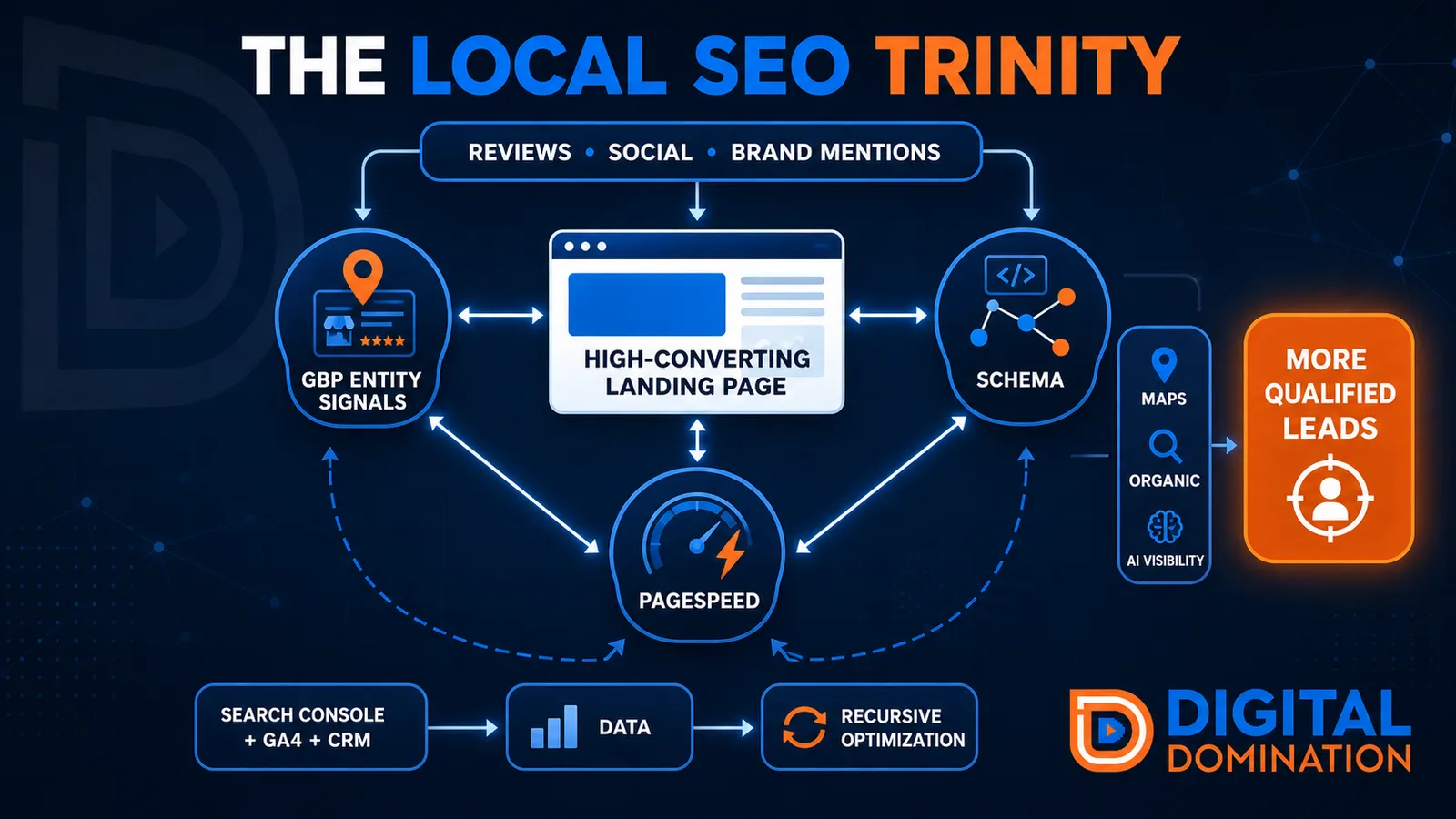
The practice with the CEREC mill, the sedation permit and twenty years of restorative experience may have been the right answer and never appeared. Maybe nobody added Saturday hours. Maybe the profile category was Dental clinic when the search was for an emergency dentist. Maybe the website spent six seconds loading an autoplay smile-makeover video before the phone number rendered. Google and the AI assistants run the same triage that mom did, at market scale, pulling facts from the profile, the site, the schema and the reviews. At Digital Domination we build dental local SEO as a trinity, with the landing page underneath all three and a measurement loop wrapped around it:
- ▸Google Business Profile entity signals establish who the practice is, which doctors work there, which procedures it performs, which insurance it takes and where its patients come from.
- ▸Schema turns the practice, its dentists, their licenses, procedures, offers and locations into a machine-readable graph with permanent identifiers.
- ▸PageSpeed makes sure a parent on a sideline, a crawler and an AI agent can all use the page immediately on a phone with two bars of signal.
The dental version in one glance
Google ranks local results on relevance, distance and prominence. Distance is fixed by where the patient is standing, so the fight a practice can win is relevance and prominence for every real office, plus conversion once the tap happens. Each layer answers a different question a prospective patient is silently asking:
- ▸Profile: do you do what I need, are you open, do you take my insurance, will you see my kid? Outcome: Map Pack visibility, calls and direction requests.
- ▸Landing page: why should I let you put a drill in my mouth instead of the office across the street? Outcome: trust and booked appointments.
- ▸Schema: how are the practice, the dentists, the procedures and the offices connected? Outcome: clearer machine understanding and eligibility for rich results.
- ▸PageSpeed: can a nervous patient on a phone reach the number and the booking button right now? Outcome: fewer lost emergencies and no-shows before the first visit.
- ▸Reviews and credentials: does the community confirm you are gentle, honest about cost and good with kids? Outcome: prominence and patient confidence.
- ▸Search Console, GA4 and practice management data: what is working and what to fix next? Outcome: a compounding system instead of a one-time project.
- ▸Social and brand mentions: does anyone talk about the practice off its own site? Outcome: corroboration and branded demand.
Profile signals that tell Google what kind of dentist you are
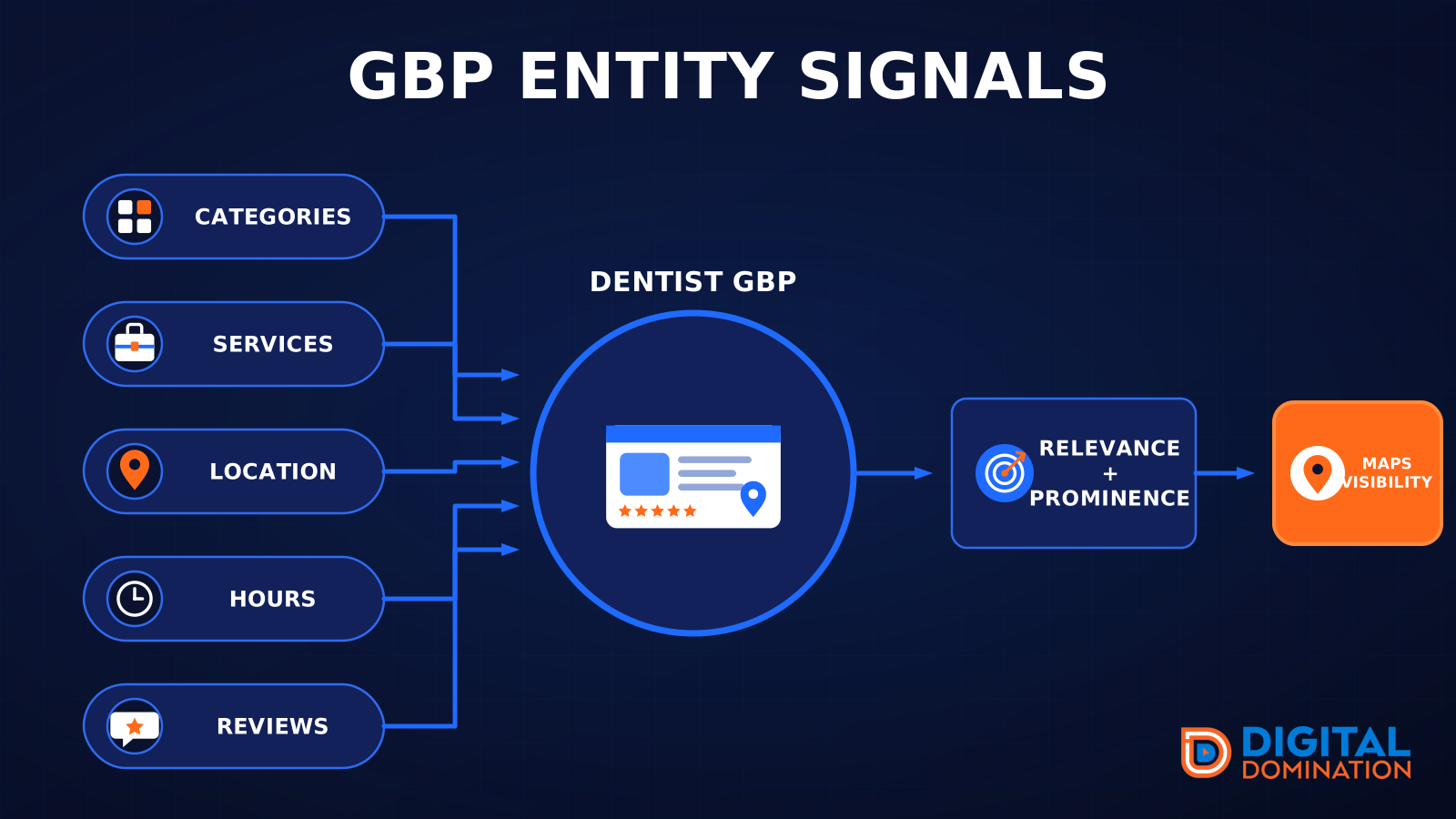
Dentistry has more sub-specialty categories than almost any other local vertical, and the primary category does most of the relevance work. A general practice that also places implants, straightens teeth with clear aligners and sees children is competing in four different searches. Dentist should almost always be the primary category, with secondaries chosen only for work the office actually performs regularly. Every dentist who treats patients at the office should also have a practitioner profile, linked to the practice, with the same name format that appears on the state board and the website. Check these fields before touching anything else:
- ▸Primary category Dentist, with secondaries such as Cosmetic dentist, Pediatric dentist, Emergency dental service, Dental implants periodontist, Teeth whitening service or Orthodontist only where true.
- ▸Services entered in the words patients use: dental cleaning, tooth-colored fillings, root canal, dental crown, same-day crown, dental implant, Invisalign or clear aligners, teeth whitening, wisdom tooth extraction, emergency tooth repair, dentures, night guard.
- ▸Attributes that decide the tap: Accepts new patients, Appointments required or walk-ins, Wheelchair accessible entrance, LGBTQ friendly, and the insurance and payment options the office actually honors.
- ▸Hours that match the front desk, including the lunch closure, early morning hygiene days and any Saturday block. Special hours entered before every holiday week.
- ▸Photos of the actual operatories, the sterilization area, the front desk team, the exterior with signage and each dentist in clinical attire. No stock smiles.
- ▸One landing page per office. A group with three locations sending all three profiles to the homepage is throwing away three relevance signals.
What each office landing page needs, and what the mom checks first
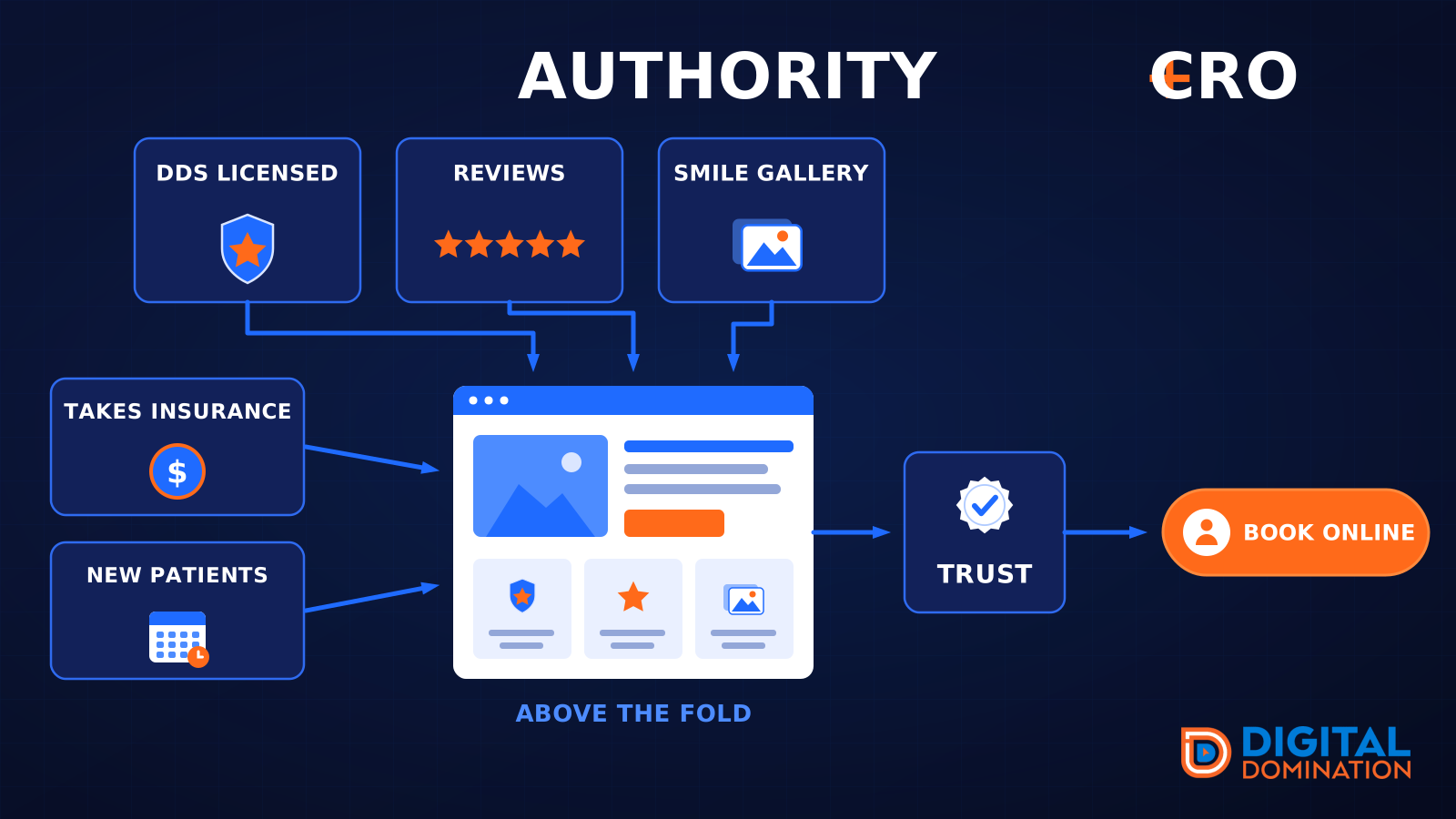
The office page is the URL on the profile. It should carry the same name, address and phone as the listing, the dentists who practice there, the procedures performed there and the neighborhoods patients drive from. Add a UTM to the profile link so each office's calls and bookings show up separately in GA4. Above the fold, a dental page has about five seconds to answer whether the practice is qualified, gentle and reachable. Real proof for a dental office looks like this:
- ▸Procedure and city in the headline, with the phone number and a Book online button visible without scrolling on a phone.
- ▸Each dentist named with DDS or DMD, dental school, and a link to the state dental board license lookup.
- ▸Memberships and credentials that can be verified: American Dental Association, the state dental association, Academy of General Dentistry fellowship (FAGD or MAGD), AACD accreditation for cosmetic work, Invisalign provider tier, state sedation permit level.
- ▸Star rating and review count from Google, plus Healthgrades or Zocdoc if the practice is active there.
- ▸Insurance accepted, in-network status by carrier, an in-house membership plan for uninsured patients, and financing through a named third-party lender.
- ▸An example authority strip, placeholder figures only: 15+ years in Henderson | 4.9 stars from 800+ Google reviews | FAGD | In-network with Delta Dental and Cigna | Same-day emergency visits.
Review velocity, and the words patients use about a dentist
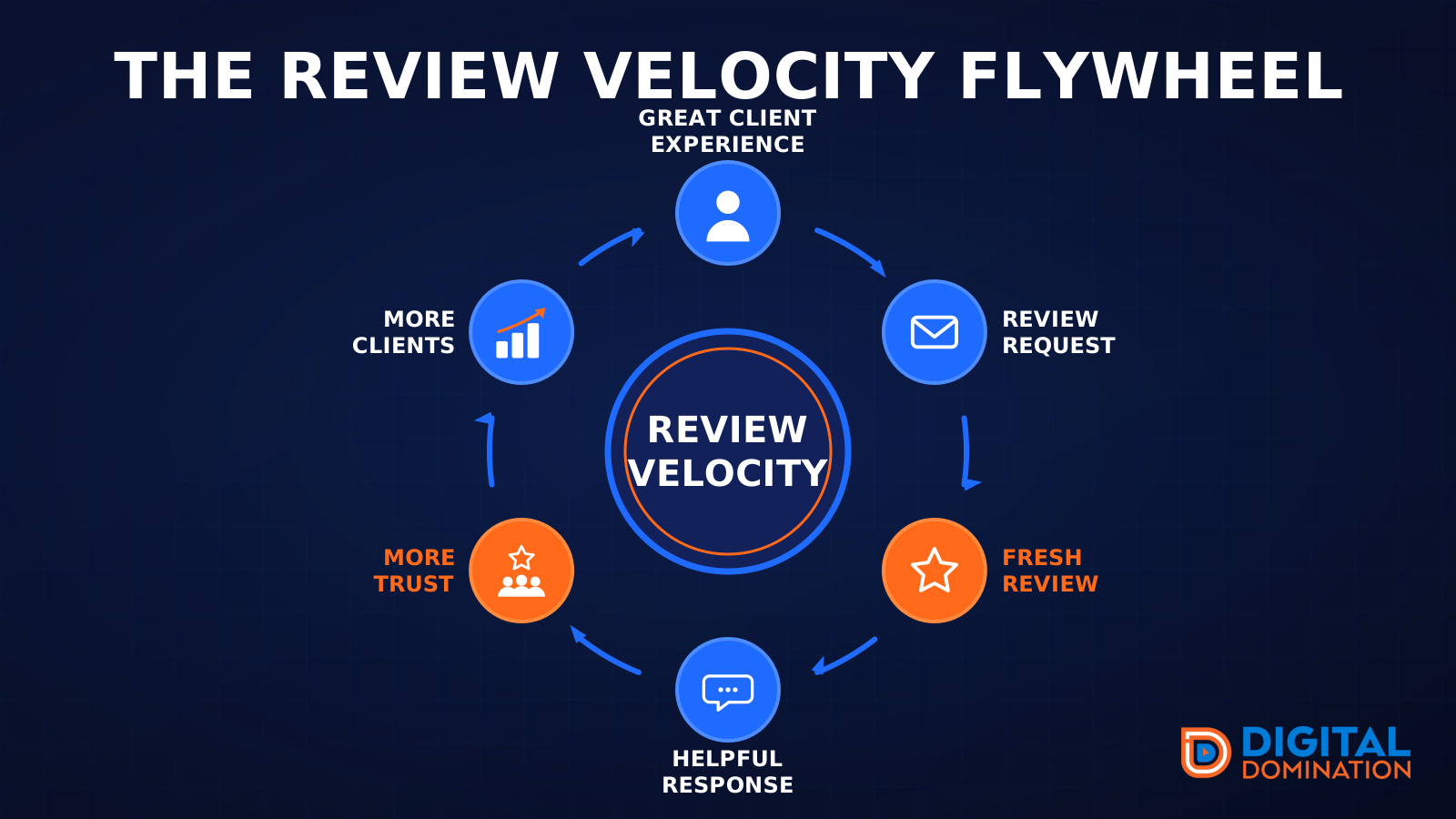
Dental reviews are unusual because the procedure is rarely what gets praised. Patients write about fear, pain, honesty and the front desk. A steady stream of reviews that say "I did not feel the injection," "they explained the cost before starting," "my daughter actually likes going" or "got me in the same day for a broken crown" does more for both ranking context and conversion than a high star average frozen six months ago. Velocity matters: a practice earning three or four honest reviews a week reads as active, and hygiene recall gives dentistry a built-in review cadence most trades never get. The habits that build the right review profile:
- ▸Ask at checkout after hygiene visits and after emergency saves, when relief is highest, with a text link that opens the Google review form directly.
- ▸Encourage patients to mention the dentist by name and the procedure, so reviews connect the person, the service and the office in the same sentence.
- ▸Reply to every review within a day, including the one-star about billing, without disclosing anything that could identify a patient's health information.
- ▸Track review velocity per office and per practitioner profile monthly, because one associate with no reviews pulls down the whole group's context.
Schema architecture for a dental practice
Schema is the JSON-LD layer that tells machines which facts belong to which entity. Without it, a search engine sees names, a school, some procedure words and an address. With it, it can read that Example Dental is a Dentist organization, that Dr. Jane Rivera is a Person who works for it, that her license is a public identifier, that the Summerlin office is a location of the practice, that implant placement is a service offered there, and that her Healthgrades and ADA profiles refer to the same person. Structured data must describe what is visible on the page, and a plugin default rarely models a multi-doctor, multi-office practice. The architecture we implement for dental clients, as entity and recommended type:
- ▸The practice: Dentist, with a permanent @id such as the site root followed by #practice.
- ▸Each physical office: a distinct Dentist location node with its own @id, address, geo, telephone and openingHoursSpecification.
- ▸Each dentist: Person, with jobTitle, alumniOf for dental school, hasCredential for the DDS or DMD, worksFor pointing at the practice @id and knowsAbout for procedures.
- ▸State dental license: PropertyValue under identifier, with the issuing board named.
- ▸Each procedure page: Service (or MedicalProcedure where the page is genuinely clinical), connected to the office through makesOffer and to the dentist through the provider property.
- ▸New-patient special, membership plan or financing terms: Offer with a PriceSpecification, stated exactly as the page states it.
- ▸Neighborhoods and cities patients come from: areaServed on the office node.
- ▸Official external profiles: sameAs to the state board lookup, ADA Find-a-Dentist, Healthgrades, Zocdoc and social accounts.
- ▸WebSite, WebPage and BreadcrumbList on every page, Article for guides, VideoObject for procedure explainers, FAQPage where a visible FAQ exists.
PageSpeed for the dental website template you probably have
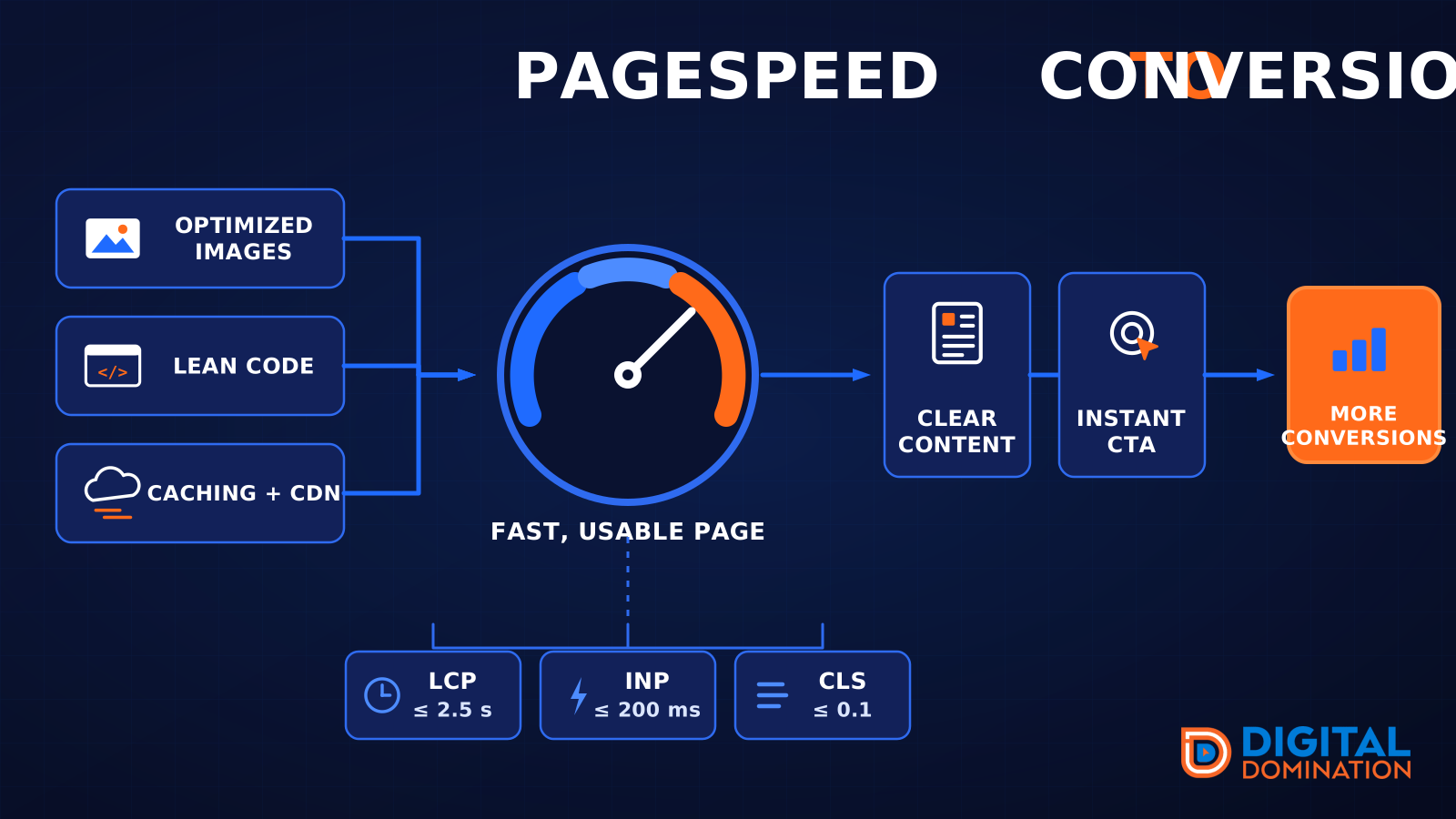
Most dental sites we audit come from one of a handful of dental-specific website vendors, and they share the same weight problems: an autoplay hero video of a smiling family, a before-and-after gallery of full-resolution photos, a third-party online scheduling widget, a live chat bubble, a review carousel and a patient-forms embed, all loading before the phone number paints. Google's Core Web Vitals good thresholds are LCP of 2.5 seconds or less, INP of 200 milliseconds or less and CLS of 0.1 or less, measured at the 75th percentile of real field data. At Digital Domination we target a PageSpeed Insights performance score of 90 or higher and a 2/2 on agentic browsing checks, because AI agents that book appointments on a patient's behalf fail on the same bloat that makes humans leave. The fixes with the biggest payoff on a dental site:
- ▸Replace the autoplay hero video with a preloaded, properly sized WebP or AVIF photo of the actual team, and never lazy-load that hero image.
- ▸Compress and lazy-load the before-and-after gallery, serve responsive sizes, and reserve dimensions so cases do not shift the page while a patient scrolls.
- ▸Load the scheduling widget, chat bubble and review carousel on interaction or after the page is idle, not in the head.
- ▸Replace the auto-loading Google Map embed with a static image that loads the live map on click.
- ▸Strip the unused plugins and tag-manager tags left from past marketing vendors, and keep the sticky mobile call and book buttons as plain HTML.
- ▸Fix server response time with caching and a CDN, then re-test the office pages and the emergency page on a throttled mobile connection.
Insurance, membership plans and price language that AI Overviews can quote
Dental is a category where the patient's first question is almost always about money, and AI assistants have learned to answer it. "Does this dentist take Delta Dental," "how much is a crown without insurance" and "do they have a payment plan" are questions a practice can answer accurately without publishing a full fee schedule. Vague pages lose those answers to a competitor who wrote them down. The pricing content that works on service pages, the new-patient page, the FAQ and the GBP services list:
- ▸The carrier list, stated as in-network or accepted, with a plain sentence about how the office handles out-of-network plans.
- ▸The new-patient exam, X-ray and cleaning offer with its actual price and its conditions, because this is the offer AI assistants and Map Pack shoppers compare most.
- ▸An in-house membership plan for uninsured patients, with the annual fee, what it includes and the discount on other treatment.
- ▸Starting-at ranges for the big-ticket procedures patients research for weeks: implants, clear aligners, veneers, full-arch restoration.
- ▸The financing lender by name, and whether same-day treatment can start on approval.
- ▸A one-line explanation of why the final fee depends on the exam, X-rays and treatment plan, so the range reads as honest rather than evasive.
Content that follows the patient from toothache to recall
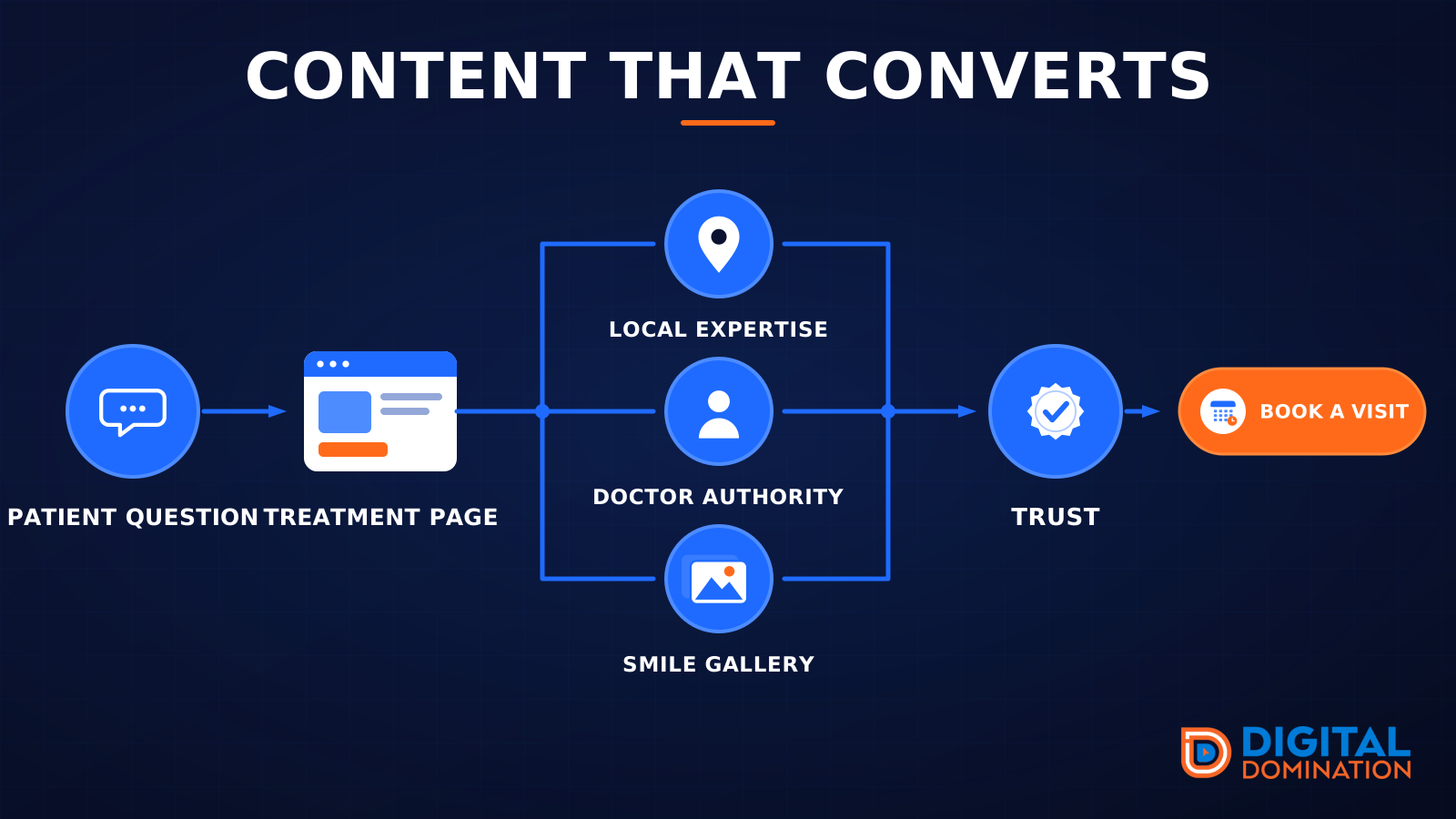
A dental patient journey has stages that a generic services page ignores. The emergency searcher wants to know if the tooth can be saved and whether to come in tonight. The implant researcher wants timelines, bone-graft questions and what the mouth looks like during healing. The parent wants to know when a first visit should happen and whether the office does nitrous for anxious kids. Each procedure page should answer the questions that stage actually asks, in the patient's words, under headings a phone reader can scan. Signals that make those pages retrievable and believable:
- ▸A named dentist as author with a reviewed-by line and a visible last-updated date.
- ▸Local specifics: which office performs the procedure, which neighborhoods drive there, and the local water fluoridation or school-sports mouthguard angles that a national template never mentions.
- ▸Original before-and-after cases with the procedure, the number of visits and the timeline, with patient consent on file.
- ▸Direct answers to the fear questions: does it hurt, how long is the numbness, can I go to work after, what happens if I wait.
- ▸Internal links among each dentist, each procedure, each office and the related guides, so the graph in the schema matches the links a crawler follows.
The loop: Search Console, GA4 and the practice management system
Search Console shows how Google finds the practice: which queries produce impressions for each office page, click-through rate, Core Web Vitals problems and structured-data errors. GA4 shows what happened next: click-to-call taps, scheduler starts and completions, insurance page views, procedure pages that lead to bookings. The practice management software, whether Dentrix, Eaglesoft, Open Dental or a cloud system, plus call tracking, closes the loop by showing which of those bookings showed up, accepted treatment and produced production. Read together, the three tell the office what to change next:
- ▸Impressions but few clicks for "emergency dentist" in a suburb: rewrite that office page's title, opening copy and emergency proof, and check that the Emergency dental service category is live.
- ▸Clicks but few calls on the implant page: test speed on mobile, move the financing line above the fold, add the dentist's implant credentials and a consult offer.
- ▸Calls but few kept appointments: the problem is intake scripting or scheduler friction, not SEO, and the front desk data proves it.
- ▸Run one focused group of changes at a time, note the date, compare four weeks of impressions, calls, kept appointments and production, keep what worked and move to the next highest-value gap.
Social posts and mentions that corroborate the practice
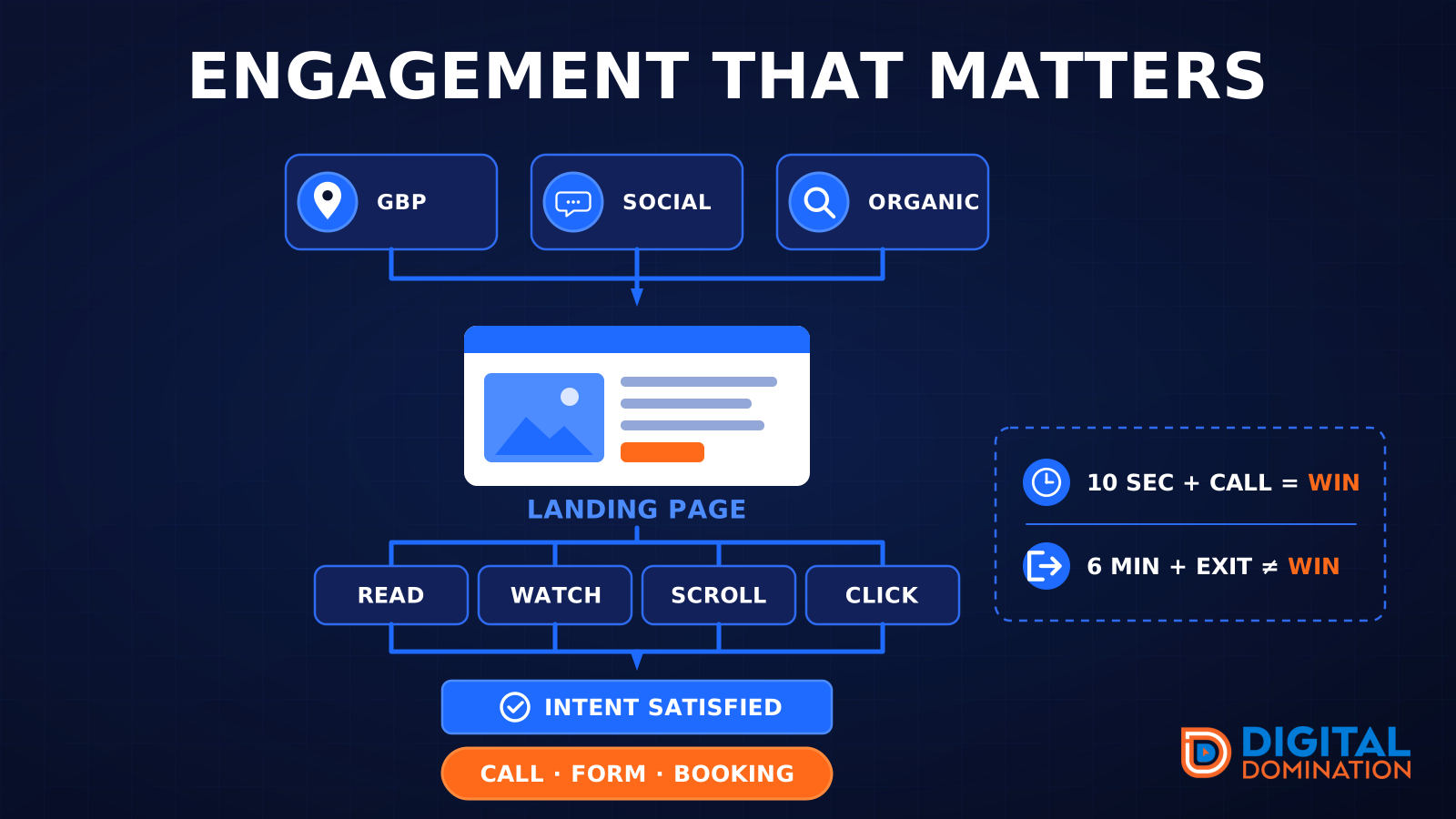
Social content for a dental office should amplify the same dentists, procedures and offices the site and profile already describe. A short video of a hygienist explaining what a deep cleaning actually is, posted to GBP, Instagram, TikTok and YouTube, sends viewers to the procedure page and creates branded searches. Google Search Console now reports supported social and video platform properties, which shows how far search and social discovery have converged. Off-site mentions matter even without a link: a parent in a local Facebook group writing that Dr. Rivera at Example Dental saw her son the morning he broke a tooth connects the dentist, the practice, the emergency service and the neighborhood in one sentence. On Reddit, Axios reported in August 2026 that Reddit's share of visible ChatGPT Search citations fell roughly 86 percent, while OpenAI still holds a Reddit data partnership, so treat forum mentions as one thread of a diversified footprint. The sources worth keeping consistent:
- ▸State dental board profiles for every dentist, with the exact name format used on the site and profiles.
- ▸ADA Find-a-Dentist, the state dental association directory, Healthgrades, Zocdoc and insurance carrier provider directories, all showing the same address and phone.
- ▸Local school, youth sports and chamber sponsorships that produce real mentions and photos.
- ▸Local news and podcast appearances on oral health topics, linked from the dentist's biography page and referenced in sameAs.
A 90-day roadmap built around the hygiene schedule
The advantage a dental office has over most local businesses is a recurring patient base already walking through the door twice a year. The roadmap below uses that: reviews, photos and content all ride on visits that are already booked.
- ▸Days 1-14, baseline: run GeoGrid scans for general dentist, emergency dentist and the two highest-value procedures from every office, audit every GBP field and practitioner profile, inventory each dentist's verifiable credentials, review current schema output, benchmark speed on the office and emergency pages, and wire GA4 events, call tracking and appointment attribution.
- ▸Days 15-30, foundation: correct categories, hours and attributes, publish one landing page per office with UTM-tagged profile links, put insurance, membership and new-patient offer language above the fold, deploy the Dentist schema graph with permanent @id values, and remove the autoplay video and auto-loading widgets.
- ▸Days 31-60, relevance and proof: publish complete dentist biographies with board links, build the procedure pages the practice management system says produce the most production, start the checkout review ask with the dentist's name, photograph real operatories and team, and distribute one procedure video a week through GBP and social.
- ▸Days 61-90, compound: pull high-impression low-click queries from Search Console, high-traffic low-booking pages from GA4, and lead-to-kept-appointment rates from the front desk, fix the weakest of the three, re-test Core Web Vitals and agentic browsing, re-run the GeoGrid and repeat.
One dental entity, stronger every recall cycle
The goal is not a finished Google Business Profile, a redesigned website or a busy Instagram account. The goal is one clearly defined dental entity whose dentists, licenses, procedures, offices, insurance participation, pricing, reviews and community mentions say the same thing everywhere a patient or a machine might look, then a monthly loop that uses Search Console, GA4, call tracking and practice management data to make that entity more relevant, more prominent and more profitable. That is the standard behind the Digital Domination guarantee for dental practices: top 3 in the Google Map Pack in 12 weeks or you do not pay.
If the map of your market looks like a sea of red with one green dot at your front door, start by seeing exactly where you rank. The free GeoGrid scan checks 169 points across your market and shows which neighborhoods the sideline mom would never have found you from.
Keep reading
Related guides
- ▸Google Business Profile 4 Day Edits
- ▸Google Business Profile AI summaries
- ▸Google Business Profile Collected Info
Put it into action
Frequently Asked Questions
Should each dentist in the practice have a separate Google Business Profile?
Yes, when the dentist is a public-facing practitioner who patients can specifically book with. Google allows individual practitioner profiles alongside the practice profile. Keep the practitioner name format identical to the state board and the website, link each one to the practice, and give each a landing page or biography URL rather than the homepage.
Which GBP primary category should a general dental office use?
Dentist, in almost every case. Dental clinic is broader and matches fewer specific searches. Add secondaries such as Cosmetic dentist, Pediatric dentist, Emergency dental service or Dental implants periodontist only for work the office performs routinely, because an unused category dilutes relevance for the ones that matter.
Does schema markup directly improve a dentist's rankings?
Not as a standalone boost. Schema helps search systems understand the practice, its dentists, procedures and offices as connected entities, and it makes pages eligible for supported rich results. Its value is greatest when it accurately describes strong visible content on a fast page.
Should a dental practice publish prices online?
Publish what you can state accurately: the new-patient offer, the membership plan, starting-at ranges for implants or aligners, and the financing lender. Patients and AI assistants both ask cost questions first, and a page that answers honestly with ranges and conditions wins those answers over a page that says call for pricing.
How can a dental office earn reviews without violating patient privacy?
Ask every patient at checkout with a direct text link, and let them write what they want. Never post or hint at treatment details in a reply, even when the patient mentioned them. A short thank-you naming the dentist and inviting them back for their next hygiene visit is enough.
Do Instagram and TikTok posts help a dentist rank on Google Maps?
Not directly, and Google does not confirm social engagement as a local ranking factor. Consistent video content does drive branded searches, profile visits, referral traffic and reviews, and Search Console now reports supported social platform properties. Treat social as corroboration and demand creation, not as a Map Pack lever.
What is the single fastest PageSpeed win on a typical dental website?
Removing the autoplay hero video and replacing it with a preloaded, correctly sized photo. On most vendor-built dental templates that one change fixes Largest Contentful Paint, and deferring the scheduling widget and chat bubble until interaction usually fixes the rest of the mobile score.
Ready to dominate your map?
Top 3 in the Google Map Pack in 12 weeks, or you don't pay.