
Garage door local SEO: how GBP entity signals, schema and PageSpeed beat the bait-and-switch listings
The homeowner with a door stuck open at 10 pm hires whoever looks legitimate and reachable in the first thirty seconds. This is how a real garage door company becomes that choice, on Google Maps and in AI answers.
The door stops halfway at 10:15 pm and the house is open to the street
A homeowner pulls in late on a Tuesday, hits the remote, and the door climbs about two feet before it shudders and stops. One cable hangs loose against the track. The door will not come down, and everything in the garage, including the door into the kitchen, is now visible from the sidewalk. She is not going to sleep with it like that.
She searches garage door repair near me from the driveway. The Map Pack shows three companies. Two have generic names, a 4.9 rating and no photos of a truck or a technician. The third is a local shop with a licensed and insured line and a review from last week that names a broken cable, the technician and the exact price quoted on the phone. She calls the third one, even though it sits in position three.
That is the garage door market in one search. It is one of the most heavily spammed local categories on Google, full of lead-generation listings that quote a cheap service call and then sell a full spring, roller and bearing package in the driveway. A legitimate company loses to those listings when it looks no more real than they do. It wins when Google, the AI assistants and the homeowner can all verify in seconds that it has real technicians, real prices and real customers.
The short version for an owner who is on a service call right now
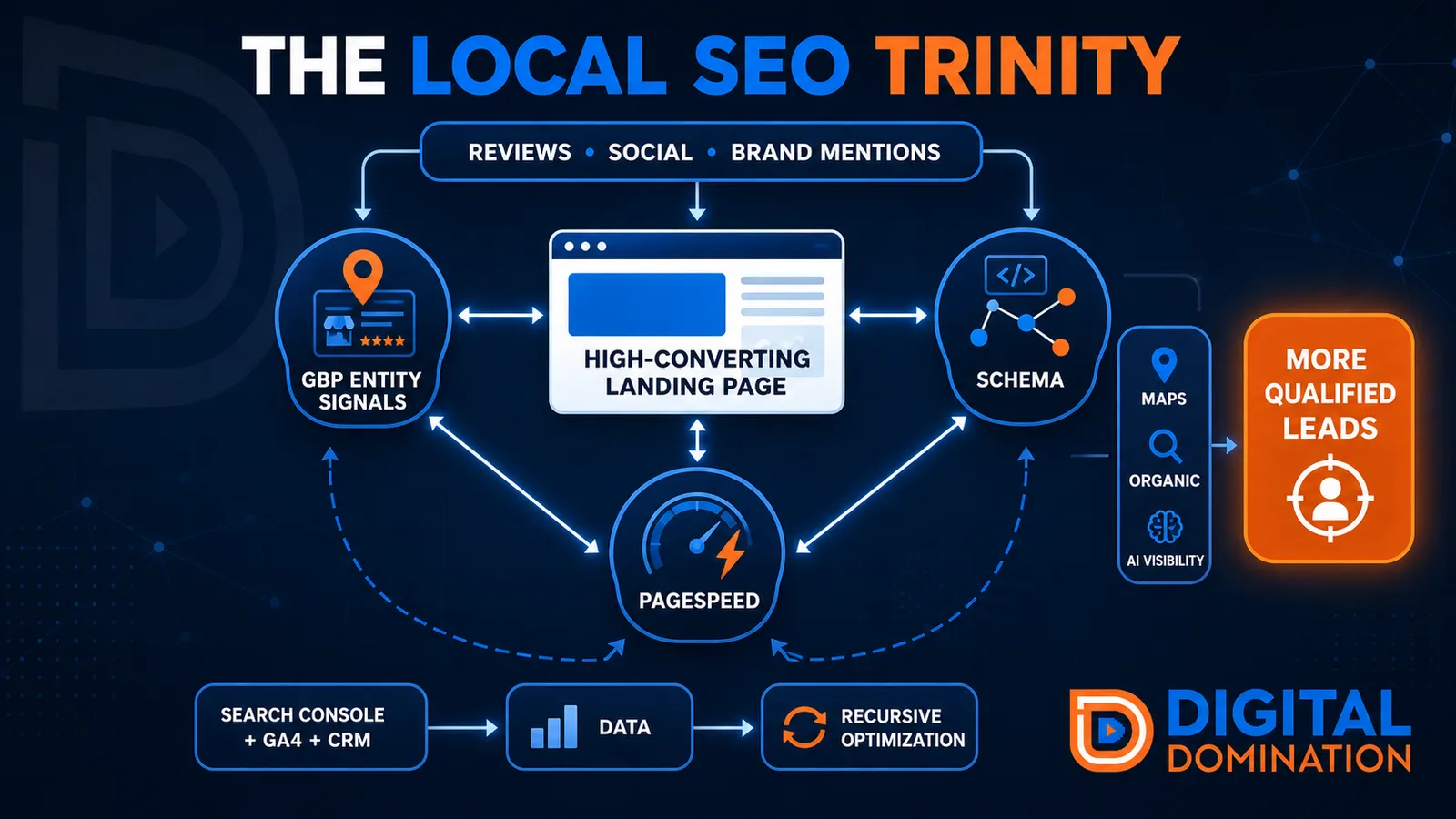
At Digital Domination we treat the foundation as a trinity. Google Business Profile entity signals tell Google who you are, what you fix and install, and where your trucks go. Schema connects your company, technicians, services, brands and service area in a graph a machine can read. PageSpeed makes the page usable on a phone in a dark driveway before the homeowner calls the next listing. A landing page carries the proof and pricing, and a Search Console, GA4 and CRM loop tells you what to fix next.
Google describes local ranking in terms of relevance, distance and prominence. Distance you cannot change except by opening real locations. Relevance and prominence are where a garage door company can outwork a spam listing, because a shell cannot publish a license number, a technician bio or a review that mentions a torsion spring. The rest of this article works through each layer in that order.
Teaching Google you are a door company, not a lead-gen shell
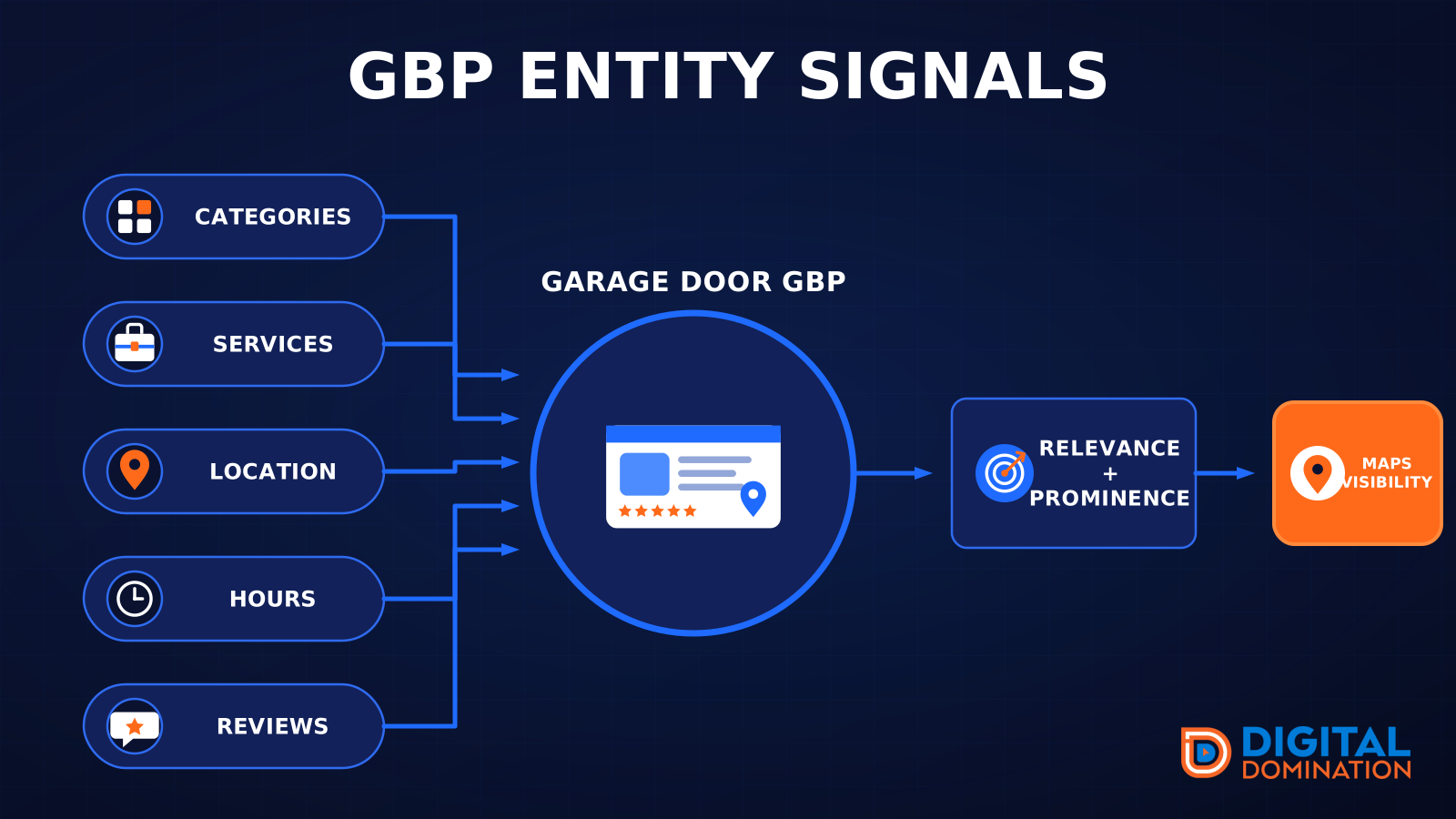
Most garage door profiles choose between two primary categories: Garage door supplier and Garage door repair service. Pick the one that matches most of your revenue (for most shops that is repair) and use the other as a secondary. Add a commercial door category only if you service rolling steel and commercial sectional doors. Category stuffing is a spam signal in this vertical and profiles get suspended for it.
Photos and hours corroborate the entity in ways a shell cannot. Upload the wrapped truck in front of a local house, the owner, before-and-after shots of a spring assembly and a full installation with the street visible. If you answer phones 24/7 but dispatch after 7 am, say so instead of posting fake overnight hours. Set the service area to the cities your trucks actually cover, give each real shop or showroom its own landing page (address, local number, hours, technicians based there, brands stocked, neighborhoods served) and make that page the profile's website URL with UTM parameters.
Then build the service list the way a dispatcher would, with descriptions and pricing, and match it word for word on the site. If the profile lists torsion spring replacement but the website only has a Repairs page, the relationship is weak. A typical residential list:
- ▸Broken torsion spring and extension spring replacement
- ▸Snapped cable repair and drum replacement
- ▸Off-track door repair and roller replacement
- ▸Garage door opener repair and installation (belt drive, chain drive, wall mount)
- ▸Photo eye sensor alignment and safety reversal testing
- ▸New insulated steel, aluminum and carriage-house door installation
- ▸Annual tune-up and lubrication
- ▸24/7 emergency repair (only if a human actually answers)
Proof a homeowner checks before letting you near a 200-pound door
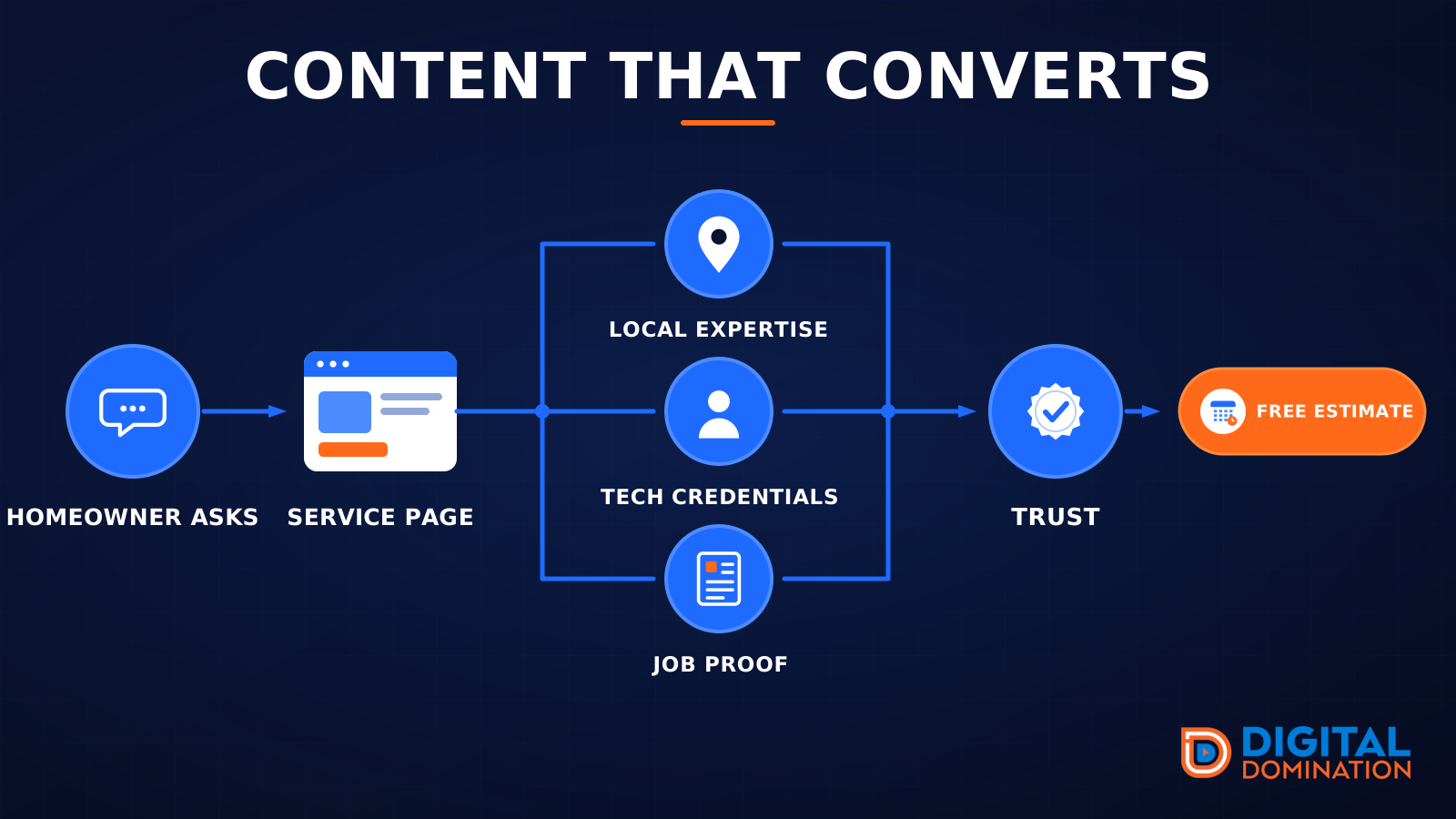
A door under torsion spring tension can break a wrist, and homeowners know the stories about the cheap service call that turned into a four-figure invoice. The first screen has to answer two questions: are these people legitimate, and will they tell me the price before they touch the door.
Above the fold, show the service and city in the headline, a phone number, a one-line pricing promise and an authority strip. As an example only, a strip might read: Licensed and insured, 12 years in business, 4.8 stars, Clopay authorized dealer, flat-rate pricing quoted before work starts. Those figures illustrate the format, not any real company. Below the fold, link every claim to something verifiable:
- ▸State contractor license number where your state requires one, linked to the board's lookup page (in Nevada, the Nevada State Contractors Board)
- ▸General liability and workers' compensation insurance, stated plainly
- ▸Dealer authorizations from Clopay, Amarr, Wayne Dalton, C.H.I., LiftMaster, Chamberlain or Genie, linked to the manufacturer's dealer locator listing
- ▸IDEA certified technicians and IDA membership, if you have them
- ▸Warranty terms in plain numbers: parts, labor and spring cycle ratings
- ▸Technician bio pages with a photo, years on the truck and brand specialties

Reviews that name the spring, the tech and the quoted price
Rating matters, but in this category context matters more, because fake listings can buy five stars. What they cannot fake at scale is a stream of recent reviews describing a specific repair. A review that says Marcus replaced both torsion springs on our double door in Summerlin for the exact price quoted on the phone connects the company, the service, the neighborhood, the technician and the pricing promise in one sentence. Google reads it, AI assistants read it, and so does the homeowner in the driveway.
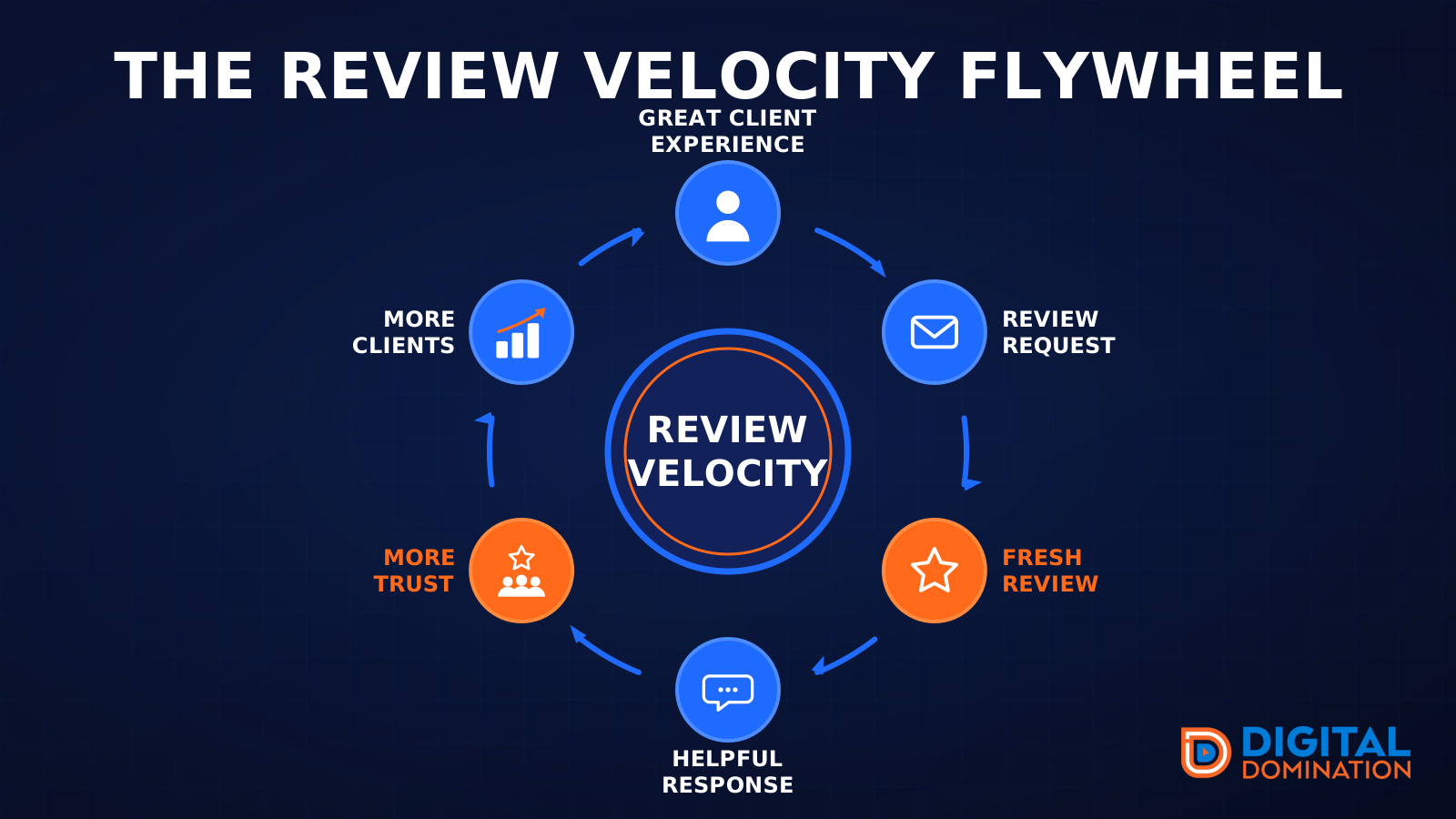
Velocity is the other half. A shop with 400 reviews and nothing since spring looks dormant next to a competitor earning three a week. Ask on the invoice, in the follow-up text and with the annual tune-up reminder, and reply to every review naming the part and the area naturally. A healthy garage door review profile shows:
- ▸New reviews every week during the cold snaps and heat waves when springs fail most
- ▸Same-day or same-night arrival for stuck-open doors
- ▸No upsell, honest pricing, or being told the door did not need replacing
- ▸Technician names that match the bios on your site
- ▸Door and opener brand names that reinforce your dealer relationships
- ▸A secondary platform (Yelp, Nextdoor, BBB) so the reputation is corroborated off Google
Schema for a garage door company: HomeAndConstructionBusiness and the graph around it
Schema is JSON-LD that labels what is already visible so a machine can read the relationships. Without it Google sees a page with a phone number, some brand logos and the word spring forty times. With it, Google can read that Example Overhead Door is a HomeAndConstructionBusiness, that Marcus is an employee with an IDEA certification, that the company is an authorized dealer for a named brand, that it offers torsion spring replacement in Henderson at a stated flat rate, and that the Yelp page and the manufacturer dealer listing refer to the same business.
Every node needs a permanent @id: the company at the homepage URL with a #business fragment, each technician at their bio URL with #person, each service at its page URL with #service. When the spring page and the Henderson page both reference the company, they point to the same @id instead of describing a new business. Most garage door sites we audit have either no structured data or a fresh, unlinked LocalBusiness object on every page, which is forty half-entities instead of one. The architecture we build, as a list rather than a table:
- ▸The company: HomeAndConstructionBusiness, with name, telephone, address, openingHoursSpecification and priceRange
- ▸Each shop or showroom: a distinct HomeAndConstructionBusiness location node with its own address and geo
- ▸Each technician: Person, connected with worksFor, plus hasCredential for IDEA or manufacturer certifications
- ▸Each repair or install: Service with serviceType and provider, connected from the company via makesOffer
- ▸Service call fee and flat-rate work: Offer with PriceSpecification, including the fee-waived-with-repair condition
- ▸Door and opener brands you sell: Brand nodes referenced from the relevant Service or Product
- ▸Cities and neighborhoods: areaServed as City nodes, matching the GBP service area
- ▸License number: PropertyValue under identifier, with the issuing board named
- ▸Dealer pages, Yelp, BBB, Facebook, Nextdoor and YouTube: sameAs on the company node
- ▸Pages: WebPage with BreadcrumbList; guides as Article; install videos as VideoObject; the FAQ block as FAQPage
PageSpeed when the customer is standing in the driveway with the door open
The homeowner in the opening scene is on a phone, on cellular, at night. Garage door websites are unusually bad for her: a template theme with a full-width video of a door opening, a manufacturer catalog widget pulling thirty product images, a chat bubble, a review carousel and two tracking pixels. If the phone number jumps while she tries to tap it, she is back on the Map Pack.
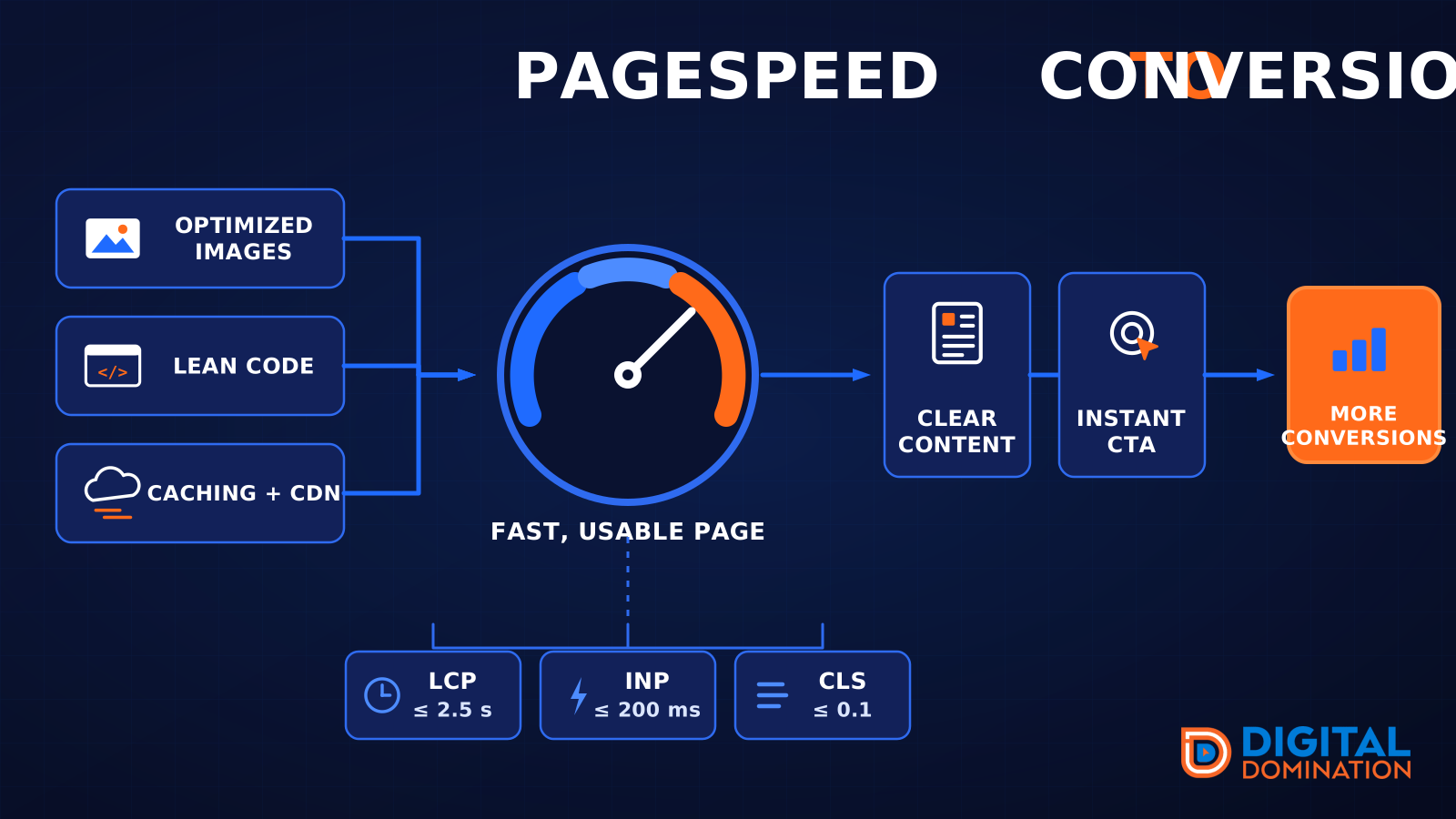
Google's good thresholds for Core Web Vitals are Largest Contentful Paint at 2.5 seconds or less, Interaction to Next Paint at 200 milliseconds or less and Cumulative Layout Shift at 0.1 or less, measured at the 75th percentile of real field data. At Digital Domination we target a PageSpeed Insights performance score of 90 or higher on the emergency repair pages, not just the homepage, and a 2/2 on the agentic browsing checks so AI agents can read and act on the page. The fixes that matter most on a typical garage door site:
- ▸Replace the hero video with a compressed WebP or AVIF photo of your truck and crew, preloaded and never lazy-loaded
- ▸Move the door configurator and catalog widgets to a dedicated New Doors page and load them on click
- ▸Lazy-load the gallery, the embedded map and any YouTube install videos
- ▸Delay chat, heatmap and call-tracking scripts until after first interaction
- ▸Reserve fixed dimensions for the review widget, the coupon banner and the sticky call bar so nothing shifts under the thumb
- ▸Use a CDN with compression and full-page caching, and test from a phone on cellular, not office wifi
Service call fees, flat rates and the price question AI keeps getting asked
The most common garage door questions typed into Google and asked of ChatGPT are about money: how much to replace a spring, what a fair price is for a new opener, whether the service call fee applies to the repair. The bait-and-switch operators thrive because legitimate companies refuse to publish anything, so the cheap advertised fee is the only number in the market. AI systems need concrete facts before they name a business, and a homeowner needs them before she trusts you.
You do not need a fixed price for every door. You need clear, crawlable language on the service pages, the FAQ, the GBP services and the Offer schema:
- ▸A stated service call or diagnostic fee, and whether it is waived when you do the repair
- ▸Flat-rate ranges for the common jobs: single and double torsion springs, cable and drum sets, roller sets, opener installation with the unit
- ▸A new door installation range by material and insulation level, with the variables that move it (size, windows, R-value, wind load)
- ▸After-hours pricing stated plainly instead of discovered on the invoice
- ▸Financing for full replacements, with the provider named
- ▸Warranty terms next to each price so the comparison to a cheap quote is honest
Content that follows the homeowner from the loud bang to the new door
Each service page should answer what the homeowner is wondering at that moment. On the spring page: what the bang was, why the door now feels like 200 pounds, why not to pull the emergency release and lift it yourself, whether to replace one spring or both, and how long the visit takes. On the opener page: belt versus chain, battery backup requirements where states mandate them, smart opener compatibility. On the new door page: steel gauge, insulation value, wind-load ratings, HOA-friendly styles and the time from measurement to install.
Local relevance in this trade is real. A Las Vegas page can talk about heat and dust wearing out rollers and photo eyes, HOA color and window rules in master-planned communities, and the neighborhoods where 1990s builder-grade doors are failing all at once. Give each page a named author (the owner or lead technician), a published and updated date, a short parts glossary, original job photos, and internal links between the service, the technicians who do it, the neighborhoods you serve and the reviews that mention it.
Search Console, GA4 and the dispatch software close the loop
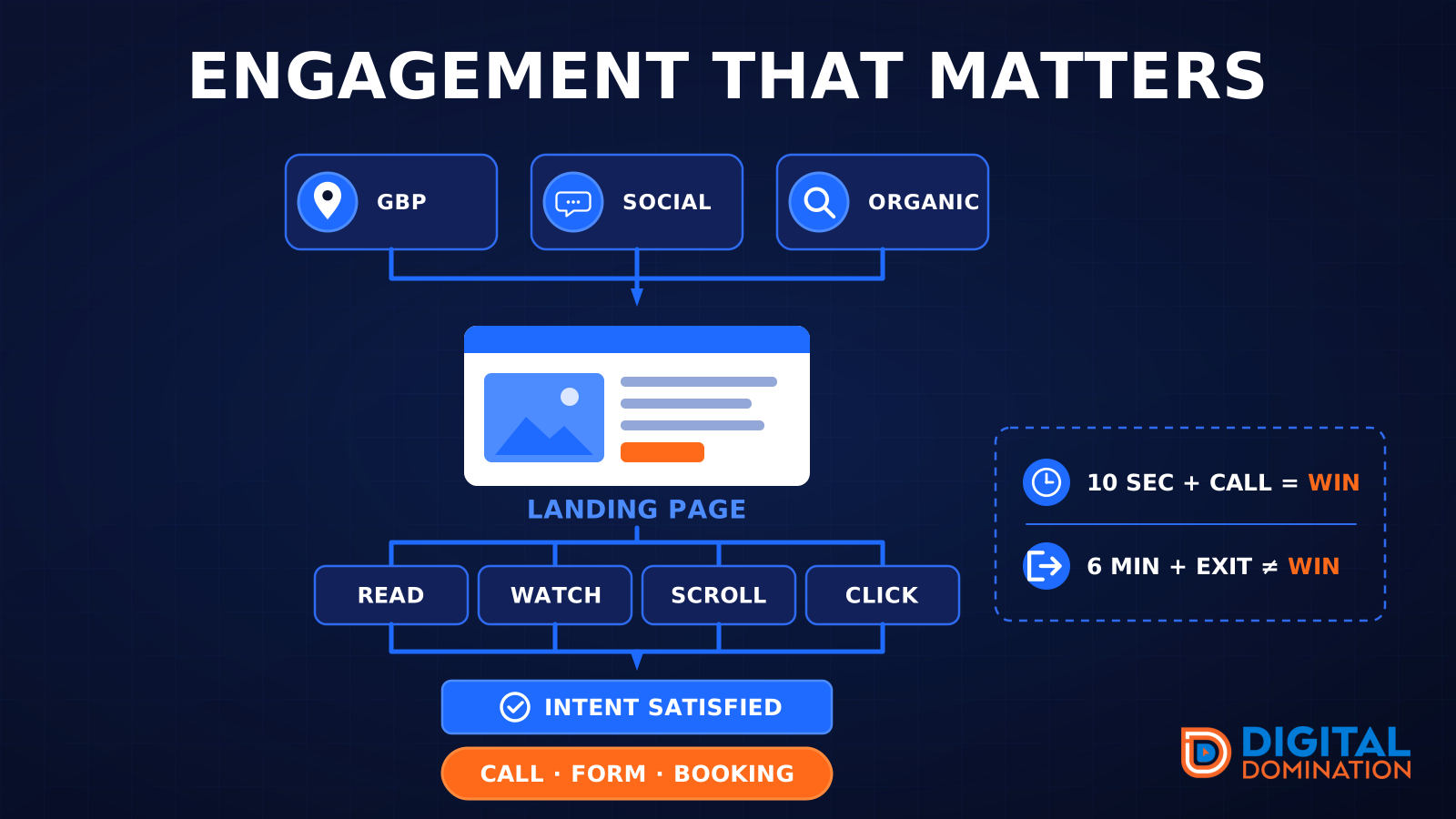
Search Console tells you what Google shows you for. If the spring page gets impressions for garage door spring replacement Henderson but few clicks, the title, first screen and location page connection need work. If Google starts showing your opener page for a specific model's error code, that query deserves its own FAQ or short video. GA4 tells you what visitors do next: click-to-call taps, form starts, scroll depth on the pricing section, and which pages produce calls at night versus during business hours.
Your dispatch or CRM platform (ServiceTitan, Housecall Pro, Jobber, GoHighLevel) tells you which calls became booked jobs, which were spring-only repairs and which became a full door sale. Connect all three and the decision tree is simple: impressions without clicks means fix relevance and the snippet; clicks without calls means fix speed, proof and pricing; calls without booked jobs means fix the phone script or the service area. Date every change, wait a few weeks, compare, keep what worked.
YouTube repairs, Nextdoor threads and the manufacturer's dealer page
Garage door content performs on video because the repair is visual and the homeowner is deciding whether to attempt it. A short clip explaining why a broken spring is not a DIY job, posted to YouTube, GBP, Facebook and Nextdoor with the technician on camera, earns branded searches, review requests and the occasional link from a neighborhood group. Google now reports supported social and video platform properties in Search Console, so you can see when that content shows up in search on its own.
Brand mentions matter without a link. A Nextdoor comment saying we used Example Overhead Door for a snapped cable in Green Valley and they were out that night connects the company, the service, the neighborhood and the responsiveness in one sentence. So does your Clopay or LiftMaster dealer locator listing, your BBB profile and a local news segment about garage door scams that quotes you as the honest operator. Keep name, address and phone identical everywhere. On Reddit: Axios reported in August 2026 that Reddit's share of visible ChatGPT Search citations fell roughly 86 percent, yet OpenAI still has a Reddit data partnership, so treat forums as one corroborating source among many.
A 90-day roadmap timed for the next cold snap
Springs fail in clusters when temperatures swing, so this plan is built to have the emergency pages, pricing and reviews in place before the next one:
- ▸Days 1-14, baseline: run a GeoGrid scan for spring repair, opener installation and new doors; audit every GBP field; report competitor listings that violate Google's guidelines through the redressal form; inventory licenses, dealer authorizations and warranties; record current schema and Core Web Vitals; wire GA4 events, call tracking and CRM attribution
- ▸Days 15-30, foundation: fix categories and rebuild the service list; publish each location page with a UTM-tagged profile link; rewrite the first screen with license, insurance, dealer and pricing proof; ship the HomeAndConstructionBusiness graph; replace the hero video and defer the widgets
- ▸Days 31-60, relevance and authority: build the spring, cable, opener, off-track and new door pages with pricing language; publish technician bios; request a review on every closed invoice; post one repair video a week to YouTube, GBP and Nextdoor; complete every manufacturer dealer listing
- ▸Days 61-90, recursive optimization: pull high-impression, low-click queries from Search Console; find high-traffic, low-call pages in GA4; compare booked jobs by source in the CRM; recheck Core Web Vitals and the agentic check on the emergency pages; rerun the GeoGrid and repeat whatever moved the most pins
One garage door company, verifiable everywhere the homeowner looks
The spam listing has a name, a phone number and five stars. You have a license, insured technicians with faces, dealer authorizations, published prices, a truck with your name on it and a decade of customers who can describe the repair you did. Local SEO for a garage door company is the work of making all of that legible to Google, to the AI assistants and to the homeowner in the driveway, and making it say the same thing on the profile, the website, the schema, the reviews, the dealer page and the neighborhood group.
Build one entity, keep every fact consistent, and let Search Console, GA4, the dispatch board and GeoGrid data tell you what to strengthen next month. At Digital Domination that system is behind our promise to garage door companies: top 3 in the Google Map Pack in 12 weeks or you do not pay. To see where you stand today, start with the free GeoGrid scan. It checks 169 points across your market and shows exactly which neighborhoods send the door-stuck-open search to a listing that is not you.
Keep reading
Related guides
- ▸Healthcare Review Stars Google Organic
- ▸Home remodeler local SEO
- ▸How long does Google Maps SEO take to work?
Put it into action
Frequently Asked Questions
Which Google Business Profile category should a garage door company use?
Choose the primary category that matches most of your revenue, which for most shops is the repair category, and use the supplier category as a secondary if you also sell and install new doors. Add a commercial door category only if you genuinely service rolling steel or commercial sectional doors. Categories you cannot back up with services, photos and reviews are a common reason garage door profiles get suspended.
How do I compete with the fake garage door listings in my city?
Report listings that violate Google's guidelines through the business redressal form with evidence such as a nonexistent address or a shared phone number, and log what you submitted. Then out-verify them: publish your license number, insurance, technician photos, dealer authorizations and flat-rate pricing, and earn recent reviews that describe specific repairs. Spam listings cannot corroborate any of that.
Should a garage door company publish its prices online?
Yes, at least as ranges with the variables explained. State the service call fee and whether it is credited toward the repair, give flat-rate ranges for spring, cable, roller and opener work, and a range for new door installation by material and insulation level. Published pricing is what AI Overviews and assistants quote, and it is the strongest defense against the cheap advertised fee the bait-and-switch operators rely on.
What schema type does a garage door company use?
HomeAndConstructionBusiness is the fitting schema.org type, with each showroom as its own location node, technicians as Person nodes connected with worksFor, each repair or install as a Service, pricing as Offer with PriceSpecification, and the brands you sell as Brand nodes. Every node needs a permanent @id so pages reference one company instead of creating a new one each time. Add sameAs links to your manufacturer dealer listings and review profiles.
Does schema by itself improve garage door rankings?
Not directly. Schema helps Google and AI systems understand the relationships between your company, technicians, services, brands and service area, and it can make pages eligible for supported search features. Its value comes from accurately describing strong visible content, so build the pages and proof first and then mark them up.
How fast does a garage door repair page need to load?
Aim for the Core Web Vitals good thresholds on the emergency pages: LCP at 2.5 seconds or less, INP at 200 milliseconds or less and CLS at 0.1 or less, measured at the 75th percentile of real users. On garage door sites the usual culprits are hero videos, manufacturer catalog widgets, chat bubbles and review carousels. We target a PageSpeed Insights score of 90 or higher because the visitor is usually on a phone in a driveway.
Do YouTube videos and Nextdoor posts help a garage door company rank on Maps?
Google does not confirm that social activity directly moves Map Pack rankings. What it does is generate branded searches, reviews, links, neighborhood recommendations and brand mentions that reinforce prominence, and Search Console can now report how supported social and video content appears in search. For a visual trade like garage doors, a weekly repair clip is one of the cheapest ways to earn those signals.
Ready to dominate your map?
Top 3 in the Google Map Pack in 12 weeks, or you don't pay.