
Healthcare review stars are fading from Google organic results
For dentists, clinics, med spas, chiropractors and other healthcare providers, the safer reputation play is shifting from forcing organic stars to building proof Google can still show and verify.
What changed in Google search
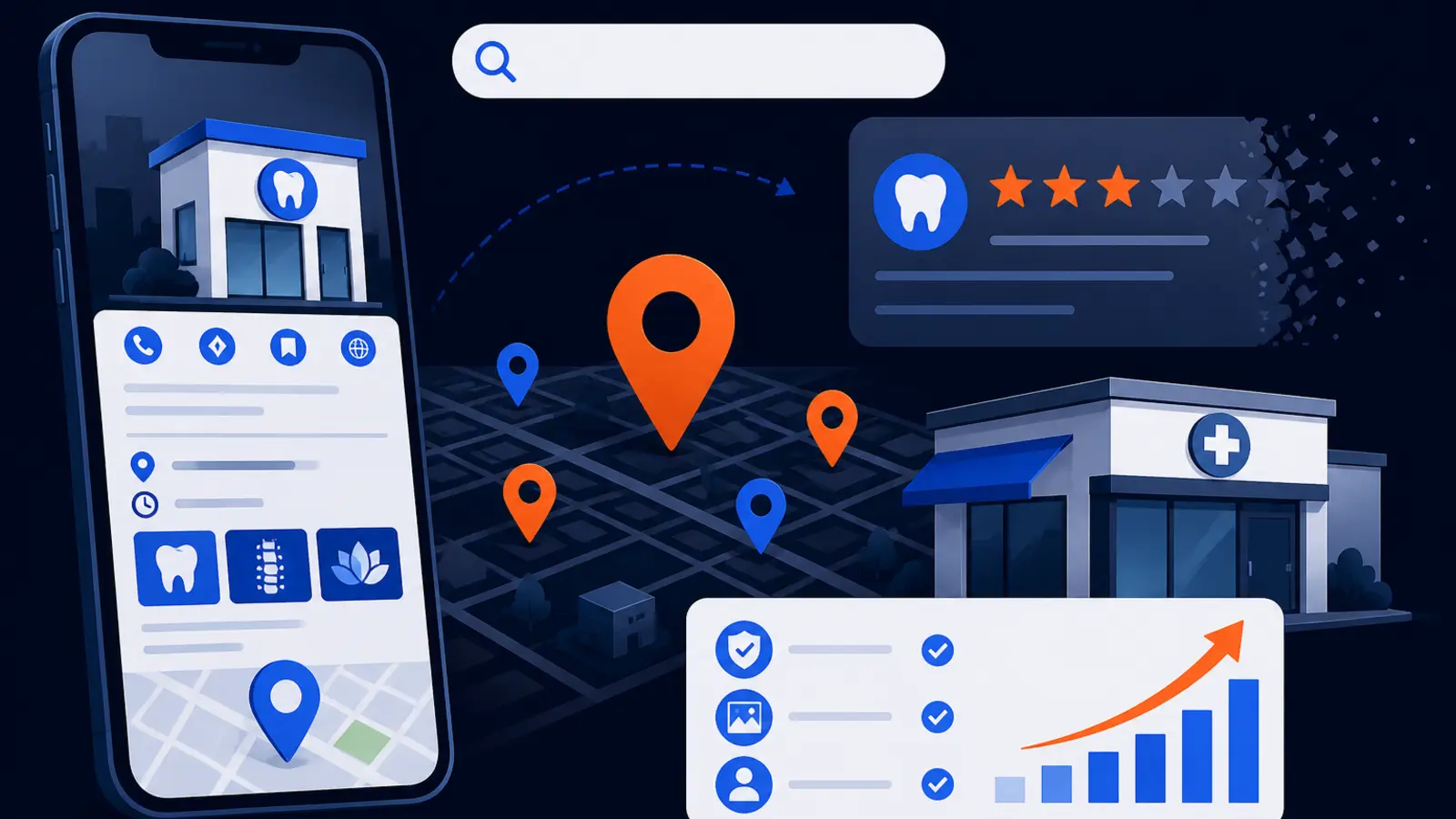
Healthcare review stars are no longer showing reliably in Google’s organic web results for many doctors, dentists, clinics, med spas, chiropractors and similar providers. This does not mean every review disappeared from Google. It means the yellow star rich result under a normal website listing is becoming much less dependable for healthcare searches.
Schema App reported on October 5, 2026 that its healthcare customers saw Google Review Snippet visibility drop in late May and again in early August. Schema App also said alternate schema implementations did not restore the rich result. Search Engine Roundtable covered the finding on October 7, 2026 and observed that review stars no longer appear reliably for doctors, dentists and similar healthcare searches outside local results.
Google’s own Review snippet structured data documentation, updated September 8, 2026, still says valid markup only makes a page eligible for a rich result. It does not guarantee that Google will show review stars. That one sentence is now the key business point: paying for markup is not the same as buying visible stars in search.
Who this hits hardest
This change hits healthcare businesses that have been paying for review schema mainly because they wanted stars under their website listing. If your marketing report treated those stars as the core win, that line item now deserves a second look.
It also affects multi-location healthcare groups that built location pages, doctor pages or service pages around review snippets. Even if the code is technically valid, Google can still choose not to display the rich result. That makes the value of the work depend less on the promise of stars and more on whether the markup accurately helps Google understand your business.
The affected businesses usually share a few traits:
- ▸They depend on trust before a patient calls.
- ▸They compete in a local map-heavy search result.
- ▸They have reviews spread across several profiles.
- ▸They use provider, location and service pages to rank.
- ▸They were sold review stars as a visible SEO feature.
What did not change
The local results are still central. Google Business Profile reviews, star ratings in the Map Pack, review responses and profile accuracy still matter because local search is built around proximity, relevance and prominence. Those are Google’s stated local ranking factors.
This is why a dentist can lose organic review stars on a website listing and still show review proof in the Map Pack. A med spa may stop seeing review snippets under its service page, but its Google Business Profile can still show ratings, review text and recent owner responses.
Your reputation strategy should now separate three different places where reviews can appear:
- ▸Google Business Profile and Map Pack results.
- ▸Organic website listings with possible rich results.
- ▸Third-party healthcare, directory and social profiles.
Why review-star schema is harder to justify by itself
Review schema is code added to a page so search engines can understand reviews or aggregate ratings. When Google chooses to show it, the result may include stars. When Google does not choose to show it, the code may still be valid but invisible to searchers.
That difference matters for budgeting. If you are paying mainly for someone to force stars into organic results, the offer is weaker now. Schema App’s healthcare finding suggests that changing the format or implementation was not enough to bring those rich results back for its affected customers.
This does not mean structured data is useless. It means the sales pitch should change. Useful schema should describe your real business, locations, providers, services and reviews accurately. It should not be sold as a guaranteed way to make Google display stars.
Before renewing a review-star package, ask these questions:
- ▸Are we paying for accurate structured data or for promised stars.
- ▸Does the vendor report whether stars are actually visible.
- ▸Are the reviews marked up visible on the page.
- ▸Is the schema compliant with Google’s review snippet guidance.
- ▸Would this work still be valuable if stars never appeared.
The better budget target: GBP review velocity
For most local healthcare providers, the better use of budget is steady Google Business Profile review growth. Not fake reviews. Not gated reviews. Not a one-time push after a slow quarter. The goal is a consistent patient feedback process that produces current, specific and policy-safe reviews over time.
Review velocity means you have a repeatable system for asking the right patients at the right time, making it easy to leave feedback and responding in a way that protects privacy. It also means the owner or office manager can tell whether review requests are actually being sent.
A practical review system includes:
- ▸A simple request process after completed visits.
- ▸Staff training on when and how to ask.
- ▸A direct link to the Google review form.
- ▸A response plan for positive and negative reviews.
- ▸A monthly check for review trends and missed replies.
Five things to check on your profile this week
If you own or manage a local healthcare business, do not wait for a technical audit to start fixing the basics. Open your Google Business Profile and check what a patient sees before they ever reach your website.
Use this list as a quick reputation check this week:
- ▸Your primary category matches your main service, not a vague healthcare label.
- ▸Your services are listed in plain patient language.
- ▸Your appointment link, phone number and hours are correct.
- ▸Recent reviews have thoughtful owner responses.
- ▸Photos show the office, team and patient experience accurately.
- ▸Practitioner profiles are not competing with the main practice profile by mistake.
- ▸Location pages on your website match the name, address and phone shown on GBP.
Do not delete all schema
The wrong reaction is to remove structured data completely. Google’s Review snippet documentation still explains how Review and AggregateRating structured data can make eligible pages understandable to Google. Eligibility is not a guarantee, but clean data still has a role.
For healthcare providers, the stronger schema strategy is broader than review stars. Your website should help search engines and AI systems understand who you are, where you practice, what services you offer and which providers work at each location. That is machine-readable reputation proof, even when the star graphic does not show in a blue-link result.
Useful structured data should support facts that are also visible to users and consistent across the web, such as:
- ▸Business name and location details.
- ▸Provider names and roles.
- ▸Service pages for specific treatments.
- ▸Accepted appointment paths.
- ▸Reviews that are actually shown on the page.
- ▸Connections to trusted profiles where appropriate.
What to do about it
First, review the contract or scope for any schema or review snippet service you are paying for. If the main deliverable is organic star visibility, ask the vendor to show current examples from your own market and your own pages. Screenshots from old reports are not enough.
Second, redirect part of that budget toward reputation operations. That means the people, process and tracking needed to request reviews consistently, respond properly and keep your Google Business Profile complete. For a local healthcare practice, that work is often more visible to patients than invisible code.
Third, keep accurate structured data, but stop treating it like a magic switch. It should support your local SEO foundation, not replace it. Google’s documentation makes the risk plain: valid markup can make a page eligible, but Google decides whether to show the rich result.
Owner-level actions to take now include:
- ▸Ask your vendor what happens if organic stars do not return.
- ▸Track Map Pack visibility separately from organic rich results.
- ▸Set a weekly review request routine for front desk staff.
- ▸Reply to reviews without confirming private patient details.
- ▸Update provider and service pages so they match real offerings.
- ▸Clean up inconsistent names, addresses and phone numbers across profiles.
How AI search changes the reputation question
AI search systems are not impressed by one decorative star line under a result. They need corroborated facts. For a healthcare business, that means your reputation should be visible across your Google Business Profile, website, provider pages and trusted profiles.
This is another reason to shift from a schema-only mindset to a proof-building mindset. If your reviews, locations, services and provider details are consistent, machines have more confidence in what they are reading. If your website says one thing, your GBP says another and your directory profiles are outdated, you are making trust harder to verify.
The assets most worth strengthening are:
- ▸Current Google reviews with specific service language.
- ▸Owner responses that sound human and careful.
- ▸Clear location pages for each office.
- ▸Provider pages that match real staff and credentials.
- ▸Consistent profiles across major directories.
- ▸Structured data that reflects the visible page content.
How to measure success now
If organic stars become unreliable, your reporting has to change. A monthly SEO report should not celebrate schema deployment as if it equals patient demand. It should show what prospects can actually see and whether more qualified local searches are turning into calls, bookings and direction requests.
For local healthcare SEO, measure the search result as a patient experiences it. Look at the Map Pack from different parts of town. Search your top services with city names and neighborhood terms. Compare branded searches, provider-name searches and service searches.
Useful reporting should include:
- ▸Map Pack visibility by search location.
- ▸Google Business Profile calls, clicks and direction requests.
- ▸Review count, recency and response status.
- ▸Top service searches where you appear locally.
- ▸Website pages that earn healthcare search impressions.
- ▸Schema validity, without pretending it guarantees stars.
The decision for healthcare owners
The news from Schema App and Search Engine Roundtable does not mean reviews matter less. It means a narrow tactic, review-star schema for organic results, is less reliable for healthcare searches. Google’s own documentation already leaves room for that outcome because structured data creates eligibility, not a promise.
If you are a dentist, clinic, med spa, chiropractor or other local healthcare provider, keep the technical work that makes your business easier to understand. But do not keep paying mainly for a visual result Google may no longer show. Put more of the budget into Google Business Profile reviews, response discipline, profile accuracy and reputation proof that patients and machines can both verify.
Digital Domination works with local service businesses nationally from our Las Vegas office. Our online reputation management page at digitaldomination.ai/online-reputation-management/ explains how we build review systems, improve response workflows and strengthen the profiles patients see before they call. To see how your practice appears across your market, start with the free GeoGrid scan at digitaldomination.ai/scan/.
Keep reading
Related guides
- ▸Who Owns Your Website SEO Agency
- ▸Why Chatgpt Recommends Competitors
- ▸Why Did My Google Maps Ranking Drop
Put it into action
Frequently Asked Questions
Why did my healthcare review stars disappear from Google search?
Schema App reported that healthcare review snippet visibility dropped in late May and again in early August 2026. Search Engine Roundtable covered the finding and noted that stars no longer appear reliably for doctors, dentists and similar healthcare searches outside local results. Google’s own documentation says valid review markup only makes a page eligible, not guaranteed to show stars.
Does this mean my Google Business Profile reviews are gone?
No. This change is about review stars in organic website results, not the reviews shown on your Google Business Profile or in local results. Your GBP reviews, star rating, review text and owner responses can still be visible to patients in the Map Pack.
Should I stop paying for review schema?
Do not pay mainly for a promise that organic stars will appear. If the work includes accurate provider, service, location and review structured data, it may still be useful. Ask your vendor what value remains if Google does not show star rich results.
Is review schema still allowed for healthcare websites?
Google’s Review snippet documentation still describes Review and AggregateRating structured data. The important point is that valid markup can make a page eligible, but Google may still choose not to display the rich result. Your schema should reflect real content visible on the page.
Where should I move my budget if review stars are not showing?
Move more budget into Google Business Profile review growth, review responses, profile accuracy and consistent location information. These are assets patients can see and AI systems can verify. Keep technical cleanup, but do not make it the whole reputation strategy.
Can another schema plugin bring my healthcare stars back?
Schema App reported that alternate schema implementations did not restore the rich result for affected healthcare customers. That means switching tools may not solve the problem. Before paying for another plugin, ask for current proof from your own pages and market.
How can a dentist or clinic improve trust without organic stars?
Build a steady review request process, respond to reviews carefully and keep your Google Business Profile complete. Make sure your website has clear service, provider and location pages. Consistency across trusted profiles matters more when one visual feature becomes unreliable.
Ready to dominate your map?
Top 3 in the Google Map Pack in 12 weeks, or you don't pay.