
Gemini 4 Hydrogen changes the AI-search visibility test for local businesses
Google says Gemini 4 Hydrogen is now powering AI Mode globally. For local service businesses, the practical question is whether Google can verify your services, locations and proof well enough to cite you.
What changed, and who it hits first
On November 12, Google rolled out Gemini 4 Hydrogen in Google Search globally. In Google Search gets a major upgrade with Gemini 4 Hydrogen, Google called it the biggest model upgrade to Search yet and said it improves intent understanding, query fan-out and linking.
Search Engine Journal also reported on November 12 that Google made Gemini 4 Hydrogen the default model in AI Mode. Location3 followed on November 17 with a local marketing view of what the change could mean for brands that depend on being found in search.
For a local business owner, the plain-English takeaway is this: AI Mode can now break a complicated buyer question into more smaller questions, then connect the answer to a broader set of helpful websites. That hits plumbers, roofers, dentists, HVAC companies, lawyers, med spas, home service brands and multi-location businesses that depend on Google to turn a searcher into a call.
This does not mean your Google Business Profile is suddenly unimportant. It means your profile, website, reviews, service pages, local mentions and third-party listings all need to tell the same story. If Google cannot confirm what you do, where you do it, when you are open and why you are trustworthy, you may be harder to include in AI Mode answers.
Why this is different from a normal Google update
A typical local SEO update is often judged by Map Pack rankings, organic rankings or traffic movement. Gemini 4 Hydrogen changes the visibility test because it affects how AI Mode interprets a detailed request before it decides which sources to connect.
A local buyer rarely types only one clean keyword. They ask layered questions like who can repair a tankless water heater near Summerlin today, which dentist offers emergency extractions on Saturday, or what contractor has proof of insurance and experience with older homes. AI Mode is built for those multi-part searches.
Google's local ranking factors still include relevance, distance and prominence. The new pressure is that relevance may need to be proven in more places and with more detail than a thin service page or a few profile edits can provide.
The update makes these local signals more important to check together:
- ▸Your exact service names across your website and Google Business Profile
- ▸Your service areas, office address, hours and appointment availability
- ▸Your reviews and whether they mention real services customers bought
- ▸Your location page content and whether it proves local experience
- ▸Your third-party listings, directories and citations
- ▸Your photos, project examples, credentials and trust signals
The old AI SEO pitch is not enough
Some providers will respond to this news by selling the same old work with a new label. They may rename generic Google Business Profile edits as AI SEO, or publish thin city pages that swap the city name while saying almost nothing useful.
That kind of work may still look busy on a monthly report. It may not help AI Mode decide that your business is the right answer for a nuanced buyer query. If the page does not answer the real question, show proof or connect to consistent sources, it is weaker evidence.
Before you buy local SEO or AI SEO in 2026, ask whether the plan measures actual AI-search visibility. Ask whether the provider checks where you are cited, which competitors appear, and which missing evidence may be holding you back.
Be careful if the sales pitch sounds like this:
- ▸We only need to optimize your Google Business Profile
- ▸We will make one page for every nearby city
- ▸AI search is just normal SEO with a new name
- ▸Schema alone will fix it
- ▸Reviews do not matter if you rank already
- ▸We do not need to check competitors in AI Mode
What AI Mode citation benchmarking should include
AI Mode citation benchmarking means testing the searches a real buyer might ask and recording which businesses, pages and sources Google uses in the answer. The point is not to chase one magic prompt. The point is to understand what evidence Google is selecting across different versions of the same buying need.
For a local business, benchmarking should include core service searches, urgent searches, comparison searches, proof-based searches and neighborhood or city modifiers. A roof repair company, for example, should not only test roof repair near me. It should test questions about storm damage, emergency tarping, insurance documentation, leak diagnosis and local neighborhoods served.
A useful benchmark should tell you three things: whether your business appears, what source Google connects to you, and what competitor evidence appears stronger than yours. Without that, you are guessing.
At a minimum, require an AI Mode visibility baseline that checks:
- ▸Buyer questions for each priority service
- ▸Searches with city, neighborhood and near me wording
- ▸Emergency, same-day or appointment-based intent when relevant
- ▸Questions that ask for proof, reviews, licenses or experience
- ▸Which pages and third-party sources are cited
- ▸Which competitors appear repeatedly
- ▸What content or source gaps need to be fixed
Five things to check on your profile this week
You do not need to understand machine learning to make your business easier for Google to verify. Start with the public information Google already has about you.
Open your Google Business Profile, your website, your main location page and your top third-party listings. Look for mismatches. AI Mode may be better at connecting information, but conflicting information can still weaken trust.
Here are the checks to make this week:
- ▸Confirm your business name, address, phone number and website are consistent
- ▸Make sure your primary and secondary categories match what you actually sell
- ▸Check that hours, holiday hours and appointment rules are current
- ▸Compare your GBP services to the services on your website
- ▸Read your recent reviews and note which services customers mention
- ▸Search your business name plus city and fix outdated directory data
- ▸Make sure your location page explains who you serve and how to contact you
Service-specific proof is now a visibility asset
Gemini 4 Hydrogen's stronger intent understanding matters because local buyers often ask for a specific service, not a general company type. A person searching for AC repair may actually need mini-split troubleshooting, compressor replacement, thermostat wiring or emergency cooling service.
If your site only says HVAC services, plumbing services or dental care, you are forcing Google to infer details. A better page names the service, explains the problem, states the locations served, shows proof and gives the next step.
This does not mean writing a separate page for every tiny variation. It means your important money services should have enough detail for a customer and Google to understand the match.
For each priority service, add or improve evidence like this:
- ▸Plain-language explanation of the service
- ▸Common customer problems that service solves
- ▸Neighborhoods or cities served from that location
- ▸Photos of your team, work, office or equipment when appropriate
- ▸Licenses, certifications, insurance or qualifications
- ▸Review excerpts that mention the service, without making unsupported claims
- ▸Clear call, booking or estimate instructions
Schema helps, but it cannot carry weak content
Schema is structured information added to a website so search engines can better understand a business, service, location or page. For local businesses, it can support clarity around your organization, address, phone number, hours, service area, reviews and service offerings.
Schema is useful, but it is not a substitute for real page content. If a page is vague, outdated or copied across cities, schema will not magically make it the best source for AI Mode. It should reinforce what a customer can already see on the page.
Ask your SEO provider to explain schema in plain English and show where it matches the visible information on your site. If they cannot connect the markup to real business facts, it may be busywork.
Owner-level schema questions to ask include:
- ▸Which pages have local business or service schema
- ▸Does the schema match the visible address, phone, hours and services
- ▸Are service areas stated honestly
- ▸Are reviews marked up only when they follow Google's rules
- ▸Is each location represented separately when the business has multiple locations
- ▸Will someone test the markup after changes go live
Reviews and third-party sources need cleanup
Google says the upgrade improves linking, which matters because AI Mode can connect users to a broader range of helpful websites. That makes your off-site footprint more important. Your website may not be the only place Google checks to confirm you.
Reviews are especially useful because they reflect customer language. If reviewers repeatedly mention emergency repair, Invisalign consultation, water heater replacement or estate planning, that can support service relevance. You should never script fake reviews or pressure customers, but you can ask happy customers to mention the service they received in their own words.
Third-party sources also matter because directories, industry sites, chamber pages, social profiles and local news mentions can either support or confuse your business facts. Old addresses, wrong phone numbers and outdated service descriptions create friction.
Clean up the sources a customer or AI system might compare:
- ▸Major business directories
- ▸Industry-specific directories
- ▸Social profiles
- ▸Chamber of commerce or local association pages
- ▸Review platforms relevant to your category
- ▸Old location pages that still show closed offices
- ▸Partner, vendor or sponsorship pages with outdated details
What to do about it before buying SEO in 2026
If you are considering AI SEO or local SEO for 2026, do not buy a package only because it promises more posts, more city pages or more profile edits. Buy a process that starts with evidence, gaps and measurable visibility.
The owner-level action is simple: require a baseline before the plan begins. You should know where you show up now, which competitors are being surfaced, what sources are being cited, and which business facts are inconsistent. A provider should be able to explain the work without hiding behind jargon.
You can do several practical things before you sign anything. These steps will make sales calls easier and help you separate real local SEO work from recycled tasks.
Use this checklist before you hire:
- ▸Ask for AI Mode citation benchmarking, not only rank tracking
- ▸Ask how Google Business Profile data will be matched to location pages
- ▸Ask which service pages need proof, not just more keywords
- ▸Ask whether schema will be mapped to visible business facts
- ▸Ask how review themes will be monitored by service
- ▸Ask for a third-party source cleanup plan
- ▸Ask how Map Pack visibility will be measured across your market
- ▸Ask what you will receive each month that shows progress
Do not ignore the Map Pack
AI Mode is getting more attention, but local owners should not treat it as a replacement for Map Pack visibility. Many customers still make fast decisions from local results, calls, directions and business profiles. AI visibility and Map Pack visibility should support each other.
A business that is clear, consistent and prominent in local search has a better foundation for AI-search visibility. The basics still matter: correct categories, accurate location data, strong service pages, fresh reviews, useful photos and a website that loads well on mobile.
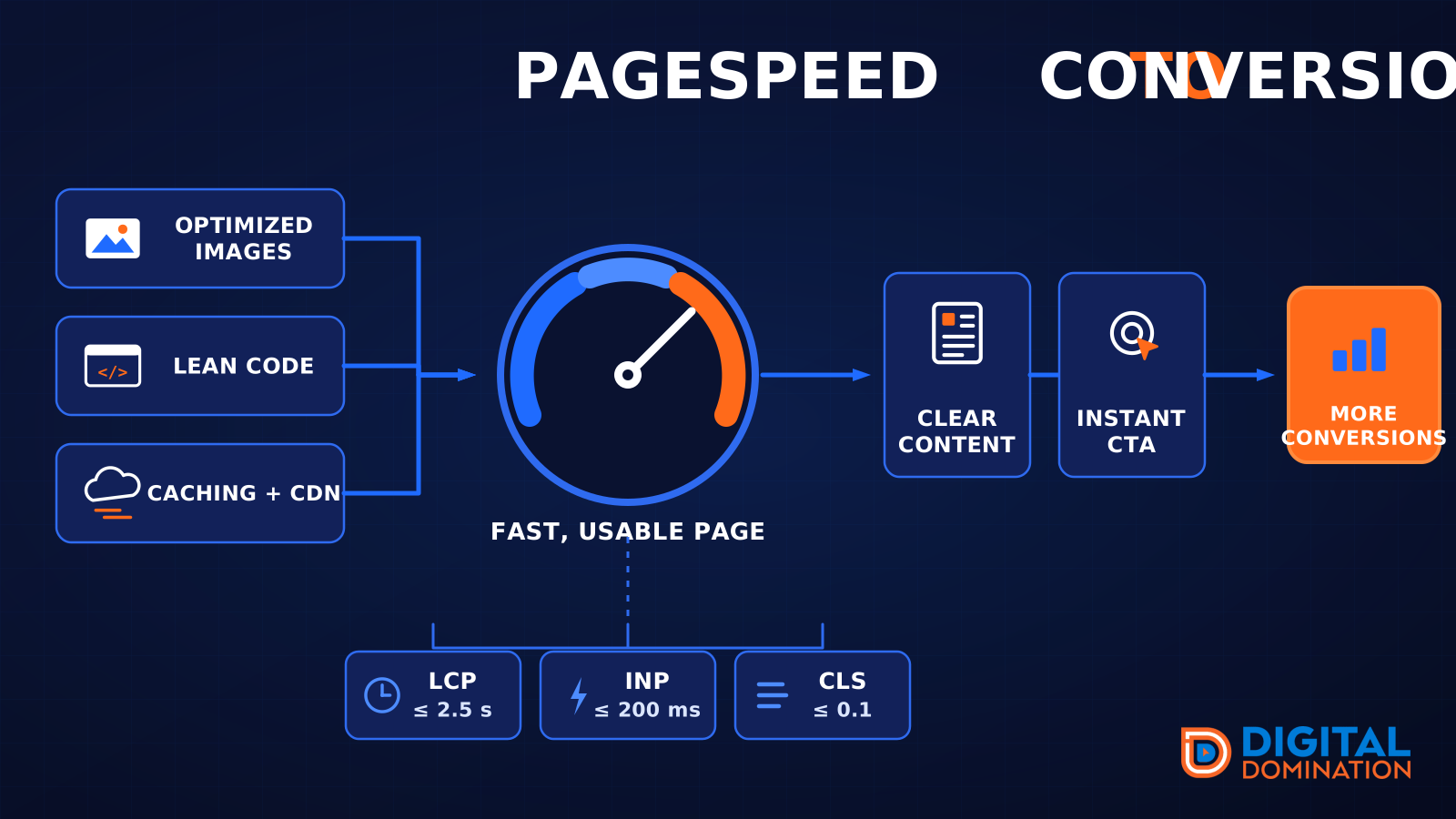
Website performance is part of the customer experience too. Google's Core Web Vitals good thresholds are LCP 2.5 seconds, INP 200 milliseconds and CLS 0.1 at the 75th percentile of field data. You do not need to memorize those terms, but you should ask whether your site is slow, jumpy or hard to use on a phone.
Keep these local fundamentals in the plan:
- ▸Map Pack tracking by service and area
- ▸Google Business Profile accuracy
- ▸Location page quality
- ▸Mobile speed and usability
- ▸Review generation and response process
- ▸Citation consistency
- ▸Service-area clarity
- ▸Conversion tracking for calls and forms
How to decide what to buy next
The Gemini 4 Hydrogen upgrade does not mean every local business needs to panic or buy a brand-new service overnight. It does mean the bar for useful local SEO is moving toward verifiable evidence. Your online presence needs to answer the specific questions buyers ask, then back those answers up across your profile, website and outside sources.
If a provider is still selling only generic profile edits or thin city pages, ask harder questions. You are not just paying for activity. You are paying to make your business easier for Google and customers to confirm.
At Digital Domination, we look at this from the perspective of a Las Vegas local SEO agency serving local service businesses nationally. If you want to understand how AI-search visibility should be evaluated, the AI SEO service page at digitaldomination.ai/ai-seo/ explains what an AI SEO strategy should review, including citations, content, local signals and technical clarity.
If you want a practical first step before a sales call, start with visibility in your actual market. Digital Domination's GeoGrid scan checks 169 points across a market so you can see where you appear and where competitors are stronger. Get the free GeoGrid scan at digitaldomination.ai/scan/.
Keep reading
Related guides
- ▸How To Choose A Law Firm Marketing Agency
- ▸How Do I Choose the Best Local SEO Company in 2026?
- ▸How to compare Google Maps SEO quotes
Put it into action
Frequently Asked Questions
What is Gemini 4 Hydrogen in Google Search?
Gemini 4 Hydrogen is Google's new model upgrade for Search that rolled out globally on November 12. Google said it improves intent understanding, query fan-out and linking, which affects how AI Mode interprets complex searches and connects users to helpful websites.
How does Gemini 4 Hydrogen affect local SEO?
It makes local SEO more evidence-based. Your business needs consistent service, location, hours, review and proof signals across your Google Business Profile, website and third-party sources so Google can verify you for specific buyer questions.
Will my Google Business Profile still matter for AI Mode?
Yes. Your Google Business Profile still helps Google understand what you do, where you are and how customers interact with you. The difference is that AI Mode may also compare your profile against your website, reviews and other sources before connecting users to you.
Do I need AI SEO if I already have local SEO?
You may not need a separate label, but your local SEO process should now include AI Mode citation benchmarking and source cleanup. If your provider only tracks Map Pack rankings and never checks AI-search citations, you may be missing part of the visibility picture.
Are city pages still useful after this update?
City pages can be useful when they include real local information, service details, proof and a clear reason for the page to exist. Thin pages that only swap city names are less likely to help with nuanced AI Mode queries.
What should I ask an SEO company before hiring them in 2026?
Ask whether they benchmark AI Mode citations, align GBP data with location pages, improve service-specific proof, use schema correctly and clean up third-party sources. Also ask how they will measure Map Pack visibility across your actual service area.
Can reviews help my business appear in AI-search results?
Reviews can support relevance and prominence when they reflect real customer experiences and mention the services people bought. Do not script reviews, but do make it easy for customers to describe their experience in their own words.
What is the first thing a local business should do about Gemini 4 Hydrogen?
Check consistency across your Google Business Profile, website, location pages and major listings. Then test the kinds of questions customers actually ask and see whether your business, competitors or third-party sources are being cited.
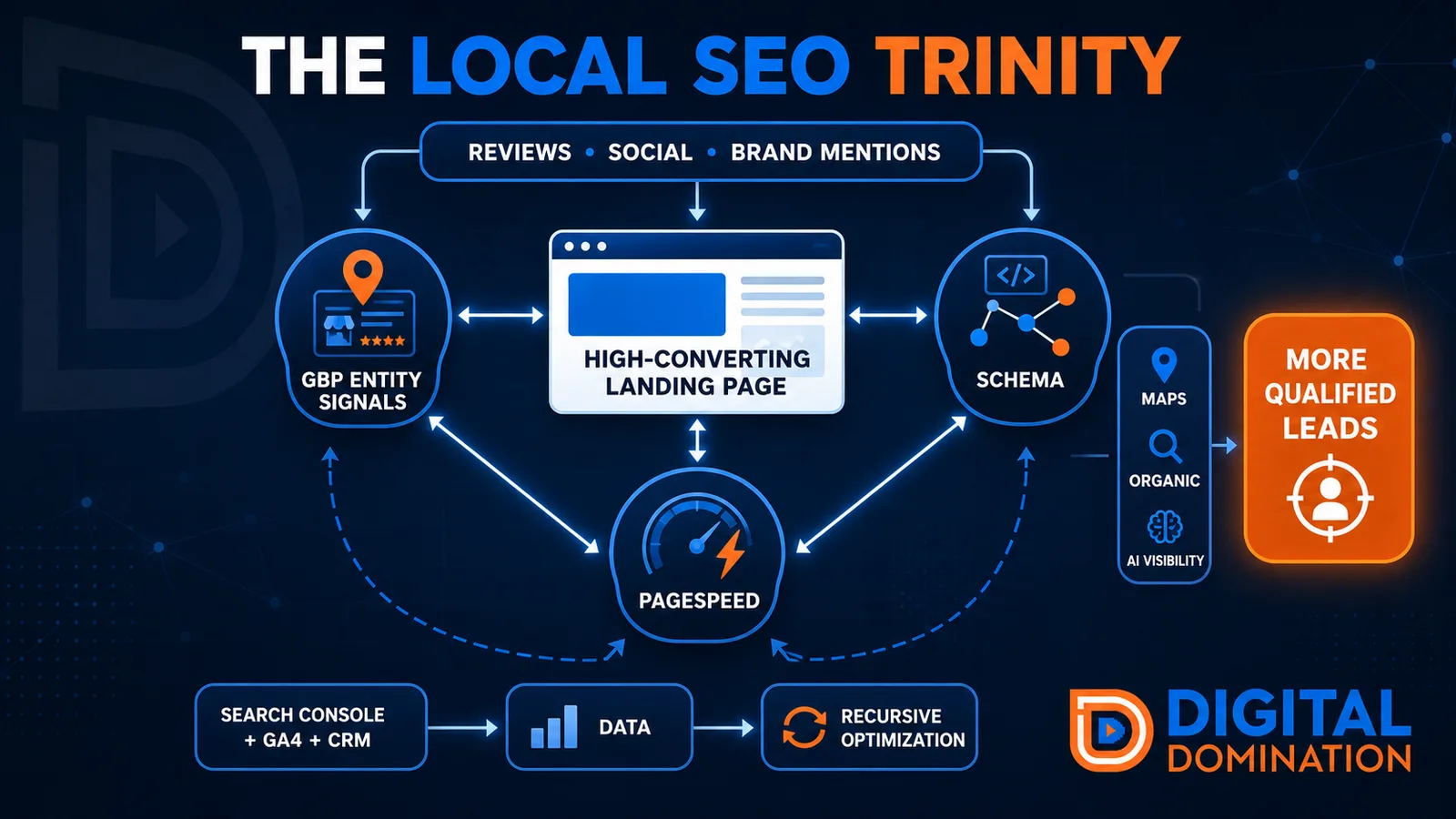
The Local SEO Trinity
Think of a three-legged stool. Your Google profile, your website, and your reviews all have to hold you up. If one leg is short, the whole thing wobbles.
GBP entity signals
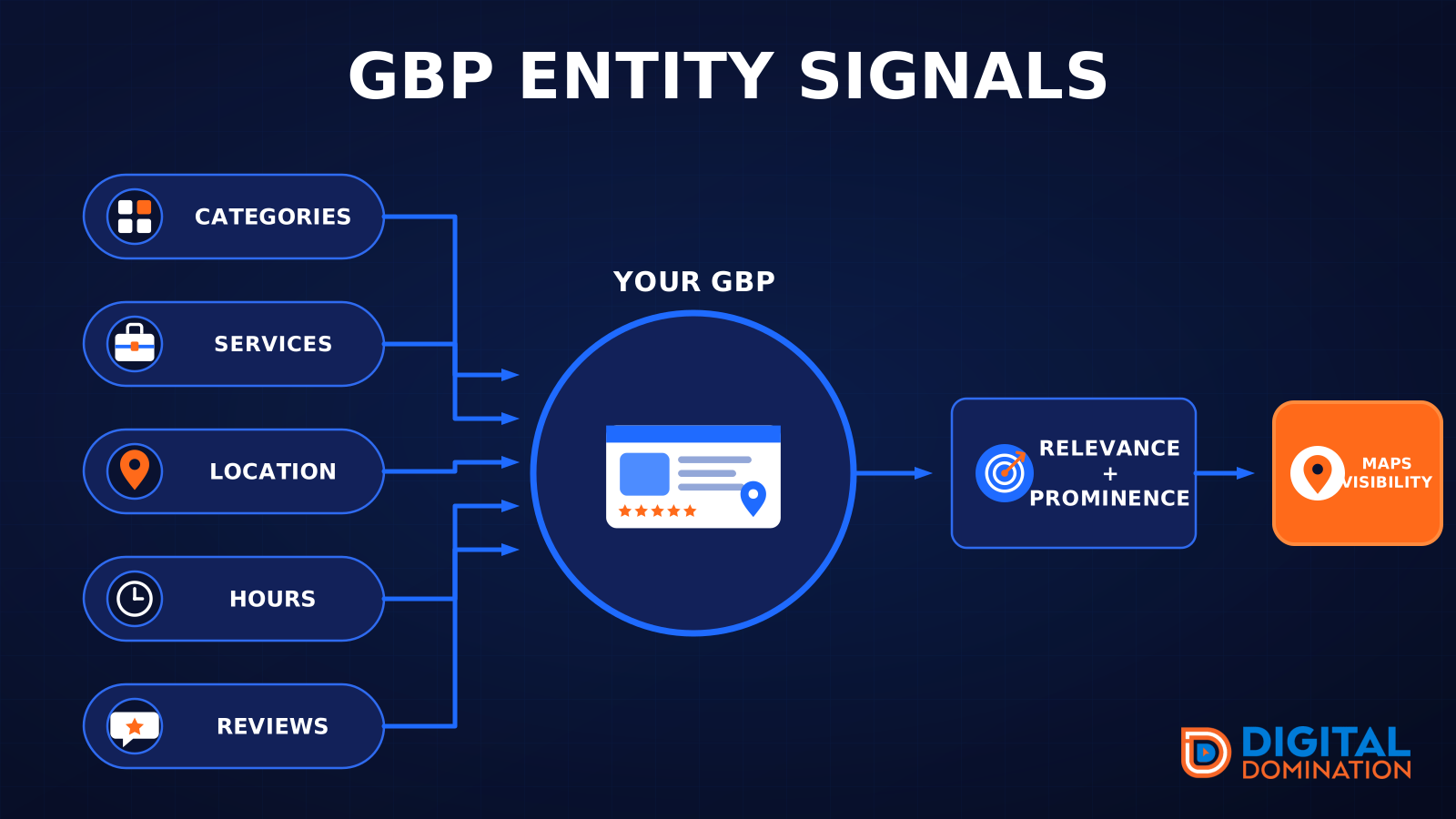
This leg is your Google Business Profile. GBP means Google Business Profile. It covers your categories, your services, your location, your hours, and your reviews. Google uses those facts to decide who to show.
Your Google profile is your storefront sign. If the sign is missing, or it names the wrong shop, people drive past.
PageSpeed to conversion
This leg is your website, above all on a phone. Small images, lean code, and caching make a page fast. A fast, clear page is what turns a visit into a call. Phone speed is one of the 12 Trinity checks because a slow page loses the call before anyone sees your offer.
Your website is the showroom. If the door sticks, people leave before they look around.
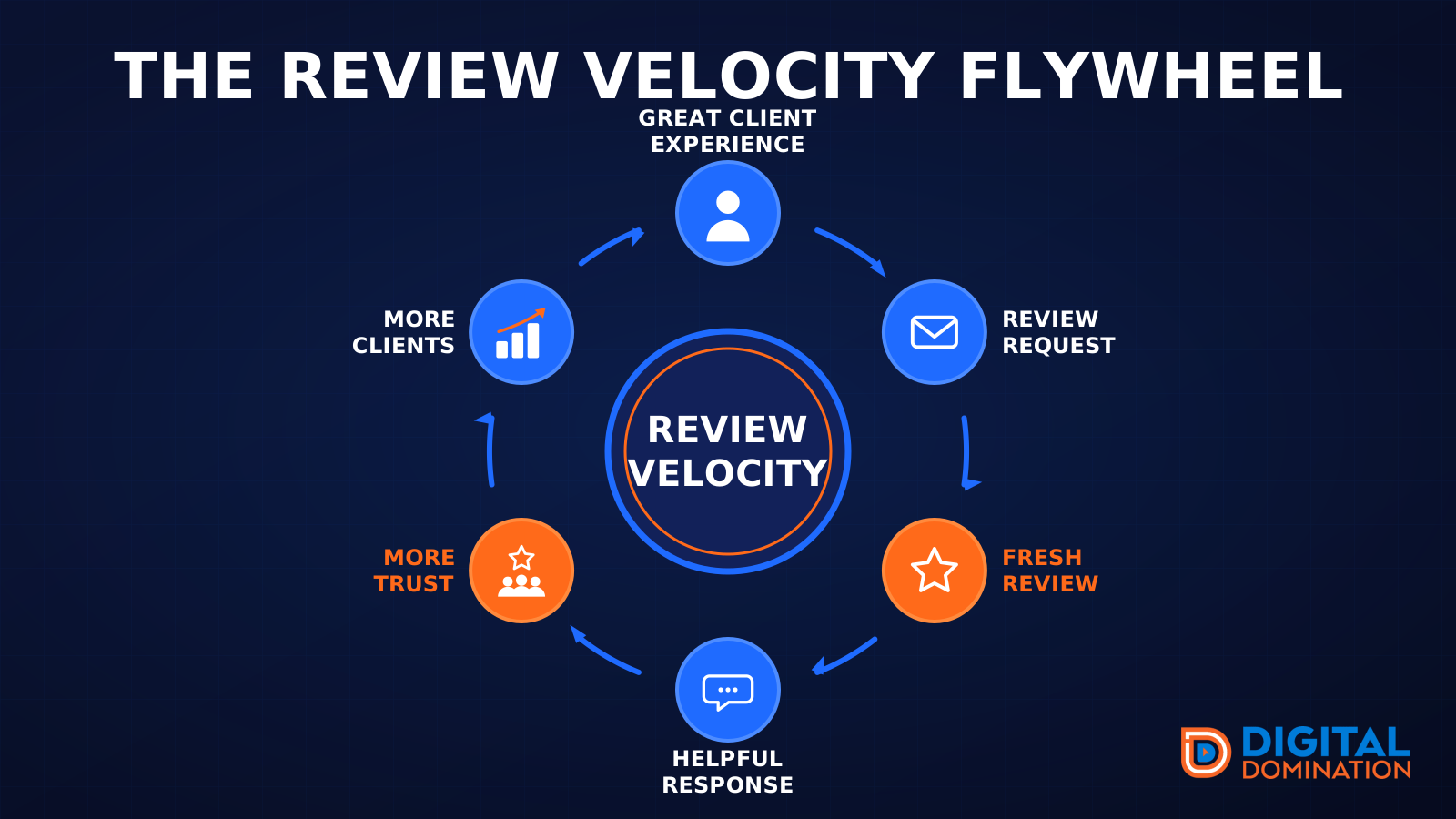
The review velocity flywheel
This leg is reviews and reputation. A good visit leads to a review request, then a fresh review, then a helpful reply, then more trust, then more customers. When the scan can find your Google listing, it shows your rating, your recent reviews, and how many you answered.
Reviews are word of mouth. One kind word helps. A steady stream of real reviews, and a reply from you, helps more.
How this turns into revenue
Being found in more searches leads to more calls. More calls lead to more booked jobs. More booked jobs lead to more revenue.
Example numbers, not a real business: 40 calls from search in a month, a 25 percent close rate, and a $400 average job. That is 10 booked jobs. That is $4,000. The math is the lesson. It is not a promise.
The full page has a box where you can type your own average job value and close rate.
One real story, from our car dealership case study: Medina Auto Group went from invisible on Google Maps to dominating every high-intent search across their market. The turnaround spanned all four of their rooftops at once. The same page says the team eliminated 89 unfair one-star reviews that had been dragging the dealership's reputation down and keeping it out of the Map Pack. It also says: “Results described here are exceptional and non-typical. Outcomes vary based on market conditions, competition, and implementation. No guarantees are made regarding earnings, rankings, or conversions.”
Free strategy call
More booked jobs start with a clear plan
Book a free strategy call. We look at your Google profile, your website, and your reviews, and we tell you what to fix first.
Free. You pick the time. A real person shows up.