
How Do I Choose the Best Local SEO Company in 2026?
Almost every local SEO engagement is won or lost in the sales meeting, because that is the only moment you have leverage to make somebody be specific.

The Short Answer: How to Choose a Local SEO Company
Choose a local SEO company by forcing three things into writing before you sign: one measurable outcome the agency is accountable for with a timeframe and a stated consequence, live proof from a current client in a comparable market that you can verify yourself from your own phone, and confirmation that you own the domain, the website, the Google Business Profile and the tracking data if the relationship ends. The clearest disqualifiers are guaranteed first-page organic rankings, deliverables described with no counts or page list, and any agency willing to also take on your direct competitor. A real operator answers all three without hedging.
The reason this is hard is that almost every pitch sounds identical, because almost every agency describes activity instead of outcomes. Activity is easy to sell and impossible to evaluate. Nobody can tell whether eight blog posts and forty citations a month is good or worthless unless someone first agreed what those things were supposed to produce.
So the entire evaluation reduces to forcing specificity, then holding the answers in the agreement rather than in your memory of a friendly meeting. The rest of this page is the specific questions, what a good answer sounds like, and the contract language worth refusing.
If you want ranked comparisons instead of a method, the site has two: /best-seo-companies-las-vegas/ for the Las Vegas market and /best-google-maps-seo-agencies/ nationally. This page is the vetting process you should run on whoever you shortlist, including us.
- ▸One accountable outcome, one timeframe, one consequence, all in writing
- ▸A current client in a comparable market you can verify yourself, unannounced
- ▸Written confirmation you own the domain, site, profile and tracking data
- ▸Walk from guaranteed organic rankings, undefined deliverables and competitor conflicts
What Separates a Real Local SEO Operator From a Reseller?
A reseller sells you a retainer and forwards the work to a white-label vendor, usually a fulfillment shop producing the same package for hundreds of accounts. This is not automatically bad, and some resellers manage the relationship well, but it changes who you can call when something breaks and it caps how specific the work can be to your market. The tell is not the size of the company. It is whether anyone in the conversation can talk about your market without reading from a template.
The fastest way to identify an operator is to ask a market-specific question in the meeting and watch what happens. Ask why the business currently sitting in the first map position is winning. An operator opens a map, looks at the primary category, the review velocity, the photo count and the page structure, and gives you a real hypothesis in a minute. A reseller gives you a generic answer about consistency and content, because they have not looked and cannot look.
The second tell is the first-60-days plan. An operator names specific things: the primary category they would change and why, the service-area pages they would build, the review process they would install, the profile fields that are empty. A reseller describes phases. Phase one discovery and audit, phase two optimization, phase three content. Phases are what you write when you do not yet know what you are going to do.
The third tell is who touches the Google Business Profile. This is the single highest-leverage asset in local search and the easiest to damage. Ask who personally makes the changes, whether they have handled a suspension before, and what they would do if yours went down on a Friday. Anyone who has actually done this work has a suspension story. /gbp-suspension-recovery/ describes what that process really looks like.
One clarification, because we sell to agencies too. The warning above is about resellers who cannot answer a market-specific question because a fulfillment mill is doing templated work behind them. It is not an argument against white-label itself. If you run an agency and want an operator behind your brand, doing market-by-market work with a stated outcome your client can hold you to, that is what our white-label program is built to be: /white-label-local-seo/. Run the tests in this guide on us.
- ▸Ask why the current first-place business is winning, and watch whether they look or recite
- ▸Demand a first-60-days plan with named changes, not numbered phases
- ▸Find out who personally edits the Google Business Profile and whether you can speak to them
- ▸Ask for a suspension story: real operators have one, resellers describe a process
- ▸Confirm whether fulfillment is in-house or white-labeled, and who you call when it breaks
What Questions Should I Ask on a Local SEO Sales Call?
Start with proof you can verify without their help. Ask for two current clients in a comparable trade and market, then check them live while you are still on the call: search from your own phone rather than theirs, look at where the business actually sits in the map results, read the recent reviews, and see how many of their pages are indexed. An agency that cannot produce a client you are allowed to check is asking you to buy on faith.
Then pin down accountability. Traffic, rankings, calls and booked jobs are wildly different commitments, and the further down that list an agency will go, the more confident it is. Push for the metric, the timeframe, and the consequence for missing. If the answer is that results depend on many factors, ask them to list the factors and say which ones they control. That question ends a lot of meetings quickly.
Then ask how they measure. This one separates people who understand local search from people who do not. Ask whether they measure your map position from a single point or across a grid of points spread over your service area. Ranking from your own office address is close to meaningless, because your position changes block by block. If they do not measure across the area, they cannot tell you where you are invisible. /google-maps-ranking-checker/ explains why grid measurement matters.
Finally, ask about the exit before you have any intention of leaving. Not because you expect to, but because the answer reveals the business model. An agency structured so that you keep everything is confident it will earn renewal. An agency that keeps the assets plans to keep you by making leaving expensive.
- ▸Show me two current clients in a comparable market I can verify myself, right now
- ▸What single outcome are you accountable for, in what timeframe, and what happens if you miss?
- ▸Why is the business in position one currently winning in my market?
- ▸Do you measure map position across a grid of my service area, or from one address?
- ▸Who personally edits my Google Business Profile, and may I speak to them?
- ▸If I leave in month seven, exactly what do I keep and what disappears?
- ▸Will you take on my direct competitor in this service area?
Why a Ranking Promise Is a Warning Sign
A promise of a specific Google position is still a ranking promise, even when it names a date and a refund. Google controls the results. Ask what work will be done and how visibility will be measured against a baseline. Results vary.
Guaranteed first-page organic rankings is the loudest warning sign, because nobody controls Google's organic results. A promise that pretends otherwise is either ignorance or a bet that you will not measure it carefully. Related fake guarantees include guaranteed traffic increases, which can be produced with worthless traffic, and guaranteed lead volume with no definition of what counts as a lead.
A Map Pack position is still something Google controls. Ask which searches will be checked, across what area, and against what starting baseline. Results vary.
One more thing worth insisting on, guarantee or not. Ask what happens in month four if nothing has moved. A good agency has a written checkpoint and an answer. A bad one has a twelve-month term and a hope. The checkpoint matters more than, because it is the moment you get information while you still have options.
- ▸Ask for the work, the baseline, and the reporting. Results vary.
- ▸Fake guarantee: guaranteed page-one organic rankings, guaranteed traffic, undefined lead counts
- ▸Always ask which keywords, measured across what geography, checked by what method
- ▸Insist on a written mid-term checkpoint even when there is no guarantee at all
What Reporting Proves the Work Happened, and Which Contract Terms Should I Refuse?
A report that proves work happened contains four things: the specific URLs published or changed in the period, your map position measured across the service area rather than from one point, calls and form submissions with the source of each, and what is planned next with dates. If a report contains impressions, sessions and average position and nothing else, it is describing weather. You should be able to tell from the report alone, without asking a follow-up question, whether the month was worth the fee.
The most useful reporting habit you can install costs nothing: ask for the page list every quarter. Specific URLs, published or changed, with dates. It is the one thing that cannot be faked with a dashboard, and it takes an honest agency ninety seconds to produce. /how-to-tell-if-your-seo-company-is-working/ goes deeper on the audit you can run yourself.
On contract terms, a defined term is reasonable. Search results take months to move and nobody builds an asset in thirty-day increments, so an agency asking for a term is not a red flag by itself. What is unreasonable is a long term with no performance condition, no checkpoint and no exit. Also refuse: automatic renewal without written notice, ownership of the domain or website resting with the agency, any clause preventing you from taking your content, and non-disparagement clauses that stop you describing your own experience.
The hidden term to look for is the platform. A site you technically own but cannot move without a full rebuild is functionally the agency's asset regardless of what the contract says. Ask whether a different developer could take over the site as-is. /seo-contract-red-flags/ lists the specific clauses, and /who-owns-your-website-seo-agency/ covers the ownership question in full.
- ▸Report must include: URLs changed, grid map position, calls with sources, next steps with dates
- ▸Ask for the quarterly page list: it is the one thing a dashboard cannot fake
- ▸Reasonable: a defined term with a written checkpoint and an exit for non-performance
- ▸Refuse: auto-renewal without notice, agency-held domains, non-portable content, gag clauses
- ▸Check the platform: could another developer take the site over without rebuilding it?
Run These Questions on Us Too, in 15 Minutes
Everything on this page is meant to be used on us. Ask us for a client in a comparable market you can verify yourself, ask exactly what we are accountable for, ask what you keep if you leave, and ask us to put all of it in writing. If we get vague, apply the same rule you would apply to anybody else on your shortlist.
Book a free 15-minute call and we will pull your live Map Pack position across a grid of your metro while you are on the phone, so you can see where you are actually visible and where you are not. That baseline is genuinely useful whether you hire us, stay where you are, or hire someone else, and it makes every other pitch you hear this month much easier to judge.
Our terms in one line: stronger visibility on Google Maps, one client per trade per service area, the AI system at $297 per month including a free custom website you keep, and 24-hour turnaround available. More on the method at /how-it-works/, and on results at /case-studies/.
Keep reading
Related guides
- ▸Are Angi Leads Worth It for Contractors?
- ▸Artificial turf installer local SEO
- ▸Auto repair shop local SEO
Put it into action
Frequently Asked Questions
How much should local SEO cost per month in 2026?
Enough to fund real work and tied to a defined outcome rather than a task list, which is why the range is wide and market-dependent. What matters more than the number is what it covers: whether the website, review management, call tracking and reporting are included or billed separately, and what happens if the outcome is missed. Our AI system runs at $297 per month and includes a free custom website, which gives you a floor to compare other proposals against. Compare the total stack cost, not the retainer line.
How long does local SEO take to show results?
Local map visibility typically moves faster than competitive organic rankings, because the candidate pool is smaller and the signals are more concentrated in the Google Business Profile and service-area coverage. The honest approach is to agree in writing on what should be visibly true at a checkpoint before you sign, then judge against that rather than against a general industry timeline. Our own commitment is stronger visibility on Google Maps.
Can a local SEO company guarantee first page rankings?
Not for organic search results, and any agency that promises it should end the meeting. Nobody controls Google's organic algorithm. A promise of a specific Map Pack position is still a ranking promise. Google says no one can guarantee placement. Ask what work will be done and how visibility will be measured. Results vary.
What is the difference between a local SEO agency and a reseller?
An operator does the work themselves and can discuss your specific market without a template. A reseller sells the retainer and forwards fulfillment to a white-label vendor producing the same package across many accounts. Test it by asking why the business in the first map position is currently winning: an operator forms a real hypothesis by looking, a reseller gives a generic answer about consistency. Also ask who personally edits your Google Business Profile and whether you can speak to that person.
Should I sign a 12-month local SEO contract?
A defined term is reasonable because search results take months to move, but a long term with no performance condition and no exit is not. Look for a term that includes a written mid-point checkpoint, a stated outcome and a defined exit if that outcome is missed. The length matters far less than whether missing the target carries any consequence. Also refuse automatic renewal without written notice and any clause that keeps the domain or content with the agency.
What should a local SEO report include?
Four things: the specific URLs published or changed in the period, your map position measured across a grid of your service area rather than from a single address, calls and form submissions with the source of each, and the plan for next month with dates. Reports containing only impressions, sessions and average position describe conditions rather than work. If you cannot tell from the report alone whether the month earned the fee, the report is the problem.
Is it bad if my SEO company also works with my competitor?
Yes, in the same trade and the same service area, because only one business can hold the top position and the agency is therefore choosing between clients whether it admits that or not. Ask the question directly on the sales call and get the answer written into the agreement rather than confirmed verbally. We work with one client per trade per service area, which is a limit on how many clients we can take rather than a feature we can waive.
How do I know if my current local SEO company is doing anything?
Ask for three things and time how long they take to arrive: the specific URLs published or changed in the last 90 days, your change in map position measured across your metro rather than from your office, and the count of inbound calls with sources. If all three arrive quickly, work is happening. If you receive a dashboard of impressions and no page list, that is your answer. /how-to-tell-if-your-seo-company-is-working/ walks through the full self-audit.
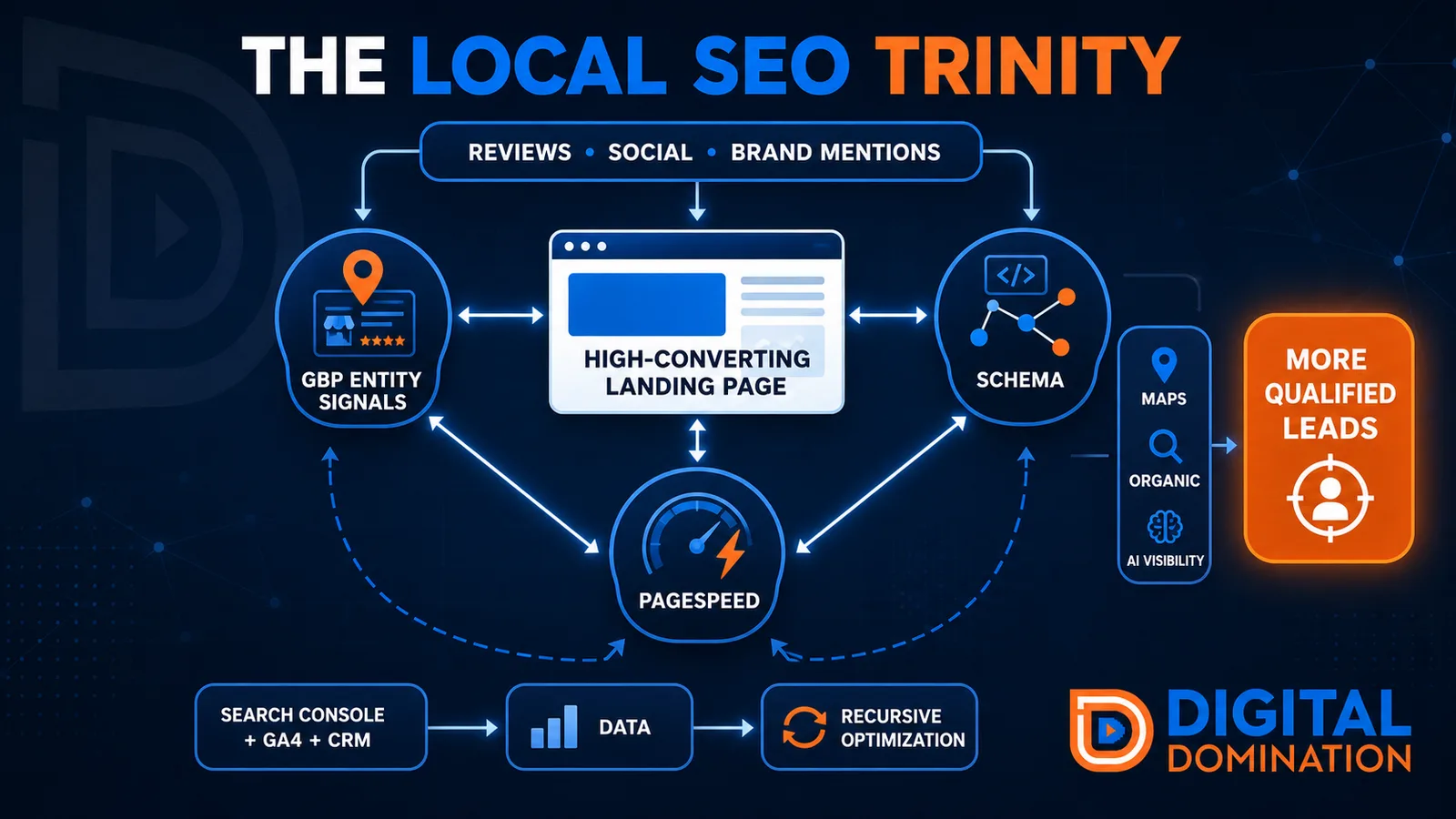
The Local SEO Trinity
Think of a three-legged stool. Your Google profile, your website, and your reviews all have to hold you up. If one leg is short, the whole thing wobbles.
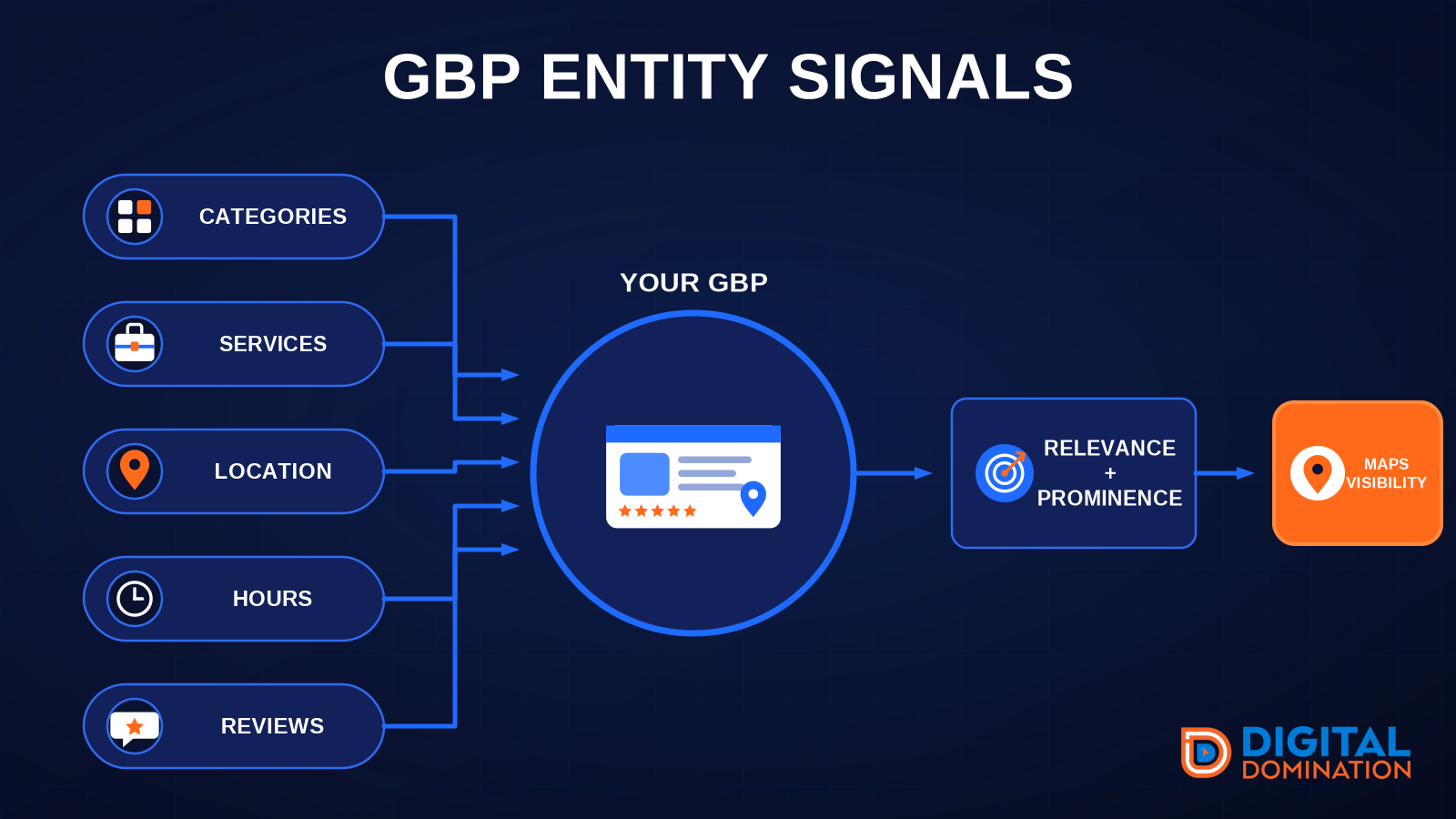
GBP entity signals
This leg is your Google Business Profile. GBP means Google Business Profile. It covers your categories, your services, your location, your hours, and your reviews. Google uses those facts to decide who to show.
Your Google profile is your storefront sign. If the sign is missing, or it names the wrong shop, people drive past.
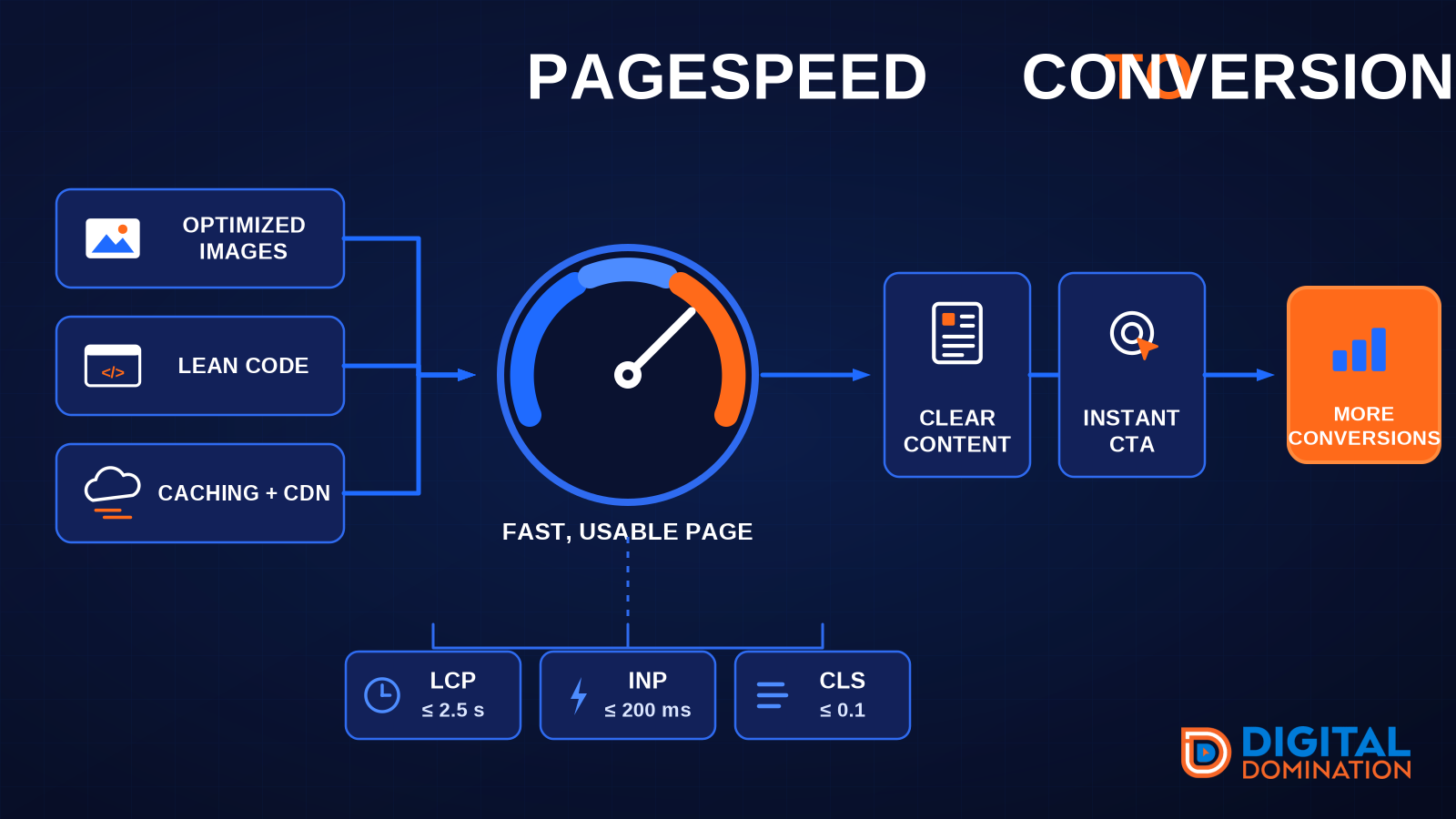
PageSpeed to conversion
This leg is your website, above all on a phone. Small images, lean code, and caching make a page fast. A fast, clear page is what turns a visit into a call. Phone speed is one of the 12 Trinity checks because a slow page loses the call before anyone sees your offer.
Your website is the showroom. If the door sticks, people leave before they look around.
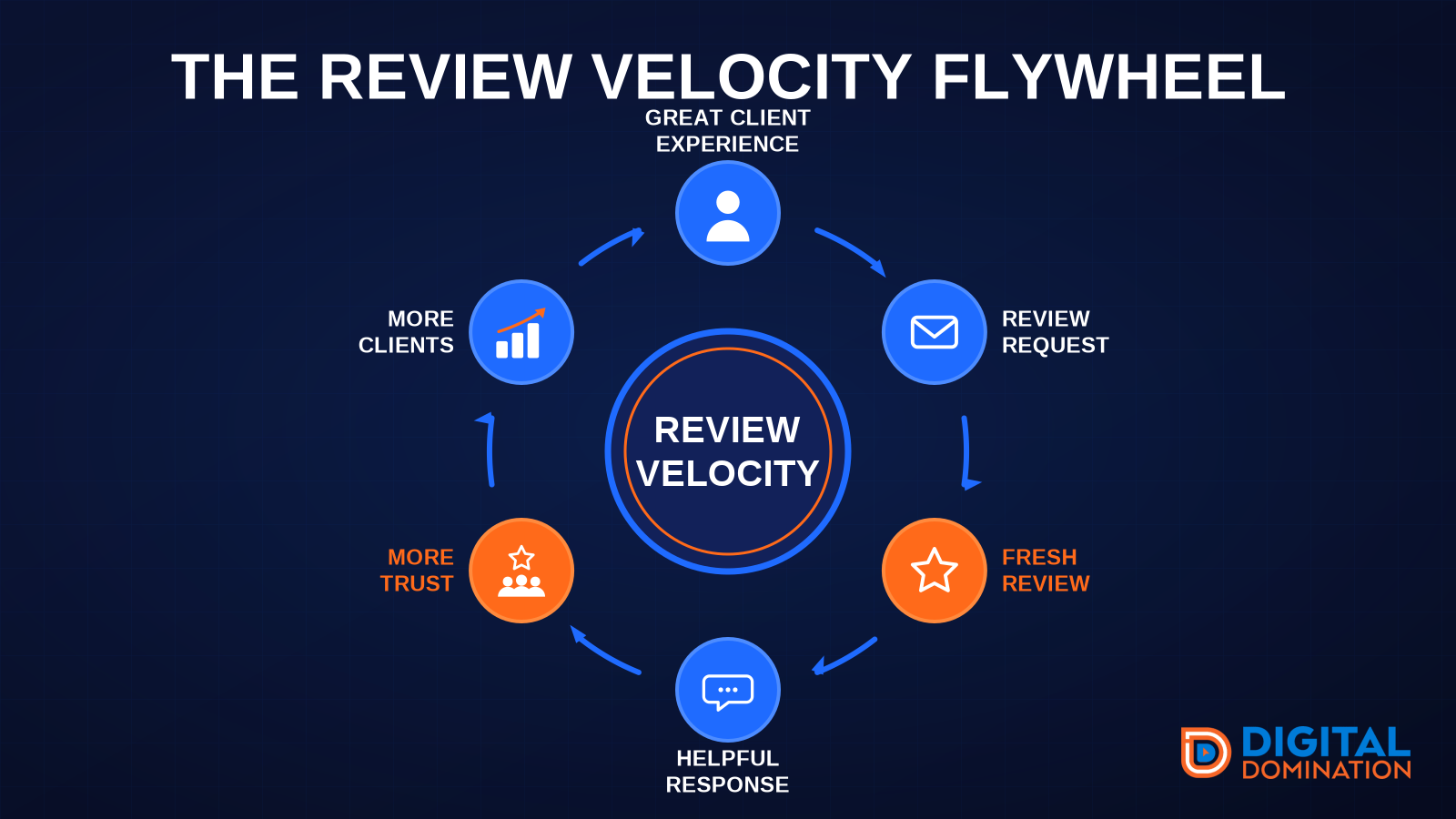
The review velocity flywheel
This leg is reviews and reputation. A good visit leads to a review request, then a fresh review, then a helpful reply, then more trust, then more customers. When the scan can find your Google listing, it shows your rating, your recent reviews, and how many you answered.
Reviews are word of mouth. One kind word helps. A steady stream of real reviews, and a reply from you, helps more.
How this turns into revenue
Being found in more searches leads to more calls. More calls lead to more booked jobs. More booked jobs lead to more revenue.
Example numbers, not a real business: 40 calls from search in a month, a 25 percent close rate, and a $400 average job. That is 10 booked jobs. That is $4,000. The math is the lesson. It is not a promise.
The full page has a box where you can type your own average job value and close rate.
One real story, from our car dealership case study: Medina Auto Group went from invisible on Google Maps to dominating every high-intent search across their market. The turnaround spanned all four of their rooftops at once. The same page says the team eliminated 89 unfair one-star reviews that had been dragging the dealership's reputation down and keeping it out of the Map Pack. It also says: “Results described here are exceptional and non-typical. Outcomes vary based on market conditions, competition, and implementation. No guarantees are made regarding earnings, rankings, or conversions.”
Free strategy call
More booked jobs start with a clear plan
Book a free strategy call. We look at your Google profile, your website, and your reviews, and we tell you what to fix first.
Free. You pick the time. A real person shows up.