
Gemini can use Maps saved places. Should local businesses pay for AI SEO now?
Google is making local recommendations more personal. That does not mean every business needs a new buzzword package, but it does change what a serious local SEO plan should cover.
What changed and who it hits
On October 22, 2026, 9to5Google reported that Gemini’s Personal Intelligence is expanding its Google Maps integration. The report says Gemini can reference a user’s Maps searches and saved places, alongside Calendar context, when making recommendations.
That matters for restaurants, home services, medical offices, fitness studios, salons, dealerships, attorneys and any local business that depends on being chosen at the moment someone asks Google for help. The old question was often, “Do I rank for plumber near me?” The newer question is, “Would Google’s AI recommend my business for this person, in this situation, with this history?”
This is not a reason to panic or buy a vague AI SEO package because it sounds modern. It is a reason to check whether your local SEO work is specific enough for Google to understand when your business is the right fit.
The news behind the shift
9to5Google reported that Gemini’s Personal Intelligence is expanding with Google Maps context, including searches and saved places. Google’s own Search Help documentation, updated October 27, 2026, says AI Mode and Ask Maps can use connected Google content apps and Search services history to tailor responses, including restaurant and place recommendations.
Search Engine Land also reported on Google Ask Maps and how business owners can make their businesses easier to recommend. The practical theme is clear: Google is not only matching a query to a list of nearby businesses. It is also trying to interpret the person’s situation, preferences, past activity and likely intent.
Google has long said local rankings are based on relevance, distance and prominence. Personalization does not erase those factors. It changes how relevance may be judged for a specific person and a specific moment.
Why generic rank tracking is no longer enough
A generic rank report still has value. If your business is invisible across town for major terms, that is a problem. But a single ranking screenshot from one location cannot show how your business appears to different people with different saved places, schedules, routes and prior searches.
For a local owner, the risk is paying for a provider that reports only a few broad keyword positions while ignoring the details AI systems use to decide whether your business fits a situation. Ask whether your local SEO reporting covers these practical signals:
- ▸Visibility from multiple points across your market, not only one ZIP code.
- ▸Completeness and accuracy of your Google Business Profile.
- ▸Whether your services, products, attributes and hours match real customer needs.
- ▸Review content, not just star rating.
- ▸Photos that show the experience, entrance, team, parking, work quality or menu.
- ▸Website pages that explain who you serve and when you are the right choice.
Five things to check on your profile this week
You do not need to be technical to act on this news. Start with the place Google already uses heavily for local recommendations: your Google Business Profile.
If Gemini and Ask Maps are going to answer situation-based questions, your profile should make the right situations obvious. Check these items this week:
- ▸Your primary category and secondary categories accurately describe what you do.
- ▸Your services or menu items are filled out with plain-language names customers actually use.
- ▸Your hours, holiday hours and special hours are correct, especially for evenings and weekends.
- ▸Your attributes answer real filters, such as outdoor seating, wheelchair accessibility, women-owned, emergency service or appointment required, where applicable.
- ▸Your photos make it easy to understand the setting, type of work, products, staff, vehicles, storefront and customer experience.
Personalization turns details into ranking fuel
A saved place is a clue. A prior Maps search is a clue. A calendar event is a clue. If someone asks for a quiet place after a meeting, Google may be trying to connect location, timing, preferences and the type of place that fits the request.
That is why thin profiles are becoming a bigger problem. A business that only says “restaurant” gives Google less to work with than one that shows private booths, late hours, parking, reservation options, menu details and recent photos of the dining room. A contractor that only says “home repair” gives less context than one with clear service pages, service areas, emergency availability and job-type photos.
This does not mean you should stuff your profile with every phrase you can imagine. It means you should describe the real reasons a customer would choose you.
What to do about it this week
The right response is not to chase every AI headline. The right response is to make your local presence more complete, more specific and easier for Google to trust.
Give yourself one hour and make visible improvements that help both traditional Maps rankings and AI-powered recommendations. Start with these owner-level actions:
- ▸Search your business name on Google and confirm the phone number, hours, address, booking link and website link are correct.
- ▸Open your Google Business Profile and add missing services, products or menu sections.
- ▸Upload current photos that show what a customer would want to know before visiting or booking.
- ▸Read your last few reviews and note what customers praise, then reflect those real strengths on your profile and website.
- ▸Update your website service pages so each page explains the job, who it is for, where you serve and what makes the service different.
- ▸Make sure your contact page and location page are clear for both customers and Google.
Review content matters more than review counting
Owners often ask for “more reviews” as if volume is the only issue. Reviews still matter, but AI recommendations may benefit from the words inside the reviews because those words describe real customer situations.
For example, if customers mention that a cafe is quiet, good for working, easy to park near or open late, those phrases help describe fit. If customers mention that a plumber explained the repair, arrived after hours or cleaned up afterward, those details help describe fit. Do not script reviews or pressure customers. Ask for honest feedback and make it easy for them to mention the service they received.
Your review process should make these basics consistent:
- ▸Ask every real customer at the right moment, not only the happiest customers.
- ▸Use a direct review link so customers do not have to search.
- ▸Ask for honest detail about the service, visit or experience.
- ▸Reply to reviews in a way that naturally confirms the service and location when appropriate.
- ▸Do not offer incentives for positive reviews or write reviews for customers.
Your website still has a job in AI recommendations
Some owners assume AI search means the website matters less. For local businesses, the opposite is often true. Your website is where you can explain things that do not fit neatly into a Google Business Profile field.
A strong local page should answer the questions a customer would ask before calling. AI systems also need that detail to understand when your business is a good match. Review your site for missing information that could help a person choose you:
- ▸Clear service descriptions for each major job you want.
- ▸Neighborhoods, cities or service areas written naturally.
- ▸Who the service is best for and who it is not best for.
- ▸Hours, response times or appointment rules, stated honestly.
- ▸Photos of your real work, place or team where possible.
- ▸FAQs that answer practical buying questions, not generic filler.
Do you need to pay for AI SEO right now?
Maybe, but only if the service is grounded in real local SEO work. Paying for “AI SEO” as a label is not enough. Paying for a plan that improves how Google understands your business, your services, your proof and your fit for specific customer situations can make sense.
A good provider should be able to explain how the work affects Google Business Profile quality, local content, reviews, photos, site structure, technical health and market-level visibility. They should not promise that Gemini will recommend you to every user, because personalized results are not one fixed ranking.
Before you buy, ask direct questions like these:
- ▸Do you track visibility from multiple points in my market, or only from one location?
- ▸How will you improve my Google Business Profile beyond basic posting?
- ▸How will you make my services and attributes clearer for situation-based searches?
- ▸Will you review my photos, reviews and website content together?
- ▸How will you measure progress if AI recommendations vary by user?
- ▸What work is included each month, and what is only reporting?
How to measure progress when results are personal
Personalized recommendations make measurement harder, but not impossible. You should not expect one report to prove everything. You need a mix of visibility checks, profile improvements, customer actions and lead quality.
GeoGrid reporting is useful because it checks rankings across a market instead of pretending one point tells the whole story. Profile insights, call tracking, form submissions and booking data also matter, as long as you understand that no single metric tells the full story.
The owner-friendly goal is simple: improve your chances of being understood as the right local answer in more real situations. That includes broad searches, direct brand searches and specific requests such as open after work, near my saved places, good for families, emergency service or quiet place after a meeting.
The buying decision for local owners
This Gemini and Ask Maps news does not mean local SEO is dead. It means shallow local SEO is easier to spot. If a provider is only sending generic keyword reports and not improving your profile, reviews, photos, services, hours, attributes and website content, they may not be preparing you for how local recommendations are changing.
Digital Domination is a Las Vegas local SEO agency serving local service businesses nationally. Our view is that AI SEO for local businesses should start with practical local SEO foundations, then make the business easier for AI systems to understand and recommend. The relevant service page at digitaldomination.ai/ai-seo/ explains how AI SEO connects to local visibility, content, Google Business Profile work and recommendation-focused search.
If you are deciding whether to pay for AI SEO, start by seeing how visible you are across your actual market today. Digital Domination’s GeoGrid scan checks 169 points across a market, so you can see where you are strong and where you are missing. Start with the free GeoGrid scan at digitaldomination.ai/scan/.
Keep reading
Related guides
- ▸How to spot a bad Google Maps SEO provider before you sign
- ▸How do you know if your SEO company is actually working?
- ▸How Trial Attorneys Are Being Found in AI Answers Now
Put it into action
Frequently Asked Questions
Can Gemini really use my Google Maps saved places for recommendations?
9to5Google reported that Gemini’s Personal Intelligence is expanding its Google Maps integration to reference Maps searches and saved places. Google’s own Search Help documentation also says AI Mode and Ask Maps can use connected Google content apps and Search services history to tailor responses, including place recommendations.
Does this mean local SEO rankings are different for every person?
They can be more personalized than a single generic ranking report suggests. Google still uses relevance, distance and prominence for local ranking, but user context can affect which business looks like the best answer for a specific situation.
Should my business pay for AI SEO now?
Consider it if the provider is doing practical work that improves how Google understands your business. That means Google Business Profile cleanup, better service details, review strategy, photos, local content and market-level tracking, not just a new label on old reports.
What should I update first on my Google Business Profile?
Start with categories, services, hours, attributes and photos. These are the items most likely to help Google understand when you fit a situation-based request, such as open late, wheelchair accessible, emergency service or good for a quiet meeting.
Do saved places matter for service businesses, not just restaurants?
Yes, the principle still matters. A homeowner’s location, prior searches and nearby saved places can give Google context about the area and intent, while your profile and website need to make your services, service area and availability clear.
How can I track local SEO if AI results are personalized?
Use more than one metric. Track visibility across multiple map points, Google Business Profile actions, calls, forms, bookings, review quality and the completeness of your profile and website.
Will adding AI content to my website help me show up in Gemini?
Content only helps if it is accurate, useful and specific to your real services. Avoid generic pages and focus on clear service descriptions, location information, customer questions, photos and details that help Google understand when you are the right fit.
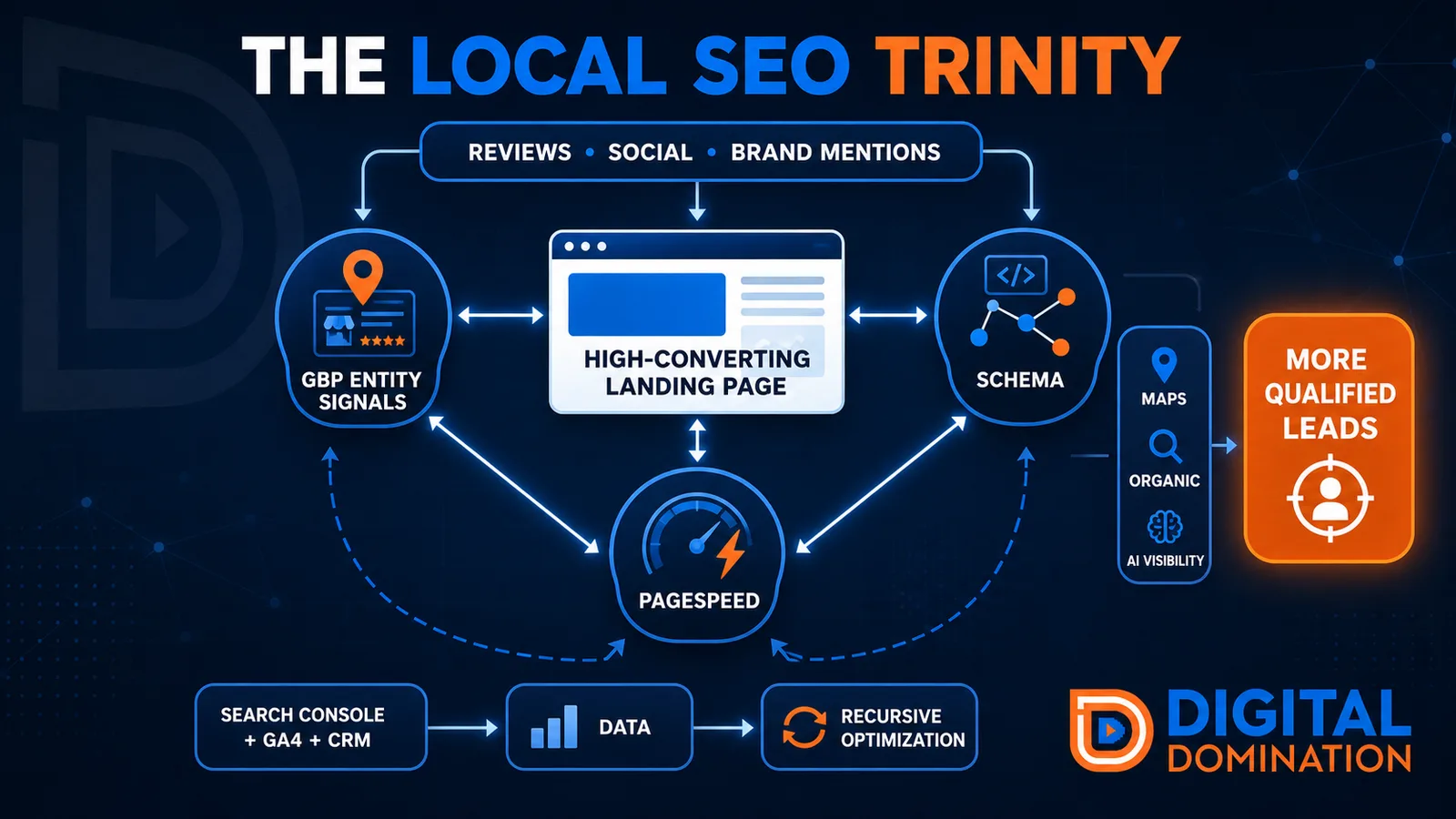
The Local SEO Trinity
Think of a three-legged stool. Your Google profile, your website, and your reviews all have to hold you up. If one leg is short, the whole thing wobbles.
GBP entity signals
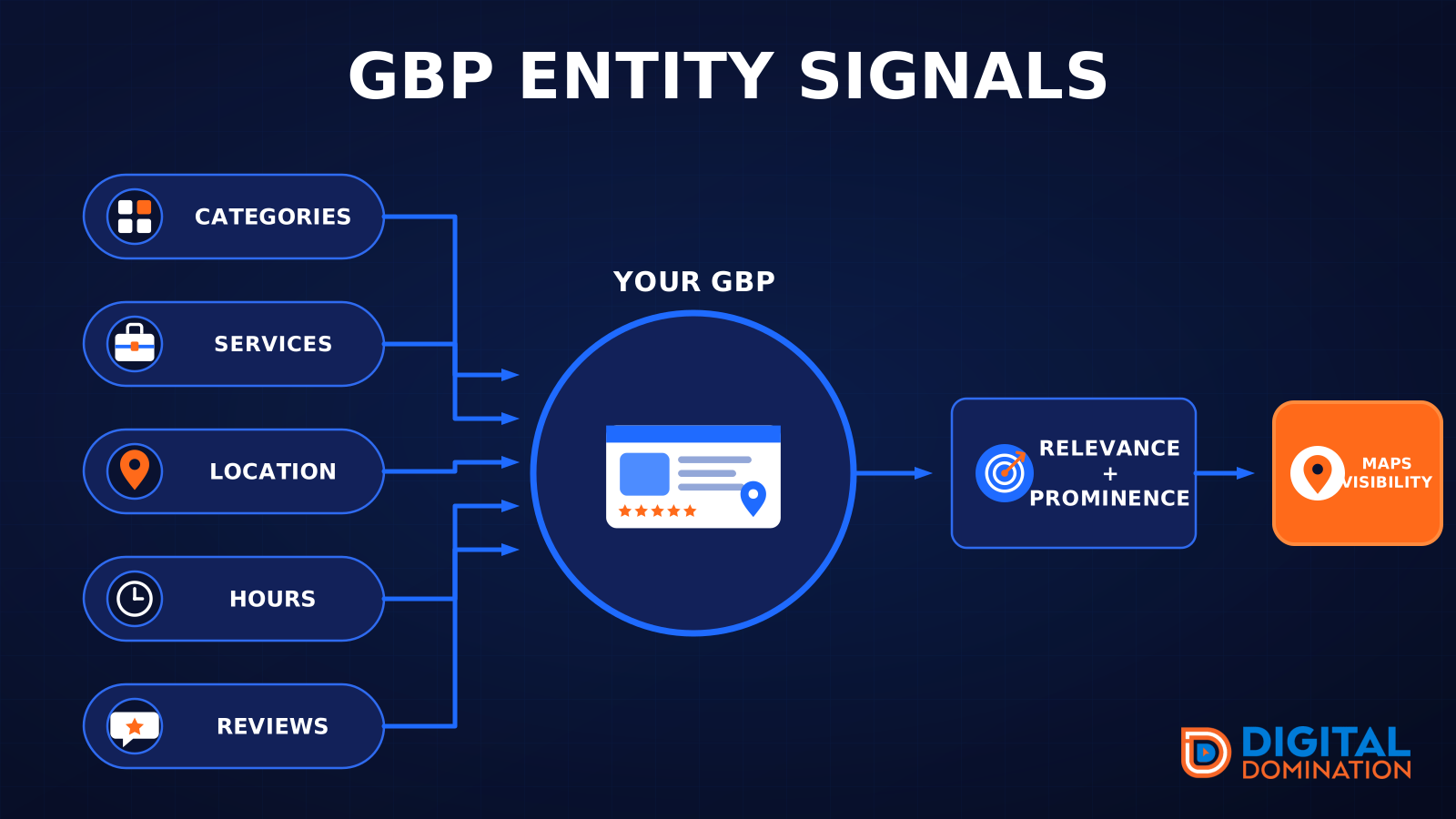
This leg is your Google Business Profile. GBP means Google Business Profile. It covers your categories, your services, your location, your hours, and your reviews. Google uses those facts to decide who to show.
Your Google profile is your storefront sign. If the sign is missing, or it names the wrong shop, people drive past.
PageSpeed to conversion
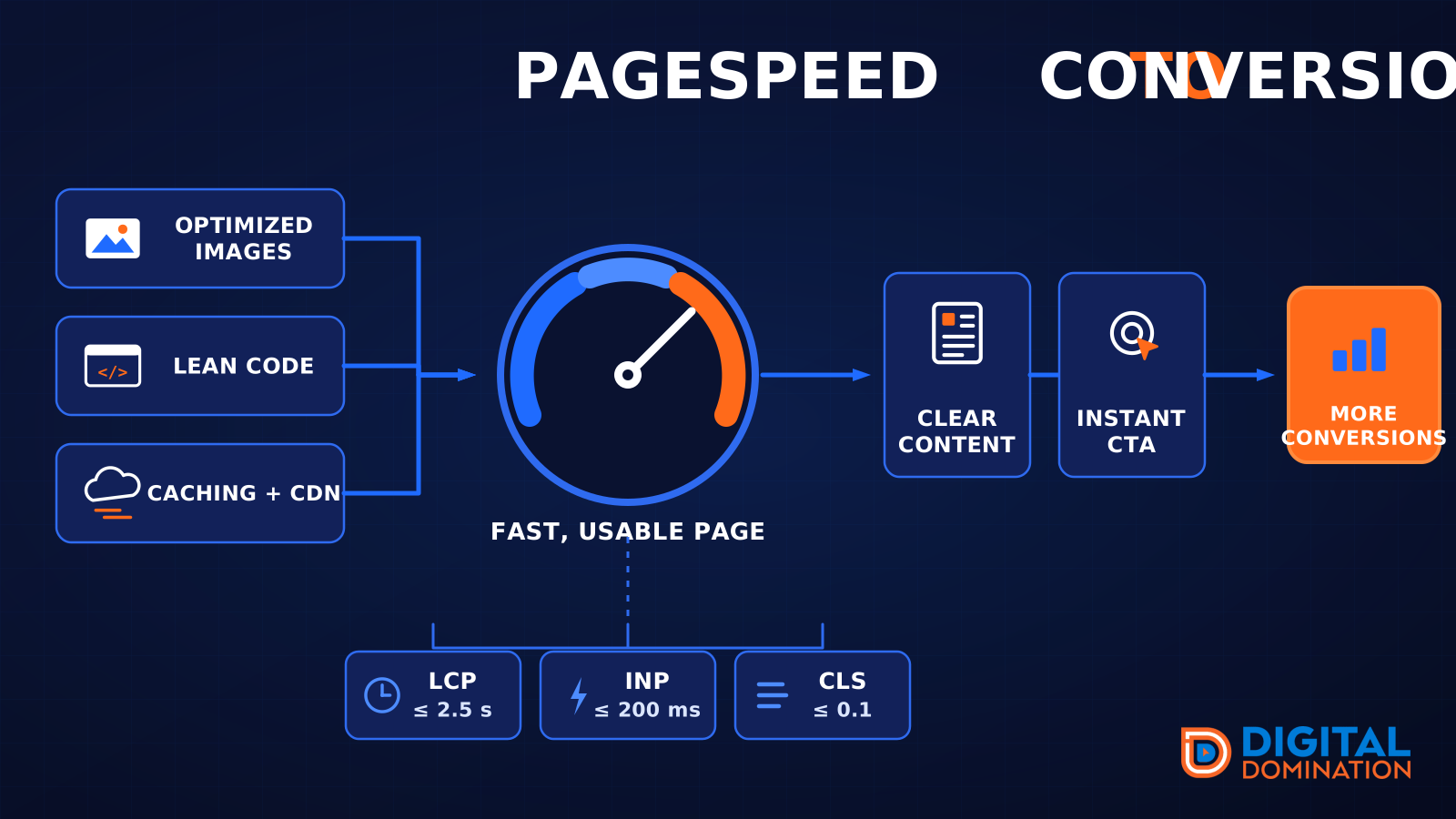
This leg is your website, above all on a phone. Small images, lean code, and caching make a page fast. A fast, clear page is what turns a visit into a call. Phone speed is one of the 12 Trinity checks because a slow page loses the call before anyone sees your offer.
Your website is the showroom. If the door sticks, people leave before they look around.
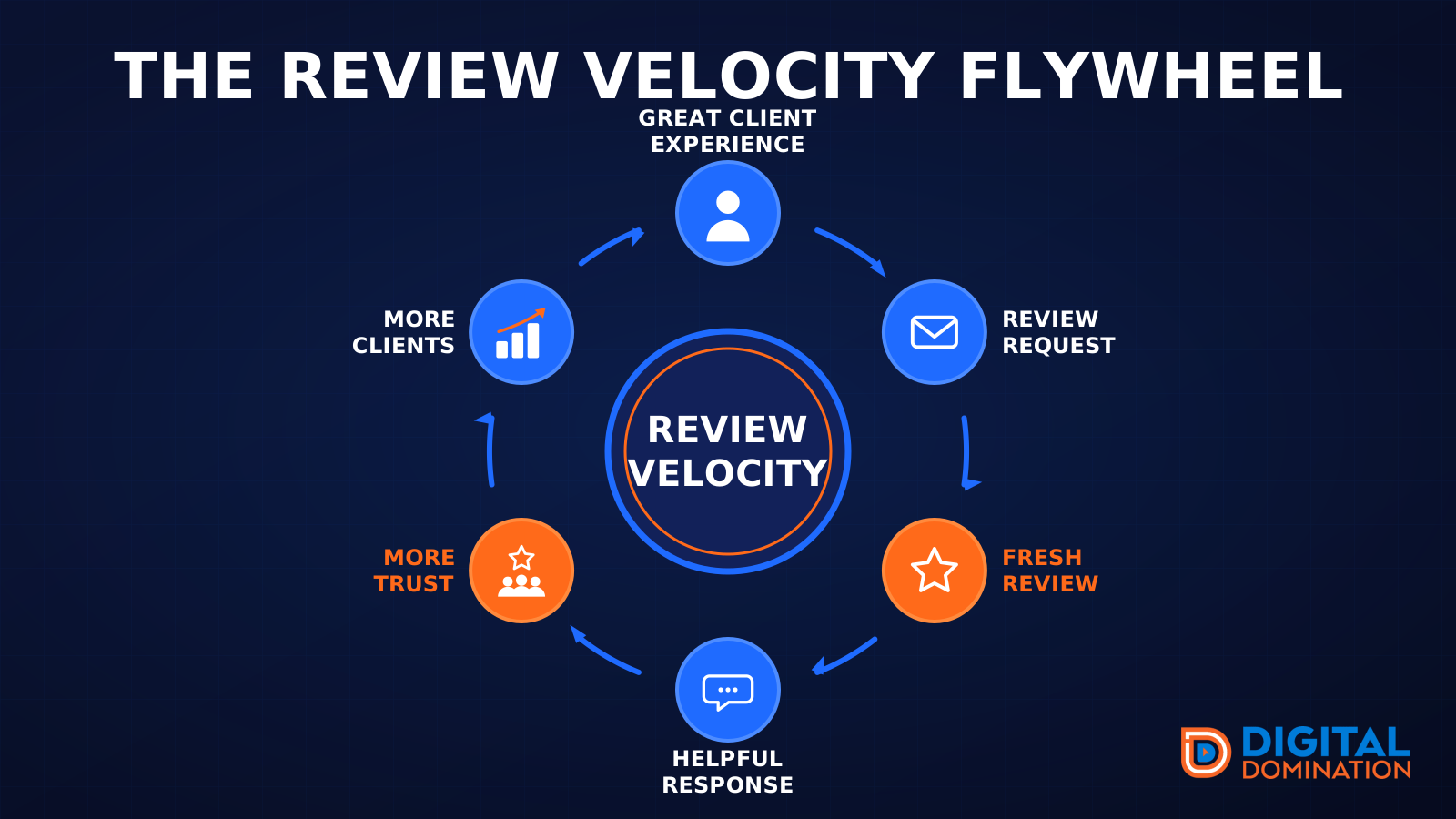
The review velocity flywheel
This leg is reviews and reputation. A good visit leads to a review request, then a fresh review, then a helpful reply, then more trust, then more customers. When the scan can find your Google listing, it shows your rating, your recent reviews, and how many you answered.
Reviews are word of mouth. One kind word helps. A steady stream of real reviews, and a reply from you, helps more.
How this turns into revenue
Being found in more searches leads to more calls. More calls lead to more booked jobs. More booked jobs lead to more revenue.
Example numbers, not a real business: 40 calls from search in a month, a 25 percent close rate, and a $400 average job. That is 10 booked jobs. That is $4,000. The math is the lesson. It is not a promise.
The full page has a box where you can type your own average job value and close rate.
One real story, from our car dealership case study: Medina Auto Group went from invisible on Google Maps to dominating every high-intent search across their market. The turnaround spanned all four of their rooftops at once. The same page says the team eliminated 89 unfair one-star reviews that had been dragging the dealership's reputation down and keeping it out of the Map Pack. It also says: “Results described here are exceptional and non-typical. Outcomes vary based on market conditions, competition, and implementation. No guarantees are made regarding earnings, rankings, or conversions.”
Free strategy call
More booked jobs start with a clear plan
Book a free strategy call. We look at your Google profile, your website, and your reviews, and we tell you what to fix first.
Free. You pick the time. A real person shows up.