
How long does the Maps Domination Program take to work?
A practical timeline for profile changes, tracking signals and meaningful movement in Google Maps, written for local business owners comparing a paid Maps program with DIY local SEO.
The short answer
You should expect three different timelines. Profile changes can show up in minutes, days or, in some cases, weeks. Measurement signals can start as soon as tracking is installed, but some Google Business Profile performance data is only updated monthly. Meaningful ranking movement usually takes longer because Google has to process relevance, distance and prominence signals across your service area.
For the Maps Domination Program, the buying expectation is simple: Digital Domination works toward the guarantee, stated exactly as top 3 in the Google Map Pack in 12 weeks or you do not pay. That does not mean every visible change waits 12 weeks. It means the program is built around a defined ranking outcome, measured across the local market instead of judged by one search from one phone.
Google Business Profile Help says there is no way to request or pay for a better local ranking on Google. That matters because a legitimate Maps program should not sell instant placement. It should fix the parts of your profile, website, review process and local authority that influence how Google evaluates your business.
What can change in the first few days
The fastest changes are usually profile and asset changes, not market-wide rankings. Google Business Profile Help says edits to a verified Business Profile usually take up to 10 minutes to review, but sometimes take up to 30 days. Google also says Business Profile verification reviews take up to 5 business days.
Some edits have their own timing. Google says approved service area edits may take up to 48 hours to show on a Business Profile. Google also says Business Profile photos and videos can take up to 24-48 hours before they show on the profile.
Here is what an owner can reasonably expect early in the process:
- ▸Profile access, permissions and verification are checked.
- ▸Core business information is reviewed for accuracy.
- ▸Categories, services and service areas are checked against what you actually sell.
- ▸Photos, videos and profile content may start appearing after Google reviews them.
- ▸A baseline GeoGrid scan can show where you rank before the work compounds.
- ▸Do not judge the whole program by one search from your office or home.
What Google is actually measuring
Google Business Profile Help says local results are mainly based on relevance, distance and prominence. Relevance is how well your business matches the search. Distance is how close your business or service area is to the searcher. Prominence is how known and trusted the business appears to be online.
That is why Maps work is not one switch. A contractor who wants to rank for emergency plumbing, water heater repair and drain cleaning across several neighborhoods needs signals that support those services and locations. A profile edit may be reviewed quickly, but the ranking effect depends on how Google interprets the whole business online.
This is also why paid placement claims should make you cautious. Google says there is no way to request or pay for a better local ranking. Advertising can buy ad visibility, but organic Map Pack ranking has to be earned through the signals Google uses.
When measurement signals appear
Measurement starts before ranking improvement is proven. Digital Domination uses a 169-point GeoGrid scan to check 169 real Google results across the service area. That gives you a practical baseline instead of a vague report saying you rank somewhere in town.
BrightLocal says a Local Search Grid places points on a map around a business and records where the business appears up to ranking position 100 from each point. Local Falcon defines Share of Local Voice as how often a business shows up in the top 3 positions in local search results for a scan. In plain English, grid tracking shows where you are visible and where you are not.
Google Business Profile Help says the Business Profile searches metric is updated at the start of each month and might take up to five days to show up. That means Google’s native performance data can lag behind the work. GeoGrid tracking helps fill that gap because it measures live ranking positions across the map.
Useful measurement should include more than one number:
- ▸Your starting rank at each grid point.
- ▸How many grid points show you in the top 3.
- ▸Where you are improving by neighborhood or direction.
- ▸Which searches are being tracked.
- ▸Call volume alongside ranking movement.
- ▸Screenshots or visual proof, not only a summary sentence.
What to look for as the program starts working
A good Maps-focused program should give you checkpoints you can verify without being technical. You are not looking for a magic phrase in a report. You are looking for evidence that Google can understand your business more clearly and that your visibility is expanding across the places you serve.
The first signs may be uneven. You might gain visibility near your office before farther neighborhoods move. You might improve for one service before another. That is normal because proximity, competition and service relevance are not the same across every part of a city.
Use these checkpoints to review progress:
- ▸Your Google Business Profile information is accurate and consistent.
- ▸Your primary category and service categories match what customers search for.
- ▸Your service area reflects where you actually work.
- ▸Photos and videos are live on the profile after Google review.
- ▸Review requests follow Google’s rules and do not offer incentives.
- ▸GeoGrid reports show movement by location, not only one rank number.
- ▸Calls are being tracked next to ranking movement.
- ▸You can explain what changed this week in plain English.
Seven questions to ask before you sign
Before buying any Maps-focused local SEO program, ask questions that separate real work from vague promises. You do not need to understand every technical detail. You do need to know what will be changed, how it will be measured and what happens if the work does not create movement.
These are the questions worth asking:
- ▸What is the baseline before work starts?
- ▸How many map points will be tracked?
- ▸Which keywords or services are included in tracking?
- ▸How often will I see ranking movement by neighborhood?
- ▸How do you handle Google Business Profile edits that take longer to review?
- ▸How do you ask for reviews without violating Google policy?
- ▸What outcome is tied to the program, and how is it proven?
- ▸Will you work with one competitor in my same trade and service area?
Why the DIY or cheaper path can take longer
The cheaper or DIY path can be a good fit for the right owner. It suits a business owner who can wait longer, follow Google’s profile and review policies, run their own geo-grid tracking, and handle profile edits, review requests and local SEO measurement without implementation support.
The hard part is not making one edit. The hard part is knowing which edit matters, waiting for Google to review it, measuring the right searches and staying consistent when results do not move immediately. If you only check rankings from your own phone, you can get a distorted view because local results change by location.
DIY can work best when these are true:
- ▸You have time to learn Google Business Profile rules.
- ▸You can set up grid tracking and read the reports.
- ▸You can keep asking customers for genuine reviews every week.
- ▸You can update services, pages and photos without delays.
- ▸You can wait several months if ranking movement is slow.
- ▸You are comfortable making decisions without implementation support.
How reviews affect the timeline
Reviews are one of the areas owners can influence, but they must be handled carefully. Google Business Profile Help says more reviews and positive ratings can help a business’s local ranking. BrightLocal’s Local Consumer Review Survey 2026 says 41% of consumers always read reviews when browsing for businesses.
Google Maps User Generated Content Policy Help allows merchants to ask for reviews that reflect a genuine experience, but prohibits incentives for posting, revising or removing reviews. That means you can build a review process, but you should not offer discounts, gifts or rewards in exchange for reviews.
A review system helps because it creates a steady habit instead of a one-time push. Digital Domination’s 5-Star Review System is a separate published offer at $297 per month, with no setup fee, cancel anytime and monthly billing through Stripe. For Maps work, reviews are part of the broader prominence picture, not a shortcut that overrides distance and relevance.
Why website and organic signals may move slower
Maps rankings are tied to your Google Business Profile, but your website still matters because it helps support what services you offer and where you serve customers. Google Search Central says some Search changes can take effect in a few hours while others can take several months. Google also says recrawling a changed page can take anywhere from a few days to a few weeks.
Semrush says ranking is slow, usually four to 12 months before meaningful movement, while indexing is fast at days to a few weeks. That is a broad SEO expectation, not a specific Maps Domination Program promise. It does help explain why profile edits can appear quickly while full authority and ranking movement take longer.
Whitespark’s 2026 Local Search Ranking Factors report asks participants to estimate the weight Google attributes to each ranking factor group for local pack, Maps and local organic results. The word estimate matters. No vendor outside Google has the exact formula, so the right question is whether the program measures real visibility and improves the signals Google says matter.
Where delays usually happen
Delays do not always mean the campaign is failing. Some delays are caused by Google review timelines. Others happen because a business has inconsistent information, thin service pages, weak review flow, old photos or a competitive market where stronger businesses already have more prominence.
The owner’s response matters. If access is delayed, verification is incomplete or review requests are not sent consistently, the work slows down. If the business changes its service area, phone number, name or categories without coordination, measurement can get messy.
Common delay points include:
- ▸Business Profile verification review.
- ▸Profile edits that Google reviews manually.
- ▸Service area edits waiting to display.
- ▸Photos or videos waiting to appear.
- ▸Monthly lag in Google’s performance metrics.
- ▸Website recrawling after page changes.
- ▸Slow review generation from real customers.
- ▸Competitive areas where distance and prominence are harder to overcome.
What the 12-week expectation means
Digital Domination’s Maps Domination Program is built around a specific ranking outcome, not an open-ended retainer promise. The guarantee is top 3 in the Google Map Pack in 12 weeks or you do not pay. Pricing for the Maps Domination Program is set per market on a qualification call and tied to the ranking outcome.
The program uses weekly GeoGrid tracking reports with visual proof of rankings and call volume. That is important because an owner should not have to guess whether the work is helping. You should be able to see if visibility is expanding across the service area and whether calls are moving with rankings.
Digital Domination also works with one client per trade per service area, which protects territory exclusivity. That matters in local SEO because two direct competitors in the same trade and service area are usually trying to win the same Map Pack spots.
The practical buying decision
If you need faster clarity, guided implementation and ranking measurement across your service area, a Maps-focused program is the better fit than guessing from one search result. If you can wait longer and handle the work yourself, the cheaper or DIY path may be reasonable.
The main point is to buy the timeline you can live with. Profile edits may appear in days, Google’s own performance metrics may lag until the next month, and meaningful ranking movement should be judged with GeoGrid tracking over the full service area.
To see what Digital Domination includes, visit the Maps Domination Program page. It explains the ranking-focused program, the qualification process, weekly GeoGrid tracking and the outcome tied to the guarantee. If you want to see where you stand first, request the free GeoGrid scan, which checks 169 real Google results across your service area.
Keep reading
Related guides
- ▸A free Trinity website audit near me
- ▸A free Trinity website audit vs doing local SEO yourself
- ▸AI Content Fact Checking Local SEO
Put it into action
Frequently Asked Questions
How fast can Google Business Profile changes show up?
Google Business Profile Help says edits to a verified profile usually take up to 10 minutes to review, but sometimes take up to 30 days. Photos and videos can take 24-48 hours, and approved service area edits may take up to 48 hours to show.
Can I pay Google to rank higher in the Map Pack?
No. Google Business Profile Help says there is no way to request or pay for a better local ranking on Google. A legitimate Maps program should work on relevance, distance and prominence signals, not claim it can buy organic Map Pack placement.
When should I expect ranking movement from local SEO?
Small signals can appear early, but meaningful ranking movement usually takes longer because Google has to process multiple signals. In the Maps Domination Program, the guarantee is top 3 in the Google Map Pack in 12 weeks or you do not pay.
Why do my rankings look different from different places?
Google local results depend heavily on location. A search near your office can show a different result than a search across town. That is why GeoGrid tracking is useful, because it checks results across many points in the service area.
What is a GeoGrid scan?
A GeoGrid scan checks how a business ranks from multiple map points around its service area. Digital Domination’s free GeoGrid scan checks 169 real Google results, which gives a clearer picture than one manual search.
Do reviews really help Google Maps rankings?
Google Business Profile Help says more reviews and positive ratings can help a business’s local ranking. Reviews must come from genuine customer experiences, and Google prohibits incentives for posting, revising or removing reviews.
Is DIY local SEO worth trying before hiring someone?
DIY can be worth it if you have time to learn Google’s rules, set up tracking, request reviews properly and measure progress. It is usually slower when the owner is busy, unsure what to change or only checks rankings from one location.
Why does Google Business Profile data lag behind my work?
Google Business Profile Help says the searches metric is updated at the start of each month and might take up to five days to show up. That means profile performance data can lag behind current work, so weekly GeoGrid tracking can give a more practical view of ranking movement.
The Local SEO Trinity
Think of a three-legged stool. Your Google profile, your website, and your reviews all have to hold you up. If one leg is short, the whole thing wobbles.
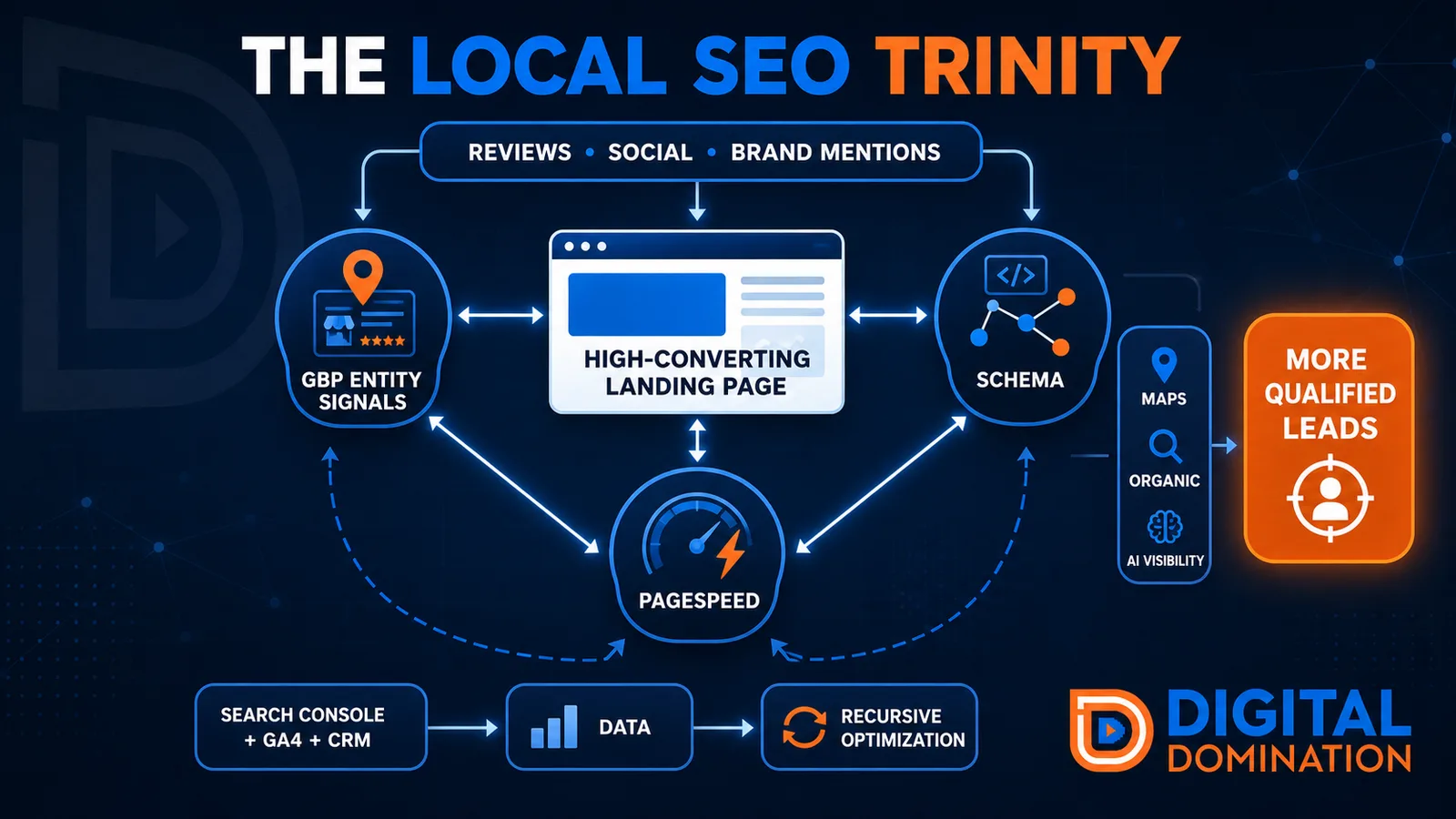
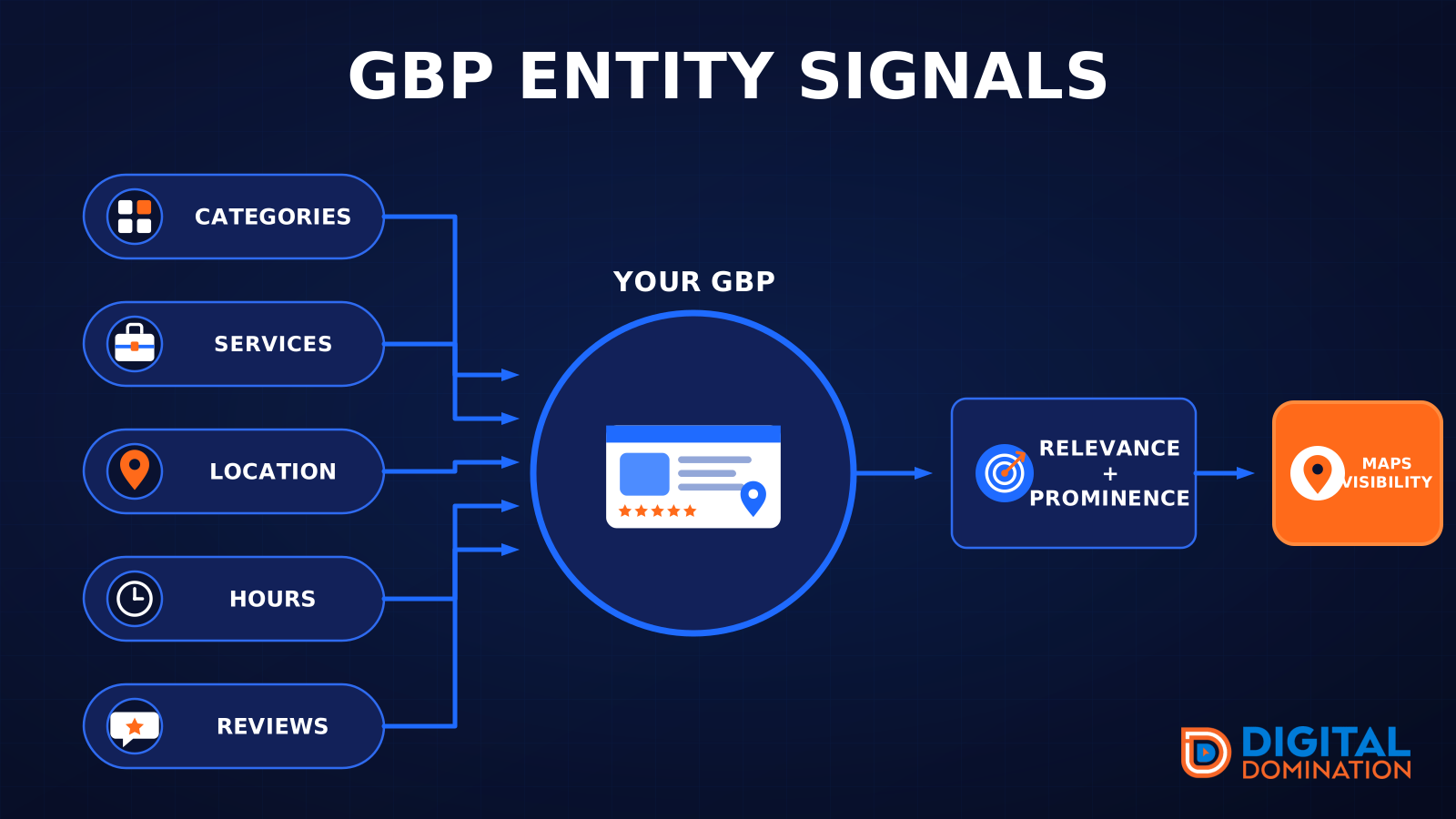
GBP entity signals
This leg is your Google Business Profile. GBP means Google Business Profile. It covers your categories, your services, your location, your hours, and your reviews. Google uses those facts to decide who to show.
Your Google profile is your storefront sign. If the sign is missing, or it names the wrong shop, people drive past.
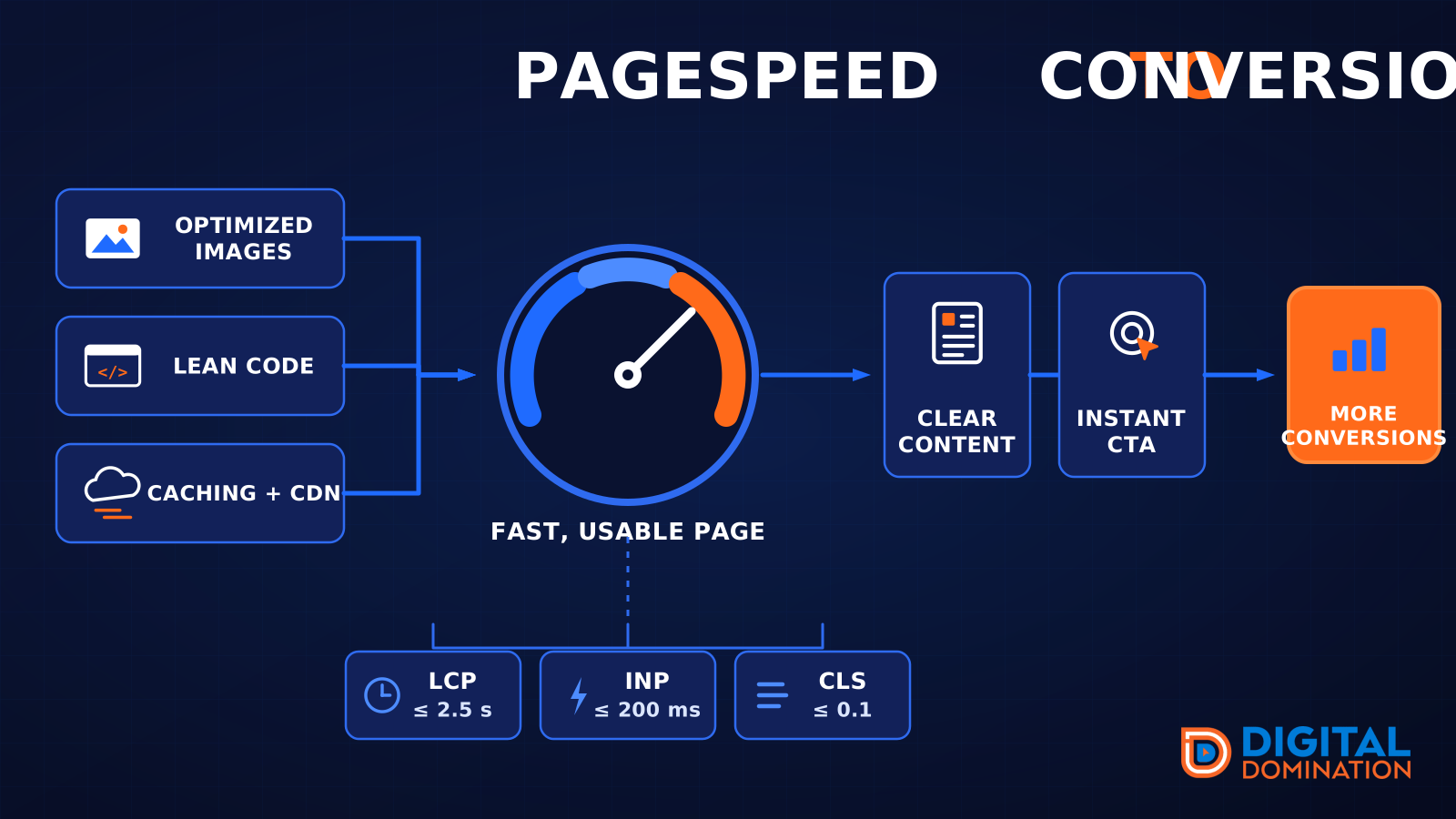
PageSpeed to conversion
This leg is your website, above all on a phone. Small images, lean code, and caching make a page fast. A fast, clear page is what turns a visit into a call. Phone speed is one of the 12 Trinity checks because a slow page loses the call before anyone sees your offer.
Your website is the showroom. If the door sticks, people leave before they look around.
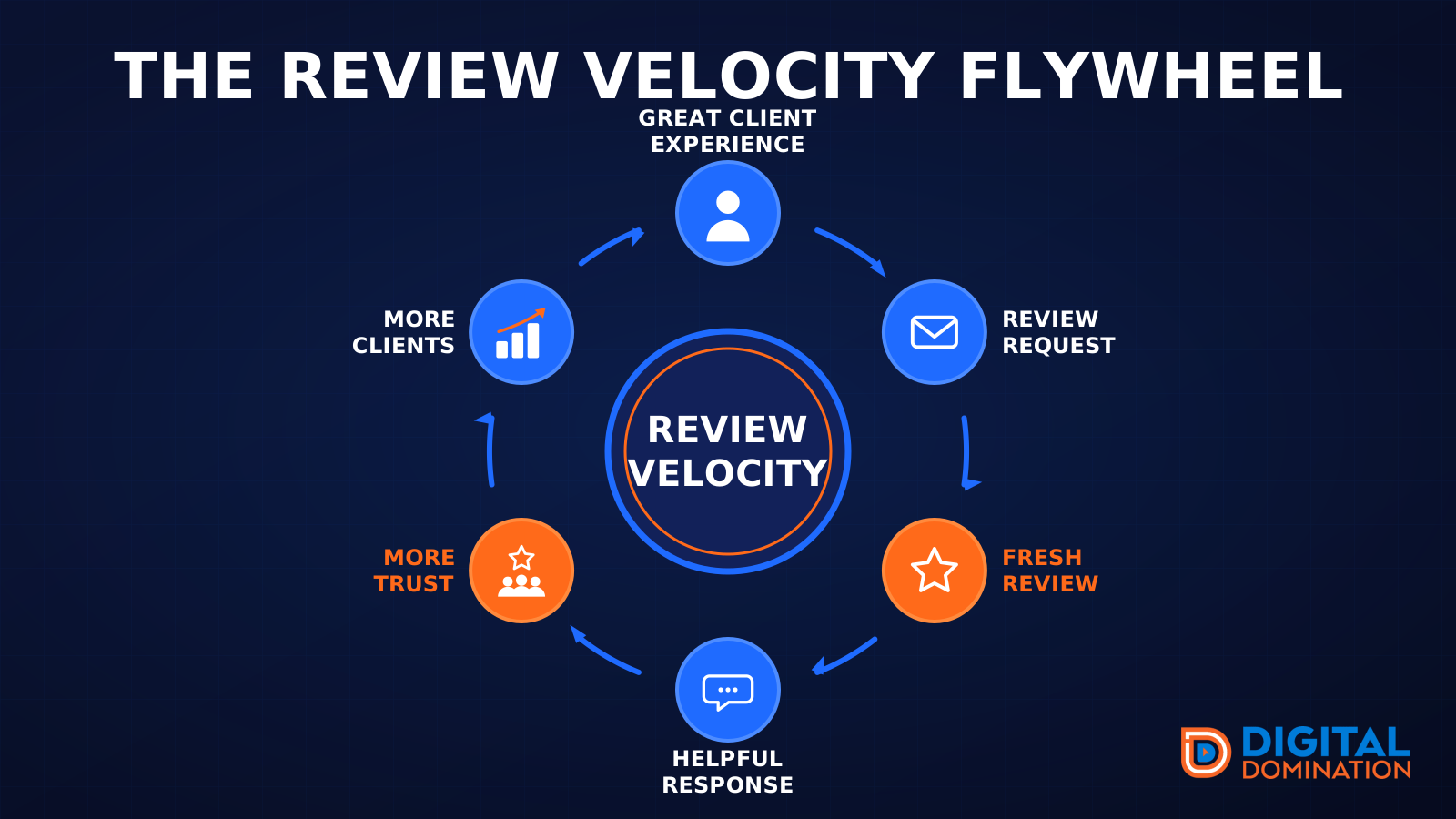
The review velocity flywheel
This leg is reviews and reputation. A good visit leads to a review request, then a fresh review, then a helpful reply, then more trust, then more customers. When the scan can find your Google listing, it shows your rating, your recent reviews, and how many you answered.
Reviews are word of mouth. One kind word helps. A steady stream of real reviews, and a reply from you, helps more.
How this turns into revenue
Being found in more searches leads to more calls. More calls lead to more booked jobs. More booked jobs lead to more revenue.
Example numbers, not a real business: 40 calls from search in a month, a 25 percent close rate, and a $400 average job. That is 10 booked jobs. That is $4,000. The math is the lesson. It is not a promise.
The full page has a box where you can type your own average job value and close rate.
One real story, from our car dealership case study: Medina Auto Group went from invisible on Google Maps to dominating every high-intent search across their market. The turnaround spanned all four of their rooftops at once. The same page says the team eliminated 89 unfair one-star reviews that had been dragging the dealership's reputation down and keeping it out of the Map Pack. It also says: “Results described here are exceptional and non-typical. Outcomes vary based on market conditions, competition, and implementation. No guarantees are made regarding earnings, rankings, or conversions.”
Free strategy call
More booked jobs start with a clear plan
Book a free strategy call. We look at your Google profile, your website, and your reviews, and we tell you what to fix first.
Free. You pick the time. A real person shows up.