
How much does the Maps Domination Program cost in 2026?
A plain-English buyer guide for local business owners comparing DIY, cheaper local SEO, and a structured Google Maps ranking program.
The short answer
In 2026, you should expect a serious Google Maps domination program to be priced like professional local SEO, not like a one-time profile setup. Ahrefs reported that local SEO averaged $1,557 per month in its survey of 439 SEO providers, and Clutch's October 2026 SEO pricing guide says SEO agencies generally cost $100-$149 per hour. Those figures give you a market reality check, but they do not tell you what your specific market should cost.
Digital Domination does not publish one flat retainer for the Maps Domination Program. Pricing is set per market on a qualification call and tied to the ranking outcome. That matters because a roofer in a crowded metro, a mobile mechanic in a spread-out service area, and a single-location salon in a smaller city do not have the same competition, proximity problem, review gap, or revenue upside.
A reasonable price should buy more than edits to your Google Business Profile. It should include a baseline scan, profile cleanup, category strategy, service-area planning, review systems, local authority work, tracking, reporting, and a clear explanation of what happens if the promised outcome is not reached. If the offer is just monthly posting and vague reporting, it should cost less than a structured Maps campaign.
Why there is no single fair price
Google states that creating a Business Profile and listing a business on Google is free of cost. Google Business Profile Help also says there is no way to request or pay for a better local ranking on Google. So the fee you pay an agency is not a payment to Google and should never be presented that way.
You are paying for diagnosis, execution, compliance, review generation, reporting, and ongoing competitive work. Local rankings are not only about whether your profile exists. Google Business Profile Help says local results are mainly based on relevance, distance, and prominence. A good campaign works on the parts a business can improve, while being honest about the parts it cannot fully control, such as where the searcher is standing.
The biggest pricing variables are usually practical ones that a business owner can understand:
- ▸How competitive your trade is in the city
- ▸How far your customers are from your verified location
- ▸Whether you have one location or multiple locations
- ▸How complete and accurate your Business Profile is now
- ▸How strong your reviews are compared with competitors
- ▸Whether your website supports your main services and cities
- ▸Whether the profile has policy risks or past suspensions
- ▸How much tracking and reporting you expect
What a reasonable Maps program should include
A Maps program should start with proof of where you rank from different points in your service area. A single search from your office, your phone, or your home is not enough because Maps results change by location. Digital Domination's free GeoGrid scan checks 169 real Google results across the service area, which gives a clearer picture of where the business is visible and where it is missing.
The program should also include hands-on work on the Business Profile itself. Google Business Profile Help says categories should use as few categories as possible, be specific, and describe what the business is rather than what it has. Whitespark's Local Search Ranking Factors report ranked Primary GBP Category first for Local Pack and Maps factors, with Proximity of Address to the Point of Search second. That means category choices and location realities deserve careful attention before anyone talks about aggressive expansion.
At minimum, ask whether the program includes these deliverables:
- ▸A 169-point GeoGrid scan before the campaign starts
- ▸Primary and secondary category review
- ▸Service and city alignment between the profile and website
- ▸Review request process that follows Google's rules
- ▸Business Profile ownership or co-ownership retained by you
- ▸Weekly ranking visibility reports
- ▸Call volume reporting when tracking is available
- ▸A written plan for service-area or location issues
- ▸Clear explanation of fees and what they cover
What makes the fee reasonable
A higher fee can be reasonable when the provider is doing the hard work that affects relevance, distance, and prominence, and when the reporting proves whether the work is changing visibility across the market. A lower fee can be reasonable when the provider is only handling a narrower task, such as profile maintenance or review requests.
BrightLocal's Local Search Industry Survey reported that 63% of agencies billed clients with a monthly fee based on deliverables. That model makes sense for local SEO because the work is ongoing, but it also puts pressure on the agency to define what it is delivering. If the deliverables are unclear, the monthly fee is hard to judge.
A reasonable fee should be tied to visible work and clear reporting in these areas:
- ▸Baseline ranking visibility across the service area
- ▸Profile cleanup and policy compliance
- ▸Category and service strategy
- ▸Review generation support without incentives
- ▸Website and local authority support
- ▸Competitive monitoring
- ▸Weekly or monthly reporting that a non-technical owner can read
- ▸A clear timeline for what happens next
Safeguards you should demand before paying
The first safeguard is ownership. Google Business Profile Help says third parties that manage Business Profiles must let end customers retain ownership or co-ownership of the profile. If an agency creates or controls the profile in a way that locks you out, that is a serious risk.
The second safeguard is fee transparency. Google Business Profile Help says third parties must disclose management fees and state that Business Profile is provided at no extra cost. Your invoice should make it clear that you are paying for services, not paying Google for placement.
The third safeguard is policy compliance. Google Business Profile Help says service-area businesses without a storefront are allowed one service-area Business Profile and should hide their address from customers. It also says a service-area Business Profile's overall service area should not extend farther than about 2 hours of driving time from where the business is based, except for some businesses where larger areas may be appropriate. A provider that ignores these rules may create short-term noise and long-term risk.
Before you sign, confirm these safeguards in writing:
- ▸You retain ownership or co-ownership of the Business Profile
- ▸The agency discloses its management fees
- ▸The agency states the Business Profile itself is free
- ▸The strategy follows service-area and address rules
- ▸Review requests do not offer incentives
- ▸You can see ranking data from multiple points, not one search
- ▸You know what cancellation or non-performance terms apply
- ▸You receive reporting you can understand without SEO jargon
A practical 2026 timeline
The first part of a Maps campaign is usually diagnosis and cleanup. That means checking the profile, confirming categories, looking for location or service-area problems, checking reviews, and comparing competitors. If verification is needed, Google Business Profile Help says verification methods are automatically determined by Google and cannot be changed.
Google Business Profile Help says most postcard verification codes arrive within 14 days and that businesses should wait up to 5 business days to be verified after submitting verification. That can affect the early timeline, especially for new locations, moved businesses, or profiles that need re-verification.
For Digital Domination's Maps Domination Program, the published guarantee is top 3 in the Google Map Pack in 12 weeks or you do not pay. That is different from a provider claiming that it can buy better placement from Google. The practical way to judge any timeline is to ask what will be done, what will be measured, and what happens if the target is not met.
A sensible timeline should make these stages clear:
- ▸Baseline scan and competitive review
- ▸Profile verification or access cleanup if needed
- ▸Category, service, and location corrections
- ▸Review request system setup
- ▸Website and local authority work
- ▸Weekly GeoGrid tracking reports
- ▸Call volume visibility when available
- ▸A written checkpoint before the promised outcome date
Where the cheaper or DIY path makes sense
The cheaper or DIY path suits a single-location owner who has time to manage the Business Profile, request reviews, check rankings, and follow Google policies without needing a structured agency campaign. If your competition is light, your service area is small, and your profile is already accurate, you may not need a full Maps domination program yet.
DIY still requires discipline. Google Business Profile Help says businesses may ask customers to leave reviews through a Google link or QR code, but may not offer incentives in exchange for reviews. It also says more reviews and positive ratings can help a business's local ranking, so review consistency matters.
A lower-cost path may fit if these statements are true:
- ▸You have one location and a simple service area
- ▸You can personally manage profile updates
- ▸You can ask for reviews after completed jobs
- ▸You are comfortable reading Google policy pages
- ▸You can check rankings from different areas
- ▸You do not need agency-level reporting
- ▸You are not in a highly competitive trade
- ▸You can wait longer for progress
When a structured agency campaign is easier to justify
A structured Maps campaign is easier to justify when your phone calls depend on Map Pack visibility and competitors are already investing in local SEO. It can also make sense when your search area is uneven, meaning you rank near your office but disappear a few miles away.
It is also easier to justify when the owner does not have time to manage the Business Profile, track rankings, request reviews consistently, and interpret policy changes. In many local businesses, the owner is already selling, hiring, dispatching, estimating, and handling customer issues. The opportunity cost of doing local SEO poorly can be high, even if the profile itself is free.
Consider a structured campaign when you recognize these problems:
- ▸You rank in one neighborhood but not the rest of the service area
- ▸Competitors have stronger review profiles
- ▸Your categories or services may be wrong
- ▸You are opening or managing multiple locations
- ▸You have had profile access or verification problems
- ▸You need reporting for calls and rankings
- ▸You want one accountable team for Maps visibility
- ▸You want a defined outcome tied to the program
Questions to ask before you sign
A buying conversation should feel like a qualification call, not a pressure pitch. The provider should ask about your trade, locations, service area, competition, call capacity, and current profile access. If they quote before looking at the market, the number may be convenient for them rather than specific to you.
Use these questions to compare providers:
- ▸How do you measure ranking from different points in my service area?
- ▸Will I retain ownership or co-ownership of my Business Profile?
- ▸What work is included in the monthly fee?
- ▸How do you handle reviews without violating Google's incentive rules?
- ▸What categories would you recommend and why?
- ▸How do you account for proximity in Maps rankings?
- ▸What reporting will I see each week or month?
- ▸What happens if the stated ranking outcome is not reached?
- ▸Do you manage only one client per trade in my service area?
- ▸What policy risks do you see in my current profile?
How Digital Domination prices and reports the program
Digital Domination prices the Maps Domination Program per market on a qualification call. The fee is tied to the ranking outcome rather than a generic package, because market difficulty and revenue opportunity are different for every trade and service area. Digital Domination also works with one client per trade per service area, which gives territory exclusivity.
The program starts with market visibility. The free 169-point GeoGrid scan checks 169 real Google results across the service area, so the conversation begins with what Google is actually showing in the places your customers search. After that, pricing is based on the market, the competition, and whether the business qualifies for the program.
Digital Domination's reporting includes weekly GeoGrid tracking reports with visual proof of rankings and call volume. The company also publishes the guarantee as top 3 in the Google Map Pack in 12 weeks or you do not pay. If your main need is only review generation, the 5-Star Review System is a separate published option at $297/month, with no setup fee, cancel anytime, billed monthly through Stripe.
What to do next
If you are comparing options, start by separating free Google access from paid professional work. Your Business Profile is free, and Google does not sell better local rankings. The question is whether you need a structured campaign to improve the parts you can control and measure the result across your actual service area.
For the full offer, visit the Maps Domination Program page. It explains the program, the qualification process, territory exclusivity, reporting, and the outcome-based structure in plain words. If you want to see your current visibility first, request the free GeoGrid scan page. That scan shows where you appear across 169 real Google results before you decide whether the program is worth a call.
Keep reading
Related guides
- ▸AI Content Fact Checking Local SEO
- ▸AI Google Maps Photo Scam Local Calls
- ▸AI Local Recommendations Volatile
Put it into action
Frequently Asked Questions
How much does a Google Maps ranking program cost in 2026?
Market pricing varies by provider and competition. Ahrefs reported that local SEO averaged $1,557 per month, while Clutch says SEO agencies generally cost $100-$149 per hour. Digital Domination prices the Maps Domination Program per market after a qualification call.
Is a Google Business Profile free or do I have to pay for it?
Google states that creating a Business Profile and listing a business on Google is free of cost. If you hire an agency, you are paying for management, strategy, execution, and reporting, not for the profile itself.
Can I pay Google to rank higher in Maps?
No. Google Business Profile Help says there is no way to request or pay for a better local ranking on Google. Local results are mainly based on relevance, distance, and prominence.
What should be included in a Maps domination program?
Look for a baseline GeoGrid scan, Business Profile cleanup, category strategy, service-area review, compliant review requests, local authority work, and clear reporting. You should also retain ownership or co-ownership of your Business Profile.
How long should a Google Maps campaign take?
The early stage often includes access, verification, cleanup, and baseline tracking. Google says most postcard verification codes arrive within 14 days and that businesses should wait up to 5 business days after submitting verification. Digital Domination's program publishes the guarantee as top 3 in the Google Map Pack in 12 weeks or you do not pay.
Is DIY Google Maps SEO a good option?
DIY can make sense for a single-location owner with time to manage the profile, request reviews, follow policies, and check rankings. It is less practical when the market is competitive, the service area is large, or the owner needs consistent reporting and accountability.
What is the biggest red flag when hiring a Maps SEO company?
Be cautious if the provider implies you are paying Google for placement or refuses to let you own or co-own the Business Profile. Google says third parties must disclose management fees, state that Business Profile is provided at no extra cost, and let end customers retain ownership or co-ownership.
Where should I start before paying for a Maps program?
Start with a visibility scan rather than a guess. Digital Domination's free GeoGrid scan checks 169 real Google results across your service area, so you can see where you rank before discussing a paid program.
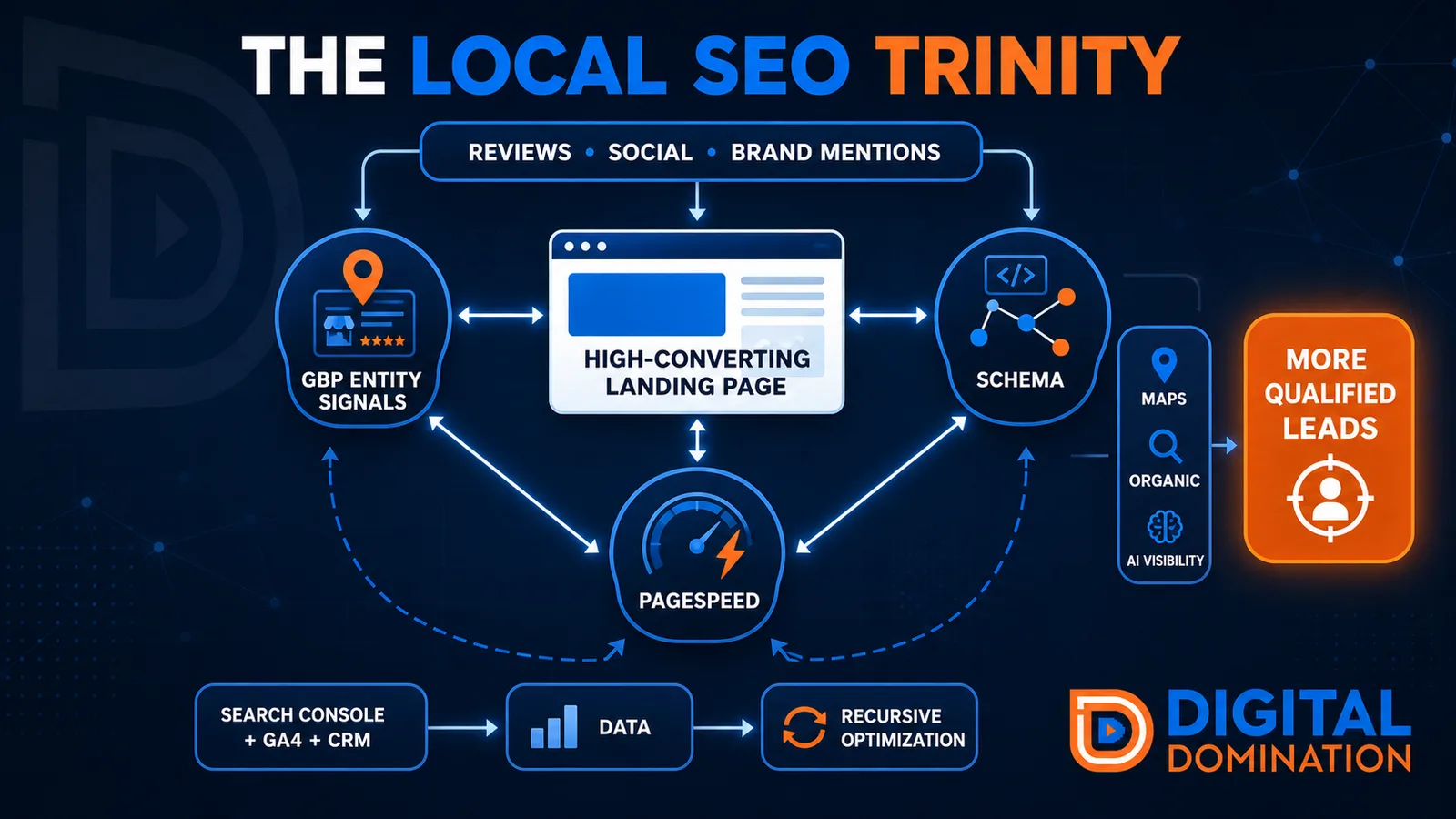
The Local SEO Trinity
Think of a three-legged stool. Your Google profile, your website, and your reviews all have to hold you up. If one leg is short, the whole thing wobbles.
GBP entity signals
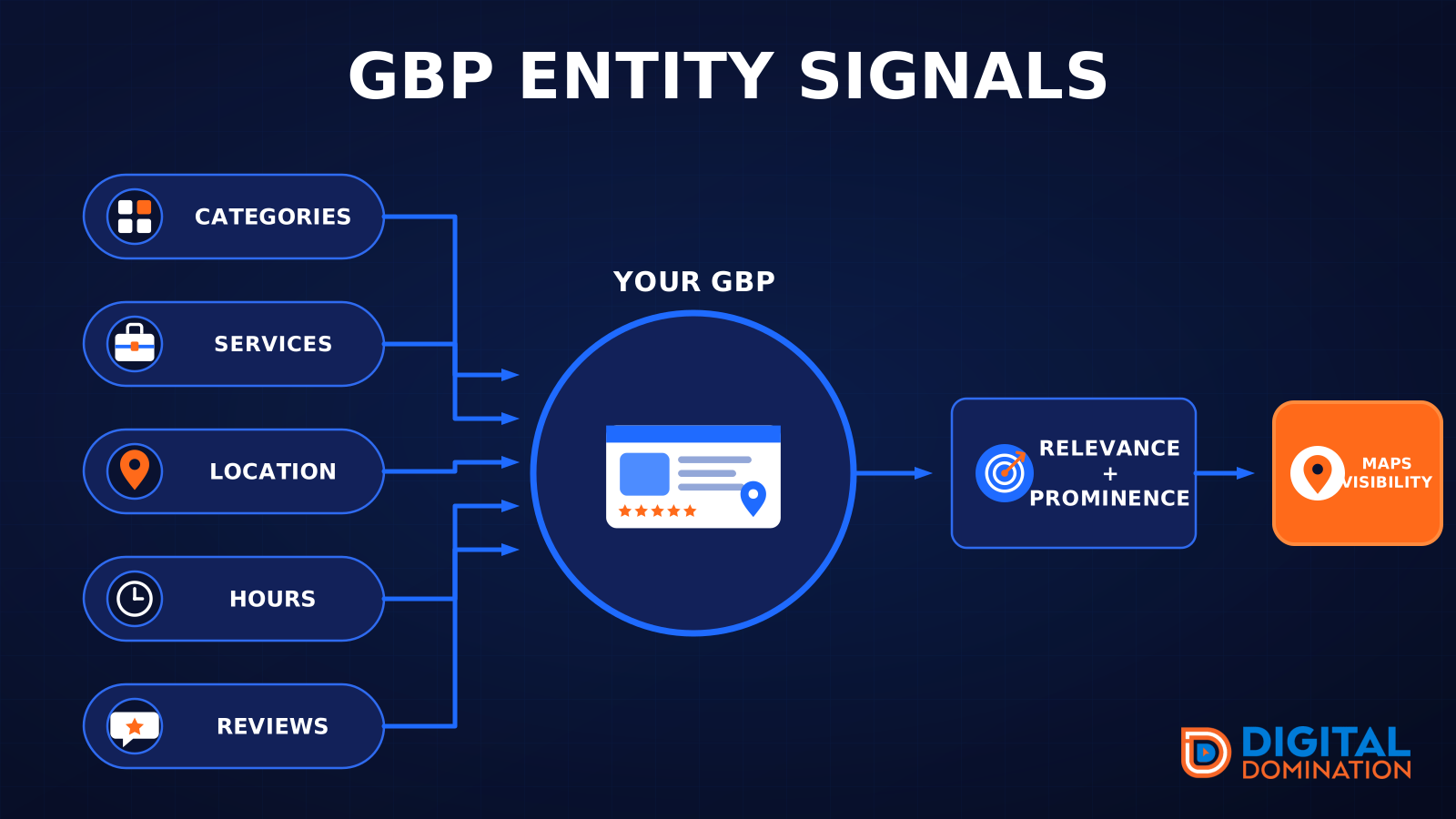
This leg is your Google Business Profile. GBP means Google Business Profile. It covers your categories, your services, your location, your hours, and your reviews. Google uses those facts to decide who to show.
Your Google profile is your storefront sign. If the sign is missing, or it names the wrong shop, people drive past.
PageSpeed to conversion
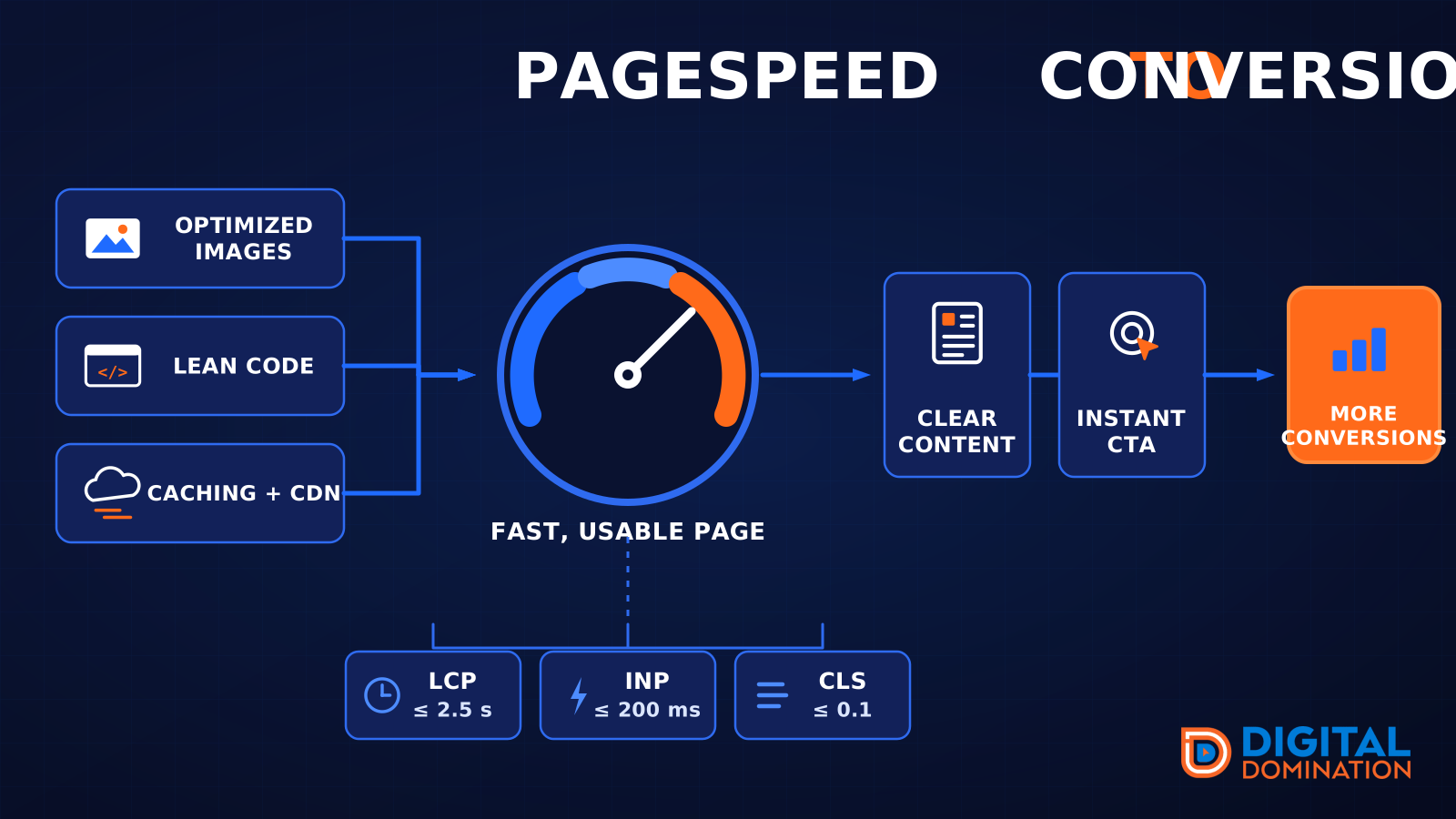
This leg is your website, above all on a phone. Small images, lean code, and caching make a page fast. A fast, clear page is what turns a visit into a call. Phone speed is one of the 12 Trinity checks because a slow page loses the call before anyone sees your offer.
Your website is the showroom. If the door sticks, people leave before they look around.
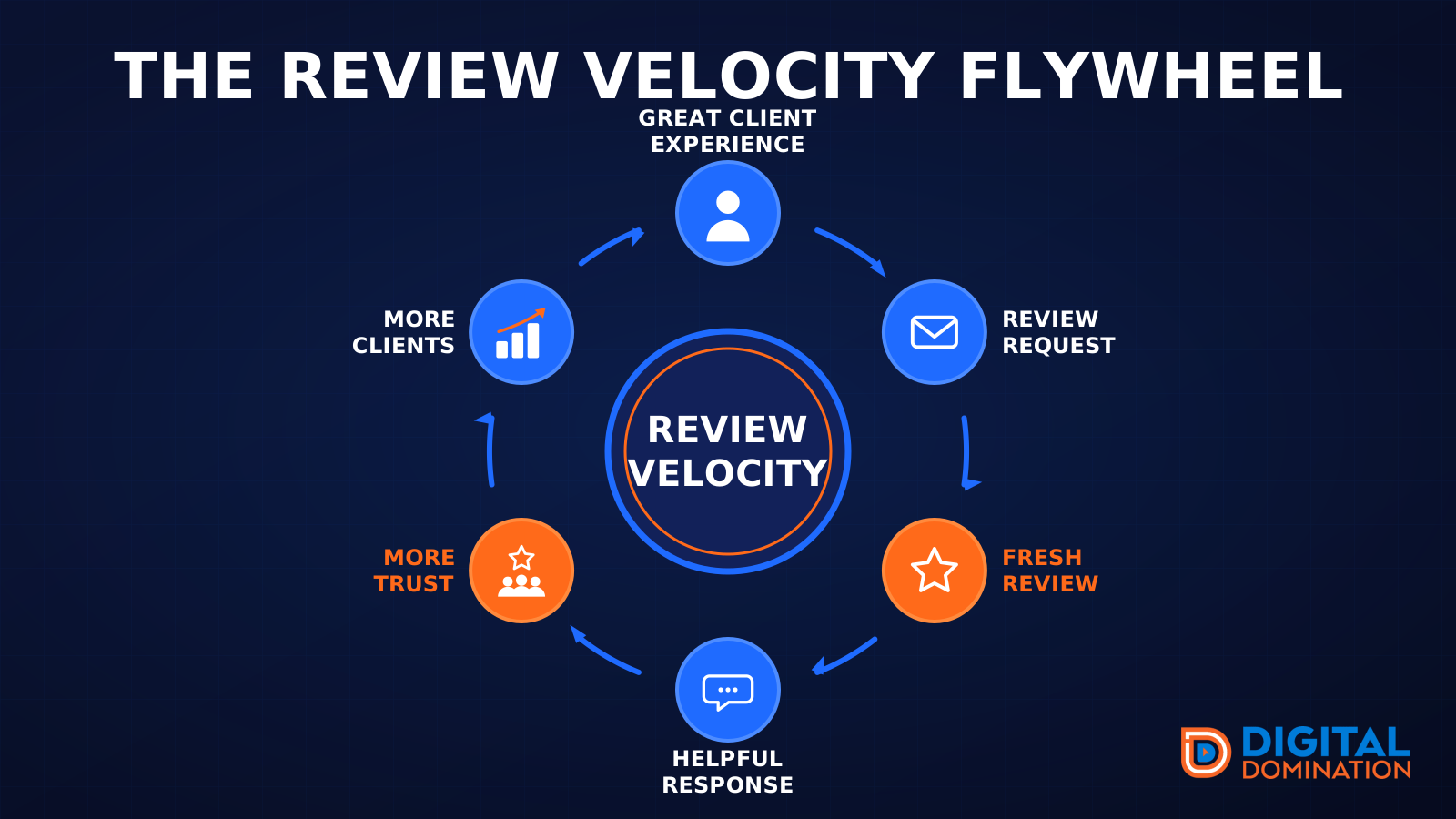
The review velocity flywheel
This leg is reviews and reputation. A good visit leads to a review request, then a fresh review, then a helpful reply, then more trust, then more customers. When the scan can find your Google listing, it shows your rating, your recent reviews, and how many you answered.
Reviews are word of mouth. One kind word helps. A steady stream of real reviews, and a reply from you, helps more.
How this turns into revenue
Being found in more searches leads to more calls. More calls lead to more booked jobs. More booked jobs lead to more revenue.
Example numbers, not a real business: 40 calls from search in a month, a 25 percent close rate, and a $400 average job. That is 10 booked jobs. That is $4,000. The math is the lesson. It is not a promise.
The full page has a box where you can type your own average job value and close rate.
One real story, from our car dealership case study: Medina Auto Group went from invisible on Google Maps to dominating every high-intent search across their market. The turnaround spanned all four of their rooftops at once. The same page says the team eliminated 89 unfair one-star reviews that had been dragging the dealership's reputation down and keeping it out of the Map Pack. It also says: “Results described here are exceptional and non-typical. Outcomes vary based on market conditions, competition, and implementation. No guarantees are made regarding earnings, rankings, or conversions.”
Free strategy call
More booked jobs start with a clear plan
Book a free strategy call. We look at your Google profile, your website, and your reviews, and we tell you what to fix first.
Free. You pick the time. A real person shows up.