
SEO vs PPC for Law Firms: Which One Should You Fund First?
The right answer depends almost entirely on how fast you need cases and how long you can fund a build.
The Short Answer: SEO or PPC for a Law Firm?
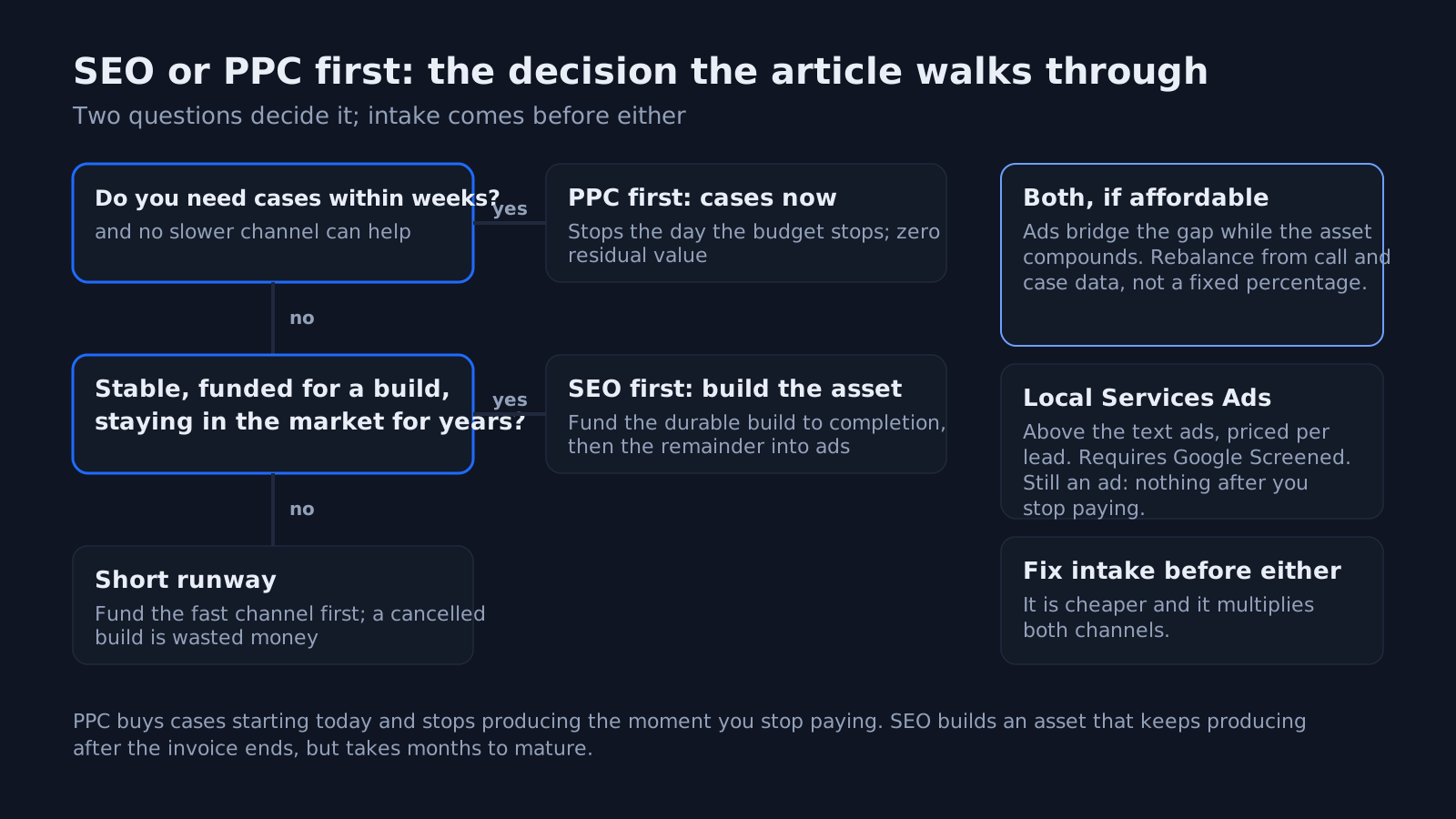
PPC buys cases starting today and stops producing the moment you stop paying. SEO builds an asset that keeps producing after the invoice ends, but takes months to mature. If you can only fund one, choose PPC when you need case flow immediately and can afford to lose money while you learn what converts, and choose SEO when you can fund three to six months of build before the return appears.
Most firms that can afford both should run both, because they solve different problems. Ads cover the gap while earned visibility is being built, and earned visibility eventually lowers the blended cost per case so the ad budget works harder. Treating them as rivals is what leads firms to flip between the two and never finish either.
There is also a third option that many firms should evaluate before either: Google's Local Services Ads, which sit above the regular text ads, charge per lead rather than per click, and require the Google Screened verification for eligible legal categories. For some practice areas in some markets they outperform both channels on cost per case, and they are covered further down this page.
- ▸PPC: cases now, stops instantly when the budget stops
- ▸SEO: nothing for months, then a durable asset that keeps producing
- ▸Both, if affordable: ads bridge the gap while the asset compounds
- ▸Evaluate Local Services Ads too, since they price per lead rather than per click
When Should a Law Firm Choose PPC Over SEO?
Choose PPC when the timeline is the binding constraint. A new office, a new practice area, an unexpected gap in caseload, or a partner departure are all situations where the firm needs cases inside weeks and there is no version of SEO that answers. Ads can be live the same day and can be turned off just as fast, and that responsiveness is the product you are buying.
PPC is also the right choice when you need to learn quickly. Ads reveal, in days, which case types actually convert for you, what people type before calling, and which landing page language gets a form filled. That is genuinely valuable information, and firms that later invest in SEO with that data build far better pages than firms guessing at what matters.
The costs are real and worth stating plainly. Legal keywords are among the most expensive in all of paid search, personal injury especially, so a small budget can be exhausted in a handful of clicks with nothing to show for it. Click fraud and competitor clicks exist in this category. And the moment you pause, the leads stop, with no residual whatsoever. PPC only makes sense with tracking in place, intake that answers immediately, and enough budget to survive the learning period.
- ▸You need cases within weeks and no slower channel can help
- ▸You want fast, real data on which case types and messages convert
- ▸You are testing a new practice area or market before committing to a build
- ▸Requirements: real budget, working call tracking, and intake that answers immediately
- ▸Accept the tradeoff: zero residual value when the budget stops
When Should a Law Firm Choose SEO Over PPC?
Choose SEO when the firm is stable enough to fund a build and intends to be in the same market for years. Everything about it compounds: pages accumulate, reviews accumulate, the map position stabilizes, and the cost per case tends to fall as the same asset produces more. That curve only pays off for a firm that stays long enough to reach it.
SEO is also the better choice when the map results are where your cases live. For most local legal searches the three map slots sit above the organic links and capture a large share of the high-intent clicks, and those slots are filled from Google Business Profiles rather than from ads or from your website. A firm competing in one metro can often get more from getting the map right than from any ad campaign, which is why our guarantee targets that specific surface: top 3 in the Google Map Pack in 12 weeks or you do not pay.
Finally, choose SEO when you want to be findable in the places you cannot buy. AI assistants and AI Overviews name a small number of firms and skip the rest, and they choose based on entities they can identify and corroborate, not on ad spend. The same consistency, reviews and question-shaped pages that lift the map also decide whether you get named there. That mechanism is at /how-trial-attorneys-get-found-in-ai-answers/ and /ai-overviews/.
- ▸The firm is stable, funded for a build, and staying in the market for years
- ▸Your case flow comes from local searches where the map sits above the links
- ▸You want a declining cost per case rather than a permanent per-click bill
- ▸You want to be findable in AI answers, which cannot be bought
- ▸You have an attorney willing to give an hour a month to content that is actually specific
What About Local Services Ads and Google Screened?
Local Services Ads are a separate product from regular Google Ads and behave differently. They appear at the very top of eligible searches, above the standard text ads, and you pay per lead rather than per click. For eligible legal categories, participation requires Google Screened status, which involves license verification, insurance verification and background checks before the badge is granted. Availability, eligible practice areas and verification requirements vary by market and change over time, so confirm the current rules with Google for your specific category before planning around them.
The appeal for law firms is the pricing model. Paying per lead rather than per click removes the worst failure mode of legal PPC, which is spending a large amount on clicks that never become a conversation. Leads that are clearly irrelevant can generally be disputed, though the process has its own rules and outcomes are not guaranteed. The Google Screened badge also carries visible trust weight in a category where trust is the whole decision.
The limits matter too. You are competing for the same finite lead pool as other verified firms, responsiveness affects how many leads you receive, and the leads are shared rather than exclusive, so speed of response decides who signs. Local Services Ads also do nothing for your durable visibility: like any ad, they stop when you stop. Treat them as a strong complement to earned visibility, not a replacement for it.
- ▸Appear above standard text ads, priced per lead rather than per click
- ▸Eligible legal categories require Google Screened verification (license, insurance, background checks)
- ▸Availability and eligible practice areas vary by market and change, so verify current rules
- ▸Poor-fit leads can generally be disputed, though outcomes are not guaranteed
- ▸Leads are contested, so response speed determines who signs the case
- ▸Still an ad: it produces nothing after you stop paying
How Should a Law Firm Split Its Budget Between SEO and PPC?
Start from your runway rather than from a percentage. If the firm cannot survive three months of marketing spend without new cases, put nearly everything into the fastest channel until that stops being true, because an SEO program you cancel in month three is money burned. If the firm is stable, the sensible pattern is to fund the durable build first at a level that will actually finish, then put the remainder into ads for immediate flow.
Then rebalance on evidence rather than on the calendar. Once call tracking shows where signed cases come from, shift money toward whichever channel produces cases at an acceptable cost and away from whichever does not. Most firms that build earned visibility properly find they can reduce ad spend over time without losing volume, which is the whole point of the exercise. Firms that never build it are still paying full price per click years later.
Whatever the split, one rule applies to both: neither channel survives broken intake. Paid leads are contested and go to whoever responds first, and organic callers who reach voicemail simply call the next firm. If calls are being missed or follow-up takes days, fixing that returns more than any budget reallocation, and it costs less than either channel.
Keep the compliance layer in view too. Attorney advertising and solicitation rules govern what you can claim in ad copy and on landing pages, and they differ by state and change over time. Confirm current requirements with your state bar before scaling anything you plan to run at volume.
- ▸Short runway: fund the fast channel first, because a cancelled build is wasted money
- ▸Stable firm: fund the durable build to completion, then put the remainder into ads
- ▸Rebalance from call and case data, not from a fixed percentage
- ▸Expect ad dependence to decline as earned visibility matures
- ▸Fix intake before either channel: it is cheaper and it multiplies both
- ▸Verify current state advertising rules before scaling ad copy or landing pages
See Which Channel Your Market Actually Rewards
The right split is market-specific. In some metros the map results are wide open and earned visibility is the cheapest cases you will ever get. In others the map is locked up by entrenched firms and ads are the only fast way in. You cannot tell which one you are in from a blog post, including this one.
Book a free 15-minute call and we will pull your live Map Pack position across your metro while you are on the call and show you which firms hold the positions you want. That tells you directly whether the earned side is a realistic near-term play for your firm or whether ads should carry more of the load for now.
If we work together, the terms are simple: top 3 in the Google Map Pack in 12 weeks or you do not pay, one client per practice area per service area, and our AI system at $297 per month includes a free custom website you keep. More on the method at /how-it-works/, and the broader worth-it question is answered at /is-seo-worth-it-for-law-firms/.
Keep reading
Related guides
- ▸Free local visibility tools vs doing local SEO yourself
- ▸Garage door local SEO
- ▸Google Business Profile API delays
Put it into action
Frequently Asked Questions
Is PPC or SEO cheaper for law firms?
PPC is cheaper to start and more expensive to sustain; SEO is the reverse. Ads cost real money from the first day and keep costing the same per click indefinitely, while SEO front-loads the investment and then tends to produce a declining cost per case as the asset matures. Compare them over a multi-year horizon rather than month to month, because a one-month comparison always favors ads.
Why are personal injury keywords so expensive on Google Ads?
Because a single signed case can be worth a great deal, so firms bid accordingly and the auction price reflects that. Personal injury is consistently among the most expensive categories in all of paid search. The practical consequence is that a small budget can be spent in very few clicks, so PI firms running ads need working call tracking, fast intake and enough budget to get through the learning period.
Do Local Services Ads replace SEO for lawyers?
No. They can be an excellent lead source because you pay per lead rather than per click and the Google Screened badge carries trust, but they are still advertising: the leads stop when the spend stops and nothing accumulates. They also compete for a finite shared lead pool where response speed decides who signs. Use them alongside earned visibility, not instead of it.
Should I buy legal leads instead of running my own ads?
Purchased leads are usually sold to several firms at once, so you are competing on response speed with everyone else who bought the same lead, and the quality varies a great deal by vendor. They can work as a supplement when your intake is genuinely fast, but you are renting access to demand rather than building your own. Before buying, ask whether leads are exclusive, how they are generated, and what the dispute process is, and confirm that the arrangement is permitted under your state's rules on fee sharing and referral payments.
Can I run PPC and SEO at the same time on a small budget?
Yes, but only if each side is funded enough to work. Splitting a small budget in half often produces a campaign too small to gather useful data and an SEO program too thin to move anything. If the budget is tight, sequence instead of splitting: fund one properly until it produces, then add the other. Half-funding both is the most common way firms spend a year with nothing to show.
What happens to my law firm's leads when I pause Google Ads?
They stop essentially immediately, which is the defining property of paid traffic. Firms often discover the extent of their dependence during the first pause. That is precisely the argument for building earned visibility alongside ads: it is the portion of your case flow that keeps arriving during a slow month, a budget freeze, or a change of marketing vendor.
Which channel produces better cases, SEO or PPC?
It differs by firm and you should measure rather than assume. Organic and map callers are often further along in their research and arrive with more trust, since they chose you rather than clicking the first ad. Ad clicks can skew toward earlier-stage searchers who are still comparing. That said, high-intent ad terms can produce excellent cases, so the honest answer is to track case value by source in your own practice and let that decide.
How do I track which channel produced a signed case?
Use a distinct tracking number for each channel, capture the source on every form submission, and record the source at intake so it follows the matter through to signing. Without that chain, the report at the end of the quarter is guesswork. Set it up before you increase spend anywhere, because attribution added after the fact cannot recover the months you already paid for.
Ready to dominate your map?
Top 3 in the Google Map Pack in 12 weeks, or you don't pay.