
Google sign-in test raises local rank tracking risk
Google's latest Search sign-in wall test is a warning for local business owners who buy SEO based on daily position screenshots instead of clean data and real leads.

What changed this week
Google appears to be testing a Search sign-in prompt that can show up immediately after a first query. Search Engine Roundtable reported the test on November 17 in its article Google Tests Sign In Protections After First Search To Block Scrapers, describing it as part of Google's broader push to block scrapers and third-party tools.
The next day, rank-tracking vendor Nozzle published Google Killing Incognito Searches? and said SERP collection briefly collapsed across providers during the test window. Nozzle said delivered SERPs fell as low as 1.6% of a normal hour before recovering.
That sounds technical, but the business impact is simple. Many local SEO reports, Maps rank trackers, GeoGrid-style scans and competitor watchlists depend on tools that collect Google results at scale. If Google makes that collection harder, cheaper tools can produce gaps, delays, false drops or strange ranking swings that are not real customer behavior.
Who this hits first
This affects anyone who buys local SEO based mainly on rank screenshots. A plumber, dentist, roofer, attorney, med spa or HVAC company may see a report that says rankings dropped overnight, when the actual issue is that the tool could not collect clean results.
It also affects agencies that use low-cost rank-tracking stacks without clear failure handling. A provider may not be doing anything dishonest, but if the tool marks missing searches as rank losses, the report can still push an owner toward bad decisions.
The businesses most exposed usually share a few habits:
- ▸They judge SEO by one daily keyword position.
- ▸They do not compare rankings with calls, bookings or form leads.
- ▸They accept screenshots without asking how the data was collected.
- ▸They panic when a grid turns red before checking Google Business Profile activity.
- ▸They let a vendor change strategy after one noisy report.
Why local rank tracking is more fragile than normal SEO tracking
Local ranking is not one fixed result. A search for emergency plumber can change block by block because Google's local ranking factors include relevance, distance and prominence. The result a customer sees near your office may differ from the result a customer sees across town.
That is why GeoGrid-style reports became popular. Instead of checking one search from one location, they test visibility across many points in a market. Used correctly, that can show whether you are visible near your shop, in nearby neighborhoods and in the service area where you want more work.
The problem is that local rank tracking still depends on clean collection. If Google blocks, delays or challenges automated searches, the report can confuse a missing result with a ranking change. SparkProxy made this point in Google's Sign-In Prompt on Search: Keep Rank Data Clean, arguing that rank data needs to be separated from collection noise before it is trusted.
A good local rank report should help you answer practical questions:
- ▸Where do we show up in the Map Pack?
- ▸Which neighborhoods are weak?
- ▸Which service keywords are improving?
- ▸Which competitors are consistently above us?
- ▸Did visibility change, or did the tracker fail to collect data?
Why cheap rank tracking becomes a buying risk
Cheap tracking is attractive because it makes SEO look measurable. You get a dashboard, a daily email and a neat chart. The risk is that low-cost collection may not include strong validation, retry logic or clear labeling when Google's systems interrupt the search.
If a provider cannot explain how it handles failed collection, you are not really buying ranking data. You are buying a chart that may mix real movement with missing data. That becomes dangerous when the chart controls your budget, your patience with the campaign or your decision to fire one agency and hire another.
The risk is not that every report is useless. The risk is that an owner cannot tell which parts are useful. That is where buying SEO becomes risky, especially when a salesperson points to a daily rank drop without showing whether leads, calls, direction requests or profile actions moved the same way.
Be cautious when a rank-tracking offer includes these warning signs:
- ▸Only one keyword is used to judge the whole campaign.
- ▸Reports show positions but not search locations.
- ▸Missing data is not labeled clearly.
- ▸The provider cannot say how often the tool fails.
- ▸A red grid is treated as proof of failure without checking lead data.
- ▸Competitor movement is discussed without checking whether collection was clean.
Five questions to ask before hiring a Maps SEO provider
Before you sign a local SEO contract, ask how ranking data is collected and protected from bad collection days. You do not need a technical lecture. You need clear answers that show the provider knows the difference between a real ranking change and a tool problem.
Ask these questions before you hire or renew:
- ▸How do you separate missing data from real ranking movement?
- ▸Do your reports label failed searches, retries and incomplete scans?
- ▸Do you compare rank changes with calls, bookings and Google Business Profile activity?
- ▸Do you track rankings from multiple points in my market, not just one location?
- ▸What would make you change strategy, and what would you ignore as noise?
The rank data an owner can trust
You can still use rank tracking. You should just treat it as one signal, not the final scoreboard. The most useful reports show patterns over time, across a market, tied to business activity.
Trust improves when the report is specific. A vague claim like you are number one for roofing is not enough. You want to know which keyword, which location, which device type if available, when it was checked and whether the scan completed cleanly.
The most trustworthy local rank data usually has these traits:
- ▸It uses consistent keywords that match real services.
- ▸It checks multiple map points across your target area.
- ▸It shows scan dates and locations clearly.
- ▸It flags incomplete or failed collection.
- ▸It compares trend lines, not just one-day movement.
- ▸It is reviewed alongside calls, forms, bookings and profile activity.
- ▸It explains what changed on the profile or website during the same period.
Failure safeguards your provider should have
A serious provider should assume that rank-tracking tools can fail. Google's test makes that assumption more important. If a vendor treats every missing search as a ranking loss, the report can create panic where none is needed.
Ask for plain-English safeguards. You are not asking them to reveal private systems or vendor contracts. You are asking how they prevent bad data from becoming bad advice.
A provider should be able to describe safeguards like these:
- ▸Failed searches are labeled instead of counted as lost rankings.
- ▸Reports can show scan completeness.
- ▸One bad collection window does not trigger a strategy change.
- ▸Ranking drops are checked against Google Business Profile and Search Console trends.
- ▸Major decisions use several weeks of evidence, not one screenshot.
- ▸Competitor reports are reviewed for the same data quality issues.
- ▸Clients are told when a tool outage or Google test affects reporting.
Outcome metrics that should replace daily screenshots
Daily position screenshots feel concrete, but they are often the least useful part of a local SEO report. A screenshot cannot tell you whether the phone rang, whether the visitor booked or whether a stronger service page helped a customer choose you.
Better reporting starts with visibility, then connects that visibility to action. For a local service business, the point of Google Maps SEO is not to win a screenshot. It is to be found by the right nearby customer and turn that visibility into calls, booked jobs and qualified inquiries.
Use ranking reports as diagnostic tools, then make these metrics the main scoreboard:
- ▸Phone calls from Google Business Profile.
- ▸Website clicks from Google Business Profile.
- ▸Direction requests when relevant to your business.
- ▸Bookings, form fills or quote requests from organic and Maps traffic.
- ▸Search Console queries that match profitable services.
- ▸Visibility by neighborhood or service area over time.
- ▸Conversion quality, such as booked appointments versus spam leads.
- ▸Changes made to the profile, website and citations during the reporting period.
What to do about it this week
You do not need to stop all SEO work because Google tested a sign-in wall. You do need to protect yourself from overreacting to noisy data. This week, review how your provider reports rankings and what they do when the data looks strange.
Start with a short reporting audit. Open the last two or three reports, look for unexplained drops and ask whether the tool had any collection issues. If the provider cannot answer, that is useful information by itself.
Take these owner-level actions this week:
- ▸Ask your provider to show how incomplete scans are labeled.
- ▸Request a ranking trend view instead of only daily positions.
- ▸Compare any reported drop with calls, forms, bookings and GBP activity.
- ▸Check whether reports separate Maps visibility from organic website rankings.
- ▸Ask which neighborhoods or zip codes are being scanned.
- ▸Ask what evidence would justify changing the SEO plan.
- ▸Keep a simple log of major business changes, such as new hours, new services or a moved address.
- ▸Do not cut budget or switch vendors based on one noisy ranking report.
How to read a sudden ranking drop
A real ranking drop can happen. Competitors improve, reviews slow down, categories get changed, pages break, addresses move and Google updates results constantly. The point is not to deny a drop. The point is to confirm it before you act.
A likely real drop usually appears in more than one place. You may see weaker grid visibility, fewer profile actions, fewer calls, fewer impressions in Search Console or a clear competitor gain across several scan points. A likely data issue often appears as a sharp one-day cliff, odd missing results, inconsistent competitor data or a vendor note about collection trouble.
Use this quick read before you panic:
- ▸If rankings drop but calls and bookings stay steady, investigate before changing strategy.
- ▸If many competitors vanish from the same scan, suspect collection noise.
- ▸If only one keyword drops for one day, wait for confirmation.
- ▸If multiple service keywords fall across many locations, check the profile and website.
- ▸If the provider cannot show scan completeness, treat the report as unproven.
- ▸If customer actions fall with visibility, prioritize diagnosis quickly.
The buying decision for local business owners
Google's sign-in wall test is a reminder that local SEO reporting is only valuable when the data is clean and tied to business outcomes. Search Engine Roundtable showed the direction of Google's anti-scraping pressure, Nozzle showed how sharply collection can fail during a test window and SparkProxy framed the practical issue: rank data has to stay clean before it can guide decisions.
From our perspective at Digital Domination, a Las Vegas local SEO agency serving local service businesses nationally, owners should not buy Google Maps SEO from anyone who can only show daily position screenshots. You want a provider that understands Maps visibility, explains failed data, connects reporting to calls and leads and can show what work is being done on the profile, website and local signals.
If you are comparing providers, our Google Maps optimization services page at digitaldomination.ai/google-maps-optimization-services/ explains what goes into Maps SEO, including Google Business Profile optimization, local keyword targeting, review strategy, website support and tracking that focuses on visibility and customer actions. To see how your business shows across your market right now, start with the free GeoGrid scan at digitaldomination.ai/scan/
Keep reading
Related guides
- ▸GBP Messaging Ein Privacy Policy
- ▸Google Business Profile photo verification
- ▸GBP Reinstatement Checklist
Put it into action
Frequently Asked Questions
Is Google blocking rank tracking tools now?
Google is testing sign-in prompts that can interrupt searches, according to Search Engine Roundtable. Nozzle reported a short period where SERP collection fell sharply across providers. That does not mean every rank tracker is dead, but it does mean owners should ask how tools handle missing or incomplete data.
Why did my local rankings suddenly drop in a report?
A sudden drop can be real, but it can also come from failed data collection. Check whether calls, bookings, Google Business Profile activity and Search Console trends moved at the same time. If only the rank report changed, ask your provider whether the scan completed cleanly.
Can I still trust GeoGrid reports?
Yes, if the report shows scan locations, completion quality and trends over time. A GeoGrid is useful because local rankings change by distance and neighborhood. It becomes risky when missing data is treated like a real ranking loss.
What should a local SEO report include besides rankings?
It should include calls, website clicks, forms, bookings or other customer actions tied to your business. It should also show what work was done on the Google Business Profile, website and local signals. Rankings should support the story, not replace the business results.
Should I fire my SEO company if a rank tracker shows a big drop?
Not from one report alone. Ask whether the scan had collection issues and compare it with leads, calls and profile activity. If the provider cannot explain the data or refuses to connect rankings to outcomes, that is a stronger reason to reassess.
What questions should I ask before buying Google Maps SEO?
Ask how rankings are tracked, how missing data is labeled and how reports connect to calls or bookings. Ask whether the provider checks multiple points across your market. Also ask what evidence they need before changing strategy.
Are daily rank screenshots useful for local SEO?
They can be useful as a quick snapshot, but they should not drive major decisions by themselves. Local results vary by distance, relevance and prominence. A better view combines multi-location visibility, trend data and real customer actions.
What is the safest way to measure Maps SEO progress?
Use several signals together: GeoGrid visibility, Google Business Profile actions, Search Console queries, calls, forms and booked jobs. Look for patterns over weeks, not one-day swings. Clean data and business outcomes should matter more than a single position screenshot.
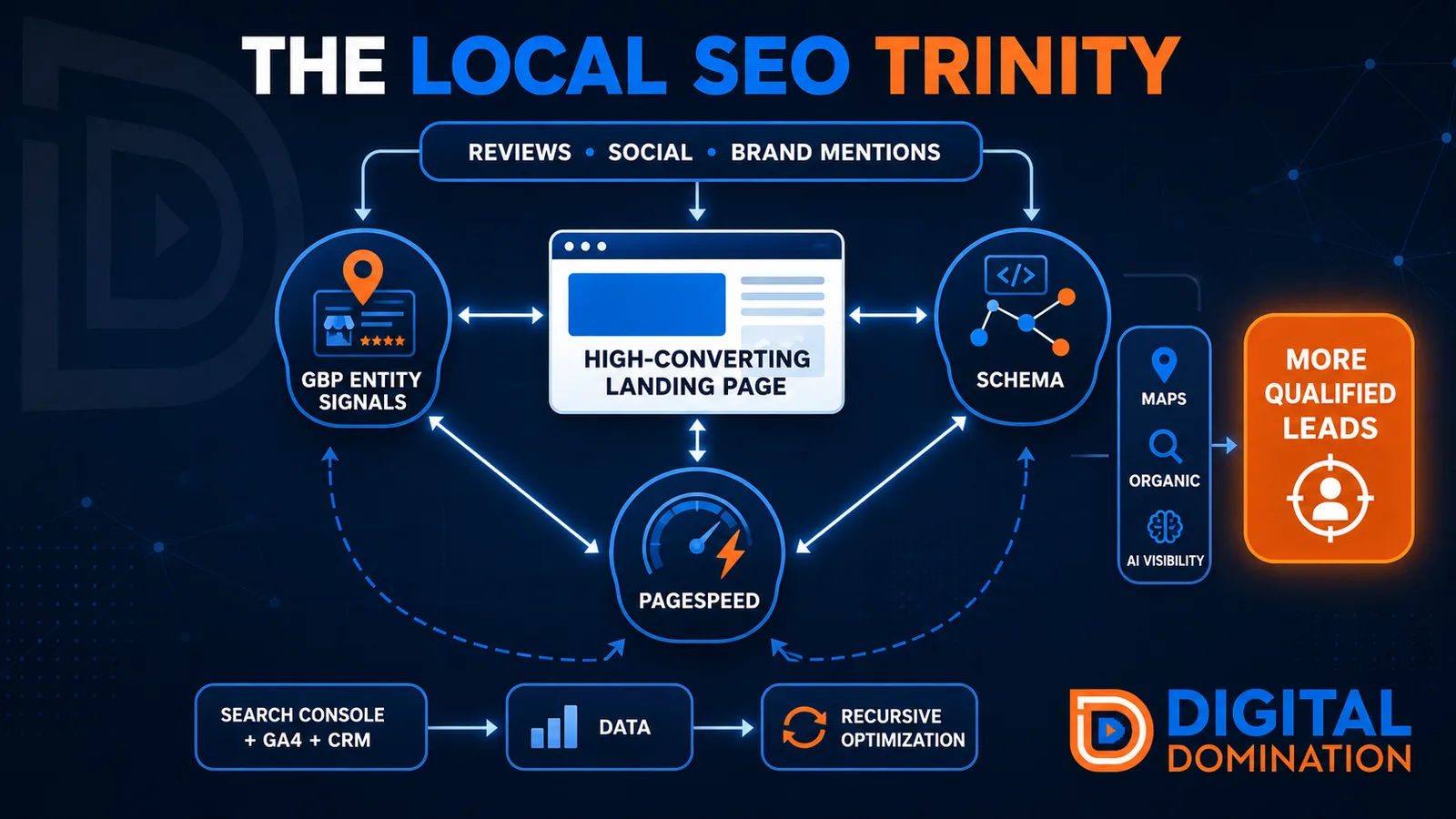
The Local SEO Trinity
Think of a three-legged stool. Your Google profile, your website, and your reviews all have to hold you up. If one leg is short, the whole thing wobbles.
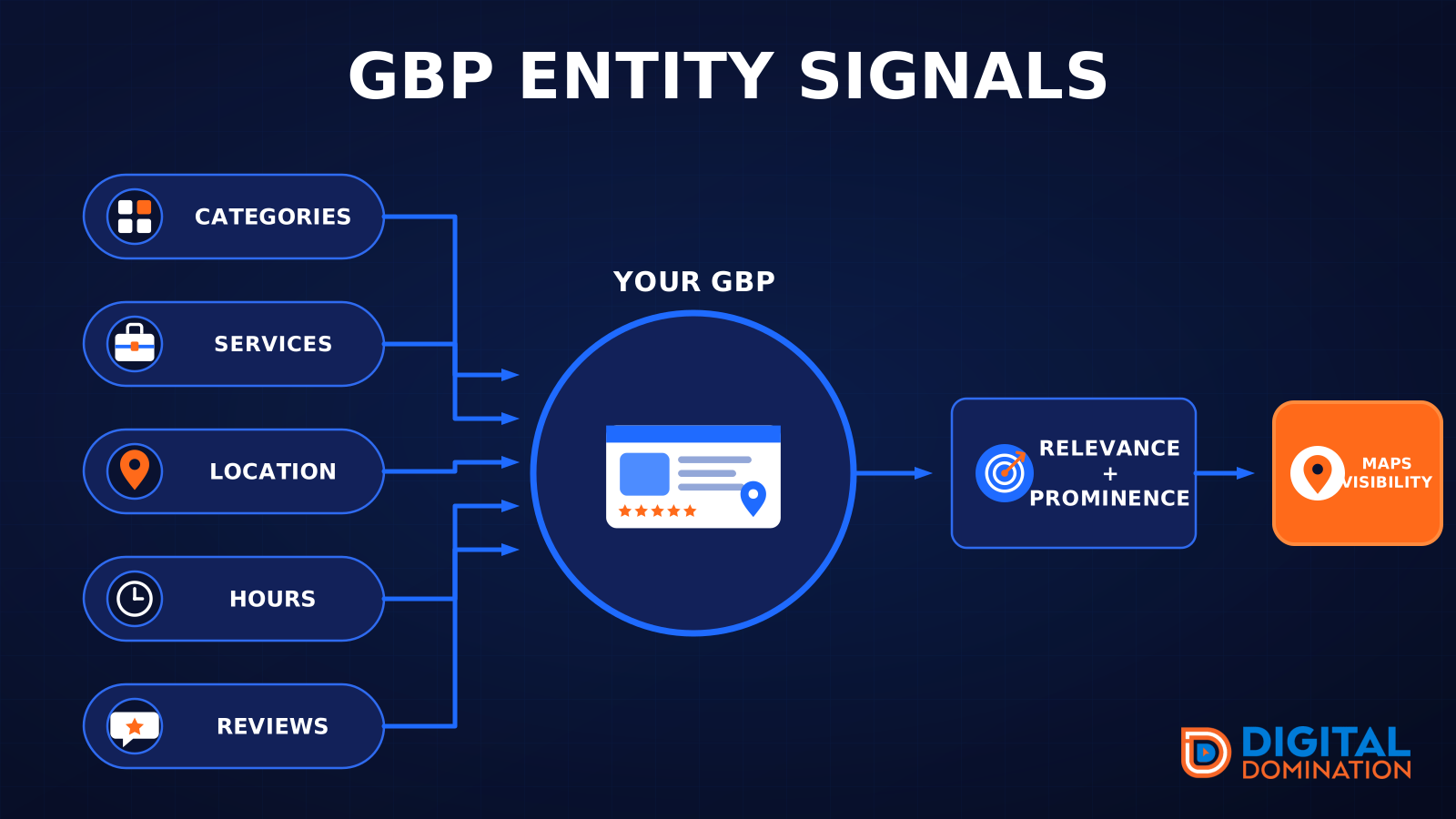
GBP entity signals
This leg is your Google Business Profile. GBP means Google Business Profile. It covers your categories, your services, your location, your hours, and your reviews. Google uses those facts to decide who to show.
Your Google profile is your storefront sign. If the sign is missing, or it names the wrong shop, people drive past.
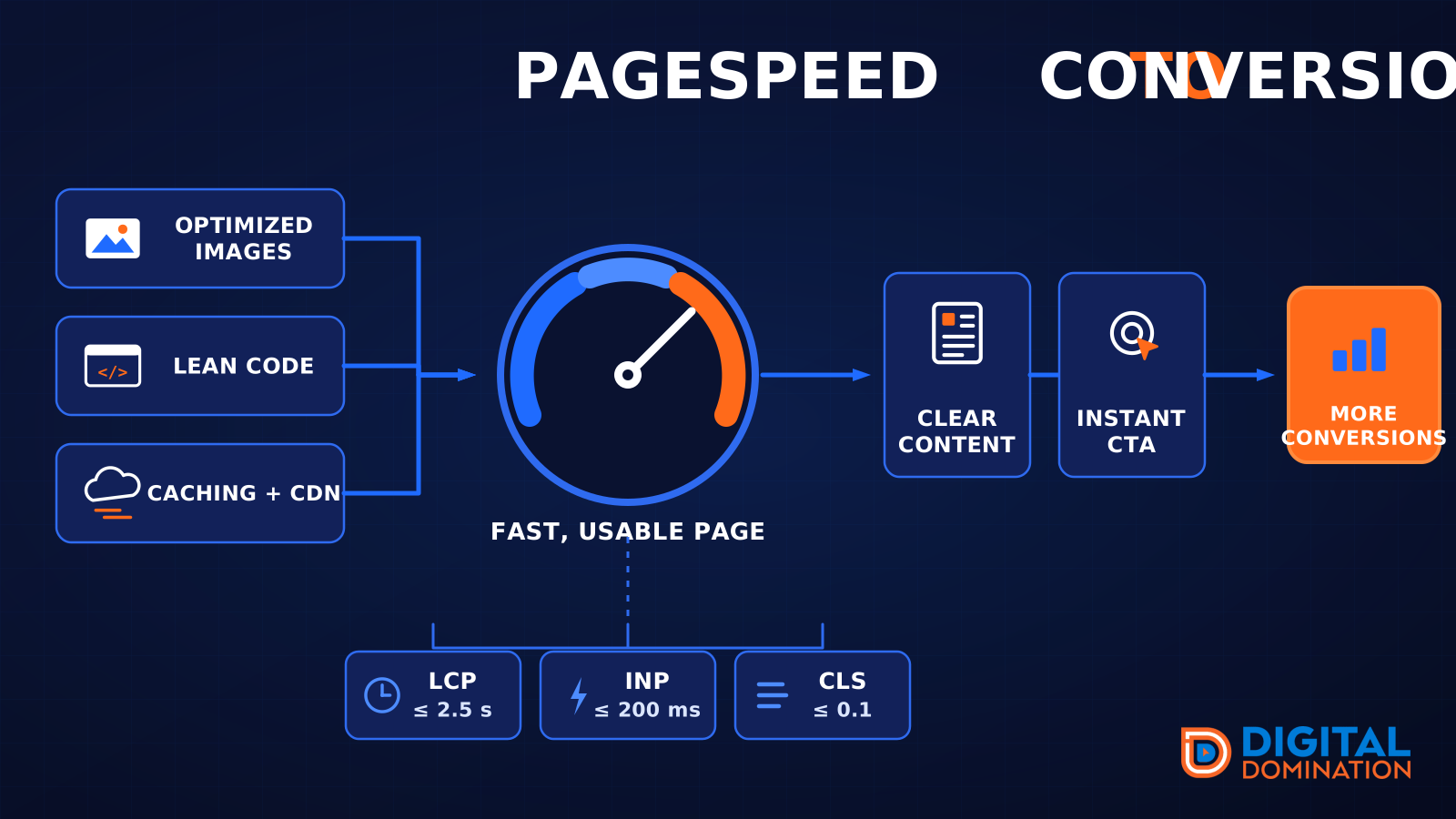
PageSpeed to conversion
This leg is your website, above all on a phone. Small images, lean code, and caching make a page fast. A fast, clear page is what turns a visit into a call. Phone speed is one of the 12 Trinity checks because a slow page loses the call before anyone sees your offer.
Your website is the showroom. If the door sticks, people leave before they look around.
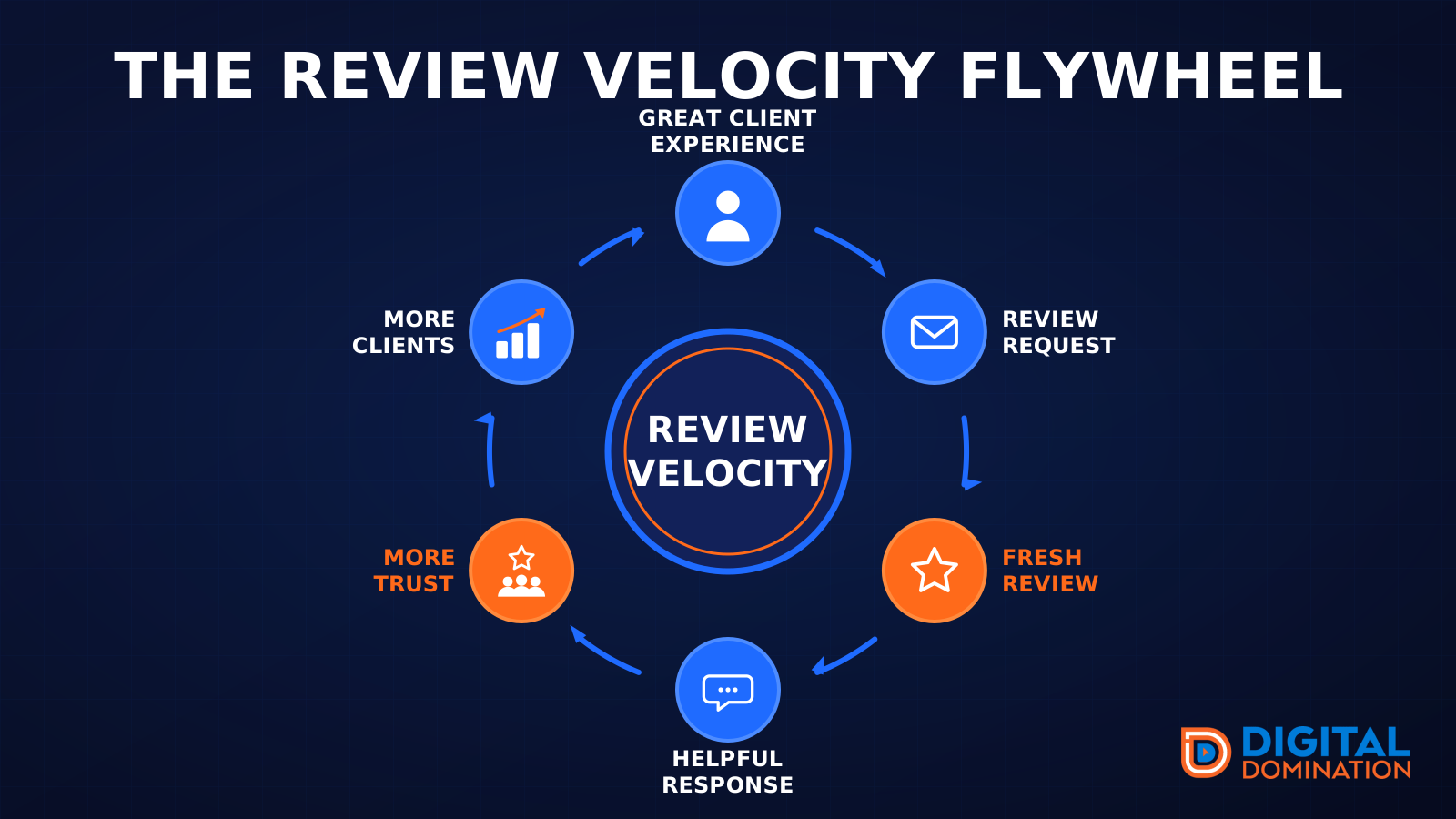
The review velocity flywheel
This leg is reviews and reputation. A good visit leads to a review request, then a fresh review, then a helpful reply, then more trust, then more customers. When the scan can find your Google listing, it shows your rating, your recent reviews, and how many you answered.
Reviews are word of mouth. One kind word helps. A steady stream of real reviews, and a reply from you, helps more.
How this turns into revenue
Being found in more searches leads to more calls. More calls lead to more booked jobs. More booked jobs lead to more revenue.
Example numbers, not a real business: 40 calls from search in a month, a 25 percent close rate, and a $400 average job. That is 10 booked jobs. That is $4,000. The math is the lesson. It is not a promise.
The full page has a box where you can type your own average job value and close rate.
One real story, from our car dealership case study: Medina Auto Group went from invisible on Google Maps to dominating every high-intent search across their market. The turnaround spanned all four of their rooftops at once. The same page says the team eliminated 89 unfair one-star reviews that had been dragging the dealership's reputation down and keeping it out of the Map Pack. It also says: “Results described here are exceptional and non-typical. Outcomes vary based on market conditions, competition, and implementation. No guarantees are made regarding earnings, rankings, or conversions.”
Free strategy call
More booked jobs start with a clear plan
Book a free strategy call. We look at your Google profile, your website, and your reviews, and we tell you what to fix first.
Free. You pick the time. A real person shows up.