
If you cannot tell the LSA from the search ad, you cannot trust the bill
Around October 17 to 22, advertisers argued over whether a local unit was a Local Services Ad. Placement decides who pays and how the lead is counted. That argument landed on top of the October 1 missed call billing change.

What advertisers were arguing about
On October 27, 2026, Barry Schwartz at Search Engine Roundtable wrote that Google advertisers could not agree on whether a specific local ad was a Local Services Ad or some other local Google ad. The posts he cites are from about October 17 to October 22. Ryan, posting as HVAC SEO, shared a screenshot and asked if the bottom unit was an LSA. Anthony Higman replied that if it has a message button it is an LSA right now, that Google is making the difference harder to see, and that a verified label was part of his read.
Other replies in the same conversation disagreed. Some called it a normal search ad with location assets. Some called it a search ad linked to a Google Business Profile. Ryan also wrote, on October 17, that he thought LSA units were being placed in the organic map pack scroll as well. On October 22, Higman posted another screenshot and said the top unit in that local pack was an LSA. Schwartz's point is that the disagreement among people who buy these ads for a living means Google's labeling is not clear, during a period when Local Services Ads are moving toward Google Ads.
Higman's "message button means LSA" line is one advertiser's read. It is not a rule Google published in that article. Do not classify a unit in a client account from a tweet. Classify it from the account that served it and the invoice that billed it.
Why the format changes the money
Local Services Ads and standard search ads do not bill the same way, and they do not show up in the same report. If a lead is an LSA lead, it is priced and disputed as a lead. If it is a search click, it is priced as a click, with its own conversion setup. If the unit on the page looks like both, a client can be paying in one product while the report they were handed describes the other.
For a service business, the practical split is simple. Who is above the map, who is inside the pack, and which login shows the charge. HVAC and other home services are where this argument started, because those categories run both products on the same money terms. Legal and other screened categories have the same split anywhere both products are on.
The October 1 missed call change sits underneath this
The labeling fight is not happening in a quiet billing month. On August 25, 2026, Search Engine Land reported that starting October 1, certain missed Local Services calls, and some follow up calls, can be charged as valid leads. Google's own "How leads work" page says you can be charged when you miss a call during business hours and the caller stays on the line for more than 20 seconds. Those business hours are the hours on the Google Business Profile. If an ad schedule is different from the profile hours, Google says unanswered calls are charged only when they fall inside both.
The help page also says that if the caller has to press a key to get through a phone menu, the 20 second clock starts after that key press, and you are not charged if they never press a key. A voicemail or greeting during business hours can still be charged if the caller stays more than 20 seconds. Answered calls are judged on the conversation, not on how long the phone rang.
So a missed call is no longer a free miss during the hours you told Google you are open. If the profile says you are open and the office is at lunch with the phones unattended, that can be a billed lead. That was true as of the help page we are citing. Read the current page before you argue a charge, because Google edits help docs.
The check for every client running both
For each client that runs Local Services and search, do a placement check on the money terms, from a phone in the service area, and then open both accounts. The question is not "did we spend." The question is which format was on the screen, and which format the charge belongs to.
Then reconcile. LSA lead count and disputes in the LSA account. Search clicks and conversions in the Google Ads account. Calls that match the profile phone and the hours on the profile. If the client thinks a search campaign produced a lead that was actually an LSA message or call, the budget conversation is wrong until that is sorted.
While you are there, set the profile hours to the hours a person answers. If the phones are covered 8 to 5, the profile should not say 7 to 7 because a longer day looked better in the pack. Under the October 1 rule, those extra hours are hours you can be billed for a missed call.
- ▸Screenshot the money term on a phone in the service area and mark each unit: LSA, search, or pack
- ▸Open the LSA account and the Google Ads account and match the screenshot to a campaign, not to a guess from the layout
- ▸Compare LSA spend and lead counts with search spend for the same week
- ▸Read disputed and credited leads before you tell the client the cost per job
- ▸Match Google Business Profile hours to staffed hours
- ▸Confirm the phone path: a person, a recorded greeting, or a menu that waits for a key
What we will not pretend
We will not tell a client a unit is an LSA because it has a message icon, and we will not tell them it is a search ad because it has a headline. The October thread exists because experienced buyers could not agree from the screenshot alone. The account is the record.
We also will not fold LSA and search into one "ads" line on a report when both are running. The formats bill differently, and since October 1 the LSA side can bill a missed call the search side does not.
If you want that reconciliation done, book a call and say which accounts are live. Profile hours, which drive the missed call clock, are part of Google Business Profile SEO. Agencies that need Local Services managed under their own brand can read the white label program, which includes Local Services Ads management. That page is for agencies, not for a contractor buying ads direct.
Sources
- ▸Search Engine Roundtable, Barry Schwartz, Advertisers Can't Figure Out If An Ad Is A Google Local Service Ad Or Not, October 27, 2026, covering posts from about October 17 to October 22.
- ▸Search Engine Land, Anu Adegbola, Google Local Services Ads will charge for some missed calls starting Oct. 1, August 25, 2026.
- ▸Google Local Services Help, How leads work.
Ads and the profile
Match the placement to the invoice
If you run Local Services and search, we will screenshot the money terms, open both accounts, and line the charges up with the hours on the profile.
Book a callKeep reading
Related guides
- ▸Google AI links
- ▸Google AI Mode citations vanished
- ▸Google AI Mode alerts change local search visibility
Put it into action
Frequently Asked Questions
How can I tell a Local Services Ad from a regular search ad?
Do not rely on the layout alone. In an October 2026 thread, advertisers disagreed about the same screenshot. One person said a message button and a verified label meant LSA. Others said it was a search ad with location assets or a Business Profile link. Match the unit to the account that served it and the invoice that billed it.
Did Local Services Ads start charging for missed calls on October 1?
Search Engine Land reported on August 25, 2026 that starting October 1, some missed calls can be charged as valid leads. Google's How leads work page says a missed call during business hours can be charged if the caller stays on the line for more than 20 seconds. Business hours are the hours on the Google Business Profile. Check the current help page before you dispute a charge.
Do profile hours affect LSA billing?
Yes, according to Google's help page. Unanswered calls are evaluated against the business hours on the Google Business Profile. If you also set an ad schedule, Google says unanswered calls are charged only when they fall in the ad schedule and within those business hours. Set the hours to when a person actually answers.
What if my phone menu asks the caller to press a key?
Google's help page says the 20 second timer starts once the caller presses the key, and you are not charged if they hang up without pressing a key. A voicemail or greeting with no key press can still be charged if the caller stays more than 20 seconds during business hours.
Should LSA and search be one line in the report?
No, when both are running. They bill differently, they dispute differently, and a missed call can be a charged LSA lead without being a search click. Reconcile spend to the placement you screenshotted.
The Local SEO Trinity
Think of a three-legged stool. Your Google profile, your website, and your reviews all have to hold you up. If one leg is short, the whole thing wobbles.
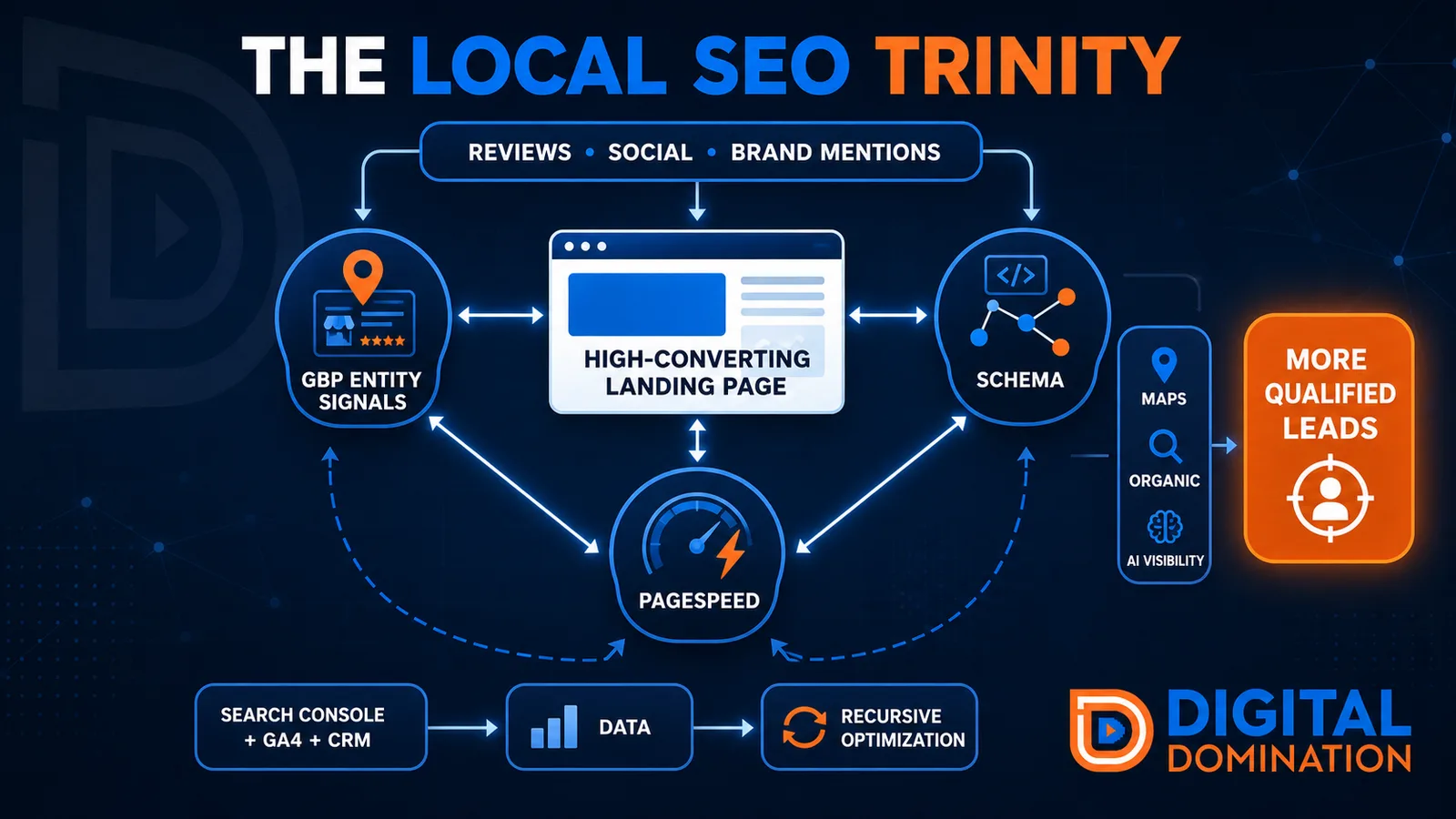
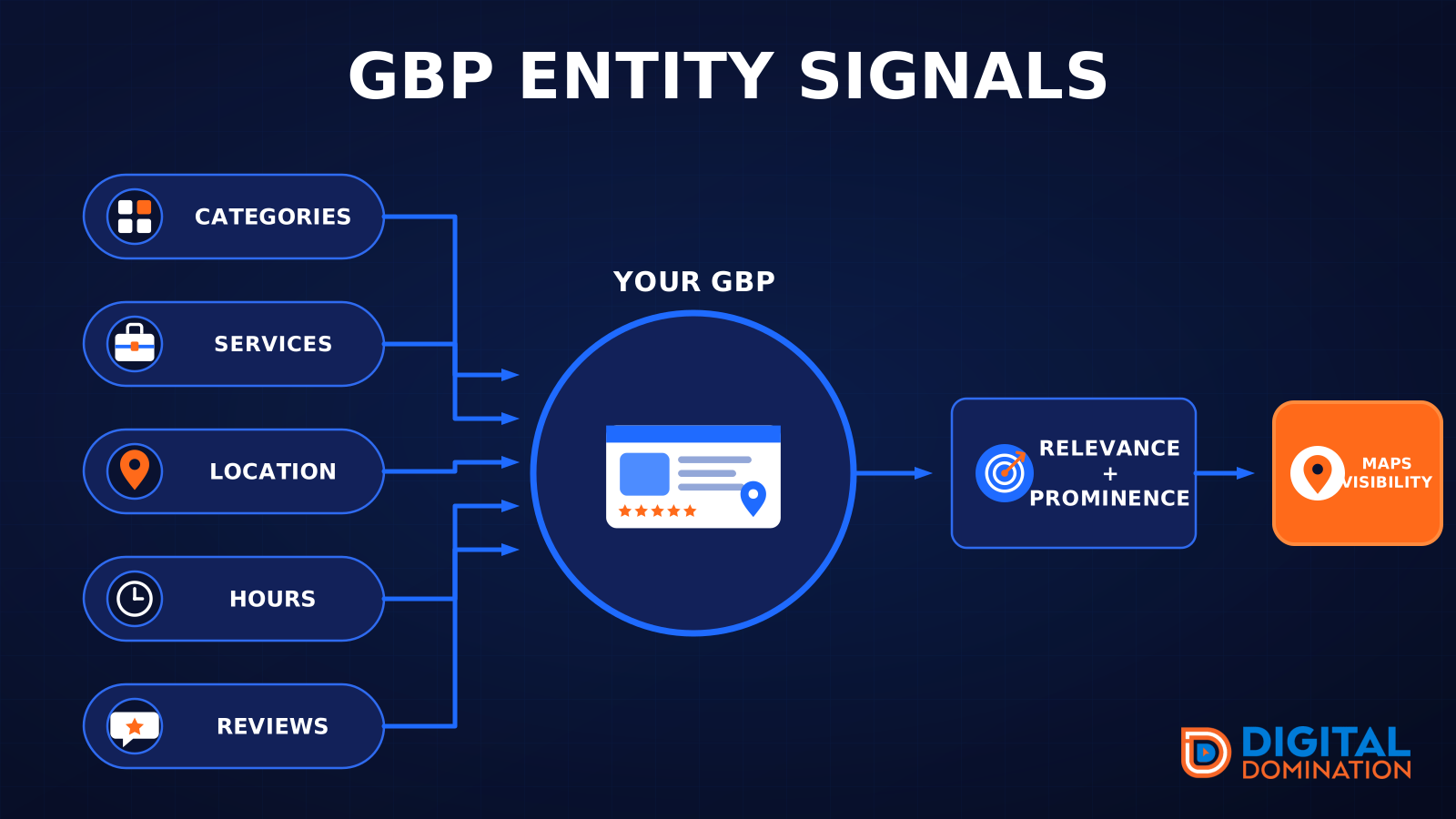
GBP entity signals
This leg is your Google Business Profile. GBP means Google Business Profile. It covers your categories, your services, your location, your hours, and your reviews. Google uses those facts to decide who to show.
Your Google profile is your storefront sign. If the sign is missing, or it names the wrong shop, people drive past.
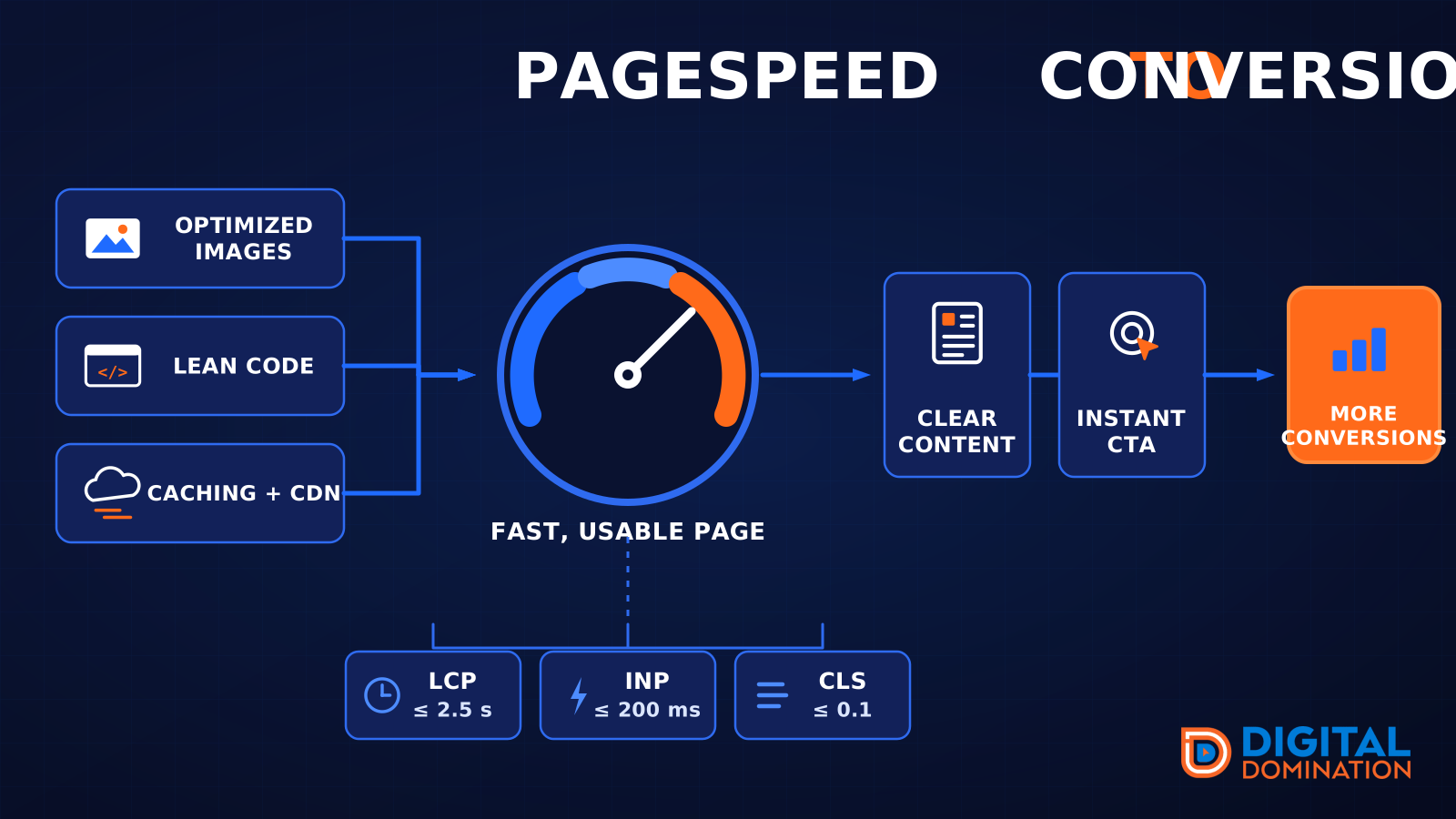
PageSpeed to conversion
This leg is your website, above all on a phone. Small images, lean code, and caching make a page fast. A fast, clear page is what turns a visit into a call. Phone speed is one of the 12 Trinity checks because a slow page loses the call before anyone sees your offer.
Your website is the showroom. If the door sticks, people leave before they look around.
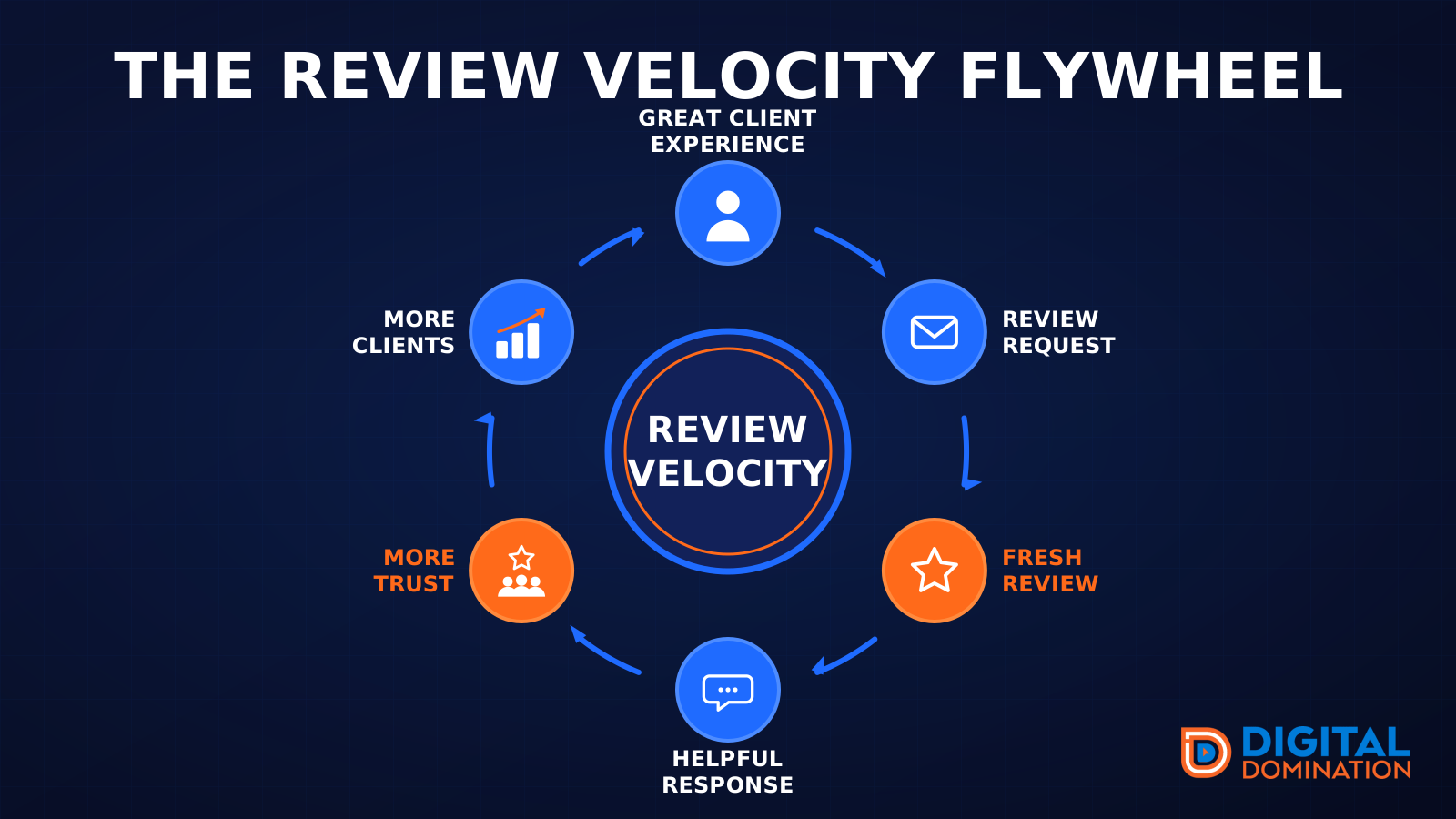
The review velocity flywheel
This leg is reviews and reputation. A good visit leads to a review request, then a fresh review, then a helpful reply, then more trust, then more customers. When the scan can find your Google listing, it shows your rating, your recent reviews, and how many you answered.
Reviews are word of mouth. One kind word helps. A steady stream of real reviews, and a reply from you, helps more.
How this turns into revenue
Being found in more searches leads to more calls. More calls lead to more booked jobs. More booked jobs lead to more revenue.
Example numbers, not a real business: 40 calls from search in a month, a 25 percent close rate, and a $400 average job. That is 10 booked jobs. That is $4,000. The math is the lesson. It is not a promise.
The full page has a box where you can type your own average job value and close rate.
One real story, from our car dealership case study: Medina Auto Group went from invisible on Google Maps to dominating every high-intent search across their market. The turnaround spanned all four of their rooftops at once. The same page says the team eliminated 89 unfair one-star reviews that had been dragging the dealership's reputation down and keeping it out of the Map Pack. It also says: “Results described here are exceptional and non-typical. Outcomes vary based on market conditions, competition, and implementation. No guarantees are made regarding earnings, rankings, or conversions.”
Free strategy call
More booked jobs start with a clear plan
Book a free strategy call. We look at your Google profile, your website, and your reviews, and we tell you what to fix first.
Free. You pick the time. A real person shows up.