
Google AI links: what local owners should fix first
Google says AI Mode and AI Overviews will show more source links. Local service businesses should make their official pages and profiles easier to trust, cite and click.
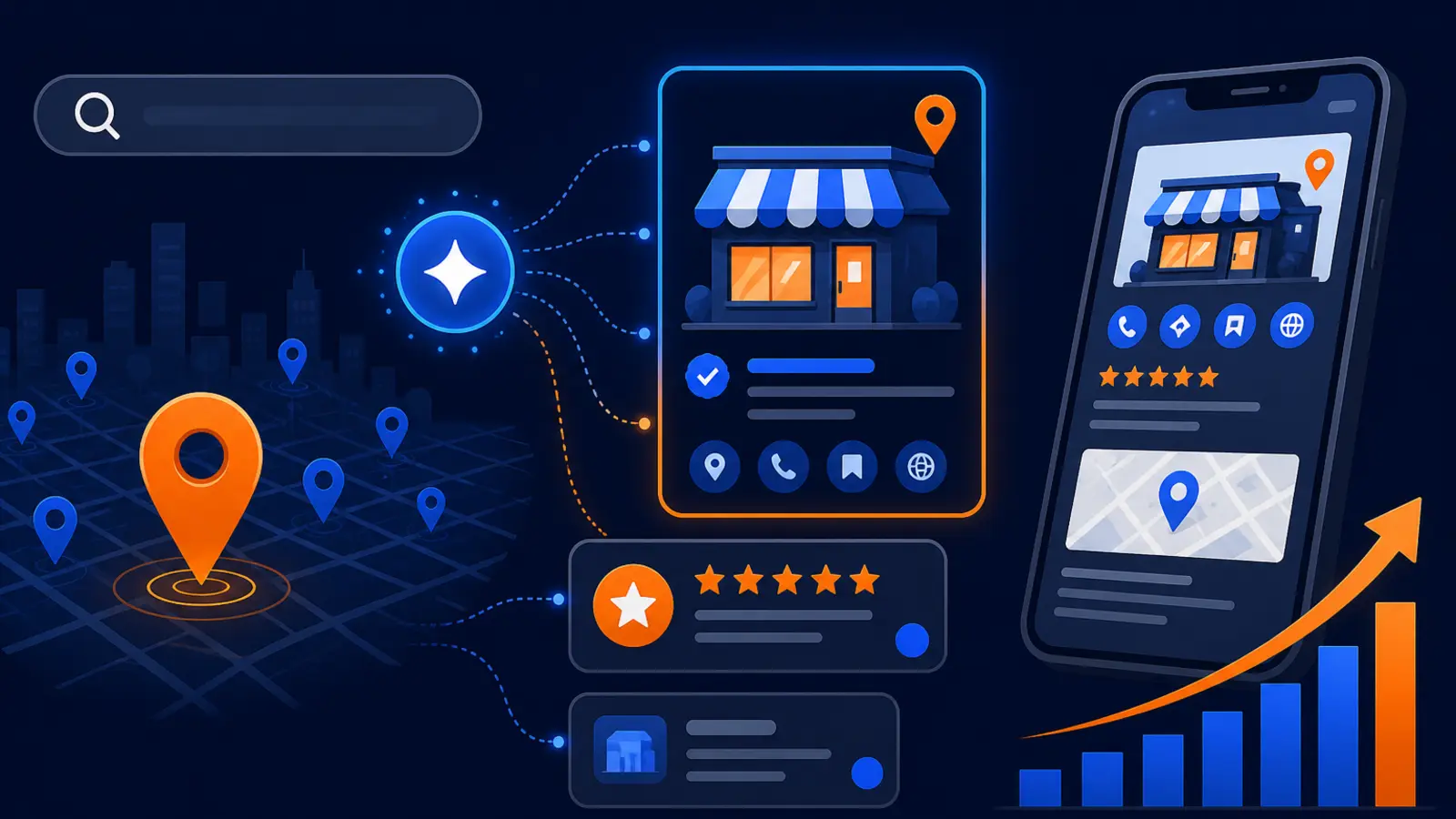
Google just made AI answers more link-heavy
On 2026-10-15, Google announced in More ways to connect with the web from Search that AI Mode and AI Overviews are getting more clickable source links. Google said it is increasing inline links, placing key links higher in AI responses more often, and testing a dedicated top section for the one or two official pages a searcher may need to finish a task or get exact information.
This hits local service businesses because many high-intent searches are not casual research. A homeowner searching for emergency plumber pricing, same-day HVAC repair, roof leak repair, or book a consultation may act on the first clear official source Google shows inside an AI answer. If that source is your competitor's service page, booking page, or Google Business Profile information, you may lose the click before the person ever studies the full local results.
Search Engine Land reported the same change and pointed out the practical catch for marketers: Google is trying to send more clicks from AI answers, but it still does not break out AI-response click data in Search Console. Android Central also covered the update, noting that Google is drawing more attention to linked sources when facts matter.
Why this matters for local revenue
For years, many owners treated service pages, booking pages, pricing language, and profile fields as SEO chores. This change makes them revenue assets. Google AI needs clean, official, specific sources it can confidently cite when a searcher asks a buying question.
The old goal was often to rank somewhere on page one. The newer risk is simpler: Google may summarize the answer and send the buyer to the clearest official source before that buyer compares every local option. That does not replace traditional local SEO, but it raises the value of accuracy and clarity on the pages that help a customer take action.
The searches most affected are the ones where a buyer wants an answer and a next step:
- ▸Emergency services with time pressure
- ▸Same-day or next-day availability questions
- ▸Pricing, financing, estimate and consultation searches
- ▸Service-area questions near city borders
- ▸Book, call, schedule, reserve and quote requests
- ▸Questions where official policy details matter
Should you pay for AI SEO right now
A local business should be cautious about buying a vague AI SEO package that promises visibility in every AI answer. Nobody can honestly guarantee control over how Google AI cites sources. The better question is whether the work being sold fixes the official signals Google would need to trust your business in the first place.
Good AI SEO for a local service business should look a lot like disciplined local SEO plus clearer source pages. It should improve your service pages, booking paths, Google Business Profile, review signals, local proof, technical accessibility, and content structure. If an agency cannot show the exact pages and fields it will improve, you are probably buying buzzwords.
Before paying for anything new, ask these questions:
- ▸Will you audit the service pages tied to our highest-value jobs
- ▸Will you compare our booking and contact pages against local competitors
- ▸Will you clean up our Google Business Profile fields and categories
- ▸Will you make pricing, availability and service-area information clearer
- ▸Will you track local rankings by location, not just citywide averages
- ▸Will you explain what cannot be measured yet in Search Console
The pages Google AI needs to trust
Google's AI answers need sources that match the question. A thin homepage usually is not enough for a specific search like emergency water heater repair in Henderson or commercial AC maintenance quote. The page that deserves the click is often the most direct page, not the prettiest one.
Start with pages that answer buying questions. Each page should make the service, location, next step, and official business details obvious. If Google has to infer what you do, where you do it, or how someone can schedule, your competitor with a clearer page has an advantage.
Fix these pages before creating new AI content:
- ▸Core service pages for each major job type
- ▸Emergency or same-day service pages if you offer them
- ▸Booking, request estimate and contact pages
- ▸Pricing, financing, coupon or availability pages if applicable
- ▸Service-area pages for real cities you serve
- ▸About, license, insurance and team proof pages
- ▸FAQ pages that answer buyer objections in plain language
Five things to check on your profile this week
Your Google Business Profile still matters because Google's local ranking factors are relevance, distance and prominence. AI answers may draw from web pages, but local trust often starts with whether your profile matches your website and real-world operation.
Do not treat the profile like a one-time setup. It should agree with the pages you want Google to cite. If your profile says one thing and your website says another, you are making the source selection harder than it needs to be.
Check these profile items this week:
- ▸Primary category matches the main service you want more of
- ▸Secondary categories cover real services without stretching into unrelated work
- ▸Service list uses the same wording as your service pages
- ▸Hours, holiday hours and emergency hours are accurate
- ▸Phone number, website link and booking link send people to the right place
- ▸Service areas match the cities you actually serve
- ▸Business description explains who you help and what you do without keyword stuffing
- ▸Photos, posts and products or services show current work and current offers
What to do about it
The first move is not to write a long article about AI. The first move is to make the pages that already convert easier for Google and customers to understand. Pick the services that bring the most valuable calls, then check whether a stranger could answer basic buying questions from the page in less than a minute.
Use plain language. If you offer same-day repair, say what same-day means for your business. If pricing depends on an inspection, explain what affects price and what the customer can expect next. If you do not publish prices, give useful context without pretending every job is the same.
Here is the owner-level action list:
- ▸Open your top service page and make the first screen state the service, city or service area, and next step
- ▸Add a clear call button and booking or estimate button near the top
- ▸Explain availability, emergency service, consultation steps or scheduling rules
- ▸Add proof that belongs to the business, such as license details, years in business if accurate, team photos or warranty language
- ▸Make sure the page name, page title and main heading use the same service wording customers use
- ▸Link from the Google Business Profile website or appointment field to the best matching page
- ▸Remove outdated offers, old hours and confusing service-area claims
Make official pages easier to cite
Google's announced test for a dedicated top section matters because it is aimed at the one or two official pages needed to complete a task or get exact information. That is your cue to create official pages that are clearly task-oriented. A booking page should look like the official place to book. A pricing page should look like the official place to understand pricing.
This does not mean stuffing AI phrases onto every page. It means reducing ambiguity. Use consistent names for services. Put the business name, phone number and service area in expected places. Make sure the page answers the question implied by the search.
A strong official source page usually includes these elements:
- ▸A clear page purpose in the headline
- ▸Specific service language, not generic marketing copy
- ▸Real locations served, not a list of every city in the state
- ▸A visible phone number and contact path
- ▸A short explanation of what happens after the customer contacts you
- ▸Internal links to related services and the main contact page
- ▸Updated information that matches the Google Business Profile
Proof signals that help Google choose you
AI answers still depend on confidence. For a local business, confidence comes from consistency and proof. Google does not need you to sound like a national brand. It needs to see that your business is the real official source for the service, location and action the searcher wants.
Prominence is one of Google's local ranking factors, along with relevance and distance. Prominence can be supported by reviews, mentions, links, consistent listings and strong local brand signals. You do not need to fake size. You need to make your real proof easy to find.
Strengthen these proof signals:
- ▸Review requests that mention the actual service performed when customers naturally choose to write that way
- ▸Consistent name, address and phone details across major listings
- ▸Service pages linked from relevant local pages, not buried in the menu
- ▸Photos that show real work, vehicles, staff, equipment or locations
- ▸Clear license, certification, insurance or warranty information when applicable
- ▸Website copy that matches the services customers mention in reviews
- ▸Local references that are accurate and useful, such as neighborhoods or nearby service areas you truly cover
Do not ignore speed and usability
If Google sends a click from an AI answer, the page still has to load and convert. A slow, confusing, or broken page wastes the opportunity. Local buyers are often on phones, in a hurry, and comparing only the options that feel easiest to contact.
You do not need to become a developer to check the basics. Open your service pages on a phone using mobile data. Tap every call, booking and form button. Ask whether the page gives a clear answer before forcing the visitor to scroll through vague copy.
For technical health, Core Web Vitals good thresholds are LCP 2.5 s, INP 200 ms and CLS 0.1 at the 75th percentile of field data. Ask your web person to check these items first:
- ▸Largest image or hero section loads quickly on mobile
- ▸Tap targets are easy to use with a thumb
- ▸Forms work and ask only for needed information
- ▸Phone links work on mobile devices
- ▸No pop-up blocks the call or booking path
- ▸The page does not jump around while loading
- ▸Tracking scripts are not slowing down the most important pages
Measure carefully, because the data is incomplete
Search Engine Land's reporting included an important warning: Google still does not break out AI-response click data in Search Console. That means you may see clicks, impressions and ranking changes, but you will not get a clean report that says this lead came from AI Overview or this click came from AI Mode.
Owners should not use that data gap as an excuse to do nothing. Instead, track the parts you can see. Watch whether the pages you improved get more impressions, calls, forms, bookings and local visibility. Also watch whether competitors are being cited in AI answers for the same buying questions.
Track these practical signals:
- ▸Calls and form fills from the service pages you improved
- ▸Booking page visits and completed booking requests
- ▸Search Console queries tied to service and location intent
- ▸Google Business Profile calls, website clicks and direction requests
- ▸Local rank checks from different points in your market
- ▸Manual spot checks for high-value AI answer searches
- ▸Changes in competitor pages that Google appears to cite
A practical one-week cleanup plan
You can make meaningful progress without rebuilding the whole site. Pick one high-value service and one high-value city or service area. Then make the page, profile and contact path agree with each other.
Do not start with ten pages at once. A focused cleanup teaches you what is missing, what customers ask, and what your competitors explain better. Once one page is strong, repeat the process for the next service.
Use this simple schedule:
- ▸Day one: choose the service page most likely to turn into a call or booking
- ▸Day two: rewrite the top of the page so the service, area and next step are obvious
- ▸Day three: add or clarify pricing, availability, estimate or consultation language
- ▸Day four: update matching Google Business Profile services, links and hours
- ▸Day five: test calls, forms and booking links on mobile
- ▸Day six: add proof, photos, FAQs or license information that supports trust
- ▸Day seven: compare the page against the competitors appearing in AI answers and local results
How to decide whether AI SEO is worth paying for
Paying for AI SEO can make sense if your business depends on high-intent local searches and you do not have time to audit pages, profiles, competitors and technical issues yourself. It makes less sense if the offer is just a new label on generic blog writing.
The work should be tied to revenue paths. For a local service business, that means calls, bookings, estimate requests and profile actions. It should also include honest reporting limits, because Google has not given owners a clean AI-answer click report inside Search Console.
A good AI SEO plan should include these deliverables:
- ▸A review of pages most likely to be cited as official sources
- ▸Google Business Profile cleanup and consistency checks
- ▸Content fixes for service, pricing, availability and booking questions
- ▸Local competitor comparisons for the same buyer searches
- ▸Technical checks on the pages that receive calls and forms
- ▸Local rank tracking across the market, not one city-center point
- ▸Clear explanation of what is measured directly and what must be inferred
The decision for local owners
Google's update does not mean every local business needs to panic or buy a new tool. It does mean the clearest official source may win more often when AI answers include links near the top. If your service page, booking page or Google Business Profile is vague, outdated or inconsistent, now is the week to fix it.
Digital Domination is a Las Vegas local SEO agency serving local service businesses nationally. Our AI SEO page at digitaldomination.ai/ai-seo/ explains how we audit AI search visibility, strengthen official source pages, clean up local signals and build a practical plan around calls, bookings and service-area rankings.
If you want to see how your business shows up across your market before deciding what to fix, start with the free GeoGrid scan at digitaldomination.ai/scan/.
Keep reading
Related guides
Put it into action
Frequently Asked Questions
What did Google change with AI Overviews and AI Mode?
Google announced on 2026-10-15 that AI Mode and AI Overviews will include more clickable source links. Google also said key links may appear higher in AI responses more often, and it is testing a top section for official pages needed to complete a task or get exact information.
Does this mean AI SEO matters for a local business?
Yes, but only if AI SEO means fixing the sources Google may cite. For a local owner, that means clearer service pages, booking pages, pricing or availability details, Google Business Profile consistency and stronger proof signals.
Can I see AI Overview clicks in Google Search Console?
Search Engine Land reported that Google still does not break out AI-response click data in Search Console. You can track page clicks, queries, calls, forms and profile actions, but you will not get a clean AI Overview click report.
Which pages should I fix first for Google AI answers?
Start with the pages closest to revenue. For most local service businesses, that means top service pages, emergency or same-day pages, booking pages, contact pages, pricing or estimate pages, and city or service-area pages that match real work you perform.
What should my Google Business Profile have for AI visibility?
Your profile should match your website. Check your primary category, services, hours, phone number, booking link, service areas, business description and current photos so Google sees a consistent official source.
Do I need to publish exact prices to get cited by AI answers?
Not always. If exact pricing is not possible, explain what affects price, how estimates work and what the customer should do next. Clear pricing context is better than a vague page that says to call for everything.
Will more links in AI answers replace local pack SEO?
No. Google's local ranking factors are still relevance, distance and prominence. The change means your official pages and profile need to support those signals because buyers may click from an AI answer before comparing every local result.
Should I hire an agency for AI SEO or do it myself?
You can handle the first pass yourself by cleaning up your best service pages, booking paths and Google Business Profile. Hire help if you need competitor research, technical fixes, local rank tracking and a structured plan tied to calls and bookings.
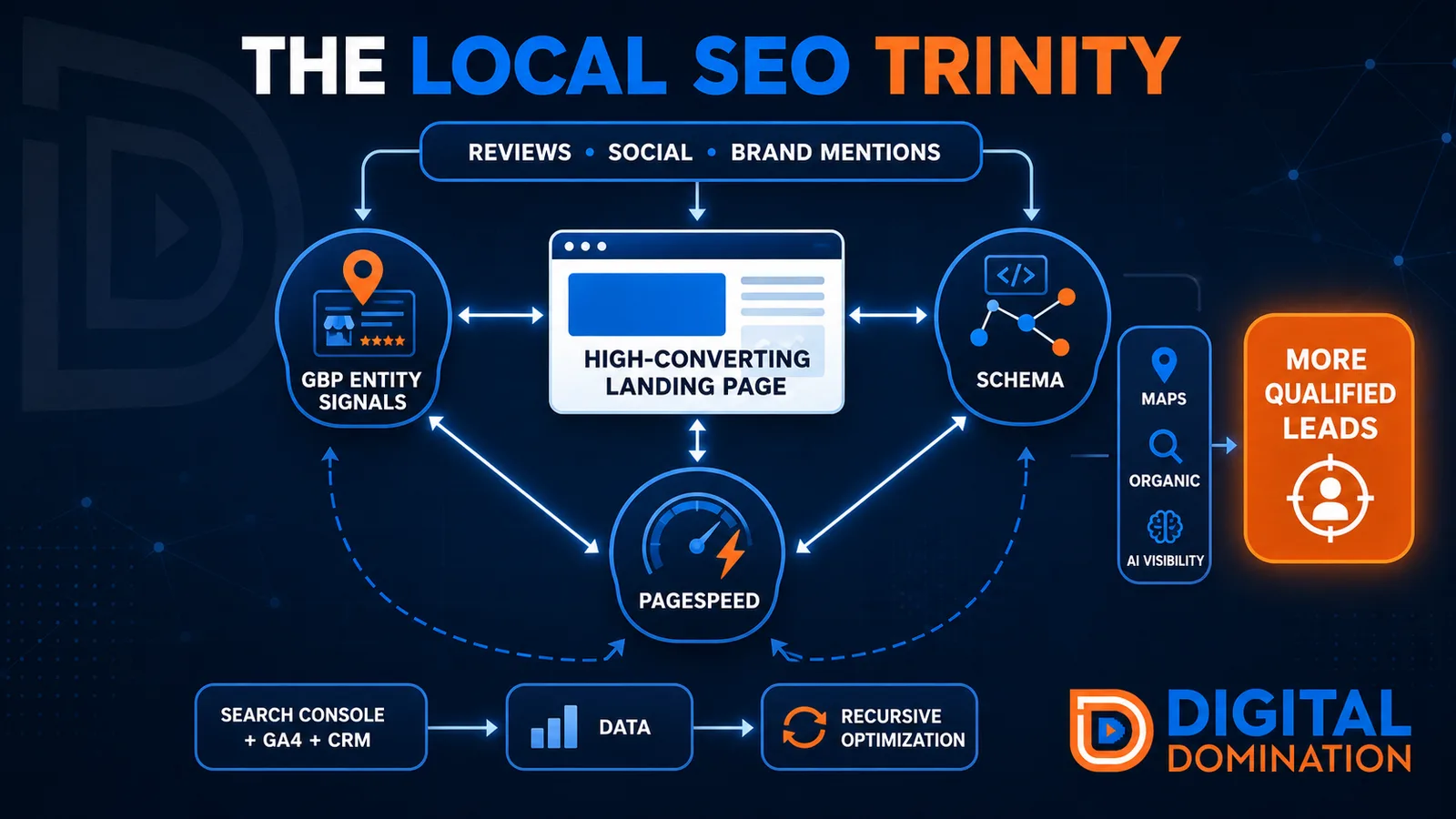
The Local SEO Trinity
Think of a three-legged stool. Your Google profile, your website, and your reviews all have to hold you up. If one leg is short, the whole thing wobbles.
GBP entity signals
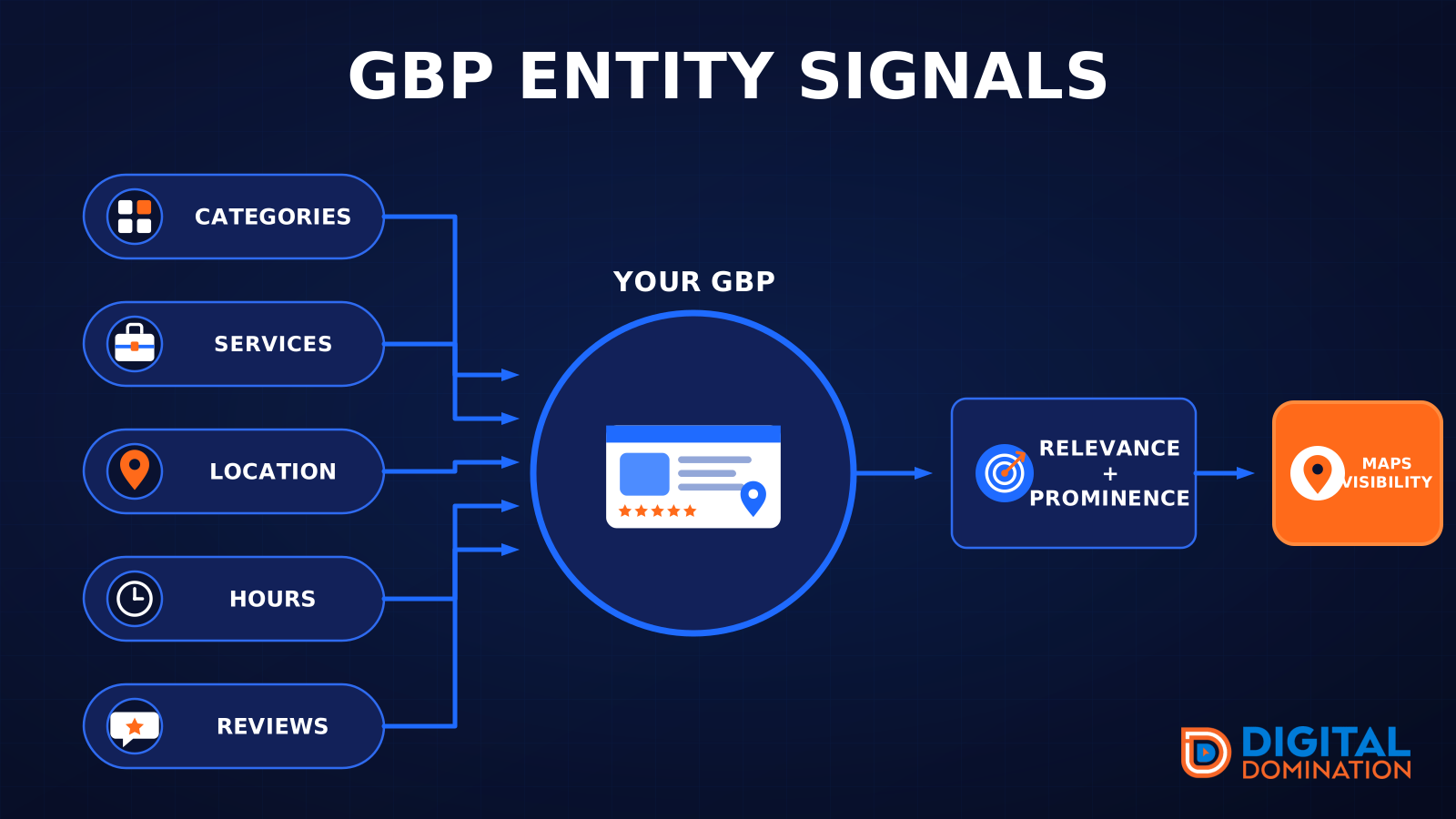
This leg is your Google Business Profile. GBP means Google Business Profile. It covers your categories, your services, your location, your hours, and your reviews. Google uses those facts to decide who to show.
Your Google profile is your storefront sign. If the sign is missing, or it names the wrong shop, people drive past.
PageSpeed to conversion
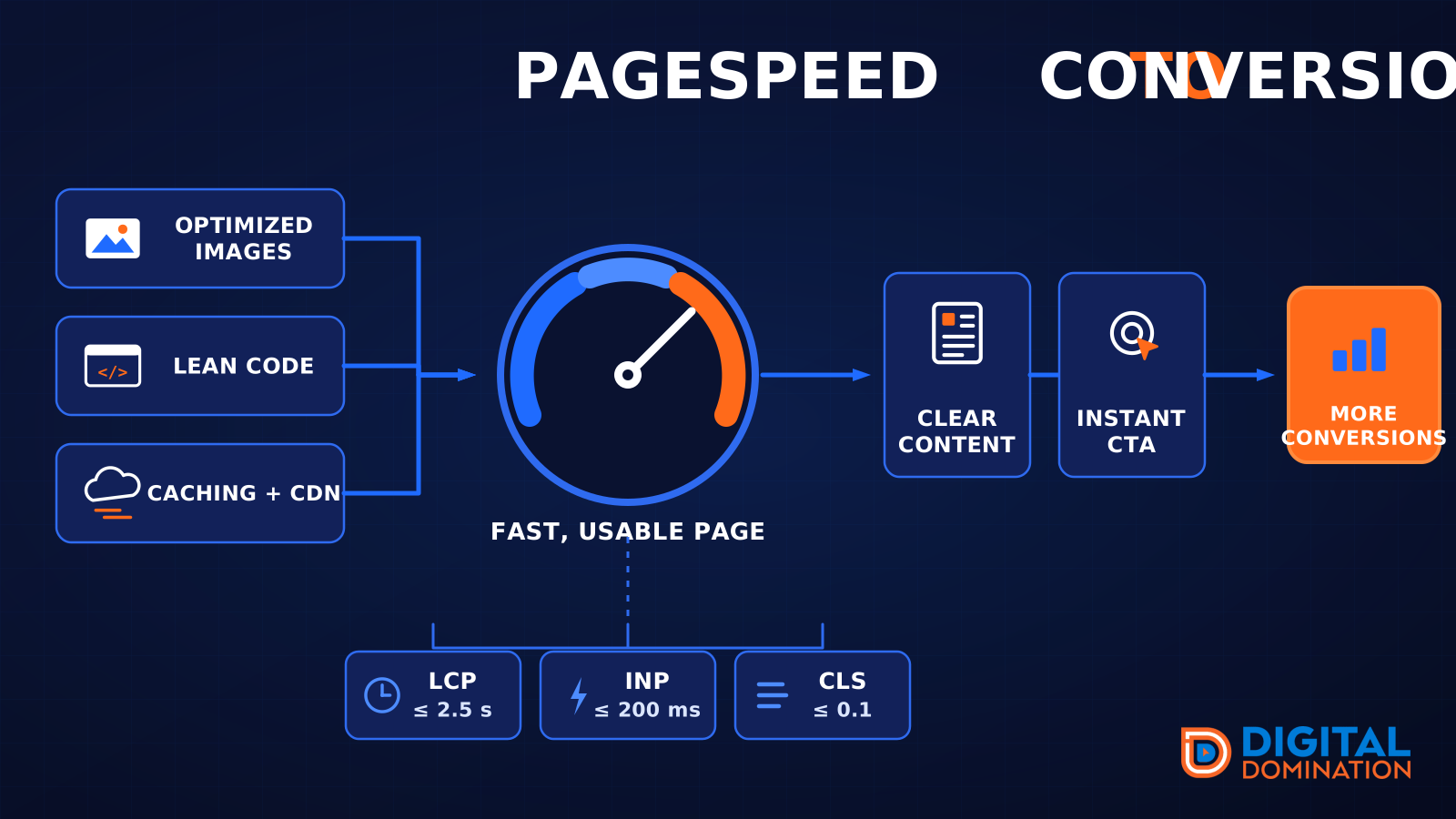
This leg is your website, above all on a phone. Small images, lean code, and caching make a page fast. A fast, clear page is what turns a visit into a call. Phone speed is one of the 12 Trinity checks because a slow page loses the call before anyone sees your offer.
Your website is the showroom. If the door sticks, people leave before they look around.
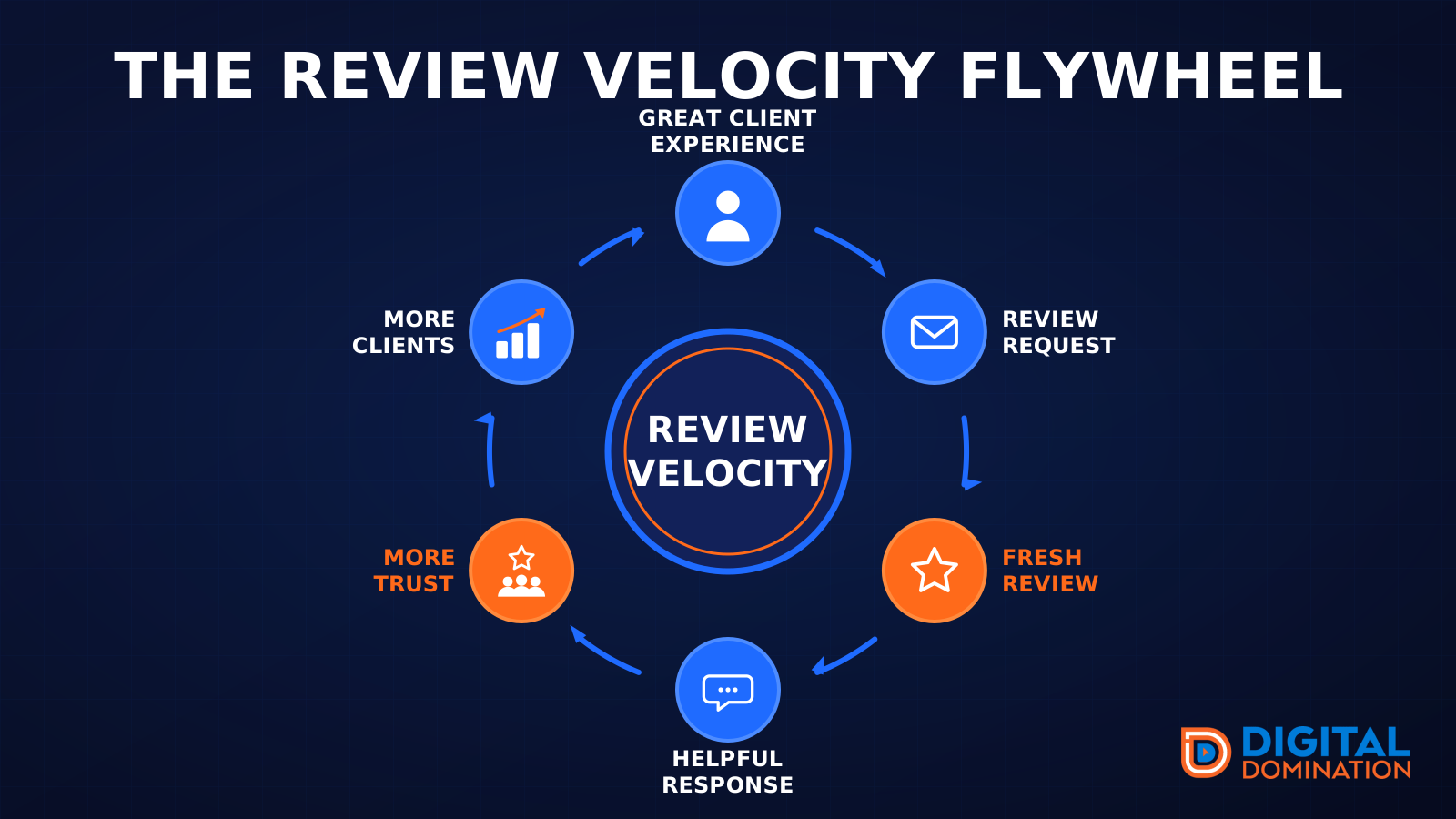
The review velocity flywheel
This leg is reviews and reputation. A good visit leads to a review request, then a fresh review, then a helpful reply, then more trust, then more customers. When the scan can find your Google listing, it shows your rating, your recent reviews, and how many you answered.
Reviews are word of mouth. One kind word helps. A steady stream of real reviews, and a reply from you, helps more.
How this turns into revenue
Being found in more searches leads to more calls. More calls lead to more booked jobs. More booked jobs lead to more revenue.
Example numbers, not a real business: 40 calls from search in a month, a 25 percent close rate, and a $400 average job. That is 10 booked jobs. That is $4,000. The math is the lesson. It is not a promise.
The full page has a box where you can type your own average job value and close rate.
One real story, from our car dealership case study: Medina Auto Group went from invisible on Google Maps to dominating every high-intent search across their market. The turnaround spanned all four of their rooftops at once. The same page says the team eliminated 89 unfair one-star reviews that had been dragging the dealership's reputation down and keeping it out of the Map Pack. It also says: “Results described here are exceptional and non-typical. Outcomes vary based on market conditions, competition, and implementation. No guarantees are made regarding earnings, rankings, or conversions.”
Free Trinity Scan
See which leg is short
Run a free Trinity Scan. You get a clear list of what to fix first.
More calls. More booked jobs. More revenue. Paste your website. The scan reads your public site and shows the gap. It does not change your website or your Google profile. You do not need an email, a phone number, or a call to see the first results.
You can fix the list yourself. Or you can have us build a new website that passes all 12 Trinity checks at launch, for $499. That part is optional.
Free. Read only. No call required to see the first results.