
Mortgage broker local SEO: how GBP entity signals, schema and PageSpeed turn a panicked borrower into a funded loan
A borrower whose bank just said no is comparing brokers in minutes, not weeks. This is how the profile, the structured data and the page speed decide who gets that call, and how to measure whether it funded.

Ten days to the financing contingency and the bank just said no
A self-employed contractor has an accepted offer. His bank pre-approved him in March, but the underwriter has now read two years of tax returns full of write-offs and the loan is dead on a Tuesday afternoon. The financing contingency expires in ten days. His agent says three words: call a broker. He does not know one. He opens Google on his truck's dash and types his city plus mortgage broker, then, a minute later, bank statement loan.
A broker in that market can have forty wholesale lenders and a non-QM desk that closes this exact file every week, and still never get the call. The Map Pack shows three names. The borrower compares stars, taps one, sees an NMLS number, a license in his state, the words self-employed loans and a phone number that works. He calls. Google ran the same comparison before he did: it collected facts about every broker in the market, checked them across sources and decided which three looked relevant, prominent and trustworthy. Mortgage broker local SEO is one consistent lending entity that Google, AI assistants and a stressed borrower can all verify in seconds.
The short version for a brokerage or a single loan originator
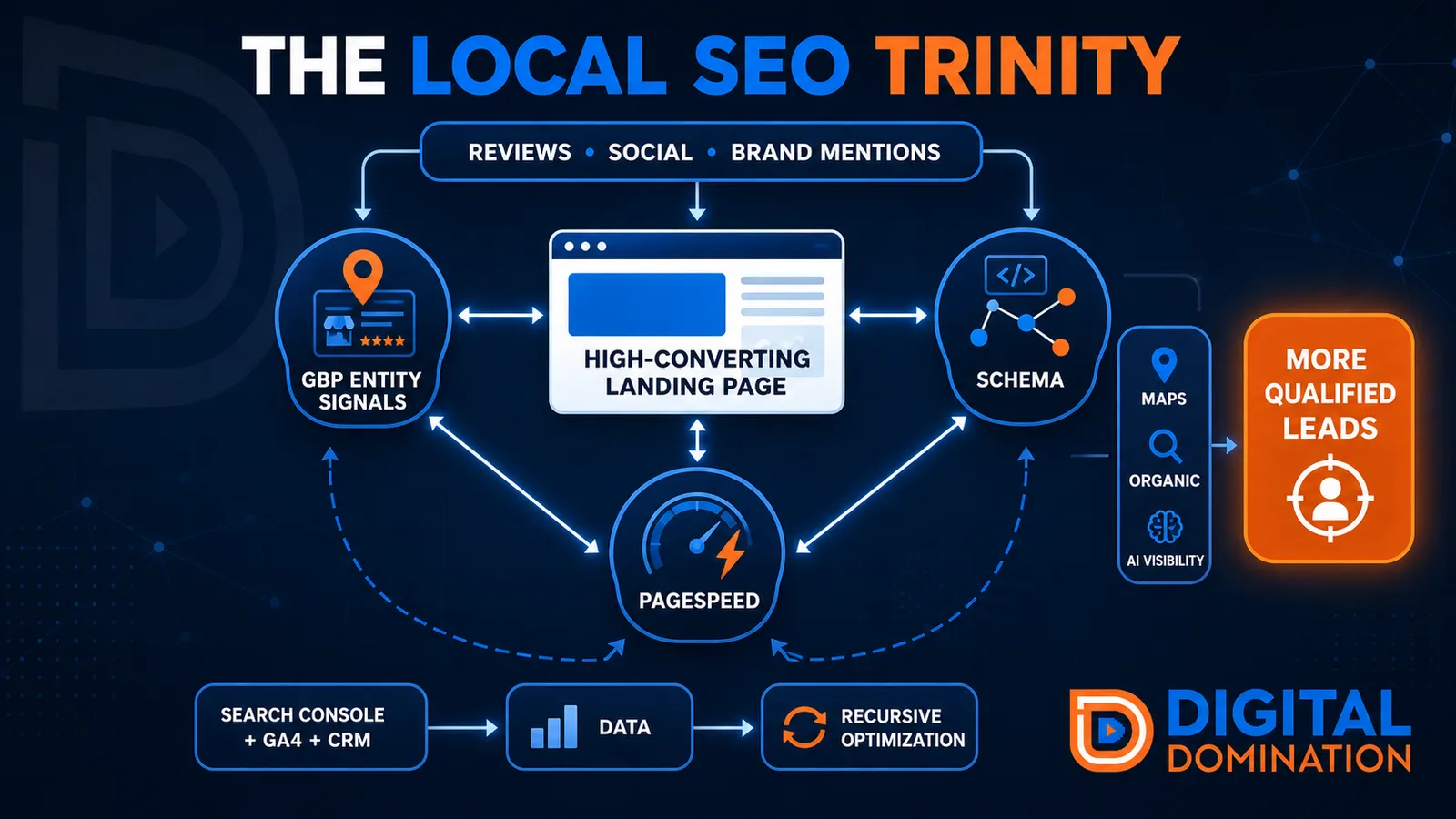
At Digital Domination we think about the foundation as three pillars. Google Business Profile entity signals tell Google what kind of lender you are, which programs you originate and where you are licensed. Schema connects the brokerage, its loan officers, their NMLS identifiers, the loan products and the licensed states into one machine-readable graph. PageSpeed makes sure a borrower on a phone can use that information before the contingency clock runs out. The pre-approval landing page carries all three, and Search Console, GA4 and the loan pipeline close the loop.
Google describes local ranking as relevance, distance and prominence. Distance is set by where the borrower stands, so the fight is won on relevance, prominence and conversion. Each layer answers one question:
- ▸Google Business Profile: what kind of lender are you, which programs do you originate and where can you lend?
- ▸Landing page: why should a borrower trust you with the largest transaction of their life, this week?
- ▸Schema: how are the company NMLS, the loan officers, the programs and the licensed states connected?
- ▸PageSpeed: can a borrower on a phone reach the number and the pre-approval form immediately?
- ▸Search Console, GA4 and the pipeline: which pages produce applications that actually fund?
GBP entity signals: brokerage profile, loan officer profiles, or both
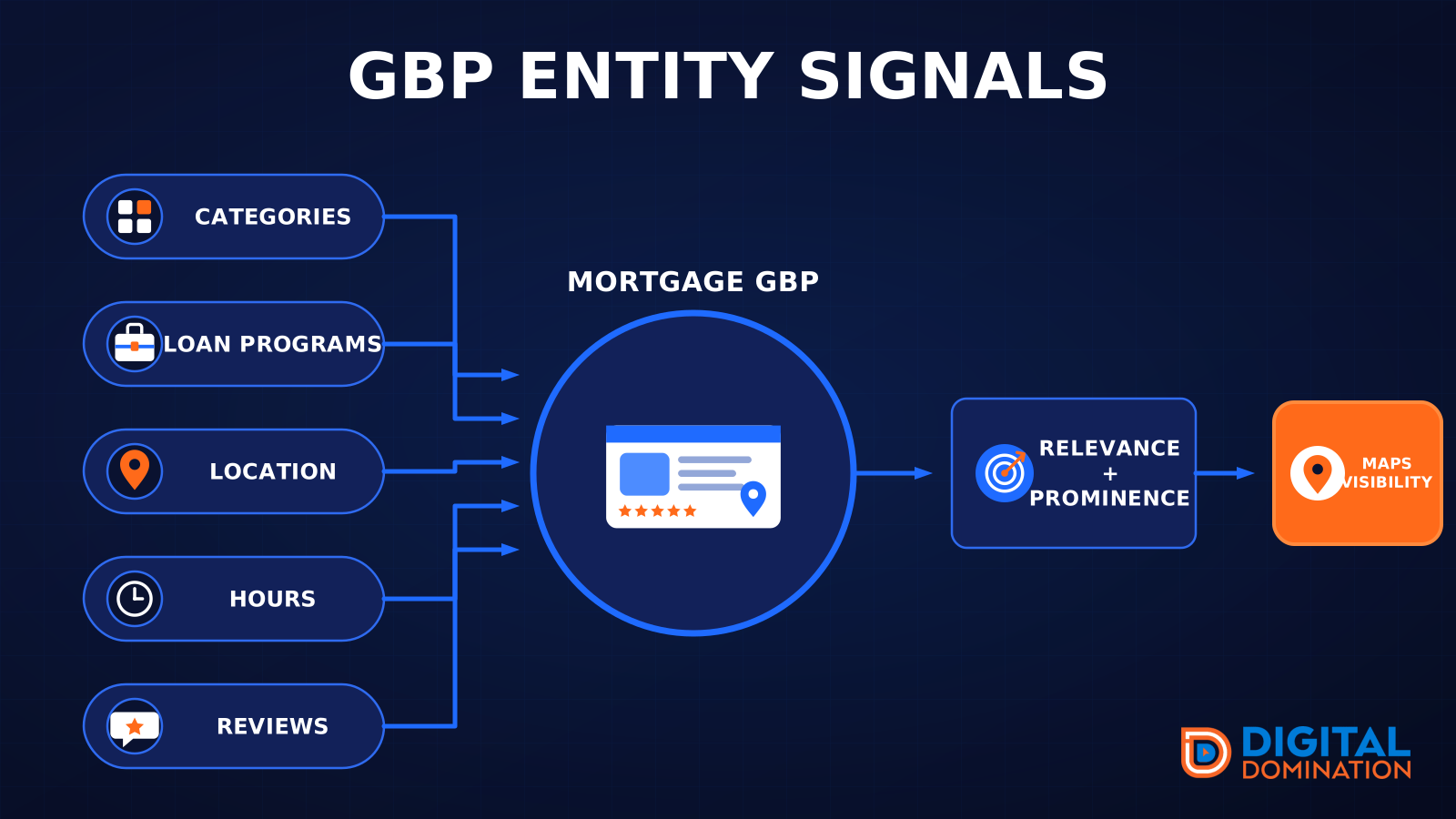
Mortgage is one of the industries where Google allows a business listing and individual practitioner listings, and most brokerages get the relationship wrong. The brokerage profile carries Mortgage broker as its primary category, with Mortgage lender, Loan agency or Financial consultant as secondaries only where true. A loan originator who meets the public can hold a practitioner profile in their own name at the same address, with a different phone number and landing page. Two profiles with the same name and number is a duplicate, and Google will suppress one.
The services list is where the loan vocabulary lives, in the words borrowers type: FHA, VA, conventional, jumbo, USDA, bank statement loans, DSCR investor loans, cash-out refinance, HELOC, reverse mortgage, down payment assistance, pre-approval. If the profile lists DSCR and the website never mentions it, the relationship is weak. If the profile, the program page, the loan officer bio and three reviews all say DSCR, it is strong. The fields most brokerages leave empty are the ones that separate them:
- ▸Attributes: online appointments, languages spoken (Spanish is a real differentiator in many markets), veteran-owned where true
- ▸Hours that match reality, including whether someone answers evenings and weekends when offers are being written
- ▸Service area set to the counties you actually license and market to, not the whole state by default
- ▸Photos of the real office and team, and closing-day photos borrowers approved, not stock keys on a table
- ▸A landing page per office and per loan officer profile as the website link, each with UTM parameters
Authority a borrower can check on NMLS Consumer Access before calling
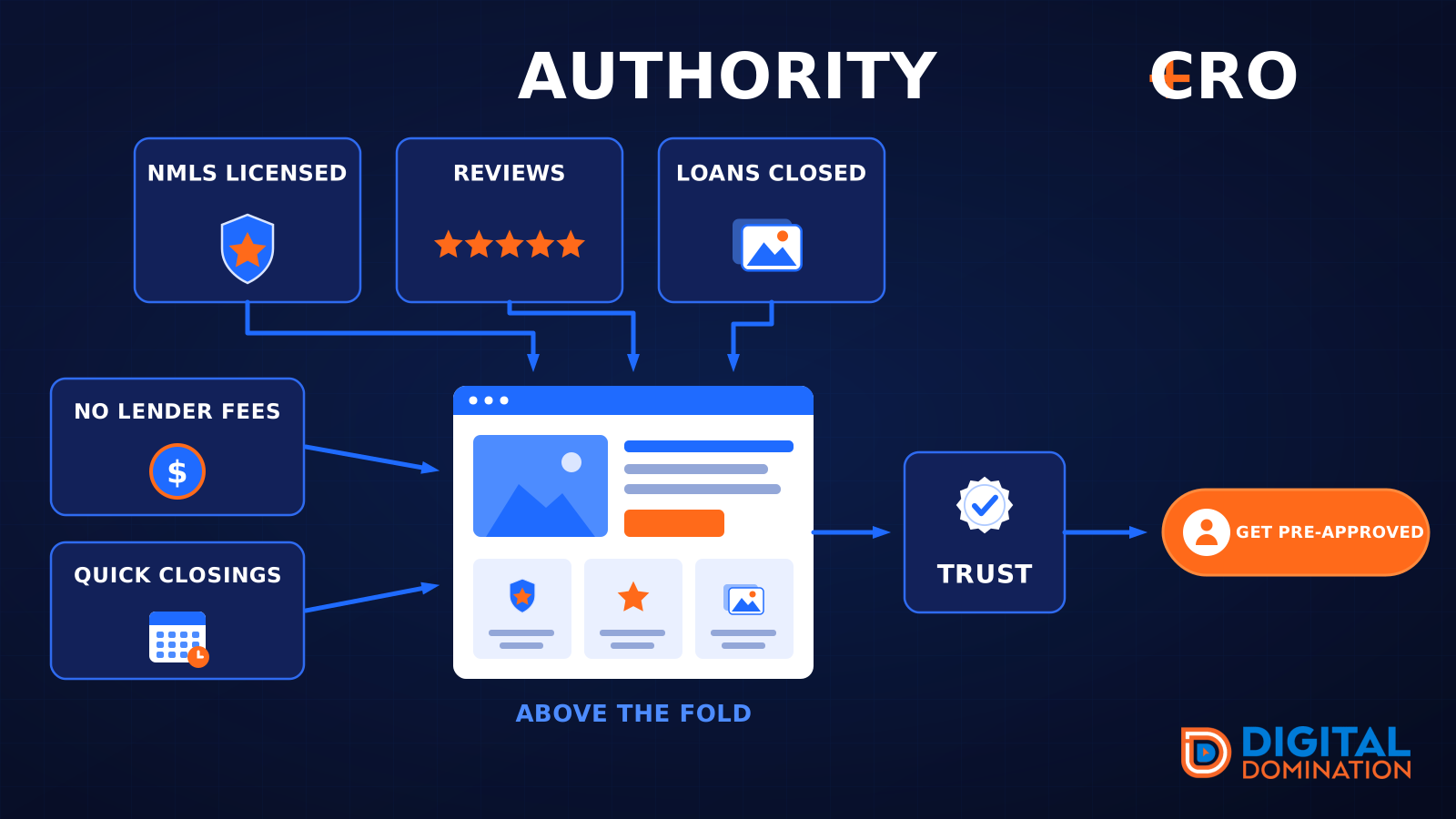
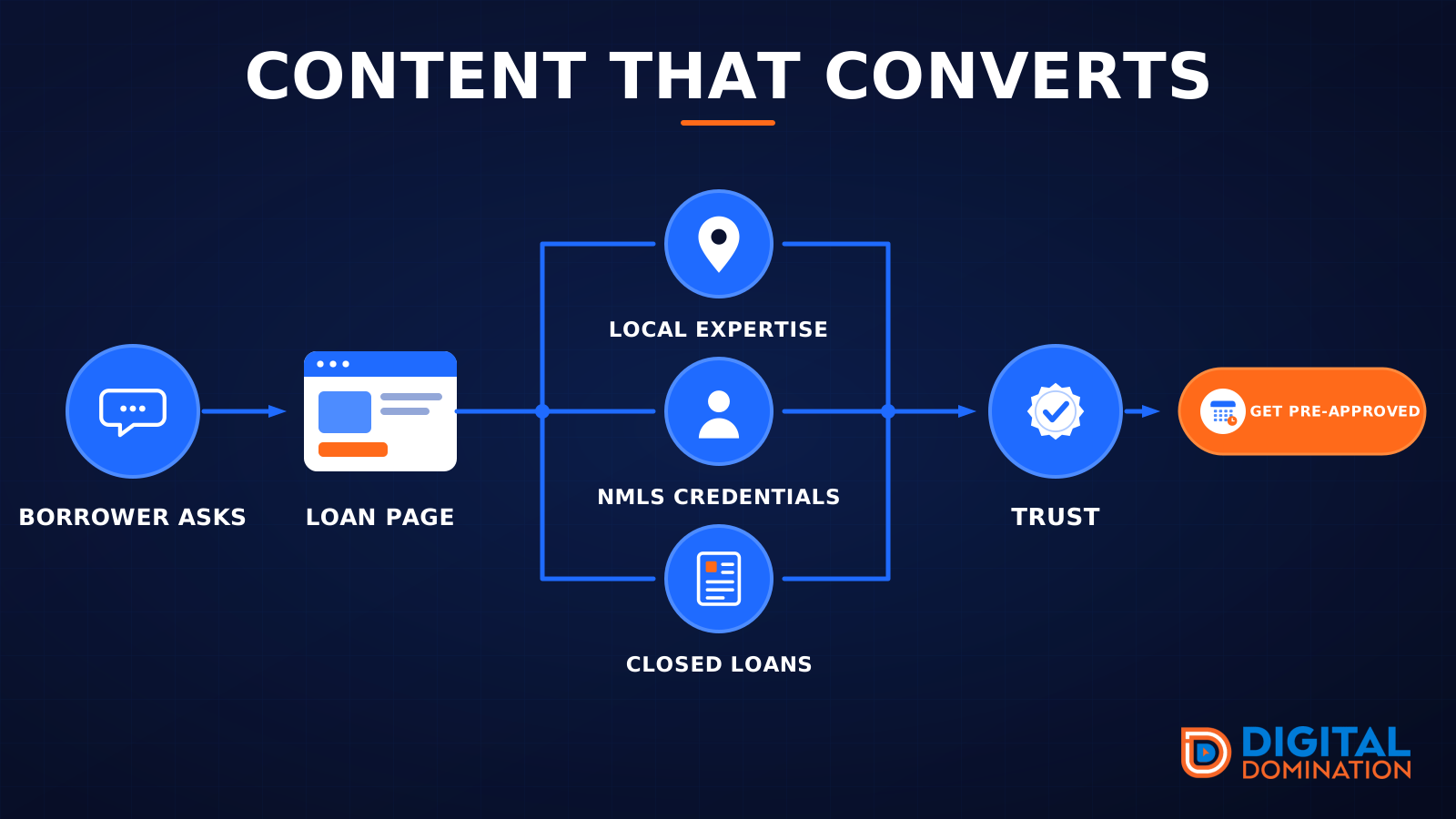
Every mortgage claim can be verified in thirty seconds on NMLS Consumer Access, and every real estate agent knows it. So the above-the-fold proof should be the things that verify: company NMLS ID, the loan officer's NMLS ID, licensed states, years originating and the Equal Housing Opportunity statement. As an illustrative example only, an authority strip might read: Company NMLS 000000 | Licensed in NV, AZ, CA | 4.9 stars on Google | 40+ wholesale lenders | Pre-approvals in 24 hours. Below the strip, skip experienced professionals and we shop for you, which every broker says, and show what a competitor cannot copy:
- ▸Loan officer bios with full name, NMLS ID, licensed states, years originating, program specialties and a link to the NMLS Consumer Access record
- ▸The wholesale lender relationships you are allowed to name, and the count you can document
- ▸Certifications that are real in this industry: Certified Mortgage Advisor, Certified Mortgage Planning Specialist, reverse mortgage (HECM) certification
- ▸Memberships that verify: the Association of Independent Mortgage Experts, the state mortgage lenders association, the local Realtor association affiliate program
- ▸Agent testimonials by name and brokerage, because agents refer the borrowers whose bank fell through
Review velocity, and the words a mortgage review needs to contain
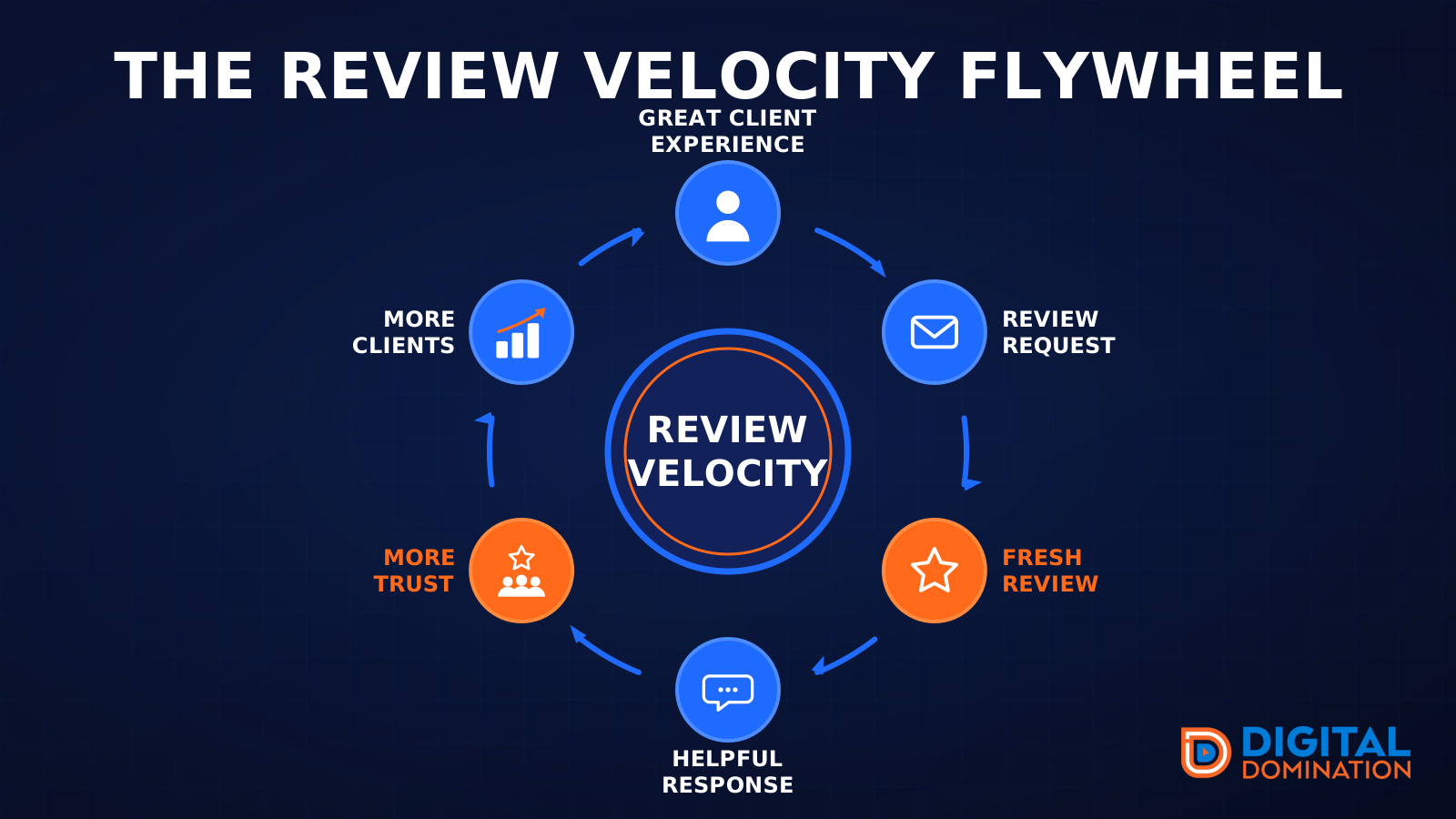
Mortgage reviews arrive in bursts because closings do. A brokerage with 300 reviews and nothing since the last refinance wave looks dormant next to a competitor earning two a week from purchase closings. Funding day is the natural moment to ask: the borrower has keys, the agent is grateful and the loan officer is on the phone anyway. The text is entity data. I got a mortgage is empty. Ask what the hardest part of the loan was and the review writes itself. The reviews that move rankings and conversions tend to mention:
- ▸The loan officer by name and the program by name (VA, FHA, bank statement, jumbo, DSCR)
- ▸The situation: self-employed, first home, low credit, bank denial, appraisal gap, tight closing
- ▸The timeline to clear to close, and whether the rate or fees beat the bank
- ▸A brokerage response that repeats the program and city without revealing anything about the borrower's finances
Schema architecture anchored on FinancialService, with NMLS as the identifier
Schema.org has no MortgageBroker type, so the brokerage is a FinancialService node whose name and description say plainly that it is a mortgage broker. Loan products are MortgageLoan nodes, a real type under LoanOrCredit. Each loan officer is a Person who worksFor the brokerage, and the NMLS ID is a PropertyValue under identifier on the company and on each person. Every node gets a permanent @id (the site URL followed by #brokerage, #lo-jane-doe or #fha-loan) so every page references the same entity instead of recreating it. Most broker sites we audit have no schema or the generic Organization node a plugin emits. The map from page to type:
- ▸Brokerage: FinancialService, with identifier for the company NMLS ID and sameAs to NMLS Consumer Access, the state regulator listing and the Zillow lender profile
- ▸Each office: a FinancialService location node with address, geo, telephone and openingHoursSpecification
- ▸Each loan officer: Person, with identifier for the individual NMLS ID, worksFor, hasCredential, knowsAbout for programs, and sameAs to LinkedIn and Zillow
- ▸Each program page: MortgageLoan, with loanType and provider pointing at the brokerage @id
- ▸Fee language: Offer or PriceSpecification on the MortgageLoan, worded to stay inside Regulation Z
- ▸Licensed states and counties: areaServed on the brokerage and on each MortgageLoan
- ▸Rate explainers: Article, with author pointing at a loan officer Person node
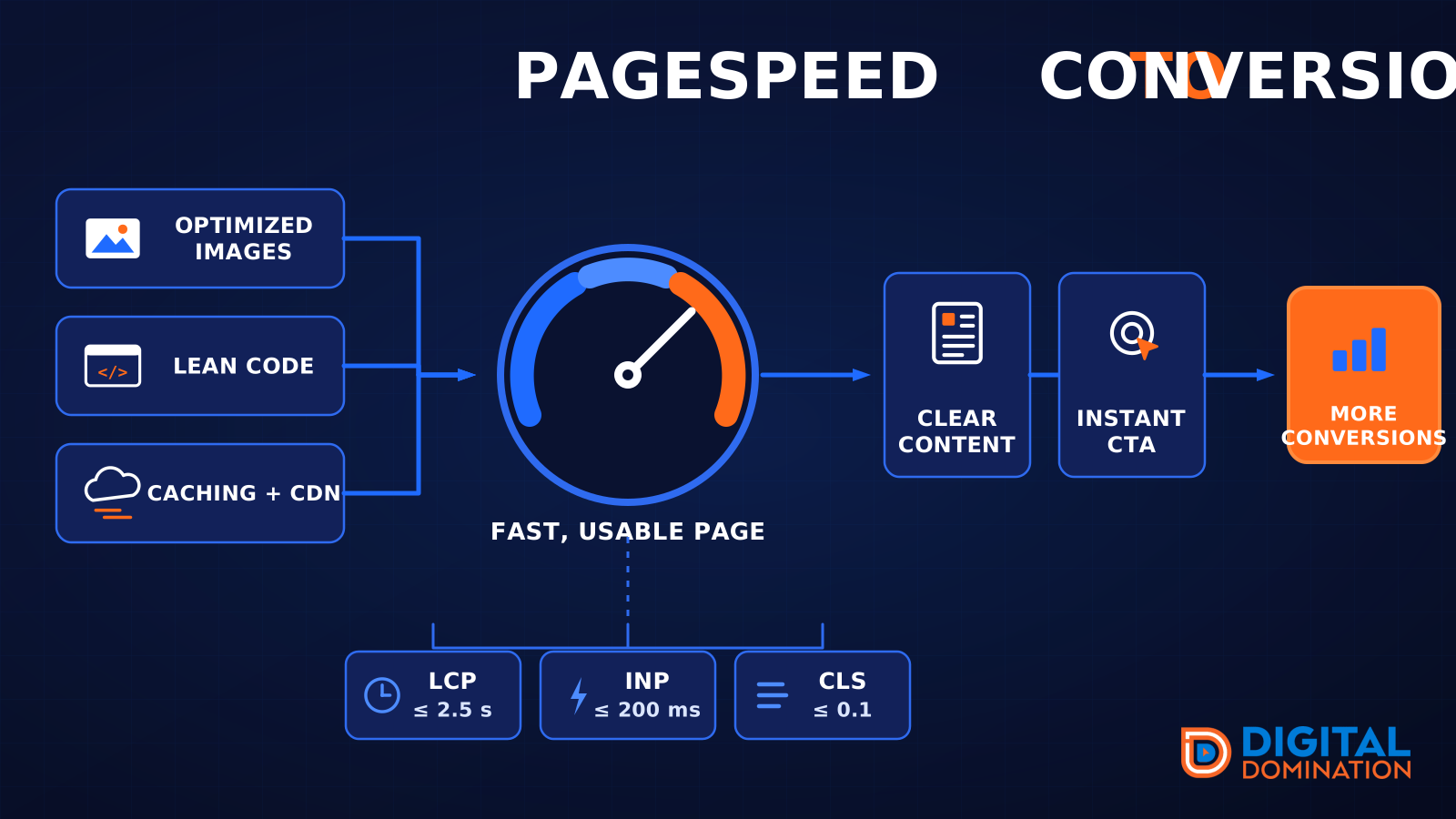
PageSpeed when the borrower is on a phone in the truck
Broker sites are slow for predictable reasons. The point-of-sale application (Arive, Floify, Blend or the lender's own) sits in a heavy iframe on the homepage. A rate widget refreshes live pricing. A calculator loads a full JavaScript bundle. Chat, a CRM pixel and a review widget fire before the phone number paints, and the headshot is a 4 MB JPEG. Google's good thresholds are LCP of 2.5 seconds, INP of 200 milliseconds and CLS of 0.1, measured at the 75th percentile of field data. At Digital Domination we target a PageSpeed Insights performance score of 90 or higher and a 2/2 agentic browsing check, because AI agents comparing lenders quit a broken page as fast as a person does. The fixes that matter most on a broker site:
- ▸Replace the embedded application iframe with a plain Start your pre-approval button that opens the point-of-sale on click
- ▸Make the rate widget and calculator click-to-load or move them below the fold, with reserved dimensions so nothing shifts
- ▸Convert headshots and office photos to WebP at displayed size, and preload only the hero image
- ▸Keep the sticky call button and the pre-approval CTA as plain HTML, not widget scripts
Fee language AI Overviews can quote without breaking Regulation Z
Borrowers ask AI assistants what they are embarrassed to ask a loan officer: does a broker cost more than a bank, who pays the broker, what is an origination fee, are points worth it. The brokers that get cited answer plainly. The constraint is Regulation Z: advertising a specific rate triggers APR and other disclosures, and a teaser rate with no APR is a compliance problem, not a marketing win. Most of what borrowers want to know is not a rate at all. Fee language that is safe, useful and quotable includes:
- ▸Whether compensation is lender-paid or borrower-paid, in plain words
- ▸Whether you charge an origination, application or credit report fee, with typical ranges labeled as typical
- ▸That the Loan Estimate arrives within three business days of application and is the document to compare
- ▸Which down payment assistance programs you can originate and their basic eligibility
- ▸The Equal Housing Opportunity statement and company NMLS ID on every page that discusses terms
Content that follows the borrower from pre-approval to keys
The search sequence is predictable: how much house can I afford, pre-approval vs pre-qualification, FHA vs conventional, bank statement loan requirements, what happens when the appraisal comes in low. Each is a page or a section written by a named loan officer with an NMLS ID and a date, not a syndicated article 400 other brokers also publish. Local relevance is checkable: conforming loan limits differ by county, DPA programs have names, income limits and funding cycles, and property tax and HOA norms change the debt-to-income math by neighborhood. The content that earns citations and applications:
- ▸Program pages for every loan type you originate, with eligibility, typical timeline, documents needed and a named loan officer
- ▸Situation pages: self-employed borrowers, denied by your bank, buying with an appraisal gap, buying while selling
- ▸A county page with the current conforming limit, local DPA programs and typical closing costs
- ▸Agent-facing content on how you keep deals on schedule, since agents send you the borrower whose bank fell through
Search Console, GA4 and the pipeline: did the application fund
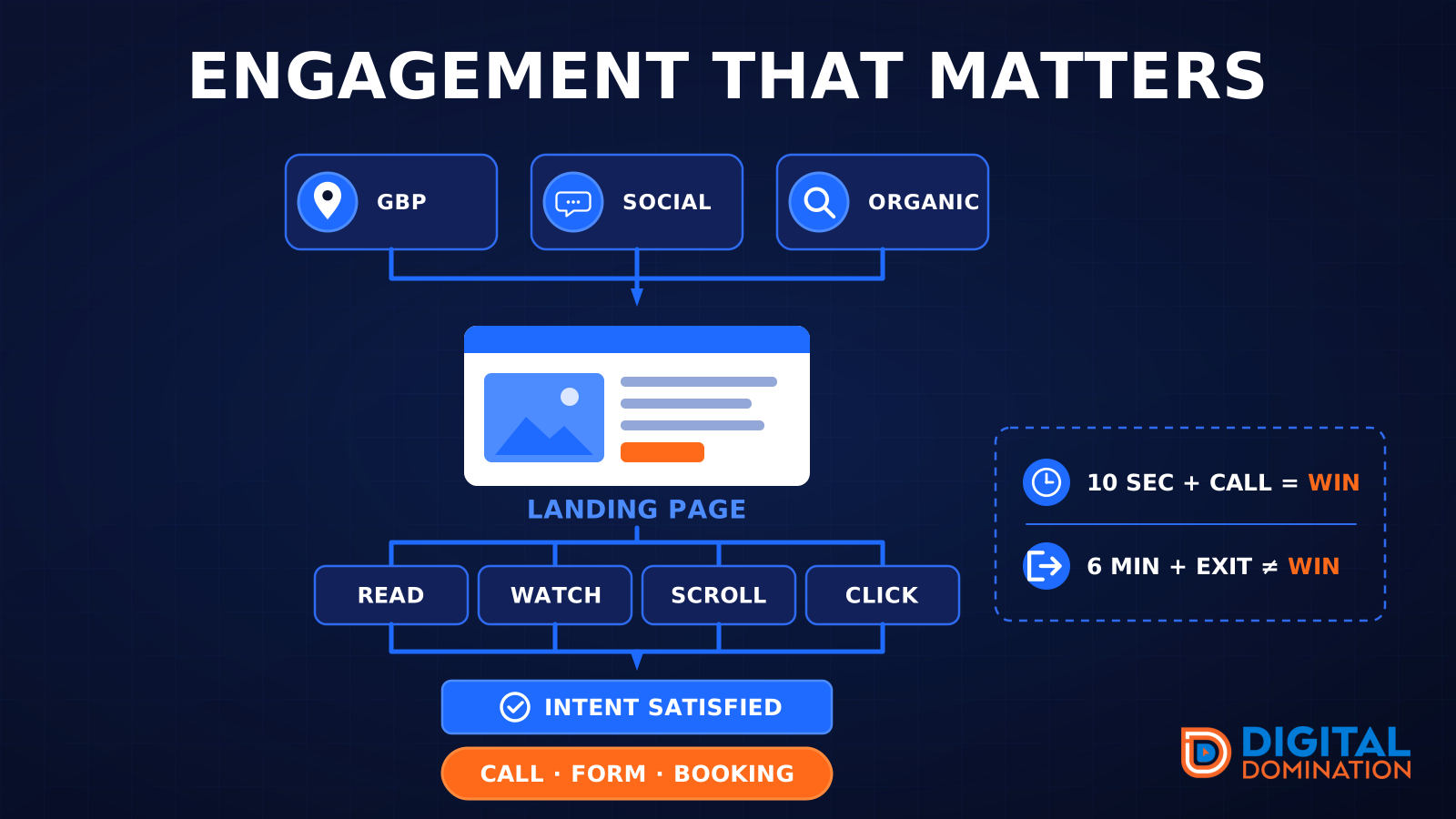
Search Console shows which queries surface your pages and where impressions get no clicks. If the bank statement loan page earns impressions for your city but few clicks, the title, opening line and authority strip are the fix. GA4 shows what happened after the click: which pages produced a call, a pre-approval start or a completed application, and where borrowers abandoned the form. The mortgage-specific step is last. An application is not revenue; a funded loan is. Tie the page and UTM source to the funded loan in your LOS or CRM and you learn that the VA page produces fewer leads but a far higher funding rate, or that the calculator page draws traffic that never applies. The loop:
- ▸Measure the baseline: GeoGrid rank by program, impressions, calls, pre-approval starts, applications and funded loans
- ▸Pick the highest-value gap, usually a program with impressions and no clicks, or clicks and no applications
- ▸Compare rank, clicks, applications and funded loans after a full closing cycle, not a week
- ▸Keep what funded, revise what did not, and choose the next test from the new data
Rate videos, agent partners and the mentions that name your loan officer
Social content for a broker is the same entity data in another channel: a loan officer on camera explaining what a rate move means on a typical purchase in your market, a walkthrough of a Loan Estimate, a closing-day clip with the agent. Posted to YouTube, Instagram, LinkedIn and GBP, they repeat the officer's name, the program and the city, and Search Console now reports supported social and video platform properties. The mentions that matter most come from agents and buyers: a forum comment saying a named loan officer closed in three weeks after the bank fell through connects entity, service, city and outcome in one sentence. Axios reported in August 2026 that Reddit's share of visible ChatGPT Search citations fell roughly 86 percent, but OpenAI keeps a Reddit data partnership, so fewer visible citations does not mean those conversations stopped counting. A durable footprint spreads across:
- ▸Loan officer profiles on Zillow, LinkedIn and NMLS Consumer Access with matching names, NMLS IDs and phone numbers
- ▸Referral partner pages and social mentions from real estate brokerages you actually work with
- ▸Local homebuyer groups where a loan officer answers questions without pitching
A 90-day roadmap timed to the spring purchase season
This plan assumes one office and two to five loan originators, and puts the emphasis on being findable and verifiable before the busiest purchase months:
- ▸Days 1-14, baseline: GeoGrid scans for mortgage broker and your top three programs; audit the brokerage and every officer profile for duplicates; pull NMLS records and confirm the site matches; benchmark calls, application starts and funded loans; test Core Web Vitals on the pre-approval page
- ▸Days 15-30, foundation: fix categories, services and service area; one landing page per profile with UTMs; NMLS authority strip above the fold; complete officer bios; deploy the FinancialService, Person and MortgageLoan graph; move the application iframe and rate widget off the critical path
- ▸Days 31-60, relevance and authority: program and situation pages; the county page with conforming limits and DPA programs; the funding-day review habit; rate explainers through GBP and social; aligned Zillow, LinkedIn and association profiles
- ▸Days 61-90, recursive optimization: high-impression, low-click program queries; high-traffic pages with no application starts; funded rate by source; expand what funded; recheck Core Web Vitals and the agentic check; rerun the GeoGrid across all 169 points
One licensed lending entity, described the same way everywhere
The contractor with ten days left did not care about your rankings. He cared that one broker in the Map Pack looked licensed, looked like it closed his kind of loan and answered the phone. Build one entity whose company NMLS, loan officers, programs, licensed states, fees and reputation say the same thing on Google Business Profile, on the website, in the schema, on NMLS Consumer Access, on Zillow, on social and in the mouths of the agents who refer you. Then let Search Console, GA4, GeoGrid data and the funded-loan report make it more relevant and more prominent every month. At Digital Domination that is the method behind our promise to mortgage brokers: top 3 in the Google Map Pack in 12 weeks or you do not pay.
If your market looks like a sea of red across the map instead of green, start by seeing exactly where you rank. Run the free GeoGrid scan and see how your brokerage appears across the entire market, not just from your office address.
Keep reading
Related guides
- ▸Google Business Profile optimization in Las Vegas
- ▸Google Business Profile optimization near me
- ▸Google Business Profile optimization vs DIY local SEO
Put it into action
Frequently Asked Questions
Should each loan officer have their own Google Business Profile, or only the brokerage?
Google permits practitioner profiles for loan originators who meet the public, alongside the brokerage listing. Each officer profile needs a distinct phone number and landing page. A second profile with the same name and number as the brokerage is a duplicate and will hurt rather than help.
Can a mortgage broker advertise rates on the website or in GBP services?
You can, but Regulation Z requires that any specific rate carry the APR and the other triggered disclosures, and the rate has to be current. Most brokers get more value from plainly explaining compensation, fees and eligibility than from a teaser rate that is stale by Thursday.
Does schema directly improve a mortgage broker's Map Pack ranking?
Not as a direct boost on its own. Schema helps Google and AI systems understand that the brokerage, its loan officers, their NMLS IDs and the programs are one connected entity, and it makes pages eligible for supported result features. Its value is strongest when it describes facts a borrower can verify on the page and on NMLS Consumer Access.
How fast does a mortgage broker's site need to be?
Aim for LCP of 2.5 seconds or less, INP of 200 milliseconds or less and CLS of 0.1 or less at the 75th percentile of field data, plus a PageSpeed Insights score of 90 or higher. For broker sites that usually means taking the application iframe and the live rate widget off the first screen.
How do I get more reviews without exposing a borrower's finances in public?
Ask on funding day and prompt with a neutral question such as what the hardest part of the loan was. Borrowers naturally mention the program, the city and the officer's name. When you reply, never confirm income, credit or loan amount details.
Do rate videos and social posts help a broker rank on Google Maps?
Google does not confirm that likes or followers move local rankings. Rate explainers and agent partner content still create branded searches, referral traffic, mentions and reviews, all of which feed prominence. Search Console now reports supported social and video platform properties, so the activity is measurable next to search.
Is Reddit still worth a loan officer's time for AI visibility?
As part of a diversified footprint, yes. Axios reported that Reddit's share of visible ChatGPT Search citations fell roughly 86 percent in August 2026, but OpenAI keeps a Reddit data partnership, and a buyer describing how a named loan officer saved their closing is still entity language. Treat homebuyer forums as one channel next to Zillow, LinkedIn, YouTube and agent partners.
Ready to dominate your map?
Top 3 in the Google Map Pack in 12 weeks, or you don't pay.