
Real estate agent local SEO: how GBP entity signals, schema and PageSpeed win the listing interview
Sellers interview two or three agents and buyers pick one from a screen full of headshots. This is how to be the agent Google, the AI answer engines and a family moving across the country all agree on.
A relocation search from 900 miles away
A nurse accepts a job in a city she has visited once. The start date is 45 days out, the kids are asleep, and at 10:40 pm she is on her phone typing the name of the new city plus 'realtor', then the name of a neighborhood a coworker mentioned. She is not in your market. Google cannot use her location. It has to decide which agents to show based purely on what it has learned about them.
The agent who gets that first text is rarely the one who closed the most sides last year. It is the one whose profile says real estate agent, whose photos show homes in the neighborhood she typed, whose reviews mention relocations, and whose website loads a phone number before she gives up and opens Zillow. A better negotiator with a longer track record loses her because Google is not sure what he does, where he does it or whether anyone recently trusted him. Every AI answer engine makes the same judgment, collecting facts about you from your profile, your site, the brokerage roster, Zillow, Realtor.com and social platforms, then checking whether they agree. This article is about making them agree.
The short version for an agent or team
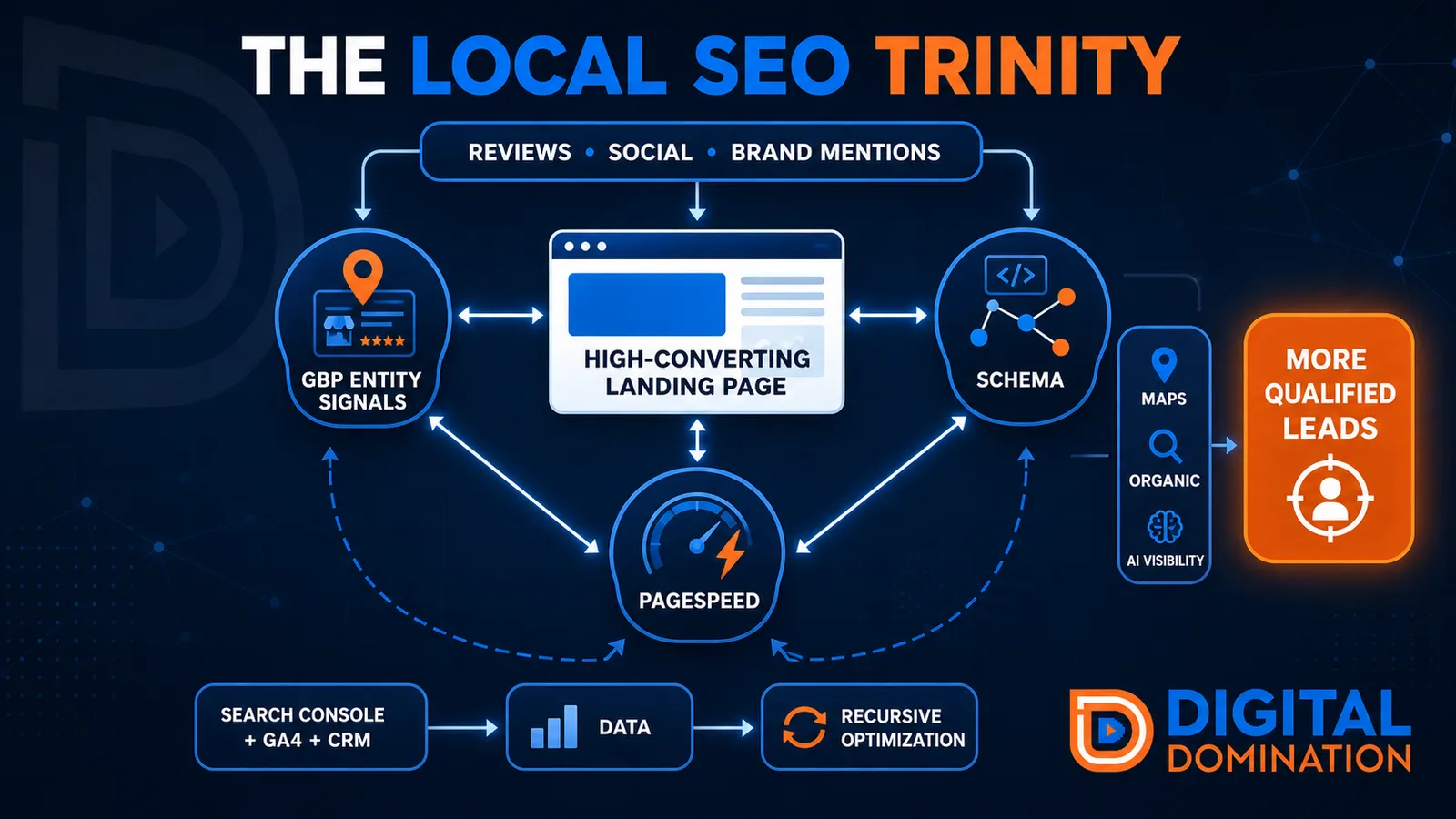
Google ranks local results on relevance, distance and prominence. Distance is the one you cannot change, and in real estate it is also the one that matters least: sellers search from the house they are selling, buyers often search from another state, and both type the city or neighborhood into the query. So the fight is won on relevance (does Google know exactly what you do and where) and prominence (does the market back you up). At Digital Domination we build that on three pillars that must describe the same agent:
- ▸Google Business Profile entity signals establish who you are, whether you are an individual agent, a team or a brokerage, which transactions you handle and which neighborhoods you actually work.
- ▸Schema turns your website into a machine-readable record: a RealEstateAgent entity with a license number, a brokerage relationship, designations, services, service areas and sameAs links to the profiles buyers already trust.
- ▸PageSpeed makes sure a seller on a phone at the kitchen table, or an AI agent browsing for a relocating family, reaches your name, your proof and your number in under three seconds, even with an IDX search on the page.
- ▸A conversion-focused landing page carries all three, reviews and neighborhood mentions supply prominence, and Search Console, GA4 and your CRM (Follow Up Boss, kvCORE, whatever holds your closings) close the loop.
Whose profile is it: agent, team or brokerage
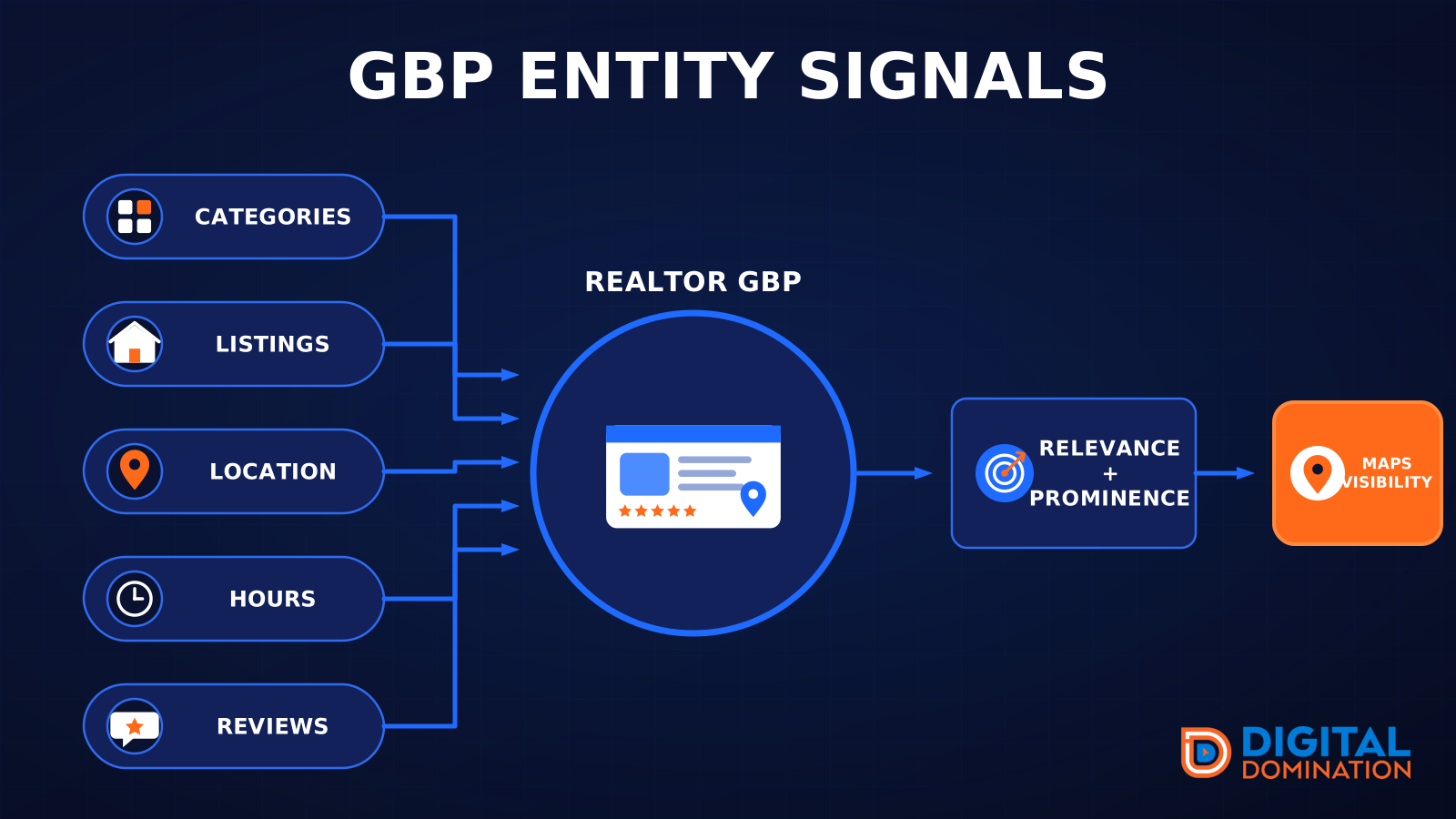
Real estate is one of the few industries where Google explicitly allows an individual practitioner to have a profile alongside the office. Most agents waste that by leaving the profile half built or by naming it 'Jane Doe Homes Best Realtor in Austin' and getting it suspended. The profile name is your real name or registered team name, the primary category is Real estate agent, and the address is the brokerage office you are licensed under. If you work from home, hide the address and set a service area instead of inventing an office. Check every one of these before you touch anything else:
- ▸Primary category Real estate agent for an individual, Real estate agency for a team or office. Add Real estate consultant, Commercial real estate agency or Property management company only if you truly do that work.
- ▸Services in the vocabulary sellers and buyers use: seller representation, buyer representation, first-time buyer guidance, relocation services, luxury home marketing, new construction, investment property, downsizing, probate sales. Each one needs a matching page on your site.
- ▸Attributes that are true, especially languages spoken, which alone wins relocation searches in bilingual markets.
- ▸Hours that reflect when you answer. Listing 24 hours and missing a 9 pm text teaches Google and the client to distrust the profile.
- ▸Photos of homes you sold, not stock skylines, plus a headshot that matches Zillow, Realtor.com and your brokerage roster.
- ▸A website link to your own agent page or neighborhood hub, tagged with UTM parameters, never to the brokerage homepage that lists two hundred other agents.
- ▸A service area set to the cities and neighborhoods you have closed in during the last two years, not the whole metro.
Proof a seller checks before the listing appointment
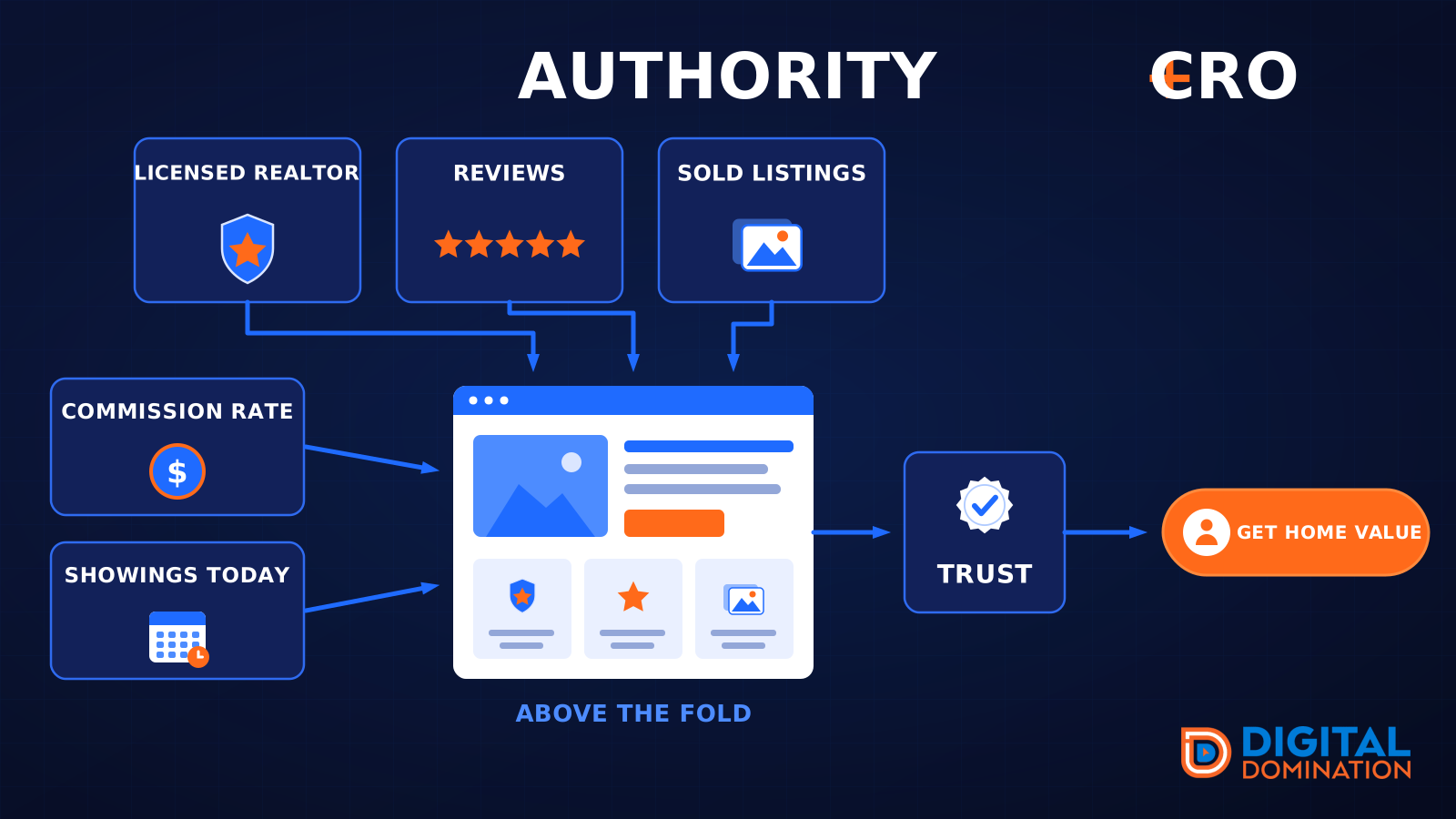
A seller has already looked you up before you ring the doorbell. They know your review count, they have seen your last three sold listings on Zillow and they may have found your license on the state real estate commission lookup. The first screen of your website has to confirm what they found and answer two questions: does this person sell homes like mine in my area, and can I trust them with the largest transaction of my life. As a placeholder example only, an authority strip might read 'Licensed since 2014 | Example Realty, TX License 0000000 | 4.9 stars from 140 Google reviews | 38 homes sold in the last 12 months | ABR, SRS', with every item linking to where it can be verified. Above the fold, that means:
- ▸Your name, brokerage name and license number exactly as your state requires them in advertising. In most states the brokerage name is not optional, so leaving it off is a compliance problem as well as a trust problem.
- ▸Neighborhood and transaction type in the headline: 'Selling homes in Mueller and Windsor Park' says more than 'Your trusted Austin realtor'.
- ▸Star rating and review count with the source named and clickable.
- ▸A bounded production statement: homes sold in the last twelve months or days on market versus the MLS average. Never a lifetime number nobody can check.
- ▸Designations that mean something to this client (ABR for buyers, SRS or CRS for sellers, SRES for downsizers, CLHMS for luxury), each spelled out in one clause.
- ▸Membership in the National Association of REALTORS, your local board and your MLS, plus the Equal Housing Opportunity statement as text rather than a footer image crawlers skip.
- ▸A phone number that dials on tap and a home-value CTA that opens a two-field form, not a nine-field lead capture.
Reviews that sound like a transaction
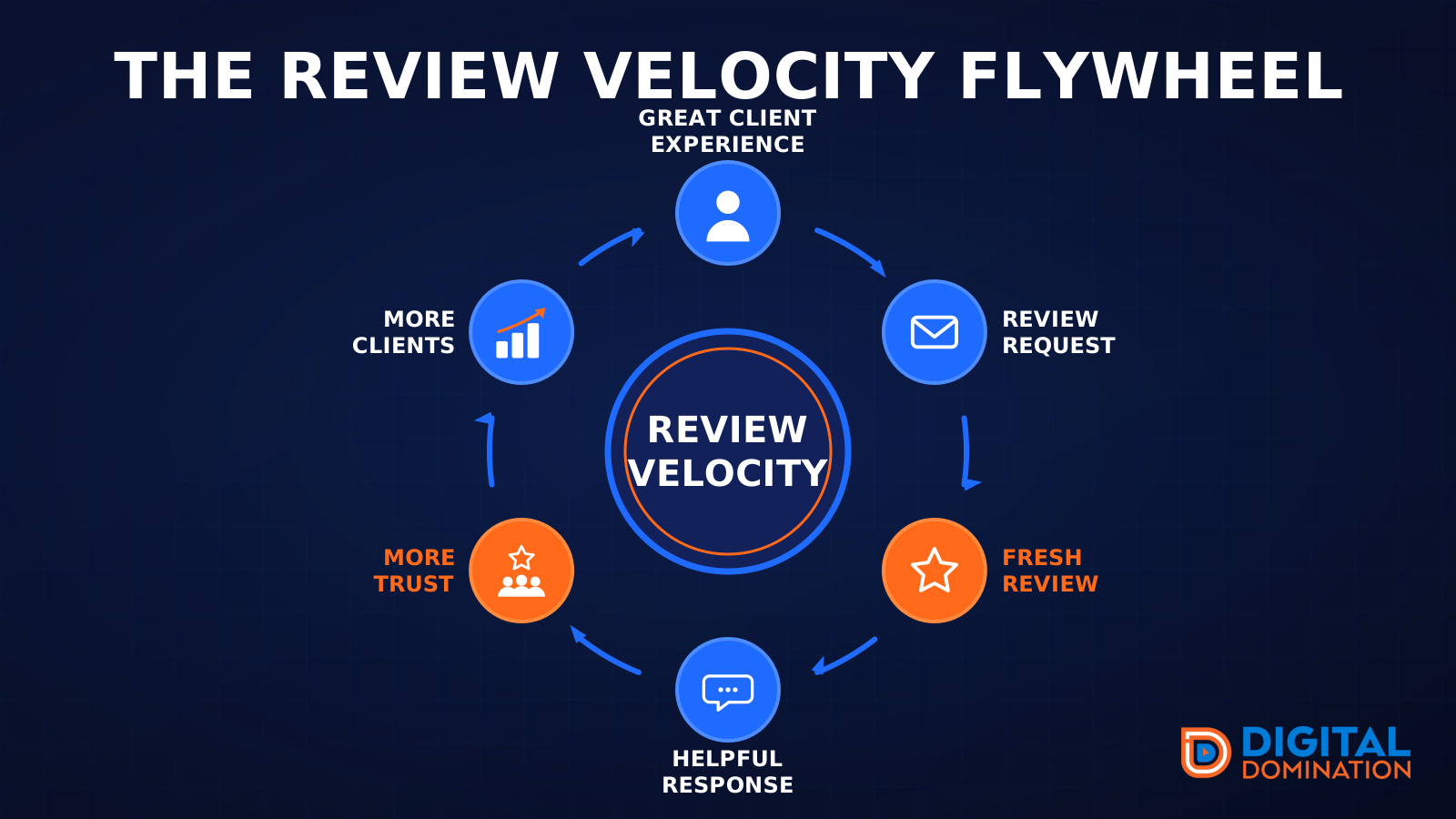
Real estate reviews have a rhythm problem. An agent closes two or three deals a month, so review velocity is naturally slower than a restaurant's, and Google notices when a profile with 90 reviews has nothing newer than eighteen months. Ask at the closing table, from your own phone, while the client is holding the keys. Ask on Google first, then Zillow, since Google reviews feed the Map Pack and Zillow feeds the platform most buyers open second. The most valuable review connects the entities you want Google to associate with you:
- ▸The transaction type: 'sold our first home', 'helped us buy from out of state', 'handled my mother's estate sale'.
- ▸The neighborhood or city by name, because that is the word the next searcher types.
- ▸A specific behavior: negotiated repairs after inspection, priced it right the first time, answered texts on a Sunday, explained the buyer agreement.
- ▸The outcome in the client's words: under contract in a week, closed on time, multiple offers.
- ▸Your reply, which names the neighborhood and transaction type again without sounding like a keyword list and never discloses anything from the file the client did not already say.
Schema for an agent, and why the type is RealEstateAgent
Schema.org has a dedicated RealEstateAgent type, a subtype of LocalBusiness, and almost no agent site uses it. Brokerage templates and IDX platforms usually emit a generic Organization or WebSite node and nothing about you. Your JSON-LD should describe the facts a seller can read on the page: who you are, whom you work under, what you are licensed to do, where you do it and which outside profiles are you. This is the architecture we implement, as a plain list:
- ▸Agent as a business: RealEstateAgent, with name, image, telephone, url, the brokerage office address and priceRange. Agent as a person: Person, linked to that node, with jobTitle and knowsLanguage.
- ▸Brokerage: Organization referenced through parentOrganization and worksFor, so Google understands you operate under a licensed broker.
- ▸State license: PropertyValue under identifier, with propertyID naming the issuing commission and value holding the license number.
- ▸Designations and REALTOR status: EducationalOccupationalCredential under hasCredential, and memberOf for NAR, your state association, your local board and the MLS.
- ▸Each service line (seller representation, buyer representation, relocation, luxury): Service, connected through makesOffer, with an Offer that says how you are compensated in plain words.
- ▸Neighborhoods: areaServed using Place or City nodes, one per neighborhood page, matching the GBP service area.
- ▸Properties you control: RealEstateListing for your own sold and active listing pages, never for IDX listings from another broker.
- ▸Neighborhood guides and market updates: Article with you as author, plus VideoObject for home tours and 'living in' videos.
- ▸Outside profiles: sameAs to Zillow, Realtor.com, the brokerage roster page, LinkedIn, Instagram, YouTube and the state license lookup URL where one exists.
- ▸Every page: WebPage and BreadcrumbList, and one permanent @id per entity (yourdomain.com/#agent, /#person, /neighborhoods/mueller/#place) so twenty pages reference one agent instead of creating twenty copies.
PageSpeed with an IDX search on the page
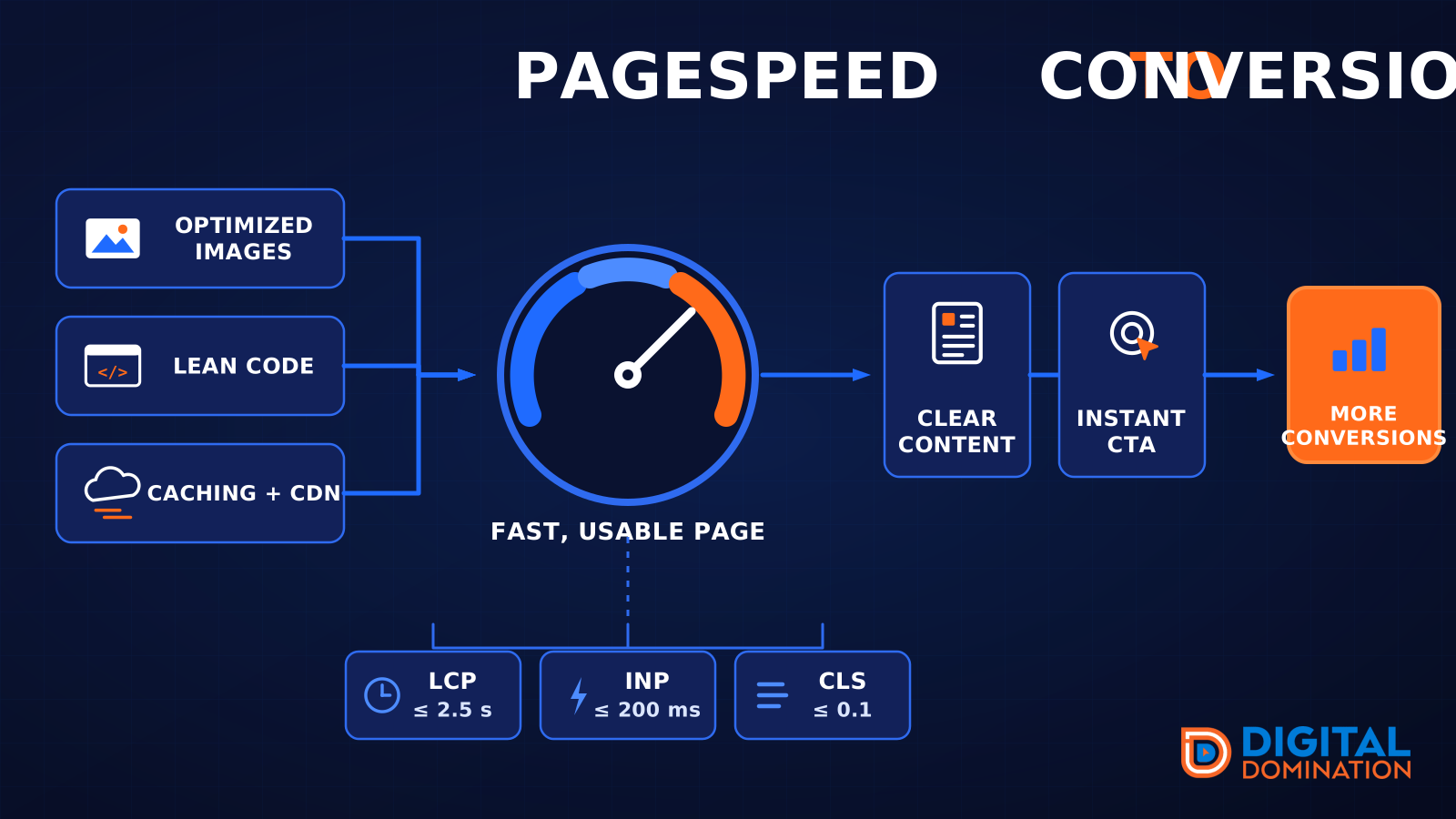
Agent websites are among the slowest we test, for the same reason every time: a hero video, an IDX widget that loads a map and a listing carousel before the page shows a name, then a chat widget, a Zillow review widget and two popups on top. A seller at the kitchen table sees a white screen and a layout that jumps while she tries to tap the phone number. She leaves for the next agent in the Map Pack.
Google measures Core Web Vitals on real visitors at the 75th percentile, and the good thresholds are LCP of 2.5 seconds or less, INP of 200 milliseconds or less and CLS of 0.1 or less. At Digital Domination we target a PageSpeed Insights performance score of 90 or higher and a 2/2 on the agentic browsing check, because an AI assistant that cannot read your page cannot recommend you. The fixes that matter on a typical agent site:
- ▸Replace the autoplay hero video with a compressed WebP or AVIF photo of a home you sold, sized for mobile, preloaded and never lazy loaded.
- ▸Move the IDX search below the fold and load it on interaction, or link to a dedicated search page. The homepage's job is to sell you, not to be Zillow.
- ▸Lazy load listing carousels, sold maps, Matterport tours and YouTube embeds, and reserve their height so nothing shifts.
- ▸Delay chat widgets, review widgets, retargeting pixels and the CRM tracking script until after first interaction.
- ▸Self-host and subset the fonts your template loads from three different places, and cut the WordPress plugins nobody uses.
- ▸Keep the tap-to-call bar and the home-value CTA as plain HTML so they work before any JavaScript arrives.
Commission language after the buyer agreement rules
Since the 2024 settlement changes, buyer agent compensation is no longer advertised in the MLS and buyers must sign a written agreement before touring homes with you. That has made 'how much does a realtor cost' one of the most asked real estate questions in Google and ChatGPT, and most agent sites say nothing, so the AI answers with a national average and a random competitor. Silence is not compliance. Clear, accurate, clearly negotiable language is. Publish these on your services page, your FAQ, your GBP services and inside the Offer nodes of your schema:
- ▸Commissions are negotiable and not set by law, stated in those words.
- ▸Your listing fee as a range or starting point, with what it includes: photography, staging consultation, video, paid promotion, open houses.
- ▸How buyer representation is paid: the written buyer agreement, the fee or range, and that a seller may or may not offer to cover it.
- ▸Whether you offer a flat-fee or reduced-fee option and for which situations.
- ▸Estimated closing costs for your state as a range, since every buyer asks and almost no local agent answers.
- ▸A free home valuation or consultation, if you truly offer one, with what the client receives and how fast.
Content that follows the move from search to keys
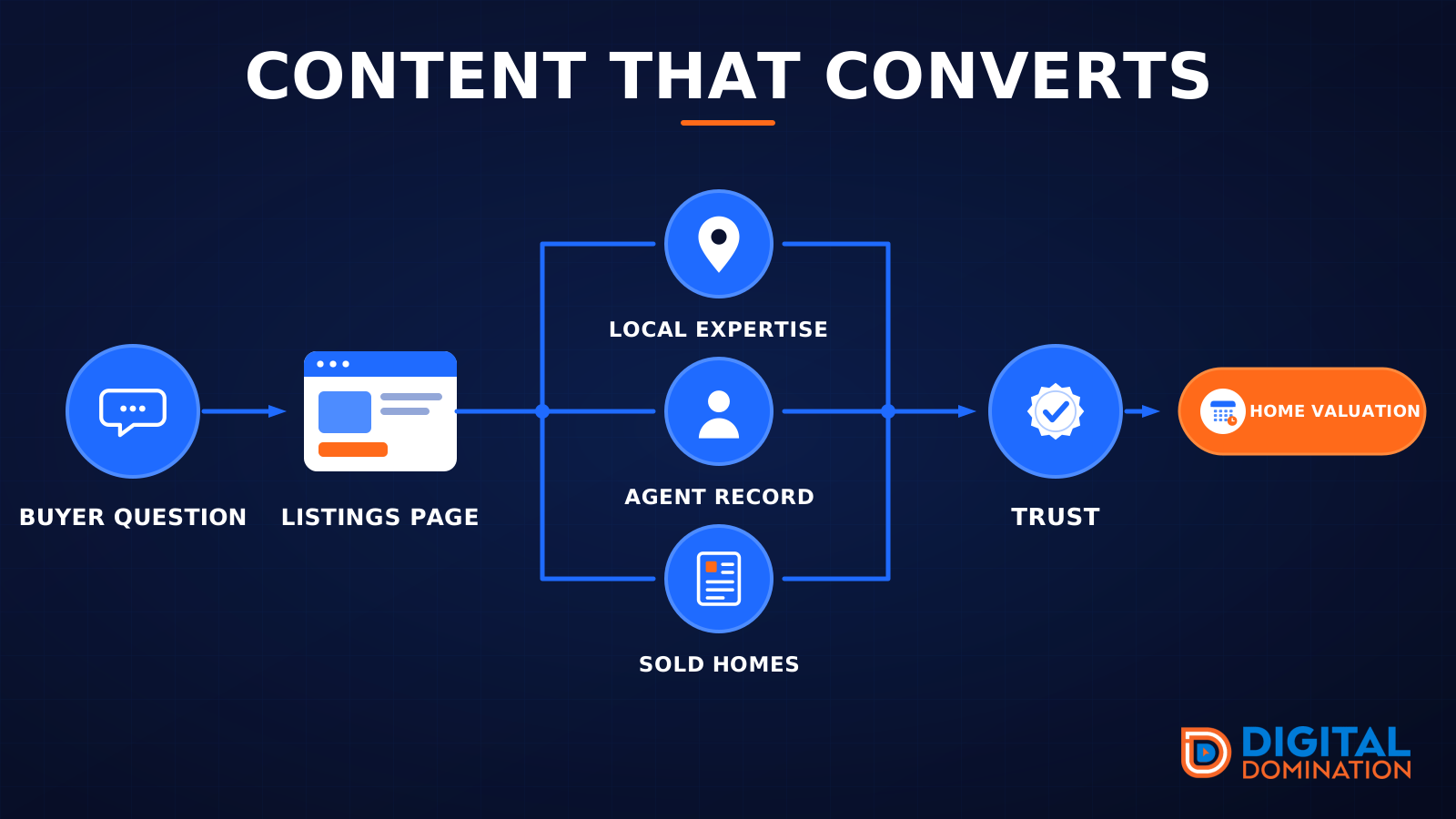
A home sale or purchase takes months, and the searches change at every stage. In February a seller types 'is now a good time to sell in [city]'. In April it is 'how much is my house worth'. A relocating buyer starts with 'best neighborhoods in [city] for families', then 'school districts', then a neighborhood plus 'homes for sale', then 'closing costs in [state]'. An agent site with only a search bar and a bio is absent from every one of those moments. The pages that earn the relationship, each with a named author, a dated update and a direct answer under each heading:
- ▸One page per neighborhood you actually work, with your sold homes there, price bands, commute times, school names, HOA notes and a video walk. This is the page your GBP service area and areaServed schema point to.
- ▸A relocation guide per feeder metro: 'Moving from Chicago to Austin' answers the questions the nurse at 10:40 pm has, and almost no competitor has that page.
- ▸A monthly market update with real MLS numbers for your area, not a syndicated national report with the city name swapped.
- ▸A seller process page (pricing, prep, photography, showings, offers, inspection negotiation, closing) and a buyer process page that explains the buyer agreement, earnest money, appraisal gaps and closing costs.
- ▸Sold-listing pages that stay live after closing, with the story of the sale in two paragraphs, all linking to your bio, your reviews and the consultation CTA.
Search Console, GA4 and the closings in your CRM
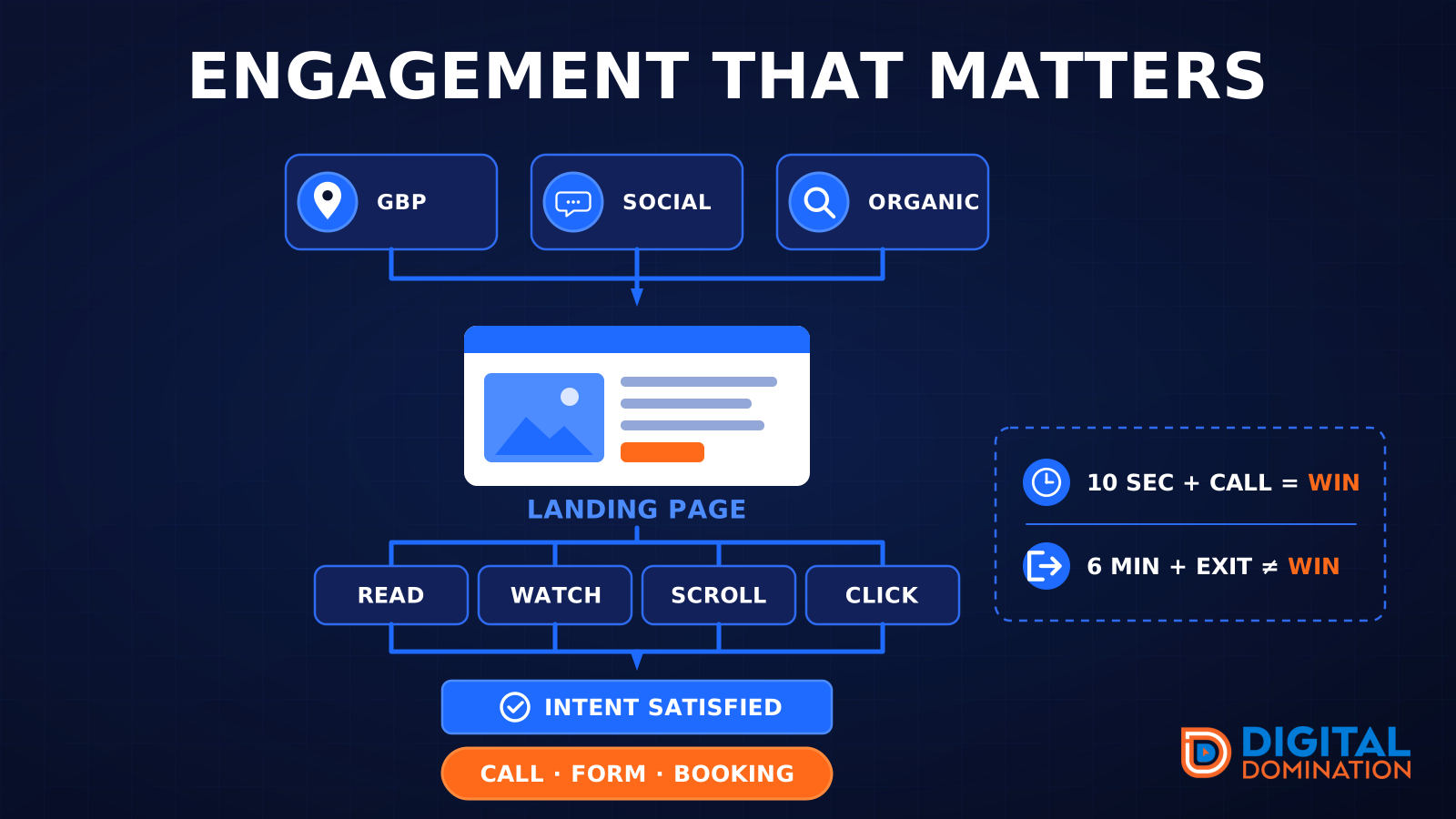
Search Console does not raise your rankings. It tells you what Google already believes about you, which is the next thing to fix. For an agent the most useful report is the query list filtered by city and neighborhood names: which areas Google associates with you, which relocation queries you appear for from other states, and where you get impressions but no clicks. A neighborhood page with a 1 percent click rate needs a better title and a sold count in the meta description, not more words. GA4 shows what visitors did next: home-value form starts, tap-to-call, neighborhood page depth. Your CRM shows which of them signed an agreement and closed. Run the loop on a fixed rhythm:
- ▸Measure the baseline: GeoGrid rank by neighborhood, impressions and clicks by query, form starts, calls, appointments set, agreements signed, closed sides.
- ▸Pick one gap. Impressions without clicks is a relevance and title problem. Clicks without calls is speed, proof or offer. Calls without appointments is follow-up speed. Appointments without agreements is positioning or pricing.
- ▸Make one grouped change, note the date, wait for real estate's slow cycle (four to six weeks for most signals), then compare.
- ▸Feed new Search Console questions into FAQs and neighborhood pages, and feed neighborhoods that close well into new GBP posts and photos.
- ▸Tag every GBP, social and email link with UTM parameters so GA4 and the CRM can tell which channel produced the listing, not just the visit.
Neighborhood videos, Instagram and the mentions that name you
Real estate is the one local niche where social content directly produces the customers, not just the corroboration. 'Living in [city]' YouTube videos and Instagram Reels walking a street are how relocating buyers choose an agent before they ever search, and Google's Search Console now reports supported social and video platform properties. Publish the same neighborhoods, sold homes and name on every platform, and link each post back to the matching neighborhood page.
Brand mentions work whether or not they carry a link. A comment in a city subreddit that says 'we used Jane Doe when we moved from Denver, she found us a place in Crestview and negotiated the roof' connects a person, a neighborhood, a transaction type and a behavior. Axios reported in August 2026 that Reddit's share of visible ChatGPT Search citations fell roughly 86 percent, and OpenAI still has a Reddit data partnership, so treat that as a warning against relying on any single platform, not a reason to ignore community mentions. Where an agent's mentions come from:
- ▸Your brokerage roster, Zillow and Realtor.com profiles, the state license lookup and your association's member directory, all showing the same name, phone, photo and license as your site.
- ▸City and neighborhood subreddits, Facebook neighborhood groups and Nextdoor, where you answer questions without pitching.
- ▸Local news quotes on market conditions, city podcasts and little league or neighborhood 5K sponsorships, which put your name on sites that already rank for the neighborhood.
- ▸Lender, inspector, title and stager partners who mention you on their own pages and in their reviews.
A 90-day plan timed to the listing season
Spring is when listings hit the market and sellers interview agents, so the plan works backward from that. Start in December and you are complete before the first March listing appointment. Start in June and run it anyway: fall relocations and year-end movers reward the same signals. The four phases:
- ▸Days 1-14, baseline: run a GeoGrid scan for 'realtor' and 'real estate agent' across your neighborhoods, audit every GBP field against your brokerage roster and Zillow, pull 24 months of closings by neighborhood, test Core Web Vitals on the homepage and one neighborhood page, inventory license, designations and memberships, export current schema, connect GA4 events and the CRM.
- ▸Days 15-30, foundation: fix the profile name, category, services, service area and photos, publish your bio with license and brokerage, write commission language, implement the RealEstateAgent schema graph with permanent @id values, move the IDX below the fold, cut the hero video and slow scripts, point the GBP link at your own tagged page.
- ▸Days 31-60, relevance: publish one neighborhood page per week with sold homes and a video, publish the relocation guide for your biggest feeder metro, ask for a Google review at every closing, post to GBP weekly with a sold home or a market stat, align Zillow, Realtor.com and association profiles.
- ▸Days 61-90, recursion: mine Search Console for high-impression, low-click neighborhood and relocation queries, find neighborhood pages with traffic but no form starts, compare appointments and agreements by channel in the CRM, expand what closes, rerun the GeoGrid scan and Core Web Vitals, schedule the next cycle.
One agent, described the same way everywhere
None of this works as a checklist of separate tasks. It works when your Google Business Profile, your website, your schema, your reviews, your brokerage roster, Zillow, Realtor.com, your license record, your videos and the neighborhood groups that mention you all describe the same person: the same name, license, brokerage, neighborhoods, transaction types and way of treating clients. Google rewards that agreement with relevance and prominence. Sellers reward it with the listing. AI answer engines reward it by naming you when a relocating family asks who to call.
At Digital Domination that is what we build for agents and teams, and the promise is simple: top 3 in the Google Map Pack in 12 weeks or you do not pay. The first step costs nothing. Our free GeoGrid scan checks 169 points across your market and shows exactly which neighborhoods already see you as their agent and which ones have never heard of you.
Keep reading
Related guides
- ▸Healthcare Review Stars Google Organic
- ▸Home remodeler local SEO
- ▸How long does Google Maps SEO take to work?
Put it into action
Frequently Asked Questions
Should a real estate agent have a Google Business Profile separate from the brokerage?
Yes. Google allows individual practitioners, including agents, to hold their own profile alongside the office listing. Use your real name or registered team name, the Real estate agent category and the brokerage address you are licensed under, or hide the address and set a service area if you work from home. Never stuff keywords or a city into the profile name, which is the most common cause of suspensions in this niche.
How should an agent talk about commission online after the buyer agreement rules?
State plainly that commissions are negotiable and not set by law, then give real ranges or starting points for listing services and buyer representation and explain the written buyer agreement. Clear language is what AI Overviews and LLM search quote, and it is what a seller reads before deciding whether to invite you to the listing appointment. Silence sends them to a national average and a competitor.
Does RealEstateAgent schema improve rankings by itself?
Not directly. Schema helps Google and AI systems understand who you are, which brokerage you work under, what your license number is, where you work and which outside profiles are yours, and it can make pages eligible for rich results. Its value comes from accurately describing content a seller can verify on the page, tied together with permanent @id values.
My website is a brokerage or IDX template. Can it pass Core Web Vitals?
Usually, but not as shipped. The fixes are moving the IDX search below the fold and loading it on interaction, replacing the autoplay hero video with a preloaded WebP photo, lazy loading carousels, maps and tours with reserved heights, and delaying chat and review widgets. If the platform will not allow those changes, put your own fast agent site in front of it and link to the search.
Which review platform matters most for an agent?
Google first, because Google reviews feed the Map Pack and the profile a seller sees before the listing appointment. Zillow and Realtor.com second, because buyers open those platforms early and compare agents there. Ask at the closing table, name the neighborhood in your reply and keep reviews arriving steadily rather than in a burst after a campaign.
How does local SEO help when my buyers are relocating from another state?
Relocating buyers type the city and neighborhood into the query, so Google relies on relevance and prominence rather than the searcher's location. Neighborhood pages, relocation guides for your biggest feeder metros, 'living in' videos and reviews that mention out-of-state moves are what surface you for those searches. Search Console will show you which states those impressions come from.
Do Instagram and YouTube affect my Google Maps ranking?
Google has not confirmed that likes or followers move local rankings. For agents the effect is more direct anyway: neighborhood videos and Reels produce branded searches, profile visits, website traffic, reviews and mentions, and Search Console now reports supported social and video platform properties. Publish the same neighborhoods and the same name everywhere and link back to the matching pages.
Ready to dominate your map?
Top 3 in the Google Map Pack in 12 weeks, or you don't pay.