
Small-town Map Packs are being won from outside town
Squarewell's new Google Maps study shows why small-town service businesses should demand location-based proof before buying local SEO.
What changed, and who this hits first
Squarewell published new Google Maps research on October 21, 2026, and the headline is uncomfortable for small-town home-service businesses: in small suburbs and towns, 45% of the Google Maps top 10 had an address outside the town search area.
The study, Local SEO Ranking Factors and Who Shows Up on Google Maps, looked at Google Maps searches run across 200 home-service markets: 10 trades, 20 U.S. cities and towns, and 25 search spots per market. Squarewell's technical paper, In small suburbs and towns, almost half of Google's map top 10 have an address outside the town, expands on that finding.
This hits plumbers, roofers, HVAC companies, electricians, landscapers, pest control companies and other local service businesses that assumed a town address was the main ticket into that town's Map Pack. It also hits owners shopping for SEO, because a vague promise to rank across the city is not enough when Google is already pulling in legitimate competitors from outside the town line.
Why an outside-town business can still win the Map Pack
Google's local ranking factors are relevance, distance and prominence. That means the closest business does not always win, and the business with the prettiest rating does not always win. Google is trying to decide which result best matches the search, how close it is to the searcher or searched area, and how prominent that business appears across Google and the web.
In a small town, the math can get messy fast. A company just outside the boundary may be closer to many searchers than a company on the far side of town. It may also have more reviews, stronger business information, clearer services on its Google Business Profile and stronger signals that match the search.
For an owner, the takeaway is not that Google is broken. The takeaway is that local visibility is tied to specific map points, not just a mailing address or a city name on your website. Before you pay anyone to improve Maps rankings, you need to know what Google is showing from multiple points around your real service area.
The risky promise: ranking across the city
The phrase rank across the city sounds good in a sales call, but it can hide the actual problem. If your company ranks near your address, disappears near the town center and has no visibility on the far edge of your service area, those are three different problems. They need different fixes.
Squarewell's October 2026 study makes that clear. If almost half of the small-town top 10 can come from outside the town search area, then a local SEO plan cannot start with assumptions. It needs a map-based diagnosis of where you are visible, where competitors are visible and which competitors are actually realistic to beat first.
Ask any provider to separate these three questions before they pitch a campaign:
- ▸Where do we rank from our address right now?
- ▸Where do we rank from the town center?
- ▸Where do we rank from the edge of the service area?
- ▸Which outside-town competitors appear repeatedly?
- ▸Which searches show a review, service or profile relevance gap?
What a GeoGrid scan should show before you buy SEO
A GeoGrid scan is a map of rankings checked from many points in the market, not one search from one desk. That matters because Google Maps results change block by block. A business can look strong from one point and invisible a few miles away.
For a local service business, a useful scan should not only show colored ranking dots. It should explain what the dots mean in plain English. If you are comparing SEO vendors, ask for a scan that connects visibility to business decisions, not just a pretty report.
At minimum, your pre-campaign GeoGrid should show these items:
- ▸Your ranking from your business address or main service base.
- ▸Your ranking from the town center or busiest commercial area.
- ▸Your ranking from the neighborhoods you most want to serve.
- ▸The competitors that appear most often across the grid.
- ▸Whether those competitors are inside town or outside town.
- ▸Which keywords produce the biggest visibility gaps.
- ▸Which areas are realistic first targets and which are longer-term fights.
Five things to check on your profile this week
You do not need to wait for a full SEO campaign to catch obvious issues. Squarewell's research points to review count, distance from the searcher and named Google Business Profile services as some of the clearest links to visibility. Distance is mostly fixed, but your profile and review system are not.
Open your Google Business Profile and check these items this week:
- ▸Confirm your primary category matches your main money service.
- ▸Add or clean up named services that match the searches you want.
- ▸Remove services you do not actually offer.
- ▸Compare your review count against the competitors that keep appearing above you.
- ▸Read your recent reviews for service language, not just star rating.
- ▸Make sure your address or service-area settings are accurate.
- ▸Check that your phone, website and hours match what customers actually experience.
Reviews matter, but a perfect 5.0 is not the whole story
Squarewell also published How Many Google Reviews Do You Need? Data by Trade on October 21, 2026. The important owner-level lesson is that review expectations are not the same in every trade or market. A locksmith, roofer, plumber and HVAC company may face different review competition even in the same area.
The mistake is chasing a perfect 5.0 rating while ignoring review depth. A business with fewer reviews and a perfect average may still look less prominent than a competitor with a larger review base, especially if that competitor is consistently earning fresh reviews that mention real services.
This does not mean you should buy reviews, pressure customers or panic over one imperfect review. It means your SEO budget may need to include a simple review request process, staff training and follow-up habits. If review count is the bottleneck in your GeoGrid, fixing website title tags will not solve the Map Pack problem by itself.
Named GBP services are a relevance signal you can fix
Squarewell's Maps study found that named Google Business Profile services had one of the clearer links to visibility. For a business owner, this is one of the most practical findings because it is something you can review without touching code.
Your Google Business Profile should use the service names customers actually search for. A plumber who wants drain cleaning calls should not rely only on a broad plumbing label. An HVAC company that wants AC repair calls should make sure AC repair is present and accurate where Google allows service details.
Check your service list for these common problems:
- ▸Important services are missing.
- ▸Service names use internal jargon instead of customer language.
- ▸Old services remain even though you no longer offer them.
- ▸Every service is listed, but none are prioritized in content or reviews.
- ▸Your website service pages do not match the services on your profile.
- ▸Your photos, posts and reviews do not reinforce the services you care about most.
Do not waste money trying to remove legitimate competitors
When an out-of-town company outranks you, it is tempting to assume something shady is happening. Sometimes there are spam listings, fake addresses or keyword-stuffed names that should be reported. But Squarewell's finding shows that many outside-town competitors may simply be normal businesses that Google considers relevant, close enough and prominent enough.
That distinction matters because removal campaigns can waste time and budget. If the competitor has a real business, a valid profile and a service area that includes your town, your better path is usually to improve your own visibility where you can win first.
Before you spend money attacking competitors, sort them into practical groups:
- ▸Clearly local competitors with town addresses.
- ▸Nearby competitors just outside the town line.
- ▸Regional competitors with strong review and prominence signals.
- ▸Possible spam listings with suspicious addresses or names.
- ▸Competitors that only win in one part of the grid.
- ▸Competitors that dominate across nearly every scan point.
What to do about it
The practical response is to build the campaign around the actual map gap. You should not buy a generic Maps package until you know whether your biggest issue is relevance, review count, proximity, service coverage or competition strength.
Start with the areas closest to your current strength. If you already rank near your address but not downtown, the first move may be to improve service relevance and prominence around the town center. If you are invisible everywhere, the first move may be profile cleanup, review process, core website signals and local authority before you worry about distant neighborhoods.
Here is the owner-level action plan:
- ▸Run a GeoGrid scan for your top services, not just your brand name.
- ▸Mark the places where you already rank in or near the Map Pack.
- ▸Identify the nearest areas where you are just outside the top results.
- ▸Compare review count and service listings against the repeated winners.
- ▸Clean up Google Business Profile categories, services, hours, photos and links.
- ▸Build a review request habit after completed jobs.
- ▸Create or improve service pages that match your most important GBP services.
- ▸Re-scan after changes so you can see whether the map is moving.
Questions to ask before you sign an SEO contract
A good Maps SEO conversation should begin with evidence. If an agency cannot show where you rank now, where competitors are winning and what specific bottleneck they plan to fix, you are being asked to buy hope.
You are not looking for a vendor who promises to beat every competitor everywhere at once. You are looking for a plan that says where you can realistically win first, what work will support that win and how progress will be measured from actual search points.
Ask these questions before you sign:
- ▸Will you show rankings from my address, town center and service-area edge?
- ▸Will you identify which competitors are inside town and outside town?
- ▸Will you compare review count by keyword and service area?
- ▸Will you audit my named Google Business Profile services?
- ▸Will you explain which areas are realistic first targets?
- ▸Will you re-scan the same grid after work is completed?
- ▸Will reporting show map movement, not just average ranking?
The buying decision: demand the map first
The Squarewell October 2026 research changes the conversation for small-town local SEO shoppers. If outside-town businesses commonly appear in small-town Google Maps results, your decision is not whether you deserve to rank because you are local. Your decision is where you can win first, what is blocking you and whether the proposed SEO work matches the real map.
At Digital Domination, we look at this from the perspective of a Las Vegas local SEO agency serving local service businesses nationally. A GeoGrid scan should come before the sales pitch, because it protects the owner from paying for vanity fixes or unrealistic promises. Our GeoGrid scan checks 169 points across a market so you can see the actual visibility pattern before deciding what to fund.
If you are comparing SEO options, ask for the map, the competitor readout and the bottleneck diagnosis first. Then decide whether a Map Pack campaign, review system and Google Business Profile service cleanup make sense. Start with a free GeoGrid scan at digitaldomination.ai/scan/.
Keep reading
Related guides
- ▸How to Rank Higher on Google Maps in 2026
- ▸How To Rank In Surrounding Cities Google Maps
- ▸How to Remove Google Reviews 2026
Put it into action
Frequently Asked Questions
Why are businesses outside my town showing in my Google Map Pack?
Google's local results are based on relevance, distance and prominence, not just town boundaries. A business just outside town can still be close to the searcher, have stronger reviews or have a better-matched Google Business Profile.
Does this mean my town address no longer matters for Google Maps?
Your address still matters because distance is one of Google's local ranking factors. The Squarewell study shows it is not the only factor, especially in small suburbs and towns where outside-town competitors may still be nearby and prominent.
Should I report every out-of-town competitor that outranks me?
No. Report only listings that appear to violate Google profile rules, such as fake addresses or misleading business names. If the competitor is legitimate, your budget is usually better spent improving your own reviews, profile services and local visibility.
What is a GeoGrid scan for Google Maps SEO?
A GeoGrid scan checks your rankings from many points across a market instead of one location. It shows where you rank near your address, near the town center and near the edges of the area you want to serve.
How do I know if reviews are my Map Pack problem?
Compare your review count and review quality against the businesses that repeatedly rank above you on the same searches. If they have stronger review depth and you are otherwise relevant, a review request process may be one of the first fixes to fund.
Do Google Business Profile services affect Maps rankings?
Squarewell's October 2026 Maps study found named GBP services had one of the clearer links to visibility. For an owner, that means your listed services should match the jobs you actually want and the words customers use when searching.
Should I buy local SEO without seeing a GeoGrid first?
It is risky, especially in a small town or suburb. A GeoGrid helps show where you can realistically win first, which competitors are truly in your way and whether the campaign should focus on reviews, profile cleanup, service pages or local authority.
Is a perfect 5.0 rating the goal for Google Maps rankings?
Not by itself. A perfect rating can look good, but review count, review freshness and service relevance can matter when Google compares businesses. Focus on earning steady, honest reviews from real customers instead of chasing a flawless average.
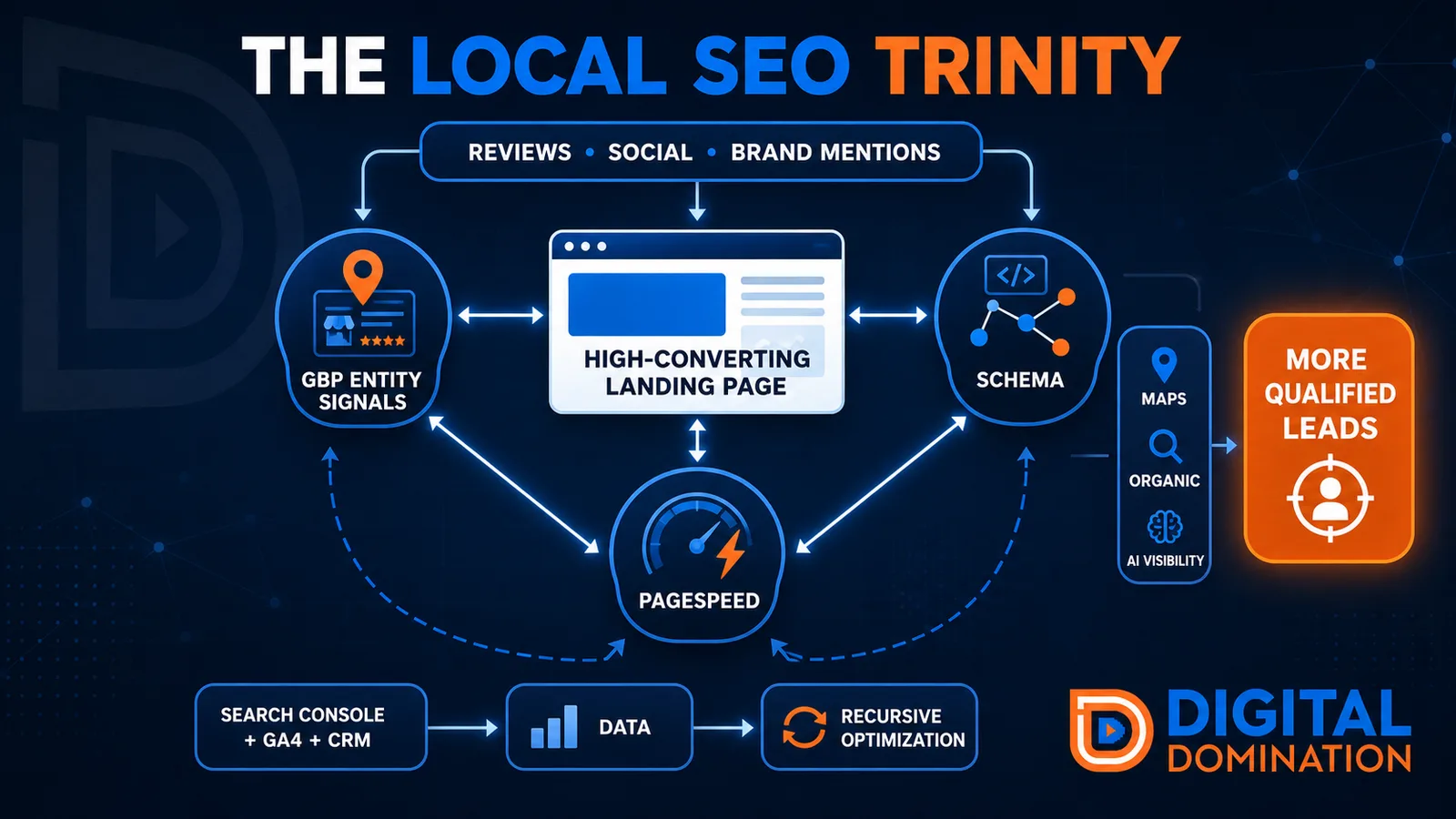
The Local SEO Trinity
Think of a three-legged stool. Your Google profile, your website, and your reviews all have to hold you up. If one leg is short, the whole thing wobbles.
GBP entity signals
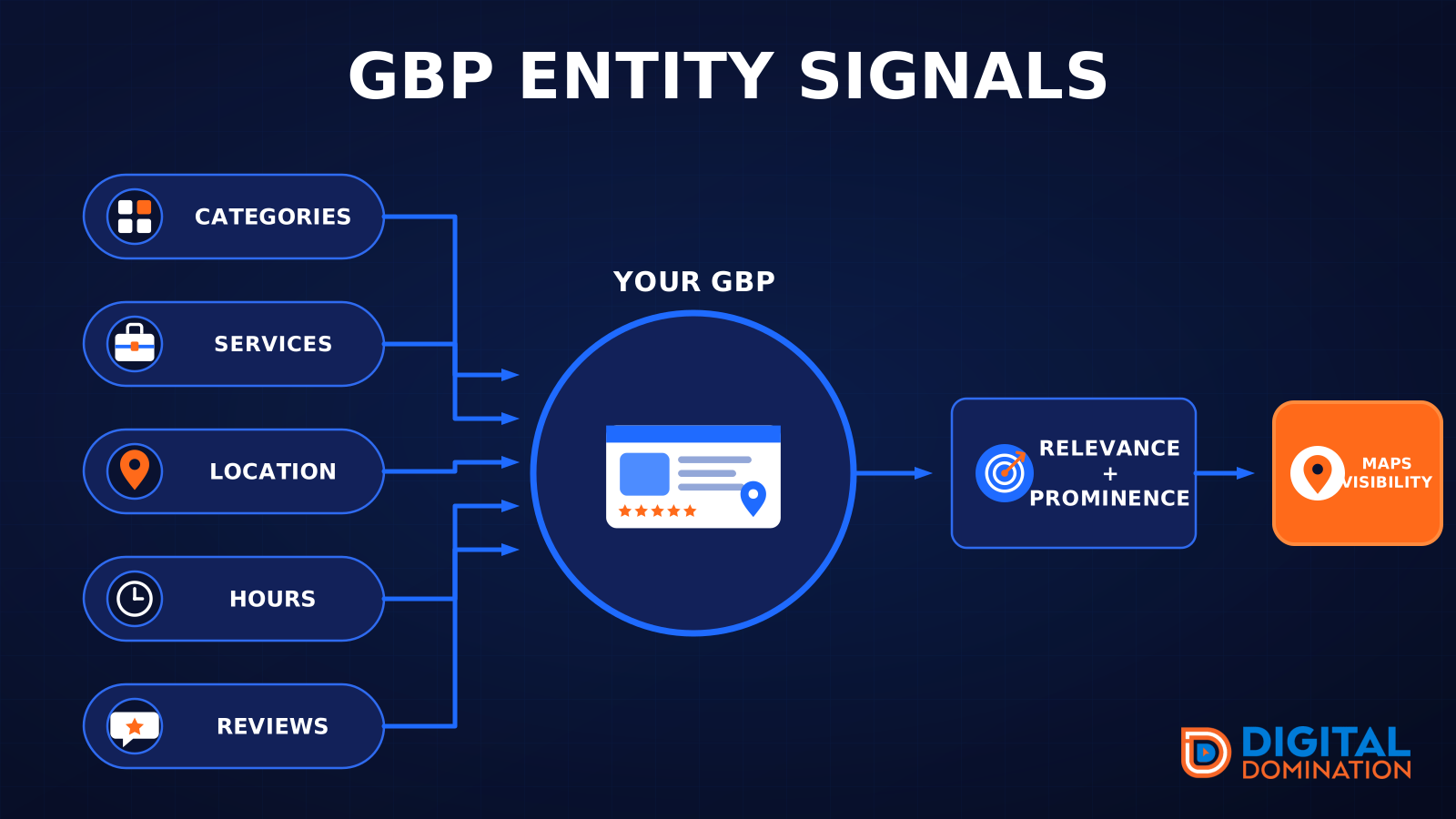
This leg is your Google Business Profile. GBP means Google Business Profile. It covers your categories, your services, your location, your hours, and your reviews. Google uses those facts to decide who to show.
Your Google profile is your storefront sign. If the sign is missing, or it names the wrong shop, people drive past.
PageSpeed to conversion
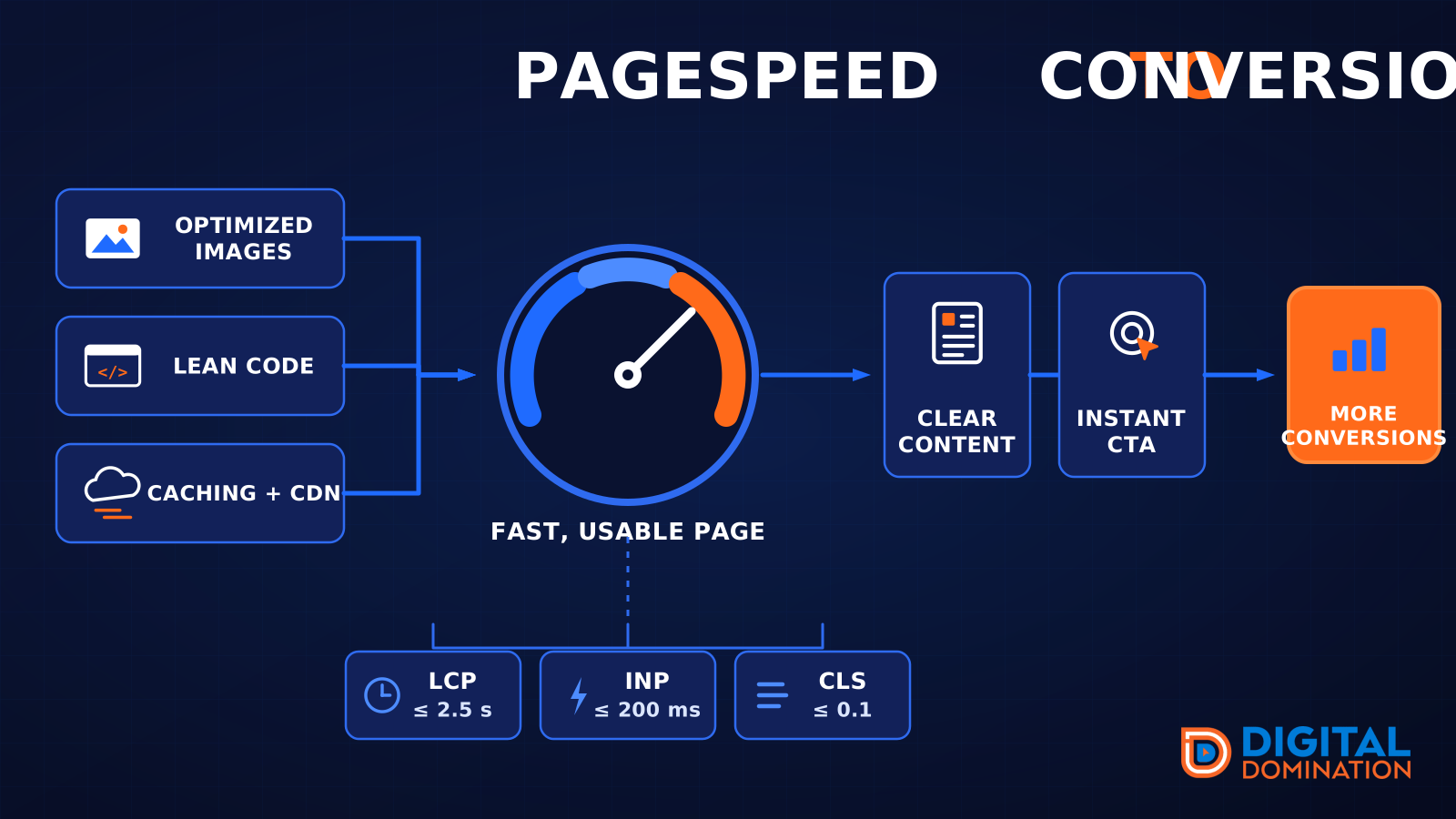
This leg is your website, above all on a phone. Small images, lean code, and caching make a page fast. A fast, clear page is what turns a visit into a call. Phone speed is one of the 12 Trinity checks because a slow page loses the call before anyone sees your offer.
Your website is the showroom. If the door sticks, people leave before they look around.
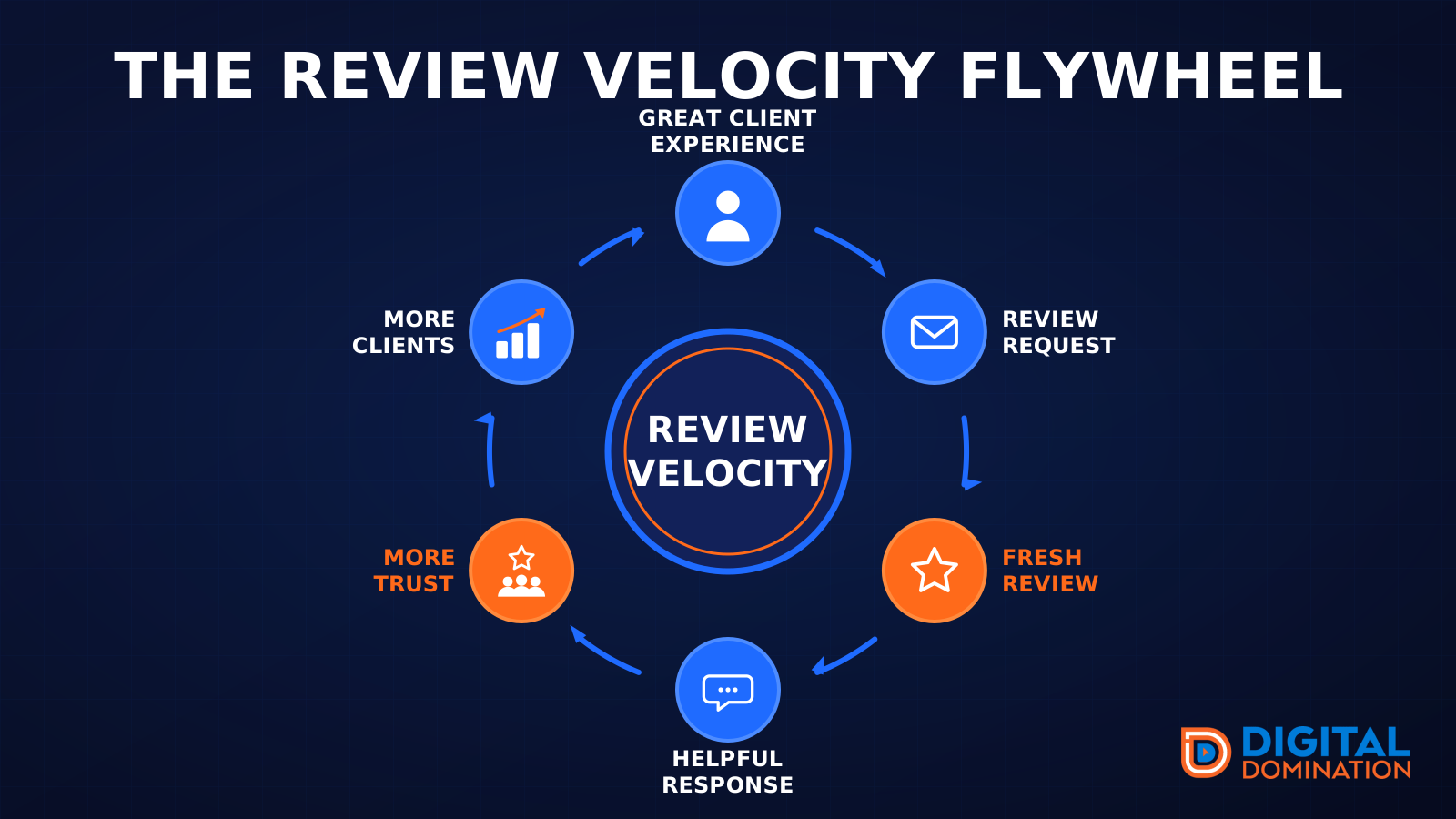
The review velocity flywheel
This leg is reviews and reputation. A good visit leads to a review request, then a fresh review, then a helpful reply, then more trust, then more customers. When the scan can find your Google listing, it shows your rating, your recent reviews, and how many you answered.
Reviews are word of mouth. One kind word helps. A steady stream of real reviews, and a reply from you, helps more.
How this turns into revenue
Being found in more searches leads to more calls. More calls lead to more booked jobs. More booked jobs lead to more revenue.
Example numbers, not a real business: 40 calls from search in a month, a 25 percent close rate, and a $400 average job. That is 10 booked jobs. That is $4,000. The math is the lesson. It is not a promise.
The full page has a box where you can type your own average job value and close rate.
One real story, from our car dealership case study: Medina Auto Group went from invisible on Google Maps to dominating every high-intent search across their market. The turnaround spanned all four of their rooftops at once. The same page says the team eliminated 89 unfair one-star reviews that had been dragging the dealership's reputation down and keeping it out of the Map Pack. It also says: “Results described here are exceptional and non-typical. Outcomes vary based on market conditions, competition, and implementation. No guarantees are made regarding earnings, rankings, or conversions.”
Free strategy call
More booked jobs start with a clear plan
Book a free strategy call. We look at your Google profile, your website, and your reviews, and we tell you what to fix first.
Free. You pick the time. A real person shows up.