
The Guarantee vs hiring an in-house marketer or marketing coordinator
A practical comparison for local business owners who want more measurable call opportunities from Google without guessing for months.
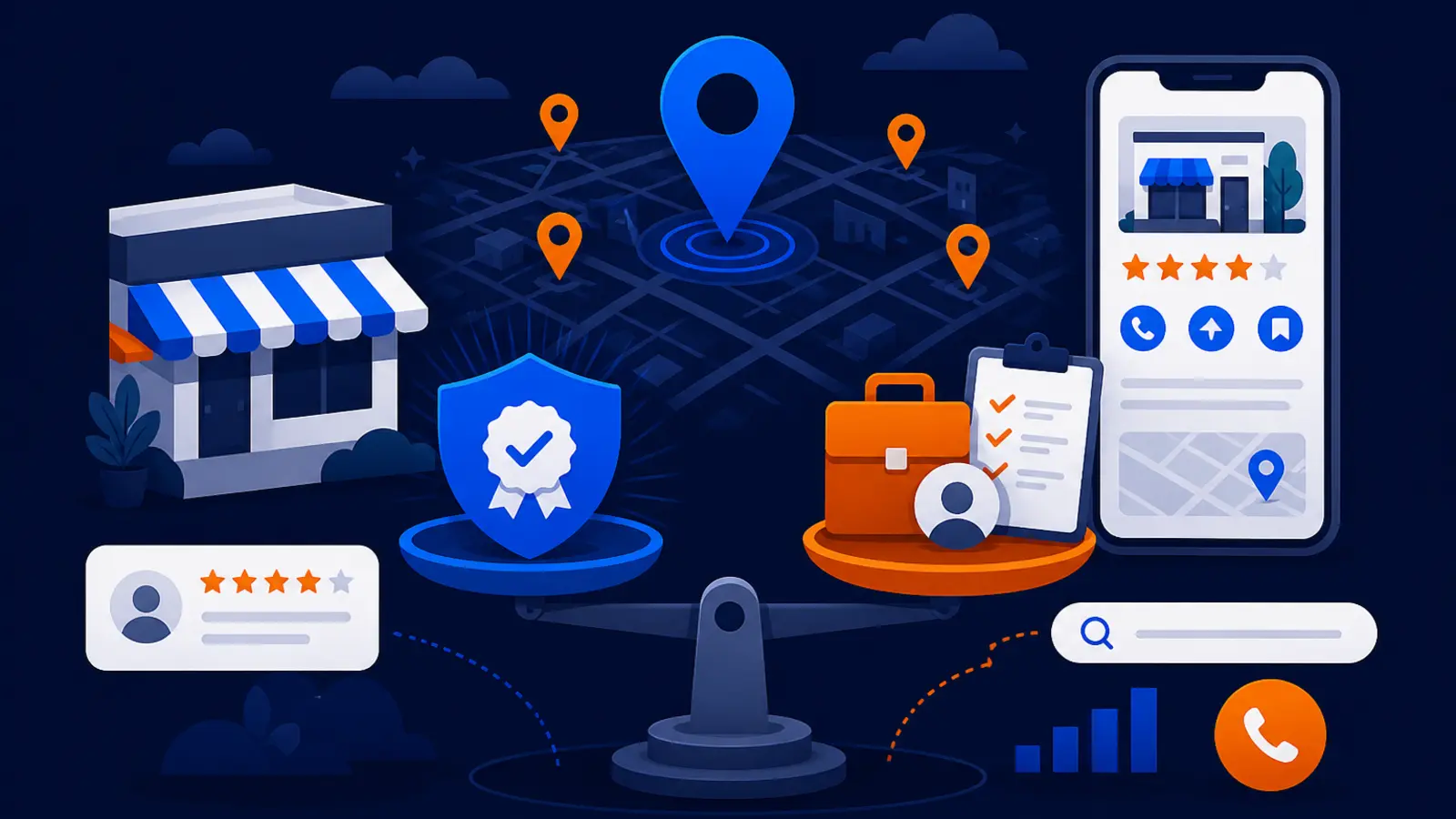
Short answer: the Guarantee is built for faster measurable local calls
If your main goal is more call opportunities from people searching nearby, a pay-for-results Google Map Pack program is usually the faster, cleaner choice than hiring a salaried in-house marketing coordinator. The reason is focus. The Guarantee is aimed at one measurable outcome: top 3 in the Google Map Pack in 12 weeks or you do not pay.
That does not mean an in-house marketer is a bad hire. It means the job is broader. A coordinator may handle social posts, email, offers, website edits, vendor follow-up, sales materials, events, photos, and day-to-day brand needs. Those tasks matter, but they are not the same as a dedicated local search campaign tied to Map Pack visibility, ranking proof, and call volume tracking.
Google Business Profile Help says customers can find a verified business on Google Search and Maps, and the business can control how its information shows up. For a local service business, that is where many high-intent calls begin. BrightLocal reported that most consumers who searched online for a local business did so recently, many decided quickly, and many started on a mobile phone. Speed matters because the buyer may choose before your next staff meeting ends.
What you are really buying in each option
With the Guarantee, you are buying a specialized local ranking program aimed at Map Pack visibility. Digital Domination starts with a 169-point GeoGrid scan that checks 169 real Google results across the service area, then tracks progress with weekly GeoGrid reports that show ranking movement and call volume. Pricing for the Maps Domination Program is set per market on a qualification call and tied to the ranking outcome.
With an in-house marketer, you are buying employee time and coordination. That can be valuable if your business needs a person inside the company every day to manage many moving parts. The employee can learn your voice, coordinate promotions, help the sales team, chase photos from technicians, update pages, write newsletters, and keep projects moving.
Here is the practical difference an owner should understand:
- ▸The Guarantee is narrower, local search visibility and calls.
- ▸The employee is broader, daily marketing support across channels.
- ▸The Guarantee is measured against a Map Pack outcome.
- ▸The employee is measured by the goals you create and manage.
- ▸The Guarantee starts with local ranking data across your service area.
- ▸The employee may need tools, training, vendors, and time to build that system.
Why Google Maps calls are a different problem than general marketing
General marketing can build awareness over time. Google Maps captures people who are already looking. That is why the work is different. A person searching for a plumber, dentist, roofer, towing company, barber, or repair shop is often much closer to making contact than someone passively seeing a social post.
Google Business Profile Help says local results are mainly based on relevance, distance, and prominence. Google also says there is no way to request or pay Google for a better local ranking. That matters. A legitimate program should never tell you it can buy placement from Google. It should improve the signals Google says matter, then report what changed.
Google Business Profile Help also says businesses with complete and accurate profile information are more likely to show up in local search results, and should provide details like address, hours, category, and attributes. It says prominence can be based on information such as links and reviews, and that more reviews and positive ratings can help local ranking. Those details sound simple, but they require consistent execution.
The speed difference: focused program vs recruiting cycle
A Google Map Pack program can begin with the asset you already have: your Google Business Profile, your website, your reviews, your service area, and your current rankings. That does not mean results are instant. Google Search Central says SEO changes can take from a few hours to several months to be reflected, and recommends waiting a few weeks to assess whether work had beneficial effects. But the work can start as soon as the business qualifies and the baseline is measured.
Hiring an in-house coordinator usually starts before any marketing work begins. SHRM defines time-to-fill as the calendar days from opening a job requisition to offer acceptance, and its 2025 benchmarking report says the median time-to-fill for executive and nonexecutive positions was about a month and a half. After that, the new hire still needs onboarding, access, context, tools, approvals, and a plan.
For a business owner who needs call opportunities faster, the common delays look like this:
- ▸Writing the job description.
- ▸Reviewing applicants.
- ▸Interviewing candidates.
- ▸Waiting for offer acceptance.
- ▸Onboarding the hire.
- ▸Teaching the market, services, margins, and customer questions.
- ▸Choosing tracking tools and reporting habits.
- ▸Finding outside specialists if local SEO is not the hire’s strength.
Cost comparison without pretending salaries are the whole cost
The cleanest salary reference is from the U.S. Bureau of Labor Statistics, which reported that the median annual wage for market research analysts and marketing specialists was $78,760 in May 2025. That figure is useful, but it is not the full business cost of hiring. An employer may also have recruiting time, payroll costs, management time, software, training, and benefits depending on how the role is structured.
Digital Domination does not publish one flat retainer for the Maps Domination Program. Pricing is set per market on a qualification call and tied to the ranking outcome. That is important because a rural market, a dense metro, and a highly competitive trade are not the same problem.
The real question is not just which option costs less. The real question is which option has the shortest path to measurable local call opportunities. For that, you should compare these items side by side:
- ▸Time until work starts.
- ▸Time until first meaningful ranking movement can be checked.
- ▸Who owns the strategy.
- ▸Who executes the technical and local SEO work.
- ▸How calls will be tracked.
- ▸What happens if the outcome is not reached.
- ▸Whether the business also needs daily internal marketing support.
What an in-house marketer is better for
An in-house marketer or coordinator fits a business that needs daily brand, social, email, offers, website coordination, and sales-support work across channels, and can wait through recruiting, onboarding, and learning curves. If your owner, office manager, or sales team is buried in small marketing tasks every week, a good coordinator can create order.
O*NET OnLine says search marketing strategists may manage search tracking and reporting, optimize digital assets for SEO, collect web metrics, identify KPIs, create content strategies, and research search query trends. That is a specialized search role. Many coordinators can help with parts of this, but not every generalist is ready to own local SEO strategy, Map Pack troubleshooting, review systems, content, tracking, and reporting from day one.
Choose the in-house route if these are true:
- ▸You need someone available daily for internal requests.
- ▸You have enough marketing work to fill a full-time role.
- ▸You can manage the person closely.
- ▸You can wait through recruiting and onboarding.
- ▸You already have local SEO expertise or an outside specialist.
- ▸You need support across social, email, print, events, sales decks, photos, offers, and website updates.
- ▸You value brand consistency as much as immediate call tracking.
Seven questions to ask before you sign or hire
Google Search Central recommends asking a prospective SEO what results they expect, what timeframe they expect, how they measure success, and how they will communicate changes and recommendations. The same thinking applies when you hire an employee. Do not compare a vague agency promise with a vague job description. Compare a clear outcome with clear accountability.
Before you choose either path, ask these questions:
- ▸What result are we buying or hiring for?
- ▸How soon can the work actually start?
- ▸How will we know if rankings improved in the exact areas we serve?
- ▸How will calls from the Google Business Profile be reported?
- ▸Who is responsible for reviews, profile completeness, website support, and local authority?
- ▸What happens if the plan does not produce measurable progress?
- ▸Do we need a specialist for local search or a generalist for daily marketing coordination?
What to expect and what you can verify
A local business owner should not have to guess whether local search work is happening. Google Business Profile performance reporting includes views, searches, directions, calls, website clicks, messages, bookings, products, menus, and offers, according to Google Business Profile Help. Calls are counted when a customer clicks the call button. That makes call activity visible, though it should be interpreted carefully because not every phone call becomes a booked job.
Digital Domination’s Free GeoGrid scan checks 169 real Google results across the service area. That matters because ranking from one office computer does not show how visible you are across a whole city or service area. Weekly GeoGrid tracking reports give visual proof of rankings and call volume, so the owner can see whether the work is moving in the right direction.
Concrete checkpoints should include:
- ▸A baseline GeoGrid before work starts.
- ▸A verified Google Business Profile.
- ▸Correct name, address, phone, hours, category, and service information.
- ▸A review plan that follows platform rules.
- ▸Call volume reporting from the Google Business Profile.
- ▸Weekly ranking visuals across the service area.
- ▸Clear notes on what changed and why.
- ▸A plain-language explanation of the next step.
How consumer behavior changes the decision
BrightLocal reported that 84% of consumers searched online for a local business in the last three months, 75% chose a business in less than 30 minutes, and 28% chose in less than five minutes. That is why Map Pack visibility is not just a vanity metric. When a buyer is moving fast, showing up with complete information and strong trust signals can affect whether the phone rings.
BrightLocal also reported that 73% of consumers started their latest local business search on a mobile phone, 52% started on Google Search, 9% started on Google Maps, and 75% used more than one channel. This supports a balanced view. Google visibility is critical, but people may still compare your website, reviews, photos, offers, and other channels before contacting you.
BrightLocal found that 72% of consumers look at three or fewer businesses before deciding, while 6% said they just clicked the top result. It also reported top decision factors such as clear and complete information, the most or best reviews, clear pricing or a deal, closeness or home service, and the best star rating. For a local owner, the lesson is simple: rankings help you get considered, but trust signals help you get chosen.
A fair recommendation by business situation
Choose the Guarantee if the business problem is specific: you need more measurable call opportunities from people searching nearby, and you want the work tied to a local ranking outcome. This is especially sensible when your Google Business Profile is already central to customer acquisition, but your visibility changes by neighborhood or you do not know where you actually rank across the service area.
Choose an in-house marketer if the business problem is operational: too many marketing tasks are falling through the cracks, your team needs daily support, and you want one person to coordinate many channels from inside the company. That hire can still work with a local SEO specialist, but the role should not be judged only by Map Pack movement unless that is the explicit job.
A practical rule of thumb:
- ▸Need local calls faster: start with the focused Map Pack program.
- ▸Need daily coordination across many marketing tasks: hire in-house.
- ▸Need both: use a specialist for Maps and a coordinator for internal execution.
- ▸Do not hire a generalist and quietly expect specialist local SEO outcomes.
- ▸Do not buy SEO without clear reporting and a timeframe.
Where to go next
If you want the local call problem handled as a measurable Map Pack outcome, read the Digital Domination Guarantee page. It explains the guarantee, the qualification process, and what it means that the promise is top 3 in the Google Map Pack in 12 weeks or you do not pay.
If you are not ready to choose yet, start with the free GeoGrid scan page. The scan checks 169 real Google results across your service area, so you can see where you show up before you commit to a direction. That baseline makes the in-house vs specialist decision much easier.
Keep reading
Related guides
- ▸How to spot a bad Google Maps SEO provider before you sign
- ▸How do you know if your SEO company is actually working?
- ▸How Trial Attorneys Are Being Found in AI Answers Now
Put it into action
Frequently Asked Questions
Is a Google Map Pack guarantee better than hiring a marketing coordinator?
It is better if your main goal is measurable local call opportunities from Google Maps and local search. A coordinator is better if you need daily help with social, email, offers, website updates, sales materials, and brand coordination.
Can someone pay Google to rank higher in the Map Pack?
No. Google Business Profile Help says there is no way to request or pay Google for a better local ranking. A legitimate program improves the business signals Google says matter, then measures ranking and call movement.
How fast can local SEO start showing results?
Google Search Central says SEO changes can take from a few hours to several months to be reflected, and recommends waiting a few weeks to assess whether work helped. The advantage of a focused program is that the baseline, work plan, and reporting can start without a hiring cycle.
What does an in-house marketer do that an SEO program does not?
An in-house marketer can handle daily internal marketing needs across many channels. That may include social media, email, promotions, website coordination, photos, sales support, vendor communication, and brand consistency.
How do I know if more calls are coming from Google?
Google Business Profile performance reporting includes calls, and calls are counted when a customer clicks the call button. A good local program should also show ranking movement by area, not just a single keyword screenshot.
What should I ask before hiring an SEO or marketing employee?
Ask what result is expected, what timeframe is realistic, how success will be measured, and how updates will be communicated. Google Search Central recommends asking prospective SEOs those types of questions, and the same discipline helps when hiring staff.
Should I hire in-house and use a Map Pack program too?
That can make sense if you have enough work for both. The in-house person can coordinate brand, content, offers, and internal requests, while the specialist handles local search strategy, tracking, and Map Pack execution.
The Local SEO Trinity
Think of a three-legged stool. Your Google profile, your website, and your reviews all have to hold you up. If one leg is short, the whole thing wobbles.
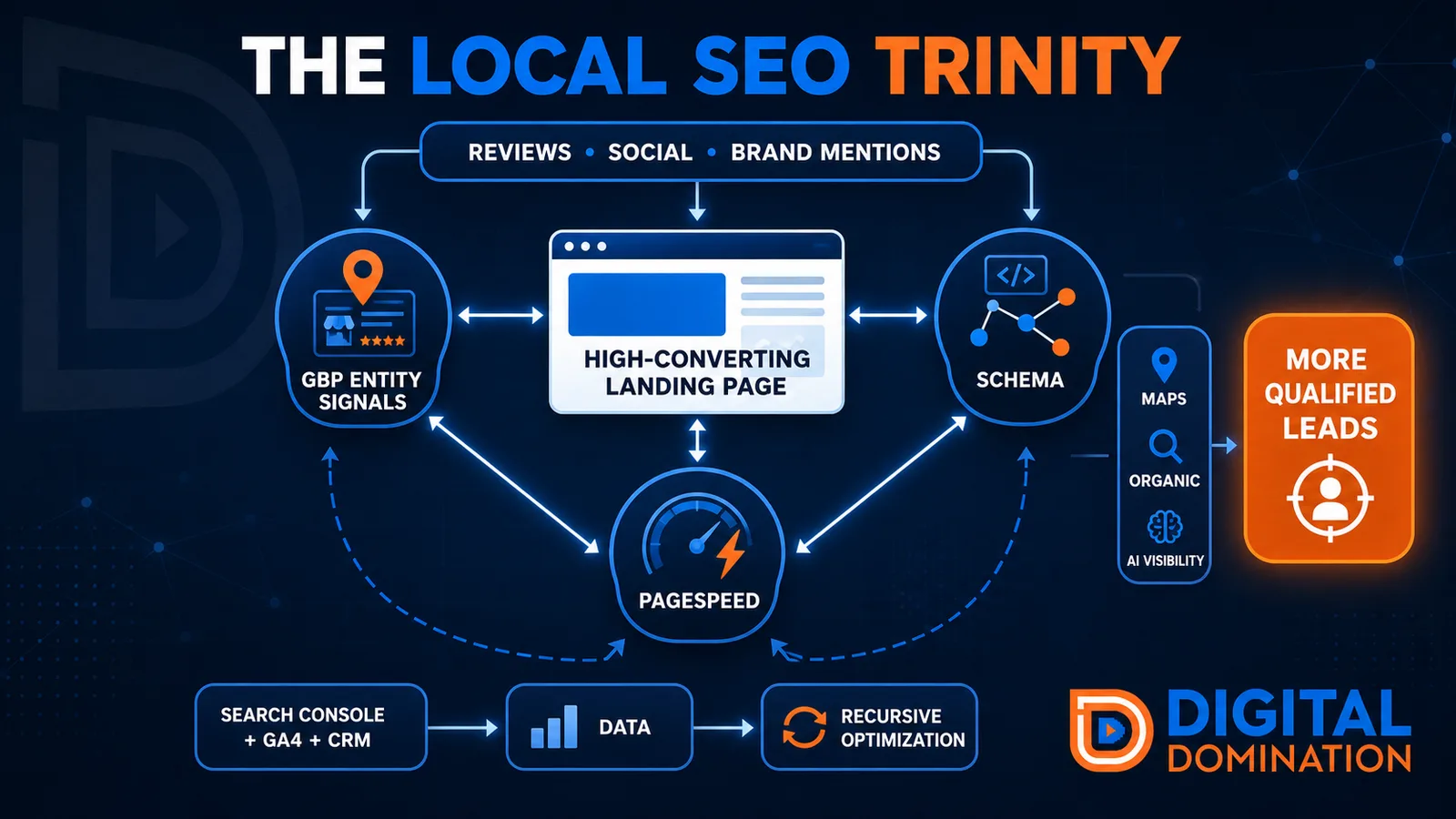
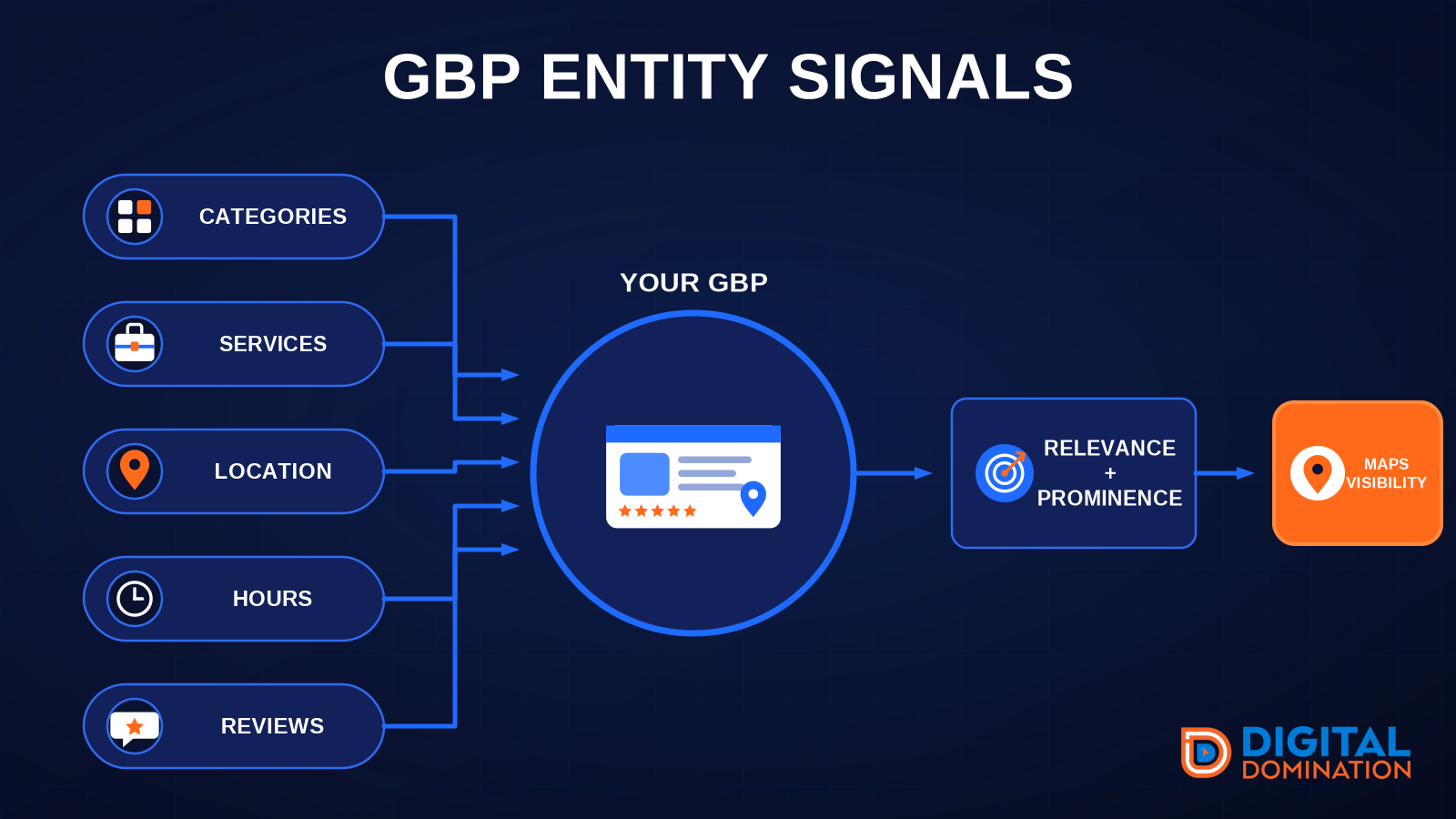
GBP entity signals
This leg is your Google Business Profile. GBP means Google Business Profile. It covers your categories, your services, your location, your hours, and your reviews. Google uses those facts to decide who to show.
Your Google profile is your storefront sign. If the sign is missing, or it names the wrong shop, people drive past.
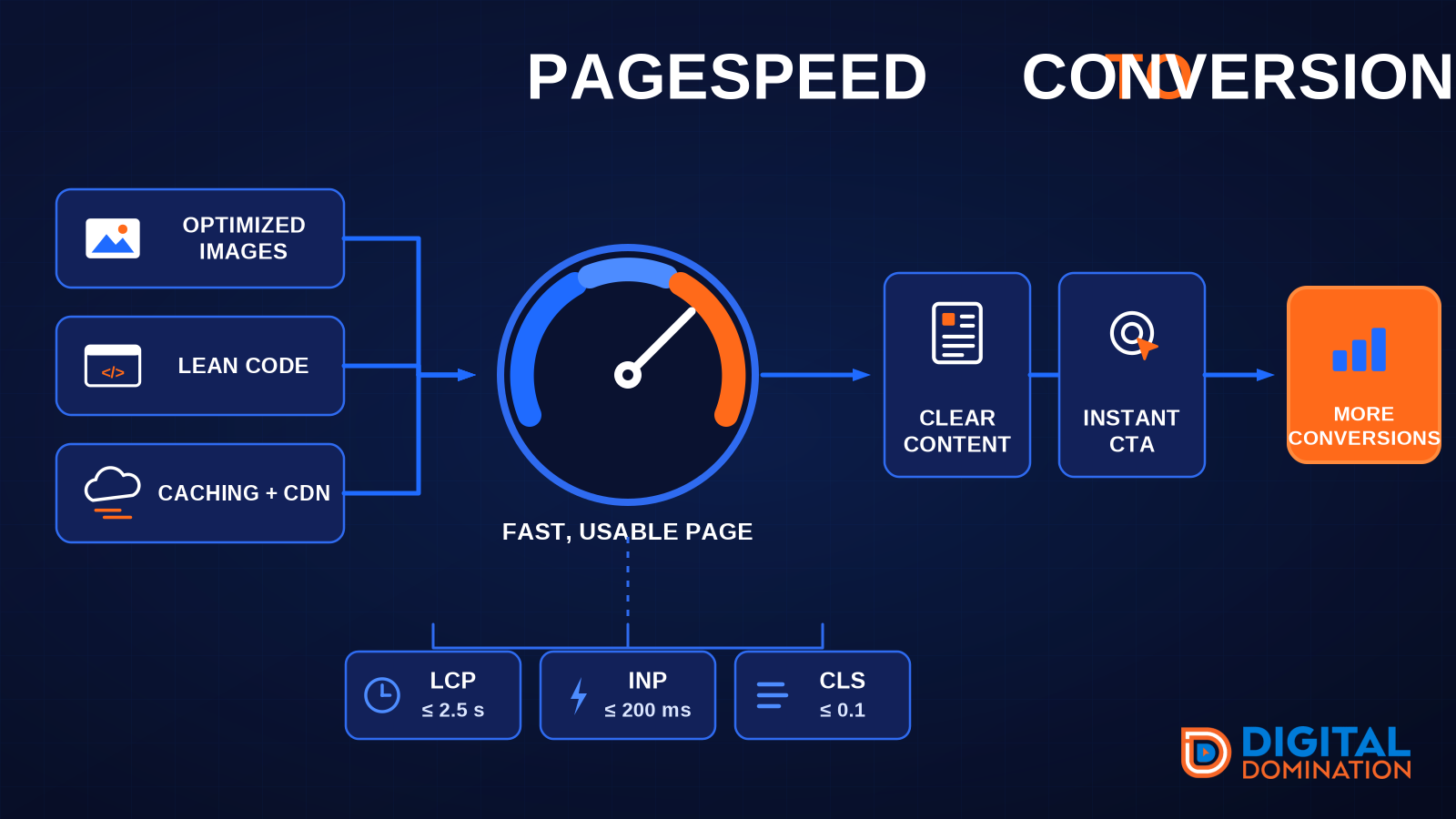
PageSpeed to conversion
This leg is your website, above all on a phone. Small images, lean code, and caching make a page fast. A fast, clear page is what turns a visit into a call. Phone speed is one of the 12 Trinity checks because a slow page loses the call before anyone sees your offer.
Your website is the showroom. If the door sticks, people leave before they look around.
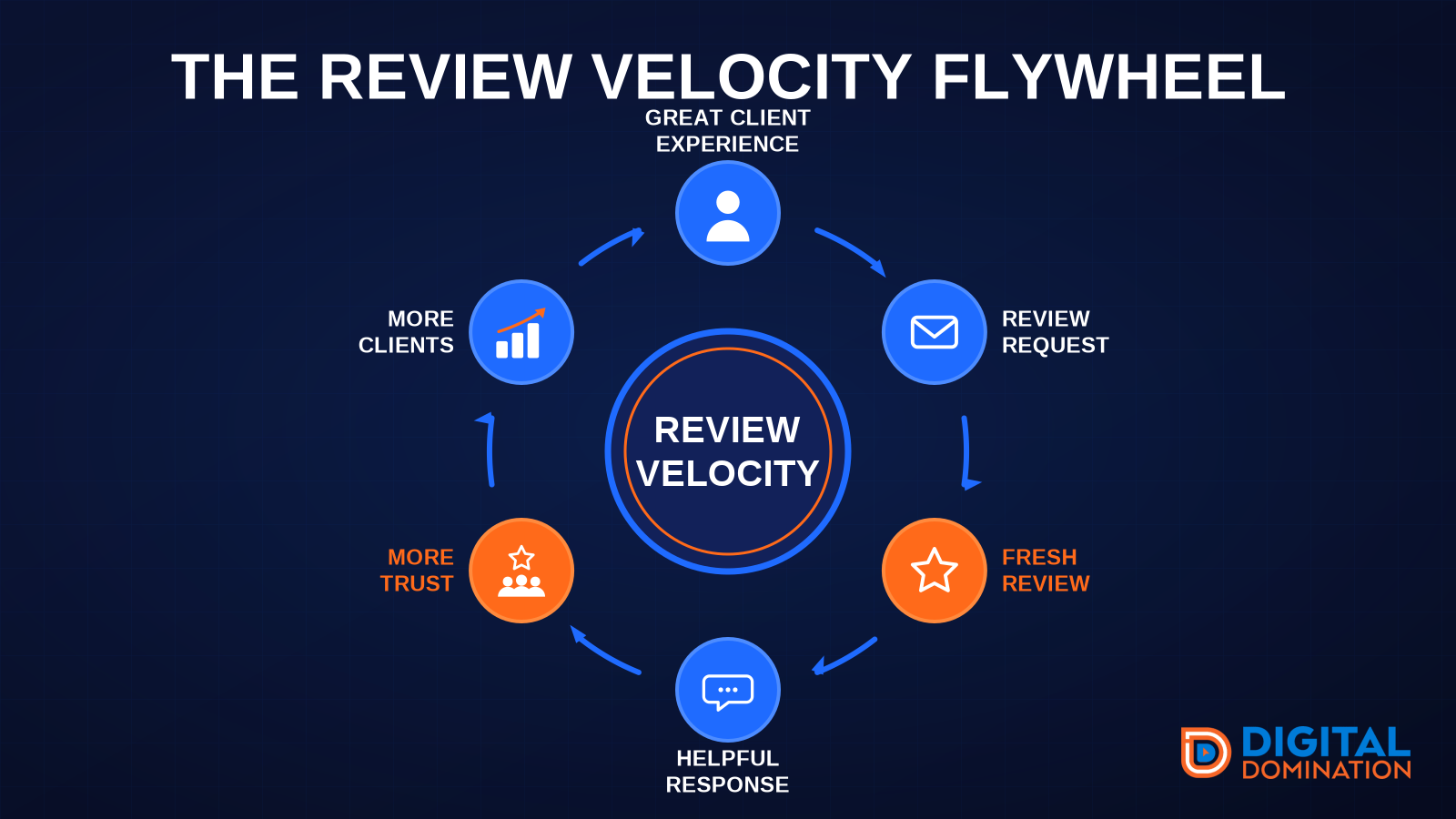
The review velocity flywheel
This leg is reviews and reputation. A good visit leads to a review request, then a fresh review, then a helpful reply, then more trust, then more customers. When the scan can find your Google listing, it shows your rating, your recent reviews, and how many you answered.
Reviews are word of mouth. One kind word helps. A steady stream of real reviews, and a reply from you, helps more.
How this turns into revenue
Being found in more searches leads to more calls. More calls lead to more booked jobs. More booked jobs lead to more revenue.
Example numbers, not a real business: 40 calls from search in a month, a 25 percent close rate, and a $400 average job. That is 10 booked jobs. That is $4,000. The math is the lesson. It is not a promise.
The full page has a box where you can type your own average job value and close rate.
One real story, from our car dealership case study: Medina Auto Group went from invisible on Google Maps to dominating every high-intent search across their market. The turnaround spanned all four of their rooftops at once. The same page says the team eliminated 89 unfair one-star reviews that had been dragging the dealership's reputation down and keeping it out of the Map Pack. It also says: “Results described here are exceptional and non-typical. Outcomes vary based on market conditions, competition, and implementation. No guarantees are made regarding earnings, rankings, or conversions.”
Free strategy call
More booked jobs start with a clear plan
Book a free strategy call. We look at your Google profile, your website, and your reviews, and we tell you what to fix first.
Free. You pick the time. A real person shows up.