
When to choose a free GeoGrid scan before hiring an in-house marketer
If your main question is whether Google Maps is hiding you from nearby customers, diagnose that first. Then decide whether you need an employee, an outside specialist, or both.
The short answer
Use a free GeoGrid scan before hiring an in-house marketer when you are not yet sure whether your problem is Google Maps visibility, website traffic, reviews, ads, follow-up, or something else. A scan gives you a local ranking picture before you create a job post, interview candidates, or commit payroll to a role that may not match the problem.
Hiring in-house can be a smart move after the problem is clear. It suits a business that needs ongoing campaign execution, reporting, coordination, vendor management, content, ads, email, social media, and other cross-channel marketing work. It is less ideal as the first step when the owner simply needs to know, “Are we showing up where customers are searching?”
Digital Domination’s free 169-point GeoGrid scan checks 169 real Google results across the service area. For a local business owner, that means you can see whether the issue is concentrated around one neighborhood, spread across the whole city, tied to a keyword, or mostly a competitor problem before you decide who to hire.
Why a scan should come before a hiring decision
Google Business Profile Help says local results are mainly based on relevance, distance, and prominence. Google also says there is no way to request or pay for a better local ranking on Google. That matters because a general marketing hire cannot simply flip a switch and make your profile rank better across town.
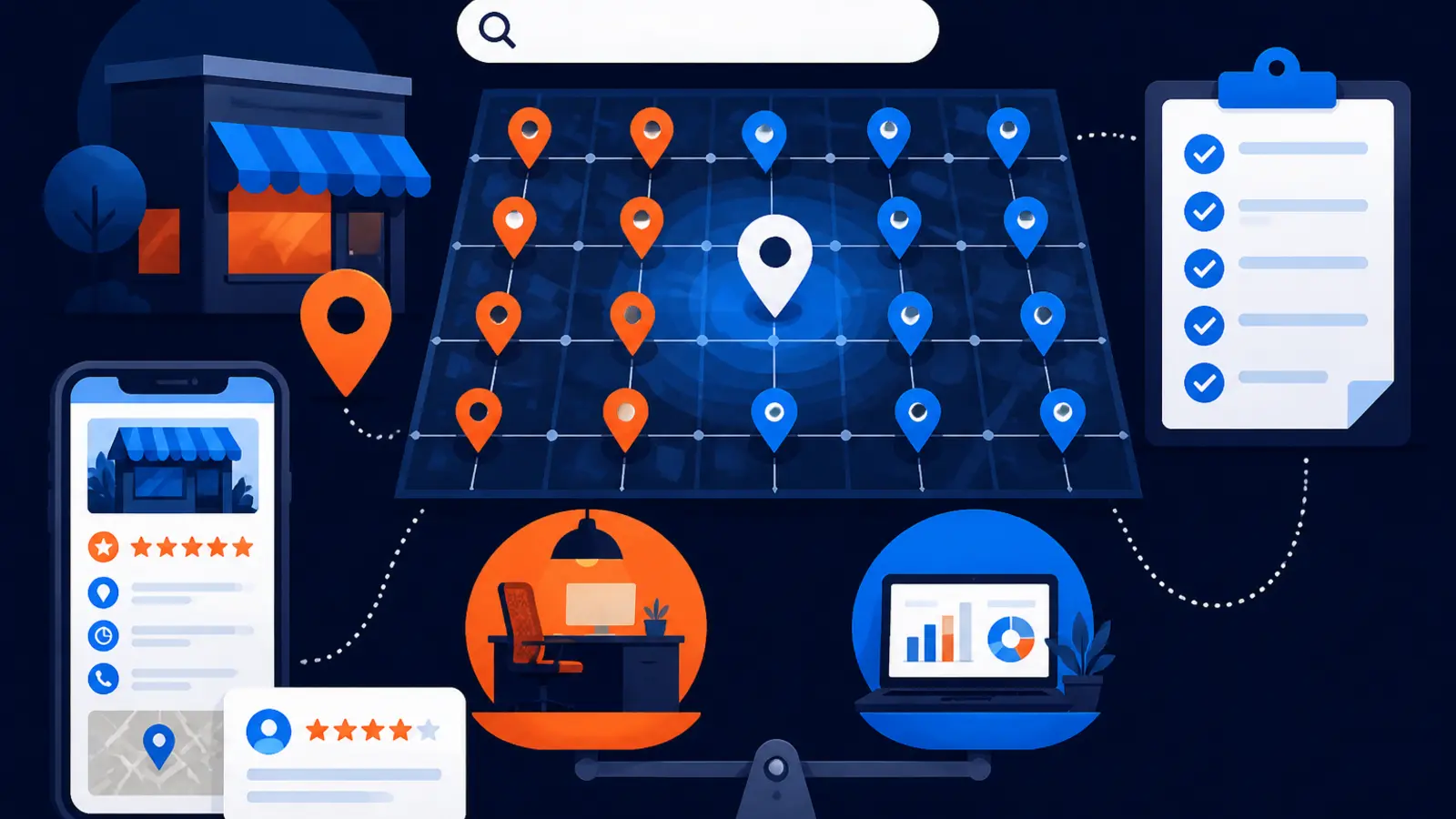
A GeoGrid scan is useful because Google Maps visibility changes by search location. A customer searching near your office may see a different Map Pack than a customer searching across the service area. Without a location-based view, you may think you have a marketing staffing problem when you actually have a local visibility gap.
Before you hire, you want to separate these issues:
- ▸You do not rank near your own location.
- ▸You rank near your office but disappear across key neighborhoods.
- ▸You rank for your brand name but not for service keywords.
- ▸You have visibility but weak calls, clicks, or direction requests.
- ▸A competitor is stronger in prominence signals such as reviews or links.
What Google’s own local ranking factors tell you
Google Business Profile Help defines relevance as how well a Business Profile matches what someone is searching for. It says complete and detailed business information helps Google match the profile to relevant searches. If your categories, services, description, and profile details are thin or off target, hiring a coordinator may help with cleanup, but the first question is whether those gaps are hurting visibility in the map results.
Google defines distance as how far each business is from the customer who is searching. When the customer does not share a location, Google uses what it knows about that customer’s location. This is why one ranking check from your office does not tell the whole story.
Google says prominence is based on how well-known a business is, including information such as links and review volume, and that more reviews and positive ratings can help a business’s local ranking. A scan helps show whether prominence issues appear everywhere or only in certain pockets of the service area.
When the free GeoGrid scan is the better first move
Choose the scan first when the owner, manager, or front desk team has a simple suspicion: the phone should be ringing more from nearby searches, but it is not. At that stage, hiring an employee may be premature because the job description has not been shaped by evidence.
This is especially true for home services, medical practices, repair shops, restaurants, beauty businesses, legal offices, and other local operators where Google Maps can influence who gets the call. The scan does not replace a complete marketing plan. It gives you a clearer starting point.
A free GeoGrid scan makes more sense first when:
- ▸You are considering a marketing coordinator mainly because leads feel slow.
- ▸You do not know whether you rank across the neighborhoods you serve.
- ▸You have never seen rankings from multiple customer locations.
- ▸You are unsure which keywords matter in Google Maps.
- ▸You want proof before adding payroll.
- ▸You need to compare your visibility against nearby competitors.
- ▸You suspect your Google Business Profile is underperforming but do not know why.
When hiring in-house is the better fit
Hiring in-house genuinely suits a business that already knows what needs to be managed and has enough work to keep the person focused. If you need someone to coordinate vendors, prepare reports, manage promotions, update the website, organize photos, support review requests, help with events, track campaigns, and keep projects moving, an employee can be a strong fit.
O*NET OnLine lists Marketing Research Coordinator as a reported job title under Market Research Analysts and Marketing Specialists. O*NET says this occupation may use search marketing tactics, analyze web metrics, and develop recommendations to increase search engine ranking and visibility to target markets. It also lists tasks such as preparing reports, gathering competitor data, measuring marketing effectiveness, and tracking marketing and sales trends.
An in-house marketer is usually a better fit when you need:
- ▸Day-to-day execution across several marketing channels.
- ▸Internal coordination with sales, operations, and ownership.
- ▸Regular reporting from many tools and vendors.
- ▸Brand, campaign, and calendar management.
- ▸Someone who can turn strategy into organized tasks.
- ▸A long-term internal owner for marketing projects.
The cost and time tradeoff
The hiring decision should include both money and timing. The U.S. Bureau of Labor Statistics reported that the median annual wage for market research analysts and marketing specialists was $78,760 in May 2025. SHRM reported that the 2026 median time-to-fill for nonexecutive positions was 39 calendar days.
Those numbers do not mean hiring is wrong. They mean the owner should know the problem before starting a search. If the main issue is poor visibility in Google Maps, you may need a local SEO solution, review process, profile cleanup, service-area correction, or competitor analysis before you need a full-time coordinator.
A free scan is fast due diligence. It helps you avoid writing a broad job description for a narrow local ranking problem. It also helps you hire smarter if you still decide to bring someone in, because you can show candidates the actual visibility issue you want them to help manage.
What to look for in the scan results
A useful GeoGrid scan should not just tell you one ranking number. It should show where you rank from different points across your service area, because distance affects local results. BrightLocal Help Center says a Local Search Grid gives a bird’s-eye view of searches for chosen keywords across a chosen area and can show local visibility, keyword blind spots, competitor opportunities, ranking drops, and Average Map Rank progress over time.
Local Falcon Knowledge Base says customizing a geo-grid for local rank tracking helps collect data from areas relevant to a business, including where potential customers are searching from. For an owner, the practical question is whether the scan reflects the places where real customers are likely to search.
When you review a scan, verify these checkpoints:
- ▸The keyword matches a service people actually buy from you.
- ▸The grid covers the neighborhoods or cities you care about.
- ▸The scan shows more than one search point.
- ▸The results separate strong areas from weak areas.
- ▸The competitors shown are real local competitors.
- ▸The report is understandable without technical training.
- ▸The findings connect to clear next steps.
Seven questions to ask before you sign
Whether you are thinking about hiring an employee, hiring an agency, or doing both, ask questions that force the visibility problem into plain English. The right answer should help you understand what is happening in Google Maps, not bury you in jargon.
Ask these questions before you commit to payroll or a contract:
- ▸Do we know where we rank from the places our customers actually search?
- ▸Which services or keywords are we invisible for in Google Maps?
- ▸Are we weak because of relevance, distance, prominence, or a mix of all three?
- ▸Is our Google Business Profile complete and aligned with our core business?
- ▸Are our service areas set up correctly for how we actually operate?
- ▸Do we need daily marketing coordination, or do we need a local ranking fix first?
- ▸What proof will we review each week or month to know whether visibility is improving?
Service-area details can change the diagnosis
Google Business Profile Help says a Business Profile can be created for a business that has a physical location customers can visit or travels to customers where they are. It also says service-area businesses cannot set a service area as a radius and must specify the service area by city, postal code, or another area type.
Google says a Business Profile can have up to 20 service areas and that the overall service-area boundary should not be more than about two hours of driving time from where the business is based. These rules matter because many local owners think of their market as a broad circle around the office, while Google asks for service areas in a different format.
A scan can reveal whether your real service area and your Maps visibility line up. For example, a two-truck plumbing company may care more about ranking in the profitable suburbs where it actually sends crews than ranking across every possible search point in a metro area.
How to turn the scan into a hiring decision
After you see the scan, the decision gets simpler. If the scan shows you are visible in the right places but leads are still weak, the problem may be conversion, follow-up, offer clarity, website experience, ads, or sales process. An in-house coordinator may be useful if those issues require steady internal execution.
If the scan shows you are missing from important areas, the next step is usually local visibility work before general marketing coordination. That may include profile improvements, review growth, category review, service-area cleanup, local authority building, and weekly tracking.
Use the scan to choose one of these paths:
- ▸Hire in-house if you need daily coordination across many marketing tasks.
- ▸Use a local SEO specialist if the core issue is Maps visibility.
- ▸Use both if you need internal execution and outside local search expertise.
- ▸Delay hiring if the scan shows the problem is smaller than expected.
- ▸Rewrite the job description if the scan reveals a specific local SEO responsibility.
What Google Business Profile data can and cannot answer
Google Business Profile performance data can show searches, views, directions, calls, website clicks, messages, bookings, products, menus, and offers, according to Google Business Profile Help. That data is valuable because it shows how people interact with your profile.
But Google also says Business Profile search queries appear when a profile appears for a search, and profile owners cannot directly manage those queries. Performance data can show activity after you appeared, but it does not always show where you failed to appear across the map.
That is the gap a GeoGrid scan fills. It gives you a location-based view of visibility, while Business Profile performance data gives you interaction data. Together, they help you decide whether you need more visibility, better conversion, or more organized marketing execution.
Start with the scan, then choose the right help
If you are debating whether to hire an in-house marketer because your local leads feel inconsistent, start with the free GeoGrid scan. It will show whether a Google Maps visibility problem exists across your service area before you spend time and money recruiting for a role that may or may not match the issue.
Digital Domination’s Scan page explains the free 169-point GeoGrid scan, what it checks, and how the results can help you decide what to do next. Go to the free GeoGrid scan page at digitaldomination.ai/scan/ if you want a plain-English visibility check before making a hiring decision.
Keep reading
Related guides
Put it into action
Frequently Asked Questions
Should I hire a marketing coordinator or check Google Maps rankings first?
If your concern is local leads from nearby searches, check Google Maps rankings first with a GeoGrid scan. A marketing coordinator can be valuable, but the scan helps confirm whether the main issue is Maps visibility before you hire.
What does a GeoGrid scan show that my Google Business Profile does not?
Google Business Profile performance data can show searches, views, calls, clicks, directions, and other interactions. A GeoGrid scan shows where you appear or do not appear from different search points across your service area.
Is an in-house marketer bad for local SEO?
No. An in-house marketer can help coordinate reporting, content, reviews, campaigns, and vendors. The key is to define the local visibility problem first so the role is realistic and useful.
Can I pay Google to rank higher in the Map Pack?
Google Business Profile Help says there is no way to request or pay for a better local ranking on Google. Local rankings are mainly based on relevance, distance, and prominence.
When is hiring in-house the right move?
Hiring in-house is a good fit when you need ongoing campaign execution, reporting, coordination, and cross-channel marketing work. It is especially useful after you know what visibility, conversion, and follow-up problems need steady attention.
Why does my business rank in one neighborhood but not another?
Google says distance is one of the main local ranking factors. A customer’s search location can change which businesses appear, so one ranking check from your office does not show the full picture.
How much does the free GeoGrid scan cost?
The GeoGrid scan discussed here is free. It checks 169 real Google results across your service area so you can see whether a Maps visibility problem exists before deciding what kind of help to hire.
Can a service-area business use a GeoGrid scan?
Yes. Google says a Business Profile can be used by businesses that travel to customers, and service-area businesses must specify service areas by city, postal code, or another area type. A GeoGrid scan can help show how visible you are across those areas.
The Local SEO Trinity
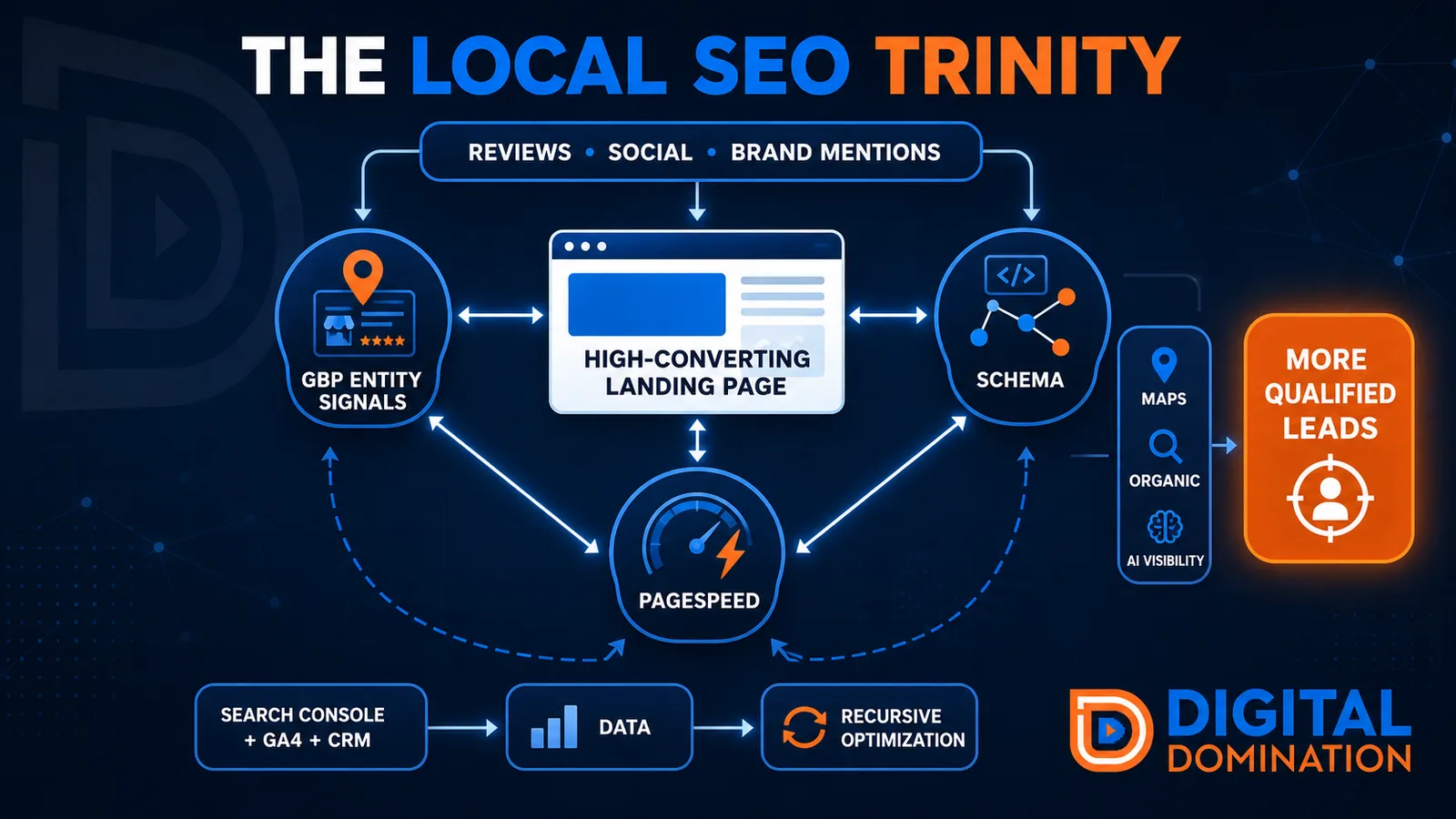
Think of a three-legged stool. Your Google profile, your website, and your reviews all have to hold you up. If one leg is short, the whole thing wobbles.
GBP entity signals
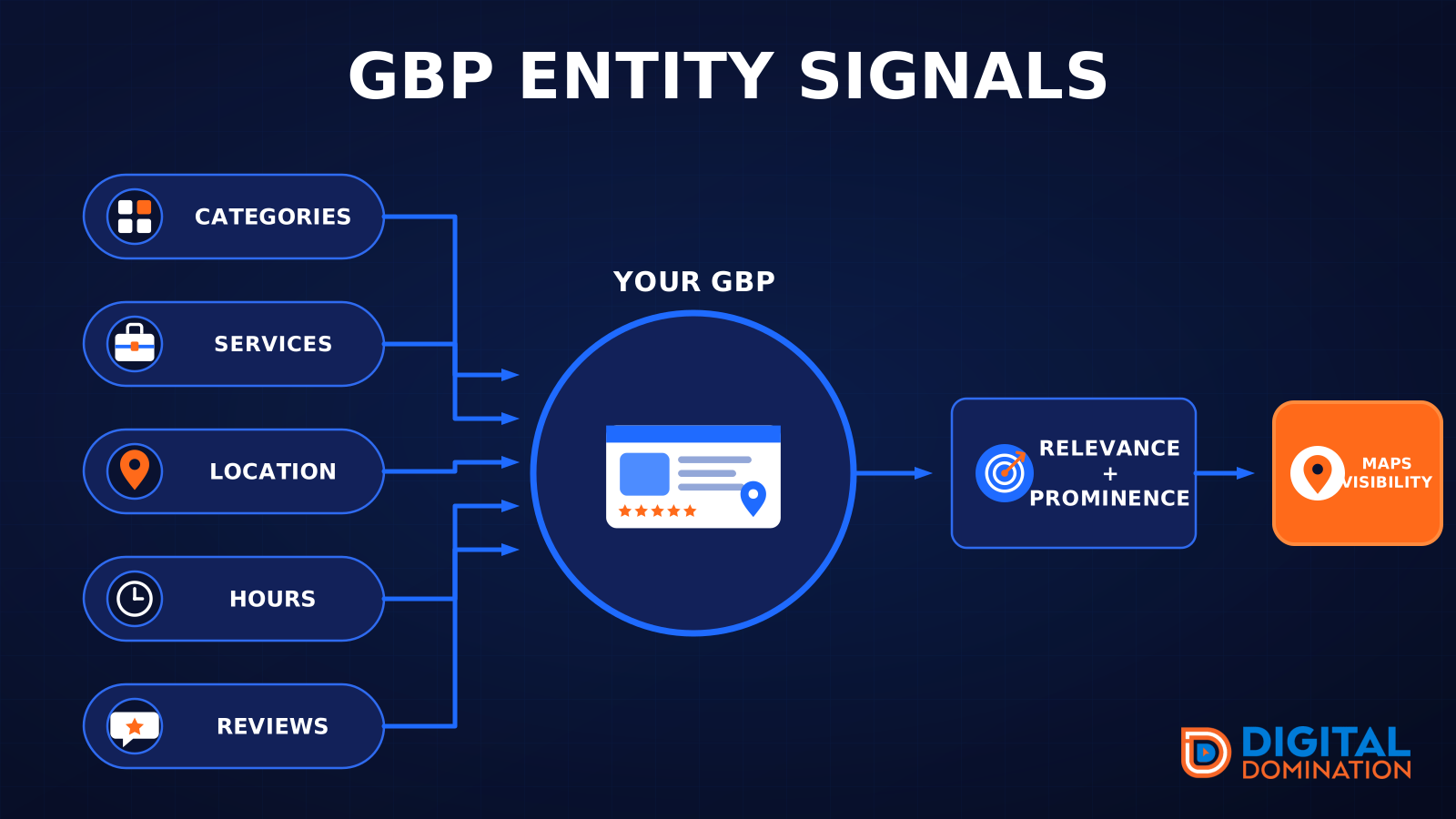
This leg is your Google Business Profile. GBP means Google Business Profile. It covers your categories, your services, your location, your hours, and your reviews. Google uses those facts to decide who to show.
Your Google profile is your storefront sign. If the sign is missing, or it names the wrong shop, people drive past.
PageSpeed to conversion
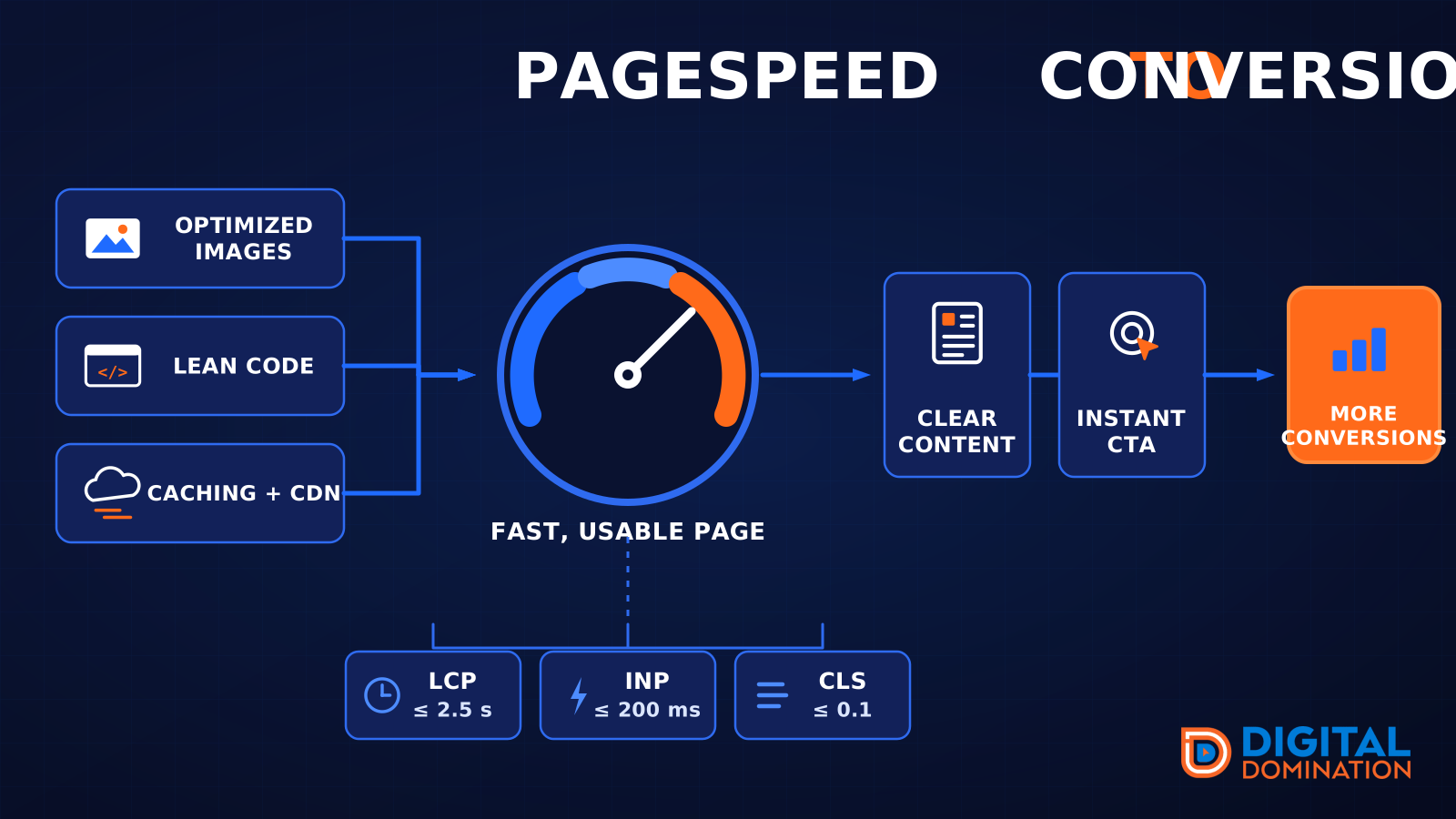
This leg is your website, above all on a phone. Small images, lean code, and caching make a page fast. A fast, clear page is what turns a visit into a call. Phone speed is one of the 12 Trinity checks because a slow page loses the call before anyone sees your offer.
Your website is the showroom. If the door sticks, people leave before they look around.
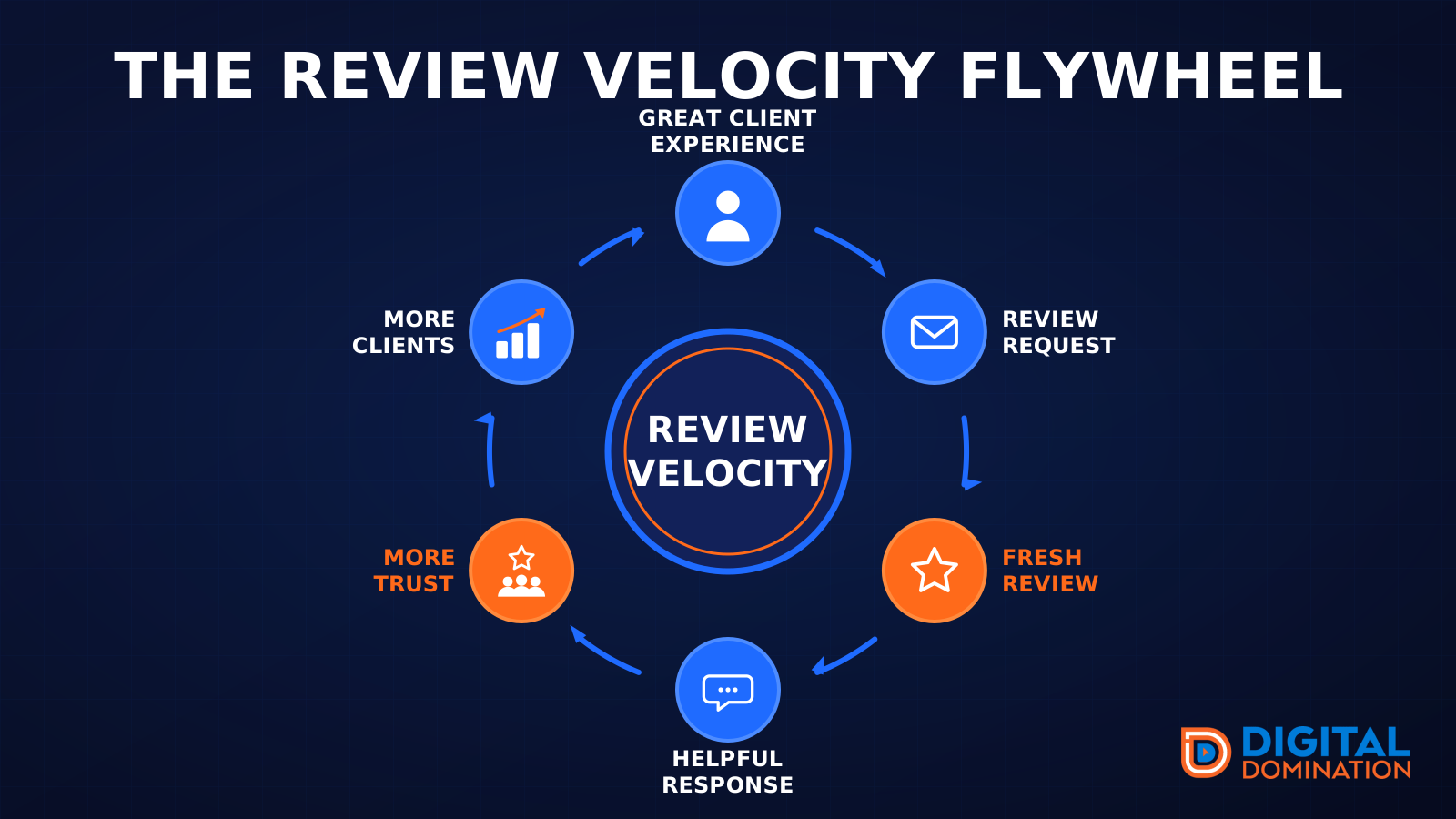
The review velocity flywheel
This leg is reviews and reputation. A good visit leads to a review request, then a fresh review, then a helpful reply, then more trust, then more customers. When the scan can find your Google listing, it shows your rating, your recent reviews, and how many you answered.
Reviews are word of mouth. One kind word helps. A steady stream of real reviews, and a reply from you, helps more.
How this turns into revenue
Being found in more searches leads to more calls. More calls lead to more booked jobs. More booked jobs lead to more revenue.
Example numbers, not a real business: 40 calls from search in a month, a 25 percent close rate, and a $400 average job. That is 10 booked jobs. That is $4,000. The math is the lesson. It is not a promise.
The full page has a box where you can type your own average job value and close rate.
One real story, from our car dealership case study: Medina Auto Group went from invisible on Google Maps to dominating every high-intent search across their market. The turnaround spanned all four of their rooftops at once. The same page says the team eliminated 89 unfair one-star reviews that had been dragging the dealership's reputation down and keeping it out of the Map Pack. It also says: “Results described here are exceptional and non-typical. Outcomes vary based on market conditions, competition, and implementation. No guarantees are made regarding earnings, rankings, or conversions.”
Free strategy call
More booked jobs start with a clear plan
Book a free strategy call. We look at your Google profile, your website, and your reviews, and we tell you what to fix first.
Free. You pick the time. A real person shows up.