
When to choose Google Maps SEO instead of hiring an in-house marketer
A practical buyer guide for local business owners deciding between a specialist Google Maps program and a full-time marketing hire.
The short answer
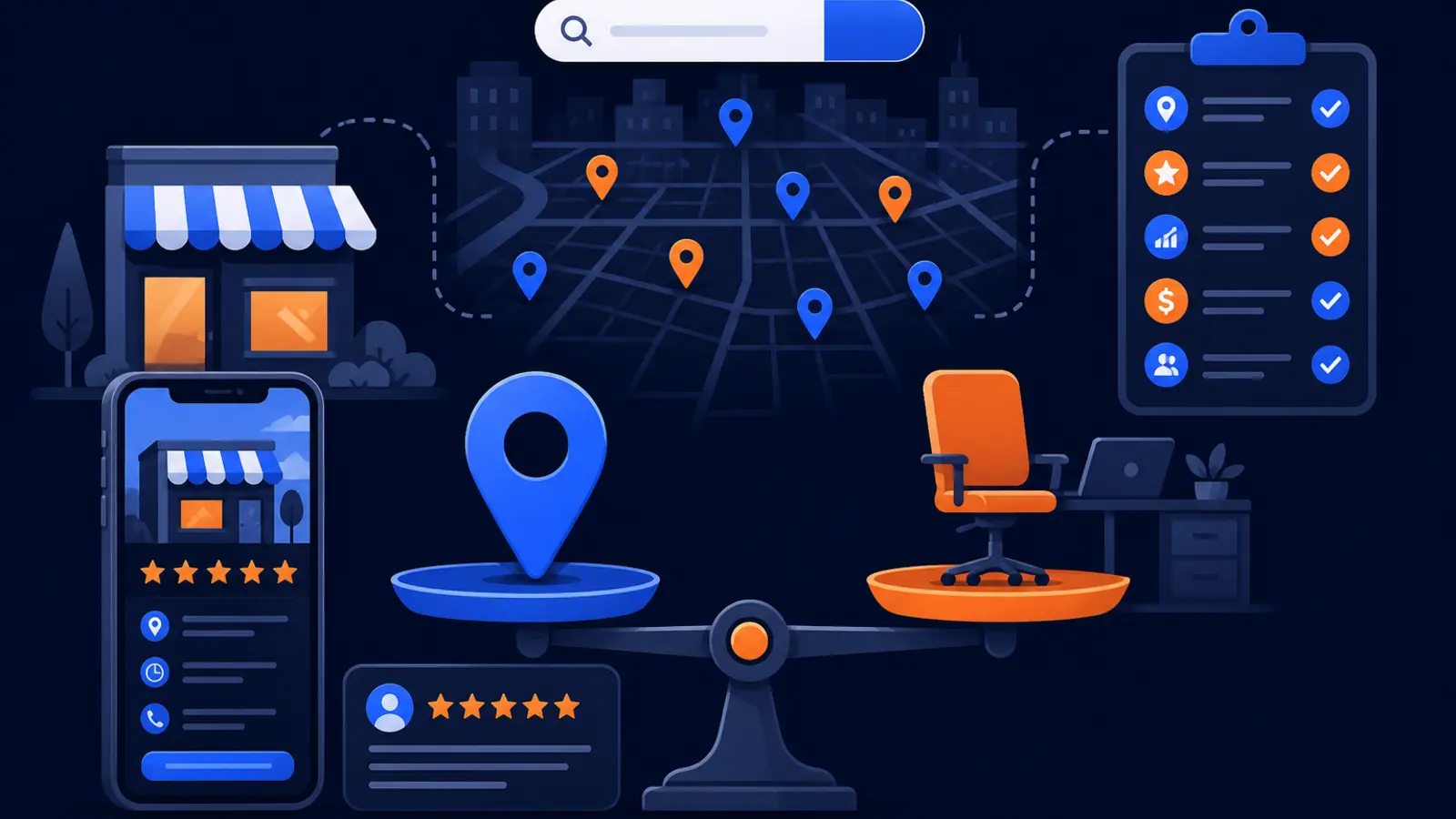
Choose done-for-you Google Maps SEO when your main buying problem is simple: you need more local customers finding you in Google Maps, calling you, and choosing you over nearby competitors. If your profile, reviews, categories, service pages, local signals, and tracking are the bottleneck, a specialized Google Maps SEO provider is usually the cleaner fit than a general in-house marketing coordinator.
Hire an in-house marketer when you need a full-time person to own many different marketing jobs every week. That can include brand work, email campaigns, social media, content calendars, print materials, vendor coordination, event promotion, campaign reporting, and customer communications across channels.
The decision is not agency good, employee bad. It is about the job you are actually trying to get done. If Google Maps visibility is the revenue problem, buy the specialist outcome. If the business has a steady stream of cross-channel marketing tasks and you can manage a full-time role well, hire the marketer.
Why this choice matters for local businesses
Google Maps is not a side channel for many local service businesses. Google’s 2026 services Business Profile playbook says Business Profiles helped drive more than 2 billion direct connections each month in 2024 for more than 19 million American businesses. Those connections can include actions like calls, messages, bookings, and website visits.
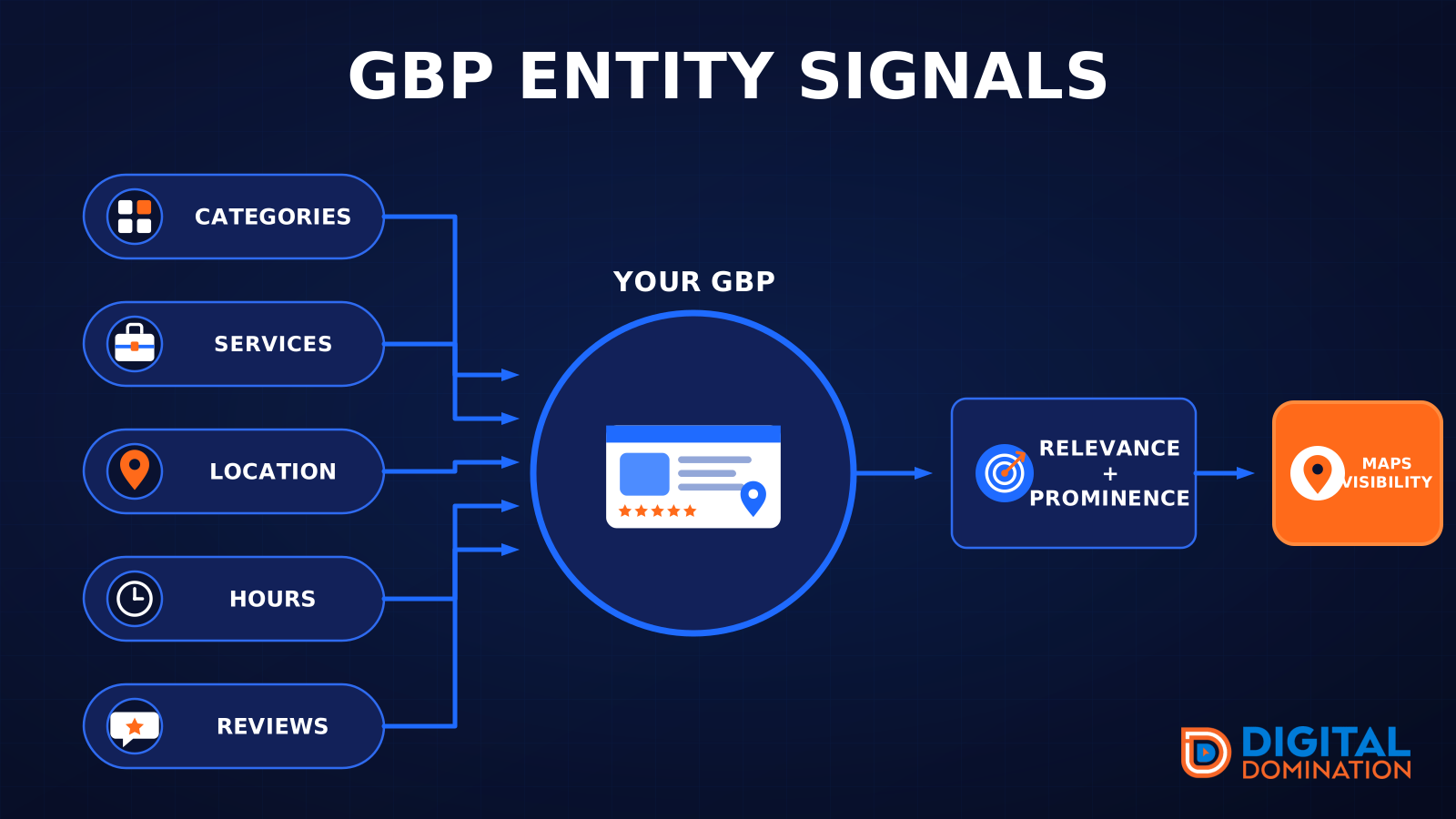
Google Business Profile Help also says local results are mainly based on relevance, distance, and prominence, and that there is no way to request or pay Google for a better local ranking. That matters because the work is not ad buying. It is the steady improvement of the signals Google uses to decide which businesses deserve to appear for local searches.
If you need better visibility in the Map Pack, the role needs practical experience with these moving parts:
- ▸Google Business Profile categories, services, hours, attributes, photos, and updates
- ▸Review growth without incentives, review response, and reputation hygiene
- ▸Local website pages that support the service area and services
- ▸Citation consistency and local business data cleanup
- ▸Tracking calls, website clicks, messages, bookings, and ranking movement
- ▸Competitor comparison across the actual neighborhoods you serve
When done-for-you Google Maps SEO is the smarter buy
Done-for-you Google Maps SEO is usually smarter when the owner can clearly say, “I do not need a general marketing department right now. I need more qualified local demand from Google.” That is common for plumbers, electricians, roofers, dentists, med spas, mechanics, attorneys, and other businesses where nearby customers search when they are ready to buy.
It also makes sense when the owner does not have time to train someone on local SEO. A marketing coordinator may be organized and hardworking, but Google Maps SEO is a narrow specialty. The wrong category choice, thin location pages, weak review process, duplicate listings, or poor tracking can slow progress even if the person is busy every day.
You are probably looking for a specialist if these statements sound familiar:
- ▸Your competitors show up in the Map Pack and you do not
- ▸You get referrals, but not enough strangers find you on Google
- ▸Your Google Business Profile exists, but nobody owns it consistently
- ▸You are unsure which calls came from Maps, ads, referrals, or your website
- ▸Your reviews are sporadic and there is no compliant request process
- ▸You need local ranking proof by neighborhood, not vague monthly commentary
When an in-house marketer is the better fit
An in-house marketer or marketing coordinator genuinely suits a business that needs ongoing brand, content, campaign, reporting, and cross-channel marketing work beyond Google Maps. This is especially true when the owner has enough work for a full-time person and enough management capacity to set priorities, review work, and remove obstacles.
The U.S. Bureau of Labor Statistics says market research analysts and marketing specialists typically need a bachelor’s degree, and lists duties such as monitoring marketing and sales trends, measuring marketing program effectiveness, gathering data on consumers and competitors, and preparing reports. Those duties are broader than Google Maps SEO.
Hiring can be the right move when the business needs one person to coordinate many moving parts like these:
- ▸Email newsletters and customer reactivation campaigns
- ▸Social media planning and daily posting
- ▸Sales collateral, flyers, sponsorships, and local event support
- ▸Photo and video coordination across the company
- ▸Internal reporting for leadership and sales teams
- ▸Vendor coordination across ads, SEO, website, design, and print
- ▸Brand consistency across every customer touchpoint
The cost comparison is not just salary versus retainer
A full-time marketing hire carries more than salary. The U.S. Bureau of Labor Statistics reported 2025 median pay of $78,760 per year for market research analysts and marketing specialists. A business also has to consider payroll taxes, benefits, tools, software, recruiting time, training time, and the owner’s time managing the role.
A managed local SEO service is different. Ahrefs reported from a poll of 439 SEO service providers that local SEO costs $1,557 per month on average, agencies charge $1,819 on average, freelancers charge around $1,150, and 78.2% of SEOs charge a monthly retainer. Those are market averages, not a promise of what any specific provider will charge.
Digital Domination does not publish one flat retainer for the Maps Domination Program because pricing is set per market on a qualification call and tied to the ranking outcome. The important buying question is not “Which line item is smaller?” It is “Which option is built to solve the problem I have right now?”
Compare the real cost in these buckets:
- ▸Cash cost: salary, benefits, software, retainers, and ad hoc vendor fees
- ▸Management cost: training, meetings, approvals, and accountability
- ▸Opportunity cost: months spent learning instead of executing
- ▸Specialist cost: paying for narrow expertise only where you need it
- ▸Replacement cost: what happens if the employee leaves or the vendor fails
What Google Maps SEO actually includes
Google Maps SEO is not one task. BrightLocal’s public managed local SEO service page describes local SEO services as claiming and optimizing a Google Business Profile, optimizing the website for local searches, and building local citations. That is a good plain-English frame for what most owners should expect.
Google Business Profile Help says a verified Business Profile tells Google the business is authorized to be represented and is more likely to show up in search results. Google also says complete and accurate profile information is more likely to show up in local search results, including details such as address, hours, category, and attributes.
A serious Google Maps SEO program should usually touch these areas:
- ▸Profile ownership, verification status, and access control
- ▸Primary and secondary categories that match real services
- ▸Business description, services, products, photos, and videos
- ▸Service area, hours, holiday hours, attributes, and contact details
- ▸Website pages that support the services and cities you want to win
- ▸Citation cleanup and consistent name, address, and phone data
- ▸Review requests, review responses, and review policy compliance
- ▸Ranking, call, click, message, and booking reporting
What to look for and what to expect
A good provider should make the work visible enough that a non-technical owner can inspect it. You do not need to understand every SEO term, but you should be able to see what changed, why it changed, and whether your local visibility is moving in the right direction.
Google Business Profile Help says Business Profile performance reporting can show calls, website clicks, messages, bookings, product views, menu clicks, and offer views. Google also says Business Profile photos and videos show on Google only after the profile is verified, and businesses can add photos and videos of the storefront, products, and services.
BrightLocal states on its managed local SEO service page that most clients see ranking and traffic improvements within 4-8 weeks, with bigger results such as more enquiries, calls, and revenue building over 3-6 months. Treat that as a general market expectation, not a guarantee for your exact city, trade, competition level, or starting point.
Before you sign, ask for checkpoints you can verify:
- ▸A clear starting scan showing where you rank across the service area
- ▸Confirmation that your profile access, ownership, and verification are clean
- ▸A written list of profile fields reviewed and corrected
- ▸A review plan that does not use incentives
- ▸A content and website plan tied to real services and cities
- ▸A simple report that shows calls, clicks, messages, and ranking movement
- ▸A named person or team responsible for explaining changes
- ▸A clear rule that you approve material profile changes
Red flags when buying Google Maps SEO
The wrong provider can create risk. Google Business Profile Help says reviews can help a business stand out in Maps and Search, and that offering incentives in exchange for posting, changing, or removing reviews is strictly prohibited. Any vendor suggesting gift cards, discounts, or rewards for reviews is asking you to take a compliance risk.
Google Business Profile Help also says third-party Business Profile managers must inform customers of all profile changes and cannot change or disable profile features without the business owner’s consent. Google says third-party managers must share management costs and performance reports in a way that is easy for customers to access.
Google lists guarantees of top placement on Google and claims that profiles will appear in Google Search or Maps at all times as examples of false, misleading, or unrealistic third-party claims. Be careful with anyone who explains rankings as if they control Google.
Watch for these warning signs:
- ▸They ask to own your Google Business Profile instead of manage it with permission
- ▸They will not explain what they changed
- ▸They promise you will appear everywhere at all times
- ▸They use fake offices, fake service areas, or keyword stuffing
- ▸They suggest paying customers for reviews
- ▸They hide management costs or performance reports
- ▸They cannot show rankings by location inside your actual service area
- ▸They talk only about activity, not calls, clicks, visibility, and leads
Seven questions to ask before you sign
You do not need to become an SEO expert to buy well. You need direct answers that reveal whether the provider understands local search, follows Google’s rules, and can show progress in plain terms.
Use these questions on a sales call:
- ▸How will you measure Map Pack visibility across my actual service area?
- ▸What will you change in my Google Business Profile, and how will I approve changes?
- ▸How do you handle reviews without incentives or policy risk?
- ▸What website work is included, and what is outside scope?
- ▸How will I see calls, clicks, messages, bookings, and ranking movement?
- ▸Who owns my profile, website content, logins, and reports if we stop working together?
- ▸What makes my market harder or easier than another local market?
- ▸How many businesses in my trade and service area do you work with?
How Digital Domination fits this decision
Digital Domination is a fit when your priority is Google Maps visibility and you want a specialist program instead of a general marketing employee. The company focuses on attention, authority, trust, and rankings online, based on 20 years of learning how businesses earn those things.
The free 169-point GeoGrid scan checks 169 real Google results across the service area, so the starting point is not based on one search from one office computer. Digital Domination also works with one client per trade per service area, so territory exclusivity is part of the buying conversation.
For owners who want proof instead of vague reporting, the Maps Domination Program includes weekly GeoGrid tracking reports with visual proof of rankings and call volume. Pricing is set per market on a qualification call and tied to the ranking outcome.
Digital Domination is most relevant when you want these things:
- ▸A specialist team focused on Google Maps, not a generalist hire
- ▸A market scan before pricing is discussed
- ▸Territory exclusivity by trade and service area
- ▸Visual ranking reports across the places your customers search from
- ▸Call volume reporting alongside ranking movement
- ▸A qualification call to decide whether the market and goal are a fit
The practical decision rule
If you have a pile of marketing tasks across every channel, hire the in-house marketer. If you have a Google Maps visibility problem, buy the Google Maps specialist. If you have both problems, you may eventually need both, but most local businesses should solve the highest-value bottleneck first.
For many owner-led businesses, the bottleneck is not a lack of social posts or a prettier brochure. It is that the business is not visible enough when a nearby buyer searches for the service. In that case, hiring a coordinator can add payroll before the main ranking and reputation problem is fixed.
Use this simple rule:
- ▸Choose done-for-you Google Maps SEO when calls from local search are the main goal
- ▸Choose an in-house marketer when daily cross-channel execution is the main need
- ▸Choose both only when the budget, workload, and management structure support both
- ▸Do not hire a generalist and expect them to instantly perform like a local SEO specialist
- ▸Do not hire an SEO provider when what you really need is a full-time internal operator
Next step if Google Maps is the bottleneck
If this guide made the choice clearer and your main problem is Google Maps visibility, visit Digital Domination’s Get Ranked page. It explains the Maps Domination Program, who it is for, how the market qualification process works, and what kind of reporting an owner can expect.
You can also request the free GeoGrid scan on the free GeoGrid scan page. The scan checks 169 real Google results across your service area, so you can see whether Maps visibility is truly the issue before discussing a paid program.
Keep reading
Related guides
- ▸The real timeline to top 3 in the Google Map Pack
- ▸The Trinity AI Accelerator near me
- ▸The Trinity AI Accelerator Vs Doing Local SEO Yourself Diy With Free G
Put it into action
Frequently Asked Questions
Should I hire a marketing coordinator or pay for Google Maps SEO?
Hire a marketing coordinator if you need daily work across many channels, such as email, social media, events, reporting, and vendor coordination. Pay for Google Maps SEO if the main problem is that nearby customers are not finding you in the Map Pack. The cleaner choice is the one built for the bottleneck you actually have.
Can an in-house marketer handle Google Business Profile SEO?
Some can, but many marketing coordinators are generalists. Google Maps SEO requires specific work around profile optimization, reviews, local pages, citations, reporting, and competitor tracking. If the person has not done that work before, expect training time and a learning curve.
Is Google Maps SEO cheaper than hiring a full-time marketer?
Often the monthly cash cost is lower, but the better comparison is total cost and fit. The U.S. Bureau of Labor Statistics reported 2025 median pay of $78,760 per year for market research analysts and marketing specialists, while Ahrefs reported local SEO pricing averages from surveyed providers. Your decision should include salary, tools, management time, and the outcome you need.
How fast should Google Maps SEO work?
There is no universal timeline because markets, competition, starting profiles, and websites differ. BrightLocal states on its managed local SEO service page that many clients see ranking and traffic improvements within 4-8 weeks, with larger business results building over 3-6 months. Treat that as a general expectation, not a promise for your market.
What should a Google Maps SEO company report to me?
At minimum, you should see ranking movement across the service area and Business Profile actions such as calls, website clicks, messages, and bookings when available. Google Business Profile Help says performance reporting can show several of these actions. A good report should be easy for an owner to read without needing SEO training.
Is it safe to let a third party manage my Google Business Profile?
It can be safe if you keep proper ownership and the manager follows Google’s rules. Google Business Profile Help says third-party managers must inform customers of profile changes and cannot change or disable profile features without the owner’s consent. Avoid any provider that wants hidden access, refuses to explain changes, or takes control away from you.
Can I pay Google to rank higher in Maps?
No. Google Business Profile Help says there is no way to request or pay for a better local ranking on Google. Local results are mainly based on relevance, distance, and prominence, so the work is about improving the signals Google uses, not paying Google for organic Map Pack placement.
When should I use Digital Domination instead of hiring in-house?
Digital Domination is worth considering when your main goal is stronger Google Maps visibility and you want a specialist team instead of a general marketing employee. The free 169-point GeoGrid scan checks real Google results across your service area before the paid program is discussed. If you need broad daily marketing support across many channels, an in-house hire may be the better first move.
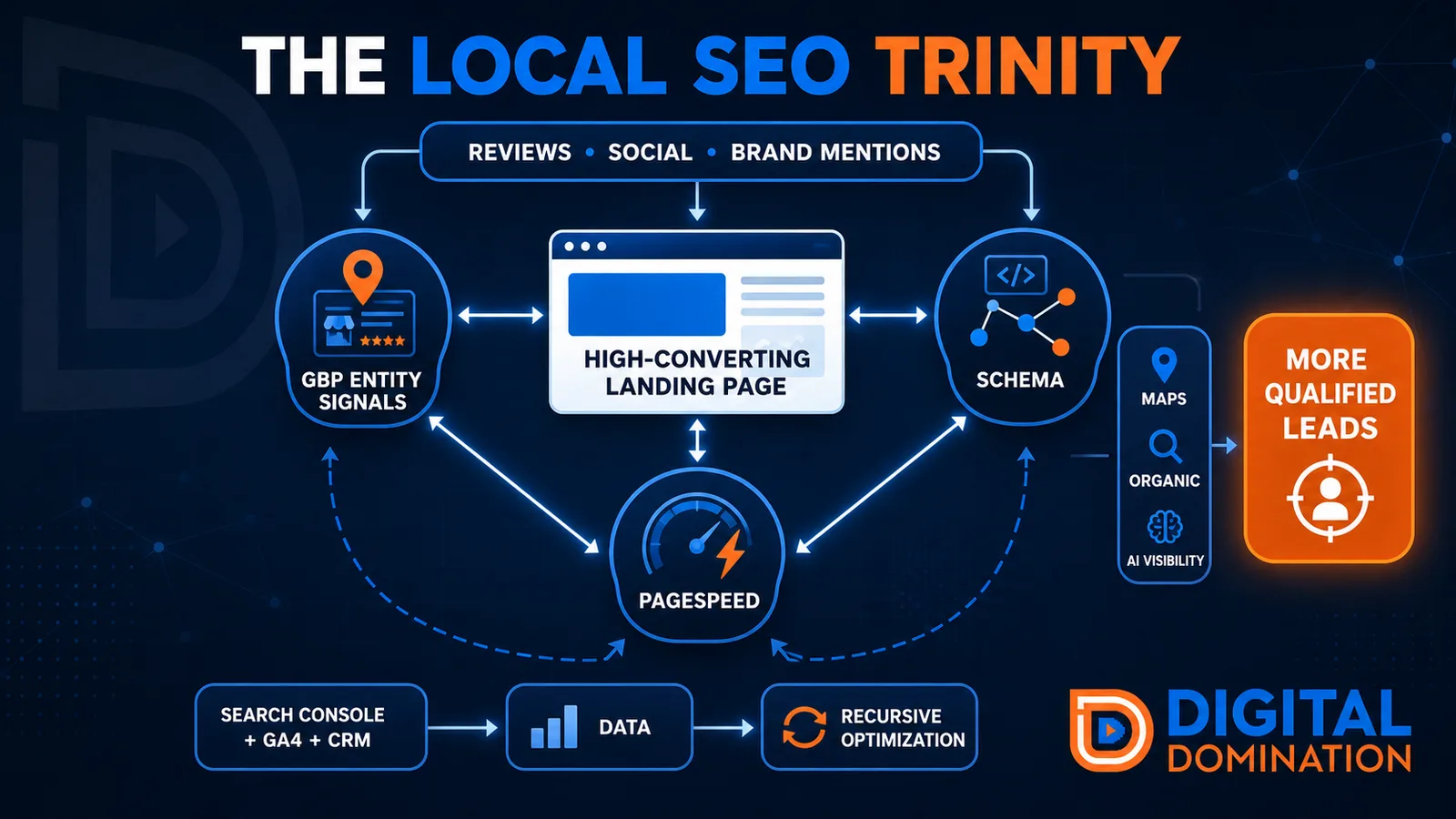
The Local SEO Trinity
Think of a three-legged stool. Your Google profile, your website, and your reviews all have to hold you up. If one leg is short, the whole thing wobbles.
GBP entity signals
This leg is your Google Business Profile. GBP means Google Business Profile. It covers your categories, your services, your location, your hours, and your reviews. Google uses those facts to decide who to show.
Your Google profile is your storefront sign. If the sign is missing, or it names the wrong shop, people drive past.
PageSpeed to conversion
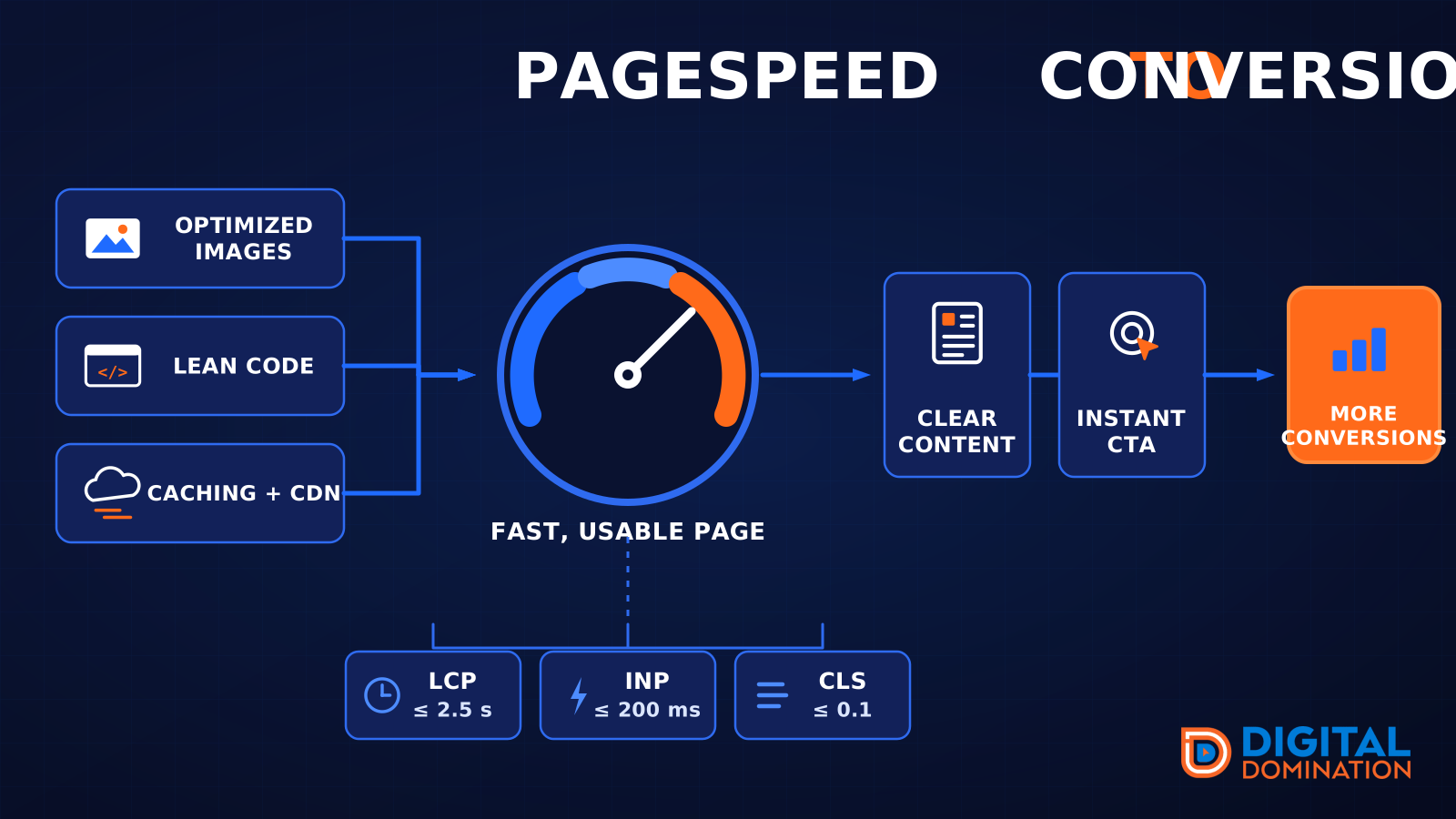
This leg is your website, above all on a phone. Small images, lean code, and caching make a page fast. A fast, clear page is what turns a visit into a call. Phone speed is one of the 12 Trinity checks because a slow page loses the call before anyone sees your offer.
Your website is the showroom. If the door sticks, people leave before they look around.
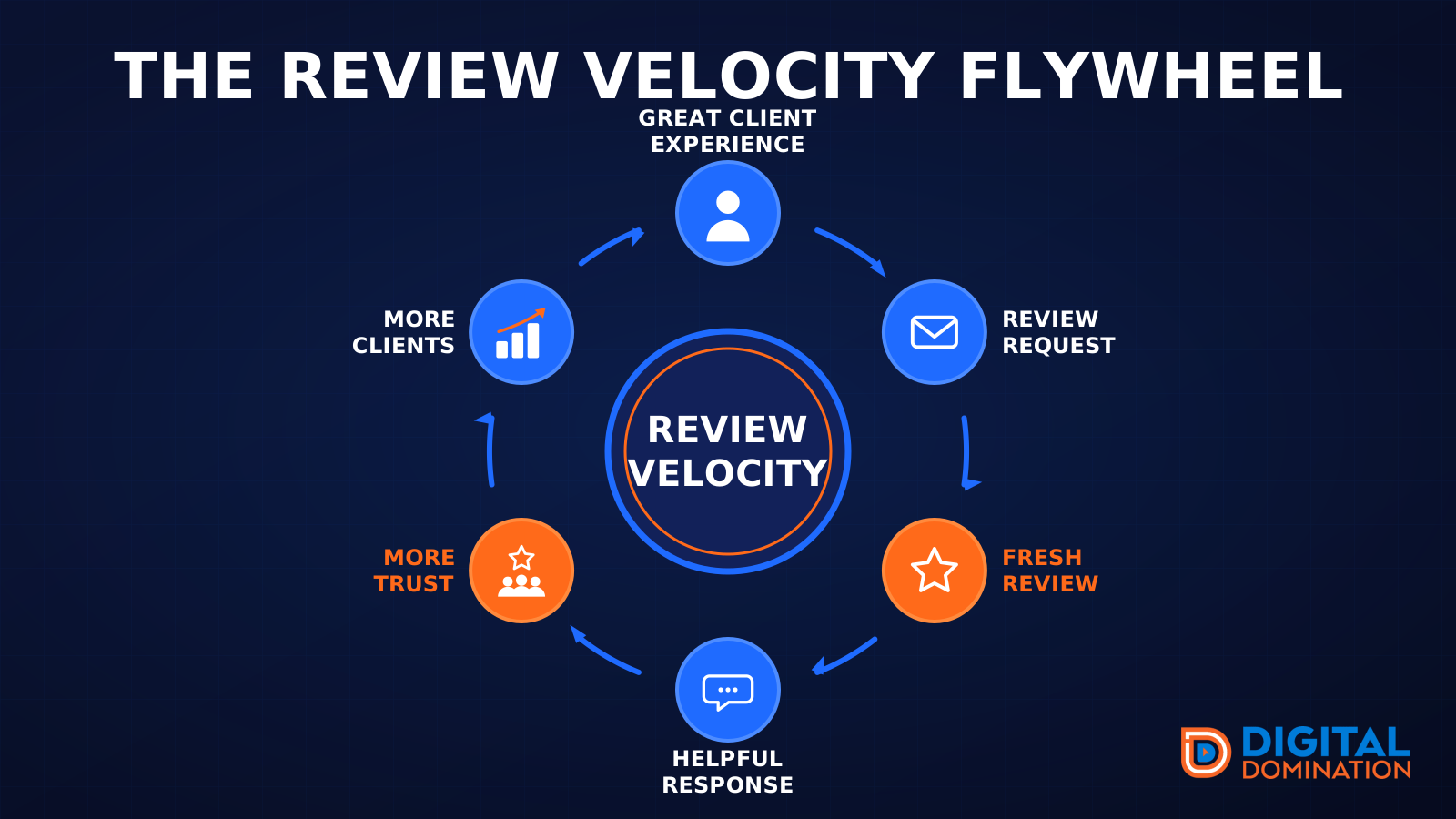
The review velocity flywheel
This leg is reviews and reputation. A good visit leads to a review request, then a fresh review, then a helpful reply, then more trust, then more customers. When the scan can find your Google listing, it shows your rating, your recent reviews, and how many you answered.
Reviews are word of mouth. One kind word helps. A steady stream of real reviews, and a reply from you, helps more.
How this turns into revenue
Being found in more searches leads to more calls. More calls lead to more booked jobs. More booked jobs lead to more revenue.
Example numbers, not a real business: 40 calls from search in a month, a 25 percent close rate, and a $400 average job. That is 10 booked jobs. That is $4,000. The math is the lesson. It is not a promise.
The full page has a box where you can type your own average job value and close rate.
One real story, from our car dealership case study: Medina Auto Group went from invisible on Google Maps to dominating every high-intent search across their market. The turnaround spanned all four of their rooftops at once. The same page says the team eliminated 89 unfair one-star reviews that had been dragging the dealership's reputation down and keeping it out of the Map Pack. It also says: “Results described here are exceptional and non-typical. Outcomes vary based on market conditions, competition, and implementation. No guarantees are made regarding earnings, rankings, or conversions.”
Free strategy call
More booked jobs start with a clear plan
Book a free strategy call. We look at your Google profile, your website, and your reviews, and we tell you what to fix first.
Free. You pick the time. A real person shows up.