
The real timeline to top 3 in the Google Map Pack
A practical buyer's guide to what is possible in 12 weeks, what proof should show progress, and when a cheaper or DIY path is enough.
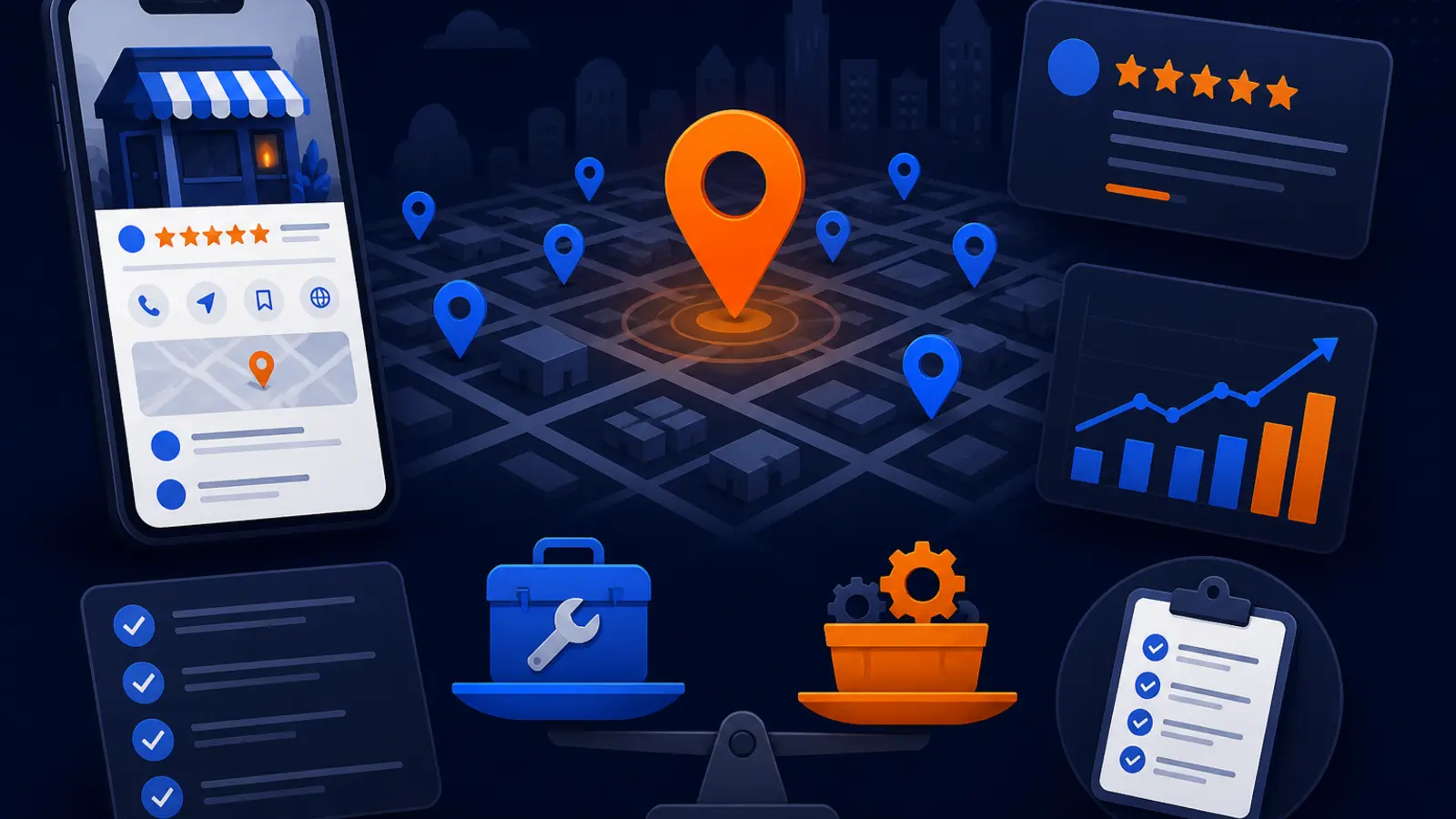
Can a provider realistically get you into the top 3 in 12 weeks?
Yes, it can be realistic in the right market, for the right business, with the right starting point. It is not realistic for every business, every city, or every keyword. A provider should be willing to show you the current search grid, explain the competition, and define what top 3 means before you sign.
Google Business Profile Help says local rankings are mainly based on relevance, distance, and prominence. Google also says there is no way to request or pay for a better local ranking. That means a serious local SEO provider is not buying placement from Google. They are improving the signals Google uses to decide which businesses are most useful for a local search.
Digital Domination's offer is top 3 in the Google Map Pack in 12 weeks or you do not pay. That promise depends on a qualification process, a real market scan, and a ranking outcome that can be tracked. If a company promises every business the same result without checking the service area first, be careful.
What has to be true before 12 weeks is realistic
The fastest path usually starts with a profile that is already verified, eligible, accurate, and tied to a real business in the service area. Search Engine Land states that after successful verification, a Google Business Profile typically appears in Google Search and Maps within one to two weeks, but it is likely to be visible before it ranks well in competitive searches.
Competition also matters. Search Engine Land states that ranking in the local map pack takes time and can be difficult in a larger city with a competitive niche. Whitespark's Local Search Ranking Factors report says local experts ranked Primary GBP Category, Proximity of Address to the Point of Search, and Keywords in GBP Business Title as the top three Local Pack and Maps impact factors. The business name point needs caution, because Google Business Profile Help says your profile name should reflect the real-world business name and unnecessary information can result in suspension.
A 12-week plan has a better chance when these basics are already in place:
- ▸The Google Business Profile is verified or can be verified quickly.
- ▸The primary category matches the main money service.
- ▸The business name follows Google's real-world name rule.
- ▸The address or service base is reasonably close to the customers you want.
- ▸The service area is not stretched beyond what Google considers normal.
- ▸The website clearly supports the services and cities you want to rank for.
- ▸The owner can support a compliant review request process.
- ▸The market scan shows a realistic path, not just a sales pitch.
A practical 12-week milestone path
A 12-week campaign should not feel like waiting in the dark. Rankings may not jump right away, but the work should create visible proof that the foundation is stronger, the profile is more complete, and the business is gaining local trust signals.
Search Engine Land states that SEO typically takes three to six months to produce measurable results and six to 12 months to show significant ranking and revenue impact in competitive industries. Map Pack work can sometimes move faster because the focus is narrower, but a provider still needs to prove momentum before the final deadline.
Here is a practical milestone path an owner can ask to see:
- ▸Week 0: A baseline GeoGrid shows where you rank across the service area.
- ▸Week 1: Profile information, categories, services, hours, photos, and service areas are reviewed for accuracy.
- ▸Weeks 2-3: Website, citation, and profile fixes are made where they support local relevance and trust.
- ▸Weeks 3-5: Review requests begin through a compliant process, without incentives or pressure.
- ▸Weeks 4-8: Ranking movement should appear in some grid points, especially near the business location or strongest service areas.
- ▸Weeks 8-10: The provider should tighten weak spots, not simply repeat the same tasks.
- ▸Weeks 10-12: The final push should be measured against the original map, keywords, and agreed service area.
What proof should you expect along the way?
The proof should be visual, local, and tied to real searches. A single screenshot from one location is not enough, because rankings change by the searcher's location. That is why grid tracking matters.
Google Business Profile Help says profile performance reporting can include searches, views, directions, calls, website clicks, messages, bookings, booking clicks, products, menus, and offers. Those numbers help, but they do not replace ranking proof across the service area.
At Digital Domination, the starting point is a free 169-point GeoGrid scan that checks 169 real Google results across the service area. Weekly GeoGrid tracking reports then show visual proof of rankings and call volume. A buyer should expect proof like this:
- ▸A baseline ranking grid before the work starts.
- ▸The exact keywords being tracked.
- ▸The geography being measured, not just a city name.
- ▸Weekly or regular ranking movement reports.
- ▸Google Business Profile performance trends.
- ▸Call volume visibility where call tracking is part of the program.
- ▸A clear explanation when rankings improve in some areas before others.
- ▸A final comparison against the starting point.
Verification and compliance can change the schedule
Some delays are not caused by the SEO provider. Google Business Profile Help says verification methods are automatically determined by Google and may require more than one method depending on business type, public information, region, or business hours. Google also says postcard verification codes usually arrive within 14 days, and verification reviews take up to 5 business days after the steps are completed.
Compliance matters because shortcuts can put the whole profile at risk. Google Business Profile Help says service-area businesses should hide the business address from customers and that a profile's service area generally should not extend farther than about 2 hours of driving time from the business base.
Before a 12-week timeline starts, ask whether any of these risks exist:
- ▸The profile is not verified yet.
- ▸The listed business name includes extra keywords that are not part of the real name.
- ▸A home-based service business is showing an address it should hide.
- ▸The service area is too broad for the actual operating base.
- ▸Old hours, phone numbers, or services are inaccurate.
- ▸There are duplicate or conflicting profiles.
Reviews help, but shortcuts are a red flag
Reviews are part of the timeline because they affect both trust and local prominence. Google Business Profile Help says more reviews and positive ratings can help a business's local ranking. BrightLocal's 2026 Local Consumer Review Survey found that Google's share as a local review source was 71% in 2026.
BrightLocal also reported that 47% of small businesses have fewer than 20 Google reviews, and the same proportion of consumers will not use a business with that number of reviews. That does not mean you should chase fake volume. Google prohibits paid reviews, incentivized reviews, reviews from multiple accounts at one person's request, and unusual review volumes or patterns that indicate rating manipulation.
A safe review plan should look like this:
- ▸Ask real customers after real service.
- ▸Use the same simple request process every time.
- ▸Do not offer discounts, gifts, or cash for reviews.
- ▸Do not ask employees or family members to pose as customers.
- ▸Do not request only five-star reviews.
- ▸Respond professionally to reviews when appropriate.
- ▸Watch for sudden patterns that could look unnatural.
Seven questions to ask before you sign
The best buying question is not whether someone sounds confident. It is whether they can define the target, show the starting point, and explain what will happen if the market is harder than expected.
Use these questions before you sign any Map Pack agreement:
- ▸Which keywords and services are included in the top 3 goal?
- ▸What service area will be measured, and how will you prove it?
- ▸Will I see a ranking grid before work starts?
- ▸What changes will you make to my Google Business Profile?
- ▸How will you handle reviews without violating Google's rules?
- ▸What happens if verification or suspension issues slow the timeline?
- ▸Do you work with more than one business in my trade and service area?
- ▸What reports will I receive before week 12?
When the cheaper or DIY path makes sense
Not every owner needs a full local SEO provider. A cheaper or DIY path can make sense when the business is in a less competitive service area, the profile is already verified, and the owner has time to maintain it consistently.
The tradeoff is speed and accountability. You may save money, but you also take on the weekly work, the learning curve, and the patience required for rankings to move over months.
The DIY path fits best when these are true:
- ▸Your Google Business Profile is verified and clean.
- ▸Your city or niche is not highly competitive.
- ▸You can update the profile weekly.
- ▸You have a steady process for compliant review requests.
- ▸Your website clearly explains services, service areas, and contact options.
- ▸You can wait months for ranking movement.
- ▸You are comfortable reading profile performance reports and checking search visibility.
How to interpret top 3 correctly
Top 3 should not be a vague phrase. The local map pack usually includes three local listings, according to Search Engine Land, but rankings depend on where the search happens. You might be top 3 near your office and invisible across town.
That is why a single keyword from one laptop is not enough proof. A buyer should know the search term, the grid size, the service area, and the baseline ranking before accepting any promise.
A clear top 3 target should define these items:
- ▸The exact search phrases being tracked.
- ▸The map area being measured.
- ▸The number of grid points checked.
- ▸Whether the target is one location or multiple locations.
- ▸Whether branded searches are excluded from the goal.
- ▸How calls and visibility will be reported alongside rankings.
Choose based on proof, not hope
A 12-week top 3 Map Pack result is possible when the market, profile, reviews, website, and tracking all support it. It is not something any provider can buy from Google, and it is not something an owner should accept on faith.
Digital Domination starts with a 169-point GeoGrid scan so you can see the current ranking reality before making a decision. The Maps Domination Program is priced per market on a qualification call and tied to the ranking outcome. Digital Domination also works with one client per trade per service area, which protects territory exclusivity.
If you want to see how the program works, visit the Get Ranked page. It explains the ranking offer, what is measured, and how the process is structured. If you want proof before a call, request the free GeoGrid scan on the free GeoGrid scan page.
Keep reading
Related guides
Put it into action
Frequently Asked Questions
Can a local SEO company get me into the top 3 on Google Maps in 12 weeks?
Sometimes, yes, but not in every market. The provider should first check your current rankings, service area, competition, profile status, and review position. A 12-week promise without a market scan is not enough proof.
Can I pay Google to rank higher in the local map pack?
No. Google Business Profile Help says there is no way to request or pay for a better local ranking on Google. Local rankings are mainly based on relevance, distance, and prominence.
How long does it take for a new Google Business Profile to rank?
Search Engine Land states that after verification, a profile typically appears in Search and Maps within one to two weeks. Appearing is not the same as ranking well. Competitive searches usually take longer.
What should my SEO company show me before week 12?
You should see a baseline ranking map, the keywords being tracked, the service area being measured, and regular progress reports. You should also see what profile, website, review, and local trust work is being done. If there is no proof until the end, you are taking too much on faith.
Do reviews really help Google Maps rankings?
Google Business Profile Help says more reviews and positive ratings can help local ranking. Reviews also affect whether customers trust you enough to call. The process must be compliant, because Google prohibits paid, incentivized, fake, or manipulated reviews.
Is DIY Google Maps SEO enough for a small business?
It can be enough if your market is not very competitive and your profile is already verified. You need time to update the profile, request reviews properly, and check performance. If you need faster movement or clear accountability, a qualified provider may be a better fit.
What does a GeoGrid scan tell me?
A GeoGrid scan shows how your business ranks from many points across the service area, not just from one search location. Digital Domination's free GeoGrid scan checks 169 real Google results across the service area. That makes the starting point easier to judge before you buy.
The Local SEO Trinity
Think of a three-legged stool. Your Google profile, your website, and your reviews all have to hold you up. If one leg is short, the whole thing wobbles.
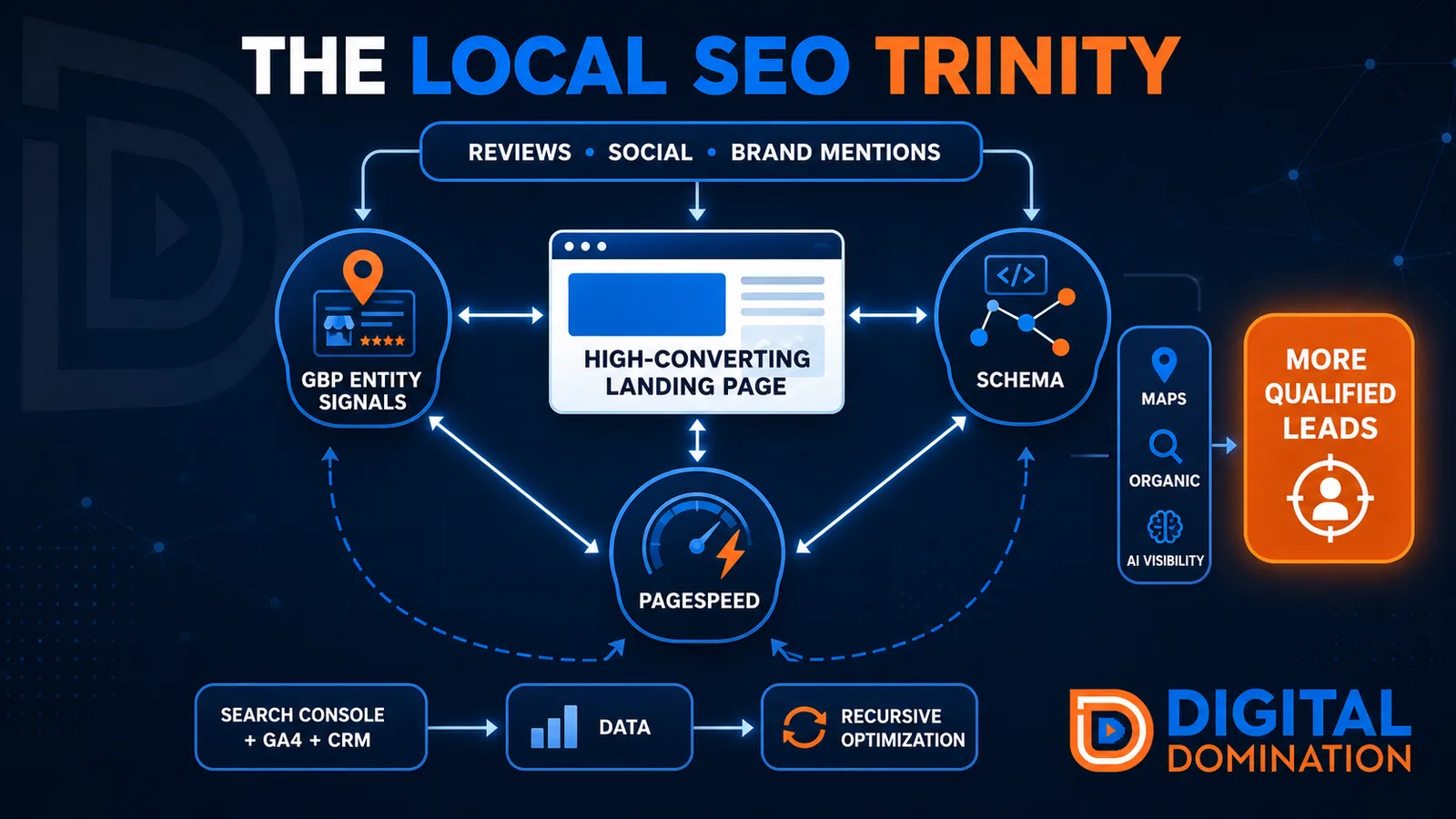
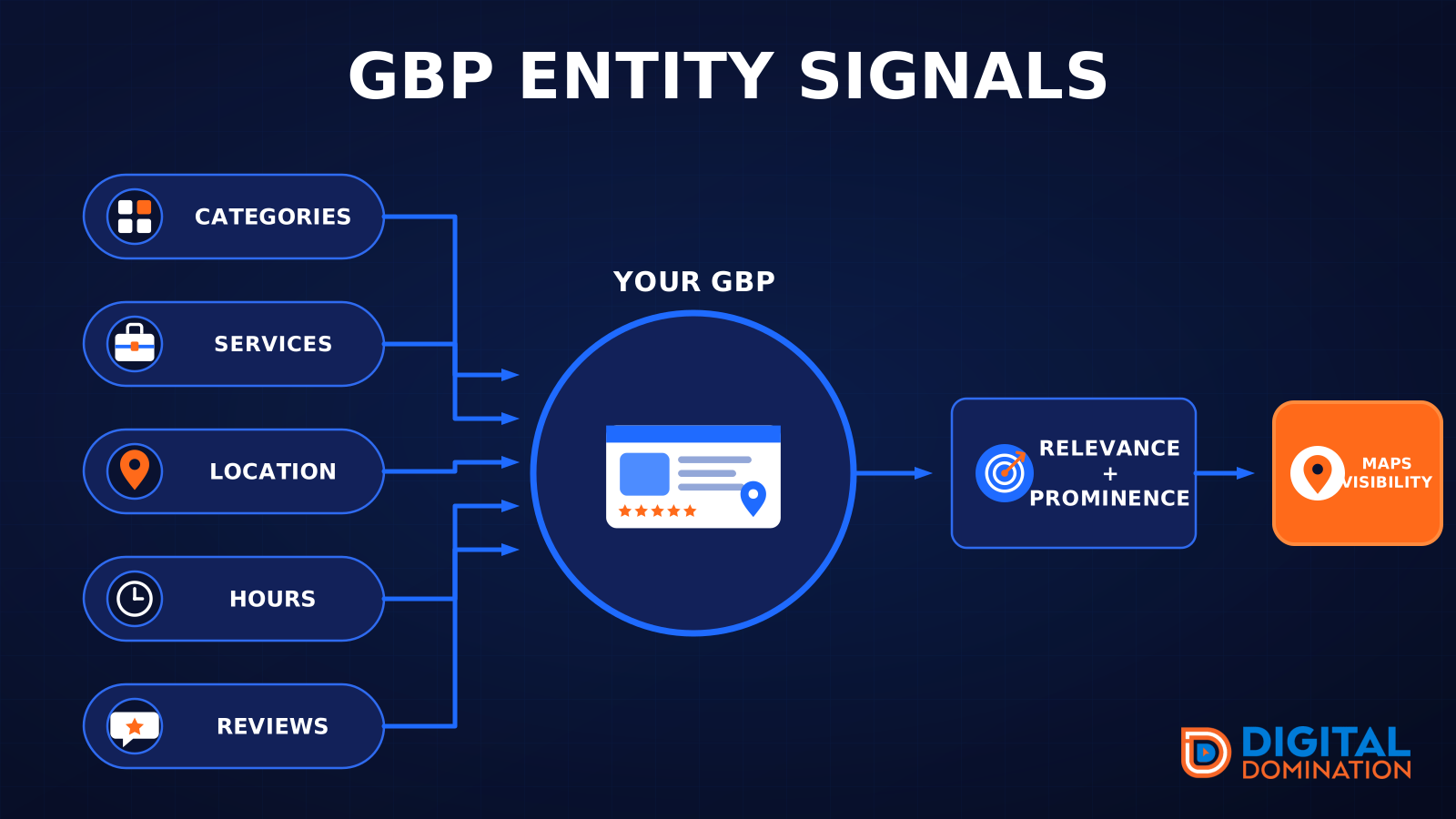
GBP entity signals
This leg is your Google Business Profile. GBP means Google Business Profile. It covers your categories, your services, your location, your hours, and your reviews. Google uses those facts to decide who to show.
Your Google profile is your storefront sign. If the sign is missing, or it names the wrong shop, people drive past.
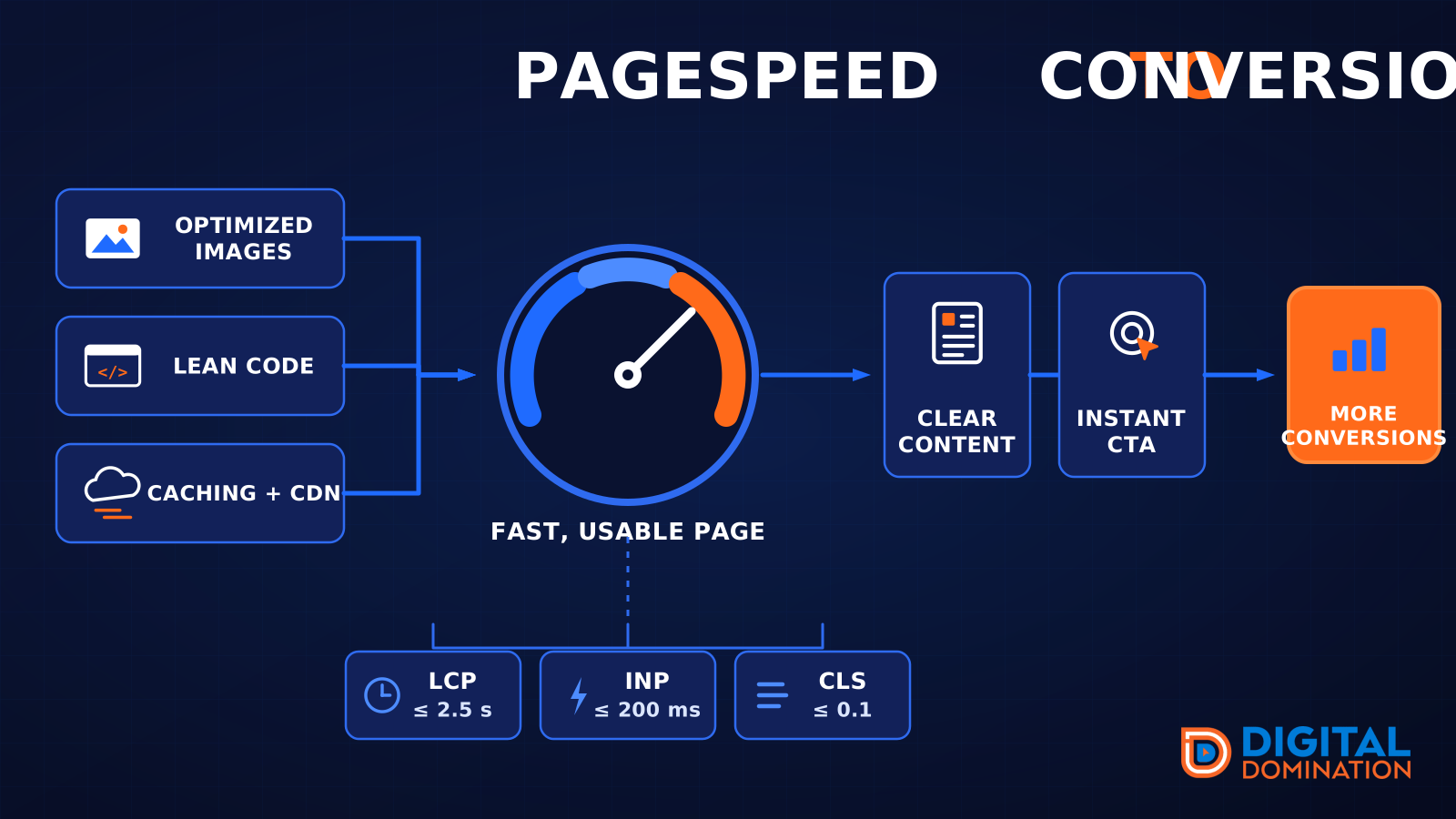
PageSpeed to conversion
This leg is your website, above all on a phone. Small images, lean code, and caching make a page fast. A fast, clear page is what turns a visit into a call. Phone speed is one of the 12 Trinity checks because a slow page loses the call before anyone sees your offer.
Your website is the showroom. If the door sticks, people leave before they look around.
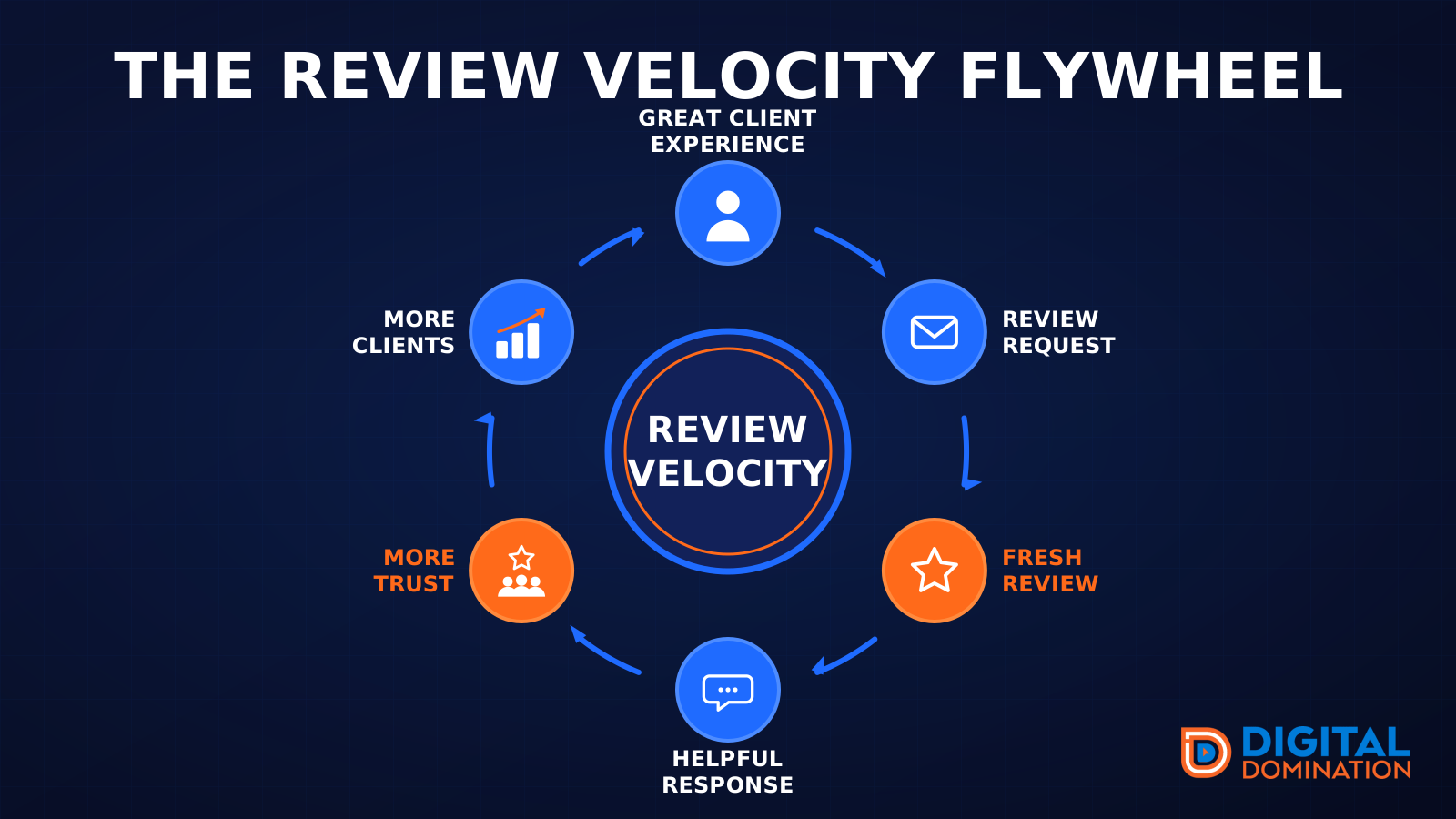
The review velocity flywheel
This leg is reviews and reputation. A good visit leads to a review request, then a fresh review, then a helpful reply, then more trust, then more customers. When the scan can find your Google listing, it shows your rating, your recent reviews, and how many you answered.
Reviews are word of mouth. One kind word helps. A steady stream of real reviews, and a reply from you, helps more.
How this turns into revenue
Being found in more searches leads to more calls. More calls lead to more booked jobs. More booked jobs lead to more revenue.
Example numbers, not a real business: 40 calls from search in a month, a 25 percent close rate, and a $400 average job. That is 10 booked jobs. That is $4,000. The math is the lesson. It is not a promise.
The full page has a box where you can type your own average job value and close rate.
One real story, from our car dealership case study: Medina Auto Group went from invisible on Google Maps to dominating every high-intent search across their market. The turnaround spanned all four of their rooftops at once. The same page says the team eliminated 89 unfair one-star reviews that had been dragging the dealership's reputation down and keeping it out of the Map Pack. It also says: “Results described here are exceptional and non-typical. Outcomes vary based on market conditions, competition, and implementation. No guarantees are made regarding earnings, rankings, or conversions.”
Free strategy call
More booked jobs start with a clear plan
Book a free strategy call. We look at your Google profile, your website, and your reviews, and we tell you what to fix first.
Free. You pick the time. A real person shows up.