
When to choose local SEO services instead of hiring an in-house marketer
If your main goal is better Google Map Pack visibility, the better first move is usually a focused local SEO service, not a general marketing hire.
The short answer
Choose local SEO services when the specific goal is to show up better in the Google Map Pack for searches near your customers. Hire an in-house marketing coordinator when your business needs daily coordination across many marketing tasks, such as ads, email, events, sales collateral, vendor follow-up, and internal approvals.
Map Pack visibility is a narrow, high-stakes problem. Google Business Profile setup, categories, services, local pages, reviews, citations, photos, website signals, location relevance, and reporting all have to work together. A good local SEO provider should already have a process for those pieces.
An in-house coordinator can be valuable, but most coordinators are generalists. O*NET says market research analysts and marketing specialists may use search marketing tactics, analyze web metrics, and recommend ways to increase search engine ranking and visibility. That does not mean every marketing hire has the hands-on experience to diagnose why your business is weak across neighborhoods in Google Maps.
Use this simple split:
- ▸If the problem is Map Pack ranking, pick local SEO services.
- ▸If the problem is daily marketing coordination, hire in-house.
- ▸If you need both, start with the bottleneck that is costing calls right now.
- ▸If your phone depends on nearby searches, do not treat local SEO as a side task.
Why Map Pack visibility is not just general marketing
Google Business Profile Help says local results are mainly based on relevance, distance, and prominence. That means Google is trying to decide whether your business matches the search, whether it is close enough to the searcher, and whether it appears trusted and well known enough to show.
Those factors sound simple, but the work behind them is not just posting updates or writing social captions. Relevance can involve your Business Profile, services, categories, website content, and local pages. Prominence can involve reviews, links from other websites, and how your business is represented around the web.
Google Business Profile Help also says businesses with complete and accurate Business Profile information are more likely to show up in local search results. That is a practical clue for owners. If your profile has thin services, wrong hours, weak categories, missing photos, or inconsistent information, a general campaign calendar will not fix the core issue.
For a local business, Map Pack work usually includes these areas:
- ▸Google Business Profile completeness and accuracy.
- ▸Service category and service description alignment.
- ▸Review generation and review replies.
- ▸Local website pages that support the profile.
- ▸Citation and directory consistency.
- ▸Tracking by location, not just one citywide ranking.
When local SEO services are the better choice
Local SEO services are the better choice when you want a scoped program with a clear ranking outcome, local search tasks, and reporting that shows whether your visibility is improving. This is especially true for service businesses where calls often start from Google or Google Maps.
BrightLocal's Small Business Marketing Report 2026 says 61% of customers start an online search for a local business with Google or Google Maps, and 71% use Google or Google Maps at some point during the search. For many local owners, that makes Maps visibility more than a branding issue. It affects who gets considered first.
A local SEO provider should understand how to work on the factors Google names without pretending anyone can buy a higher local ranking. Google Business Profile Help says there is no way to request or pay for a better local ranking on Google. The work is about improving the signals Google uses, not paying Google for a better Maps position.
Local SEO services usually fit when these statements sound familiar:
- ▸You get referrals, but strangers are not finding you in nearby searches.
- ▸Competitors with weaker service seem to appear above you in Maps.
- ▸Your Business Profile exists, but you do not know whether it is built correctly.
- ▸You have reviews, but they are inconsistent, old, or not being answered.
- ▸You need neighborhood-level ranking proof, not vague traffic reports.
- ▸You want a specialist process instead of asking a new hire to figure it out.
When an in-house marketing coordinator is the better choice
An in-house marketing coordinator is the better choice when the business needs daily coordination more than a specialized Map Pack campaign. This person can help keep projects moving, collect photos from the field, coordinate vendors, update internal documents, schedule emails, support events, manage approvals, and keep your brand organized.
The U.S. Bureau of Labor Statistics says market research analysts and marketing specialists had a median annual wage of $78,760 in May 2025 and typically need a bachelor's degree. That number is useful because it reminds owners that hiring is not just salary. You also need recruiting time, training, management, software, payroll costs, and a clear plan for what the person should do each week.
If your team is disorganized, your salespeople need marketing materials, your campaigns stall because no one owns follow-up, or your vendors need one internal point of contact, an in-house coordinator can be a strong fit. That is a different problem from diagnosing why your Google Business Profile is underperforming across a service area.
An in-house coordinator is usually the better fit when you need help with tasks like these:
- ▸Coordinating ads, emails, events, and print materials.
- ▸Chasing approvals from owners, managers, or franchise contacts.
- ▸Collecting field photos, job details, and customer stories.
- ▸Updating sales collateral and internal documents.
- ▸Managing calendars and vendor communication.
- ▸Keeping daily marketing tasks from falling through the cracks.
The cost question owners should ask
The real cost question is not simply, which option is cheaper. The better question is, which option matches the job you need done.
A full-time hire gives you availability and internal control, but you still need strategy, training, tools, and management. If the hire is junior, you may also need an outside specialist anyway. If the hire is experienced in local SEO, the compensation expectation may be higher and the recruiting pool may be smaller.
A local SEO service should bring a process, tools, and market experience without requiring you to build the department yourself. The tradeoff is that the scope should be clear. You should know what they are responsible for, how performance is measured, what they need from you, and how often they report.
Before comparing cost, separate the work into buckets:
- ▸Specialist ranking work that affects Google Maps visibility.
- ▸Daily coordination work that keeps marketing projects moving.
- ▸Creative work such as photos, videos, offers, and brand materials.
- ▸Sales support work such as brochures, follow-up assets, and scripts.
- ▸Owner decisions that cannot be outsourced, such as approvals and positioning.
What to expect from a good local SEO service
Google Search Central lists SEO provider services that can include site content or structure review, technical advice, content development, online business development campaigns, keyword research, SEO training, market and geography expertise, and generative AI optimization. For a local business, the provider should translate that into plain work that supports calls, directions, and Map Pack visibility.
Google Search Central also recommends asking a potential SEO what results they expect, in what timeframe, how they measure success, what experience they have in your industry and city, and how they will communicate changes and recommendations. That advice is useful because it keeps the conversation grounded.
A good provider should not hide behind jargon. You should be able to see what was checked, what was changed, and what moved. If the report only shows broad website traffic, it may not answer your Maps question.
Here are concrete checkpoints an owner can verify:
- ▸They inspect your Google Business Profile for categories, services, hours, photos, links, and accuracy.
- ▸They compare visibility across your service area, not just from one office computer.
- ▸They explain how relevance, distance, and prominence affect your situation.
- ▸They review your reviews, star rating, review recency, and reply habits.
- ▸They check whether website pages support the services and locations you want to rank for.
- ▸They explain expected timing in weeks and months, not overnight promises.
- ▸They report ranking movement and call activity in plain English.
- ▸They tell you what they need from your team, such as photos, service details, or approval for page updates.
Seven questions to ask before you sign
This is the section to use on a sales call. You do not need to become an SEO expert. You need to find out whether the provider has a real local search process, whether expectations are realistic, and whether reporting will answer the question you care about.
Google Search Central says an SEO audit should give realistic estimates of improvement and the work involved. It also says to find someone else if an SEO guarantees first place in search results. That does not mean every performance promise is automatically bad, but it does mean you should listen carefully to the wording, scope, and proof behind any claim.
Ask these questions before you sign:
- ▸What Google Maps result are we trying to improve, and in what service area?
- ▸How will you measure Map Pack visibility from different parts of my market?
- ▸What work will you do on my Google Business Profile?
- ▸What work will you do on my website to support local rankings?
- ▸How will reviews, review replies, and review recency be handled?
- ▸What should I expect in the first few weeks, and what may take longer?
- ▸What will your reports show, and how often will I receive them?
- ▸Who will make recommendations, and who will actually implement changes?
Timing: why both options need realistic expectations
Map Pack improvement is not always instant, even when the work is correct. Google Search Central says some SEO changes may take effect in a few hours, others may take several months, and site owners should generally wait a few weeks to assess whether work had beneficial effects.
Search Engine Land says SEO typically takes three to six months to produce measurable results and six to 12 months for significant ranking and revenue impact in competitive industries. Local SEO can sometimes move faster when the problems are obvious, but owners should still avoid thinking of it as a one-week fix.
This timing issue matters when comparing a service to a hire. A new employee needs onboarding before they can diagnose anything. A specialist service may start faster because the process already exists. Either way, the first month should be judged by whether the right work is being done and whether visibility is being measured properly.
Good early signs include:
- ▸A baseline ranking scan before major changes are made.
- ▸Clear profile and website recommendations.
- ▸Fixes to inaccurate or incomplete business information.
- ▸A review plan that follows platform rules.
- ▸A reporting rhythm you can understand.
- ▸A short list of owner decisions needed to keep work moving.
Reviews are a major reason to choose a specialist
Reviews are not just a reputation issue. Google Business Profile Help says prominence is based partly on how many websites link to a business and how many reviews the business has. It also says more reviews and positive ratings can help a business's local ranking.
BrightLocal's Local Consumer Review Survey 2026 says 47% of consumers will not use a business with fewer than 20 reviews, 74% seek reviews written in the last three months, and 31% will only use a business with 4.5 or more stars. That makes review quantity, quality, and recency a buying issue, not just an SEO checkbox.
Google Business Profile Help says replying to customer reviews shows that the business values feedback, and positive reviews plus helpful replies can help the business stand out. A coordinator can help request and organize reviews, but a local SEO service should connect reviews to Maps visibility, profile trust, and customer choice.
A review system should make these parts clear:
- ▸How customers are asked for reviews.
- ▸How the business avoids fake, filtered, or policy-risky review tactics.
- ▸How quickly reviews are answered.
- ▸How negative feedback is routed to the right person.
- ▸How review recency is tracked.
- ▸How review activity connects to Map Pack reporting.
How Digital Domination approaches this decision
Digital Domination is built for owners who want a Map Pack outcome, not a vague marketing activity list. The company offers a free 169-point GeoGrid scan that checks 169 real Google results across the service area, so the conversation starts with where you actually show up and where you do not.
Digital Domination works with one client per trade per service area, which protects territory exclusivity. Its Maps Domination Program pricing is set per market on a qualification call and tied to the ranking outcome. The guarantee is top 3 in the Google Map Pack in 12 weeks or you do not pay.
Owners also get weekly GeoGrid tracking reports with visual proof of rankings and call volume. That matters because a single ranking screenshot from one location does not show how visible you are across the neighborhoods that matter.
The fit is strongest when you want these things:
- ▸A focused Google Map Pack program.
- ▸A market scan before a pricing conversation.
- ▸Territory exclusivity for your trade and service area.
- ▸Weekly visual reporting on rankings and call volume.
- ▸A provider that treats local visibility as the main job, not a side task.
A practical way to decide this week
If you are choosing between local SEO services and an in-house coordinator, write down the work you need done over the next 90 days. If most items are internal coordination tasks, hiring may be the right move. If most items are about Google Maps visibility, reviews, local pages, profile accuracy, and ranking proof, local SEO services are the cleaner fit.
You can also combine the two, but do it in the right order. A local SEO provider can define the ranking plan and technical priorities. An in-house coordinator can help gather photos, get approvals, request reviews, and keep the owner from becoming the bottleneck.
Use this quick decision test:
- ▸Choose local SEO services if the main pain is not showing up in Google Maps.
- ▸Hire in-house if the main pain is marketing tasks piling up inside the business.
- ▸Choose both if you have the budget and need specialist strategy plus daily execution support.
- ▸Do not hire a generalist and expect them to invent a local SEO system from scratch.
- ▸Do not hire a local SEO provider when what you really need is someone managing daily internal projects.
Next step if Map Pack visibility is the goal
If better Map Pack visibility is the goal, visit Digital Domination's Local SEO Services page. It explains the local SEO program, the ranking focus, and how the work is built around Google Maps visibility for local businesses.
If you want to see the current problem before you talk to anyone, start with the free GeoGrid scan page. The scan checks 169 real Google results across your service area, so you can see where you are visible, where competitors are beating you, and whether local SEO services are the right next step.
Keep reading
Related guides
- ▸What 2000 A Month SEO Should Include
- ▸What A Good Google Maps SEO Provider Actually Does Each Month
- ▸What a Google Maps SEO consultation should cover
Put it into action
Frequently Asked Questions
Should I hire a marketing coordinator or use local SEO services for Google Maps rankings?
If the main goal is better Google Maps rankings, local SEO services are usually the better first choice. A marketing coordinator is better when you need daily help managing ads, emails, events, collateral, approvals, and vendors.
Can an in-house marketer do local SEO?
Some can, especially if they have direct experience with Google Business Profiles, reviews, local pages, and ranking measurement. Many in-house marketers are generalists, so you may still need a specialist plan or outside support.
How long does local SEO take for Map Pack results?
Google Search Central says some changes can take hours, while others can take several months, and owners should usually wait a few weeks to judge effects. Search Engine Land says SEO commonly takes three to six months for measurable results, with longer timelines in competitive markets.
Is it possible to pay Google for a better local ranking?
No. Google Business Profile Help says there is no way to request or pay for a better local ranking on Google. The work is about improving relevance, distance signals where possible, prominence, profile accuracy, reviews, and website support.
What should a local SEO service report to me?
At minimum, it should report where you rank across the service area, what changed on your profile or website, review activity, and call activity when available. A single ranking screenshot is not enough for a service area business.
Are reviews really part of local SEO?
Yes. Google Business Profile Help says more reviews and positive ratings can help a business's local ranking, and that replying to reviews can help the business stand out. Reviews also affect whether customers choose you after they find you.
When is an in-house marketing coordinator worth it?
An in-house coordinator is worth it when your marketing problem is daily execution and organization. If campaigns stall because no one gathers assets, manages approvals, updates collateral, or coordinates vendors, an internal hire may solve that better than a narrow SEO service.
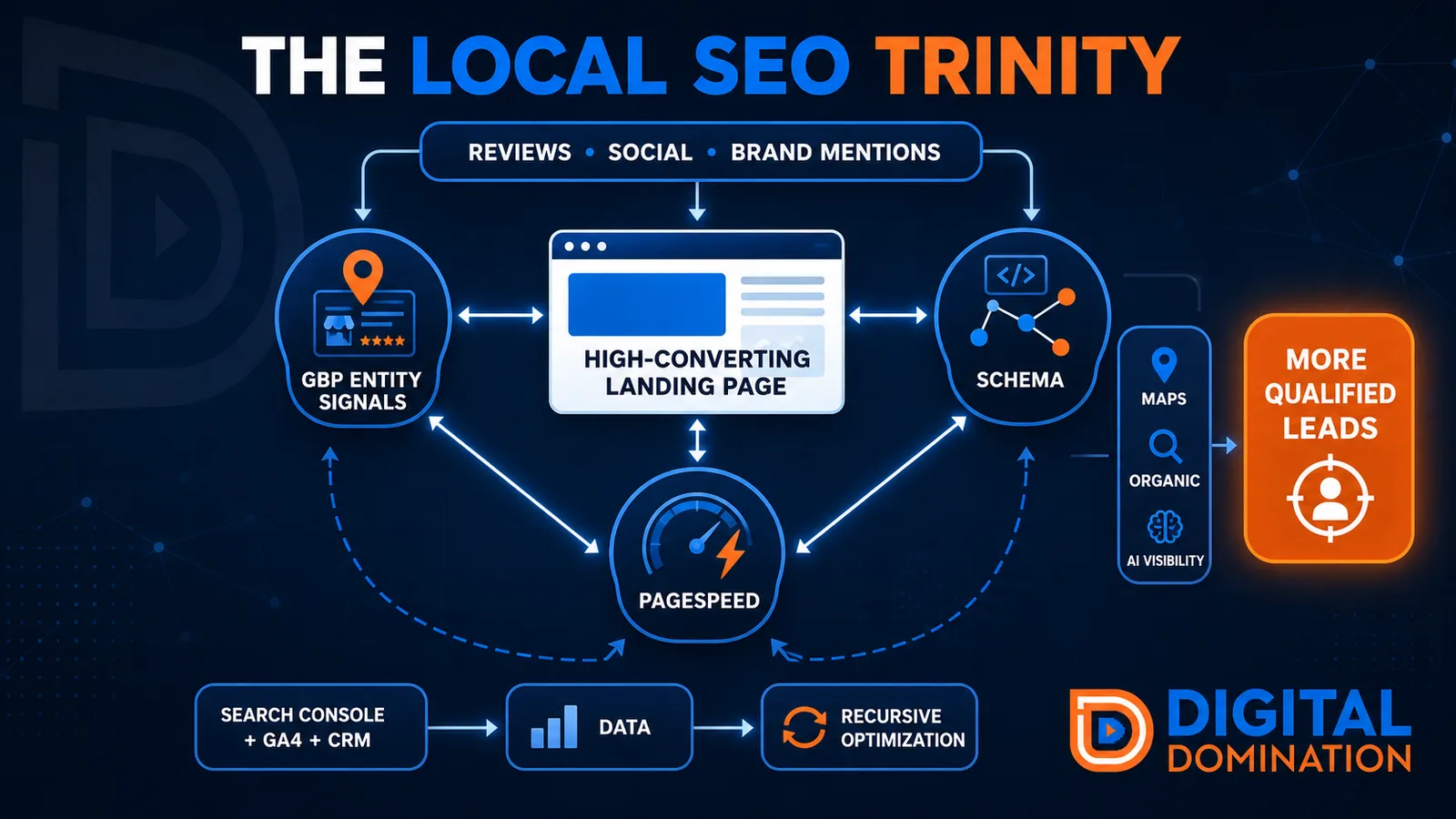
The Local SEO Trinity
Think of a three-legged stool. Your Google profile, your website, and your reviews all have to hold you up. If one leg is short, the whole thing wobbles.
GBP entity signals
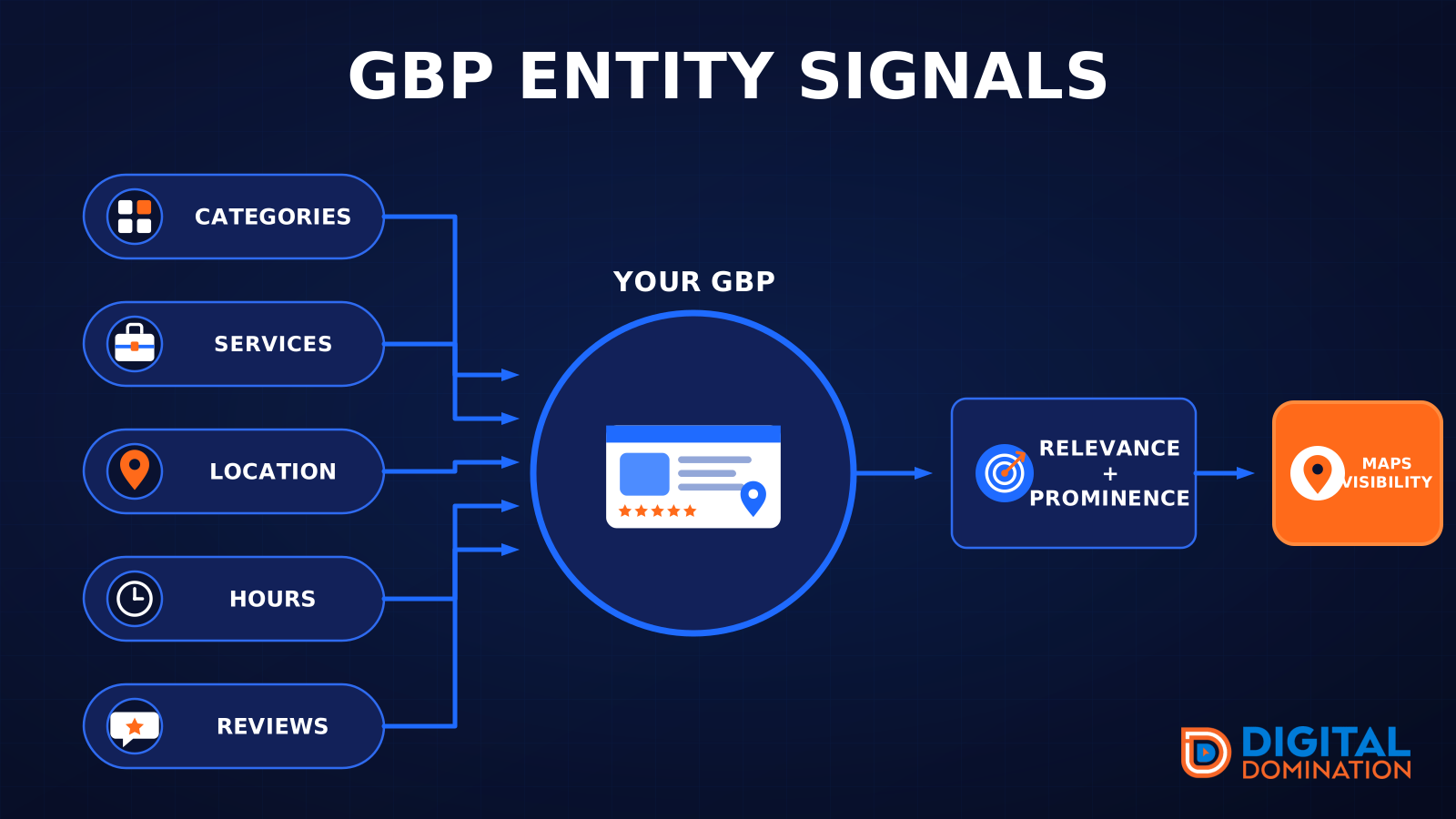
This leg is your Google Business Profile. GBP means Google Business Profile. It covers your categories, your services, your location, your hours, and your reviews. Google uses those facts to decide who to show.
Your Google profile is your storefront sign. If the sign is missing, or it names the wrong shop, people drive past.
PageSpeed to conversion
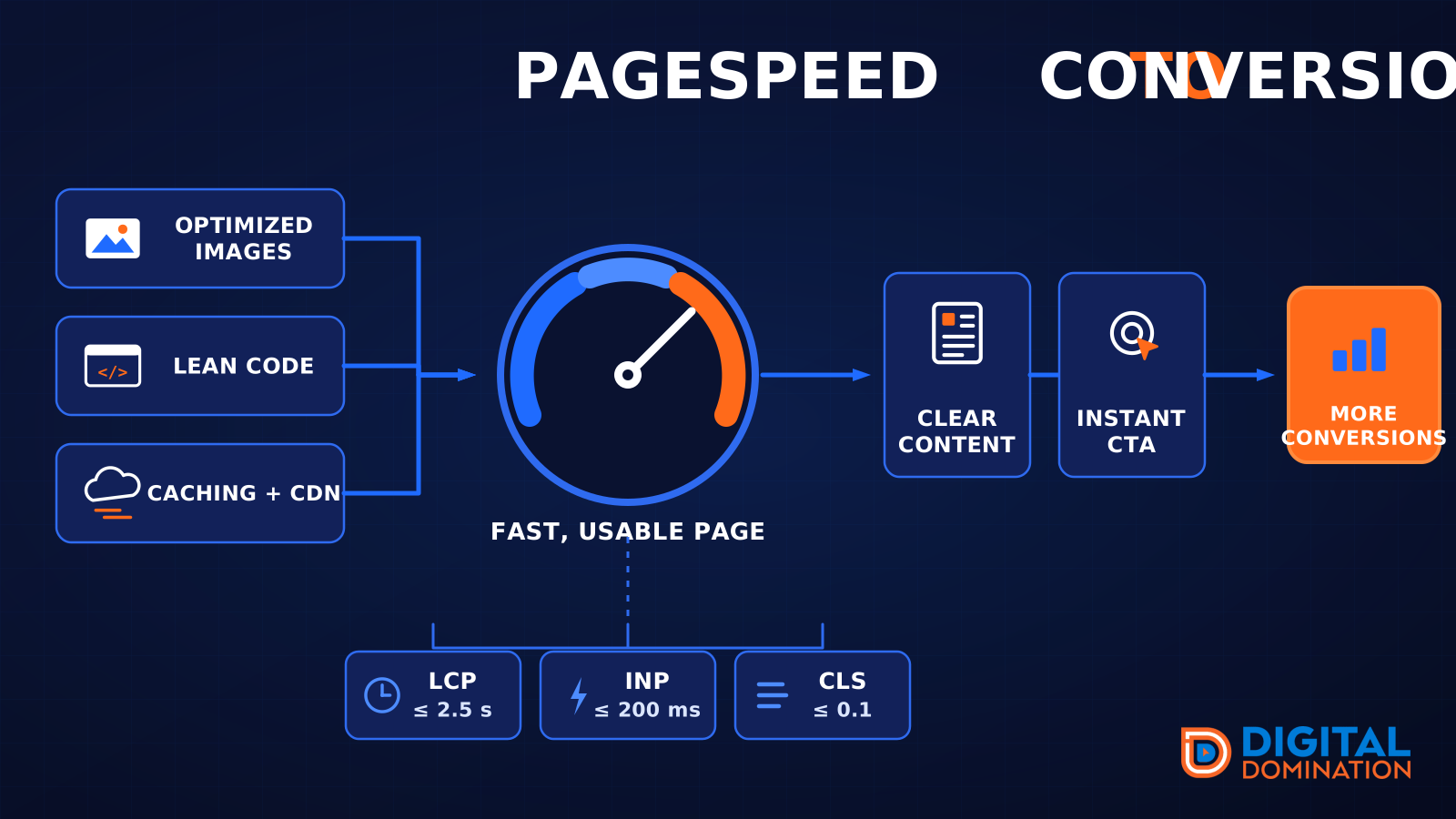
This leg is your website, above all on a phone. Small images, lean code, and caching make a page fast. A fast, clear page is what turns a visit into a call. Phone speed is one of the 12 Trinity checks because a slow page loses the call before anyone sees your offer.
Your website is the showroom. If the door sticks, people leave before they look around.
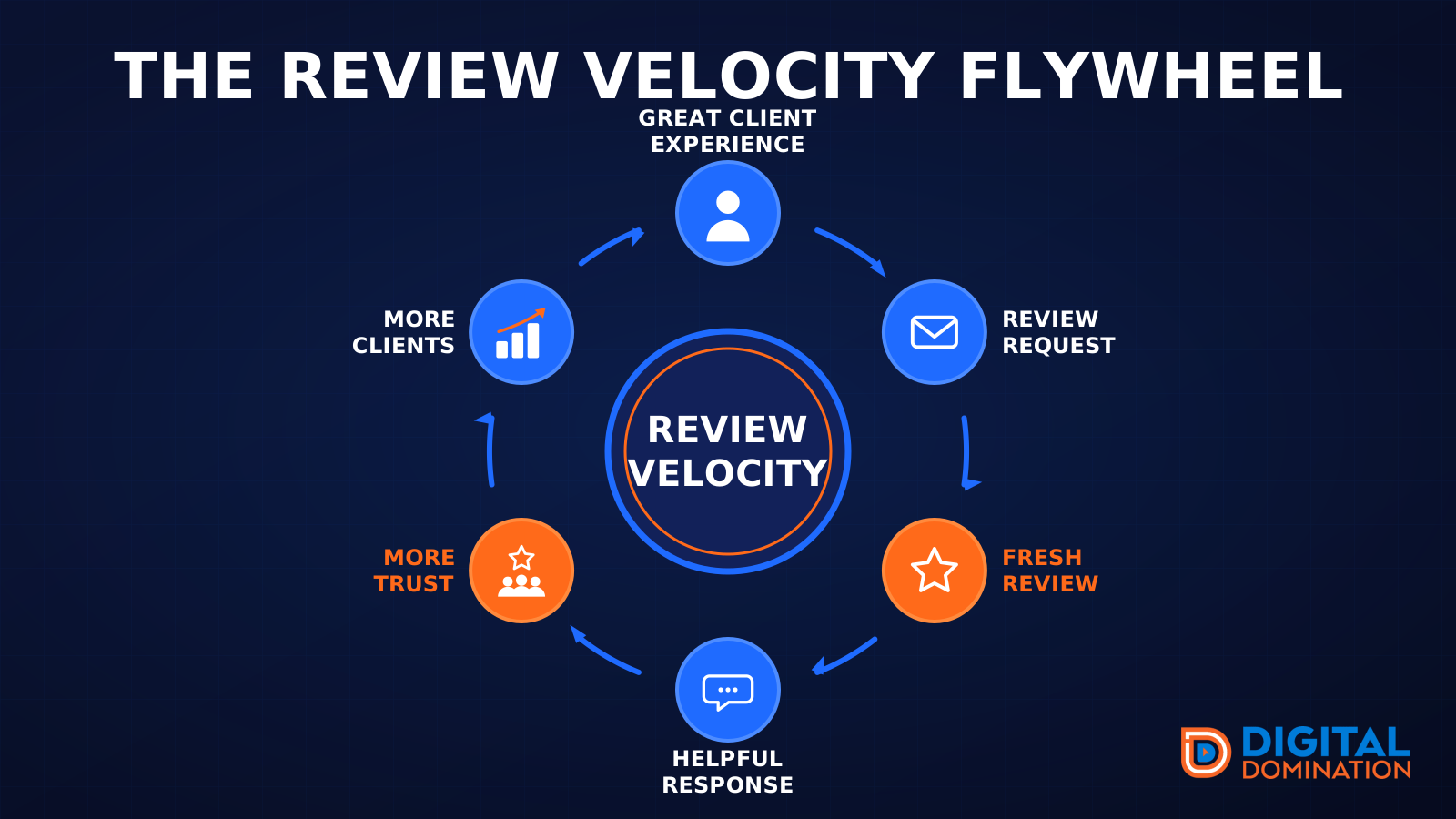
The review velocity flywheel
This leg is reviews and reputation. A good visit leads to a review request, then a fresh review, then a helpful reply, then more trust, then more customers. When the scan can find your Google listing, it shows your rating, your recent reviews, and how many you answered.
Reviews are word of mouth. One kind word helps. A steady stream of real reviews, and a reply from you, helps more.
How this turns into revenue
Being found in more searches leads to more calls. More calls lead to more booked jobs. More booked jobs lead to more revenue.
Example numbers, not a real business: 40 calls from search in a month, a 25 percent close rate, and a $400 average job. That is 10 booked jobs. That is $4,000. The math is the lesson. It is not a promise.
The full page has a box where you can type your own average job value and close rate.
One real story, from our car dealership case study: Medina Auto Group went from invisible on Google Maps to dominating every high-intent search across their market. The turnaround spanned all four of their rooftops at once. The same page says the team eliminated 89 unfair one-star reviews that had been dragging the dealership's reputation down and keeping it out of the Map Pack. It also says: “Results described here are exceptional and non-typical. Outcomes vary based on market conditions, competition, and implementation. No guarantees are made regarding earnings, rankings, or conversions.”
Free strategy call
More booked jobs start with a clear plan
Book a free strategy call. We look at your Google profile, your website, and your reviews, and we tell you what to fix first.
Free. You pick the time. A real person shows up.