
Bail bonds local SEO: how GBP entity signals, schema and PageSpeed win the call that comes at 2 am
Nobody shops for a bail bondsman in advance. The person searching is scared, in a hurry and on a phone with a dying battery. This is how to be the company Google, the AI answer and that person all land on, at the minute it matters.

The parking lot outside the detention center
It is 1:40 am. A woman is sitting in her car in the visitor lot across from the county detention center. Her brother was booked two hours ago on a DUI, bail is set, the amount is more than she has in checking, and the deputy at the window cannot recommend anyone. Her phone is at nine percent. She types bail bonds near me and gets a Map Pack of three listings, an AI Overview explaining what a premium is, and a row of ads.
She does not read carefully. She looks for a listing that says Open 24 hours, a rating that is not embarrassing, and a name that looks like a real company instead of a phone number pretending to be one. She taps call. If the site opens first and takes six seconds to load, or shows stock handcuffs and a form asking for her email, she backs out and taps the next one. The company she calls writes the bond within the hour. The company she did not call may have a better agent and twenty years at that same jail, and it will never know she existed.
Bail bonds demand is created by arrests, not marketing, and it arrives on a schedule the agency does not control: nights, weekends, holidays, the hours after a DUI checkpoint. Google and the AI systems decide who shows up in that moment by comparing facts about your agency across your profile, your website, your reviews and everything else that mentions you. At Digital Domination we treat that as one job: build a single, consistent bail bonds entity that machines understand and frightened people trust, then measure it against real calls.
The short version for an agency owner who is on call tonight
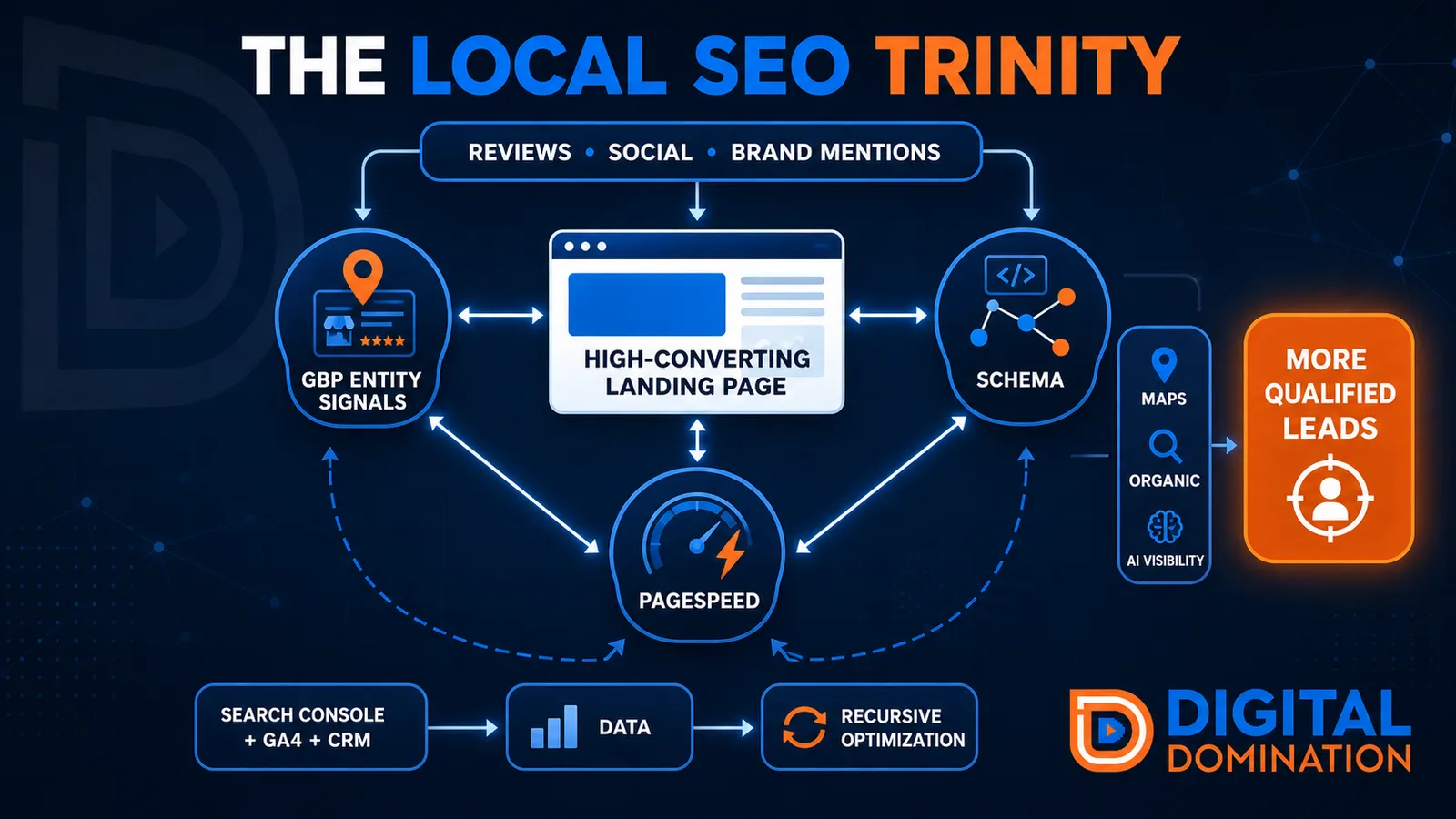
Three things carry most of the weight. Google Business Profile entity signals tell Google what you are, which jails and courts you work, and that you are actually open at 1:40 am. Schema turns your agency, your licensed agents, your services and your premium terms into a machine-readable graph that Google and LLMs can quote. PageSpeed makes sure the page opens before the caller gives up on a bad cellular connection. A landing page built for the after-hours caller ties the three together, and Search Console, GA4 and call tracking tell you what to fix next.
What each layer does for a bail bonds company:
- ▸Google Business Profile: who you are, which detention centers you serve, whether you pick up right now. Drives the calls that are the entire funnel.
- ▸Landing page: what happens next, what the premium is, what the cosigner needs, how fast release happens. Converts the call.
- ▸Schema: connects the agency, each licensed agent, each bond type and each jail you cover into one entity.
- ▸PageSpeed: a usable page within two seconds on two bars of signal. A slow page here is a lost bond, not a lost pageview.
- ▸Reviews: proof that real families got someone out at 3 am and were treated decently.
- ▸Search Console, GA4 and call tracking: which queries, jails and hours produce bonds written, not just clicks.
- ▸Social and brand mentions: evidence that attorneys, local news and community threads talk about the agency, not only its own site.
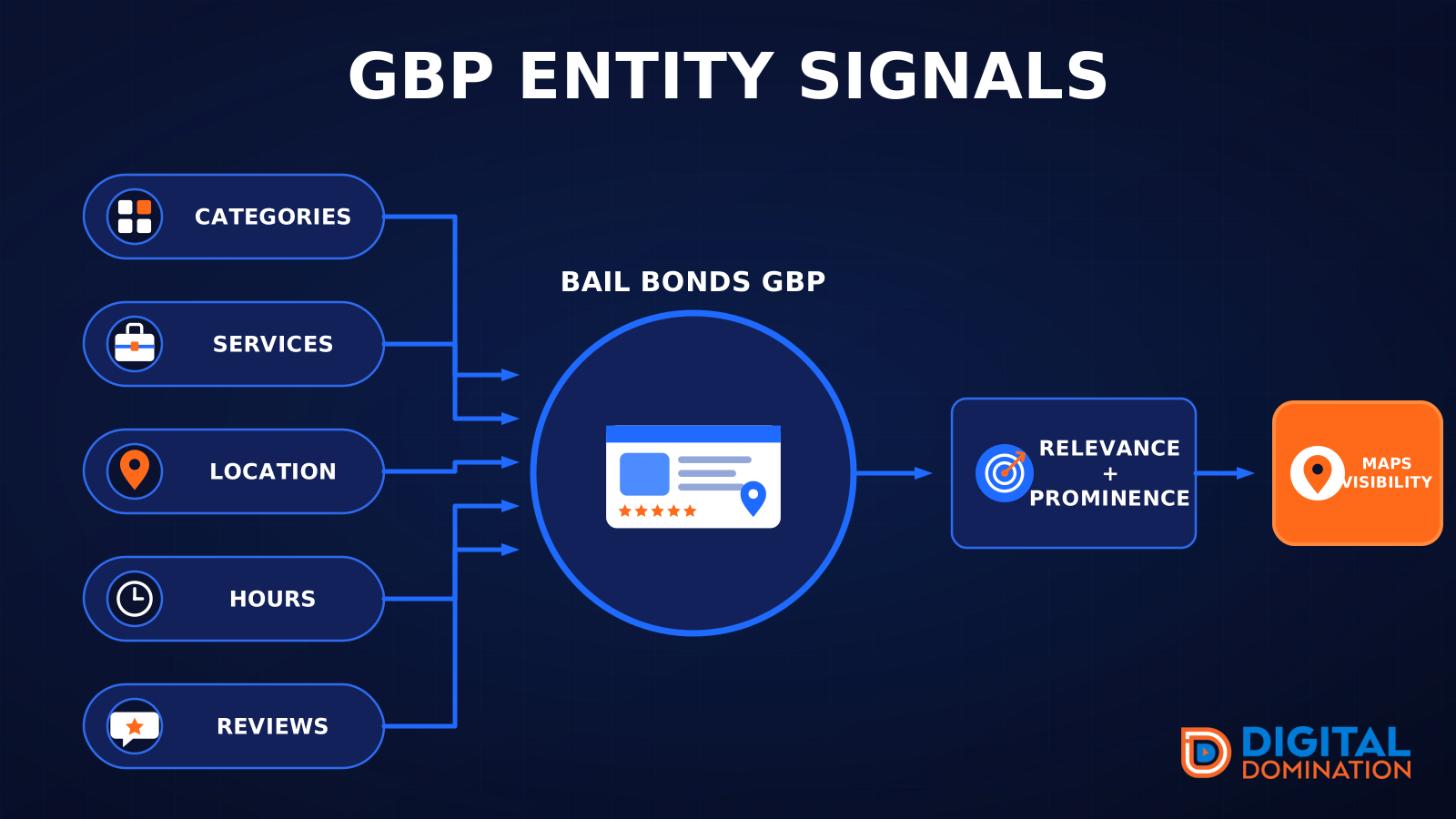
GBP entity signals: proving you are a real 24-hour bail agency, not a lead-gen number
Bail bonds is one of the most spam-heavy categories in local search. Map results near a jail fill up with listings that have no office, a rented mailbox address, a call-center number and a name stuffed with the county and the words 24 hour. Google applies more scrutiny here, which is good news for a real agency: every legitimate detail you add is a signal the spam cannot match.
Primary category should be Bail bonds service. Do not switch it to Financial institution or Insurance agency to look respectable; it kills relevance for the queries that matter. Hours must be a true 24 hours, every day, with holiday hours confirmed rather than left blank. If you have an office, the address must match your state license record exactly. If you meet clients at the jail, hide the address and define the service area by the counties and jails you actually work.
Then build the vocabulary Google uses to match you to specific searches:
- ▸Services list: DUI bail bonds, misdemeanor bonds, felony bonds, warrant and walk-through bonds, domestic violence bonds, transfer bonds. Name them the way callers do, not the way the statute does.
- ▸Description: the detention centers and courts you post at, your license type, years in business, payment plans and languages spoken. Skip the superlatives.
- ▸Attributes: Spanish spoken if true, payment options including cards and financing.
- ▸Photos: the storefront lit at night, the agent at the counter, the signage from the street, a shot from the jail lot showing how close you are. No stock handcuffs or gavels.
- ▸Q and A: seed the questions callers ask on the phone (how much do I pay, do I get the premium back, what does a cosigner need, how long until release) with state-specific answers.
- ▸Per-jail landing pages as the GBP website links: one page per detention center or court, with directions from that facility and its release process. One home page cannot rank for six jails.
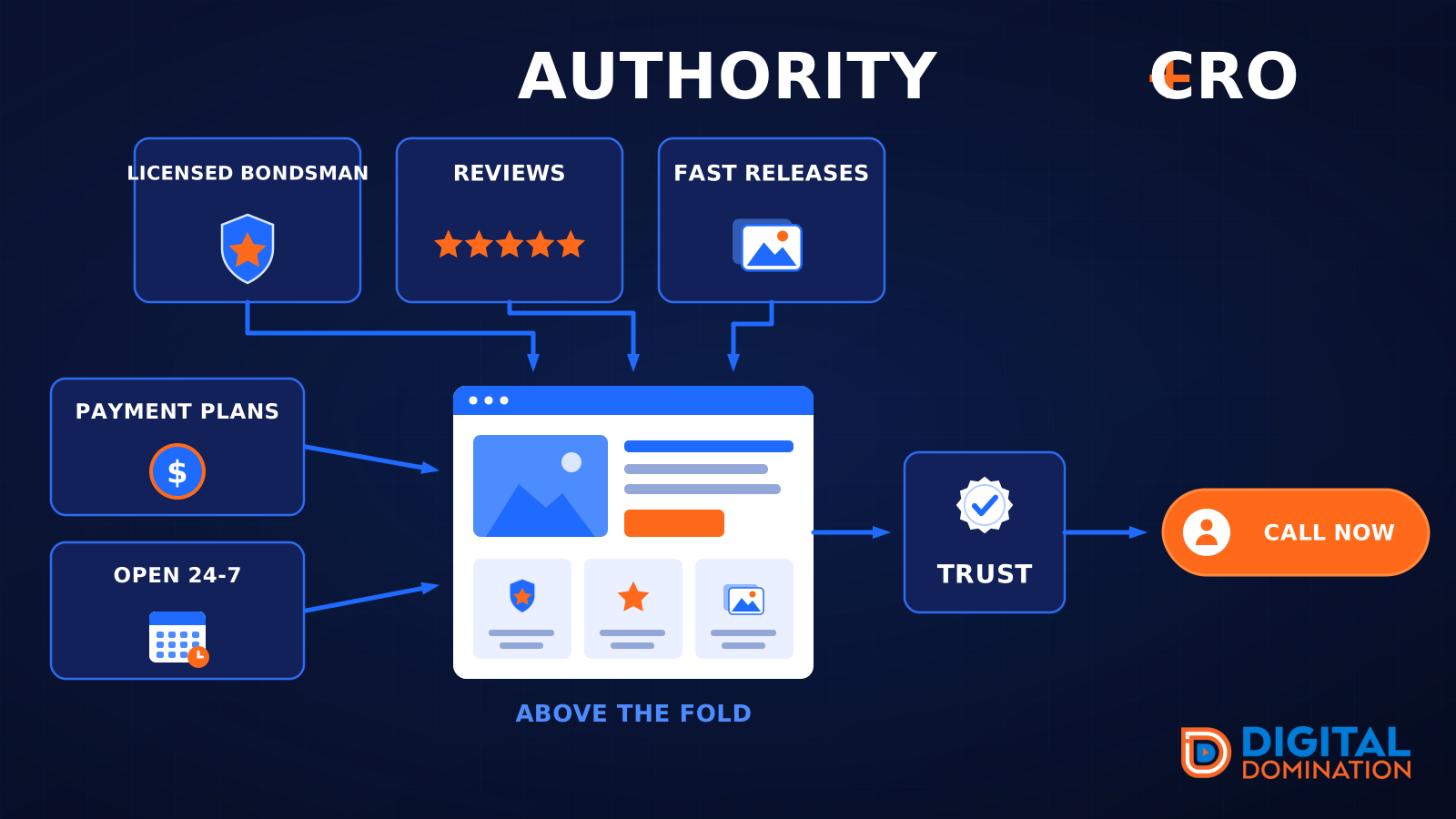
Above-the-fold proof for a caller who has never hired a bondsman
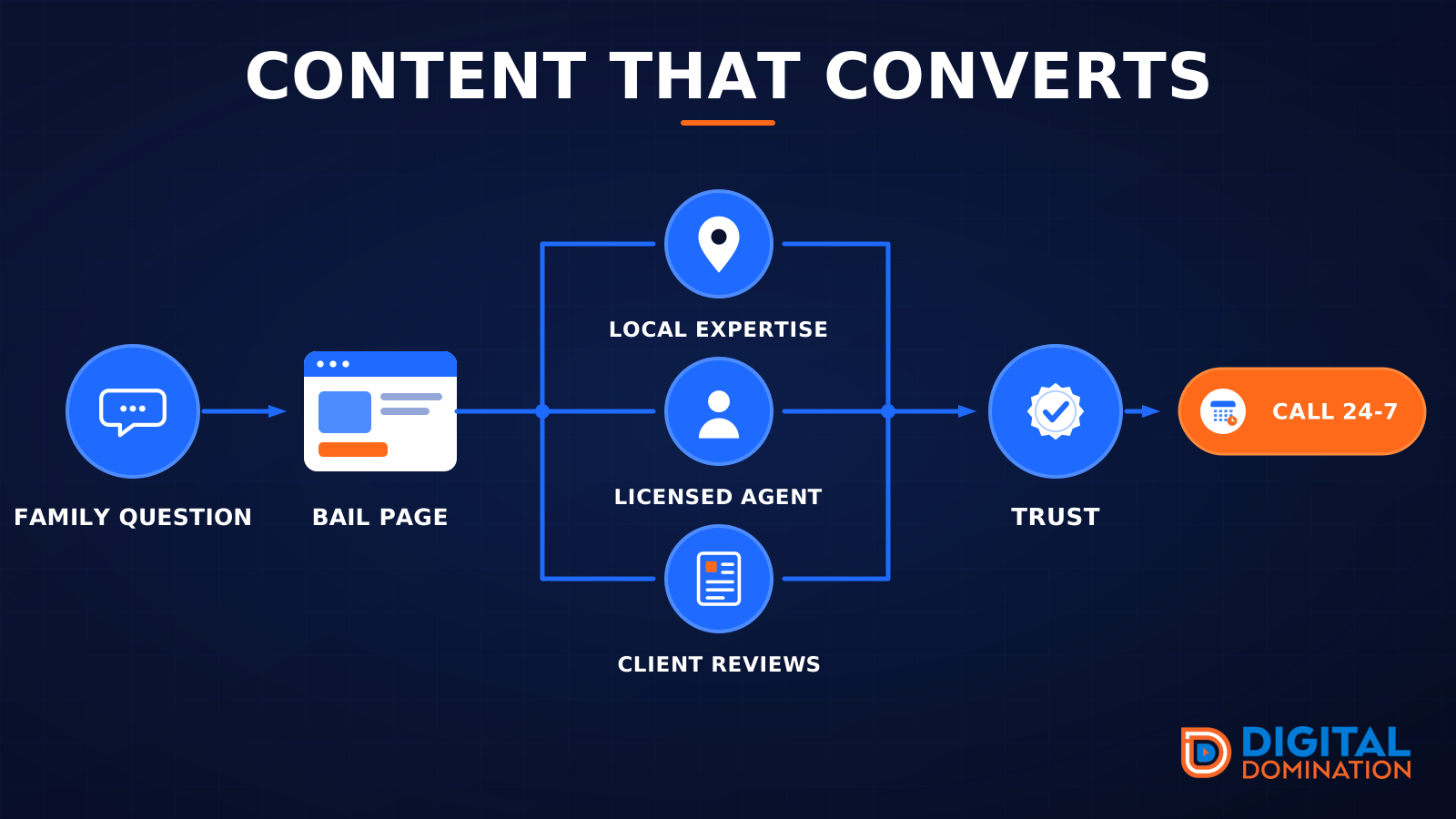
Most people calling a bail agency have never done it before and are half expecting to be taken advantage of. The first screen of your landing page has to prove you are licensed and real, and tell them exactly what to do next, in under three seconds. That screen is also where Google and AI systems pull the facts they use to describe you.
Real bail bonds authority signals are specific and checkable. Build the strip from these, and only the ones that are true:
- ▸State license: the number issued by your state department or division of insurance (in Nevada, the Division of Insurance), written on the page, not implied by a badge.
- ▸Surety company: the insurer whose power of attorney backs your bonds. Callers do not know what it means, but attorneys and Google do.
- ▸Years at this jail: posting bonds at the county detention center since a specific year beats trusted and experienced.
- ▸Premium terms: the state-set rate stated plainly, whether payment plans exist, what forms of payment you take. Vague fee language is the biggest reason a caller hangs up and tries the next listing.
- ▸Release time expectation: an honest range for that facility, framed as typical and dependent on the jail's processing, never a guarantee.
- ▸Memberships: state or national bail agent associations if you actually belong.
- ▸A tap-to-call number in the header and a sticky call bar on mobile, with the words agent answers, not a call center, if that is true.
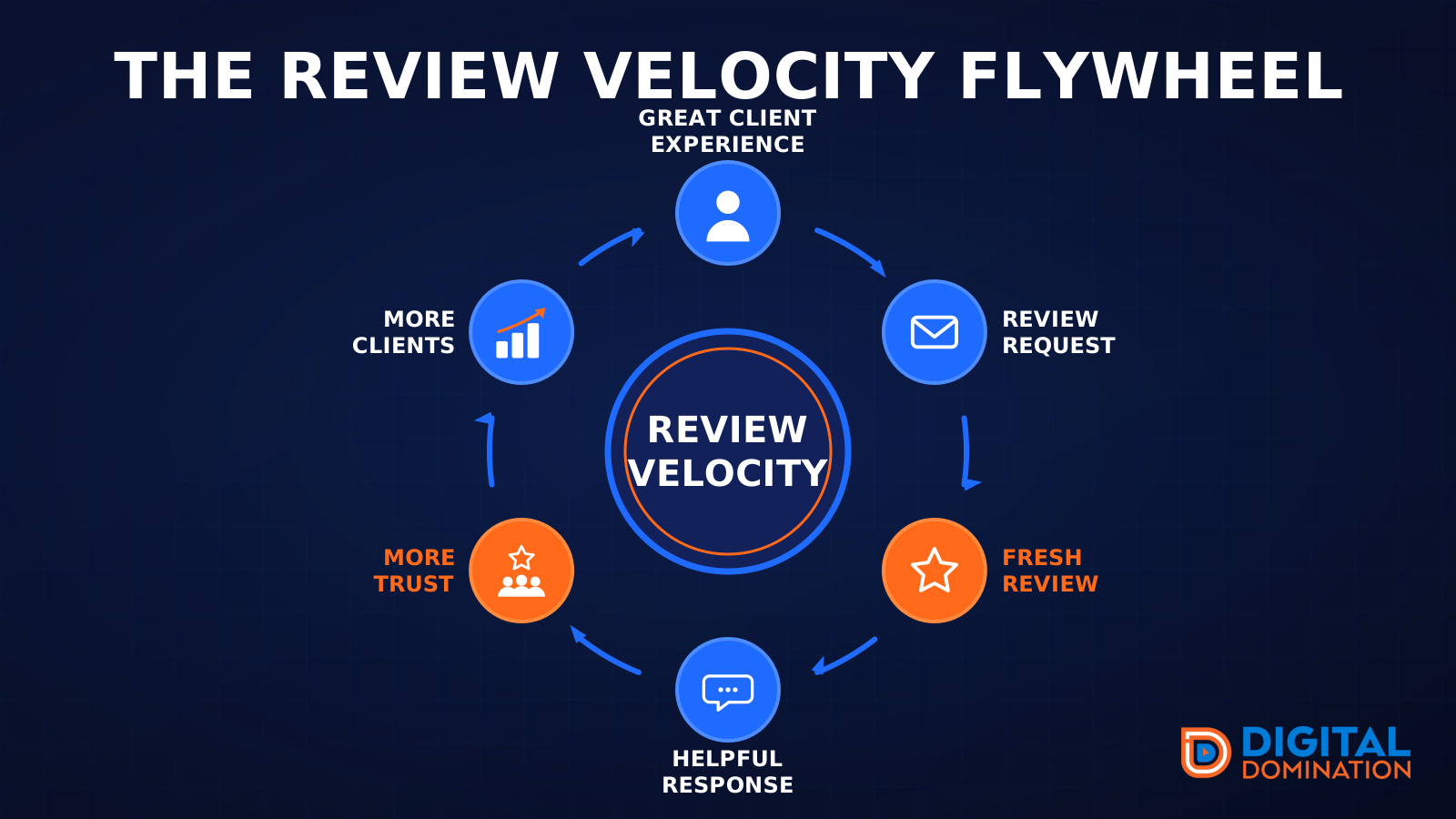
Review velocity when your customers would rather forget you
Bail bonds has a review problem no plumber has: the customer does not want to remember the day, and the defendant does not want a public record of it. So most agencies sit on a handful of old reviews while a competitor with a process pulls ahead in prominence.
Ask the right person, at the right time, in a way that respects the situation. The right person is usually the indemnitor (the cosigner), not the defendant. The right time is the day after release, not at the counter. The right way is a text with a direct review link and a line like: if we made a bad night a little easier, a review helps the next family find us. Never gate reviews or offer anything in exchange; it violates Google's rules and would be a licensing problem in most states.
What you want in the text of the review is context Google can match to queries:
- ▸The jail or court: got my husband out of the county detention center.
- ▸The time: called at 3 am and someone answered on the second ring.
- ▸The charge type, when the reviewer volunteers it: DUI, warrant, misdemeanor.
- ▸The money: explained the premium and the payment plan before I signed anything.
- ▸The agent's name, which connects the review to the Person node in your schema and the agent's page.
- ▸Reply to every review, including the angry one from the person who thought the premium was refundable. A calm, accurate reply about how premiums work helps the next reader.
Schema for a bail bonds agency: LocalBusiness, licensed agents and the jails you serve
Schema.org has no dedicated bail bonds type, so the correct anchor is LocalBusiness with an additionalType and a description that names the category, then a graph of connected nodes that mirrors your real operation. Most bail sites have no schema or a plugin-generated Organization node with a phone number, which tells Google nothing new.
The recommended node architecture, read as a table:
- ▸LocalBusiness (the agency): name, legal name, license identifier, telephone, address or service area, openingHoursSpecification set to 24 hours all seven days, priceRange, paymentAccepted, and sameAs pointing to your GBP, state license lookup, social profiles and directories.
- ▸Person (each licensed bail agent): name, jobTitle, license number as an identifier, worksFor pointing at the agency @id, knowsLanguage, sameAs. Agents are the trust unit in this industry; give each one a node and a page.
- ▸Service (one per bond type): DUI, felony, misdemeanor, warrant, domestic violence and transfer bonds, each with provider, areaServed and serviceType.
- ▸Offer with PriceSpecification: the premium as a percentage set by state statute, plus payment plan availability, in the same words the page shows.
- ▸areaServed: the counties and cities and, on each jail page, the facility as a Place with its own address, so Google connects bail bonds near a named detention center to the right page.
- ▸FAQPage on the pages that answer money and process questions, matching the visible text exactly.
- ▸BreadcrumbList on every jail and service page.
- ▸Permanent @id on every node, reused unchanged across the site, so the graph stays one entity instead of a new one on every page.
PageSpeed on two bars of signal in a jail parking lot
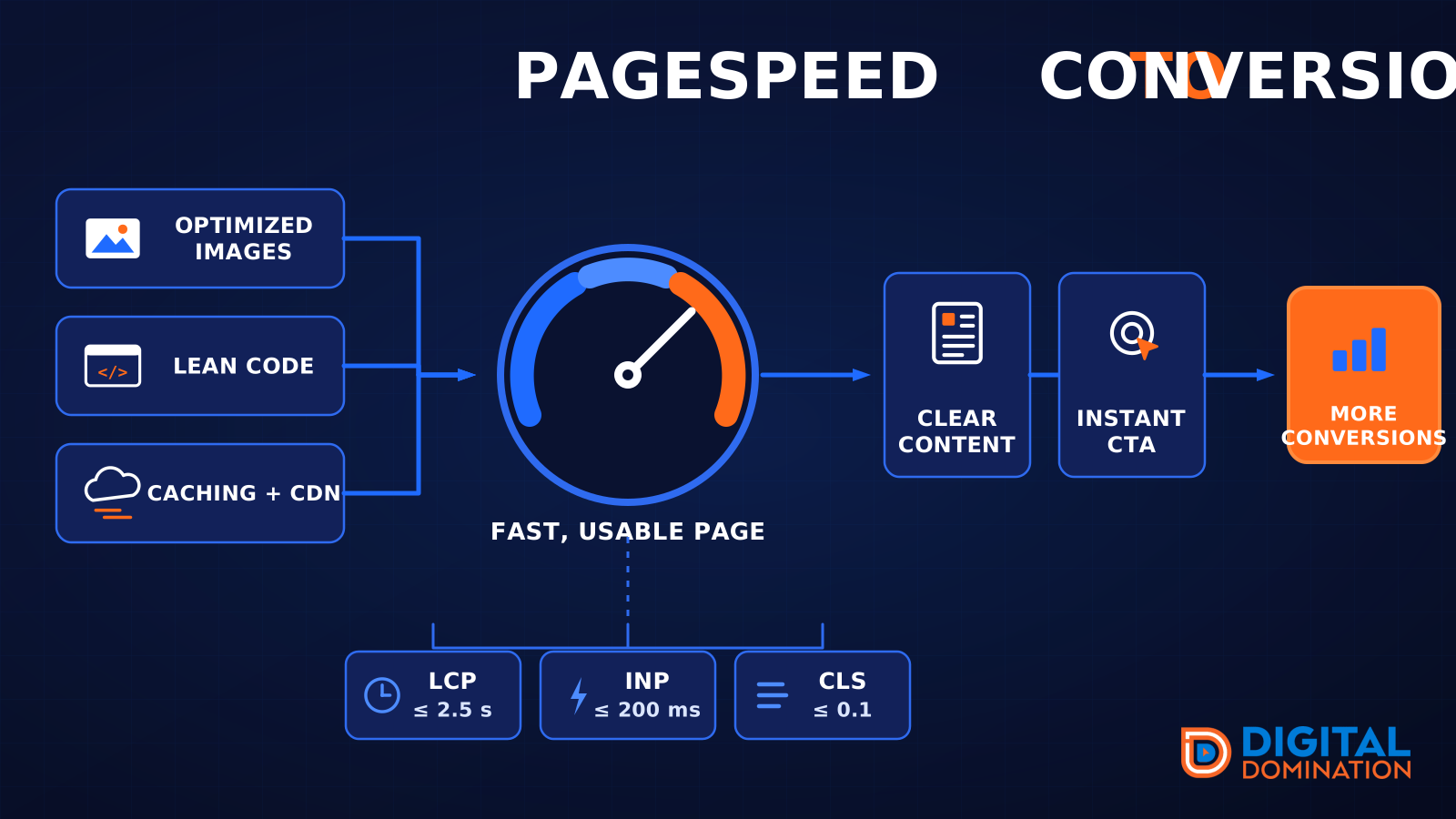
Other industries get to assume a decent connection. Yours does not. Detention centers sit on the edge of town, signal around them is poor, and the caller's battery is low. Core Web Vitals thresholds are the same as everywhere (LCP 2.5 seconds, INP 200 milliseconds, CLS 0.1, measured at the 75th percentile of real users), but a bail site's field data skews toward the worst conditions because that is where your users are. At Digital Domination we build to a PageSpeed Insights performance score of 90 or higher and a 2/2 agentic-browsing check, so the page works for a person on a bad connection and for an AI agent fetching it on someone's behalf.
The typical bail site is a WordPress theme bought in 2017 with a hero slider, a chat widget, three call-tracking scripts and a background video of a courthouse. The fixes that matter most, in order:
- ▸Make the phone number the largest contentful element, rendered as HTML text, so the LCP is the thing the caller needs.
- ▸Remove the slider and the video. One compressed WebP photo of your office at night, sized to the viewport, preloaded.
- ▸Consolidate call tracking to one script that loads after the page is interactive, and make sure the swapped number does not shift the layout.
- ▸Defer the chat widget or drop it. Nobody bailing someone out wants a bot; they want a human on the phone.
- ▸Self-host one font with font-display swap, or use the system stack.
- ▸Lazy-load everything below the first screen, including the map embed.
- ▸Test on a throttled mobile profile, not office fiber, and read field data in Search Console's Core Web Vitals report rather than one lab run.
Premium and fee language that AI Overviews can quote correctly
The first thing an AI Overview or a ChatGPT answer tries to explain about bail bonds is money: how much, is it refundable, what does the cosigner owe. If your site avoids the subject, the model quotes a competitor or a national explainer, and your agency is absent from the answer the searcher reads before she taps anything.
Bail premiums are among the most explainable prices in any local industry, because the rate is set by state statute in most states. Write it that way. State the percentage for your state and explain that it is the same at every licensed agency, so the searcher understands you are not the expensive option. Explain in one sentence each that the premium is not refunded when the case ends, that collateral is returned when the bond is exonerated, and what a cosigner takes responsibility for. Then explain what does vary: payment plans, down payment, charges for a warrant walk-through or travel to a distant jail.
Put this on a dedicated page titled the way people ask (how much does a bail bond cost in your county), mark it up as FAQPage, repeat the numbers in the LocalBusiness Offer node, and keep visible text and schema identical. When an LLM checks your claim against your structured data and your reviews, all three agree, and you become the source it cites.
Content for the whole arrest-to-court-date journey
The 2 am search is the emergency, but the family keeps searching for weeks: how to find out if someone is in custody, when the arraignment is, what happens if the defendant misses court, how to get collateral back. Every one of those questions is a page that ranks, earns a citation in an AI answer and keeps your name in front of the family who will refer the next one.
Map the journey and give each stage a page written in the caller's words:
- ▸Before the call: how to find out if someone was arrested in the county, how to look up a bail amount, what to have ready when you call.
- ▸The paperwork: what a cosigner needs, what collateral is and when it is required, how payment plans work.
- ▸Release: how long it takes at each facility you serve, where to pick the person up, what to do if the jail is slow.
- ▸After release: court date reminders, what happens after a missed court date, how a forfeiture works, when collateral is returned.
- ▸Per-jail pages: one for each detention center and court, with directions, hours and the release process, connected to the Place in your schema.
- ▸Agent pages: one per licensed agent, with license number, languages, the jails they cover most, and the reviews that name them.
Search Console, GA4 and the call log: measuring bonds written, not clicks
The only metric that matters in bail is bonds written, and almost every bail site measures everything except that. The loop connects three sources: Search Console for what people searched and where you appeared, GA4 for what they did on the page, and call tracking plus your bond management software for whether the call became a bond.
Search Console shows which jail names, charge types and near me queries bring impressions, and whether your Core Web Vitals pass in the field. GA4 with a tap-to-call event shows which pages produce calls, at which hours, on which devices. Dynamic call tracking shows where each call came from, and the bond log shows which calls closed and for what amount.
Once a month, join those together and ask the questions that change the plan:
- ▸Which queries produce impressions but no clicks? Usually a rating problem in the Map Pack, or a competitor with an Open 24 hours label you are missing.
- ▸Which pages get calls between midnight and 6 am? Those are your money pages. Make them faster and clearer before anything else.
- ▸Which jail pages rank on page two? They need reviews that name the facility, photos taken there and a stronger Place node.
- ▸Which calls did not become bonds, and why? If callers thought the premium was refundable, the pricing page and the GBP Q and A need to be clearer.
- ▸Which agents appear in reviews most often? Feature them; the entity is strongest where the market already trusts a name.
Social posts, attorney referrals and the mentions that corroborate you
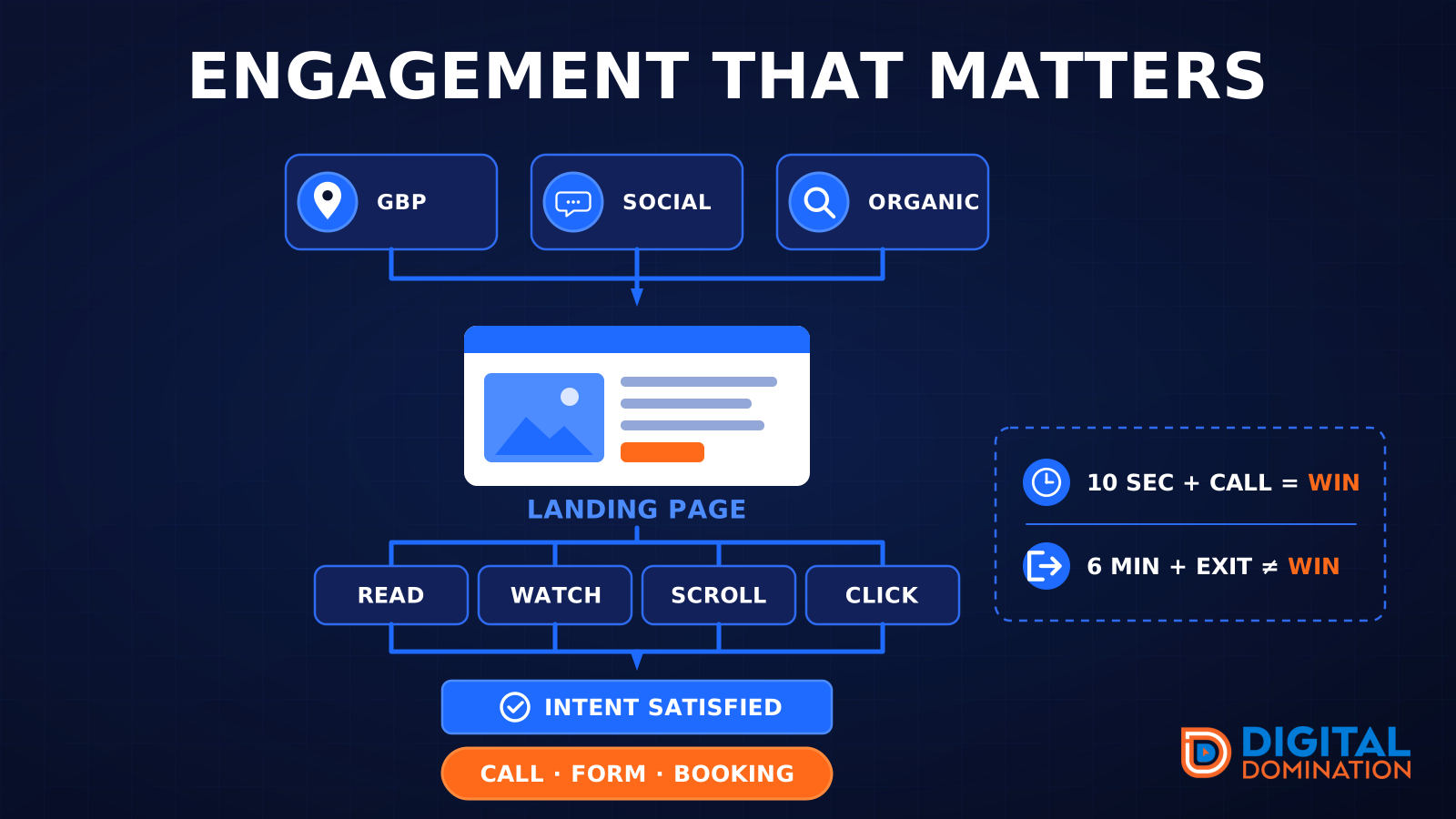
Social media does not directly move Map Pack rankings, and bail agencies should not pretend otherwise. What it does is corroborate the entity. Google's Search Console now reports supported social and video platform properties, a plain signal that Google reads those profiles as part of who you are. A profile with the same name, phone, license number and jail list as your GBP is one more matching source. A profile with a different phone and a name variant is noise.
Where bail agencies get mentioned matters more than posting cadence. Criminal defense attorneys refer bondsmen every day and often list them on their sites. Local news covers bail reform and quotes agencies. Community threads ask who the legitimate bondsmen in a county are, and the answers stick around for years. Axios reported in August 2026 that Reddit's share of visible ChatGPT Search citations fell roughly 86 percent, so a Reddit thread is not the shortcut it was, but OpenAI still has a Reddit data partnership, and a helpful answer from a licensed agent is still a brand mention. Treat these as reputation work, not link building:
- ▸Ask referring attorneys for a listing on their resources page with your legal name, license number and phone, matching your GBP exactly.
- ▸Offer local reporters a licensed agent as an on-record source when bail is in the news.
- ▸Post short explainers on your social profiles (what to bring when you call, how release works at a specific jail) using the same vocabulary as your site.
- ▸Answer community questions as the agency, with your name and license, without pitching. Correcting misinformation about premiums and forfeiture is what earns the mention.
- ▸Audit every directory that lists you and fix name, phone and category so the corroborating sources agree.
A 90-day roadmap built around the night shift
The plan below prioritizes the hours and pages that produce bonds first, for one agency with a handful of jails, and scales up for multi-county operations. Digital Domination's GeoGrid scan checks 169 points across a market, and for a bail agency we center the grid on the detention centers, not the office, because that is where the searches originate.
Days 1 to 14, baseline and emergency fixes:
- ▸Run a GeoGrid scan centered on each jail you serve for bail bonds and bail bonds near me and record the rank at each point.
- ▸Verify the primary category, confirm true 24-hour hours including holidays, match the address to the license record.
- ▸Measure PageSpeed on a throttled mobile profile for the home page and the busiest jail page. Make the phone number the LCP element and remove the slider or video.
- ▸Consolidate call tracking to one deferred script and set up the tap-to-call event in GA4.
- ▸Days 15 to 30, foundation:
- ▸Publish the LocalBusiness graph with Person nodes for every licensed agent and Service nodes for every bond type, with permanent @id values.
- ▸Publish the premium and cost page with FAQPage markup in plain, state-specific language.
- ▸Rebuild the first screen around license number, surety, years at the jail, premium terms and a sticky call bar.
- ▸Start the post-release review text to indemnitors and reply to every existing review.
- ▸Days 31 to 60, relevance and authority:
- ▸Publish one page per detention center and court with a Place node, plus one page per agent.
- ▸Photograph the office at night, the storefront and the route from each jail; upload to GBP and the matching pages.
- ▸Approach referring attorneys for resource-page listings and fix every directory to match the GBP.
- ▸Publish the journey content: custody lookup, what a cosigner needs, what happens after a missed court date.
- ▸Days 61 to 90, optimize on real data:
- ▸Join Search Console, GA4 call events and the bond log. Rank pages by bonds written per visit and by hour of day.
- ▸Re-run the GeoGrid scan from each jail and compare point by point against day one.
- ▸Expand the jail and service pages that are gaining, consolidate the ones that are not, and re-measure PageSpeed after every content change.
- ▸Set a monthly review of the same numbers so the system keeps learning after the 90 days end.
One licensed entity, findable at the worst hour of someone's week
A bail bonds company wins the 2 am search when Google, the AI answer and the frightened person in the parking lot all encounter the same agency: the same name and license number on the profile, the site, the schema, the attorney's resources page and the review that says someone answered on the second ring. The GBP declares what you are and where you work. The schema connects your agents, services and jails into a graph machines can read. PageSpeed makes the page open on two bars of signal. Reviews, mentions and the monthly loop keep the whole thing honest and improving.
At Digital Domination we build exactly that for local businesses whose customers cannot wait, and we back the Maps work with a simple guarantee: top 3 in the Google Map Pack in 12 weeks or you do not pay. If you want to know where your agency actually ranks from the detention center lot instead of from your own front door, run the free GeoGrid scan and look at the 169 points yourself.
Keep reading
Related guides
- ▸Electrician local SEO
- ▸Estate planning attorney local SEO
- ▸Fake Google Maps Listings Hijack Addresses
Put it into action
Frequently Asked Questions
What Google Business Profile category should a bail bonds company use?
Use Bail bonds service as the primary category. Switching the primary to Insurance agency or Financial institution to look more respectable cuts relevance for the searches that actually produce calls. Add secondary categories only for a real service you offer, such as a notary.
Should a bail agency publish its premium rate on the website?
Yes. In most states the premium percentage is set by statute and is the same at every licensed agency, so publishing it costs nothing and lets AI Overviews and LLMs quote you as the source. Explain plainly that the premium is not refundable, that collateral is returned when the bond is exonerated, and which terms such as payment plans vary by agency.
How does a bail bonds company get reviews when clients want to forget the experience?
Ask the cosigner rather than the defendant, and ask the day after release by text with a direct link, not at the counter. Frame it as helping the next family find a legitimate agent. Never offer anything in exchange for a review and never screen who gets asked; both violate Google's rules.
There is no bail bonds type in schema.org. What should the schema use?
Anchor on LocalBusiness with an additionalType and description that name the agency as a bail bonds service. Connect Person nodes for each licensed agent with license identifiers, Service nodes for each bond type, Offer with the premium as a PriceSpecification, and areaServed Places for each jail. Reuse a permanent @id on every node across the site.
Does PageSpeed matter more for bail bonds than for other local businesses?
It matters more in practice because the caller is typically on a phone with poor signal near a detention center, late at night, with a low battery. The thresholds are the same as anywhere (LCP 2.5 seconds, INP 200 milliseconds, CLS 0.1 at the 75th percentile), but bail sites miss them more often because of sliders, videos and stacked call-tracking scripts.
How do we compete with the spam listings clustered around the jail?
Out-signal them with details they cannot fake: a license number on the profile and site, a surety company, real night photos of the office, agent pages, reviews that name the facility and the agent, and attorney resource-page mentions. Report listings that violate Google's guidelines, but assume the durable advantage comes from being the most verifiable entity.
Do social posts help a bail bonds company rank in the Map Pack?
Not directly. Google's ranking factors are relevance, distance and prominence, and social posts do not feed those on their own. Profiles that match your GBP name, phone and license corroborate the entity, and the mentions that matter most come from referring attorneys, local news and community threads where a licensed agent gave a useful answer.
Ready to dominate your map?
Top 3 in the Google Map Pack in 12 weeks, or you don't pay.