
If Google adds Messenger to the profile, someone has to own that inbox
An October 28 report says Google is emailing businesses that it is adding Facebook Messenger m.me links to Google Business Profiles on its own. An unread Messenger thread is a missed job.
What showed up in inboxes
On October 28, 2026, Barry Schwartz at Search Engine Roundtable wrote that Google is emailing businesses to say it is automatically adding Facebook Messenger m.me links to their Google Business Profiles. The email in the article was shared by Darcy Burk, who asked on X whether others were getting a wave of these automatic updates. Schwartz wrote that Google sends profile emails of this general type, and that he did not think he had seen Google add m.me links before, so the behavior may be new.
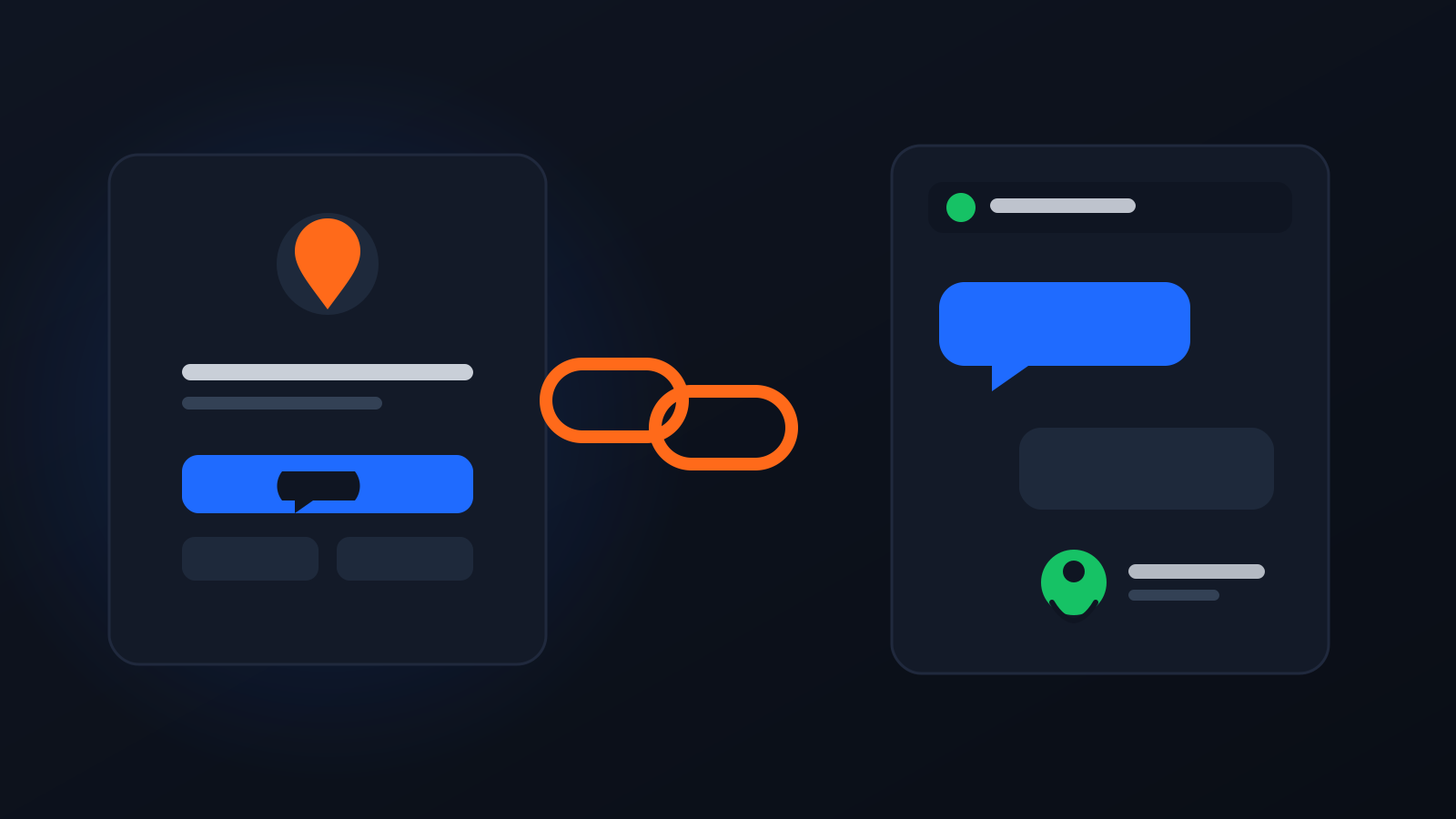
An m.me link is Meta's short URL. It opens a Messenger conversation with a Facebook Page. Put that link on a Business Profile and a person who found you on Google can land in Facebook chat instead of on the phone.
This article is one shared email plus Schwartz's note that he had not seen the pattern before. It is not a Google help doc, and it is not proof that every profile received the mail. Check the profiles you are responsible for. Do not assume yours was skipped, and do not assume yours was included.
An unstaffed chat button is a missed job
HVAC, plumbing, legal, med spa, dental, and the rest of the service businesses we work with already lose jobs to slow phones. Messenger is the same failure in another app. The customer did what the profile offered. They asked for help. If the Facebook Page inbox is a place nobody opens, or a place an old agency still technically owns, the lead dies where you cannot see it in the call log.
The dangerous version is the automatic add. Nobody on the client side chose to advertise chat. Google, if this email is accurate, added the path. The office finds out when a customer says they messaged two days ago, or they never find out.
There is a clean version. The office already answers Messenger, the Page is theirs, and a named person checks it on the same schedule as the phone. In that case the link is another door on a building you already staff. Leave it, and write down who owns it.
The audit on every client profile
Open each Google Business Profile you manage and look for a Facebook or Messenger link, including an m.me URL. Check the notification email if the client forwards it. Then decide, in writing, which of the two paths you are on.
Path one: the client owns the Facebook Page, a named person reads Messenger at least as often as the front desk reads the phone, and after hours messages have a rule. Write the name in the account notes.
Path two: nobody will watch it. Remove the link. A profile should not offer a contact method the business will not answer. If you cannot find a remove control, save a screenshot and the Google email and escalate it as a profile support issue the same week. Do not leave "we will get to it" as the status.
While you are in the profile, confirm the phone is still the number a person answers, and that hours match when that person is actually there. A new chat link does not fix a wrong phone.
- ▸List every client profile and mark Messenger present, absent, or unknown
- ▸If the Google email arrived, save it with the date
- ▸Confirm the Facebook Page belongs to the client, not a former vendor
- ▸Name the person who reads the inbox, and the same day response rule, or remove the link
- ▸Tell the office that a Messenger lead counts the same as a call in the follow up log
- ▸Recheck after a week, because an automatic add can return
What we will do on accounts we run
We treat a new contact method on a client profile as an intake change, not as a cosmetic edit. If Messenger is on the listing, the account notes get an owner for that inbox or a task to take the link off. We do not leave a channel live because Google turned it on and the monthly report did not have a line for it.
Profile control, categories, and the contact paths a customer can actually use are the work on Google Business Profile SEO. If you want the profiles checked and a person assigned, or the link removed, book a call and say it is the Messenger audit.
Source
Search Engine Roundtable, Barry Schwartz, Google Business Profiles Adds Facebook Messenger M.me Links, October 28, 2026. Based on an email shared by Darcy Burk. Schwartz wrote that he could not recall Google adding m.me links before.
Intake
Staff the inbox or take the link off
We will check client profiles for an m.me link, confirm who owns the Facebook Page, and either assign a same day reader or remove the path.
Book a callKeep reading
Related guides
- ▸How Many 5 Star Reviews Cancel One Star
- ▸How much does Google Maps SEO cost in 2026?
- ▸How much should a contractor spend on marketing?
Put it into action
Frequently Asked Questions
Is Google adding Facebook Messenger to every Business Profile?
Search Engine Roundtable reported on October 28, 2026 that Google is emailing some businesses about automatically adding m.me links. The report is based on one shared email. Check your profiles. Do not treat it as a confirmed change on every listing.
What is an m.me link?
It is Meta's short URL that opens a Facebook Messenger chat with a Facebook Page. On a Google Business Profile, it gives a searcher a path into that chat.
Should I remove the Messenger link?
Remove it if nobody will read the inbox. Keep it if the client owns the Page and a named person answers Messenger on the same schedule as the phone. An offered channel that nobody watches is a missed job.
What if a former agency still has the Facebook Page?
Do not send customers there. Get the Page back to the client or remove the Messenger link from the Google profile until the client controls the inbox. A lead that lands in an old vendor's chat is not your lead anymore.
Does this replace the phone number on the profile?
No. The phone is still the primary path for most service businesses. Messenger is an extra door. Keep the number accurate, and only add chat if someone answers it.
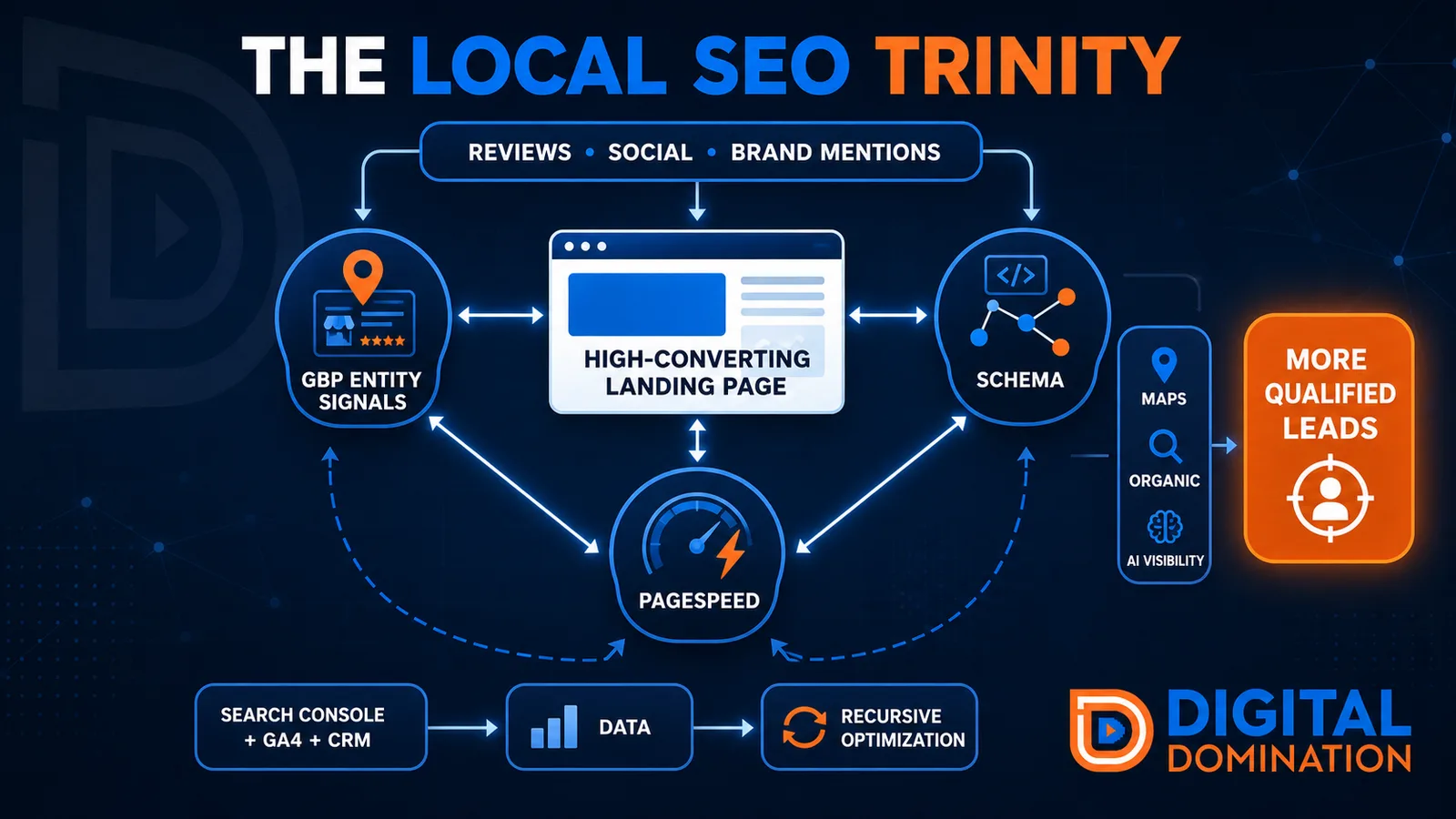
The Local SEO Trinity
Think of a three-legged stool. Your Google profile, your website, and your reviews all have to hold you up. If one leg is short, the whole thing wobbles.
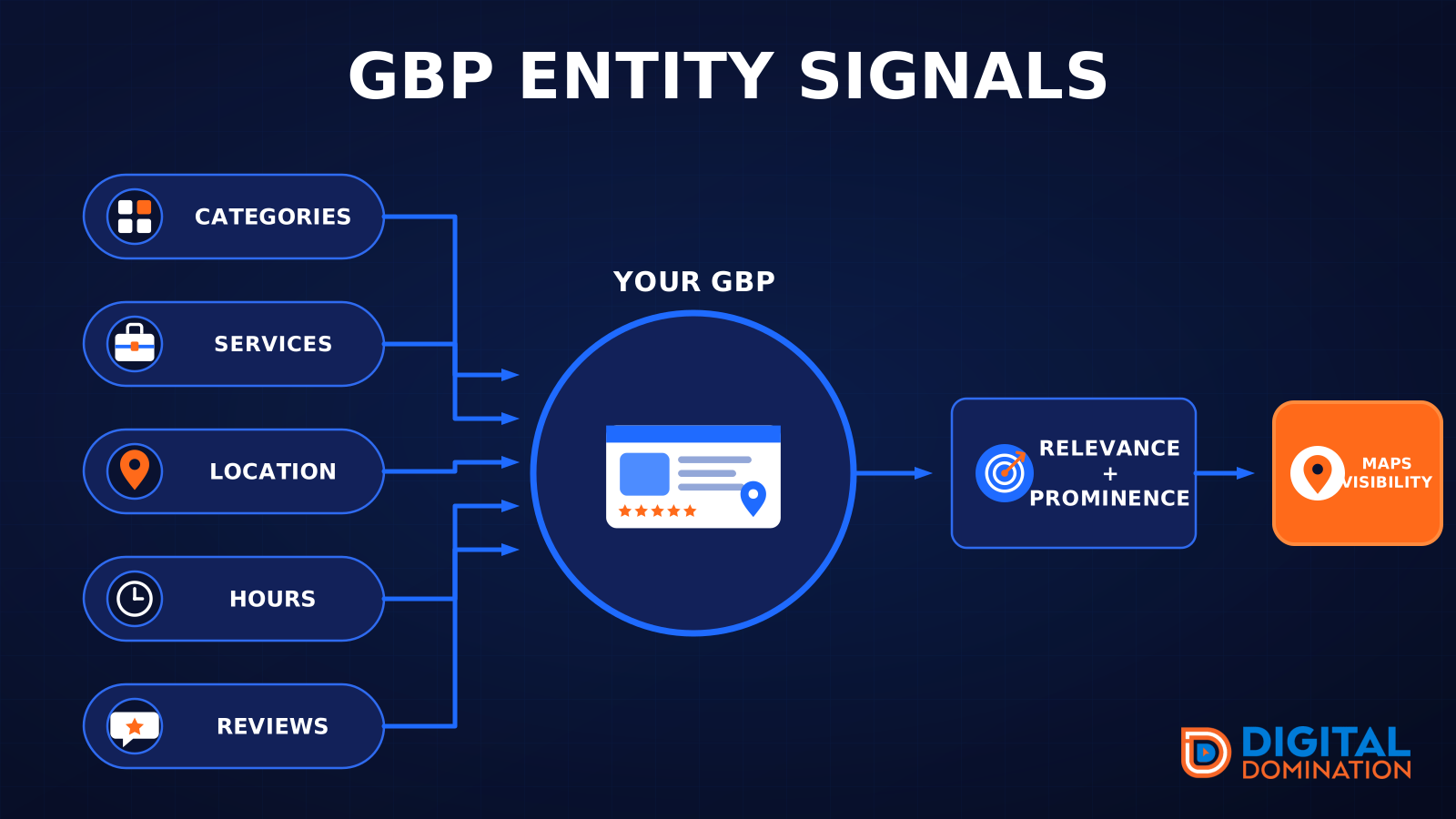
GBP entity signals
This leg is your Google Business Profile. GBP means Google Business Profile. It covers your categories, your services, your location, your hours, and your reviews. Google uses those facts to decide who to show.
Your Google profile is your storefront sign. If the sign is missing, or it names the wrong shop, people drive past.
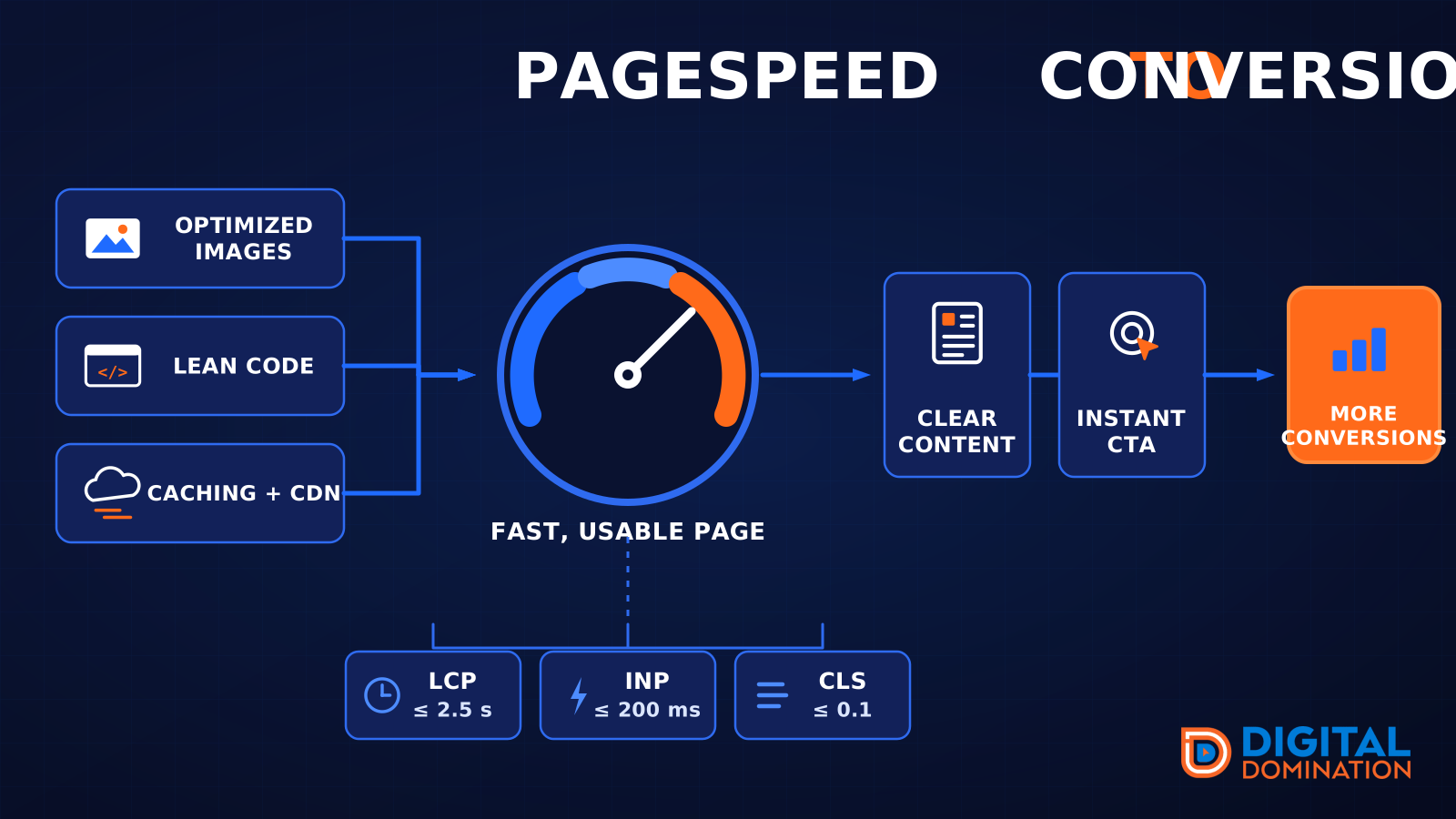
PageSpeed to conversion
This leg is your website, above all on a phone. Small images, lean code, and caching make a page fast. A fast, clear page is what turns a visit into a call. Phone speed is one of the 12 Trinity checks because a slow page loses the call before anyone sees your offer.
Your website is the showroom. If the door sticks, people leave before they look around.
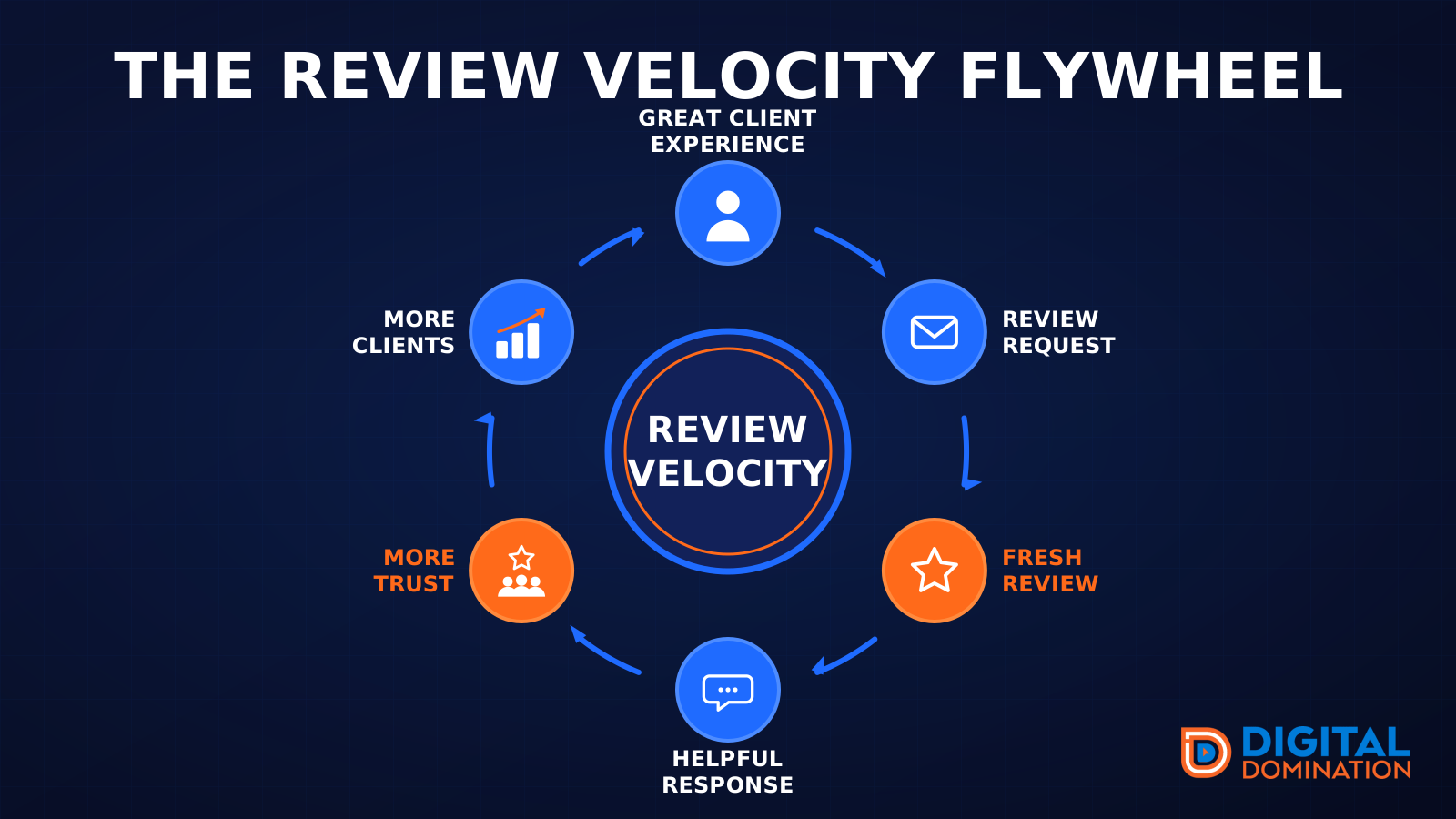
The review velocity flywheel
This leg is reviews and reputation. A good visit leads to a review request, then a fresh review, then a helpful reply, then more trust, then more customers. When the scan can find your Google listing, it shows your rating, your recent reviews, and how many you answered.
Reviews are word of mouth. One kind word helps. A steady stream of real reviews, and a reply from you, helps more.
How this turns into revenue
Being found in more searches leads to more calls. More calls lead to more booked jobs. More booked jobs lead to more revenue.
Example numbers, not a real business: 40 calls from search in a month, a 25 percent close rate, and a $400 average job. That is 10 booked jobs. That is $4,000. The math is the lesson. It is not a promise.
The full page has a box where you can type your own average job value and close rate.
One real story, from our car dealership case study: Medina Auto Group went from invisible on Google Maps to dominating every high-intent search across their market. The turnaround spanned all four of their rooftops at once. The same page says the team eliminated 89 unfair one-star reviews that had been dragging the dealership's reputation down and keeping it out of the Map Pack. It also says: “Results described here are exceptional and non-typical. Outcomes vary based on market conditions, competition, and implementation. No guarantees are made regarding earnings, rankings, or conversions.”
Free strategy call
More booked jobs start with a clear plan
Book a free strategy call. We look at your Google profile, your website, and your reviews, and we tell you what to fix first.
Free. You pick the time. A real person shows up.