
Google Business Profile optimization vs hiring an in-house marketer
If your main goal is more calls from Google Search and Google Maps, the better choice is usually focused Google Business Profile optimization. If you need full-time marketing coordination across many channels, hire in-house.
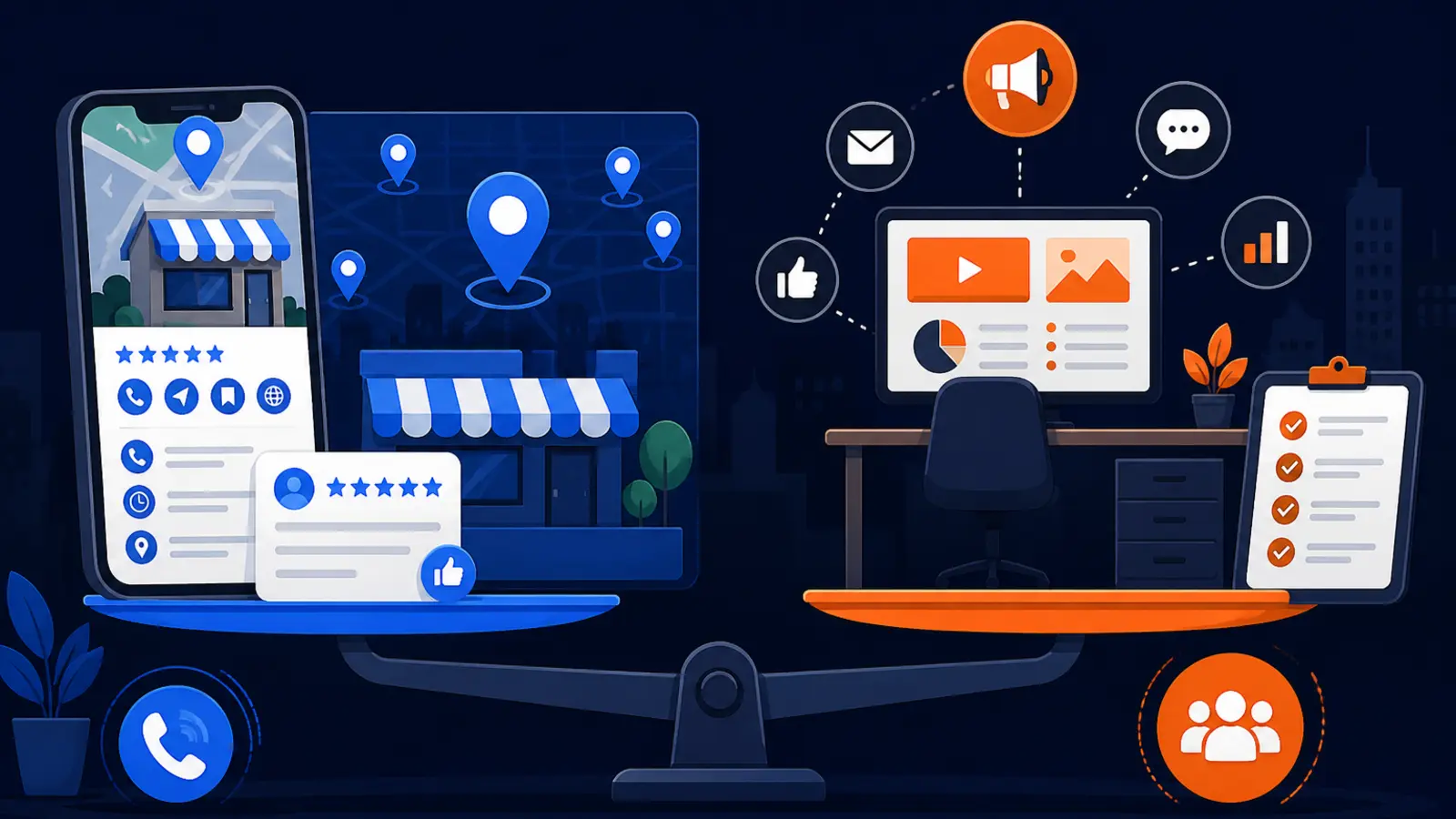
The short answer
If the goal is more calls from Google Search and Google Maps, start with focused Google Business Profile optimization before hiring a full-time marketer. Your Business Profile is the place where many local searchers compare your category, reviews, photos, hours, services, directions, website link, and call button before they contact you.
Google Business Profile Help says complete and accurate Business Profile information makes a business more likely to appear in local search results, while inaccurate information can keep a profile from showing for relevant searches. Google also says local results are mainly based on relevance, distance, and popularity, and there is no way to request or pay for a better local ranking on Google.
That matters because an in-house marketer can be a strong hire, but the role is broad. A marketing coordinator may handle reporting, email, social media, campaigns, vendor communication, promotions, internal requests, print material, customer research, and website updates. Those jobs may be useful, but they are not the same as focused work on the factors that affect Google Maps visibility and call conversion.
- ▸Choose Google Business Profile optimization when your immediate goal is more calls from Maps and local search.
- ▸Choose an in-house marketer when you need a full-time employee to manage multiple channels and internal projects.
- ▸If you can only fund one option right now, match the spend to the outcome you want first.
Why the Business Profile is often the faster call path
For a local business, Google Maps is not just a listing. It is a decision screen. A homeowner searching for an electrician, plumber, roofer, dentist, mechanic, or attorney can see a map result, read reviews, check hours, view photos, compare services, tap the call button, or click through to the website.
Google Business Profile performance defines Calls as the number of times a customer clicked the call button on a Business Profile. It defines Website clicks as the number of times people clicked the website link on a Business Profile. Those actions are closer to revenue than a generic social post or a brand awareness campaign.
Focused GBP optimization works on the information Google uses to understand and display your business, plus the details a customer uses to decide whether to call. The work is narrow, but that is the point.
The call path usually depends on these visible pieces:
- ▸Correct primary category and supporting categories.
- ▸Accurate name, address, phone, hours, and service area details.
- ▸Services that match what customers actually search for.
- ▸Review quality, review recency, and owner responses.
- ▸Photos that prove the business is real and active.
- ▸Website and landing page alignment with the Business Profile.
- ▸Tracking that separates calls, website clicks, and ranking movement.
What Google says affects local visibility
Google Business Profile Help says local results are mainly based on relevance, distance, and popularity. Google defines relevance as how well a Business Profile matches what someone is searching for, and says complete and detailed business information helps Google match a profile to relevant searches.
Google also says prominence is based on information such as links to the business and reviews. It says more reviews and positive ratings can help local ranking. That does not mean reviews are the only factor, and it does not mean a business can buy its way into the Map Pack. Google says there is no way to request or pay for a better local ranking on Google.
The category decision is especially important. Google Business Profile Help says a category helps connect a business with customers who search for its products or services, and that selected categories affect local ranking on Google. A profile can have one primary category and up to nine additional categories.
The practical owner takeaway is simple: if your profile is incomplete, loosely categorized, inconsistent, or thin on services and reviews, hiring a general marketer may not fix the problem unless that person knows local search well.
Where an in-house marketer can be the better choice
Hiring an in-house marketer can be the right move when the business has enough marketing work to fill a full-time role. The U.S. Bureau of Labor Statistics says the median annual wage for market research analysts and marketing specialists was $78,760 in May 2025, and employment in that field is projected to grow 7% from 2025 to 2035. Salary is not the only cost, but it is a useful reminder that a full-time hire is a serious commitment.
A good in-house marketer can become a hub for communication, planning, follow-through, vendor management, and reporting. That is valuable when owners and managers are buried in operations and need someone inside the company every day.
Hiring in-house may fit better if you need help with work like this:
- ▸Researching customers, competitors, offers, and new markets.
- ▸Coordinating campaigns across email, social media, events, print, ads, and website content.
- ▸Working with staff to collect photos, job details, approvals, and customer stories.
- ▸Managing calendars, promotions, sponsorships, and internal deadlines.
- ▸Building reports for ownership, managers, franchise teams, or investors.
- ▸Serving as the daily point person for multiple agencies and vendors.
Where focused GBP optimization wins
Focused Google Business Profile optimization wins when the business has a clear local intent problem: people search for what you sell, but your profile is not showing often enough, not showing in enough of the service area, or not earning enough calls when it does show.
This is a specialist job because small Business Profile decisions can change what Google understands about the business. Category selection, service naming, address consistency, review strategy, business description, photos, landing page alignment, and local prominence signals all work together.
Whitespark's Local Search Ranking Factors survey asked 47 local search experts to score 187 factors, including local pack and Maps ranking impact, local organic ranking impact, conversion impact, and AI search visibility impact. In that survey, Primary GBP Category ranked first for local pack and Maps ranking factors, while HTML NAP Matching GBP NAP ranked fifteenth. Those are not glamorous tasks, but they are the kind of details that can affect whether you are found.
Focused GBP optimization is usually the better fit when these are true:
- ▸Your phone should ring from nearby searches, not just from referrals.
- ▸Your competitors appear in the Map Pack more often than you do.
- ▸Your categories, services, hours, or service area may be wrong or incomplete.
- ▸Your reviews are inconsistent, unanswered, or not part of a system.
- ▸Your profile looks inactive compared with nearby competitors.
- ▸You need ranking proof by neighborhood, not a vague monthly traffic report.
What to look for before you buy either option
Before you buy optimization or hire in-house, ask for proof that the work will be connected to calls. A profile can look nice and still fail to show in the neighborhoods that matter. A marketing hire can stay busy all week and still miss the main reason the phone is quiet.
Google Business Profile Help says the Profile Strength Indicator helps identify missing business description, hours, and contact information, check consistency across Google Search, Google Maps, and Google Shopping, and add photos, videos, and posts. That is a helpful starting point, but it is not the same as knowing where you rank across your service area.
Business owners should expect concrete checkpoints they can verify with their own eyes. The best buying process starts with current visibility, then fixes the profile, then tracks ranking and call movement over time.
Use these checkpoints when you compare your options:
- ▸A baseline scan that shows where you rank across the service area, not only at your office address.
- ▸A review of the primary category and additional categories.
- ▸A check of name, address, phone, website, hours, and service area consistency.
- ▸A service list that matches real customer searches and your highest-value work.
- ▸A plan for review requests and owner responses.
- ▸Photo and video updates that show real people, vehicles, work, location, or proof of service.
- ▸A report that separates profile calls, website clicks, rankings, and call volume.
- ▸A clear owner approval process for edits, since some profile changes may be reviewed by Google.
Seven questions to ask before you sign
The wrong purchase is usually the one that sounds broad but has no clear owner-visible checkpoints. Whether you are talking to an agency, consultant, freelancer, or job candidate, ask questions that reveal whether they understand local search and call generation.
Ask these questions before you commit:
- ▸What would you change first on our Business Profile, and why?
- ▸How will you choose or validate our primary category?
- ▸How will you measure ranking across our actual service area?
- ▸How will you improve calls, not just impressions?
- ▸What review system will we use, and who responds to reviews?
- ▸What work requires our staff to provide photos, approvals, or customer information?
- ▸What should we expect if Google reviews an edit or verification step?
The trade-offs owners should expect
Focused Google Business Profile optimization is narrower than hiring an employee. That is its strength and its limitation. It should be judged by local visibility, call actions, profile engagement, and movement across the map, not by whether it handles every marketing task in the company.
An in-house marketer gives you daily availability and broader support, but a generalist may need training, tools, management, and outside specialists. If your biggest problem is that you do not appear when nearby buyers search, a general marketing hire may spend months on useful but indirect work.
There are also timing realities. Google Business Profile Help says photos and videos can take up to 24 to 48 hours to show after upload. Google says edits to a verified Business Profile usually take up to 10 minutes to review, but sometimes can take up to 30 days. Google also says Business Profile verification reviews take up to 5 business days after verification steps are completed, with longer reviews on rare occasions.
Expect these trade-offs:
- ▸GBP optimization is more focused, but it will not run every marketing channel.
- ▸An in-house marketer is more flexible, but may not be a Maps ranking specialist.
- ▸Profile changes may need Google review, so not every update is instant.
- ▸Ranking work should be tracked by location because distance affects local results.
- ▸Call growth depends on both visibility and conversion details such as reviews, photos, hours, and services.
How reviews change the decision
Reviews sit at the intersection of ranking and conversion. Google Business Profile Help says prominence can include reviews, and more reviews and positive ratings can help local ranking. BrightLocal's Local Consumer Review Survey 2026 says 97% of consumers read reviews for local businesses and 89% expect business owners to respond to reviews.
That means review management is not a side task. It affects whether people trust you enough to call after they find you. It also creates a practical operations question: who will ask happy customers for reviews, who will respond, and who will catch problems before they become reputation issues?
A full-time marketer may be helpful if review requests require daily coordination with dispatchers, front desk staff, technicians, salespeople, or managers. Focused GBP optimization may be better if you need a system and accountability specifically tied to local ranking and profile conversion.
Your review plan should answer these questions:
- ▸When is a customer asked for a review?
- ▸Who sends the request?
- ▸Where does the customer leave the review?
- ▸Who responds to positive and negative reviews?
- ▸How are common complaints shared with operations?
- ▸How is review activity connected to profile visibility and calls?
A practical decision rule
If your business already has enough leads from Google and needs someone to coordinate the rest of marketing, hire the in-house marketer. That person can help the company stay organized, keep campaigns moving, and support channels that sit outside the Business Profile.
If your business needs more calls from Google Search and Google Maps, buy focused Google Business Profile optimization first. The work lines up more directly with how Google understands local businesses and how customers decide who to call.
A simple decision rule is to look at the bottleneck. If the bottleneck is internal coordination, hiring may be right. If the bottleneck is Maps visibility, profile completeness, reviews, services, categories, or proof of local ranking, focused GBP work is the cleaner match.
Use this rule of thumb:
- ▸Need more Google Maps calls soon: choose focused GBP optimization.
- ▸Need full-time campaign coordination: hire in-house.
- ▸Need both but have a limited budget: fix Google visibility first, then add broader marketing capacity.
- ▸Have several locations, many internal stakeholders, or complex campaigns: consider an in-house marketer plus a local search specialist.
How Digital Domination can help with the Google side
Digital Domination focuses on helping local businesses compete in Google Maps and local search. The Google Business Profile SEO page explains the Maps Domination Program, how Google Business Profile SEO works, what is included, and why the work starts with proof of current visibility.
The free scan page offers a 169-point GeoGrid scan that checks 169 real Google results across your service area. That gives you a practical starting point before you decide whether your next move should be focused GBP optimization or a full-time marketing hire.
If your main goal is more calls from Google Search and Google Maps, start with the Google Business Profile SEO page, then request the free GeoGrid scan. You will see where you stand now, where competitors are winning, and whether focused Maps work is the right next step.
Keep reading
Related guides
- ▸Online reputation management near me
- ▸Online Reputation Management Vs Doing Local SEO Yourself Diy With Free
- ▸Optometrist local SEO
Put it into action
Frequently Asked Questions
Should I hire a marketer or pay for Google Business Profile SEO first?
If your main goal is more calls from Google Search and Google Maps, start with Google Business Profile SEO. If your problem is broader campaign coordination, reporting, social media, email, events, or internal project management, an in-house marketer may be the better first hire.
Can an in-house marketer manage our Google Business Profile?
Yes, an in-house marketer can manage a Business Profile if they understand local SEO, categories, services, reviews, photos, and ranking tracking. The risk is hiring a generalist who stays busy on marketing tasks but does not fix the profile issues that affect Maps visibility.
What matters most for ranking in Google Maps?
Google says local results are mainly based on relevance, distance, and popularity. Google also says categories affect local ranking, and Whitespark's Local Search Ranking Factors survey ranked Primary GBP Category first for local pack and Maps ranking factors.
Does Google let businesses pay for a higher local ranking?
No. Google Business Profile Help says there is no way to request or pay for a better local ranking on Google. You can improve the accuracy, completeness, relevance, reviews, and prominence signals around your business, but you cannot buy a better organic Map Pack position from Google.
How do I know if GBP optimization is working?
Track rankings across the actual service area, not only at your office address. Also watch Business Profile calls, website clicks, review activity, and call volume so you can connect visibility work to real customer actions.
Is review management part of Google Business Profile optimization?
It should be. Google says more reviews and positive ratings can help local ranking, and BrightLocal says most consumers read reviews for local businesses. A good plan should include review requests, owner responses, and a process for handling negative feedback.
When is hiring an in-house marketing coordinator worth it?
It is worth considering when you need a full-time person to manage research, reporting, campaigns, vendor communication, internal coordination, and channels beyond Google Business Profile. That role can be valuable, but it should not be confused with specialist Google Maps optimization.
What should a local business check before buying GBP services?
Ask for a baseline map ranking scan, category review, service list review, NAP consistency check, review plan, photo plan, and clear reporting on calls and website clicks. You should be able to verify the work without needing technical knowledge.
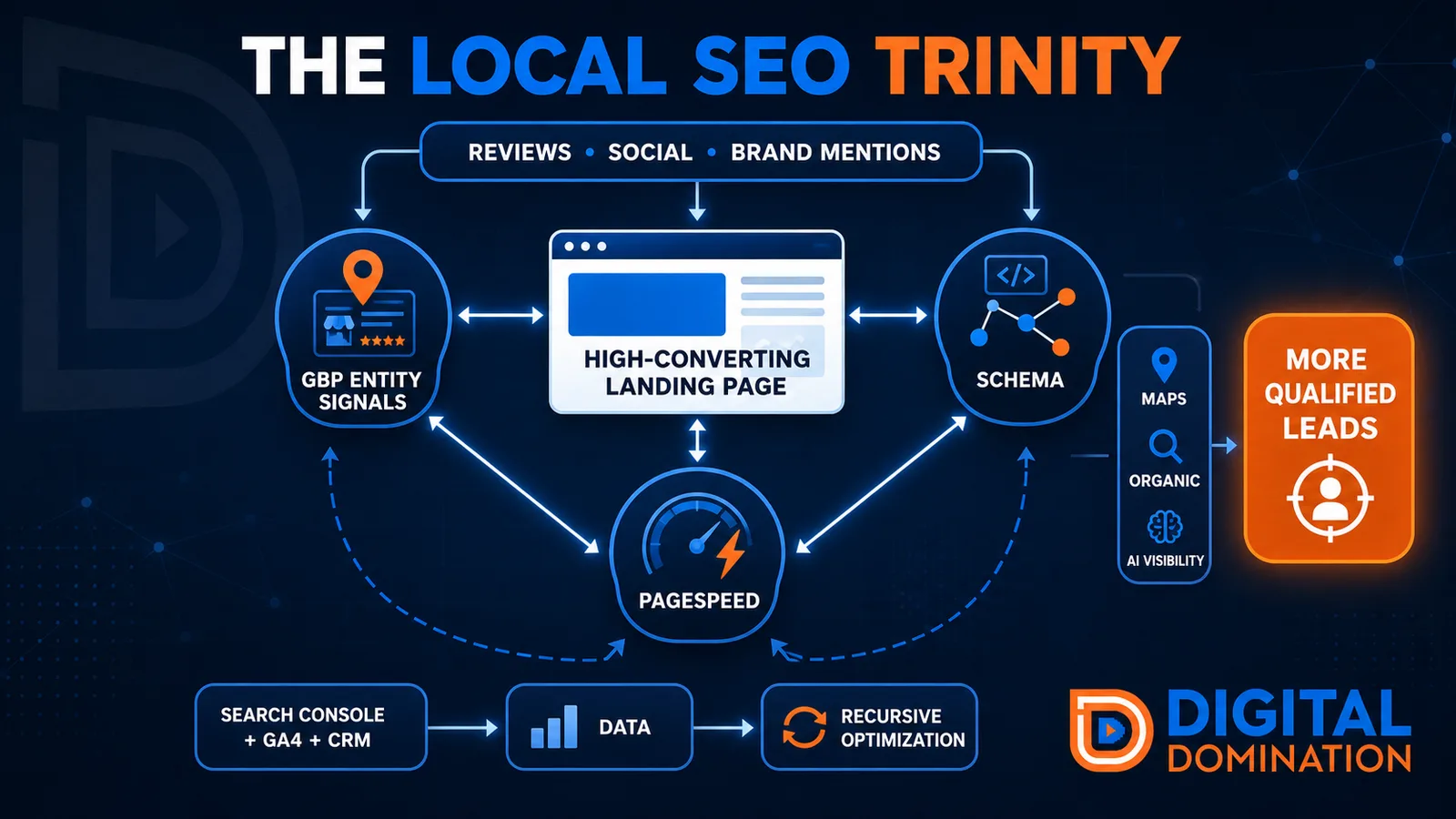
The Local SEO Trinity
Think of a three-legged stool. Your Google profile, your website, and your reviews all have to hold you up. If one leg is short, the whole thing wobbles.
GBP entity signals
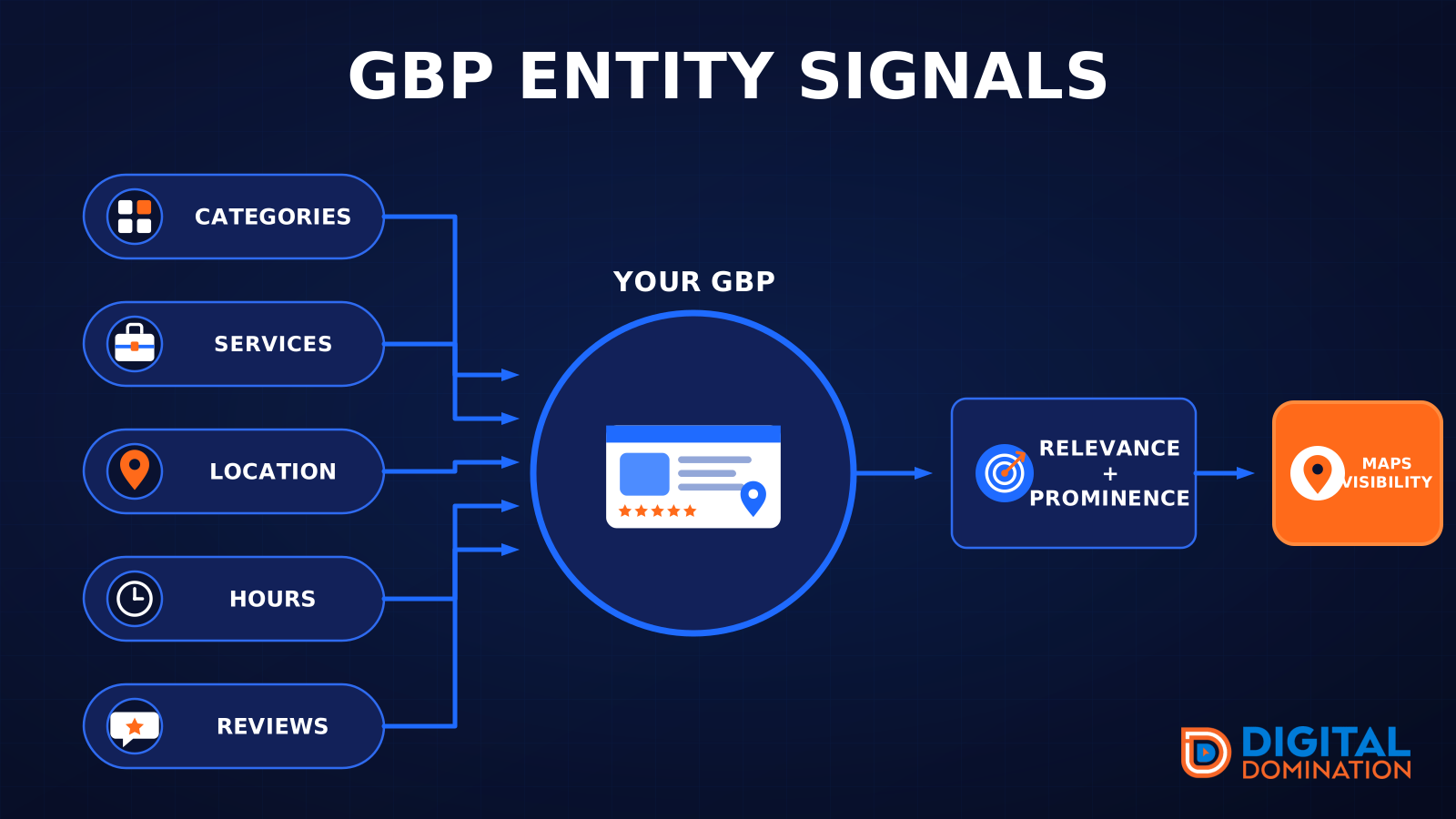
This leg is your Google Business Profile. GBP means Google Business Profile. It covers your categories, your services, your location, your hours, and your reviews. Google uses those facts to decide who to show.
Your Google profile is your storefront sign. If the sign is missing, or it names the wrong shop, people drive past.
PageSpeed to conversion
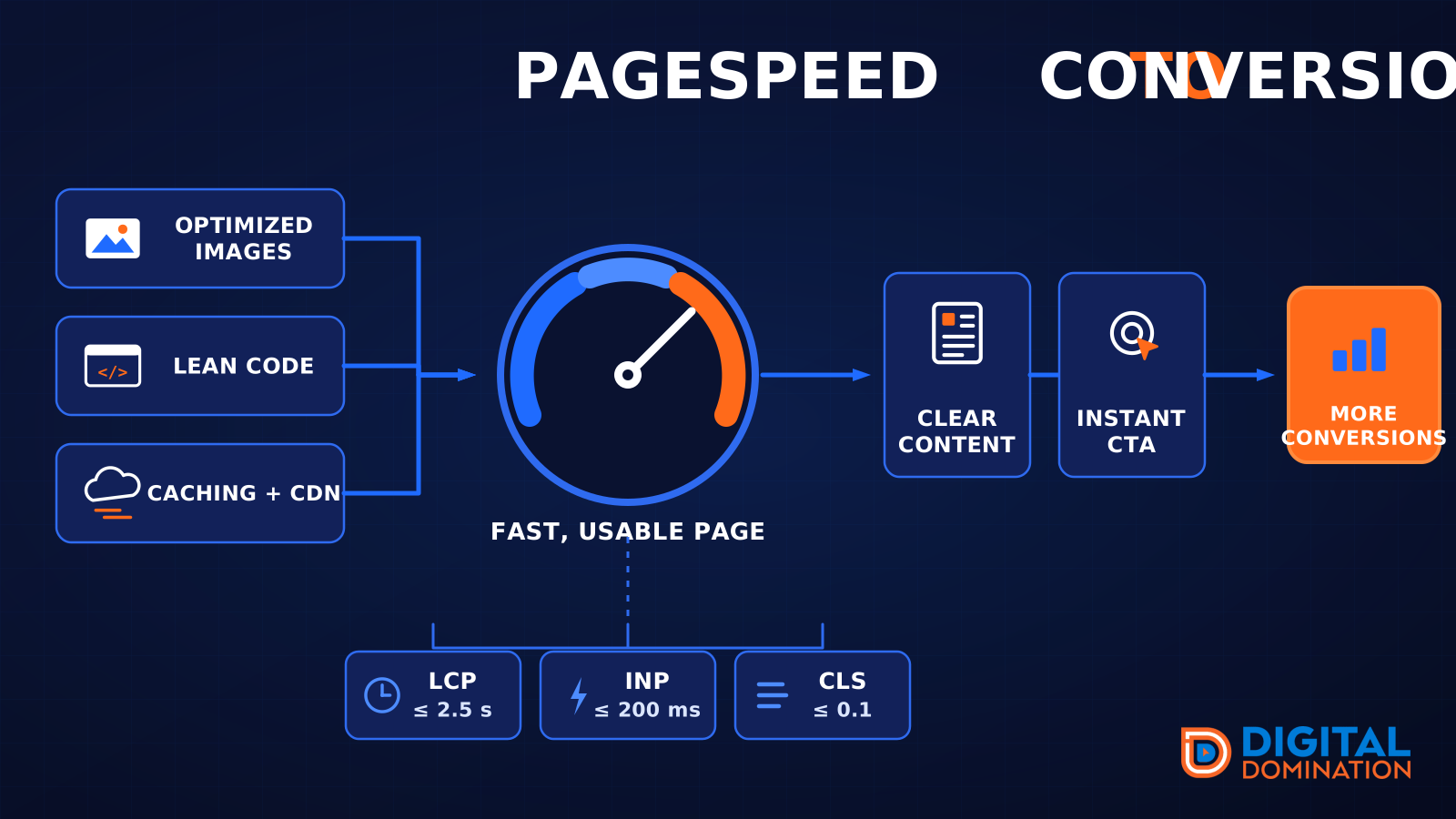
This leg is your website, above all on a phone. Small images, lean code, and caching make a page fast. A fast, clear page is what turns a visit into a call. Phone speed is one of the 12 Trinity checks because a slow page loses the call before anyone sees your offer.
Your website is the showroom. If the door sticks, people leave before they look around.
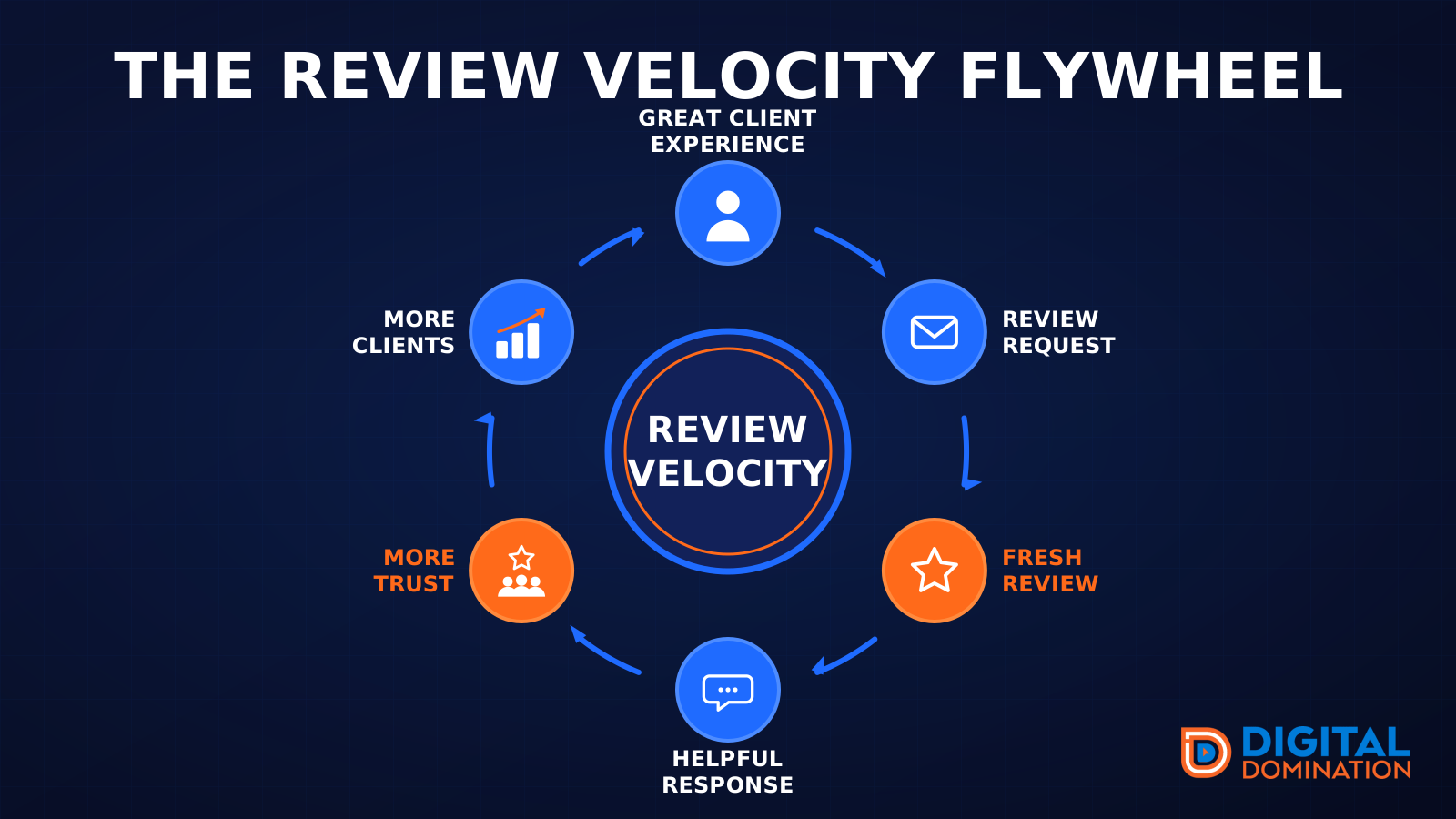
The review velocity flywheel
This leg is reviews and reputation. A good visit leads to a review request, then a fresh review, then a helpful reply, then more trust, then more customers. When the scan can find your Google listing, it shows your rating, your recent reviews, and how many you answered.
Reviews are word of mouth. One kind word helps. A steady stream of real reviews, and a reply from you, helps more.
How this turns into revenue
Being found in more searches leads to more calls. More calls lead to more booked jobs. More booked jobs lead to more revenue.
Example numbers, not a real business: 40 calls from search in a month, a 25 percent close rate, and a $400 average job. That is 10 booked jobs. That is $4,000. The math is the lesson. It is not a promise.
The full page has a box where you can type your own average job value and close rate.
One real story, from our car dealership case study: Medina Auto Group went from invisible on Google Maps to dominating every high-intent search across their market. The turnaround spanned all four of their rooftops at once. The same page says the team eliminated 89 unfair one-star reviews that had been dragging the dealership's reputation down and keeping it out of the Map Pack. It also says: “Results described here are exceptional and non-typical. Outcomes vary based on market conditions, competition, and implementation. No guarantees are made regarding earnings, rankings, or conversions.”
Free strategy call
More booked jobs start with a clear plan
Book a free strategy call. We look at your Google profile, your website, and your reviews, and we tell you what to fix first.
Free. You pick the time. A real person shows up.