
Google tests deeper Business Profile performance reports for Maps visibility
A limited Google Business Profile test could give owners clearer proof of calls, direction requests, reviews, audience behavior and search trends. That should change what you ask from a Google Maps SEO provider.
What changed and who it affects
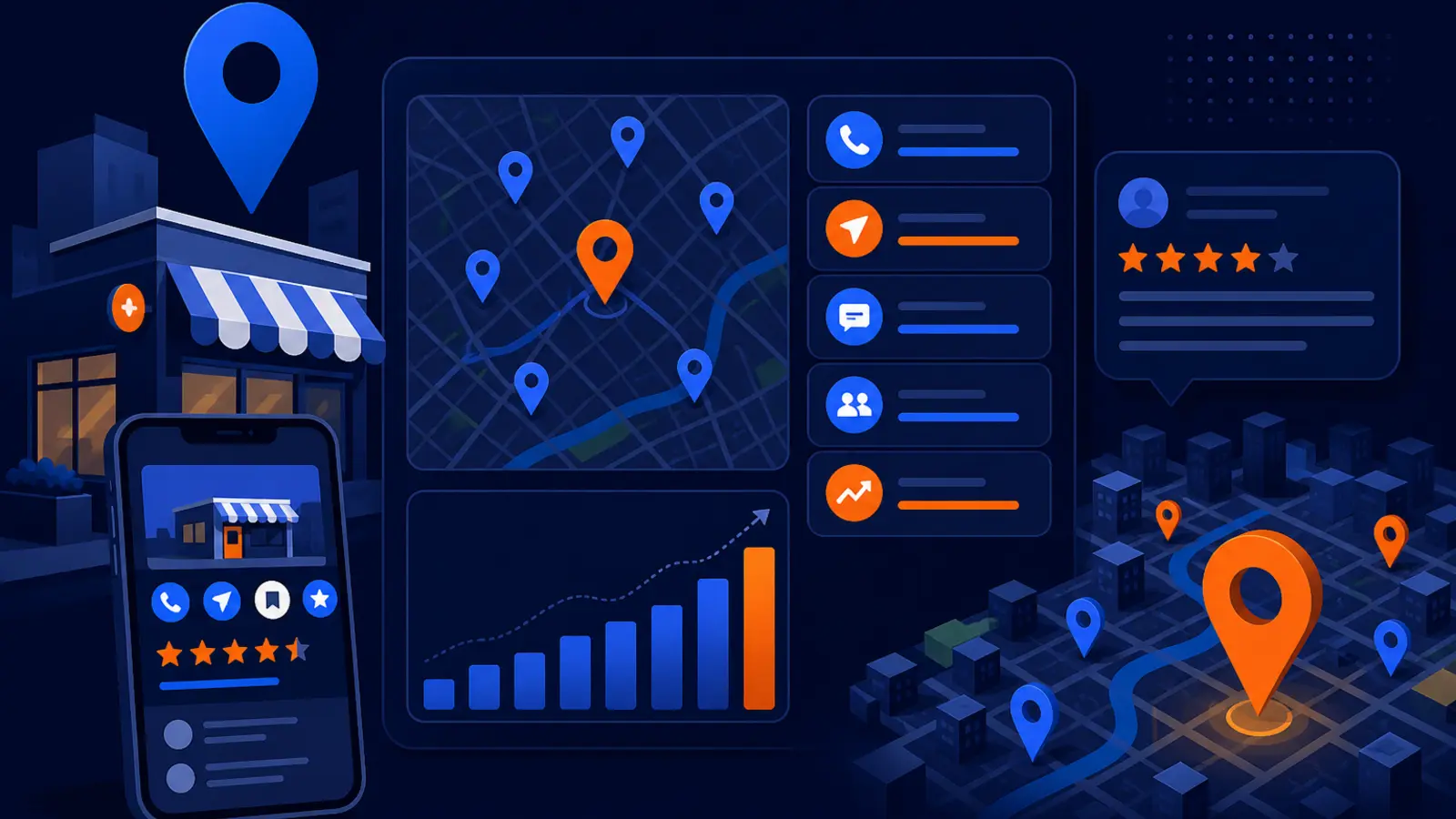
Google is testing a revamped Google Business Profile performance report that appears to break reporting into separate sections for engagement, reviews, audience, search trends and top recommendations. Search Engine Roundtable reported the test on October 23, 2026, based on live-account screenshots. Maps Agent also covered the same test on October 26, 2026, and framed it as a Business Profile performance reporting change that owners should watch closely.
This does not appear to be a universal rollout yet. Google has not announced that every Business Profile will get the new report, so local business owners should treat it as a limited test until they see it inside their own account.
The change matters most to service businesses that depend on Google Maps, including plumbers, roofers, HVAC companies, attorneys, dentists, med spas, home service companies and other local operators that get calls from the Map Pack. If Google gives owners more native reporting, it becomes harder for a weak SEO provider to hide behind one blended traffic number.
Why this test matters for Google Maps SEO buyers
For years, many local business owners have had a frustrating reporting problem. They pay for Google Maps SEO, then receive a report that mixes website visits, profile views, rankings, impressions and leads into a single story. That makes it hard to know whether the campaign is actually producing more phone calls, better Maps visibility or just more charts.
A better native Google Business Profile report could make the conversation more practical. Instead of asking, "Did traffic go up?" an owner can ask whether the profile is getting more calls, more direction requests, stronger review activity and better visibility for valuable search terms.
Before signing or renewing a local SEO contract, ask the provider to separate these three areas:
- ▸Map Pack ranking: where your profile appears from different parts of your service area.
- ▸GBP engagement: calls, direction requests, website clicks and other actions from the profile.
- ▸Lead outcomes: booked jobs, qualified calls, form submissions and revenue you can trace internally.
What Google appears to be testing
The reported screenshots show a more structured performance area inside Google Business Profile. The important part is not the exact design, because tests can change. The important part is the direction: Google appears to be giving owners a clearer way to understand how people find and interact with a profile.
Search Engine Roundtable described separate sections for engagement, reviews, audience, search trends and top recommendations. Maps Agent noted that this could make Business Profile reporting more actionable for local businesses because the data is organized around what owners actually care about.
If this test reaches your profile, check whether you see sections like these:
- ▸Engagement, such as calls, website clicks, messages or direction requests.
- ▸Reviews, including rating patterns and review activity.
- ▸Audience, which may help you understand who is interacting with the profile.
- ▸Search trends, showing how people are finding the business.
- ▸Top recommendations, which may suggest profile improvements.
The reporting mistake owners should stop accepting
The common reporting mistake is accepting a single blended number as proof of SEO performance. A provider may point to total website traffic, total impressions or a general visibility score. Those numbers can be useful in context, but they do not prove that your Google Maps presence is producing qualified local leads.
Google's local ranking factors are relevance, distance and prominence. That means a real Maps SEO report should show more than broad traffic. It should explain whether your profile is better matched to the right searches, whether you appear across the areas you serve and whether your reputation and authority signals are improving.
If a provider cannot explain the difference between these items, you are not getting clear reporting:
- ▸Visibility: how often and where you appear in Maps results.
- ▸Engagement: what searchers do after seeing your profile.
- ▸Leads: which actions turn into real business opportunities.
- ▸Quality: whether the calls or inquiries are from people you actually want as customers.
Five things to check on your profile this week
You do not need to wait for Google's test to reach your account before improving your reporting habits. Most owners can check a few practical items this week and make their next SEO conversation much sharper.
Use this list as a quick audit before your next vendor call:
- ▸Check whether your primary category matches your main money service, not a broad or outdated label.
- ▸Open your Business Profile performance area and note the calls, direction requests and website clicks you can already see.
- ▸Look at your recent reviews and write down the services customers mention by name.
- ▸Search your top service from different parts of town and see whether your visibility changes by location.
- ▸Ask your team which calls from Google are qualified, repeat questions, spam or wrong-fit inquiries.
What to ask before paying a Google Maps SEO provider
If Google is moving toward deeper native reporting, your provider should already be comfortable with transparent measurement. A serious Google Maps SEO provider should not be afraid to separate rankings, profile actions and lead quality.
The right questions are simple. You are not asking for a lecture on algorithms. You are asking whether the provider can show what changed, why it changed and how that connects to your business.
Before you pay, ask these questions in plain language:
- ▸Can you show my Map Pack ranking from multiple points across my service area, not just from one office location?
- ▸Can you separate Google Business Profile actions from website traffic?
- ▸Can you report calls, direction requests and website clicks without mixing them into one vanity number?
- ▸Can you explain which searches are improving and which ones still need work?
- ▸Can you show what profile changes were made each month?
- ▸Can you help me connect profile activity to actual booked jobs or qualified leads?
How ranking proof should look
A single screenshot of your business ranking near your office is not enough. Google Maps results change based on the searcher's location, query, competition and proximity. A business can rank well in one neighborhood and barely show up a few miles away.
That is why local rank tracking should be geographic. A grid-style view helps you see where you are strong, where you are weak and which parts of town need more work. At Digital Domination, our GeoGrid scan checks 169 points across a market, which gives a much clearer picture than one manual search.
Good ranking proof should answer these questions:
- ▸Where do we rank near our office or shop?
- ▸Where do we rank in the neighborhoods we care about most?
- ▸Which services rank well and which services lag behind?
- ▸Did visibility improve in the target area or only in a small pocket?
- ▸Are competitors outranking us because of proximity, categories, reviews or stronger web presence?
How engagement proof should look
Engagement is what people do after they find you. This is where a deeper Google Business Profile performance report could be useful. Calls, direction requests and website clicks tell a more practical story than profile views alone.
Owners should still be careful. More engagement is not automatically better if it comes from unqualified searches. A personal injury lawyer does not want calls for family law. A drain cleaning company does not want calls for wholesale plumbing parts. The report needs to connect engagement to the services you actually sell.
Ask your provider to explain engagement in these buckets:
- ▸Calls from the Business Profile.
- ▸Direction requests from people nearby.
- ▸Website clicks from the profile.
- ▸Messages or booking actions, if enabled.
- ▸Search terms that appear to drive the profile actions.
- ▸Changes in engagement after profile updates, review work or content changes.
How review and audience proof should look
Reviews are part of prominence, and they also affect whether a searcher trusts you enough to call. A better review reporting section inside Google Business Profile could help owners see patterns instead of just watching the star rating.
The most useful review question is not only, "How many reviews did we get?" It is, "Do our reviews describe the services, locations and experience we want to be known for?" A steady pattern of detailed customer feedback can support both conversion and local relevance.
A provider should be able to review these items with you:
- ▸Whether recent reviews mention your core services.
- ▸Whether customers mention neighborhoods, cities or service situations naturally.
- ▸Whether negative reviews are being answered professionally.
- ▸Whether your team has a repeatable review request process.
- ▸Whether review themes match the services you are trying to rank for.
What to do about it now
Because this is still a test, do not redesign your whole reporting process around a screen you may not have yet. Instead, use the news as a reason to tighten your expectations. If Google gives you more native data, you want a provider who can interpret it, not one who simply copies it into a report.
This week, take a simple baseline. Save what you can see today in your Business Profile performance area. Note your top calls, direction requests, website clicks and visible search terms. Then compare that with your provider's report. If their report is less clear than what Google is starting to show inside the profile, that is a warning sign.
Take these owner-level actions now:
- ▸Ask for separate reporting on rankings, profile actions and leads.
- ▸Request a geographic Maps ranking scan for your main services.
- ▸Review your categories, services, business description and photos for accuracy.
- ▸Create a simple call-quality note system for your front desk or office manager.
- ▸Track which Google calls become booked appointments or estimates.
- ▸Require your provider to document monthly profile changes in plain English.
What this means for your next SEO decision
The deeper Business Profile report test points in the right direction for business owners. More useful native reporting should make it easier to see whether Google Maps SEO is producing visibility, engagement and real opportunities. It should also make vague reporting harder to excuse.
The buying consequence is simple. Before you sign or renew a local SEO agreement, ask the provider to prove Map Pack ranking separately from Google Business Profile engagement, and ask how they help you connect that activity to qualified leads. If they can only show a blended traffic chart, you do not have enough information to judge performance.
Digital Domination is a Las Vegas local SEO agency serving local service businesses nationally. If you want to see how a serious Maps campaign is structured, the Google Maps optimization services page at digitaldomination.ai/google-maps-optimization-services/ explains the work that goes into ranking improvement, Business Profile optimization, local signals and reporting. You can start with a free GeoGrid scan at digitaldomination.ai/scan/.
Keep reading
Related guides
- ▸The Maps Domination Program Vs Hiring An In House Marketer Or Marketin
- ▸The real timeline to top 3 in the Google Map Pack
- ▸The Trinity AI Accelerator near me
Put it into action
Frequently Asked Questions
Is Google rolling out new Business Profile performance reports to everyone?
Not yet. Search Engine Roundtable reported the test from live-account screenshots on October 23, 2026, but Google has not announced a universal rollout. Treat it as a limited test until you see it inside your own Business Profile.
What is changing in the Google Business Profile performance report?
The test appears to organize performance into deeper sections such as engagement, reviews, audience, search trends and top recommendations. That could give owners a clearer view of how people find and interact with their profile. The exact layout may change before any wider release.
Why does this matter if I already get an SEO report?
Many SEO reports blend website traffic, profile views and rankings into one broad story. A better Google Business Profile report could help you ask sharper questions about calls, direction requests, review patterns and search terms. Your provider should be able to explain each part separately.
What should I ask a Google Maps SEO company before paying?
Ask whether they track Map Pack ranking from multiple points across your market, not just one location. Ask whether they separate Google Business Profile actions from website traffic. Also ask how they help connect calls and inquiries to qualified leads.
Are profile views enough to prove Google Maps SEO is working?
No. Profile views can show exposure, but they do not prove that searchers are calling, requesting directions or becoming customers. You need to look at visibility, engagement and lead quality together.
How can I check my Google Maps ranking myself?
You can manually search your main service from different parts of town, but results can vary by location and device. A geographic grid scan is more useful because it shows how visibility changes across your market. That gives you a better picture than one screenshot.
Should I switch SEO providers because of this Google test?
Not based on the test alone. Use it as a reason to review your provider's reporting. If they cannot separate rankings, Business Profile engagement and lead outcomes, it may be time to ask harder questions before renewing.
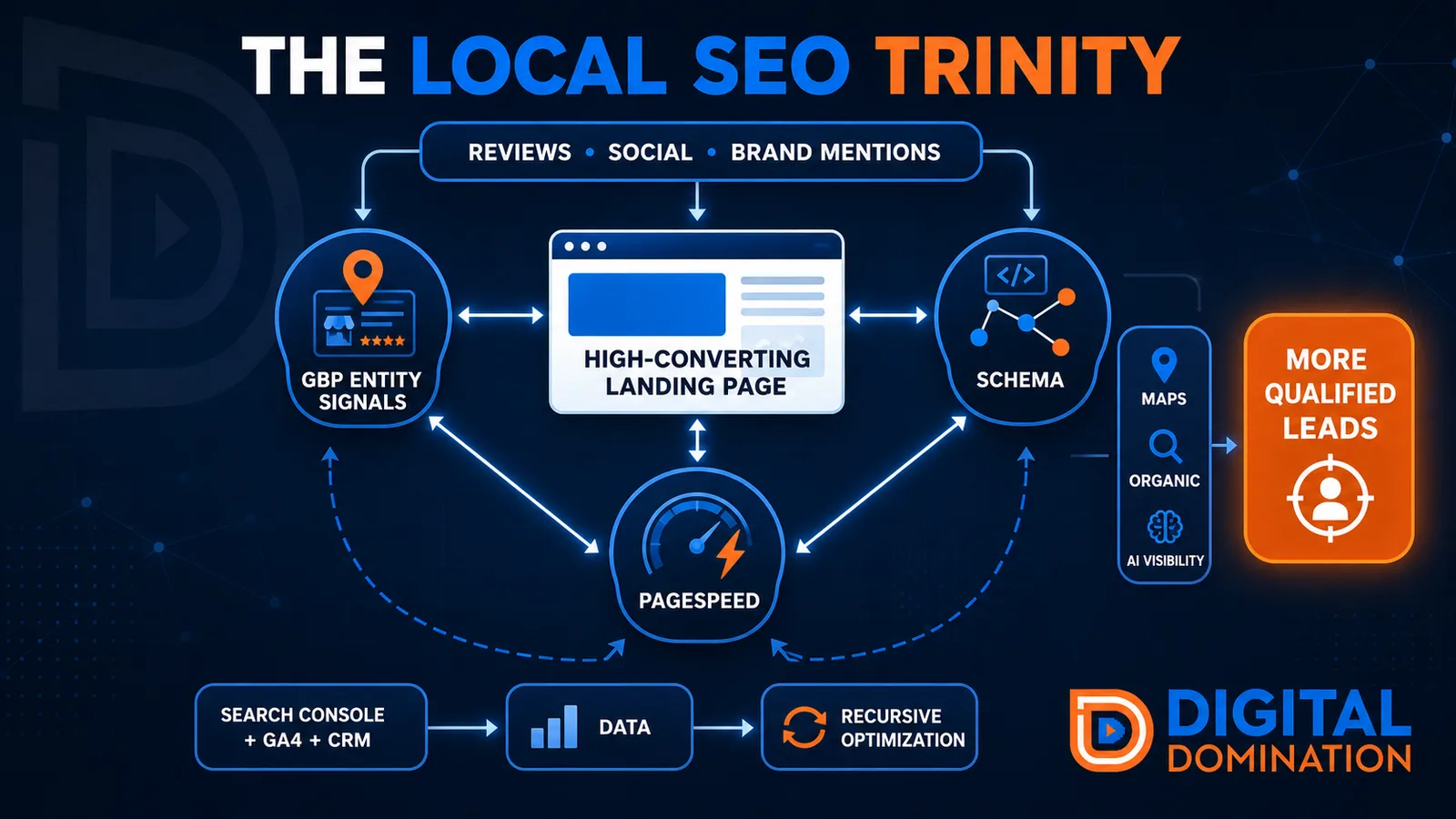
The Local SEO Trinity
Think of a three-legged stool. Your Google profile, your website, and your reviews all have to hold you up. If one leg is short, the whole thing wobbles.
GBP entity signals
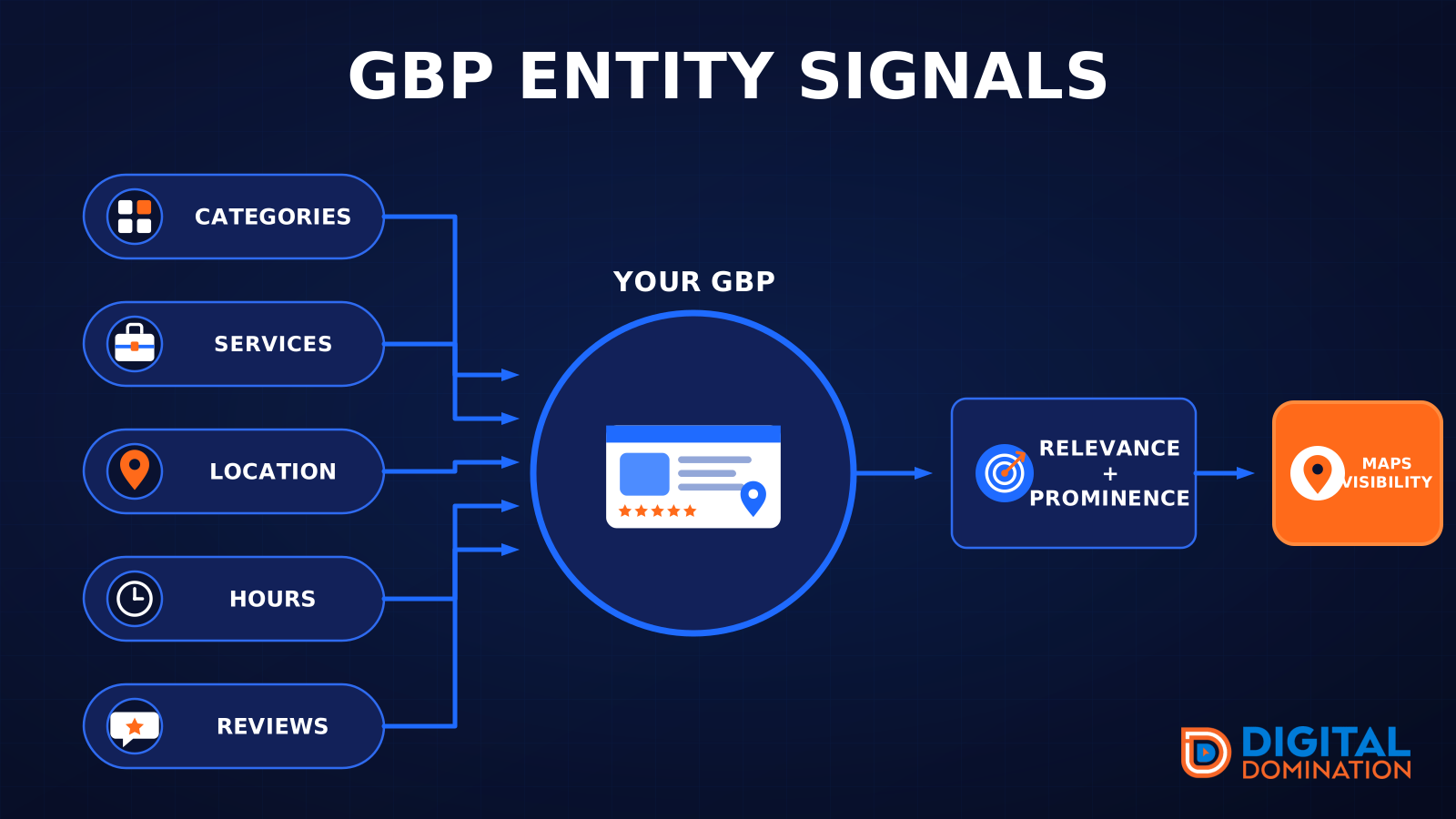
This leg is your Google Business Profile. GBP means Google Business Profile. It covers your categories, your services, your location, your hours, and your reviews. Google uses those facts to decide who to show.
Your Google profile is your storefront sign. If the sign is missing, or it names the wrong shop, people drive past.
PageSpeed to conversion
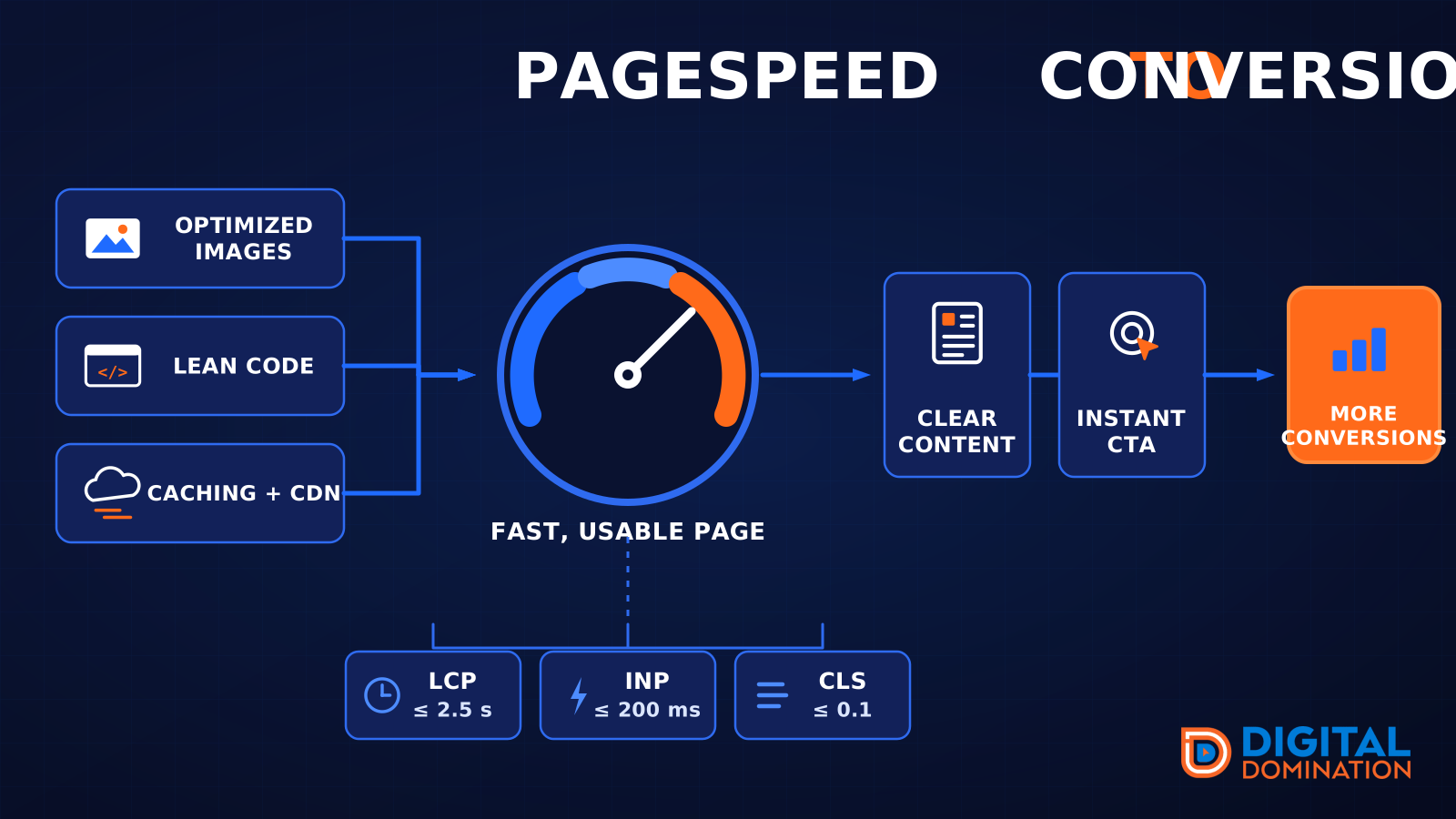
This leg is your website, above all on a phone. Small images, lean code, and caching make a page fast. A fast, clear page is what turns a visit into a call. Phone speed is one of the 12 Trinity checks because a slow page loses the call before anyone sees your offer.
Your website is the showroom. If the door sticks, people leave before they look around.
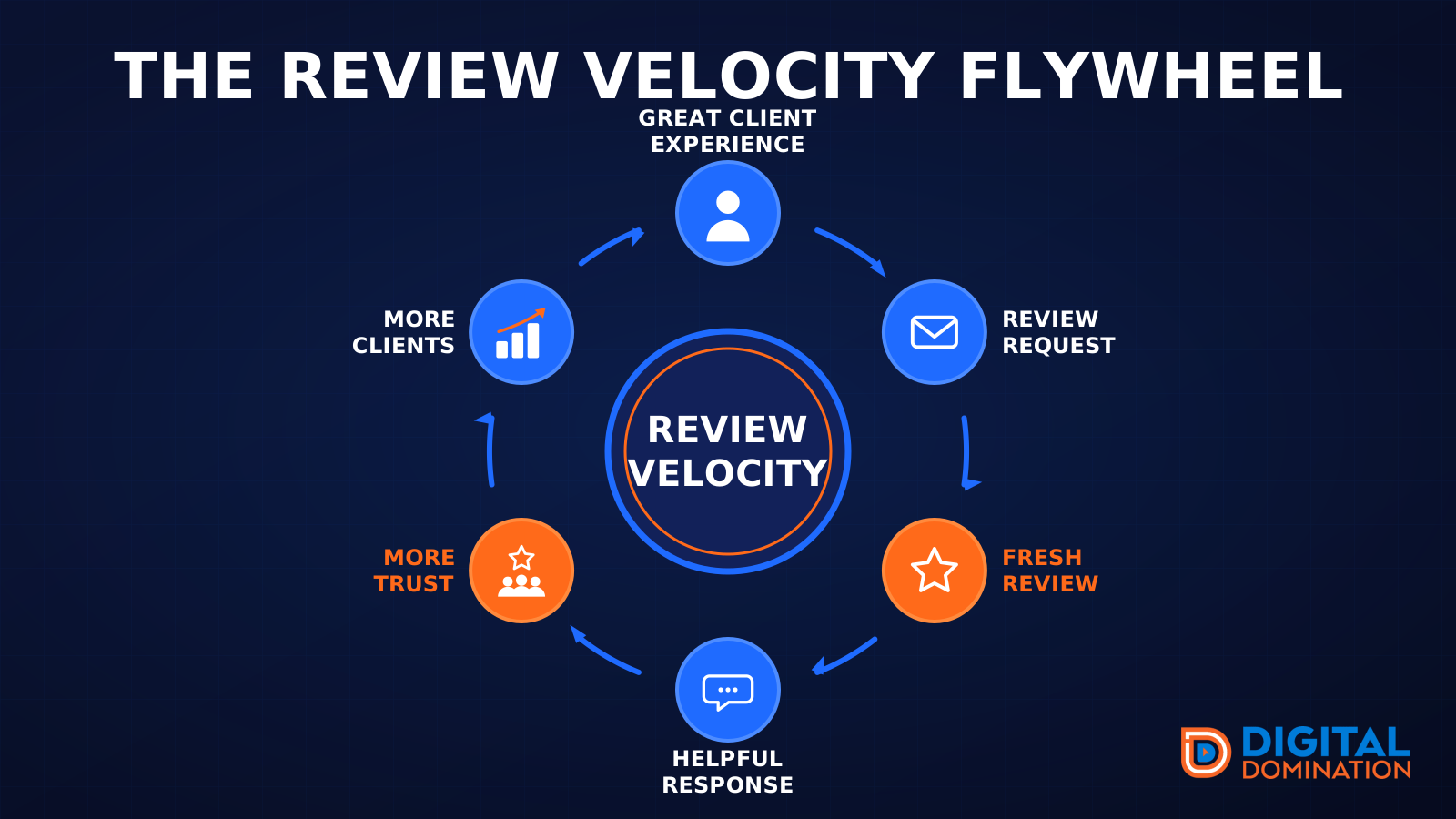
The review velocity flywheel
This leg is reviews and reputation. A good visit leads to a review request, then a fresh review, then a helpful reply, then more trust, then more customers. When the scan can find your Google listing, it shows your rating, your recent reviews, and how many you answered.
Reviews are word of mouth. One kind word helps. A steady stream of real reviews, and a reply from you, helps more.
How this turns into revenue
Being found in more searches leads to more calls. More calls lead to more booked jobs. More booked jobs lead to more revenue.
Example numbers, not a real business: 40 calls from search in a month, a 25 percent close rate, and a $400 average job. That is 10 booked jobs. That is $4,000. The math is the lesson. It is not a promise.
The full page has a box where you can type your own average job value and close rate.
One real story, from our car dealership case study: Medina Auto Group went from invisible on Google Maps to dominating every high-intent search across their market. The turnaround spanned all four of their rooftops at once. The same page says the team eliminated 89 unfair one-star reviews that had been dragging the dealership's reputation down and keeping it out of the Map Pack. It also says: “Results described here are exceptional and non-typical. Outcomes vary based on market conditions, competition, and implementation. No guarantees are made regarding earnings, rankings, or conversions.”
Free strategy call
More booked jobs start with a clear plan
Book a free strategy call. We look at your Google profile, your website, and your reviews, and we tell you what to fix first.
Free. You pick the time. A real person shows up.