
Google Maps SEO for plumbers
A practical Maps plan for plumbing companies that want to show up in the towns, emergency searches, and service categories that produce real calls.
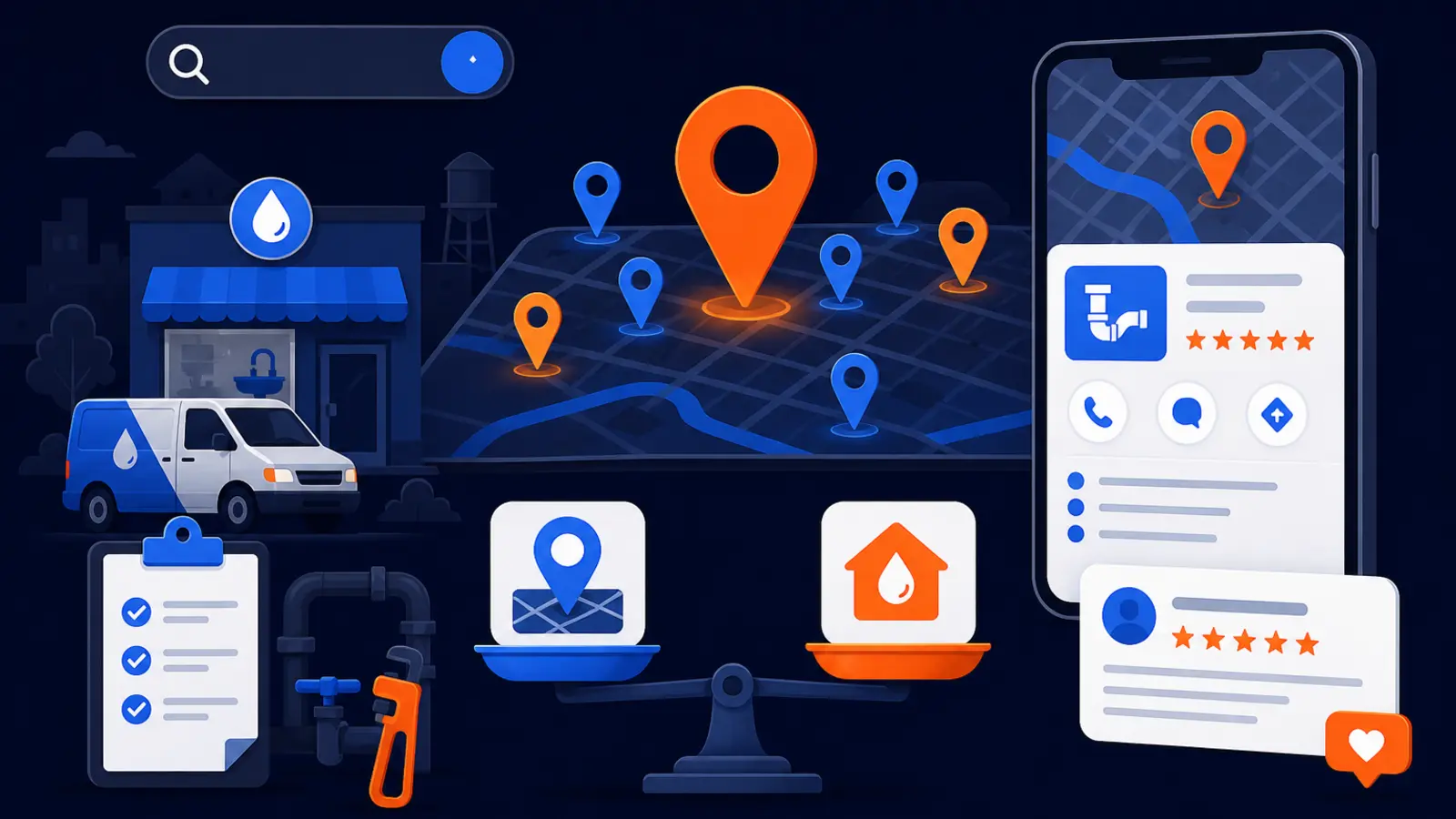
Can this get your plumbing company into the Map Pack for the right jobs?
Yes, if the plan is built around the towns, services, and Google Business Profile signals that actually affect local visibility. For a plumbing company, Google Maps SEO is not just adding keywords to a website. It is the work of making Google confident that your company is relevant for plumbing searches, close enough to serve the searcher, and prominent enough to deserve a top position.
Digital Domination’s Maps Domination Program is built for this exact buying question: can we win the Google Map Pack for the searches that lead to booked plumbing jobs, such as emergency plumber, water heater repair, drain cleaning, leak detection, sewer repair, and town-based plumbing searches. The program starts with a scan of real results across your service area, then builds a 12-week execution plan around the gaps that scan reveals.
Google Business Profile Help says local results are mainly based on relevance, distance, and prominence. It also says there is no way to request or pay for a better local ranking on Google. That matters because any plumbing SEO plan should be judged by the quality of the work, not by promises of special access to Google.
For plumbers, the first pass usually checks these items:
- ▸Is the Business Profile set up correctly for a service-area plumbing company?
- ▸Are the primary category, additional categories, and services aligned with the jobs you want?
- ▸Do your service areas match towns you can actually serve well?
- ▸Are reviews being requested in a safe, policy-compliant way?
- ▸Do your website pages support emergency and town-level plumbing searches?
- ▸Can rankings be tracked by location, not just with one citywide keyword report?
Why Google Maps SEO matters for plumbing calls
Plumbing is urgent. Many searchers are not comparing ten companies for weeks. They have a leak, a clogged drain, a broken water heater, or a sewer problem, and they want a nearby company they can trust now. That is why the Google Map Pack can be one of the most valuable search placements for a local plumber.
BrightLocal’s Small Business Marketing Report 2026 says Google is used by 71% of local searchers. BrightLocal’s 2026 Local Consumer Review Survey says 97% of consumers read reviews for local businesses, based on a representative panel of 1,002 US adult consumers. For a plumber, that means Maps visibility and review strength work together. The listing must be findable, but it also has to look trustworthy enough to earn the call.
The mistake many plumbers make is treating Maps SEO like a one-time profile setup. In reality, it needs ongoing cleanup, review building, service page support, photo activity, citation consistency, and tracking by town. The goal is not to look busy in a report. The goal is to make your company a stronger local result for the searches that produce jobs.
Set up the profile correctly for a service-area plumber
Google Business Profile Help represents service businesses as either service-area businesses or hybrid businesses, and it lists plumbers as an example of a service-area business. This is important if you operate from a shop, office, or home base and send trucks to customers.
Google says service-area businesses can only have one profile for the whole area they serve. Google also says a Business Profile can have up to 20 service areas and cannot use a radius distance as the service area. The boundaries of a service area should not be more than about 2 hours of driving time from where the business is based.
If a plumber runs the business from a residential address, Google says the address should be cleared from the Business Profile. This avoids presenting a home address as a storefront customers can visit. It also keeps the profile aligned with Google’s rules for service-area businesses.
A good setup checks the basics before chasing advanced tactics:
- ▸The profile type matches how the plumbing company actually serves customers.
- ▸The address display follows Google’s rules.
- ▸The service areas use towns, cities, or defined places instead of a radius.
- ▸The service area is not stretched far beyond practical driving time.
- ▸There is only one profile for the service-area business unless a real additional location qualifies.
Choose categories and services with care
Google says each business location must have one primary category and may select up to 9 more categories. For a plumbing company, the primary category is one of the biggest setup decisions because it tells Google what the business is mainly about.
Whitespark’s Official 2026 Local Search Ranking Factors Report ranked Primary GBP Category first for local pack and Maps rankings. The same report ranked Proximity of Address to the Point of Search second and Keywords in GBP Business Title third. That does not mean a plumber should stuff keywords into the business name. It means your real-world business name, category setup, and location signals all matter, and they need to be handled carefully.
Google Business Profile Help says a plumbing business may get suggested services such as Install faucet or Repair toilet, and may add custom services. This is useful because the services section can line up the profile with real plumbing jobs, not vague labels.
For a plumbing company, category and service cleanup usually includes:
- ▸Confirming the primary category fits the core trade.
- ▸Adding relevant secondary categories only when they truthfully apply.
- ▸Reviewing suggested plumbing services from Google.
- ▸Adding custom services for real work the company performs.
- ▸Matching services to website pages where it makes sense.
- ▸Avoiding business name edits that do not match the legal or real-world name.
Build reviews without putting the profile at risk
Reviews are not just a reputation issue. For a plumbing company, they help a worried customer decide whether to call. A homeowner searching for an emergency plumber often sees star ratings, review text, recency, photos, and responses before clicking through to the website.
Google Business Profile Help says businesses may ask customers to leave reviews by sharing a Google link or QR code. It also says incentives for reviews are strictly prohibited. That means no discounts, gift cards, cash, or special treatment in exchange for a review.
Google’s Business Profile restrictions for policy violations say fake engagement violations can lead to restrictions such as blocking new reviews, unpublishing existing reviews, or displaying a warning on the Business Profile. For a plumber that depends on trust, that kind of risk is not worth it.
A safe review process should be simple enough for a dispatcher, technician, or owner to follow:
- ▸Ask real customers after completed jobs.
- ▸Use a Google review link or QR code.
- ▸Do not offer incentives for reviews.
- ▸Do not ask employees, friends, or vendors to fake customer experiences.
- ▸Respond to reviews in a professional tone.
- ▸Track review patterns by service type and town when possible.
What to expect in a 12-week Maps plan
A serious Google Maps SEO plan for plumbers should not begin with random posting or a vague promise to improve rankings. It should begin with a baseline scan that shows where the company appears and where it does not. That scan should be specific enough to reveal town-by-town weakness.
Digital Domination’s free GeoGrid scan checks 169 real Google results across the service area. That 169-point GeoGrid scan helps show whether your plumbing company is visible only near the base address or whether it has reach into the towns you care about.
Digital Domination’s guarantee is: top 3 in the Google Map Pack in 12 weeks or you do not pay. Pricing for the Maps Domination Program is set per market on a qualification call and tied to the ranking outcome. Digital Domination also works with one client per trade per service area, which means territory exclusivity for plumbers who qualify.
Here are concrete checkpoints an owner should be able to verify during the plan:
- ▸A baseline GeoGrid report before work begins.
- ▸A clear list of target towns and plumbing services.
- ▸Business Profile category, service, and service-area cleanup.
- ▸Review process setup that follows Google’s rules.
- ▸Website page recommendations for town and service relevance.
- ▸Citation and profile consistency checks.
- ▸Weekly GeoGrid tracking reports with visual proof of rankings and call volume.
- ▸A clear explanation of what changed and why it matters.
Seven questions to ask before you sign
A plumber does not need to become an SEO technician to buy this service wisely. You just need to ask questions that reveal whether the provider understands Google Maps, service-area rules, and plumbing search behavior.
Use these questions before you choose an agency or decide to handle it yourself:
- ▸Do you track rankings across my actual service area, or only from one point in town?
- ▸How will you choose my target towns and emergency service searches?
- ▸Will you follow Google’s rules for service-area plumbing businesses?
- ▸What changes will you make to my Business Profile in the first month?
- ▸How will you help me request reviews without incentives?
- ▸What proof will I see each week?
- ▸Do you work with more than one plumber in the same service area?
- ▸What happens if the Map Pack ranking goal is not reached?
How Digital Domination measures real plumbing visibility
One problem with traditional SEO reporting is that it can hide weak local performance. A single ranking report may say you rank well for plumber near me, but that does not tell you whether you rank in the north side of town, the neighboring suburb, or the areas where your best jobs come from.
Digital Domination uses GeoGrid tracking because plumbing searches change by location. Google’s own local ranking explanation includes distance as a core factor, so the searcher’s location matters. A rank from one office computer is not enough to understand a service-area plumbing business.
Weekly GeoGrid tracking reports give visual proof of rankings and call volume. For an owner, the point is simple: you can see where the company is gaining ground and where the next work needs to happen.
A useful plumbing Maps report should make these items easy to see:
- ▸Which grid points are in the top 3.
- ▸Which towns are improving.
- ▸Which services still need support.
- ▸Whether calls are moving with visibility.
- ▸What work was completed that week.
- ▸What the next priority is.
When the cheaper DIY path makes sense
The cheaper DIY path can be a good fit for a plumber who has time to manage the details without needing a fixed 12-week execution plan. If you enjoy working inside Google Business Profile, building pages, asking for reviews, checking citations, and reading ranking grids, doing it yourself may be reasonable.
DIY becomes harder when the business is busy, the service area is competitive, or several towns matter. Plumbing owners also have to be careful because well-meaning profile edits can create problems if they conflict with Google’s service-area rules.
If you go the DIY route, expect to manage these tasks consistently:
- ▸Business Profile categories and services.
- ▸Service areas and address display settings.
- ▸Review requests and review responses.
- ▸Photos and profile updates.
- ▸Citation consistency across major listings.
- ▸Local landing pages for important towns and services.
- ▸GeoGrid tracking by search location.
- ▸Ongoing checks against Google’s policies.
What affects emergency plumbing searches
Emergency plumbing searches are usually more competitive because the customer is ready to call. Google still has to decide which businesses are relevant, close enough, and prominent enough for that searcher at that moment.
The best plan does not treat emergency plumber as one magic keyword. It supports the emergency intent across the Business Profile, services, website pages, reviews, and local proof. It also keeps the service area realistic, because Google’s distance factor can limit how far a profile reaches.
For emergency plumbing visibility, the main work areas are:
- ▸A correct plumbing primary category.
- ▸Clear emergency service wording where it belongs.
- ▸Service entries for urgent work the company actually performs.
- ▸Town and service pages that match real coverage.
- ▸Fresh customer reviews that mention real plumbing work naturally.
- ▸Fast, clear calls to action on the website.
- ▸Consistent name, address, and phone data where applicable.
- ▸GeoGrid tracking for each priority town.
What is on the plumbers page and how to start
If you want the plumber-specific version of this service, go to Digital Domination’s plumbers industry page. It explains how the Maps Domination Program applies to plumbing companies, what the process is built to improve, and how territory exclusivity works for one client per trade per service area.
If you want proof before a sales conversation, start with the free GeoGrid scan page. The scan checks 169 real Google results across your service area, so you can see where your plumbing company shows up now and where the biggest Map Pack gaps are.
From there, the qualification call is about your market, your target towns, your plumbing services, and whether the ranking goal is realistic. The right plan should be specific to your service area, not a generic SEO package with plumbing keywords swapped in.
Keep reading
Related guides
- ▸What happens if you wait to fix your Google Maps ranking
- ▸What is included in Google Maps SEO?
- ▸What is included in the Maps Domination Program?
Put it into action
Frequently Asked Questions
How do I get my plumbing business higher on Google Maps?
Start with the basics Google says matter: relevance, distance, and prominence. For a plumber, that means a correct Business Profile setup, accurate service areas, the right category and services, strong reviews, consistent business information, and website pages that support the towns and services you want to win.
Can plumbers have more than one Google Business Profile?
Google says service-area businesses can only have one profile for the whole area they serve. Additional profiles should only be considered when there is a real qualifying business location that follows Google’s guidelines.
Should a plumber show a home address on Google?
Google says a plumber that runs the business from a residential address should clear the address from the Business Profile. You can still define service areas, but the home address should not be displayed as a customer-facing location.
How many service areas can I add to my plumbing Google Business Profile?
Google says a Business Profile can have up to 20 service areas and cannot use a radius distance as the service area. Google also says the boundaries of a service area should not be more than about 2 hours of driving time from where the business is based.
Are reviews really important for plumbing SEO?
Yes, reviews affect trust and can support local prominence. BrightLocal’s 2026 Local Consumer Review Survey says 97% of consumers read reviews for local businesses, so a plumbing company with weak or stale reviews may lose calls even when it is visible.
Can I pay Google to rank my plumbing company higher in Maps?
No. Google Business Profile Help says there is no way to request or pay for a better local ranking on Google. You can pay for ads, but organic Map Pack rankings have to be earned through relevance, distance, prominence, and policy-compliant local SEO work.
What does a GeoGrid scan show for a plumber?
A GeoGrid scan shows how your plumbing company ranks from many search points across the service area. Digital Domination’s free scan checks 169 real Google results, which helps reveal whether you are visible in the towns that matter or only near your base location.
Is Google Maps SEO for plumbers worth doing myself?
It can be worth doing yourself if you have time to manage categories, services, service areas, reviews, photos, citations, and local pages consistently. If you want a fixed 12-week execution plan with weekly GeoGrid tracking, a specialized Maps program may be a better fit.
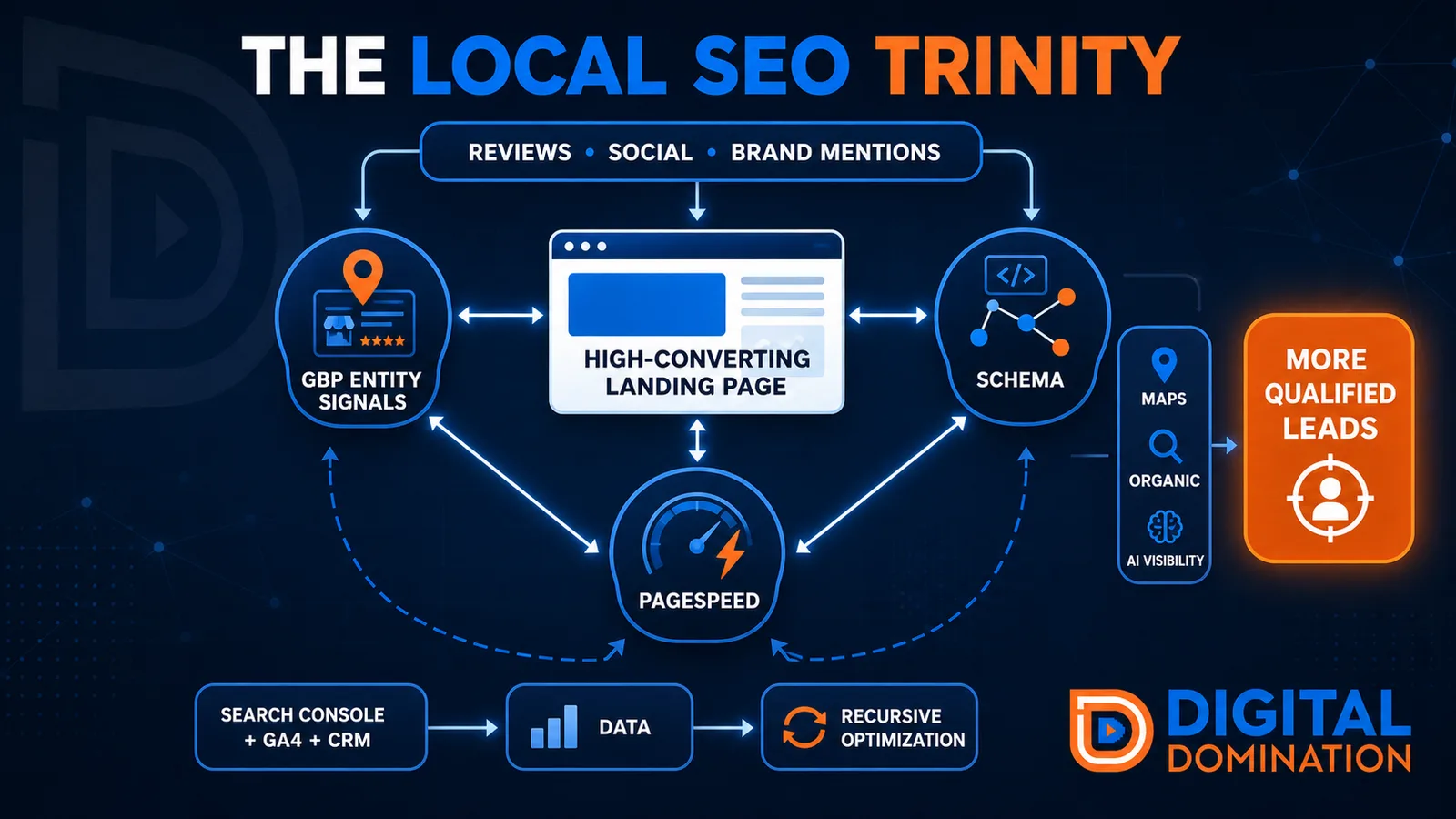
The Local SEO Trinity
Think of a three-legged stool. Your Google profile, your website, and your reviews all have to hold you up. If one leg is short, the whole thing wobbles.
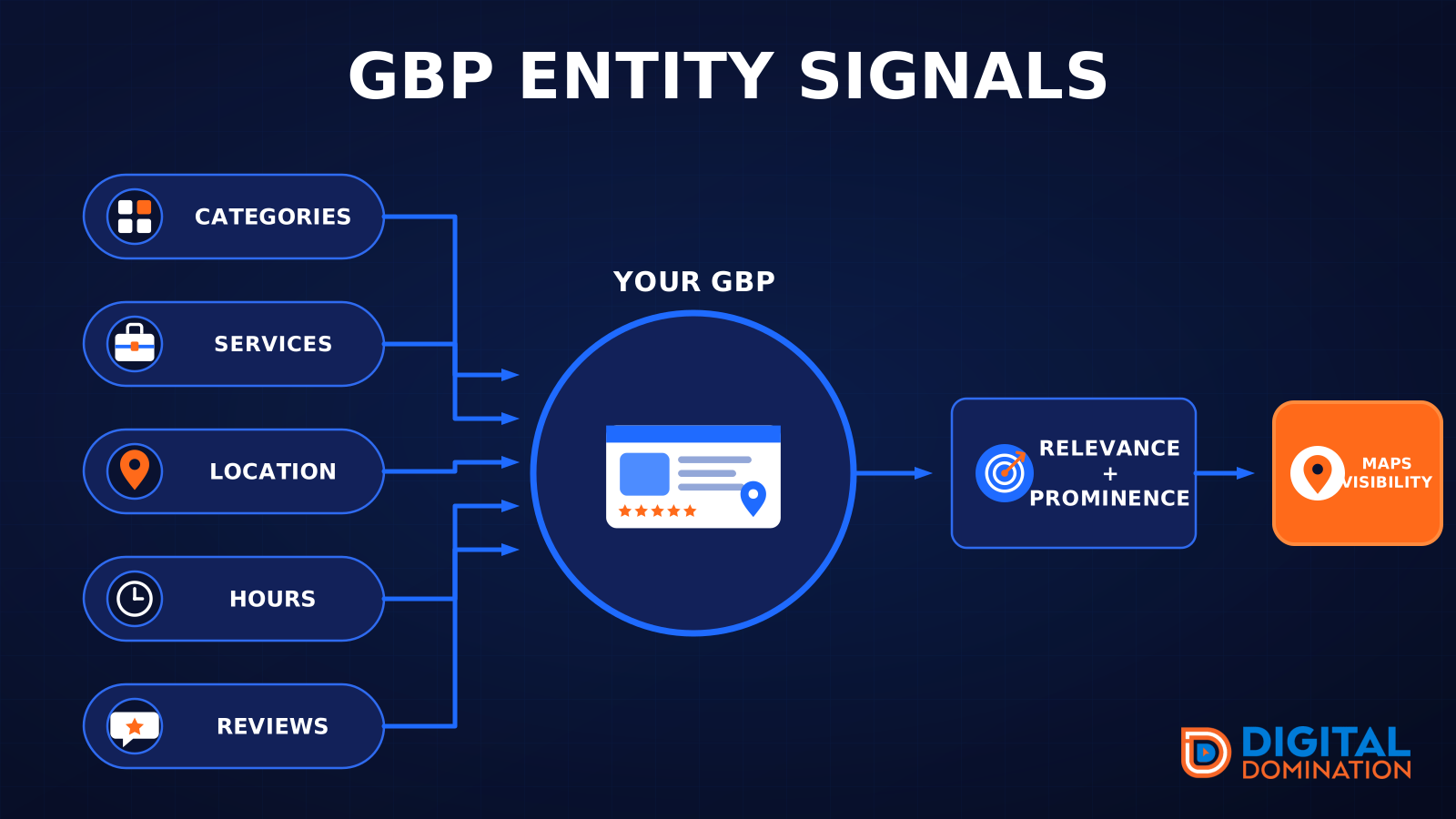
GBP entity signals
This leg is your Google Business Profile. GBP means Google Business Profile. It covers your categories, your services, your location, your hours, and your reviews. Google uses those facts to decide who to show.
Your Google profile is your storefront sign. If the sign is missing, or it names the wrong shop, people drive past.
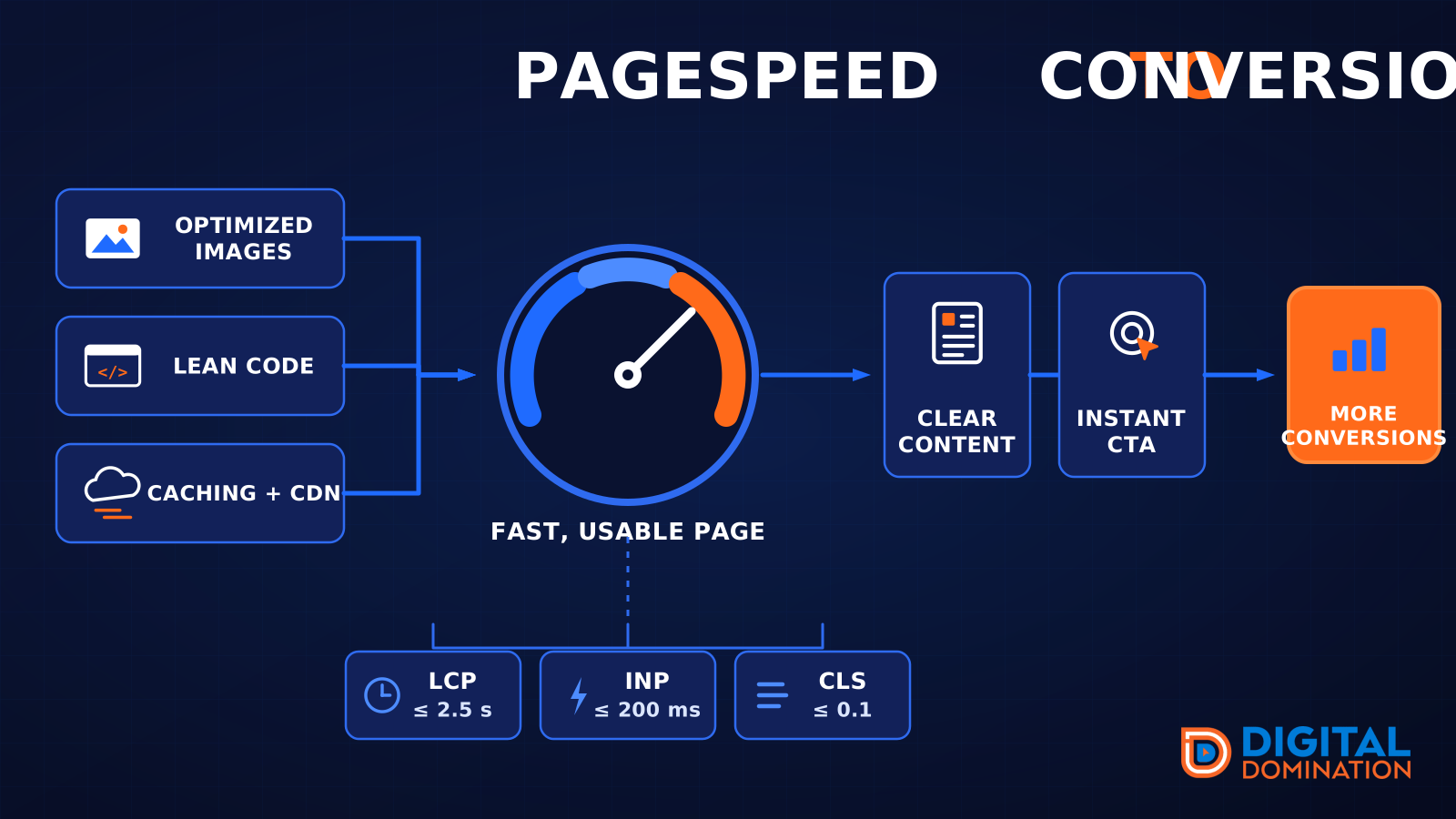
PageSpeed to conversion
This leg is your website, above all on a phone. Small images, lean code, and caching make a page fast. A fast, clear page is what turns a visit into a call. Phone speed is one of the 12 Trinity checks because a slow page loses the call before anyone sees your offer.
Your website is the showroom. If the door sticks, people leave before they look around.
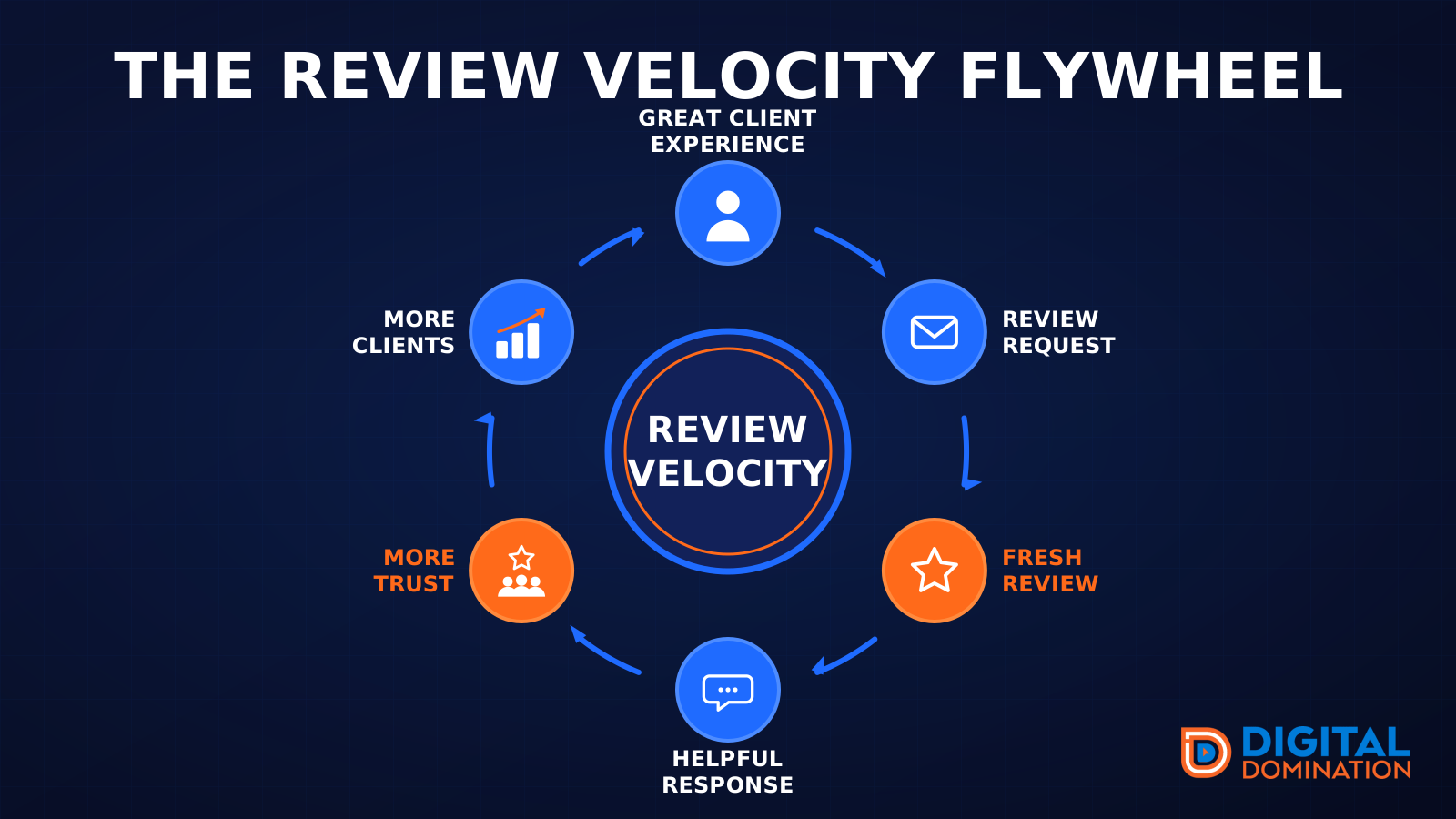
The review velocity flywheel
This leg is reviews and reputation. A good visit leads to a review request, then a fresh review, then a helpful reply, then more trust, then more customers. When the scan can find your Google listing, it shows your rating, your recent reviews, and how many you answered.
Reviews are word of mouth. One kind word helps. A steady stream of real reviews, and a reply from you, helps more.
How this turns into revenue
Being found in more searches leads to more calls. More calls lead to more booked jobs. More booked jobs lead to more revenue.
Example numbers, not a real business: 40 calls from search in a month, a 25 percent close rate, and a $400 average job. That is 10 booked jobs. That is $4,000. The math is the lesson. It is not a promise.
The full page has a box where you can type your own average job value and close rate.
One real story, from our car dealership case study: Medina Auto Group went from invisible on Google Maps to dominating every high-intent search across their market. The turnaround spanned all four of their rooftops at once. The same page says the team eliminated 89 unfair one-star reviews that had been dragging the dealership's reputation down and keeping it out of the Map Pack. It also says: “Results described here are exceptional and non-typical. Outcomes vary based on market conditions, competition, and implementation. No guarantees are made regarding earnings, rankings, or conversions.”
Free strategy call
More booked jobs start with a clear plan
Book a free strategy call. We look at your Google profile, your website, and your reviews, and we tell you what to fix first.
Free. You pick the time. A real person shows up.